Why You’re Building Community All Wrong (And How to Fix It) | Seth Godin
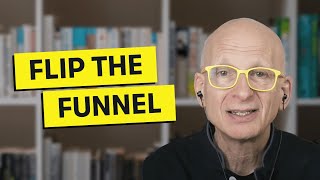
Seth Godin explains why most community building fails and how to fix it. Small, committed groups scale better than massive ones. Hosts matter more than platforms, and status within the group motivates people more than technology ever will.
Chapters
All right. Seth Godin. Amazing author, thinker, community builder. I can't believe he said yes. Seth, so lovely to see you. It's been forever.
You know, the people who are tuning in haven't yet heard clearly that you are the og, that you haven't been doing this for a week or a month or a year or a decade, that my career wouldn't be my career if it hadn't been for you. And you keep showing up to make things better. So when you reached out to me, it was like, instant yes. I don't get.
It was an instant yes. I was, like, so excited, and I, I, I was reflecting on the, just how our paths have crossed over the years. Like, I don't even, I don't even know if you know this, but, like, I worked at a company that was that in the very early days. I was doing early M and A during the dot com boom. And like, I remember Yo Yo Dine. Like, I was like, oh, my gosh, like, this is so cool. And then you showed up with tribes in, in probably one of, again, the, the most foresighted concepts frameworks, how you've approached it, which I'm hoping we'll, we'll get a chance to talk about. And then all of the other things that you've experimented with from Alt MBA and now the latest book with this is this is Strategy. You have continually found ways to evolve the fundamental core concept of how do we show up for people and how do we create value for people and how to really create this intersection of business, of marketing, of community, of connection. And I'm curious just to start out, like, is that accurate? Like, how, how do you think about it? You know what I mean? That's how I sort of look at it from the outside.
But it's like, you're very kind. You know, I have, I have a simple hack that has served me well for a long time. Most people who think of themselves as doing business or writing about business say, I want to win some prizes. How can I use people to help me get what I want?
Right.
And what I learned from my parents in a long, long time of building stuff is there are people who need stuff. How can I help people get what they need and maybe make a living doing it? And then I try to articulate in a book or a blog post or building a company how you could do that.
Yeah.
And so when we look at the Internet, there's plenty of very loud, very hyped hustlers who are doing things to people. Some of them are billionaires. Some of them are struggling. But it's such, such easy shortcut to put in pop ups and to spam people and to lock them into places they can't leave and just to seduce and to trick. And I think we're sort of fortunate that they aren't always winning. That there is a different path and that path is resilient and generative and you can be proud of it. And that's what I'm trying to help people do.
I love that. I also feel like a kindred spirit because one of the things that you know is, is so important to me is getting at the essence of how to create value for people. And the place where I think the most value has been created and can be created is in relationships and community. And one of the things that I love about the latest book, this is strategy that you can get your own copy of is the first thing you say is find a group of people to do this with.
Yeah.
And the second thing you say is and use modern tools like Claude or Chatgpt to, to help you tease out and apply these concepts and ideas. The concepts. I love the opening of the book. I'm going to read this because I think it's, it's awesome. Traction is progress. Help others get where they're going. Big problems require small solutions. I want to, I want to unpack that one. That one's super cool. The work is easier if you can see where you're going. I think that, that when I read that I was like, oh my God, yes. Like that is so profound. What is this one? This one is creating change creates tension. I can't even read my own handwriting here. Like, and better as possible. And so I, I'd love to, to, I'd love to hear especially around the big problems require smaller solutions. How you got there?
Well, you just got to look around and you might notice things. And one of the things you notice when you look around is that all the stuff in our built modern world didn't arrive on overnight Federal Express by magic. Know we paved the earth. How long did it take to pave the earth? It took a century. When it, you know, when you, when you tried to get people to buy a car they were like, well there's no roads and there's no gas stations. So I'll just wait until everything is paved and then I'll buy a car. And when books first came out with Gutenberg they hadn't invented reading glasses yet and there were no bookstores. So it, you can't wait until it's all clear before you begin. And the other thing about it is, you know, let's say your goal is to provide solace and aid and behavior change to millions and millions and millions of people around the world who are struggling with alcoholism. Well, you could say, how am I going to do that in a week? Or you could say, how am I going to help 12 people in Cleveland sit in a church basement and connect with each other? Let's build Alcoholics Anonymous, and then let's build a network effect that goes with it, because 40 years from now, it's going to have changed the world. That didn't happen because you said, there's a big problem. I need a big solution. You said, can I help 12 people? Can I make an impact right here and right now?
Yeah.
And the same thing is true with every podcast you've ever listened to. The first week it only had 10 listeners.
Yeah. Yeah. When. What I. What I love about this is. One of our themes for this summit is start where you are and just get started. Like, just take that first step. And so for you, what. What was your first step? How did you. How did you get started? And. And. And when did you know you had something that you could take to the next level?
So I'm not a poster child for much, but I will tell you that the way the book business works is every book publisher, pretty much, until recently, pays the same royalties, but they compete with each other to pay you in advance. My first book, Chip Conley and I wrote together in 1986, probably when you were 12 or something, and we got a $5,000 advance that we had a split. But when you get a $5,000 advance or $50,000 advance, you haven't written the book yet, but suddenly you know there's going to be a book, because now you owe now. Now you're on the hook, and everything that happens after that is not, should there be a book, because there will be a book. And the magic of what you're doing with this $199 thing is so simple, which is, you know, if someone on TikTok shows up and says, Pay me $199 and I'll tell you some secrets, you should change the channel. But when Gina shows up after doing this for more than a decade and says you should pay 199 hours, you should do that because it's in advance.
Yeah.
Not because Gina needs the money. Not because you can't use the money on something else, but because once you pay the advance, now There is going to be a network and everything you're going to do is going to be about the incremental stepwise progression to make it work. So my blog, which in April is going to have its 10,000th blog post, I've written it every single day for more than 25 years. I don't decide every day that I've written a perfect blog post. So there'll be a post tomorrow. What I do is I decide that it's Wednesday. And so since tomorrow is Thursday, there's going to be a blog post, because I already decided that. And once you make this commitment that you're going to put this group together, the smallest viable unit, a group that's worth it, but tiny, then you've done the hardest part. But what most people do is they go tldr. What's the next trauma or urgency of the moment? Oh, what did he say over there? And what did. Don't do that. Just commit to something and then show up to justify the fact that you committed.
Yeah, I love that. When did you so, so in your journey, like, have you always seen the power of taking concepts and ideas manifested through books or manifested through your blog and turn them into communities? Or how did that happen for you?
Well, I dare say I have failed more times than anyone who's listening to this. And I'm proud of it because the failures, you know, if you're not saying this might not work, then you're not innovating. You have to be okay with the things that don't work and the things you quit. I'm thinking back. Okay, so I would guess the first moment where I started to feel the power of community as a organizer was when I was a sophomore in high school. They opened a new high school. So they moved 400 of us from two other high schools into the new high school. Well, this is like skiing fresh powder because nothing has been formed yet.
Yeah.
And there was a college bowl type show on television in Buffalo called It's Academic, and there were three people from each high school and they would compete with the buzzers and the whole thing.
That's awesome.
And I was a nerd and I thought, I would love to be on this TV show pressing the buzzer. So what's the best way to do that? Start the club in the high school. Because if I'm the starter of the club, I can be on the team. Right. And so, so then I had to teach myself relays and stuff to build the buzzer system so we could practice. And it turned out I was the seventh best person on the team, and so I wasn't even an alternate. But what I learned from that crew of ne' er do wells and lonely nerds is we wanted connection. We didn't want to be lonely alone. We wanted to be lonely together. And those weekly or twice a week meetings really resonated with me. And I had to be the coach. We actually made it to the finals, and we lost because the question that they asked, which Sheldon Pressman answered on the last round, was, what was the name of the first man made satellite in space? I still remember this because Sheldon buzzed in and he said, sputnik. And the host looked at his card. I can't believe this. And he said, nope, the answer is Sputnik1. And I leaped out of my chair, like, you know, I said it wasn't called Sputnik 1 until there was Sputnik 2. And they said, sit down and shut up. We lost. But the point of the story, and I do have a point, is connecting seven people. Help me understand that while the easy thing to do is to put something behind a paywall and sell that in some form, the way the people at. I always forget the name. The. The way that many online sites have said, we have this video, we have this course. You can pay money to see it. That's easy to sell because you've created tension. And people want to know what's in there. Right. And they have to pay Masterclass to get it. Here's a celebrity pay masterclass. And get it. And when I started the Alt mba, I said, there are no secrets in here. There are no. There's no access to Seth Godin. I'm not going to show up. But you know who else is going to show up? People like you. Yeah. And you're going to engage with each other, and it's going to cost way more than Masterclass. And as a result, far fewer people signed up. But the people who signed up, and there's now more than 5,000 alums around the world, it changed their life.
Right.
Because it's. This isn't about consumption. It's about connection.
Yeah. This is something that, for me was always intuitive. And then one of our mighty hosts, a guy named Dan Miller, said it. He's like, people pay attention to what they pay for. And when you want results and transformation in your life, the best way to get those results in transformation is to actually make an investment. And. And that's not. And I'm not saying that from the perspective of, like, you know, hearkening back to the offer that we just made it. We see this all the time. The people who are running or participating in communities that are about exactly what you're talking about, creating that people magic, they're much more engaged, they have significantly longer retention, and they are willing to pay more money because it's about taking a framework, not content, but taking a framework, and, and the act of investing in applying that framework to get results, to get transformation in their lives. And it's one of these things that the idea of selling a product, to your point, like a tangible thing, feels like it is easier to sell. And in some cases it is. It is easier to sell a T shirt that hearkens to sort of a longing for some kind of identity than it is to say, hey, join this community, join this program, join this challenge. And it will actually be more rewarding and more valuable. And sometimes people have to do it to really sort of see and feel it. It's one of the things that I found with community builders is especially those that are new to it. It' like, it's so fun and I'm drawn to it, but I can't exactly put words against why it is so rewarding to create a community, to participate in a lively one. But it's something that, like, it's so different than any of, to your point, any of the gurus or any of the highly polished. This is about buying membership when it really is about consuming content. What's been your experience with that? You're, you're, you're, you're nodding because it's, it's, it's like this club that we're all a member of, of, like. No, no, no. When you create a community and when people are actually helping each other or taking pictures because they just met up live in Amsterdam or, you know, some place that you've never been, and it's all from your ideas. There's something incredibly both exciting and impactful in their lives, but also, let's be honest, super ego boosting. Like, like, if you want, if you want to have a moment where you know, yes, you're making money, but more importantly, you feel phenomenal, create relationships between people in pursuit of something that they can achieve on their own. What's been your experience with this?
I want to just put a pin into the idea of this idea of paying, because there's lots of ways to pay and one of them, the most convenient one, is money. But we'll talk about that in a second.
Yeah.
So on Ning, we built one of the Earliest big communities you had, other than the volunteer firemen, which was called tribes with three eyes in the middle of it. I'm not sure why it had three eyes in the middle of it, but it did. But it was cool.
I liked it.
It was. It was what, 15 years ago probably.
Yep.
A couple months ago, Becky. Becky Blanton, who was a core member, passed away.
Oh, I'm sorry.
And I think I met her in real life once maybe, but we all heard from each other again 15 years later. And I now run a community called Purple Space that has a thousand people. But in between, I built the carbon Almanac with 1900 other people and we were all volunteers. It was my full time job for a year and a half. I didn't make a nickel. And 90 countries. What people paid for there was they had to put in their time or they couldn't be part of it. And once we made this commitment to create a 97,000 word book in five months, and we did it footnoted and without a significant error, what people said is this was transformative. They found solace and hope in the idea that other people could come together and make magic happen. And the thing about the Carbon almanac is it's 97,000 words. I only wrote a thousand of the words, so I wasn't in charge, but I created the conditions for it to happen.
Right.
And so what we're seeking to do here is find a place. Sure, people should pay you money to be in it, but what they're really going to pay is time commitment status. It's going to feel risky to them to identify with this thing. That is the hard thing to get people to do. And when you build one of these communities, the tempting thing is to just keep cramming it with content. And because then the people who want content will stop whining and you can go back to what you were doing. But if you leave a space, don't steal the revelation if there's a liminal space for them to step into. So, you know, one of the guys who wrote, I think, 14 articles in the almanac, the first one he wrote was terrible. And the second one he wrote he used AI and plagiarism. And we said, don't do that. But the third one, when he realized he could write, transformed him and the book and he just kept writing and it kept getting better and better and better. Oh, wow. But if we said, oh, don't worry, we'll take care of the writing, he would have just been a witness and you need more than that you need participants.
Yeah. What I love about that as well is if he had tried to go do, or any of the people involved in the almanac would have tried to go do it on their own, you know, this idea of like, oh, well, now especially with AI, I can do all of this. They would. First of all, he wouldn't have had the same results and he wouldn't have built the same connections and relationships that allowed him to have those results.
Yeah.
And I, I think what's, you know, and I really appreciate what you're saying in terms of the investment people make is not just money. I think that's true. I think that what's been so interesting in my evolution is seeing the data behind the scenes, that when you have one area of investment, there are all of these other areas of investment that show up as well. And I think what is so powerful about what you're describing is that there can be. Now, money is certainly the easiest, but it's not the only one. And I think that that's a super important point. And I think the, the other thing that I would. I would tease out is. The power of creating these kinds of new, fresh, interesting ways of interacting. People have never. And this is one of the reasons why I think, you know, whether it's. It's transactional dating sites or other things like networking events, even, you know, people. People are. The way you create relationships is in the context of a transition of a goal, of an interest, a passion, a framework that you fall in love with and you want to apply, or a transition that you want to make. I think the sobriety, Some of our most popular mighty networks are different flavors of sobriety networks and sobriety movements. But I think one of the things that I'm really struck by, and I'd love for you to maybe talk a little bit more about this, is this when you can bring people together to go on a quest.
Right.
There is a reason why the most popular stories in the history of people, whether that's big blockbusters or whether that is, you know, stories being told over fires a thousand years ago, are about bringing people together to go on a quest. And I think you have this incredible history of. Of creating quest for people. How have you thought about it? And. And does that resonate? Or are you like, no, no, Gina, you're drop.
You're dropping so many pearls here. So, you know, let's think about the. One of the largest marathon events in the world, the New York City Marathon. Where did it come from? Was it Mike Bloomberg or Somebody else who just said, let's have a marathon. No. Was the New York Road Runners Club. So the New York Road Runners Club starts as four people. Four people who just want to run around Central Park. Why is it better to run with three other people? And the answer is, because the last mile of a marathon, everyone is tired. There's not a question. No one goes to a running coach and says, I want to be able to run a marathon without getting tired. That's not an option. So what's the difference between someone who quits at mile 25 and someone who finishes? And the answer is they figured out where to put the tired. And if you can run with other people, the peer pressure will help you learn where to put the tired. Okay, so now there's four of you, and then there's eight of you. Once you've become a runner, once you are in a circle like that, you will do almost anything to defend your choices. So now you will volunteer and give out juice, and now you will write the newsletter. And now. So if you go to the Park Slope Food Co Op in Brooklyn, there are people who work more than their shift because they don't do the shift because they have to. They do the shift because that's what people at the Park Slope Food Co Op do. And so, yeah, the identity. So what we have in our culture is not a shortage of noise or information or things to buy. We don't have a shortage of all sorts of entertainment. We have a shortage of meaning and identity. And the people who are, you know, self medicating with social media, they're doing it because what they really want is a hug. What they really want is to be missed if they are gone.
Yeah.
And so that's why starting the kind of communities you're talking about is a service. It is not selfish. And if you do enough service, you'll get paid. Don't worry about it. You'll get paid. But you got to figure out how to do enough service first.
Yeah, I think about it as the high. I think about social media as the high fructose corn syrup of relationships. You know, it's like you think it's feeling good and you think you're getting something. The, the aha moment I had was there was a couple of people that I was following on social media and, and they were people I had kind of met once or twice, but. But then I saw them again, you know, a year later after following them on social, and they didn't know me from Adam, and yet I knew more about Them. And I realized that that disconnect actually was more jarring to me. And I realized I just, like, I don't want to have these parasocial relationships. If anything, what I want and what I want mighty to be and what my team wants mighty to be is a way for you to facilitate and host people building relationships with each other, perhaps from an idea, perhaps from a, you know, the ability to bring people together around a transition or around a goal, but that it is the. About the relationships that they are making with other members, whether that's in the New York Roadrunners Club or whether that's in the Park Slope Co Op than it is about a false relationship with me or anybody else.
Yeah. And for a sec. I'm sorry. And I didn't want to interrupt.
No, I love switching gears. What I was just going to say was, and this is different than what exists on an email list or in a newsletter or in, you know, in a social following, but switch gears.
Okay. David Chang, the famous chef at Momofuko.
Yeah.
When did David Chang become David Chang? Because I was there, and I will tell you, I don't know the original.
I feel like we're about to, like, get like. Like something that I wouldn't otherwise know just from Reading. Please go.
The original Momofuko noodle bar only seats, like, 100 people. And before, it was a critical darling, you could just walk in anytime. I live about 45 minutes from there. And so on Saturdays, I pile the family into the electric car, and we drive down to the east side, lower side of Manhattan, walk in for lunch. And I haven't had meat in 30 or 40 years. And so I would order the Brussels sprouts without the bacon, please. This is a big win for them because they don't have to waste the bacon. And it's a win for me because I can eat it right? And we'd sit at the counter and do this. And the first time, it was delicious. The second time was delicious. We went the third week, and I ordered it, and the guy behind the counter. And I'm pretty sure it was David. I can't be sure, but I'm pretty sure David turned to me and he said, you know, there's a really good vegetarian restaurant three doors down, and we have this on our menu the way we have it, because that's the way we think it should be. So thank you for your support, but you shouldn't come back.
Wow.
And if you're not willing to do that, you can't actually build A community, you have to be able to say, this is. If you want to eat at a restaurant, you need to wear a suit and a tie. If you want to come to the New York Philharmonic, you're not allowed to cheer in the middle of a movement. This is what it's like around here. And that doesn't mean you're dictating everything. It just means you have to, A, have standards, but B, be very clear who's it for and what's it for. And one of the challenges of a paid for network is it's super tempting you say, but, yeah, but they're going to pay me. I know they're going to pay you, but what they're really going to pay you with is their energy and their insight and their connection. So if you let bullies in, if you let in people who are too needy for what the community can offer, if you let in people who get satisfaction out of being a troll, that's what you're going to get.
Yeah, I, One of the things I've observed is that, you know, those fears of the bully or the person who's going to come in and tr. Create something really interesting that, that is conventional. And I think there's a counterintuitive solution that builds on what you're saying, which is so what a lot of people try to do is they try to set guidelines. And the guidelines are like, anything that any of us can think of is the worst thing that could happen in the world. So we start with like, don't, you know, don't murder anybody. Don't say anything, you know, don't say anything bad. It would be like, so from where I'm sitting, it's like walking into a party and, and like you're, you're kind of nervous. You don't, you don't know people, you know, you don't even know what the culture is yet. And all of a sudden it's just like, don't do these horrible things. And this, it comes from the greatest, you know, intention, but it is the single worst thing that you can do. Instead, the right way to think about it is, or more productive way to think about it is how are you creating the culture? And what does the culture of your community have and what does it not have?
Right?
And so you actually can really benefit. And we talk about this as creating a magical first experience, creating just this opportunity to give people the right way or the way they're going to get the greatest reward for participating because you're, you're actually giving Them. You're giving them the cheat code to make friends in your community. You're giving them the cheat code of having recognition. You talk about this a lot. You know, it's like how people are motivated to get recognition. What's funny, because. And you did. You. And I did not plan this, but I'll just take a moment. One of the things that we launched this morning was streaks, and we launched streaks. So you get actual rewards for coming back every day. But this is. This is the thing that we're doing that's different, that's coming in about a month, is you will be able, as the host of the community, to create a system of recognition based on the values of your community, based on the culture of your community. So that somebody who's earned a bunch of points because they've been coming back every day, they get to use those points to recognize other members and being able then to recognize other members for being welcoming or being fun or being insightful or being somebody who brings joy to those around them. And so now all of a sudden, you're creating the culture of your community because, number one, you're getting people to come back. And if you get people to come back every day and you have 30 people, they're going to, by definition, provide more value. And especially if you're not necessarily to your point, you know, creating the conditions like a chat that the same five people are dominating all the time, like, you're mixing it up a little bit in terms of the features, but this ability to say, hey, if you come back every day, you are a member in good standing of this community and get to recognize other people and be recognized for the contribution that you're making. And I think it's a perfect example of where people pay attention to what they pay for. But paid is what are you investing in? So maybe I should even change it. People pay attention to what they invest in, and they can invest time, energy, identity, reputation, money. And so thank you for giving me that opportunity to use a really concrete example of something we just built in, because, yeah, it's.
So the underlying. The underlying forces here, there are only two things that most people want. If you have food and shelter and health. Most people are only left with two things they're striving for, which is affiliation and status. And what you're building is both. Affiliation is. So a couple months ago, I got invited to a fancy wedding in the Hamptons. I don't like weddings. I don't like fancy either.
But how about the Hamptons?
I don't like the Hamptons, because it's both. So we get there and you had to get in a. You parked your car, and then there was a golf cart to take you to the wherever. And we're waiting for the golf cart. It's my wife and I. And there's one other guy, and he's wearing a tuxedo. And I go, oh, oh, because I'm wearing a suit. And it's gonna be a long night. So then three more people come and all three of them are wearing suits. And I could see the guy in the tuxedo going, oh. Because we want to wear the right clothes to the wedding, we spend an enormous amount of time thinking about stuff like that. Affiliation. Am I part of the culture? Do. Am I doing what the cool kids are doing? Peer pressure. All of those things inform our whole lives. And the other one is status. Who's up and who's down? Who did the teacher call on? Who got into the famous college? And it's again, a whole long list. Well, the organizer of the community begins by dispensing those things. Yeah, you are the adjudicator of status. And so the magic of the kind of streaks economy you're talking about is now you're delegating some status awards to other people who also get the culture. And this goes back thousands of years. There's a reason they have bishops and, and cardinals and all those other things, because you move up a hierarchy, even if you're not getting a raise, because it's a way to earn status from the fact you showed up with affiliation.
Yeah, yeah. So it's so well said. And it's what we. What we really wanted to do. And this, you know, reinforces. The point is, how do we give the host of a community the way to reinforce the things that bring status?
Right.
And, you know, many gamification systems that exist out there are really just about, you know, the. The system decides what those things are. Like, the system decides, well, if you come back every day or you take this action of doing a post or whatever, then that leads you to the leaderboard, and then you're going to stay there forever. And it's just like, no, no, no, no. Like, there has to be a better way if we're going to build more sophisticated communities for more people to take advantage of. Because the reality is that we're living at a time in a moment where there are a ton of forces into that high fructose corn syrup way of connecting. And this has got to be better, deeper and more Interesting. Or else it doesn't work. It just doesn't work. So as you think about 2025, like, what are you excited about? What are you, you know, what, what are you excited about? What are you focused on? What are you paying attention to? One of my favorite questions to ask people.
Individual change is always difficult and challenging.
Yeah.
Cultural change multiplies that because cultural change is widespread and involuntary. I think that regardless of how you hope the world will be, it's easy to acknowledge that, at least for people in many parts of North America, cultural change is on the agenda.
Yeah.
And it's a trap to decide that worrying at three o' clock in the morning is going to fix this problem, because it will not. It is like worrying about gravity. It. Gravity doesn't know you even exist. So what to do? What to do comes down to the idea that for a hundred thousand years, human beings organized in tribes of people of about 150. And this number, Dunbar's number, is actually hardwired into many people. Even if you're super popular, only 150 people are going to come to your funeral. 150 people is the circle of folks that most people can tolerate. And social media and pop culture and Walter Cronkite really threw us for a loop because now it's not 150 people. It's not even 150 million people. It's everywhere, all the time. So I don't think it makes sense to shut it off, but I do think it makes sense to not make it the focus of your day.
Right.
So what to do instead? What to do instead is to realize just how much extraordinary privilege anybody who has the technology to be watching this has the tools. Like when I started, when you were looking at Yo Yodyne, we were the largest receiver of email in the world at the time. And it took an hour and a half for an email to travel across the Internet. And we had to build our own server instead of spending $19 at Mailchimp. And on and on and on. So just from a technological point of view, the fact that I'm talking to my friend Gina 3,000 miles away in high resolution and it's recorded in it, and, and you know your Streamyard subscription costs you, what, $29. So there are all of these tools and they used to be reserved for a handful of people at Fortune 100 companies. And here you can have them. And oh, the trillion dollars we spent to build AI, you can have that too. So what I am thinking about is this generational shift that's Happening that my generation is taking hands off the wheel and handing it to other people. And each generation changes the culture and the tools and the possibility.
Yeah.
And so, yeah, if you want to ask me if I'm completely bereft about the climate, of course I am. I know a lot about it, so that makes me bereft. Right. But I can't fix that all by myself. I can do is organize people to cause change to happen.
Right.
So I've been persistently optimistic about that year after year after year. And the fact is many things in our world keep getting better because of that. They don't get headlines.
Yeah.
But they keep getting better because people in networks communicate and organize and, and cohere and that is the only thing that's ever changed the world.
Yeah, I, I'm so glad you brought up the 150, the Dunbar number, because this is, this is fundamental to. I think what, what is the shift I'm seeing, which is we're still in social media, but we're spending it. There are more people spending less time there because a community of 30 or 100 or 150 or 1,000 people that feels like it's 150, like that's, that is, that is the people magic that we are spending all of our time, energy and resources on, which is how do we make the smallest and even the largest.
Yeah.
The most valuable to an individual because of the people that they are able to meet, to nurture a relationship with. And what I love about what you're saying as well is one of the things that I think has been sort of lost is this ability for there to be a strong host and supporting technology, supporting a strong host who has that vision for what those 150 people can organize around. The, the reason that they are coming together, the vision for what we're going to go create together. And it is so overwhelming to pay attention to everything that is going on in the world when everybody not only has a voice, but now they have a voice. And, and they are, they are flooding the lane. And as we see technology evolve, we've got to have these solutions like going into private communities, being able to use technology in a different way to make those connections easier, to make being able to schedule something easier and then ultimately to create value with fewer people so that there are more and more reasons to stay in these worlds, these communities, these 150 person groups without feeling like you're missing out on something in, in.
Correct. Because the old social media was just a hack. This Is human. Right. So I have a small. If it's here, where'd it go? Yep. I want to talk about a little tactical thing. Yeah. So this is a funnel, and I.
Love the fact that you have the. The prop. Yeah. Like, you have it, like, just right. Right down here.
You have no idea. I got my Jerry Garcia action figure here, which.
I mean, that's an obvious one.
I have the limited edition Seth Godin action figure, which. Oh, if you have one of those, you're pretty special. Anyway, people marketers, or people call themselves marketers, will tell you you need a funnel to grow. Agree that anybody who's serious about this can get 10 folks to join their community. If you can't get 10 folks to join your community, you've been spending too much time indoors. So you can get 10 folks. How do you get to a sustainable number? Well, the theory is you put attention in the top of the funnel. You promote. You buy ads, whatever it is, and most people drop out, but some end up at the bottom. Converting that word. Converting. Right, Right. My proposal is you flip the funnel and make it into a megaphone. And it's not a megaphone for you, it's a megaphone for your users. Yeah. And so what the hard part is, is to create a community that's more like Fight Club. Not the weird parts of Fight Club, but the part of Fight Club that was the first rule of Fight Club is you always talk about Fight Club. That Fight Club grew because the people who are in it realized their life would be better if they brought their friends. So it is possible to build, in fact, much easier to build a community that feels private. I don't want to bring anybody on here. This is my special place.
Right, Right.
But what you need to do if you're evangelical about it, is you need to, from the start, build a community where people understand that their status, their affiliation, their standing increases when they can bring in the others because it's good for them. And that is how you get from 10 to 100, whether it's a podcast, a blog, or a community, you're never going to grow the way you want to grow by hustling. You're going to do it because your users talk about you instead.
Yeah. This is the whole concept we talk about as an ambassador culture and how to build an ambassador culture from day one. And why you can just start, like, don't think about all your marketing ads. Like, until you have 30 members, don't do any of that stuff. And 30 people, you can start with five. And those five all know enough people to get to 30 relatively quickly. And then those 30 become your ambassadors. They become the people that are talking about and bringing in new members. And this goes to imagine, you're not investing the time and effort and energy to try to anticipate all the horrible things people can do, but instead you're spending time, effort and energy in terms of creating a magical first experience and getting people super excited about the mission, the quest that this community together is going to go on together. That was not, I didn't say that the best way, but anyways, that, that wasn't a sound bite, people, but this ability to create that quest and that culture where it's like, no, we, we're bringing more and more people into this. That is at the very essence of what we are building and what we are constantly looking for. Because that megaphone is the power of community. It's, it's grabbing a friend and bringing them in and helping that friend. This is one, one thought on this and because obviously I spent a lot of time thinking about this topic is it's not about selling something. It's not about spamming somebody. It's not about, you know, oh, I can only mention it once and then I never can mention it again because they didn't respond. I don't, I don't, I don't want to be a bother. It's about reframing what you are creating into. This is a community that is going to create results and transformation in people's lives. How? Through affiliation or identity and relationships that are going to surround them and create the scaffolding for them to stick with a new practice, a new habit, a, A, A pursuit of a goal that requires effort to be rewarding. And if I'm not talking about this, I am actually there's, there are people out there in all nodes of this network that we all live in that are hungry for this, that are. That they don't know where the solution to their problem is. And that if you're not talking about it, you are preventing them from. You're stealing, you're stealing, you're stealing their opportunity. And so that is a different way of looking at it. And at least for me, you know, it's the reason I'm so passionate about saying, hey, yes, I have an offer. I have $199 offer that includes your book. Because I am here to ensure that if there is somebody who is out there because they're curious, because they're ambitious, or they're struggling to create a business that is going to be meaningful, impactful, and durable. In an age, in a moment of rapidly advancing technology that is going to commoditize a lot of things, then I got to be out there, and I got to make sure that people know about my offer. And I need to make sure that it's so good that saying no isn't an option, because it's rad and awesome and includes your book. So I think that that's actually a really. That's a really.
They had one big asterisk, though. And then I have two slogans to share.
I love that. I love that.
Not only is no an option, no might be exactly the right thing for many people. What's not an option is maybe.
Oh, I like that. I like that a lot.
Right. So if this isn't free, if this isn't for you, terrific. Thanks for coming. Gene and I are almost done. You came for the good part. We'll see you later. But if. If this is the work you want to do, then do it or stop wasting your time. Right. It's in or out. So the two slogans. People like us do things like this.
Right?
People like us do things like this is the definition of culture. It begins with who the people like us are. And that's not about race or social standing. It's a mindset. People like us, you know, if you're an endurance runner, you've decided to be people like us do things like this. Right. And so you get to decide what that's going to be. You get to pick who the people like us are.
Yeah.
But the second slogan, after I wrote tribes came up a lot. People said, well, how do I get my tribe? Where do I find the people who are going to be in my tribe? I'm sorry, you don't have a tribe, and you will never have a tribe. I don't have a tribe. What you have is a chance to find a nascent tribe, a disconnected tribe, a tribe in waiting, and bring them together, and you can narrate for them. You could even lead them, but they're not yours. And the minute you start treating them like they're yours, they will leave. Yeah. And so the magic of tribes is that human beings really want to find the others. They don't want to find everyone. They just want to find their others. And your job as a creator of culture and to build a platform with help from Gina's extraordinary team, you get to lead for a while. But it's their tribe, not yours.
I love those. And what you also did Something that I think is the best, best part of community, which is communities are forgiving, communities evolve. And, and so even as, as I'm like, yes, I need to go do this and make it so that, you know, people don't say, no. And you're like, no, no, no, that's not right. Maybe it's the problem and the in and out, what we talked about in terms of the, the, the David Chang, you know, this is not the right place for you. I am so glad that you challenged me. And so I just want to just acknowledge that modeling because that, like this, communities aren't about being right. They are about learning and being smarter and being in environments where you can test out ideas and get reactions and be smarter and more sophisticated as a result. So I really appreciate that. And then the other thing I just want to end on is this idea that we own our audience. Even that term, we own our audience. What I believe the ultimate end state is, is to be able to be a member of a community or a co host or leader of a community that is existing without me. Meaning that when I want to go into it, I can, and I can take that energy from it, but it does not rely on me to exist. And if anything, you know, my goal is always, if I am tired, I want to know that I started a party, that the people that are going to be in that party for as long as they want to be in that party, Godspeed. I'm going to enjoy it, I'm going to get energy from it, I'm going to take what I want out of it. And then I'm going to go to bed and I might watch a show before I go to bed, I'll be honest. So I just want to thank you for, you know, this conversation, your incredible wisdom, your incredible awesomeness. And I just feel. And I, I have always felt grateful to know you, Seth, and you've just reinforced that for me. So I thank you. I hope everybody sees this. Amazing man.
Stop, stop, stop, stop, stop. Because my ego is big enough that I like it when people say nice things. But I gotta tell you, what it means to be a professional is to show up when you don't feel like it. And I don't think you've felt like it every day for the last 15 years. But you keep showing up, and you show up with consistency and generosity, with transparency, building this generative engine. And there aren't very many people like you who are building stuff like this online. And I am so grateful to know you.
Thank you for saying that I really appreciate it. Well, this has been a love fest and you know, that's what I like. I like being a part of one. And for everybody who's participated, the chat has been amazing. Thank you guys so much for being here. And again, this book is fantastic. And especially if you are curious, if you are ambitious or you are struggling, this is a fantastic read and we can't wait to get you guys a copy. So thank you, Seth. Thank you. And I don't know about you guys, but, like, this has been a pretty awesome day for me so far.










