You Can Start with 0 Members | People Magic Summit with Martinus Evans
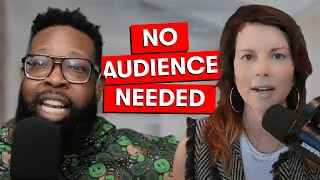
Martinus Evans built Slow AF Run Club from 20 members to a thriving community that sold 6,000 virtual race entries during COVID and 30,000 copies of his Penguin Random House book. He shares how he started as a back-of-pack runner, pivoted through failed courses and email lists, and now monetizes through merchandise, events, and hybrid in-person chapters.
Chapters
Stop sharing my screen. I'm going to invite Martinez Evans to the stage. Hi, Martinez, how are you?
What's up, Gina? How you doing?
I am doing phenomenally well. We just got through. I don't know if you were a part of this, but we just got through kind of the overview. You are our first speaker, so we are kicking things off with our very first People Magic Summit. And what I love about you being our first speaker is you've been a part of our extended Mighty Networks world for a while now, from when we were not as big as we are now and when fancy people were not on Mighty Networks. And so here's what I would love your help with in this opening session, which is I want to see who's in the audience right now. That is like, you know, easy for. I saw this, I saw this earlier this week when I was posting about the summit and I was posting about our speakers and I saw somebody who, who was like, it's easy for you to say because you have all of these things given to you or you can do this because you know somebody has a massive social media following or because you have an email newsletter or an email list for the last 10 years. So of course you can create a community. And I want to just point out neither of those things were true for you. So maybe you can start and share where, where, where, where were you and how did you get to this moment? And this moment being a wildly successful community, A best selling book with a second book on the way, a front page New York Times feature story on what you do and how you do it, as well as an incredibly important story for where, where you started and where you are today. So maybe with that I can open the floor and you can, you can help us all hear what it's like to start from scratch.
Alrighty. So how do, how did everything start from scratch? So 2019, let me take everybody back. 2019, pre pandemic. Do you remember what the world used to look like before then? I did a little bit about myself. I was just a runner. You know, I ran maybe one or two marathons during that time and I was just upset with what the running industry had to offer me as a larger individual, as a slower runner, as somebody who's in the back of the pack but paying their money to be, to be a part of this running community. I was upset, very upset with what was going on with the community. And I knew that there were other people out there who were experiencing the same thing that I was experiencing. And one of the things that I just started to do or just started to think about as I started to run these races, run these races and meet other people was, why aren't we together? Why aren't we in a community together? Why aren't we celebrating our wins?
And these are these back of the pack runners, like people that are finishing like a lot longer than like the last person before them?
Absolutely. So think, you know, on average, on average, average marathon or probably finish a race around three to four, three to four hours. We're talking about people who are finishing races at six hours, seven hours, eight hours, nine hours. Right. So these are individuals who are just left to finish for themselves. And I was one of those individuals. And I felt like there needed to be something out there to support us. If the running community at large wasn't going to support us, then we needed to find a way to support each other. And that's where the idea for Slow AF Run Club came from. And yes, it started off with literally zero people. And one of the things that I did to help a get over that initial hump was to share my story and share a why I'm doing this. Also share to share the journey of building this thing. And then the thing that really took off was helping out and pointing out the pain points of other individuals that were inside or that wasn't inside this community, but they knew they needed to be inside this community. Yep.
Yeah. And when did you know? Because, you know, if we, if we go back to that period of time you started running, you started a blog, you, which I love. And then the blog turned into, did Instagram come next after the blog? And then the other thing that I think is so important about your story and maybe you can share this experience, which is you followed all the gurus at that point in time. You followed all the people that told you to build an email list, launch a course, think about community later. Like after you have your funnel and your automations and your tags and your this and your that. And that had happened right before you and I met each other. So maybe you can share that story.
Because I think, oh, man. So let me tell you this. Yes, I followed all the gurus, any guru that you can think of when it comes to business and building an online business. I bought a course, I followed their methods and so on and so forth. So much so that, yes, I build multiple email lists and they failed. I created a course. And this is something I think I told Gina as I was talking about Mighty Networks is like, yes, I built the course and, you know, I followed all the gurus. Five people joined that course, even though it took me thousands of dollars to build that course. And somewhere in the middle of that course, two people flaked out. They even joined the course. They just paid and not even do it. Another person got injured in the course because they didn't listen to anything that, that I taught. And then the other two people was like, hey, like, this is not what I really thought I was going to get. Can I have my money back? So, like, that was my experience and I was fed up. I was literally fed up with all of this. You know, all these gurus saying, it's going to be easy. All you got to do is build this course. If, you know, if you build it, they would come. And yeah, five people came. But when it was all said and done, I impacted nobody. And I was out of thousands of dollars.
Right. So I think I had just met you after that when you were kind of in the regrouping phase.
Yeah, yeah.
And we should, we should say how we met each other, because it's one of my favorite stories.
I'll let you tell that story. But what I would say is, yes, I met Gina at a very interesting point of my life of having these failed courses, doing this fail email list. I just spent all of this money following these so called gurus, you know, business gurus who really made their money on building businesses or who made their money on teaching people how to build a business. But that was originally their business. Right. And I was fed up and meeting Gina. And, you know, one of the things that we was talking about was, why haven't you built a community? And I'll say, what do you mean?
So I'll share my story. So before the pandemic, I worked out at a gym around the corner. It was like a boutique gym. So it was like, you know, only about 20 people were in this gym at one time. So it's me, it's my trainer. And all of a sudden this guy starts cleaning near us and starts cleaning, you know, the equipment near us, starts sweeping near us and strikes up a conversation. And he had, you know, no idea that I did business stuff or community stuff or had like created some of the things that I've created. But what was so fantastic about me, my trainer Jerrell, and our new friend Martinez is that we started to have really interesting conversations. And this was before I had launched the precursor to People Magic Profit, which was community design. I had not launched a course yet. I was totally intimidated by running a course Even though we had built courses into Mighty Networks, I thought you had to have, like, a PhD in, like, online courses or like, Scorm or something. Because everybody we talked to who wanted us to build online courses into Mighty, this is like 2019. They all seemed like they had been doing it forever. So finally I was like, okay, I think I'm gonna launch my own course. I think I'm gonna launch my own course. So a few weeks before I was getting ready to launch my own course, I'm at the gym and I'm, like, working out. And all of a sudden, you know, Jerrell and I have this new friend, Martinez. And Martinez starts telling us his story. And his story is incredible. And his story is, wait a second. I built this in, you know, pretty special thing with my blog and my Instagram account, and I launched this course. It didn't work. I don't know what I'm necessarily going to do next. And we started sharing our stories. And what was so fun is that Martinez knew he did not want to do a Facebook group. So at the time, Facebook groups were like, oh, well, why wouldn't you just do a Facebook group? He's like, I don't want to do a Facebook group. And what was really fun was while I was, like, trying to work out, Martinez was not only peppering me with questions, but challenging me with like, well, what about this? Why would I do that? But I could do this over here, and it was awesome. And so I launch the first version, my very, very first course, the Community design masterclass. About 300 people joined. Martinez was one of them. And here was the thing. This is such an important lesson that I learned from you, Martinez, which is when you do things, live just like we're doing right now. Not only do you learn a ton in the chat, but for the things that I nailed in community design, I heard about them pretty, pretty quickly. And for the things I got wrong in community design or were a little bit fuzzier in community design, I heard about those things immediately. And I'd never done this before, so it was such an important lesson. So literally, I came in, I think it was like week three or week four of a.
Of a.
Of a five week course. And I was like, getting ready to work out. And Martinez beelines for me and is like, gina, I absolutely do not understand how, like, the launch math that you are sharing doesn't make any sense, and here's why. And I realized at that moment, I'm like, oh, my God, this is my secret weapon or my magic Elixir, if you would like less violence in your life, is when I can surround myself with my own community. I'm going to get feedback so much faster. And so not only did Martinez take community design, but I'll hand the microphone back to you. You started thinking about how you could turn your 300 pounds in running Instagram account, which I think at the time had about 25,000 people in it.
Yeah.
Into something that was that community. What was that process like for you as you were learning about some of these things? And what was the hardest thing about it?
Oh, man, I'll start with the hardest thing. The hardest thing was just getting out of my head. Right. And not being my worst critic and being my worst enemy and trying to out think why this wasn't going to work. That was probably the hardest thing, I would say. What I learned through that whole process is how quickly and how easily it became when I launched the Slow F1 club, literally, you know, we launched this thing, we had less than 20 people. And I learned so much just from those 20 people interacting with those individuals, asking questions, answering their questions, so on and so forth, that it really helped me grow and foster this thing to what it is today.
Yeah. And so this was 2019. You launch Slow AF Run Club.
And.
Something happens in March of 2020 that changes the course of not only the Slow AF Run Club, but also all the opportunities that presented themselves to you. So maybe you can talk about that transition a little bit.
Absolutely. So what Jean is talking about is COVID 19. So let's even back up.
Like when people running is one of those things, you know, because you, you were sponsored, but you, you got a sponsorship from Adidas. You're like going to all of these marathons. You're running them. Turns out marathons aren't great when everybody has to stay at their house.
No. So, yes. So one of the initial things that I thought about when it came to slowly up Run Club was that, you know, what would it look like just for groups of people to come together and just run races together. So like I said, this thing started off about 20 people and we were figuring out what races are we going to run for the next year and, and figuring out who's going to run what race with who, and figuring out travel plans and so on and so forth. March 2020 happened. COVID 19 happens. And literally day by day, oh, that race we were going to run, it got canceled. Oh, that race you was going to run, that got canceled. And the next thing you know, these people, including Myself had zero races on the calendar. So now we're sad and we're depressed and a lot of members is like, well, like, what's the point of even being in this thing? Because this was the goal. And for myself, I, I knew in order to stay active and motivated, I had to run races. I had to get that carrot of a medal. And I created a virtual race called the Slow AF Social distancing Shuffle. And I got a metal made and things of that sort. And I, I remember talking to the company in China and they was like, oh, you need 100 metals. And I remember being scared out of my mind. Like, I don't know how in the world I'm a cover. There's 100 metals because there's only 20 people in this thing. So then I promoted this race and I let the people inside the community also promote this race. And this race, when it was all said and done, sold a believe 6,000 race entries.
Wow.
You do the math on 6,000 race entries at $45 a pop.
Wow.
I had to get some more medals.
You had to get some more medals.
But that was the start of the boom where it came for slow if run club. And from that point on I completely switched the idea and the model of what I had for slow F run club. People just going, getting together and running races to really understanding. There's a whole population of people out here, adult onset runners who wants to get active and have no idea how to do that because they too also are afraid. They have been shamed so many other things that they have happened in their life. And I end up being the sherpa to let them know that, hey, if I can run, I think it was, you know, four marathons at the weight that I was weighing, then you can do it as well. And let me show you how.
Yeah. So I just want to, you know, put a pin in this for one, one moment. Not only did you identify your first transition, so your first transition were with people who were not sort of accepted runners who wanted to run their first marathon into realizing that the transition. So from point A, not doing anything to point B, having run their first marathon and then running more marathons to a broader transition of adults who wanted to be more active, wanted to run, that didn't know where to start. Yeah, yeah, didn't know where to start. Now for you, this also created as, as slow AF was growing, it also created more opportunities for you. Do you want to talk a little bit about how you turned slow AF into multiple other opportunities? You the One I'm thinking about is, is one that I read.
Okay, so let's talk about that as a hint.
As a hint.
So yeah, I actually have that next to me. So during that process of all of these people coming inside of Slow Run Club, the questions, the barrage of questions came and literally I became a servant leader and asked and answered every question that anybody asks about running. Do you run about speed? Do you run about speed first? Do you do distance, what shoes to wear, so on and so forth. And then somebody in the process was like, yo, you have this amount of information, you should write a book. And I was like, you know what? I should. And I went on a process of figuring out how to write a book, write a proposal, and then this is the end product. The slow. Yeah, Run Club, the ultimate guy. For anybody who wants to run this book end up getting picked up by Penguin Random House, which is one of the largest book publishers in the world. And since it's been out maybe about a year now, this book has sold over 30,000 copies.
Where's the like shock emoji? Let me do that guy. And do you want to just say also like most books that go out 30,000 copies is the what, top 1% sales? Yeah, top 1%.
30,000 copies. So within this first year, most books in this whole life of a book does not sell over 2,000 copies. This book itself has sold over 30,000 copies and which has created this whole other thing about multi figure, multi six figure book deal that came along with it, speaking engagements. Something else that also happened with this thing was a 50 date book tour across the United States. Now that I'm, you know, now we are moving from virtual community to actual in person to meet, touch and really feel these people and these people can feel me to see, to say, hey, you really changed my life.
So I just want to stop there for a, a a minute. Holy guacamole. The other thing is the strength of the community was one of the things that the publisher looked at.
Absolutely. So let's talk about that. You know, there's this whole process when you have to write a book proposal, so on and so forth. I won't go deep into that. Maybe I'll write a course on that and create a community about that later on today. But yes, as I'm talking to the publisher and by then solo, if Run Club has grown from those 20 people to now 5, 10, 20, 10,000 people inside this community and as I'm talking with the publisher and I'm letting them know all the ways that I'm going to promote this book. One of the ways that came out was I'm going to do this massive book launch party inside the slowly up front club. And that was something they really liked because it was novel, but also it has never been done before. Right. So when we start to do this, you know, we had this whole virtual street team of people who would go and promote this book, who would go to their local libraries and request a book, who would go to their local bookstore and request a book that would go buy multiple copies and put it in the little libraries and so on and so forth. Like this campaign was amazing. Like within first week sales, when you were just thinking about the book, we sold roughly 6,000 copies in the first week, which is almost unheard of.
It is unheard of. And now one of the things I'm curious about is, you know, how many people in the chat think that you first have to create, you know, a massive following, a massive audience and then a course, then a community. Or that you have to create a massive audience and an email newsletter and then maybe you get to have a paid membership later on. Um, how many, how many people are like, yeah, that's, you know, that's a gina. It's called a funnel. If you haven't heard of it, you might want to like look at the Internet and learn about being a. Okay, I, I see I've got a couple of, I got a couple of ringers in here in the chat. But one of the things that I think is so awesome about your story, and we see this all the time at mighty, is when you start with a community, you actually feed not only the these opportunities, but you can feed your audience. So your audience actually gets bigger if you have this community of people who are connected to the mission. But also when you reach people who have that sort of singular transition, they have more motivation to meet each other and more motivation to take an action that includes. Includes the really concrete things that go into sales. Go into the action that you are doing.
Absolutely. And I think that's the most wonderful thing is understanding the amount of people lives that you're changing by building this community. I would have not known that I would be even able to sell 30000 copies. Like Dana, when I met you was cleaning toilets at a gym. So to go from that. Yeah, like literally cleaning toilets at a gym to creating this massive following this massive community and be able to have some of these outcomes that, that I would never ever thought of, but it's because of the community that I built with Slow F Run Club. That is the reason all of this stuff have happened. It's going to continue to happen.
Yeah. One of the things I am seeing in the chat is that idea. I have to have a lot of people and I have to have a lot of people to start because if I don't have a lot of people to start, then there won't be enough people to provide value for each other. And I just want to stop and reiterate or just shine a big fat spotlight on something. Martina said he started with 20 people. And I think one of the things that social media has. Has distorted is this idea that you cannot start a community with less than like a hundred people. And it's just simply not true. So you can start with 10 people and hopefully I'm noticing, by the way, some of the things with, with People Magic GPT where they're like, oh, you just. 10 of people will be active. We're seeing that number actually grow month after month. So your percentage of active members as or your percentage active members versus the total should be roughly 30 to even 40%. And the smaller the number, the more people will be active. But I just want to really stress that the more that you put pressure on yourself up front to have a lot of people and build this massive funnel or like, God forbid, go and buy meta ads to be able to seed your community. Like, when you hear Martinez's story, that is not what ultimately allowed him the opportunity to create the Slow AF run club.
Can I also ask something, Gina? It's the.
It's the fact that I guess you're kind of guest. You can actually, like, talk all you want.
So I would say it's the fact that I started off with 20 people to really understand, like, to validate the ideas that I had and the ideas that they wanted and try to figure out how to bridge that gap.
Yeah.
And having those 20 people is what really helped me do that. You can't do that with a thousand people or 100 people. Like, there were times where I missed the mark and it was just a simple delete. And hey, y', all, my bad. I didn't get it right. But it's a lot. That repercussion is a lot bigger once you have a larger community.
Yeah.
So if you're just starting out and you don't know where to go, I would aim for a smaller community so that way you can figure out and learn together. But it also, it also helps build loyalty like nobody's business. Those 20 people are still like my ride or dies. And during the book tour, I had somebody that lived in Chicago and went to California, Washington state, so on and so forth, just to help me with the book tour. Just because they were so invested in the success of the Slowy of Run Club that they just wanted to help. And that's the only way you'll be able to do that is when you are building something from that small point and you're growing together.
That's profound. That's profound. Thank you. All right, so sharing. Where are you now? So we're, we're, we're past the, the 50 city book tour. I, I want to stress as somebody who was kind of watching that from.
Afar.
What you did in terms of creating the, the IRL relationships from the digital community, that is something that has been so inspiring to me and our team at Mighty Networks. We think that it is actually the thing that is going to be the future, especially as more and more things online become synthetic.
Yes.
So maybe you can just spend a few minutes sharing. What was that like beside. Let's put exhausting over on the side because I totally know there were multiple times you and I would be texting and you're like, I am tired. Which is totally valid. But maybe share a little bit about what you learned and what you saw from the book tour. And then I'm going to fix some lighting here because the sun is coming through my face. So. So go Jem. IRL is in real life. So the fish. Physical community as a physical thing in addition to community as a digital thing.
Yes, absolutely. So talking about irl, right. That, that's something that when you build this community and you, you initially just see these people as just profiles. Right. And as you meet them in real life, you understand that these people have real lives just like you are and they know more about you. It's something about meeting somebody for the first time and they break into tears and tell you how much you have influenced their lives. Because like I said, we're just behind a screen. And you really don't understand that. Yes, there is real people on the other side of that string that's also dealing with something. So I think that was by far the most impactful thing. I think the second impactful thing is like tangible sales. Like it's one thing to sell like a virtual membership and things of that sort, but to sell a tangible item is by far one of the hardest things that you can do. And being, and being able to turn and help encourage this group to not only be some of the Best cheerleaders for me. But. But to also turn that into actual buying power is unmatched. It's definitely so. When talking about what's for the future for Slow wave, Run Club 2025 and beyond is one of the things we're looking at. How do we build this hybrid community of IRL and virtual community? How can we do more things in person? How can we have. How can we start to create overall chapters, Slow your front club chapters all over the nation so that not only people are meeting in. In the virtual world, but also they're meeting in real life and actually have an impact in their own tangible community. And then overall, like how do we then turn that into our own events? Whether it's the slow. Yeah. Run Club race, the slowest Run Club conference. Those are the things that really excite me going forward.
I love that because it's the same things that I. That excite us. And we are working on things as we speak to be able to create one of the things that, that, that we have in the. In the platform. And I think you guys have used it a lot at Slow AF is members near you.
Yes.
So unlike any other platform out there, we at Mighty Networks have members near you. And because we have members near you, it allows for you to find. And you'll see this when you go to People Magic MNCO for the countdown to January challenges. You will be able to find members who are near you to be able to start that. What is there right now is a V1. It is a first version. It's just the beginning because going back to kind of the opening session, advanced software and yes, AI is going to be able to connect people. And then one of the variables in terms of being able to connect people is connect people who are near each other.
Yeah.
And I believe, and I think you share this belief having been on that 50 city tour is we're kind of getting bad at people stuff like, you know, like it's just too easy to be out in the world. And like, like, okay, I could talk to this person that I'm afraid of or I could be on my phone and. And what we're really looking at is how do we use the phone to basically be like, no, go talk to Martinez because he's rad. And this is what you guys have in common and this is what is possible.
Yeah.
And I would also just make a plug for talking to people out in the real world. That is what Martinez did with me. And before he knew what I did or what the whole opportunity could be. And I just think that that is really powerful. Okay.
What.
We have got some amazing questions and I love what is happening in the chat right now, but I have a. But we are not done. Martinez.
Alrighty, I got a sip of. I'm ready.
So as you think about this move from digital to in person or IRL or in real life, when you, when you think about your priorities going into January, what, what does that look like? How do you think about January now? Again, you have some other things going on in January beyond the Slow AF Run club that you may or may not want to share.
No.
And, and so I, I think this, it actually speaks to another piece of why community is so much more powerful and why people Magic and creating people magic is so much more powerful than having to maintain a social media account or having to maintain an email newsletter, having to maintain content. And maybe you want to share a little bit of how you're thinking about the next few months. And then I have a final question about.
Absolutely. So the main thing or one of the things that's coming up for me is fatherhood. So we have a little one on the way. And it's one of the things that I am thinking about is a. How can I be present during those, during those baby bonding moments while also keeping the community running? I think the cool thing is some of the features that you already have, like that Infinite Question Generator, Chef Kiss. Right. So that, that helps with keeping the community active. People, people are asking questions, answering questions, so on and so forth. I also think that I've done a great job of modeling, like what I want the community at large to participate in. So those things are cool, right? I think the thing that I'm really thinking about next year is what does that really look like to make that jump from a full time virtual community to this community? And what does that, what does that even looks like? What does the offering offerings even look like? Get insurance. Like, these are things that me and my team are just thinking about as we help grow this thing. Right? Like, does it make sense to go full virtual? Does it make sense to go full irl? What does it look like to really think about various chapter leaders and how do we grow that inside of the actual Mighty platform? Those are things that are really top of mind. And I.
For us too. Yeah, for us too.
And I would, and I would say I know that Mighty has my back when it comes to that.
Well, it does. So I saw the question about the Infinite Question Engine. So one of the things that we talk about In People Magic Profit and we'll show you if you are are interested is questions and polls are some of the most effective way to create a community that runs itself. And the reason is that members talk to each other after they've answered questions. But the question cannot be, hey guys, what do you think? The question actually needs an unlocking expression or unlocking phrase and the topic. And it has to be something that people can answer initially in less than 15 seconds. And then what happens is that the conversation takes off in the question or the poll. So that is something that we have seen generate the most engagement. So I saw a couple of questions about engagement, like how do I get my community to engage? Questions and polls are actually absolutely critical. And with AI, we have the ability to take the purpose of your community, why people are coming together and generate questions based on that formula of unlocking phrase and topic related to your community. And so because of that, you are able to to set up this infinite question engine, get a bunch of questions, polls that you can put into your community and then schedule them in advance. So as you schedule them in advance, it means that notifications are triggered for those questions and polls members come in, they answer them as they answer them, they get notifications when other people answer them. And we have seen more relationships built through questions and polls than any other feature on a mighty network. So that's what the infinite question engine is. You can also just look at the unlocking phrases and put it into the people magic GPT and be able to get some really good questions as well. I think that that's true. I might have just made that up, which would not be the first time or the last time that I do that. And then the, the other thing that I wanted to just add in terms of like how we have your back. One of the things we have wanted to build, and we are now in a position to build this over the next probably nine months is what I've talked about since I think you and I met Martinez around the dynamic meetup. So the idea would be the following. We can see in the software who are Martinez's most active members in Palo Alto, California. So let's say the top two most active members in Palo Alto, California and let's say Martinez has another 25 members in Palo Alto and Mountain View and Sunnyvale, just naming cities that are close to Palo Alto, California. But basically in a 25 mile radius of Palo Alto. We have all that data in Slow AF Run Club. So now imagine Martinez can decide to turn on a dynamic meetup and the software gets to work to basically say, hey Gina, we see that you are our most popular or most active, active member in Palo Alto. First of all, congratulations. Do you want to host a Meetup? There are 25 other amazing members of the Slow AF Run Club in and around Palo Alto, California. And we know that if you want to run this two weeks from now on a Thursday night, you're going to get 60% attendance because that's what we see on average happens. Do you want to do this? Let's say I'm looking at. I'm like, that sounds really fun, let me go ahead and do that.
Or.
Or I'm like, nah. Then by the way, we go to the next person. Then all of the hard work. How many people have had this hard work where you have to like make sure everybody's coming? Like, yeah, it's just like, hey dudes, we're still doing this thing on Thursday at 6 o'. Clock. Well, the beautiful thing about software is it can take all that work off your hands. All that work off your hands. So now Martinez can organize that hybrid experience where members near each other can actually meet up. And they know why they're meeting up, they know what they're going to do together, and they know who each other are so that when they show up, it's more like a reunion than an awkward networking event.
I love that.
That's where things are going. That's where things are going. So Martinez, you know, kind of final question here before we go to questions. One of my favorite questions as a matter of fact, which is what do you want to be able to do a year from now that you can't do today?
Go to space.
I mean, that doesn't look like it's too far off.
That's an interesting question. What do I want to do now that I can.
But you want to be able to do a year from now that you can't do today? Because there's a lot of great things that you're able to do now today.
I think one of the things I really want to be able to do now is to launch a 10 chapters in our most popular cities as well as launch the first iteration of the Slowly Effort Club conference. That's what I want to do.
I love now is the conference going to be. Now that everybody knows what IRL means, is the conference going to be like in real life?
Yes, yes. It's something that I'm dreaming of. Like I want this whole conference, I want this big expo space. I want people running I want people having fun. I want music. So that's the thing that I want to do in the next year.
I love that. All right, that's fantastic. Okay. And I have to. So when you think about music, who would be your headline musical artist slash act?
Oh, man.
I know. I'm like, I'm like the hard hit. This is like 60 minutes, Martinez. It's like 60 minutes. This is like hard hitting journalism.
Bruno Mars tripling.
Oh, that's a good one.
Yes. Running vibes.
Everybody heard it here first 10 chapters in most popular cities. First in person conference expo with headliner Bruno Mars. All right, let's go to a few questions.
All righty.
All right. All right. What is the, as you think about it, what is the value that your slow AF members are gaining from being a part of the community?
There's a lot of value that they're gaining. I, I think first things first is now they are no longer alone. They're no longer alone. They are part of a community that a is going to support them and celebrate them through all their wins and whatever hurdles that they got. So I think that's the first thing. I think the second thing is having direct access to me, especially as my notoriety is growing. You know, 50 day book tour, speaking things of that sort, knowing that being in a sluggish run club, that is one of the direct ways that you can get direct access to me. And then I would say the other thing is that when you are going on a journey, it's one thing to do it alone, but it's another thing to do with a group of people. And as research that shows that whenever you do hard things, you want to do it with a community because it makes it perceived easier.
I love that. All right, this is a great question. Would love to know what kind of effort it takes you now to run the community and what does that lifestyle look like. And remember, people always assume it's more work than sometimes it is the effort these days.
Oh man, I don't want to say zero, but it's very low effort thinking about a day in a life of what it looks like to run a slowly up run club. Now I maybe check it twice, twice a day and that's because I want to make sure that everybody questions being answered or at least somebody has a comment on their post. And I spend maybe two days out the month to plan and schedule content. But big shout out to the like I said, the auto question generator because most of the time I can just go through those approve the ones that I want to go out, select those, schedule those and add in my own flare and that's it for the rest of the far as like managing the community well.
And I think that that is not. You're not alone in that. One of the other things that we see is that's been a huge. Just taking that admin off your plate. The other big thing is these new things we will be continuing to launch around Automations, around being able to cluster members together and these dynamic meetups that we've been, you know, mentioning in this, in this opening session. Yeah.
But I would say for people who out there who are thinking about how to grow or just even like how to keep people engaged. You know, my motto when it comes to slowly run club is never miss a handshake. So what that means is whenever somebody's asking a question and a posting that's like them putting their hand out, you don't want to leave them hanging. Right. You want to make sure that you're reciprocating as well. So that's why I still spend, you know, I'll still go in there a couple days, I mean a couple times a day just to make sure that everybody's getting a handshake.
I love that. I also, I think you've done a really great job with your 20 ride or dies where they're also making sure.
Yes.
That nobody puts their hand out and doesn't get a receptacle handshake. Yeah, I think that's really cool. All right, another question. What was the book or books that inspired you to write the book?
I know, right? What was the book or books that inspired me to write this book? I've read. There's not one particular book in mind that I can think of that helped me inspire. What I would say is that using my experience as a slower runner and reading all of the running books when I started running and learning to run, even going to get run code certification. Right. They give you this book that's called the Jack Daniels Guide to Running. Right. And they tell you like, oh, this is your bible when it comes to coaching people. And I remember during the running coach.
Certification, it's literally called the Jack Daniels.
Yes, it's called the Jack Guy to Running.
And is it followed up by somebody saying, no, not that Jack Daniels Daniels. As soon as I heard that, I was like, really? Like in addition to making amazing American Kentucky Bourbon. Okay, great Guide to running. Wow.
So it's literally called the Jack Daniels Guide to Running. And when I got that book and I remember just Flipping through it and looking at some of the methods on how they was training people. And I remember being like, none of the stuff makes sense for what I'm trying to do. And I think that was the. I would say the book that really inspired me to say, you know, I need to write a book with all the information that I've learned or all the workarounds when it comes to running that has made me successful.
Wow. I love that because instead of. And I find this a lot. Getting inspired by something that you're like, no, like, getting inspired by. No, not. Oh, I want to be like that. It's like, I see the gap in what's. What's out there. And I think that that's true for any entrepreneur in any new kind of offering. Okay, I got a. I got another question here, which is Scott asks, I'd love to hear how and why you grew it. Was it all word of mouth? Did you have a marketing strategy? Did you use ads, for example? And then we'll go to the. Like, how did you keep people engaged? So I think that there's a. There's this sense of. And I have my own, you know, my own observation here on. On some of these, but how did you get those first 20 members? And then how much did those 20 members bring in the. The next wave?
So how did I get the first initial 20 members? Social media. Right. I did have a smallish following on Instagram, so I would. I would share my journey and share my story and let people know, like, this is what I'm trying to do, right. And literally take people along the journey of building it out, sneak peeking and so on and so forth. And as I did a, you know, beta group or whatever you want to call it, those were the people who joined, and those are the people that really I interact with. I would say growing it. The. The virtual race is one of the main things that helped grow the community, because literally we had a few hundred in there. Like, it was growing slowly. But when 6,000 people sign up for a race that you've, like, initially created and it's presented by the Slow Run Club, people want to know more, people want to stay, so on and so forth. So we literally had a percentage of people stay over from those events. I've never have invested not a single dollar into ads. No Facebook ads, no, like, no ad dollars in general. Everything has always been word of mouth. And I think that's. I would say that's my superpower, is that I love when it's word of mouth. And then the other thing that really helps out is this. This fly merch, right? Like, you know, we've created merchandise that has also have its own six figure leg. And this merch is one of the things that becomes a talking point when people are out in the world running, right? Racist, wearing this mercs. People want to know where they got it from, they want to know the backstory of it and so on and so forth. And that then also turns. People want to join the community because they've seen somebody else run a race wearing it or where out in the world, and they love what our motto is. And they also want to be a part of the community as well.
That's amazing. I know from my own experience wearing my neck. My neck thing a lot. A lot of comments. All right, we are. We are running up against time. All right, so why don't we have one final question, which I think is great. It's from Monica. What kept you going when your numbers were low? Oh, I would also reframe too. We have just spent a bunch of time talking about the fact that. That 20 members is not low. You are doing something different at that phase than you are doing later. But you've got to have had moments where things felt like they were going slower than. Than you wanted them to go.
All right, now I'm about to get in my Martinez Luther King bag. All right, I've been to the mountaintop, and I'm here to tell you this. Everybody starts at zero. When I started running, I did not know how to run. I couldn't even run for 15 seconds. Now I ran eight marathons. Like, it's. Literally, everybody starts at zero. Because that's, that's the part of the process. Like, if you started off and you got millions of people in the community, then you start at zero, right? But if you start at zero, it's a part of the journey. It's a part of the journey to figure out that there's this thread that you're trying to help, right? And I think for a lot of people, they think, oh, it's the money, it's the, you know, all this other stuff. No, like, really what it is about is helping people get from point A to point B. And for me, that's from not running to running, right? So if you focus on that and you continue to foster those people, the numbers will come. Literally the numbers will come like that. That's, that's. I would say that's the least of. That should be the least of your worries. Like, the most important thing that you should be worrying about is really figuring out like how what is your message and what are you doing to go cultivate the people who are actually there. There's this article that I read years ago about you know, 1,000 true fans and I and I think that that notion is still true. If you got a thousand people paying you a hundred dollars a month then you don't have a problem.
Right.
So I really think that we really need to stop focusing on oh is I got to have all these people is not that it's about how do you provide what the people you have need and how do you impact them in a way that they go out and become your biggest cheerleaders. Yeah, that's the thing you should be worrying about.
Well we will take Martinez the inspirer any day of the week. Thank you so much for your time. Thank you to just an amazing first session, an amazing.










