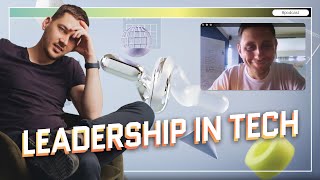
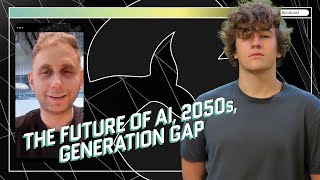
Misha Pravilniy: Rap, IT and why AI will never replace the creator
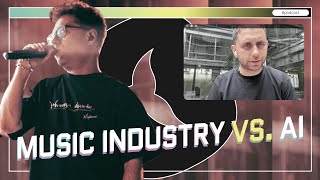
Rap artist and IT manager Misha Pravilniy started writing songs when Russia invaded Ukraine. He discusses how streaming algorithms shape music discovery, the Drake deepfake that fooled listeners, and why AI will never replace creators because it cannot feel the human pain that makes songs last.
Chapters
Foreign.
Music journalist, publicist and rap artist. Every song he creates aims to provide a realistic view of our present day. Alongside his music career, he works in IT as a creative manager passionate about the latest technologies in the music field.
Foreign so yeah, it's our next episode that we run as an activity to share ideas that people originally from Ukraine have in terms of different contexts, technology like music, AI trends and stuff like that. We know each other for some period of time already and I'm lucky to know you from different sites. The core one we interact now is you help us with our creative approach in things we do in IT at one of the companies at Kitrum that I take the role of the CEO and I think that the crossroad of unobvious professions like creativity, of being musician and working in some straightforward, sometimes boring, data driven businesses like technology company can bring very surprising results. Tell us who are you?
Thank you. First I'd like to thank you for the invitation not just in podcast but also to the kids room where really I've been working for a year and a half as a creative manager. I think it's quite exciting journey exciting in different ways, but always exciting, if you know what I mean. Past couple of years I'm writing songs and it's amazing that my songs resonate with people all over Ukraine and I started writing straight at the beginning of Russia's invasion and for me it was kind of like therapy that eventually transformed into a profession. I didn't expect it to turn out this way.
I wonder like what's your current usage or dive into this because music used to be about joy and it is about like creative approach. Like do you feel that like the modern tech is damaging the repeat, you know this or more like add some value and. Yeah. So please share your thoughts on this.
I don't know, I can't give a quick answer on this to put it briefly because it makes you reflect about it. I think for me music it's just therapy and that's all. And I match it with my job in IT because unfortunately the music industry in Ukraine isn't as top of the game and it's not necessary for not priority for us now and the market is struggling. So you're. If you're a genre artist, especially if you are a rapper, you probably have to match to juggle your music career with another job. That's why you can see in Ukraine a lot of engineer rappers or IT rapper guys or something. I'm not the only one who doing this.
Cool, cool. Well, I'm Sure. There is no way to avoid, you know, collision of these things because look, weirdos and nerds become rappers, rappers start learning selenium and writing JavaScript and we get a very beautiful, weird, surprising synergy that charms outside, you know, people, companies, organizations, because they see how our talents can think outside the box. And as for the challenges, look, you say there are challenges in music. There are challenges in everything. Like currently most of the businesses participate in, they are in the very turnkey point. It's a perfect storm moment to adapt changes and adjustments, you know, the way you do things and you know, evolve on the right pace in the right way. So challenges are everywhere. And as for the combining hustle side job and your career passion, well, I think, you know, it's always, it's always about like doing what he. It's also about balance, I think. And one of the samples to give you about how technology may help and how we use them to help businesses is a story how we win clients from music industry whom for the first glance. Okay, it's not an obvious thing to do because most of the engineering companies and technology service companies, they target, you know, big brands. We want to work with like Salesforce or we want to do some like heavy engineering. However, the same challenges face any business that is growing and in music industry. Like, we have an interesting story of a client from Spain, from Barcelona, whom we initially started working with like five or six years ago. And it all started with a small talk and with matching music tastes because the guy on other side of the camera was wearing like a bandana and it was like, what the are you? This is the VP of product. And we ended up sharing some like tastes of music. And then he said, okay, I have this issue, can you guys fix it? And then it's always about performance, creativity and you know, ideas how to approach the problem. Not willing, you know, to make all the money in the world from one deal, but you know, show how good you are, then scale up. And the company they are creating like a Shazam for the outside world pretty much. They analyze the usage of music on like stadiums and venues and cafes. And if music is being used and there are no licenses, so they create some automatic like legal issue and then royalty distribution. So there is so much of like technologies and challenges on, in music on the first glance. So yeah, that's what I wanted to add. And for you personally, like in your daily life, do you use any like AI instruments in your job or you know, in, in production of the songs?
Yeah, sure, I'll tell you about it. But first I'd like to ask you, is it difficult, is it challenging for you to work in music industry with no like your company doing something for Spanish company? Yeah. Is it challenging to work with something else outside your expertise? Because there are many unknown factors that you didn't know maybe or.
I mean the question makes me laugh in a good way. There are many unknown factors in choose anything like in healthcare, in like building firmware for unmanned aerial vehicles and launching marketing campaign. So I guess this is more about the approach of learning process and in music specifically, like in any other domain. As an engineer we don't have to know nuances, we don't have to know like the rules of this creative process. However, we have to know that each song has 100,000 metadata items that can be distributed, that needs to be stored, that needs to be analyzed and parsed by data, blah blah, blah. And this is. We need to ensure like any other piece of information. So challenges happen for us not just on the tech level, but on every stage level. For instance, we had a. We had an interesting situation where like we did all that we were asked and then there was some pause in the relationship that we needed. We really wanted to scale more because our teams already know each other but business on that side did not require like any new things. So we went creative and like I'm, I'm in touch with different people and the co founder of the company shared with me the T shirt signed by Messi for the name of the CEO of the business. And you know, saying that hey, do things together. And I knew that the guy's from Barcelona and it was like a very interesting case where I presented the T shirt showing that, you know, we understand the specifics and nuances and passions and the guy was okay, let's talk more. So there is uncertainty in everything. It's super important to have people who around who treat this uncertainty in the same way as you do in iterative data driven KPIs or care based. And then it's not about like music or.
I understand it's not a big deal when you are dealing with development or software. It's okay. Yeah. So let me tell you about AI and music and how it's collaborate. It will be a long story, but we have some time. I think this whole thing didn't start just now. It goes way back. There is a very talented, genius guy. His name is Jimmy Iovin and he's producer of Universal Music Group, head manager. I don't know who is he right now. But he is genius because he introduced and take on to the World Cup a lot of artists with totally different styles. Like Marilyn Manson, no doubt, Eminem, Tupac Shakur. He is manager of those artists and many others. He's the first one who saw not just the talent but also the business opportunity in those artists. Like Bono from YouTube, like Nine Inch Nails. A lot of one day Jimmy made his him. He made his money by selling records, compact discs. It was 1996 till 20s and one day he saw platforms like Napster and other which offered free music. He calculated the millions which they were losing and he was depressed about it. Then he saw one of the presentations by Steve Jobs, I think it was ipod. And he went to talk with him. He was excited by charisma of Steve Jobs. And their conversation led to the birth of paid music on Apple Store itunes. Then after that arrived other platforms like Spotify, Deezer, Shazam, Many, many, many others. YouTube Music and their management asked themselves. With a million artists, there is no exact number of artists worldwide. But it's over 10 millions right now, maybe 15 millions. How can people discover new artists? How can we keep them on our platforms? How do we compete with others? That's how they came up with algorithms. And it was the first case in music industry when AI influenced on people tastes. I mean you open Spotify and based on your music tastes and the data it has about you, it creates playlists, recommendations of music you like. TikTok does the same thing and it's currently transforming the music industry right now at the moment. We will talk more about that soon. We try to game these algorithms, optimize our tracks and reach as many listeners, people as possible. AI help us here too. Services like Chat Metric and other there are a lot of tools. They help us try to tame these algorithms and reach out all those people.
Interesting. I wonder like didn't this wasn't, didn't like weren't create creativity or choice was killed when all musicians were put like in one ecosystem. On the one hand I think it made the game equal. Like you know, if you consider yourself as a creator or musician, okay, consider using being on Spotify or whatever. But I wonder there are cases when people could be just hey, I just, you know, do it on my own. But I guess it doesn't if they don't want to be, you know, to share their music with other people, they're not too much like as a creators. It's more like for inner. You understand what I'm saying? I'm saying like is it necessary to be on this platform to be considered as a musician and like as a present dance. I wonder where like top players are not on streaming platforms. Like is there cases like this?
I don't know, I didn't hear about it. If I want people listen to my music, I need to be on these platforms and I need to, you know.
What I'm saying is that I need.
To fight for attention.
I understand, but maybe this is like with air mass backs or any like rare shit where, you know, you can't buy them anytime, anywhere. But you know, these are music drops never. No, no platforms, no streamings. These are vinyl. You have 10 of them prohibited to repeat. Like you know, this is the stuff.
No, it may be, but only if you have a name. Like one or two weeks ago, like this album of Wu Tang Clan. Did you hear about it? They made one copy of their album and sold it. I don't remember 10 millions dollars or something like that. But they are Wooden Clan.
Yeah, I got it. And then so at some point of your career you can start doing interesting. But yeah, like speaking of AI and music and overall in the future, all these existential questions and you know, will AI pretty much stream like if we set up our favorite rapper or rock artist and say, you know, create anything like this, but about dolphins dancing in the sky and he's like, okay, here is dolphin about the sky. But still I'm 100% certain, not 99, but AI will never create texts like, you know, like Pnich or Division or other folks. Because these texts, they have space for insanity, for craziness, not for the controlled error that can be pre programmed. And this makes me, you know, remain sometimes positive that, you know, we are not completely. There is always chance to do things differently and coexist with AI either in music or in daily life, but only about coexisting. We're not talking about you know, owning or being like controlled. We're talking about, you know, coexisting.
I think that AI not now, but in two or three or five years it will write in songs and text like those artists who you mentioned. But I have one theory, I will tell about it and not now. I would like to tell you about. Here is example hysteria about AI and music. Started with Fake track by Drake and the Weeknd made by AI. Did you know about it anything? It was a track heart of my. I don't remember. Someone did it, put it on TikTok. This track became popular and after that the ability to write songs without artists quickly Just by one prompt became popular among fans all over the world. And now we have millions and maybe billions songs By Michael Jackson, XXXTentacion, Ariana Grande and so on down the long list. And after that it's how it's hard to understand. Is it demo of Michael Jackson really or is it AI? It's really hard to understand. And in April this year, 2024 association of Group Artists Rights alliance something about that they published an open letter to tech companies which made these tools, AI tools that the letter was signed by over two or three hundred artists like Billie Eilish, Nicki Minaj, Stevie Wonder, management of Frank Sinatra of Bob Marley. And they don't want, they want royalties from these tracks. And after that was a big conflict between TikTok and Universal Music Group. Universal Music Group is the biggest major label. They couldn't agree of royalties for a song generated by AI. It's about Universal Studios Artists and Universal take they pulled millions of their artist tracks from the platform. But Taylor Swift, she is also on Universal. Her songs returned a week before her new album dropped. And no one really knows how right now the companies have reached a new agreement and I think that Universal will take some bigger royalties than before it and it definitely shook up the industry. It's all about cash. But I'm sure that all these conflicts and all these agreements won't change much because you cannot legally stop the progress. It's like in Fosoria writing a letter to God saying I don't want to evolve into a fish. Evolve. It's not going to get anywhere with that.
Interesting. And you know, music is an asset for sure. And if we know the scale of like, you know, the world's GDP, it's like 100 trillion. Session music is equal asset but it owns minds, the messages, the ideas, the tastes, the melody, the texts. And in this occasion I think that you know what is currently happening. You say there are challenges in the Ukrainian music industry. Well, yeah, because things are changing, evolving from being like, I think from comprehending music as a just instrument for money making to maybe more people with passion and talent getting access to technologies and tools which we all may know how to will end up with. So yeah, I think this is the foreseeable future of like five, seven years. I wonder, you know, how the world will look like in 2050 because it's pretty much soon it's in 25 years and I will be 60 or something. You may also be in the same age. Like imagine what would you. How would your day look like? Have any Ideas like will you still listen to music in your headphones?
I think that in 2000 and 50s, first of all, everyone will be able to create any kind of music. Every person with any voice, in any style, with any instruments. So it's about your take about texts. The main criterion for popularity is will become not music, not your voice, but just the message of that songs or just perspective of person singing. It's, it's. It's about the poetic side of rap that I love. I write rap and I believe that in. In future it's this criterion will be the unique take on love world society, parties on anything. And it will be the key to success. We will be able to do with music every technical work. For example, when in 2022 missile destroyed our office. When I recorded my songs in March 2024, I recorded it on iPhone, sent it to my sound producer Tulv and he spent hours to cleaning up the sound and make it studio quality. Now today he could just run it through a tool, set the prompt and get a clean sound in five or ten minutes.
Well, thanks God we have technologies. But you know, speaking about the message and you say everyone will be able to create anything. Well, surprise, surprise, it's already happening now. Everyone can create anything in music in like entrepreneurship and like you name it. Because we have Udemy, Coursera, everything. And speaking about the message. Well, I agree. And some albums of Moby without words. They send the message. Twin Peaks as a series in you know, third season, I think 18th episode. Just 50 minutes of crazy. They send the message and I guess it's like indeed about the messages and our comprehending and analyzing. If the message we got make us feel better, made people around us better, made the world better. And the highest competition will be for attention and marketing and technology would be tools to give the advantage for it. And speaking about technology, we're now currently hiring a CTO to one of our businesses. So if there are any like nerds, tech experts, technology executives who are a fan of music and who are willing to join some kind of fast growing tech business, we have something to offer. You know, sorry for the hidden ad.
I'd like to tell you about my theory why AI can will never replace author in and artist in a music. Check this out. You can open every any playlist of the greatest songs in human history and you will find that all the songs there are about pain. Even if someone thinks about happiness, Hallelujah or Wonderful life, there is still pain underneath. That's why AI can never replace humans, because it can cannot feel the pain. It can mimic it. Yeah, for sure, but it can't feel it. And the day AI can truly feel emotions, it will be the end of humanity. Because if I were AI, people would annoy me. And if I were connected to all the global processes like Internet weapons, I'd find out what to do with them.
Yeah, you know, the last comment on my end and I guess we'll let our listeners viewers go. And by the way, we're working on creating decomposed content of the video. So instead of listening for 40 minutes for two like you know, folks in black, you can scroll in 5 seconds for 10 points. Still getting the message. As for the like challenges and sorry, wanted to add one more symmetry. What was the idea you were talking. You're talking about the A.I. a.I. The pain. Yeah. So it was a pain. Well, can you imagine how many dumb prompts requests chat GPT received? Like can you make this and you're you really wanted And I guess imagine like billions of people asking dumb, you know, chatgpt or AI doing dumb and what you have told that once AI get a feeling this one we don't know. But there are chances it may happen and this may be a moment for all the people in the world who speak different languages, try to sing jointly how to overcome it. So and you know, fixing all other things, worse climate and everything because we will have something way different like a Babylonian tower. Well, you know, since May done next. But yeah, thanks for staying with us. Subscribe like.
Three Tales Podcast.