Disrupting the Code Podcast - Episode 2: Fitting In with Nour Alabbasi
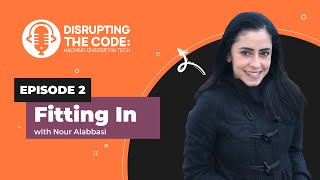
Noor Alabbasi, a technical director in Norway, fled Gaza during the war and rebuilt her career despite stigma against Palestinian and MENA candidates in European tech. She discusses how a Norwegian degree helped her résumé get noticed, why interview practices need to change, and how programs like Manara bridge the gap for Middle Eastern talent.
Chapters
We are so excited to have Noor here today to tell us not only about her work at Nuar, but also about her trajectory to get there. Hi, Noor. ¿Qué tal? How are you?
I'm so okay, thank you. Hopefully I'm so looking forward to do that.
Noor is from Gaza. She actually studied at the same university as my co-founder, Laila Abudahi, Al-Azhar University in Gaza. She now lives in Norway where she is working as a technical director and developer at NØR focusing on software development and IT operations support. She has over 10 years of experience as a consultant and software developer, and her expertise in utilizing information systems to meet the demands of modern business operations is unmatched. Nur, to start, I have to ask you about your t-shirt. For people who aren't with us here in the studio, they can't see it, so I'm going to read it. It says, "I'm a programmer." I think, "I'm a programmer, I'm a programmer." They're all crossed There is like different ways of spelling programmer and then it says, I write code. What's up with the t-shirt?
I got it like a present from my husband. It was like Christmas and the whole concept, because, you know, I'm not English native speaker. So I always do all these mistakes and I always try to explain stuff. And with Arabic, we have a big problem between saying the B and the P. So he struggled with me in the beginning when we first met what I actually do. And I spent ages and ages, and then he was like, I told him, I write code, dude. So he just get me that t-shirt after. So we always remember that story.
Oh my God, did he make the t-shirt himself or did he find this?
I, I don't know, probably they design it, but he found it. Like, he got me a lot, like, bunch of t-shirts like that, nerdy ones, just like, you know, but someone like me, oh my God, they're so lovely, I love it. So yeah, I have been wearing it for maybe 10 years.
That's awesome. So Nur, tell us about how you got to where you are today. I know it's an incredible story, probably a lot of parts to it. So start wherever you want.
Yeah, a good question. Like, as you said, I graduated from Gaza in 2008. And after that, I was working in Gaza. And after that, for a reason or another, I get outside Gaza to do some sort of conference thing. And of course, you know, how is it the situation in Palestine? Another war started and obviously the whole situation got a little bit complicated. So I ended up surrounded in a country which was Norway. It was random. It was pure coincidence. But later on, I really fell in love with that country. I get opportunity to do what I want.
Let me jump in to make sure I understand. So you were in Norway when a war started in Gaza.
Exactly.
Having to stay in Norway.
Exactly, exactly. Which was horrible at that time because imagine like having someone who is like first time— that was my first time to leave Gaza alone. Like I left Gaza before her. First time leaving Gaza? Yeah, yeah. Like I always left with my family, you know, like, you know, how is it? So that was the first time actually to dare and do something by myself. But I was lucky enough. I was with my sister who was like 2 years older than me. And when the thing, like the war started, it was horrific. You didn't— I was like more worried about my family. How is it going there? And, you know, You totally forget, but we were like, you know, in a safe area. And after things calm down, I get opportunity to do, you know, start with the language, wait a bit longer, you know what I mean? And then, um, just like, you know, coincidence happen, you start making a network, you start working, start getting excited about this and that while you are connected to everything else. But, you know, let's say it like, I really used to be open for new opportunities. So that was an opportunity, but I didn't imagine that it would last that long to say it like that. But you start and then, okay, it's just a little bit language, a little bit study, and then you meet someone and then like friends, and then you fall in love and then just life happens, basically.
Well, that is a life happening version on steroids, I've got to say. Tell us about how you decided to start studying Norwegian and what was it like learning an entirely new language?
The language thing is really interesting. Always. I think it's Like, it always gives you opportunity to understand the people better. And as I said, it was like the first time to leave Palestine. I always traveled to Arabic country, so for me it was always classic to understand what the people are talking around on the bus. But suddenly I was in a country where people talking about stuff, and I'm just out of nowhere not understanding a word. So it wasn't pure curiosity, you know, you start reading signs, you start— and I think because it wasn't English, and you always have these volunteer people who want to introduce the language, because I believe language is part of the culture. When you get to the language you understand more, you connect with people more, you start understanding. Like the same with Arabic. Like my colleagues, before I wouldn't speak Arabic in front of them because I don't want to, you know, people assume that we are angry, you know, like then you have to go through it and try to do—
wait, what do you mean? What do you mean they assume you're angry when you speak Arabic?
Yes, didn't you notice that before? Like if you went to any working place and I would start talking with my kids on the phone in Arabic, people just like, what is happening? Are you all right? Like, dudes, we're chilling. This is like a normal conversation. You don't need to worry about it. But after that, I noticed maybe I need to introduce more Arabic words, you know? Like, the only Arabic word that we actually use here is yalla. And funny enough, in English, yalla, it's mean like Arabic, let's do it. But in Norwegian, if you say yalla, that's mean that it's like done in a dodgy way, you know? Yalla way.
Oh no, it has a bad meaning. Oh, and that's such an important word in Arabic. It's one of my favorite I know, I know.
But then I discovered that what I can do is like be more like, you know, it takes a few years. Just to be fair about that, it took me a few years. But when I start to get comfortable around the people around me, then I would be open to speak Arabic in front of them. I would teach them a bit of phrases here and there. And I was thinking like, even if I'm listening to a bit of music, I would take the headphone off and try to like, this is how it sounds, you know, like it's different.
I don't think It's fair for people from the Arab world to have to feel like they're the black sheep and to have to hide your culture for so long. And it is not my experience as a Polish American when I move or I travel. It's the exact opposite. Everybody's always curious, wants to learn my language, you know, wants to hear about my culture. But when I see my Palestinian friends or even Manara alumni, when they relocate to Europe, there is this common theme of feeling like you have to hide where you're from, not sure what people will think. When they find out that you're from the Arab world, and especially Palestine, there seems to be some stigma associated with it. What's your experience of that, Nora? What do you think about it?
I, I could not agree more. I mean, it is a classic theme between all the people, and I would say it's, it's two parts. One part is like us putting this, uh, pressure on ourselves, and the other part, let's face it, it's like stereotype. To start with the Arab part, I mean, you know, like, even my story is much easier than my brother's story. My brother's name is Muhammad, and he is like bigger than me, big guy, big like beard. So let's— like, it's a stereotype of things when we are in the airport. We have to be stopped, you know, no matter what. Like, every time I travel to any place, like, you know, you look like— it's— I think this is something to do with the whole, um, wrong assumptions that is made around the whole Arab area. And I think it's, it's getting better now because a lot of people are understanding more with the connection with the internet. We, we— with that, with even that, like the latest political revolution, people start to understand that we are not one kind of people. We are different. We agree and disagree internally with each other. So I think that's the first part, that people just like, you know, they would judge you naturally. And the other part, I think it's in our heads. Like, we instantly, we don't want to have a high profile because like we have so strong opinions about our own, like, you know, like I don't know, like as a Palestinian, I really believe in our case. I'm really proactive about it, but at work I would never mention it because I don't want to have this situation where I put some other people in front of me uncomfortable talking about it. So usually I will like rarely, until someone comes to me and insists to ask me where I'm from, I wouldn't throw it on the table. While you see all the other people, Latin American people, so proud, they throw it everywhere. They wanna share it with you while I don't want to because, and in my case in Norway, I experienced that it's black and white. Either people really pro-Palestinian, love us, or not big fan of us. Just say it like that, you know? So you don't want to end up with these discussions. And I personally think if I get comfortable with people and get to a certain level where I'm actually comfortable, I am happy to share. I'm happy to make awareness, even inviting for things. I believe it's related. But until I get to this stage, I would never actually mention it.
Let's transition to the part of your professional development. Were you a software engineer when you arrived to Norway?
Yes, I had a bachelor's, as I said, from Gaza. But of course, I tried to apply for normal job first as a software developer, and I ended up nowhere. And I have one interview where a guy asked me if we have computers in Gaza. And I was like, dude, I'm having bachelor's like software engineering and you're telling me if you have computers? No, we did it all on the, on the screen. You know, I was like, and I have that sense of sarcasm. It didn't help me and I didn't get the call back anyway. And, and I ended up thinking, all right, what shall I do? You know, like as an active person, what would I do? So I ended up doing jobs, which is focusing more about like language. So I ended up doing all sorts of like, you know, working with kids, doing support here, doing their work in like different kind of jobs, but nothing to do with the IT.
What do you mean jobs have to do with language? You mean with learning Norwegian or with using—
Yes, like instead, no, no, you go to, for example, kindergarten where all the kids like 1 to 3 where they actually speak Norwegian but in the same level like me. So I would start there where I can learn and they can communicate with them. But in the same time, that was not my future. This is not what I thought for myself it's going to be. Then I decided, okay, the only way I would go to that world is to do a master from Norway, so the university name is something they can relate to. Because classic story, I was like one of the top students in Palestine, so in my head I was like, look at my num— like, grades is great, how you're not taking me?
You went to Al-Azhar University, of course they should want you, right? And they're like, what the hell is Al-Azhar University?
I know. So it's like, it was like this way, like, of like being so proud about yourself, the tiny bit of experience you had, and then they are like, what are you talking about? We cannot relate. However, I thought, okay, I do a master. One part of it is—
How did you figure that out, Noor? Because nobody was there to guide you and explain to you like, your resume is not making it past the resume screens because nobody has heard of Al-Azhar University, right?
So yes, this is what I tell to anyone traveling to another country. If you didn't have a contract, first thing, check the educational way. Because it's the hard way. You have to go, you have to apply for a place, that place is going to take months and months until they approve that your certificate is actually what it is. And you know, with the education system from a country to another country, actually you might end up doing a bit over what you needed to. However, I was lucky enough that my bachelor's got recognized as a bachelor's. So for me, it was not a question. If I wanted to do software engineering, as I really wanted to do, I have to have a 2-year master. The lucky part is that the education in Norway is for high— like, high education is for free. And that is— yes, that what made the whole story easy. Because when I say that story to all my friends all over places in the world, like, what, you didn't need to pay? No, I didn't need to pay. So for me, as long as I managed to go through the papers, prove that actually I have that bachelor I could apply like as any person in Europe or any person like basically as a— yeah, you don't need to pay anything except like tiny bit of like fees.
And looking back, do you still feel like that master's degree was primarily just to have the credential, just to have a name on your resume that people recognized? Yes, I see you nodding your head. So you don't feel like you needed it for the learning. It was literally just to get your foot in the door. You know, this, I want, yeah, the, the reason I'm asking is because at Manara, one of the main things that we're trying to do differently is people in the Middle East and Palestine and, you know, the whole region today, often they think their only step to go abroad, if that's what their dream is, is to go study first. Yeah. That there is no other open door. And we're like, well, what if the world needs your software engineering skills now and studying is gonna waste 2 years of your time and potentially waste a lot of money as well if you don't have a scholarship or free studies, right?
So.
That's why we've been connecting people to top tech companies that Google, Meta, startups, et cetera, directly out of college. But it's a lot harder for them to make that connection, to pass those interviews. And that's kind of the whole point. So absolutely get it. This is the problem that we're trying to solve, basically.
Exactly. But seriously, it's so spot on. I believe that Monara is solving a serious issue because you are taking that barrier away from both sides. Because like I think both sides, let's say the graduate in the Middle East and the companies that are here, it's just like there is like miscommunication or a bit of ignorance about each other. So when I came here, I really didn't know how to apply. I didn't know how to write a CV that can relate. In my head, which is classic for square, like Middle Eastern style, I have to have another degree and this degree has to be top store to be able to just tell them good again. Which is not even valid anymore, you know. It's— we know that software engineers and theistic people, they actually can do that without having a degree. So having that mindset, it's, it's like when I heard about Manara, I was like, oh my God, this is what I needed to hear about 10 years ago, you know. But so giving that opportunity now, I think, is just a gold opportunity. You are giving it to both sides. And again, the tech companies are having access to super, like, resources which I really believe they are dedicated. They are like willing to do the extra mile because they appreciate everything in different perspective.
Oh, absolutely. And it's always hard to find good talent. I mean, one of the whole reasons we launched Manara was not only to support people like you who should have had it 10 years ago, but also we were trying to hire people to our companies. And Laila was like, I wish I could hire my friends from Gaza. How do we connect them to these jobs? Yeah. What about your software engineering career? So you graduated from university. What was your first job and what was that like?
Yes. So I picked up like summer job when I was at the university. So after like 1 year, I started to work as a developer. I was open for both. I focused primarily on the backend. So I really, really burned for it, but at some situation I ended up needing to step in for frontend. So I I like raised my hands and I joined in and I actually worked in it. So I call myself now like a full stack developer. I do a lot of, it counts like cloud services, infrastructure, because I have the interest to do with the whole software development from A to Z. So I'm not one of the developers who doesn't like to meet with customers. I love to see how the whole story starts from like requirements, how we go through it. Deliverable, like, to small milestones, and then we start working at, you know, doing the Scrum style, and then after that deliver. So I was lucky all the time to work in, in, in like teams which everyone is heard and seen. Since then, I don't think like, yeah, I took different direction, but all the time I'm doing programming, which I, I'm planning to continue doing it. I took like recently a master in management. But after I figured that, I really enjoy coding. So I think I'm going to start coding for a few years still.
And what was it like in your very first job? Yes.
A good question. Like, just to give a feedback, I don't know how is it in the US, but in Norway, we don't have a lot of female developers. So when I studied, I was one out of three girls in the whole class. The other girl was Iranian. And one Norwegian girl who dropped out.
Oh my God.
So my first—
versus in Palestine, what was it like at Al-Azhar?
How? 60% girls, 60% girls, 40% boys. Is no doubt about it, you know. How is it? No, we had girls more than boys, and we had the girls actually. I was surprised, I was surprised. And you know, with, with my little head, I was like Oh my God, girls can drive the trucks outside and tractor and they don't want to do it. It's like, because with, with, with, with, like, equality with the gender roles, it's amazing here. Women do everything. I mean, the prime minister in Norway is woman. Like, all the top leaders in all political parties are women. Like, they are really working hard for equality, like, in all perspective except it. When it comes to it, for some reason, we don't have enough girls. Just say it like that.
Do you know why? Are there any hypotheses?
I think it's something to do with the fact that when they are at school, it's like the way they were selling, like, the it thing is like it's more maths, it's boring. I think some stereotype about the girls being nerdy with the glasses and she's going to be left behind. You know what I mean? Like, you want to be the cool girl who is not that girl, you know? And I think it's changing. Yeah, but is it changing? Is it changing? And now they are doing a lot of programs which I really burn for, and I'm absolutely all in for it, to try to introduce girls in early ages that it's not about maths and science. It could be more about logic. It could be easy. Like, you know, I think it's more— yeah, but it's interestingly to see—
wait, wait, wait a minute. Even if it is about math and science, that's great for girls too. This is the thing that actually struck me when I went to Gaza and is Because the whole reason that we launched Monara is that I grew up with stigma around math and science in the United States, feeling like boys were better. I was getting fricking A's in my college, in my classes. I took, I took, um, uh, multivariable calculus in university when I was in high school still. And I still had a chip on my shoulder around my ability to do math and science because I thought I wasn't as good as my brother or the boys, right? Then I arrived to Gaza and I'm talking to women about the stigma that we have in the West around women and science and math. And every single person was like you, where they're like, what are you talking about? Women are better at these fields. We're 60% of these classes. Our moms are all physics teachers, right? Um, and so I just want to say women can do math and science. They can be really good at that and gorgeous, you know, and attractive and everything else that supposedly a woman is supposed to be.
I know, I know, I really, I don't get it. And exactly as you said, because I'm coming from a culture where like women do it like without even like sweating it. I never felt unique in Palestine. Everyone was like in my class good girls with a top score. But when I came to Norway, I was like, okay, I'm gold. Like, you know, it's here, not a lot of girls who are doing that. And yeah, so I think that actually helped. So That story led us to the original story. So every time I joined a team, it would be 9 guys and me. And no stereotype, but it guys are, it used to be, they are not very social. They don't want to start this conversation around lunch. So I always convinced myself.
I'm very okay with that stereotype actually. I know we usually try not to stereotype, but that unfortunately really is the majority. And it does make it hard as the first woman on a team to make friends. And I, Yes, totally.
But to be fair, like, now it's changing again. Like, now actually, like, and I'm gonna give that, like, for my colleagues, they actually, it guys are changing. They creating, like, a new image. But I always had this, like, having 9, a team of 9 guys, it just gives you always the support because they try to be nice anyway.
I am thrilled to hear that was the case because I don't know that that's always the case. So you always felt completely comfortable as the only woman on all of these engineers? It sounds multiple engineering teams where you were the first woman or only woman. Yeah, totally comfortable with it.
I mean, after that, later on, I managed to get to a team where I have like 2 girls, 1 tester, 1 developer, and that was the dream team. Everyone was talking about it. We have like 3 girls in the team and they were super role models. They were like the girls that show you how it's done. You just do, you stand up, you start. And this is the interesting part, because when you find girls in it, they're usually taking leading roles and taking their place. And they are willing to, like, you know, take in both sides. So I think I was lucky enough to have all these good role models in front of me that it just led me to, yeah, getting where I am.
Let's touch base a little bit on the actual work as a software engineer. What were your biggest surprises out of college? Did you just immediately know everything that you needed to do as a software engineer? Was your university education enough? And if not, What's your advice, I guess, for somebody who's just starting in a software engineering role?
I would say university has nothing to do with the real work, nothing, just prepare you to learn fast, really. But if you finish university and you think that you're ready to, I mean, you have to get a bit of self-confidence that you spend all these years in university, then you have the toolset that you need, but you don't need to be terrified when you start a new chapter. And actually there's a lot of things to learn. It just, I think it's overwhelming mentally, but step by step you can do it. And I think the expectations, as long as you're clear when you need help, you can just ask, when you're approaching other people, when you try to divide the big like bunch into smaller things and try to take it step by step. And I always think like try to ask and don't like, I think this transparency, if you are transparent all the time about how you feel, where you are, you need help or you need more tasks to do, it's the way to go.
Can you give an example of that from your own experience? I actually can think of one.
Yeah, go ahead.
It's actually a Manara alum. It just popped to my mind all of a sudden when I heard you say that. She moved to Sweden, so very close to you. She moved from Morocco, and the first time she was given a task, she was just like, oh God, okay. I don't know this programming language and I have to deliver this code in a language that I don't even know. I'm gonna just stay up all night for multiple nights to get my sprint tasks done.
Right?
And, uh, she saw another colleague a couple weeks later who said, oh, okay, I need to do this. Well, we first need to build in a sprint for me to learn the language and then build in a sprint for me to develop the task. And so basically putting learning into the plan. As a part of your job, as opposed to something that you have to do during your nights and weekends. It's almost like a way of asking for help, right?
It's amazing. But that is a very, very good thing actually. And I always say like, when you are in an interview, that is something you should ask about. You should ask, how are you going to get me on board? How are you going to get me to know the system, understand what you're doing and the details, how you do things? And I think like the earlier you ask about this stuff, the better it is for you to have a bit more of like internally, because this is how things are going to go. And when you give such questions like you, if you think nothing's ahead, it's just giving the workforce a great idea that you're actually ready to rock and roll, but you need to have the tools that you need. And usually like 90% of the times that I have been involved, they give you that period to learn, you know. But if you just, no, no, no, I get it. And then you're pressuring yourself. And this is something I think to do like we do always pressure ourselves to be trying to perform better. And this is, I think, what we need, just to be more open about it. Don't. Just say where you are, what you need, and they will just work around it, you know?
And you're always going to be learning. You're always going to walk into a job where you don't know everything. I was talking to a Monada mentor, her name is Jan Chong, who said that at their startup, they recently hired somebody who arrived and was trying to build code and launch it, but the DevOps process was broken and they didn't have a DevOps engineer at the time or something. It was his first week on the job and she was like, great, welcome to the startup. Figure out how to fix it. Not your job, not what we hired you for, but you know, figure it out. And everyone's always figuring things out and Googling it, you know, putting things together.
Yeah. And now we have the copilot, you know, now we have someone to write with code. It's no problem. But I think this is what I always discuss. Yes, this is what I think is really important. I think it's more— the more flexible we are, the more— it's something to do with the mindset. I think this is more important, that you try to get to a situation, all right, this is what I have, how I'm gonna deal with it. It's better than just to work so hard and you have less energy, mental energy, that you cannot cope with the other things. You stay up all night and in the morning in the meeting you have a breakdown because you got so much overwhelming. Well, save that energy in the stand-up meeting, try to mention that. Maybe we need to have that, maybe. So I think it's more about— but again, this is what we started our talk about— we need to be comfortable. You have to have this safety net in the working place that people dare to say that, because this is important. I think this is something to do with the companies, it's nothing to do with the people applying for the jobs. We have to give that space people to actually be able to say that.
So how should companies do that?
I think definitely like safety net, like safety by doing it, like by making people comfortable, by involving people instead of like when we are planning a sprint, exactly as you said, it shouldn't be like, oh, this is what we have to do. Start with a background. How is it going around the room? How are we feeling? How, where do you think you can produce more? Where are you comfortable here? Do we need to do pair programming? Do we need to have two people helping each other here? Do you think you wanna shadow people in the beginning? I mean, we have to ask all these questions and people have right to say yes or no. So I believe that try to ask all the time, then expect people to be proactive and come to you. And this is what I do, like, you know, with our teams. I don't expect everyone there to raise their hand and come to you and tell you, it's your job as a leader to actually encourage people, like, by asking this, by, I don't know, be nice, like genuinely nice, and be easy to talk to so they can actually approach you, you know.
Yeah, and by offering things, because they don't know what they can ask for. They can't be proactive when they don't know what the options are, right? So it's almost like giving them a menu. This is some things you should be asking for. Let me expose you to this one. Let me expose you to this one. Like you're going to have pair programming this week. You're going to have a week to learn this technology this week. It's going to be built into the sprint, a few other things like that. And now you have the whole slew of things that you know that you can ask for. So now it's your job to start asking.
Absolutely. And to be vulnerable, it's really important to lead by giving example. Like if you're standing there assuming that I can do all that, this is a piece of cake. I usually finish my feature in 2 minutes. You know, I mean, it's just like if you don't show this weakness, like, okay, I'm really good with that back end. I always say it, but with the front end, I would spend longer time than other people just to try to show that you're not good in everything. Otherwise you're not giving a role model. And if you're a superhero at work, you're just making everyone else's life really hard. So just to try to be, I don't know, yourself, like show that actually showing weakness is quite a good thing.
Love it. Love it. What, um, what do you think is the potential for ChatGPT to help people, junior engineers with their onboarding into their first ever roles? Like if I were a junior engineer today, how might my life be different becoming a software engineer in my first role than it might've been 10 years ago when you were getting started?
I think it's really interesting times. I think it's really, really going to be interesting to see how we're going to utilize it. I, believe that, um, to start with, it's, it's, it's gonna be a challenging because with ChatGPT you get a lot of answers, but you need to know how to ask. And this is one of the questions, the things that we talked about in the beginning. You don't know what to ask and you need to have a bit of surroundings. I, I would say the company, we should definitely utilize it in a good way, but they have to keep in mind that as a new starter, when you start a new job, you don't know what to ask. You don't know what is like you need to feel the space. So I really hope that the introduction to people into new jobs is still involve people involved. I think that few months in the beginning, you still need to have a person who will show you, explain to you, this is the scope of it, this is how much is it. And after the people are comfortable enough understanding the whole picture, then they can go ahead and start using Copilot and do that. However, as a new starter, I would definitely invite all the graduates Go for it, use it. It's like, use it as your assistant for writing email description, explain things to me, but at the same time, be proud about using it. Don't have it hidden in your background and just look like you're trying to have it on and off. I think this is, this is where it goes a bit dodgy. Like, as long as you're open about it, use it because I use it. Everyone use it now. It's the one who doesn't use it are missing out. Just say it like that. But it's more the question, how can we utilize it in a way that we still do the thinking ourselves and just make us help and always question the feedbacks, you know, when it comes to, I mean, but with the coding is, I must say, it's awesome because like you get like the error message that usually you would be struggling with for days and hours. You just get like hints how it's gonna, oh, what about that? Did you try that? Did you try that? So I found it like sort of like a soul, like someone is just talking to you. So I think definitely they should use it, but at the same time be open about it. Don't take credit for anything.
Yeah, that's so awesome. That reminds me of the rubber duck system. Have you heard of the rubber duck thing? This is one of our engineers at Monara, Thiago Carvalho. He's from Brazil, but he worked in Berlin for many years. He's the one who taught me the rubber duck, which is when you're getting stuck, like you have a bug or, you know, you're— something's not working and you don't know how to fix it. Sometimes you just need somebody else to talk to about it. Like, you need— so he would sometimes just bring a rubber duck and just talk to the rubber duck, like, what could possibly be wrong? I tried this, I tried that. For me, it's always like I call the tech lead. Of course, as soon as the tech lead shows up, I figured out the answer, right? Yes. So now instead of calling the tech lead, I could just call ChatGPT.
I could not relate more. I actually do that. Like usually I always start by asking a colleague to come in and help me. And by the time I finished explaining the thing from A to Z, you figured it out yourself, but sometimes it helps you to say it loud. So I hope that not all of us would use too much ChatGPT and we miss this communication between the developers, because I think this is something really nice.
That's true too, right? Because when you're figuring it out yourself through saying it out loud, uh, it's, uh, first of all, it makes you proud of having figured it out, right? It's probably exercising a part of your brain.
Yeah.
Which is important so we don't lose those muscles. Uh, but also, like you said, that might create a sense of connection with another coworker, a sense of vulnerability so that they can ask questions.
Absolutely.
Or it might spark some idea for them about something they were working on that they wouldn't have thought of otherwise.
Yes. And with a colleague, he's not just answering that question. It's usually some nice tip that it's gonna give you a general guidance in approaching the whole problem in different perspective while ChatGPT give you the answer that you needed for that specific things. But usually always asking question, like especially between developers, you end up having some new information, new website, new tool, a new perspective of things. So, um, yeah, it's just Let's find the balance between still asking each other and nagging each other on themes and getting ChatGPT writing all the emails so it looks like good English.
When people from the Middle East and North Africa get hired at European companies, often they're either starting as a junior engineer or they might have 5, 7, 8 years of experience, but it's in a very different context. So at companies that haven't had the opportunity to scale as much because there just aren't so many jobs in the region? You know, we don't have a— we now have enrami, you know, there's a couple startups that are growing, Moon, uh, Souk of course, which was acquired by Amazon. Why should companies in Europe be seeking out this talent?
It's really good question, and I think it's again, it's misconception. Like, regardless the fact that people worked for 8 years within software technology, I, I, I, I think like they still come in with pure knowledge and it's a pure way of practicing things. It could be like, this space is different kind of things. We have startup, we have scale-up, and we have well-established companies. But in the bottom of it, we are talking about software development within the teams. The same mindset, the same way of doing it, the same tool and attitudes. So I think like I experienced working for like well-established companies and I have been in startup and I now I'm jumping into scale-up. So I experienced it. It's just different cups, but the water inside is the same. Really, the whole core of it is the same. So I think if you are a good software engineer who adapts to things really quickly and you have that flexibility and adaptability, scalability, possibility, I think you will be an addition. And stamping things like what is the kind of organization that you're coming from, I think it's just like I don't know, labeling it. It's just like old school. So usually in the interviews, I would just dig into more, give me stories. How did you fix that? How did you undo that? How did you show— like, I think that you should think more about the, um, like this kind of things, being flexible and all that, better than looking to more labels we were putting ourselves and other people in.
I love what you just said about interviews because So often for these, for people who are coming from backgrounds like yours, the interview skills is a skill. It's a specific expectation around how to answer questions and how to practice that people coming from someplace like Gaza might not know, right? What advice do you have for an interviewer who's interviewing somebody who's coming from a background like that?
I think the first thing, try to make people really comfortable because I think the first thing people are usually nervous and when we are nervous, we miss half of ourselves. Like, I noticed 5 seconds ago I stumbled, I get zundado, and I'm just like, you know, you have to keep in consideration that people speak— this is not a first language, so people spend tiny bit of seconds actually like translating it. So you have to give them the space, the time, the comfort. We are not comfortable with the silence, you know, like if in the Middle East we are not comfortable with it. Like, we always have to fill the space, but you can indicate it in a very clear way. Take your time, it's okay to think. And I always tell it to mentor, like, to the others in Manara, you can say, let me think about it, and take 10 seconds. It's your right to collect your thoughts and just— and to be honest with you, this is something we never used, um, to say to each other in the Middle East. You have to answer really quickly, and you notice that most of us were speaking quickly, we stumble, but we have to continue producing some sort of text instead of just stopping. We then get it just digested, you know, and before you continue that. So I would say for interviewers, please give them time. Try to indicate it very clearly that, take your time, I'm here, and make them feel comfortable.
Yeah, and even saying something like, I know English is not your first language, if you're having trouble finding a word just stumble through it. Like, I'm not here to grade your English. I would just want to understand your software engineering background. It's okay if we have to repeat a question a few times.
Absolutely. That is wicked. If you say that, people would be comfortable. Better than like other comments which I used to hear, and I still hear it. Oh, your English is so good. Where did you learn it? I know it's not. I know it's not. And let's, let's cut this crap and get to the point. I don't like like Just like, you know, I like sometimes like talk with them as like kids. No, if you say that, I know that English is not your first language and you're trying your best, and feel free to stumble into what to give me. What does it mean? Than to be stuck into that word. I think this is the best thing you can do when it comes to the language part. And the other part, just give them a space and try to dig in the juice, because don't expect them to tell you about their free time, because the free time in the Middle East is just like free time. It's just free time. While here, the free time tells you something about your personality. What you do in your free time shows, like, you know, if you do some sort of, I don't know, sport or whatever, just show your commitment, consistency. It shows you different things. So I think we just need to be open. But in the interviews, try to give and take. It's— if you want them to come with something personal, it doesn't help if you're sitting behind and you're just so formal. Start by saying something personal yourself, you know, that would break the ice.
Absolutely. And, and just realize that people haven't learned to sell themselves, that the other people you're comparing them against are people who've been practicing interviewing with family members, with other, you know, people in their communities. And this is a person who is showing up and doesn't even know what about their background is going to excite you. So they don't know what to share. So you might need to do a little bit more digging. Because otherwise you're gonna miss a gem in the dust. It's like Laila, when she was applying to jobs, first of all, for the networking part, she had to run around at conferences and ask random people like, oh, you work at Google, can you refer me? Just to make sure that her resume wouldn't get lost. Then she would show up to the interviews and she was just like a deer in the headlights, so she bombed a lot of them. And then when she got hired, she got promoted faster than anybody else, which I'm sure is true for you and for so many people that you work with as well. Like you said, that dream team of women, right? You need to make the investment if you're going to have a chance to have that dream team. What inspired you, Noor, to join Manara? And how would you describe it to people who don't know what Manara is?
What inspired me? I mean, as I say, it's a dream project. I was like, God, these guys are so awesome. As I said, I was always involved in into this program escalating, like, female. I want more female into the it, and I always like try to do stuff in Norway. And when I read about Manara, I was like, oh my God, this is even bigger. This is like the whole thing is like— I love it, it's amazing, it's motivation, it's inspiring. It's like, seriously, I think you get like, um, I felt like, why didn't I think about that? I went through that experience, you know what I mean? Like, this is my first thought, like, I love these girls, I don't know them, But it's just like wicked project. So for the—
by the way, we are recruiting to our team. You know, we do have a role for an engineer. Just saying, our team is remote around the world.
I mean, I mean, I always talk about Manara. I talked about Manara in my job interviews, like I'm applying for new jobs and I was telling them about that wicked thing. So for the people who doesn't know about Manara, so Manara is an awesome opportunity for both sides. They're giving opportunities for super ambitious, and honestly, you choose the top of the class. And I'm coming from the Middle East, and I can tell you that you are choosing like the top of the top. Like the process that you're going through, you're finding the right— you're not looking only for like grades, you're looking for, um, personalities. You're looking for people are ambitious, looking forward, engaged, Like, I never done an interview in Manara without being inspired and get like, ting-pong stars into my eyes, like, oh my God, these people are just so awesome. And in the other hand, I know in tech landscape, we need people, we need more diverse people, we need more female to start with. And I think again, that the thing with diversity, I think it's nothing to do to be nice, it's profitable, it's good. For business. It's proven, it shows everywhere. We're seeing the teams that is diverse is producing better, get into more ideas. They are not stumbling in the same, like, you know, you're not going around the same circle. You are opening more and more circles. You get different attitudes, you get the team spirit. Don't let me start it. I mean, it's awesome. Like, it's not how you cannot fall in love with Manara program. Of course, I, when I first read it, I was like, I'm going to apply and I'm going to hope that you will take me. And even for mentors, we have to go through steps, which I like. You didn't make it like, oh, just come and join us. Like you, I think putting this standard in everything with the mentoring, with the coaching, with the English speaking, all that is just making it more high quality in all perspectives.
Yeah, that's so amazing. And how did you hear about us?
Good question. I don't know. I don't really remember. It must be LinkedIn. It must be via, via, via And funny enough, before I joined Monara, I didn't have any Arabs on my LinkedIn. I don't know why they were all hidden talent. I never matched anyone. And then after I joined Monara, and I mean, the community is not only between the students, the community that you created even for the mentors. Like, I didn't know that we have a lot of female engineers in all these, like, you know, big tech companies. Like, you know, it's just like, it's that, like, it's, it's inspiring, it's motivating, it makes you connect with people. Like, but it's like, this is exactly what I love about Manara. It's just like, it's amazing community. This is maybe the first, second time for you and me to meet, but we can hang around all evening and talk for now.
Oh God, I wish I could. And you know what I mean?
Like, this, like, natural bond that come with other people, and you feel like you connect, though you don't really know anything about their stories and the details about it, but you have so much things in common, and ability to agree and disagree. I think that's great. And this is what makes Manara a community more than, uh, like, you know, organization or a company. It's just a community and makes everyone happy because it gives before it takes, which I love. And everyone there, apply for Manara.
No, I think it really goes back to what you said at the beginning around how important it is to feel safe and We spend so many, you know, diverse people, so to say, in software engineering spend their careers feeling like they're solo or, you know, there's, they occasionally maybe find one other person that they can relate to and to suddenly find a community of people who feel like home, you feel like you belong, even if they're not all at your company, it just gives you a sense of Yeah, a sense of belonging that I think is grounding and motivating. Thank you so much, Nur, for joining us today. I am so inspired. Have a wonderful rest of your day and enjoy the summer and the sun.
Yes, thank you so much. It was super pleasure talking to you. Really enjoyed it.
Thank you for listening to this episode of Disrupting the Code podcast. You can listen to us on Spotify or wherever you prefer to listen to your podcasts. You can also watch our full episodes on the Manara channel on YouTube. Thanks again and tune in soon for the next episode.