Can You Play Guitar With Arthritis - Tips For Older Learners
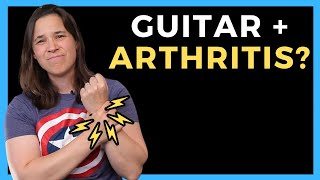
Lauren Bateman (YouTube creator) addresses older adults with hand arthritis who want to learn guitar. She emphasizes easing into playing by using simplified chord shapes (one- and two-finger versions instead of standard three- or four-finger chords), warming up hands, avoiding playing through pain, and adapting technique (thumb/index strumming) or gear (thumb-mounted Black Mountain pick, lighter hollow-body/electric-style guitars such as the PRS SE Hollow Body II piezo). She also promotes her seven-level guitar system tailored to older learners.
Chapters
If you're watching this video, you might be an older adult with some arthritis in your hands. And you're wondering, will I ever be able to play the guitar? I know arthritis can be very painful. My dad suffers from rheumatoid arthritis and I know he has his good days and he has his bad days. But I do have some good news for you. I do specialize in working with older adults, and a lot of my students do suffer with various forms of arthritis. And I think a key thing when you are an older adult, you have arthritis or not, is to really ease your way into the guitar playing. So I see a lot of teachers, when they teach beginner chords, they a lot of times teach chords that use three or four fingers at a time. Now, even if you don't have arthritis, that is a very difficult thing to do in the beginning because your hands is a whole new mechanic and you can't really move your hands as well. Okay? And it'd be like me teaching you to ride a bike for the first time. It's going to be clumsy, it's going to be awkward. So what I like to do with my students is I like to start by building up hand dexterity and strength, which again, for older adults is really important. And a big thing with arthritis is just getting the hands moving, getting the fluid inside the joints moving and warming up. So what I like to do with students is we'll start out with very, very simple chords. So instead of giving you like a three fingered C chord, I'll give you a two fingered C chord. You could even play a one fingered C chord if you needed an even easier version. But what I'll do is instead of playing your C chord like this, because this third finger is, even if someone has a healthy hand, this is quite a stretch. And if you're not used to doing that, it can be very painful and it can be very hard. And I have a lot of students who never graduate to this three finger C chord. It is literally just too painful for them to play. But you know what, they have fun playing music using the two finger chords. So they'll use a two fingered C chord, a two finger E minor chord, a two fingered D chord, and I show them a two finger G chord, okay? And they may never graduate from that. But I've had a number of students say, you know, I never thought I was going to be able to do this because it was too painful. And you actually gave me an option to that made it accessible to me. And sometimes, you know, I have A lot of students in my seven level guitar system in my private community, they're always asking me for suggestions. And I had a student who actually recommended this. I knew nothing about these picks. This is called a Black Mountain pick. This is their super light. So it's very good for strumming. And you know, I have a lot of students, they have arthritis in their thumb, all right? And it can make it very hard to hold on to a guitar pick. So I've had a lot of students are like, lauren, can I strum using just my thumb because it hurts? The answer is yes. But the great thing about a pick is you'll get a lot more sound and percussion out of it over time. So I had a student who recommended these great picks. They're called Black Mountain picks. And you just put it over your thumb, it's like a spring. And you will never drop the pick. Okay? You don't have to. I'm trying to fling this thing off and it is not falling off. So you do not have to hold on to the pick tightly. All right? And for a lot of people, this is enough.
That's enough for some people to be like, oh my God, I can actually use a pick. Because when you have arthritis in your thumb, it can be very hard to press and hold the pick. And I have a number of students, they're like, I can't hold the pick, it's too painful and it falls out of my hand. I say, hey, give this a try. And if that doesn't work, you can always just strum with the flesh of your fingers, okay? I always tell people, you can strum down with your thumb and then up with your index finger, down with your thumb, up with your index finger. And if that works for you, great. You may never use a pick on the guitar. And that's totally fine. I always tell students, don't focus on what you can't do. Do on the guitar, focus on what you can do. And you know, maybe you're going to be a guitar player that doesn't play chords. I have one student, she had very bad arthritis and we could never play bar chords. They were just, they were too painful for her. Fortunately, she could play open chords. And if we had a song with a bar chord, we would just use an easy fix to a bar chord. So instead of playing an F bar chord, we would play an F major 7 chord, alright? Or we played some sort of like open B minor chord. Okay? So this way she didn't have to bar because it was, it was too painful. With her arthritis, she just couldn't do it. I said, it's not the end of the world. We can always fix it. We can always use a capo to try and get rid of bar chords where needed. So it just goes to show you, you know, if you are someone that suffers from arthritis and you want to learn the guitar, it's totally possible. You just have to find a teacher that's willing to work with you, that's willing to go outside of the norm. You know, everyone yells at me on YouTube, like, I chord has to be played this way. And it's like, a C chord does not have to be played this way. There are many, many different ways to play a C chord on the guitar. Traditionally, when we teach beginners, yes, we teach them the C chord this way. We teach them the G chord like this, or the G chord with the pinky, traditionally. But what happens when I have a student who doesn't have a ring finger? I've had students, like, I'm missing my index finger. What do I do? And it's like, okay, well, yeah, no, you're not going to play your C chord like this because you don't have an index finger. You might have to play it like this. And it's going to be really awkward in the beginning. But because you don't have access to this finger, this is how you're going to train your hand to play the guitar. So whenever you're learning, just keep an open mind that, you know, there's a possibility that there is a different way to do this. There might be an easier way to do this. And if you ever have pain while playing the guitar, stop. You never, never want to play through pain because that's just going to aggravate the arthritis. That's going to aggravate the inflammation. You know, I had a lot of students who said something that was very helpful, was warming up their hands with, like, a hand warmer, you know, getting a heating pad and putting their hands and warming up, even just getting the hands moving, doing this before you play. Because I know if you're having a bad day, your hands can be really stiff and feel really, really tight. You know, like I said, my dad has arthritis, and sometimes he can barely move his hands. Sometimes he can barely get out of bed. So I know you can have good days, and I know you can have bad days. So just even sometimes doing this and getting the blood flow going and getting the joints moving before you even touch the guitar can be super helpful for warming up and getting yourself prepared and don't jump into the hard things right away. Okay? So if you're just getting started, learn a one fingered C chord, then a two fingered C chord and then a three fingered C chord. Okay? Don't jump into this right away. It's going to be too hard, it's going to be frustrating and you're going to want to give up and throw the guitar back in the closet. And that's not what we want. Our goal as teachers is to help you accomplish your goals with, you know, whatever you can do. Okay. Again, like I said, you might not play chords, but maybe you're going to play lead guitar instead. Okay. Because maybe you can just play single notes and that's all you're going to be able to do. And there's nothing wrong with that. You could play. Play melody lines to songs. Okay. I have a number of different lessons on the pentatonic scale and maybe that's the route you're going to go. Maybe you're going to go instead of becoming the strumming guitar player, maybe you're going to become the lead guitar player. And there's nothing wrong with that. Another tip for older adults is the acoustic guitar is much harder to play in terms of strength needed. Something like this, this PRS hollow body here. So this is a hollow body guitar. Okay. So it's hollow inside and the string layout is more of an electric guitar. So the strings are a little bit thinner, they're easy to press. And electric guitars in general do tend to be much easier from a strength positioning to play. So if you're someone who really, really wants to play guitar and you're an older learner, maybe get something that's more of a, an electric guitar style. Okay. You don't have to get a full, what we call a solid body electric. Where it's full, it's wood all inside. Because even for me, I find solid body electric guitars very heavy and they hurt my shoulder a lot. Okay. I'm a very small person. I'm only about five' four, so I do not like a heavy Les Paul style guitar. I would much rather get something like this that's hollow. You can see there's an opening here and I can put my hand inside so it's hollow, so it has a lot less weight. So this hollow body guitar isn't that much heavier than my acoustic. And the great thing about these, so this is a special model from PRS that has a special pickup that you can play it more like an acoustic, which is nice. So this is the SE Hollow body two, the piezo version. So there's two inputs, all right? One is more for if you want those electric guitar sounds. The other input is more if you want to sound like an acoustic. So it just goes to show you there are options out there for different guitars that can actually make things easier for you to play. So if you're someone that suffers from arthritis or an older learner, there is hope. Do not give up. And if you're looking for a system that is designed specifically with older adults in mind, I highly recommend you, you go check out my seven level guitar system. We take things from absolute beginner to kind of that late beginner phase and we take it step by step. All right? We're not going to throw you into really hard and difficult things at first. I really work on getting finger dexterity, the coordination down because you can't get faster chord changes if your hands are not fast or your fingers aren't nimble. So we really need to work and focus on that in the beginning and, and that's what I do in my course and I teach you all the skills you need to play the songs that you know and love. So if you're an older adult and you're looking for a system, a step by step system, YouTube's great, but you're kind of all over the place here. Okay, I love YouTube, but if you want things in a step by step order, I highly recommend you go check out my seven level guitar system. I'll put a link in the description below and I hope to see you in a lesson video real soon.










