Finance Book Contrary to EVERYTHING You've Been Told
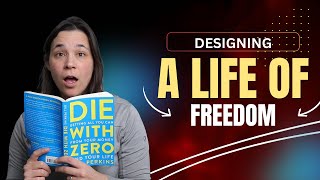
Lauren Bateman breaks down Bill Perkins' "Die with Zero," which argues you should spend more on experiences in your 30s and 40s when you're physically able, not save everything for retirement. She shares her own regrets about missing travel while building a business and health problems that started in her late 30s, plus her upcoming 15-day Spain trip.
Chapters
I am now of the opinion that you should be aiming to die with zero because most of us, and I was like this too, are trying to save for a secure tomorrow. And while that's a wonderful thing, so many of us forget to live right now. Okay? And I know this personally as someone growing a business. We spend so much time growing our businesses. In my 20s, I missed out on so much family time. We didn't go on vacation for a very long time because we didn't have the money to. I gave up on a lot of things in my twenties in the pursuit of trying to build a business. But now, you know that I'm in my 40s, you know, my back's hurting. When I wake up in the morning, I'm like, did I miss some opportunities in my 20s and 30s to do things that are starting to slowly become unaccessible to me in my 40s? Now? I know what you're thinking. It's the traditional retirement advice that, you know, Lauren, nobody knows how long they're going to live. Nobody knows how much money they need to live. So how can you die with zero? And this is a cool thing about the book, you know, it's. It's probably not something you want to read when you're in your 70s and 80s. I think it's a very, very great book for people to read in their 30s, 20s, 30s, 40s, even 50s. And it gives you some advice that, listen, all of us have a limited time here on earth. None of us know how long we're going to be here. None of us know how long we're going to live. But there's so many people who are saving for tomorrow, saving for tomorrow. And I found an interesting fact in this book. He said, you know, kind of your prime years are in your 20s, up until about age 35. And I can confirm that, being, you know, almost 41 now, you know, things are starting to get sore. It's easier for me to injure myself. I'm already starting to not do things that I used to do when I was younger. Now there's many 40 year olds that go skiing. I just don't want to go skiing anymore because I don't want to tear, you know, an ACL or something or crash into a tree. I skied for years and years when I was a kid, snowboarded. But today there is a big risk of me doing something like that if I fall and I break my arm. My living is based on me being able to play a guitar. So I don't want to break an arm, that could be very, very bad for me. I also know if I break my arm in my 40s, I broke my arm in third grade, I'm not going to heal as fast in my 40s as I did when I was a kid. Okay? So we have to keep those things in mind. And I think the important thing about die with zero is like, he says, he's like, he's not emphasizing dying with absolute zero. None of us can predict to the perfect T how much money we need, but it's the emphasis on living today. And that's something that really hits home for me. Okay? Especially, you know, I've been saving since I was 23. I'm like, I'm going to save for retirement, save for retirement. You know, I don't want to be working for the rest of my life. But we have that hard thing of, of coming to a determination of how much is enough. Right? And for me, experiences, now that I'm 40, experiences are way more valuable to me than making money. And I'm very fortunate to say, you know, I am in a position where I've made enough money that I can maybe pull back on the savings. Because I was still saving a lot before I read this book. I was still saving a lot. And I decided, you know what, I'm actually gonna pull back on the savings. And. And I am going to start putting more money into experiences. And we started doing that at the end of the curve. We really started doing more of that when I was 35. We went by honeymoon. We spent a month in Italy for our honeymoon. Most people don't go away for a month. But I think an important thing and something that I like to preach, the business owners that I work with, is you want to create a business that works around your lifestyle. And I think that's what this book is good at getting at, is saying, Listen, a healthy 35 year old or a healthy 45 year old is always going to be healthier than a healthier 55 year old, okay? Or healthy 65 year old, okay? You can just do more when you're younger than you can when you're older. So he's like, there's certain experiences like you want to go climb a giant mountain or you want to go climb Everest. It's probably going to be a little bit easier in your 20s and 30s versus doing it in your 60s and 70s. And I know what you're saying, like, Lauren, there's people, there's outliers who do this stuff all the time. And that's exactly what they are. They're outliers. On average, people are declining in health once they get to their late 30s, late 40s. All right, you just don't have as much muscle as you used to. I still go to the gym and some people are like, you know, I'm stronger than I was in my 20s. And it's like, yeah, maybe you are, but your body's not recovering as quickly as you were in your twenties. And give you an example here. Last year, it's almost been a full year, I was working out with my trainer and I slipped and I fell and I landed on my hip. I still have back pain from that. And I actually, it got so bad to a point where I actually cried because I thought I wasn't going to be able to do the things that I love to do, which is, which is hiking. You know, I love going over to Europe and hiking and backpacking is a big part of what we do. It was really difficult for me to even walk on uneven terrain. So I was like, crap. I was like, is this it? Am I relegated to not being able to do the activities that I used to do? So that was kind of a wake up call for me for this year. And I think this book really echoed that, which is the fact that, yes, you know, we always want to save for the future, but there are things we can buy to prepare ourselves for the future. You know, you can get an annuity, you can get long term care. I mean, nobody knows how long they're going to live. And an interesting thing he talked about in the book, he said people in their 60s like, they saved, they retire. And he says the crazy thing is that most of those people have more money in their 70s than they did in their 60s. And those people in their 80s had more money than they did in their 70s, which means they're not even spending the money later in life. And you know, there's always that concern of, you know, later in life those medical costs are going to go up. Listen, if you have to go into a long term care, you could save up millions of dollars and it'll be gone like that, okay? And that's where something like probably a long term care insurance becomes more important, becomes more valuable. And I thought a great thing he talked about in here is, is really you can buy insurance for anything. There really is. It just depends on, you know, how much money you want to spend and how you want to, to insure yourself. But something he also talked about, you know, if you are someone that's older and you have children. You know, I don't have children. Um, I made that decision because, you know, I wanted to live my life for myself. But if you're someone with children, he has a whole chapter on that. For parents, saying, you know, when your children need the money is not usually when they inherit the money. So for people today, a lot of us are living longer. There's a really good chance that I could live into my 80s or 90s, especially since I have some longevity, especially on my mother's side. There's a lot of people who lived into their, their 80s and 90s. And my great aunt, I think she's 96 or 97. So we have some longevity on my mother's side. And the thing is, if my mom, say my mom dies in her 90s, I'm going to be in my 60s by the time she passes away. I'm already probably retired at that point. I've already made my life and done things. So the important thing that my parents did to help me is they technically have already given me my inheritance. They didn't really put it that way, but he talks about that in the book. He's like, give your kids their inheritance now when it's going to help them versus when they need it later. So how did my parents give me my inheritance early? Well, I went to school, I went to college, and I think I graduated with about $21,000 in student loan debt, which, you know, compared to some people is relatively little. I did get some scholarships. I was an RA to try and reduce the cost. I got free board to be an ra. But the bottom line is, you know, my parents paid off my debt. So I left college with very, very little debt, which allowed me to grow right away versus if my parents gave me $21,000 right now, if, you know, would I find something to do with it? Obviously, yes, I would. But not going to say no to $21,000. But the $21,000 had a bigger impact on me at 22 than it would now. $21,000 right now for me wouldn't make a huge impact in my life. I don't have a lot of debt. I've always been good at not keeping a lot of debt unless it was like real estate or business debt. But for me, it was game changing because I know a lot of friends who are still in their 40s who are paying their student debt and some of them had a lot more student. Student that than I do. And it is a burden. So my parents helped me out then to release that burden. And I want you to keep that in mind. So if you have children, think about how you're going to help them sooner versus later. Because he's saying most people, when they inherit, they're already in their 50s. And yes, some people inherit later, some people inherit earlier. But he's like, if you really are saving up the money to leave it to your kids, he's like, you better give it to your kids now because it's will actually mean more to them. Maybe you buy them an experience that they can't afford. Okay. When I was in my 20s, I said I couldn't afford to really go on vacation. We would go hiking up in New Hampshire. We would do things that were free and enjoyable, but I would have loved to have traveled the world more. And imagine if you bought your kids a month, a summer in Europe. That's amazing. He talks about how his friend who he worked with had, they had the same job. I think they were like stockbrokers or they worked on, on the floor. And he said that his friend took a summer off, do a vacation, I think in Europe. And he was backpacking. And he said, you know, I didn't do that. He said, my friend took out a loan. And he's like, this goes against all advice to take out a loan. And he said, my friend took out a loan and he went to Europe. And he's like, he came back, he got his job back. And he goes, we weren't making, he wasn't making less money than me. He goes, we made the same exact money, except now he was three months richer in experiences. And yes, he had that debt. But the thing is, in your 20s, you know, in generally you're going to make a lot more Money in your 40s and 50s if you have a career based path or even if you're an entrepreneur building a business like me, I make a lot more money now than I did in my 20s. And he's like, you know, taking on debt for experiences is good. And he talks about how he took that too far. There is a balance in this. But I think the most important part about this book is just really understanding that life is limited. None of us have any guarantees. And you know, for me being 40, it's realizing like I am now on the downward curve of my life cycle. I am not getting stronger, I'm getting weaker. Some of you know, I had cancer when I was younger. So I go in for stress tests and when I go in for the stress test, my lungs are not better. Than they were three years ago or five years ago. My lungs keep getting worse. I keep having less capacity for air, less capacity for oxygen. That's just happens with aging. Our hearts get older, our lungs get older. All right, so I'm seeing these effects medically, and they have been tracking them for me since my 20s. So I am seeing in real time that my health is declining now. Is it to the point where, you know, I couldn't go hike Mount Kilimanjaro if I wanted to tomorrow? No. I could probably still go and do that, but I need to do that sooner rather than later. And he talks about, you know, if your dream is to go to Italy and sit in a theater and opera, he's like, those are things that you could probably do later in life. Because he's like, the other thing with travel that you got to keep in mind is, you know, the bathroom. He said a big thing that a lot of older adults say prevents them from traveling is the fact that they have to use the bathroom more frequently, and that's why they avoid going on long flights. Travel just becomes more difficult as you get older. So those are things that you want to keep in mind. You got to take more frequent breaks. So when you're younger, you want to get these experiences in while you can. And I don't mean to be like a negative Nelly on that, but it really hones in on what I believe is that your business really needs to be built around your lifestyle so that if you want to go and take a month off somewhere, you can and you can go and enjoy something. And that's typically what we do now. Like, if we're going to go over to Europe, we never go for less than. Than two weeks. Like, we're going to Spain in a little bit, and I think we're going for 15 days. We're going to stop in London first, and then we're going to go to Spain and do like a wine tasting thing with. With someone we know locally in business that does wine. And then, you know, the year before, for my 40th birthday, we took a month off and we went to Scotland. And then next year, my wife's going to turn 40 and we're going to take a month off and go to Ireland. Because if I'm going to go to a country, I want to spend time there and I want to experience it okay? And I don't want to have to be running back and worrying about a job, you know, worrying about different things and responsibilities. Here I've created my business and my life around how I want to enjoy it, how I want to experience life. And I learned that when I was younger, when I had cancer at 16 was, you know, I learned very young that life can throw you some curveballs sometimes. And I don't want to die without doing the things that I want to do. And there's so many things I still have now. It's like the bucket list, because like I said, now I'm on the decline. So you just want to make sure if there's experiences that require a lot of physical activity that you're doing those sooner in life and that, you know, continue to save. You need to have a secure retirement, but understand that it might not be as much as you think you need. And there's some great formulas in the book to kind of figure out if you have enough money for how long you're going to live. Even gives you some websites to go to. I think one of them was living to100.com. You can take a calculator, answer some questions, and it'll give you an estimate of how long you're going to live. Mine was actually into the 90s, the early 90s, so I'm happy to hear that. But obviously there's always the, you know, you can get hit by a bus tomorrow theory too. But it can give you some idea of what you're preparing for so that you can understand, do I have enough saved and do I have extra money to spend on experiences? Maybe I don't need to be saving thousands and thousands of dollars right now. Maybe I can put thousands and thousands of dollars into experiences. And he says that he's like, in your 20s and 30s, you really shouldn't be saving a lot. He's like, actually, in your 20s, you really shouldn't be saving anything. Which is totally contrary to what a lot of retirement investors tell you to do. They say invest early, compound interest, you can't get that time back. But literally on the flip side, you can't get that time back physically and health wise either. And then he says, in your 30s, you ramp up the savings. In your 40s, you ramp it up even more because now you're making more money, you might have a lot more expendable income to put into savings. And I can confirm that that's totally true. And then he's like, as you get into your 50s, you start slowing down that savings. And in your 60th, you're probably not saving anymore. You're just living on what you got at this point. So very, very interesting book if you're someone like me that really believes in experiences, I'll put a link in the description below for this book. It's called Die with zero, Getting all you can from your money and your life. It's by Bill Perkins. When I read a book that really, really has a big influence on me, I like to tell people about it. The first one that had a real big financial influence on me was was Rich dad, Poor Dad. And this one's another one that I thought was really good. Kind of gave me a smack in the face and really is making me think about saving for retirement differently and living more towards kind of my values and my goals about experiencing a life. So let me know in the comments below if you are interested in getting this book. Do you believe that you should be dying with zero? What are your thoughts on that? What is your retirement plan? And again, if you're interested in picking up the book book, I'll put a link in the description below. YouTube's going to put another video over there. I hope to see you in another video real soon.










