Getting Motivated To Practice + LIVE Event
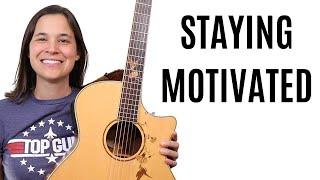
Lauren Bateman (YouTuber and guitar teacher) hosts a live session offering motivation and practical advice for guitar practice. She promotes a three-day live event in Woburn (near Boston) on September 22–24, describes ticket options (single pay and three-pay plan) and a sold-out VIP band opportunity, and encourages viewers to reconnect with their "why," set routines (at least three practice days/week), and use a metronome to track progress (e.g., 60 bpm = one click per second). She gives technical tips (C-chord practice, spider exercise, whole-note timing before up-strums), accessibility suggestions (alternate picks, switching handedness, power chords), and performance-prep guidance (about 30 minutes/day per song to be performance-ready in ~1 week). The session includes Q&A, community announcements (private fellowship), and Lauren's personal teaching background.
Questions this video answers
September 22–24 (three-day weekend).
Woburn, just north of Boston, MA.
$297 (for the seven-level beginner guitar course).
Venue capacity ~80; about 40–50 tickets sold so far and 50–60% of tickets sold (speaker's estimates).
At least three days per week (e.g., Mon/Wed/Fri).
Chapters
Foreign.
Enthusiasts. Lauren Bateman here coming live, wanted to hop on with you guys, say hello, tell you a bit about some things you got going on, provide you with a little motivation, a little inspiration. And if there's time I see you guys over in the chat here, I'll take some questions and maybe do a little bit of Q A. So I got my tailor here, as you can see on the side. So I got the guitar ready to rock and rol. But first I wanted to let you guys know as some more people hop on here. I do have a live event coming up. People are always like, lauren, can I take lessons with you in person? Can I take lessons at your music school in Boston? And I don't particularly teach one on one anymore just because my schedule is so crazy. Hello, Nate, how are you doing? So I do have an event that's coming up in September. It's September 22nd through 24th. It's here, it's just north of Boston, a town called Woburn. And we're going to do an all weekend event. Friday, Saturday, Sunday. Play music with me, learn about the guitar. We're going to do a guitar maintenance workshop. We're going to be having a blues jam going on, lots of cool stuff. We had a lot of fun last year doing this, so. So we did it again. It's going to be September 22nd through 24th. If you want information on that, there's a link in the description below or it's laurenbatemanguitar.com backslash event laurenbatement.com backslash event. You can get all the information there. We have a single pay ticket option as well as a three paid ticket option. So definitely go and check those out. Let's see who's popping on in here. We got Aldo, Peter. Hello, John, Sandy, Rick. Nice to see everyone on here. So I wanted to pop in, give you guys a little bit of motivation because we're getting into those stuff. Summer months and you know, you can see I'm in a long sleeve here in Boston in June. It's, it's supposed to be like 70 or 80 and I'm like freezing in my house. But you know, we're getting to the summer months where the weather is supposed to be getting nicer, right? And you know, we want to be outside and we want to be doing things and, and sometimes the guitar practice gets pushed to the side a little bit. And you know, that's normal. Life happens. Life happens all the time. And I always tell students, you know, when you're feeling that pulse, people Are like, I'm not practicing as much, or I feel like I'm having a hard time getting back to the guitar. What you have to do is you have to get back to the things that you love about the guitar. It's two things. Okay? Telling about two things I think you need to do. One is reminding yourself, why. Why are you doing this? Okay, why are you learning guitar? Me? For some of you, this is a lifelong dream. You've been wanting to do this for 20, 30, 40, you know, 50 years. I have some students who are in their, you know, 80s and 90s who are like, I've just been wanting to do this. Actually had a guy, he messaged me the other day, and he's like. I think he was 86, and he's like, all I wanted to do is just have fun with this instrument, and you've helped me do that. And that's a great. Why. Like, it's something you've always wanted to accomplish, and you go and you do it great. Why? Maybe I've had students who are like, I want to play guitar for my wedding. I had a student, and she ended up writing a song for her wedding, which was even cooler than the original goal. So we all have reasons why we want to learn guitar. And, you know, if you're keen, put your reason why. If you know what your reason why is, throw it in the comments below. Share it in the chat here. See more people popping on here. We got Gail, Misha, Ally, Joe, Peter, Frank. Nice to see everybody, but, yeah, throw your wine. Share it with everyone, because that's what's going to keep you motivated to keep going. Okay. When you hit tough times, like, for me, I am not very good with fitness. Let's. I. I need to have someone who's, like, kind of pushing me a little bit. I have a very hard time working out on my own. But yesterday I went and played racquetball. Why? Why did I play racket? Because racquetball, for me, is fun. It's the part about exercise that I love. It's exercise without feeling like I'm exercising. So that's the thing with guitar. You have to remember the things that are fun. And I always tell students, have a fun song that you love to go back to. You know, your. Your song that you're comfortable with, that you feel like, I can play it very well. And just remind yourself, like, this is fun. This is why I started the guitar, because I wanted to have fun with it. Okay. And it might be a deeper reason than that. But everyone's reason is different and none of them are wrong. Okay, so whatever your reason is, throw it in the comments over there in the chat. Share that with us. And another thing that I kind of just talked about is routine. Routine is super important because routine can help us on the days that we are not motivated to do something. So Monday, you know this. Earlier this week, I had a long weekend. I was tired, I was exhausted. I definitely. The last thing I wanted to do on Monday morning was do a workout. But I have a schedule. I work out, you know, in a group, there's a fitness group, and I go work out with them 7:45, Monday, Wednesday, Friday. That's my routine. And I have that routine because I know if I don't have that, I won't stick to my goal. And how does this apply to guitar? It's very important that you have some sort of routine. And I know a lot of my students out there are older, you guys are retired, and part of retirement was not having that routine and having some freedom. But pick the days that you're going to, you're going to practice. It has to be a routine. You can't just be like, oh, I've got a few extra minutes today, I'm going to go practice. No, I mean, if that happens and you get a bonus in on top of what you've already scheduled for the week, that's awesome. But I highly recommend that you pick three days a week. At least three. All right, Pick three days a week. It could be a Monday, Wednesday, Friday, could be a Tuesday, Thursday, Saturday thing, whatever works for your schedule. Pick three days and say, okay, on Monday, Wednesday, Friday at 8:00am I'm just gonna go and practice guitar. And the earlier you can do it, the better, okay? Because stuff always comes up during the day. I don't know about you guys, all my emergencies seem to come up around like afternoon time. And it totally derails the rest of my schedule. So I try to do all my most important things first thing in the morning because I usually don't get too many people who are bothering me or trying to knock me off track. So that would be my recommendation, is to stay motivated, have that routine. Have that routine that you go to that you're like, great, Monday is my day. And sometimes life gets in the way. Listen, I understand. Life happens, okay? You know, you got niece's graduation. I went to my niece's soccer game this morning. Like, stuff happens. I want you to participate in life, but don't be skipping every single session or Move a session to the next day, okay? Because once you miss one session, you're like, oh, and then the next session comes and you miss another one and you miss another one. Now you've kind of fallen off the wagon, as they say. Okay? So try not to miss more than one practice in a row. And if you're gonna miss your second routine, shift it over a day. Move it over a day so that you get that practice in. Because the progress is what keeps us motivated too. And you probably know me if you've watched my videos, if you're just seeing me for the first time. My name is Lauren Bateman. Hopefully you know me, but I help make the guitar make sense. And one of my big things that I teach, even in my seven level course, my beginner guitar course, is using a metronome tracking progress. Because a lot of people, we don't, you know, we're not knowing if we're getting better at something. It's very subjective. But when you write a number down, when you use a metronome to track speed and you see that number getting faster and faster, it's just the visual reminder. It's like a visual scorecard. Am I getting better? And if you can measure that, it's super motivating. I used to do that with students all the time in person. You're amazing. Thank you, Kimini. I appreciate that you can track that over time. And I have a lot of students and they. They get to like, those. Those plateau points are like, ah, the number is just not. It's not getting any faster. And that's kind of demoralizing for people too. And I just say, listen, the, you know, the numbers there, if you're getting stuck at a point, don't let that hold you back. So my guitar course, the seven level guitar system, what I do is I give people a goal range and I'm like, hey, I want you to work on this C to G chord change. And I want you to try and get between like 60 to 80 beats per minute, and then you can mark that off as done. And I get some. Some students, especially my older adults, because those of you who have arthritis, you know, you have good days, you have bad days, and sometimes your fingers don't move the way they did in their 20s and 30s as you. As you age. So, you know, sometimes I get students like, I'm really trying and I just can't get there. And I'm like, you know what? Don't let that hold you back. Don't let that hold you back. Keep moving forward. He don't get stuck on something. If you feel like you're getting stuck, you've been working on something three, four, five, six weeks and you're like, I can't get past this point. Put it to the side. You can always come back. Because when we start feeling stuck, that's when we start losing our motivation to keep going forward and keep pushing people forward. Another great thing about motivation, now that I got some more of you, I see 86 of you on here. Awesome. Thank you so much for joining me on Saturday afternoon is going to events and meeting other like minded people. I have an event coming up in September. It's September 22nd through the 24th. It's a three day event where you can come out, meet me, meet other guitar enthusiasts. And I don't know if any of my students are in the chat right now that are coming to the event. I think we have 40 to 50 people so far who've purchased tickets for this event. We have a band that's going to be playing the VIP students. VIP is sold out. So the VIP is everyone gets to play with me live in a band. We'll have a drummer, a bass player. It's awesome. It was so much fun last year. All the students loved it, even if they weren't in the band. But we're gonna have different workshops. We're gonna have a blues jam, we're gonna do some guitar maintenance. I'll be teaching some workshops as well, playing with others. I might even do like a songwriting workshop. But it's three days of guitar fun. Okay. And you can come out even if you're just a beginner. I. I actually was in St. Scotland in April. I had an event out in Scotland and I live in the uk so I can't come. You just meet me, Misha. Miss me. I was in Scotland in April and I did have a sold out event in Scotland and I had a bunch of people who came out and one student, they had just started playing guitar and they were nervous about coming. They were really nervous and they were like, I didn't know if I should come to this event because I just started playing guitar and he decided. I'm glad he did. His name is Ron. He decided to come to the event and he was like, I was so happy that I did this. He is like. Because it made me just feel so much better about my playing. Even though he, I think he'd only been playing guitar one or two months. So he's really, really beginner. So if you think you're too beginner to come to a guitar event. Listen, I can help you make things easier, harder. No matter what, there will be something for you. So this is in Boston. It's September 22nd through the 24th. It's laurenbatementguitar.com event. There should be a link in the Description below, but laurenbatement.com event. Come hang out with me. Come play music with others. You know, the first event, what students found so motivating was actually meeting other students and being able to play music with others. For most people, that was. That was their first time playing music with others. Any events in Montreal? No, no events. I actually have a lot of Canadians who are coming. It was funny. I think last year almost half of my students that came down to Boston were from Canada and a lot of people from Ontario. So that was. That was super cool. So. So we do have lots of Canadians who come on down for Boston. So if you're in Canada, don't let that stop you. And if you're in Canada, I hope you guys are doing well. I know you guys had your, your fire, the fires up there recently. So if you're one of my Canadian students, hope you guys are staying safe and doing well up there. What city in Scotland was I in? I was in Edinburgh. That's where we did the event. And then I kind of toured around a bit all over Scotland. We went up to. We went to sky, we went to the Highlands, Orkney, went all over. It was my 40th birthday gift to myself was to go to Scotland and, and take a trip. Come to Toronto, please. That's awesome. Yo. Right now we're doing events in Boston just because it's. It's much easier for me to. To be local here with equipment and everything else and the filming. We're bringing in a big stage with a teleprompter so that you guys can see my hand. It's a really. It's going to be a really big production this year. I'm super, super excited. So, you know, I think we can have about 80 people in the rim max. So, you know, we've already sold more, probably like 50 to 60% of the tickets. So I just wanted to let people know, hey, listen, I got people coming from California. I had someone come from Australia last year that was pretty awesome. Someone flew from Australia. I had someone come in from Germany. So, you know, if you guys are available In September, it's September 22nd through 24th. Come on over. Come on over and hang out with me for the weekend and just play guitar and have fun. It's a really, really, really great time, and it's super motivating. Like I said, people left that event sky high. People came in being like, I didn't know if I could do this. And within a single weekend, they completely transformed their mindset, because most of this stuff is mindset. And they were like, I left here knowing that I could do this, that I could actually play music, and then I could play music with others and that this was possible. And. And that's the exciting part of. Of learning guitar and being part of this process is saying, I can do this, you know? And I know a lot of people reach out to me, and they're like, lauren, the reason I love you as a teacher is because you make me feel like I can do it. You know, you're not condescending. You make me feel really good about myself and my playing. And that's half the battle. Like I said, it's all mindset. So if you have someone that's telling you, like, you can do this, you can do this. I know you can do this. Don't give up. Keep practicing. That is the motivating part. Keep going. If you have someone rooting for you, someone else is going to believe in you before you believe in yourself. I've even had that with coaching, believe it or not. I know you guys see me on YouTube. Before I logged in, I was like, 10 subscribers away from 300,000 subscribers. I was like, oh, my God, that's. That's crazy to think that. That I've come that far and that I've helped, you know, 300,000 people. Not all those people have taken my course. Most of them just do the free stuff on my website and YouTube, and that's perfectly fine. Really appreciate your support. Your subscribership means a lot to me, but, you know, I've just totally lost my train. Oh, 300,000 subscribers. In the beginning, I didn't believe in myself. I didn't believe that I was good enough to be a guitar teacher. Believe it or not, when I started teaching, I didn't even teach guitar. I started with voice. Okay. I started as a voice teacher because I didn't really have any guitar lessons. I didn't have a degree in music. I just quit my job at the pharmaceutical company. So I'm like, I have absolutely no credentials that anybody would want or look for in a teacher. So I did not feel like I was going to be a good guitar teacher. So I didn't even touch it. And then eventually I was like, oh, I got to make some more money. Let me start teaching guitar. And. And it was a business coach of mine. She's like, you have a gift. You have a gift that you need to share with all of you. I have a gift that I need to share. And she said, if you don't do that, you're being selfish. And I was like, wow. I was like, that's. You know, she had a point. She had a point. And I realized, you know, I see all the people on here. Misha Donovan. Who else is on here? Omaka. I got people from all over. Put in the chat where you're from, because it's always amazes me. I get people from, like, Japan, Sri Lanka, all over the place. Kenya. Nancy's in here. I'm Jazz from playing. I want to come over with you in the group earlier. Oh, yeah, we had so much fun this morning. So some of you guys. Nancy was on this morning. Scotland's in the house here. The Lone Star State. We had a live this morning in my community. So some of you may not know, I do have a private, private community where we get together, we jam, we play songs. In this morning, we did a song by Melissa Etheridge called I Want to Come over, which I have recorded a lesson for you guys. No, I love Melissa Etheridge. And I was just showing them how with, like, a simple eighth note pattern, just a simple eighth note strumming pattern, how you can do so many different things rhythmically and dynamically to make a song come to life. So, Nancy, thank you so much for being there this morning and being a part of that. That's called our song Circle, and I do that, and I. I just come on and we work on songs together. And that's part of the. My private community. Lauren Bateman, Guitar.com Backslash Fellowship if you guys are interested in checking that out. I think the membership is closed right now, but I think it reopens next month in July. So if you go to laurenbatement.com backslash Fellowship, just put your name, there's a little form you can fill out, and we'll let you know when. When enrollment opens up again. But I think it's opening up again next month. Month. So definitely get in there. Can you do a Queen tutorial? Believe it or not, Nisha, if you search Lauren Bateman, Another One Bites the Dust, you're gonna find an old video of mine that's probably 10 or 11 years old at this point. I haven't done a recent Queen video, but that's Always a great suggestion there. You know, you guys there, there's so many great songs. You, I, I see your comments. You know, can you do this song? Can you do that song? And I know, like, when Gordon Lightfoot passed away, I had a lot of people who were like, can you do Sundown? Can you do Sundown? Can you do Sundown? So I do see the comments and I take that into consideration when I'm doing new songs. So that's why I did Sundown recently, shortly after Gordon passed away, because I had so many people requesting Gordon Lightfoot stuff. So, so we got that out for you guys. I see. Houston, India. I think India wins for the. The furthest. Staffordshire, England. Hey, Tony, how are you? Nice to, Nice to see you. YouTube here. Awesome. Tony was at my event in, in the uk. It was awesome. Let's see what else. I'm smashing my left hand and now have limited. Oh. Ability. I'm now trying to learn playing left handed. Yeah. You know, Martin, I have a lot of students who have physical disabilities. I have, I've had lots of students. They're missing digits. I have one student, I. He had a deformed hand and I think he really only had his thumb and one other finger. Fortunately, it was his picking, his strumming hand. So we found a device that he could actually hold because he couldn't hold the pick. So listen, this is a great, this is a great topic in itself if you are someone that has a disability or older. I mentioned arthritis earlier because a lot of my students have arthritis because most of my students are in their 60s, 70s, and 80s. So let's just, you know, my dad, he's. My dad's in his late 60s. He's got rheumatoid arthritis. So I know how painful it can be. I can. Like some days he has a great day and then there's other days, like he can barely get out of bed. So I know the ups and downs of arthritis. So when you have those good days, you have to use them. But there's lots of great little things. I wish I had a pick here. Let me see if there's one in my little pick thing. I don't have one, I think in here, but it's called Black Mountain Picks. Look them up. Black Mountain Picks. And it's got a little spring that helps you hold the pick in place. All right. Or I can't think. Martin was his name. If you've got missing digits on one hand, make your full digit hand, the fretting hand. I've Had a lot of students who are like, I'm missing like my index finger on my left hand and I'm right handed. Can I switch it over? And it's like, yes. All right. It might be a little bit more of an effort because the way your brain works to, to flip it, but play it flipped. Play lefty. All right, if you're righty, play lefty. And guess what? You'll have all the digits. You don't need all your. You don't even need your index finger. I don't know if a lot of you guys want. Some of you people mention it. Some students mention it when I'm strumming. You'll see. Sometimes I hold my pick with the middle finger. Okay, I know because I. Some of you comment on the, on the, in the comments and you're like, you use your second finger too. This is an old bad habit of mine from being self taught. But for me, it's the most comfortable way to hold it. I had people try and get me to do the first finger because that's the way you're supposed to. Okay. And sometimes I do that. Okay. If I'm picking, if I'm doing lead guitar stuff, I'm definitely holding it with my first finger. But a lot of times if you catch me strumming, I doing the second finger or the first and second finger at the same time. But the best way to hold it is definitely with that first finger. And that's how I teach people to do it because that's the proper way to do it. But you guys watch my video. See if you catch me holding my pick with my second finger, sometimes it happens. Okay? You gotta find what works best for you. J.P. says I am a finger picker. Yeah. Yep. See, I'm missing my right index. And yeah, the pick are. Does. The pick are a lifesaver. And yeah, does, I guess. Are you talking about the Black Mountain picks? So there's always something you can do to overcome a disability. I tell students all the time, like, there are people who play guitar that don't have hands. They play with their feet. So if you want it bad enough, a great guitar player, if you guys look it up, Django, he was, he was, I think a gypsy guitar player. And he was in a fire. Okay. And. And his third and fourth fingers got fused. And if you guys watch my lesson on the stuck like glue chords, those are actually the Django chords. I pull up my guitar. Look, I just happen to have a guitar right here. Those are the stuck like glue chords. So what he did was he created a way to play guitar that he never had to move his third and fourth fingers.
And. And, you know, he. He has different voicings of chords because he had a deformed fretting hand, and that's all he could do. And he was an amazing guitar player. Player. So just. Just look that up. All right? Just because you have something wrong with your hands does not mean you can give up on your dream of playing guitar. There's plenty of things you can do. I have so many students who are like. Because of their arthritis, they're like, I can't do bar chords. They're so hard. They really. They're painful. I had a student in person who had bad arthritis. I think she was in her 50s, and just playing a bar chord was. It was too hard for her. So I was like, well, we can do power chords. We can do power chords or forget it. Let's just don't do bar chords. Or we can do easy versions of the. Of the bar chords without a bar. We'll just play it without the bar, and we'll play the bottom three or four strings. We'll figure out a way that works for you. As long as you know that your F chord is not going to sound like this. It may sound like this, and if you're okay with that, then that's how we're going to play our F chord. Okay? So there's always. There's a will, there's a way. All right? Do not get discouraged. All right? This whole talk today is about motivation. Do not get discouraged if you have some kind of handicap right now, because there's always a way around it. Okay. There's always a way around it.
Yeah. Black Mountain picks. That's what he was talking about. So Black Mountain picks. There you go. Helps a lot. Got someone from Australia. I'm having difficulty with rhythm. Queen bee says, well, Queen bee, the best way to work on rhythm. Let's do a little rhythm thing here. Get a metronome. Here we go. I got my phone. And the metronome is just a click. And it can be very robotic. Okay. But we're going to take it one step at a time here. Okay, so let me just pull up my metronome app here. Okay. And no, I don't want the free trial. So the first thing first is to get used to counting. And I tell people, think of counting as, like, seconds on a clock. Okay. So let's talk about quarter notes. Quarter notes is one click on a metronome or just One beat at a time. So if we take an E minor chord, whatever you play, I play it my first and second, second, third, doesn't matter. 1, 2, 3, 4. Think of it as seconds, okay? Each chord, each time you strum, it's one second apart. Just think about it in that most basic term and get your hand used to that. So that would be 60 bpm. Okay? 60 beats per minute is a clock, a second hand on a clock. So I'm going to set this up so you can see I got a little metronome and it clicks. Okay? You guys can probably hear the clicking, and that's how you work on your time. 1, 2, 3, 4. 1, 2, 3, four. That's it. 1, 2, 3, Four. More.
Okay. Sounds like zombie, you know, so. And that's what you do. You have to start slow, okay? If you cannot do that, you have no business starting to do up strums. I see so many teachers here on YouTube and they're like, I'm going to show you a beginner guitar strumming pattern. And then they start going.
And I'm like, an upstrom is not. Well, you know, upstream are beginners, but it's not for an absolute beginner. Okay? You have to start just on the downstrom. Get in touch. You need to be spot on with that timing. I think the thing with timing is I think people are in such a rush to do.
That they don't slow down and get the timing right. Because this is the foundation. The biggest foundation would be whole notes. So strumming once for every four clicks. One, two, three, four. One, two, three, four. And one, two, three, four. And one, two. And then once you've got that down, then you go, one, two, three, four. One, two, three, four. 1, 2, 3, 4. That is the best way to work on timing. You have to develop that foundation first and then move on to the more intricate stuff. And we did, you know, my event, my UK event that was in April that Tony was at, we did a whole thing on strumming, and a lot of that was listening. What do you hear? Do you hear the guitar parts? And in the beginning, people didn't really hear the parts, but as I pointed things out, they're like, oh, yes, I can hear that. So a lot of timing, too, is listening. Can you hear when the chord change happens?
Can you hear when the changes of the chords come? Because that can help you with timing down the road. You know, a lot of us that have been playing guitar for decades, we don't count the rhythm anymore. We Feel the rhythm. But in the beginning, you're going to have to count and really, really focus in on, on that timing there. Hi, From Florida. Hello, Ryan. Thank you. Thank you. D1. Amazing. And San Francisco's in the house. I am doing well. L. Lewis, thank you so much for asking. Good morning. Love watching your channel, learning and having fun making music. There you go. And someone says, ruth, I find it hard changing to the C chord fast. Yes. Okay, let me give you a little tip on that. So the C chord is a pain for a lot of people. And it's usually the third finger is the issue. So I tell people, practice the C chord two ways, okay? First finger, second finger, third finger, and then do it the opposite. Third, second, first. Ideally.
When you watch my chord changes, if I slow them down.
Notice when I do C, the G, my first finger that moves is the third finger. It's also the first finger that hits. Okay? So a lot of students, they start by practicing the C chord this way because they're so used to anchoring that first finger. And then they put the third finger down. And what happens? The third finger ends up all the way in the back of the fret and it gets muted. You need that third finger to be the front of the fret. The other thing that's tricky about the C chord is it's a three fret stretch. So a lot of beginner chords, G, E minor, A minor, E, D, they're only two frets wide. So that is the additional difficulty of a C chord because it stretches across three frets. So that's what I tell people. Take your spider exercise, okay? Just go search Lauren Bateman. Spider exercise. You'll find it. And start moving it further down the fretboard. Because these frets are much wider than the ones up here. You really have to start stretching out your hand on those first three or four frets. This way you can have that stretch for that C chord and get that third finger closer to the front. So that's it. Practice the C chord both ways because you want to develop a muscle memory to get these fingers in place. And that's it. Just pick a chord change. And you might have to do this 10,000 times. I'm not joking. For those of you who know my favorite Bruce Lee quote, it's not the Man. I'm not scared of the man who knows 10,000 kicks. I'm scared of the man who's practiced one kick 10,000 times. And just talking about mastery, all right? And to get this C Corp, you might have to do this 10,000 times, okay? Because that's what it takes. It takes lots and lots and lots of repetition and relax. Most people when they're practicing things, they go.
And then they let out or spider exercise, same thing.
And then you get to the end and you let out all this air breathe.
Not that you have to do, I'm over exaggerating, but just breathe normally when you're doing these exercises. It's going to help you relax. Yes. Great quote. I, I was a big Bruce Lee fan growing up. Oh, Ryan, thank you so much for the little, little chat donation. Appreciate it. Yeah, YouTube is. I, I've been noticing and I want to say thank you to all the people who've been giving me thanks and little super chat donations and stuff. You guys are awesome. YouTube now has allowed you to give thanks thanks to student below the videos. I don't know if you guys have seen this. There's a little money button and it says thanks. So if you want to make a little donation to not just me, any YouTuber, if you see a video that you like, you know, a dollar or two, send it in it, you know, we see it, you know that someone's made a donation. It's really nice, just like Ryan did here. So thank you so much for that, Ryan. It just lets us know that you appreciate it. Like, listen, I know not all of you can go and buy my course, okay? The course right now it's 297 for that course and that's really within that course is like 9 to 12 months of lessons. So it's really worth the price. Plus you get access to the community to interact with me a little bit as part of that course. But I know not everyone can do that or you have to save up to do that. And that's why I do a lot of stuff here on YouTube for free because I know there's a lot of people who, who can't afford that, you know, or they're. I saw someone, you know, earlier. Maybe they're in a part of the country where $297 US is expensive. Okay. So if you, you know, have a YouTube creator that they helped you or they did something nice, show them a little thanks. We really do appreciate it. We notice it and, and it just makes us feel good about the stuff that we're doing here. We love helping you guys. You know, part of. I was talking earlier about how I, I'm almost at 300000 subscribers. I wouldn't be surprised if in the middle of this, we should check. We should check and see where I'm at. If in the middle of this, I got up to. To 300, 000, let's check. Who wants to make a guess? What do you think? Think we made it.
Four. We have four more subscribers to go before maybe by the end of this live, I'll be at 300, 000 subscribers. But in the beginning, it's a really tough go. Here on YouTube, you're really putting out a lot of content for not a lot of gain. And, you know, the thing that I always kept in mind, and we talked earlier in this about having a good why to be motivated about guitar and practicing. You were my why. Believe it or not, I was getting discouraged with YouTube probably the first year or two, because I thought I was putting out a lot of content. But I'm making these videos and, you know, like, 20 people were seeing them, and like 30 and then 100 people were seeing them, and I'm like, wow, this. This really stinks. I'm doing a lot of work, and not a lot of people are seeing what I'm doing. And I just kept going. And I almost quit, almost quit twice. And I looked at the numbers and I'm like, you know What? If only 300 people saw this video, I helped 300 people. And that's more than I could help one on one at my music school. So I kept you in the forefront, and it's like, why am I doing this? Yes. Obviously, you know, a lot of us here on YouTube because we want to pay our bills. We have courses and stuff that we want to sell, but deep down behind everything is helping other people achieve their dreams. All right? I know for a lot of you, this is a dream you've been wanting since you were a kid. And whether it was you couldn't do it because of financial reasons. Okay, maybe you didn't have a guitar, your family couldn't get a guitar, or maybe you had a crappy guitar, or maybe life came up. Maybe you joined the army, you got married, you had kids. Life got in the way, Right? Life always gets in the way. And for a lot of you now, you know you're retiring and you're like, hey, this is something I've always wanted to do, and now I have the time to do it. So don't ever get discouraged with where you're at in Life, whether you're 55, 65, 75, 85, I don't care. I want to help you achieve your dream. And if that's just, you know, Playing something for your significant other. I had a gentleman who emailed me. He emailed me a year ago, and I responded to him. I think his wife had dementia, and one of the things that kept him going through that was being able to play guitar. That was kind of like his sanity through. Through that. But he messaged me. I think it was when his wife, I can't remember how old she had turned. But he emailed me because he was able to play Happy Birthday for his wife on the guitar. And another one was Silent Night. I believe that was the song he played. It was a Christmas song, and he played it for his wife. And he has that memory. His wife has since passed away, but he now has that memory to take with him. And, you know, he emailed me a few weeks ago when he was like, I just wanted to let you know that, you know, my wife passed away, unfortunately. But I've been keeping up with the guitar, and I have such a bigger repertoire now. And those are the stories that we live for. You know, as a teacher, that's what we live for. I want to hear that I'm helping someone do something that they always want. That I gave you guys the courage to say, you know, it's okay to make mistakes. That's why today, if anyone was. I know Nancy was here earlier. She was on the live that I did in my private community. I was playing a song, and in the middle of the song, boop, I dropped my pick, and everyone saw it. And what happened, I just kept going. And I love when stuff like that happens. And I try to keep it in the YouTube videos too, because I want you to know that I, I. There's nothing special about me. I'm human, all right? I don't have a degree in music. No one in my family plays music. I am not naturally talented. Everything I had, I had to work for over years. So I'm just like you. I am just like you. I just loved music and I wanted to learn how to play the guitar, and I didn't have any, like, advantage, you know, When I was growing up, I started with piano. I hated it. My grandfather used to pay for my piano lessons. We didn't have a ton of money growing up. And then when my sister bought me my guitar When I was 16, my mom was like, don't do it. She's not going to use it. She's never going to make anything. She g. She's going to quit just like she did the piano lessons. And I kind of had to teach myself because we didn't have a lot of money to just waste on guitar lessons. And, you know, it was just something that I really, really loved. And when I was growing up, I grew up in a very strict Italian household. So having your own opinion wasn't, you know, we didn't have a lot of. It was like, jump. And it was like, how high? How high do you want me to jump? I was like, crack the whip. So guitar for me was a voice. It was a way for me to express myself and get my feelings out. Because that was something I felt like I couldn't do when I was younger. So that stuck with me. And that. That's why I took to the guitar, because it was an outlet for me. And the older you get, it's so nice to have a musical outlet. Music touches us in ways that so many other things can't. So, you know, I really hope that if you're. If you're watching this and you're just starting your guitar journey and you're getting discouraged, please keep going. Do not give up. This is so worth it. It's not easy. If everyone were doing it. If it were easy, everyone would be doing it, right? It's not easy. It takes time. It takes persistence. It takes dedication. But I guarantee you, if you don't quit on this instrument, you will get it. You will be able to have fun with this instrument. You may have to modify things. Okay. You may have to change things up when, you know, at the live event, I got to see people's. People's hands in person on bar chords, and I made adjustments to their hands. We did live lessons at the event. That's something else I do. So for those of you who are just jumping on, I do have an event that's coming up September 22nd through 24th. Laurenbatement.
And we do Q and A sessions where students come up and they're like, I'm having trouble with bar chords. And I look at their hand and I kind of fix things. So we're doing workshops, play alongs. It's a whole weekend of guitar fun with me. I'm going to be there the entire weekend. Would love to meet some new students. I had a blast meeting students last year, so we decided we were going to put on another event this year, September 22nd to 24th in Boston. So if you're interested, there should be a link in the description below. Go check that out. Grab a ticket. I would love to see you. We do have a three pay option. Lauren Bateman, guitar.com backslash event but sometimes it's just the smallest changes that make the biggest difference, especially in stuff like bar chords. There's just like these little minute changes in your hands that you can make that make a huge difference. Mary says, I'm an older learner and believe me, don't give up. I'm actually learning. That's right. That's right. Awesome, Mary. Yes. And you gotta encourage other people. That's what I love about our community. It's so, so encouraging. Ignacio says, Lauren, your wonderful teacher, thank you so much. Oh, well, thank you. You're so kind. How many hours do you recommend to practice before performing a gig, Melanie? That is a great question. So I always tell people when we practice and play songs, you can play songs for, you know, practice, and then you can play songs to make them performance ready. So you may have to put a lot of hours in. Let me tell you my process, Melanie, for how I would learn songs. Now, I had to learn the guitar parts and the lyrics. And learning the guitar parts is easier than learning the lyrics a lot of times for songs. So what I would do is I would learn it one section at a time. So I would go through the verse, I would learn the chord progression, make sure I memorized it, and then I would learn the lyrics, and then I would move on to the chorus and I would learn the chord progression there, and then I would learn the lyrics, and then I would practice it over and over. So a song, like if I were going to take this song here, so this is me and Bobby McGee, another song I just recently recorded a lesson on. So this will be coming out soon. Now, if I were to take a song like me and Bobby McGee, I would take it and I would learn everything piece by piece. And for the lyrics, sometimes I used to write the lyrics out because you remember more when you see things and write things. So the lyrics for me was the hardest part. And then once I felt I had it well enough, my band and I would, would rehearse repetition. Every week we would spend, you know, a couple hours going through songs, learning them. So to learn a song and get it really performance ready, depending on how difficult the song is, like this, me and Bobby McGee. For me, if I really put a lot of time in, I could probably learn the song and get a performance ready within a week. That means me, no sheet music, memorizing everything. I mean, I can play the song right now, but when I perform, I don't want to have a sheet music in front of me. I. I want there to be no sheet music because I want to walk around on stage and have fun and jump around and do all the things that I do on stage. So for a song like that, if I were going to practice, say I probably spend like 30 minutes a day on the song. I could probably have a performance ready by the end of the week or pretty close. Okay, so one to two weeks per song. And mostly, as I said before, it's not really the guitar parts that are hard for me to learn. It's memorizing all the lyrics. That's really where I have to put a lot more time and effort in. So hopefully that answers your question. But yeah, about a half hour a day per song. You could probably learn a song in about a week and get it fully performance ready or pretty close to performance ready. What was the first song you learned to play on guitar? Great question, Louis. I think it was Nirvana.
That was one of the first ones I learned. I also did a lot of like Blink 182 songs. Blink 182 was big when I was learning guitar, so I learned a lot of like melody stuff. I did like Enter Sandman.
A lot of intros to songs because I didn't, I didn't really know chords yet. So a lot of the stuff I played were like little intros and licks. But I'm pretty sure it was Come as you are was one of the first songs that I learned on guitar. The first song when I finally took guitar lessons, I went in and take guitar lessons because I really wanted to play Stairway. Yeah, if I can play it.
I'm not going to play Sterics. They'll, they'll yell at me for copyright. But I went in because I didn't know how to finger pick very well and, and that was a finger picking song. So we went in and the first song I really learned was, was Landslide. And she taught me how to do Travis picking, which I go over my finger picking course.
Okay. So that was one of the first songs I learned with a guitar teacher when I finally took lessons was Landslide. That's, that's kind of the level I was at by the time I got taking lessons. But when I first started it was all just little licks and stuff and I couldn't really play a full song because I didn't really know how to strum very well. And I think that's why I, I stick stuck to like learning licks, you know, like Another One Bites the Dust.
So I did learn like a lot of Nirvana and, and Blink 182 songs. That tells you When I was learning guitars like the early ninet, so. But that's a great question. I don't think anyone's ever asked me that before. Hi, from Greece. How are you doing? I've been doing four hours of practice a day for the last two months. And I find the hardest part is the first hour. I watch your spider exercises, and it's been good. Yeah. So that's a long time to practice. So if you can do a full hour or more. That is amazing. That was totally amazing. It's going to depend on your fingers and how much you can take. My fingers. After going to Scotland, my fingers got a little soft, so I can't practice as much or play as much as long. But now that I have the event coming up in September, I'm gonna have to recondition my fingers because I'm gonna have to play guitar the entire weekend. All right. When I was busking in Boston, I used to play in Porter Square in Cambridge, down the subway, and I used to, you know, have my guitar with my case open and people would throw money in, and I used to play. I'd start at like 6:30 in the mice. Played for two hours straight. My. My fingers, you know, because you guys write to me sometimes, you're like, the skin's coming off my fingers. I mean, my fingers were ripped up, but I could play for hours. And it didn't bother me at all. It's why I can. I can get a pot plate out of the microwave and not feel anything. I think I've killed all the nerve endings in my fingers at this point. I like to learn CCR songs. Ryan says yes. CCR is a great band. They. They have so many fun songs. Is there a better way to build finger strength and flexibility if you aren't able to get. Get to your guitar? I actually have a device right here. One of my students told me about this. It's a d' Addario product. And I wish I have the name of it. I don't, but it's just a little hand grip thing. And there's different tension points, so it can help you with keeping the strength in your fingers. But the other cool thing about this is if you take off the back part, I don't know if you guys can see this. I'll kind of like put it in the light there. There's. There's strings back here, like fake strings, so you can keep your calluses if you go on vacation. So I wish I brought this when I was in Scotland, when I go to Portugal I'll bring this in Portugal, but there's little string indentations that. This way you can keep your. Your calluses while you're away. But this is a great way. You can either do one finger at a time, and there's a little scroll down here so you can adjust the finger tension. So I forget what it's called, but it's a d' Addario hand strength something. And it was pretty cool. One of my students told me about this, so I got one, and it's very, very cool for hand strength. So. So this is a great little device d' Addario that I have here. So. So great question on that. And I had it right here so I could grab it easily. There you go. Thank you so much, Mark. It's called the Vera Grip. I have one here. Diodario Vera Grip. Thank you so much, Mark. I appreciate that. So, Singapore and Portugal. I'm gonna be in Portugal, Tiny. In July, the first week of July, I will be going to Portugal. I'm going for a business. A business event out there, but I will be in Lisbon and I will also be in Porto a few days the first week of. Of July. So I'm very, very excited to see your country. It looks like it's absolutely beautiful. I can't wait to go experience the sun because It's. It's like 60 outside. I think it was. I went to my niece's soccer game this morning and it was 55 in Boston in June. It's like freezing here. I want to be outside in a tank top. I like it when it's like 80 degrees. So I'm actually looking forward to going to Portugal because I think it's going to be a lot warmer than it is here in Boston, so. Oh, your farm is there. Awesome. Fantastic. Great. I can't wait to go. It looks like it's absolutely beautiful. Beautiful country. So awesome. Everyone, I just wanted to pop on, say hello, let you know about my live event. September 22nd, 24th. Lauren batemanguitar.com backslash events stay motivated. Do not give up. If you're feeling frustrated, keep going. You've got this. I believe in you. You can do it. And I'll see you guys all in a lesson video real soon. Everyone, have a great day. Bye. Bye.










