Is It Important For You to Have Fancy Equipment?
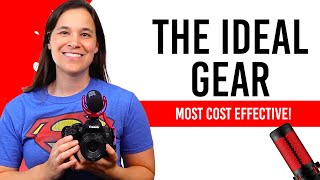
Lauren Bateman started YouTube on a Google Pixel 1 in 2017 and upgraded to a DSLR and ring lights over three years. Her most-viewed video, with over 2 million views, was shot on her phone. She's made seven figures selling online courses.
Questions this video answers
2017
Google Pixel 1
Over 2 million views
Canon EOS 800D (Rebel T7i)
18–55 mm kit lens
Chapters
When you're content creator on YouTube, the question you start asking yourself is, is it important for me to have fancy equipment and at what point should I start upgrading my equipment? I'm going to share my process over the years with you guys and what equipment I'm using on my setup today. Now, before I get into the specific details of the type of equipment I'm using, I want to preface this by saying you do not need anything fancy to get started on YouTube, especially as an educator. All right? If you were a filmmaker, ye, you might want to have some high quality equipment. But if you're someone like me, I started off as a guitar educator here on YouTube. You don't need super fancy equipment to get started. As a matter of fact, my most successful channel to date, which has over 2 million views, was made with zero fancy equipment at all. This was it. This was what I used. All right? This is actually the. I sell my phone. It's funny, I think I keep it for videos and stuff like this. This is a Google Pixel 1, all right? And I started filming on YouTube in 2017. And most of my videos, the first probably year or two years, was recorded with this phone. And my entire first course, I did it on this phone with this lapel mic. All right? That was it. This is what I use. I didn't even have overhead light. I didn't have ring lights or backlighting. All I have was the overhead fluorescent lights. They were very dark videos. They were grainy, they were crappy. So it just goes to show you that my most successful video was done with very, very simple equipment. I guarantee you that the phone you have today is, is much better on video quality than this phone was five years ago. For those of you that don't know me, my name is Lauren Bateman and I'm an online educator here on YouTube. I've done over seven figures in online course sales. And my goal here is to help other educators learn how to leverage YouTube so that they can be successful doing what they do, helping others in selling online courses themselves. So the first thing I recommend as a content creator to upgrade is your lighting. So you see here, I actually like a lot of lighting. There's a lot of people who use, like, cinematic lighting. They do a really dark side and a bright side. I like a lot of lighting. That's just my personal preference. I actually have two 18 inch Westcott ring lights. I have one on the right here, I one on the left here. And I have a backlight now, I could put a filter over that. If I wanted to add a pop of color. But I'm a very simple person, so that's kind of my setup is that I have three lights, but you could easily get away with two. And just to show you the importance of lighting, I have turned off all of my lights to show you what the video would look like. I've now just turned on one of my lights, which gives me a dark side here. And a lot of people like to film like this. Like I said again, I personally like a lot of lighting, but some people don't. And the backlight helps to get rid of some shadows and add a pop of color if you want to. Now, the lapel mic that I was using, this is just a pop voice. I paid like, I think they were like 15 bucks and it was just plugs into the headphone jack of your smartphone was really simple. I used to clip it on my shirt or I would clip it on my guitar strap. They're very, very, very inexpensive. But it really helps bring the audio quality of your videos up. And if you guys are interested in checking out any of this equipment, I'm going to put links in the description below. This way you guys can go check that out over on Amazon if you're interested in purchasing any of the equipment I use here today. Now, I played around mostly with filming on my phone the first couple years, but then Covid happened in 2020 and I finally upgraded to a DSLR camera. I wanted to get some high quality video. So this is the EOS 800D. It's the Rebel T7i. And I like the eye because it has this reversible screen. For me being guitar, I need to see where I am on screen. Not so much for these, you know, these talking heads here, but. But I like the reversible screen, which is nice. Now I bought a kit. So this is the kit I bought. And depending on what you get, what kind of bundle you get, they can range from anywhere from $600 to $1,000. This one came with a lens and the lenses themselves are expensive. So this is the lens it comes with. It goes from 18 to 55 millimeters. So you can see if I, if I open and shut this. So you can do close up, you can do wide shots, you can do closeups. The downside to this lens that I didn't know when I started is that the focal point, this is an important thing I learned about cameras. The focal point on this is very high. It's 4 to 5.6. Now what does that mean? If you don't speak camera. It's basically an F value and it tells you how much light the lens lets in. Now if you guys saw when I turned off all my lights here, it's very dark in my office. I have very little natural light. And you could imagine even with some of the lighting setup that I had, my videos were still coming out pretty dark. And when your videos come out dark, you have to change what's called the ISO setting. And the higher that ISO setting, the lower the quality of the video in general. So I felt, still felt like I wasn't getting the best quality video, even though I had bought this really nice camera that I was learning how to use. So what I did was I took a simple videography class where I learned about focal points and the importance of low focal points. And I bought these two extra lenses. Now these, these lenses, they're about $125 each. You'll see. I have two here. Um, so we have this one here is the 24 millimeter. So the F value, the focal point is 2.8. All right? So it lets in a lot more light. And this is great for wide shots. So that this is the lens I'm using for to, for this video right now. And then I also have a 50 millimeter. Now this one is an F value of 1.8, so it lets in even more light. And I use this on my close up camera. So just so you guys can see that this is the 50 millimeter lens. This is my close up camera. So I right now, when I film my guitar videos, I film with two cameras simultaneously. All right? So I started off with one camera because that's all I could afford. I mean they're not, they're not cheap. And then eventually I said, you know, I want to make these videos better. So I'm going to upgrade. I'm going to get two cameras so that I can film a wide shot and a close up shot on my guitar and my hands at the same time. Now you'll see on this camera, this one features a rode shotgun microphone. So this is a great way to pick up video. These are about 100 bucks. So if you're out shooting or you don't want to get into a lapel mic just yet, these rode shotgun microphones are a really good option to start. But eventually I got tired of having wires running all over the place, or especially when you're walking around with a guitar and you're moving around, I got tired of having wires all the time. So this is the sennheiser it's the EW G4. This is pretty expensive. I think I spent about 600 on this. You do not have to upgrade to a wireless setting. I did it because, you know, as a guitar player, I was moving around and I had so many wires, you know, running through my. My. My recording setting. And every once in a while, I would hit the extension on my lavalier mic and I'd unplug it, or I'd hit it with my foot and there'd be a clip on the video. So basically, what this is, you can see there's two receivers. One of these goes on the camera. So one's on my camera right now. And the other one goes to the pack, which is just sitting on my desk right here, and it picks up the mic and sends it over to the camera. And last but not least, when I do podcasts and other stuff, I do have this hyper quad cast microphone. It's great. Whenever you guys see me kind of doing my screen recordings, I like using this microphone or if I'm doing a zoom call or a podcast, it's a great podcasting microphone that you guys can use. So beginning to end, this setup that I'm using now probably took me about three to four years to work my way into. Like I said, I focused. My first couple years was all phone. Then I upgraded to the DSLR camera. I used that for another couple years. And then within the last year, I started incorporating multiple camera angles. So you'll see, over time and as you make more money on YouTube, you can reinvest into your equipment. But in the beginning, this phone is perfectly fine. You're going to do great. Maybe get one light to just brighten things up a bit. Get a lavalier, and you'll be in business for YouTube. So now that you guys know all the gear I use to record my videos, if you're interested in knowing what's the first content you should be getting up on your YouTube channel, go watch that video right over there.
Sam.










