It's NOT The Algorithm That Doesn't Like You, It's This instead
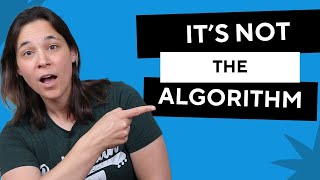
Lauren Bateman (speaker) argues that YouTube creators should stop blaming the algorithm and instead focus on serving their audience. She explains how ‘micro trends’ in a channel’s analytics reveal what content an audience wants, recommends iterating on top-performing videos (reposts, angle shifts), and ties YouTube growth into an independent creator business model centered on a flagship course and lead magnets.
Questions this video answers
About 2,700 subscribers.
November 2017 (she said she released it 'like, November of 2017').
About 1.1 million views in December and roughly $10,000 paid by YouTube that month.
Approximately 70% of her income.
Chapters
Hello. Hello, YouTubers and content creators. I'm here live in Miami to talk to you about something that drives everyone nuts, and it's the YouTube algorithm. But I want to tell you it's not the YouTube algorithm that doesn't like you. It's something else. So I took some notes here because I want to stay on track, and I want to tell you that if you instead focus on this one other thing, because everyone's always like, what can I do to trick the algorithm? What can I do to make YouTube like me better? You know, what, what tips and tricks are there? You know, if you make better thumbnails and all that stuff, Trust me, yes, you can get into all that stuff. The thumbnails, the titles, the SEO, it matters. I did that for years and, and I still do that. And I found I was struggling in the beginning because I didn't understand YouTube that well myself. You know, I was putting out videos and I wasn't getting a lot of views. And then I realized something very, very important. It's not the algorithm that I was trying to make happy. It was the audience I was trying to make happy. So if instead of saying, why does the algorithm not like me? If you ask yourself a different question and you say, why does my audience not like me? That will give you a better answers, because now you can look at the content that you've released and you can look at through the lens of your audience. You know, even with this channel here, you know, it's a newer channel. I've only got like 2700 subscribers. So it's just getting going and growing. And, you know, I was trying lots of different content, lots of different content ideas, and some things were getting more views, some things were getting less views. And even the last couple videos I put out, most of my videos, you know, 50 to 100 views is what I would get. Last couple videos, it was like 300 to 400, because it was, it was the stuff that my audience wants from me. As much as, like, I love doing courses and I talk about making money on YouTube, the majority of people who, who want to hear from me, or at least it seems on the, on the platform, want to know how to get started with YouTube, how to get the ball rolling, how to make this work. And that's why stuff like this is super important, because when, when you're starting out on, on YouTube, you have to know who that audience is because you have to serve them over and over and over again. Okay? And you're going to watch your content, and there's data in your content that's going to tell you what's working and what's not working. I call them micro trends. All right? Even like I said on this channel, if you go to my videos, you go on YouTube, you can see the last few videos I've uploaded. Most of them are within like the hundred view range. The last couple gotten 300, 400 views. Okay. And the reason for that is because the content is more in line with what my audience is looking for. One, what they're putting into YouTube search. And two, it's. It's really the questions they're searching for. It's what they really, really want the answers for. It's just like on my guitar channel, I'm constantly putting out content related to learning beginner guitar. I literally just released a video, I'm going to say, two or three weeks ago, this is the fourth time I've done that video. If you look at my analytics, when I was doing. I was on a call with a client the other night and I said, let me just show you something. And of the top 10 videos that are my most watched videos, three of them are different iterations of the same video. They really. I was like, oh my God. I was like, this is embarrassing. But I was like, I'm just going to go to show you that this works. Okay. One video was released in like 2020, another was released in 2022, and the other one, I think was released just a couple weeks ago. So it just goes to show you, when you find a piece of content that works, you can keep giving the same content year after year after year. One, because it's a. It's a new audience. And a lot of times people forget what they've heard from you in a year. So you can keep rehashing things. When you find things that work, obviously you can try to take them from different angles. But if I put out a video and it gets a lot of views, I want to try and say, hmm, okay, this is telling me something. There's a signal here. So if you look at your videos and the videos are like 50 views, 100 views, 200 views, 600 views, 100. It's like, okay, let's go back to that video that had 600 views. What happened there? That wasn't the algorithm liking you, that was the audience liking you. There was something in that video that made your audience watch. Because what happens. And YouTube will tell you this. I see this on my videos when, especially when I have a video that's going out far and wide YouTube will say in the analytics, it'll say this video is getting more views because your audience likes it. So YouTube is showing it to more people. It literally tells you that it says this video is getting more views because I think it might say your subscribers, but. Or your viewers, but it's like your audience watching this video and they're liking it. And because your audience is liking it, YouTube is deciding to show it to more people. So again, if you replace the word algorithm with the word audience, you're gonna, you know, because blaming the algorithm is blaming something we can't control. Right? Yeah. Great minds not to dig in even more. I've totally seen that. So important. Yeah, you've seen it on your analytics, and it's there, and it's crazy. But YouTube literally telling you what it wants. Okay. And if you just blame an algorithm, like I said, it's something you don't have control over. We can't control the algorithm. Yes. We can do things that YouTube likes. Okay. We can try and make better thumbnails. We can do SEO, because, you know, YouTube is a search engine. So we can try and find keywords, you know, and all of that stuff. But ultimately it comes down to posting content that your audience is searching, searching for. Okay? So when you're going to make a video, you should go over to YouTube, search, and just search the content or the idea of that video. Because if you go and most of those videos only have like a thousand views, chances are you're not going to get a lot of views either. But if you go and research a content, you see people have gotten hundreds of thousands of views or even millions of views. It doesn't guarantee that that's going to happen to you, especially if you're a smaller channel, but it tells you that it's a topic that people are searching for and people are a little bit more interested in. Okay? So just always keeping in mind, what is my audience looking for, what is my audience like, and what does my audience want? For me now, even with. With the creator Launchpad here, I know that I eventually want to get people into selling courses and monetizing on YouTube better, because, you know, it's great to have a YouTube channel. It's great to grow a YouTube channel. I make a lot of money off of YouTube ad revenue as well, but I make so much more money off courses, and I want to pivot people into that because I want to help people create a YouTube channel that's actually a real business. But before you even get into the monetization and all that other stuff. You have to build an audience first. You know, when I first started on YouTube in 2017, I had a course. I started my course. I think I released it, like, November of 2017. So I just started my channel. I maybe only had a few hundred subscribers, so I didn't really have the greatest audience to. To sell that course. So what I want is I want people to get on YouTube, get the momentum, get things going to a point where they're like, okay, I want to create this course. I want to start monetizing this because they'll get monetized by YouTube. But then they're like, I'm only making like, $5 or $10. It's really small in the beginning. It's only pennies in the beginning. It does add up over time. Like, what was last month was December. I think I got 1.1 million views. And YouTube paid me, like, $10,000. They did. I got a check for $10,000 from YouTube, but it was over a million views. And that's a lot. That's a lot. It took me eight years to get there, but I was making $10,000 in courses way before that. Like, I didn't even have a hundred thousand subscribers and I was making that much money selling courses. So it just goes to show you, you know, that's where I want people. I want people to get the momentum on YouTube, but I want them to understand, to really be successful on YouTube. It's not about getting tons of views and getting tons of subscribers. It's about getting people off of the YouTube platform onto your platform, your website, where they can give you an email for something free, like a free crash course, or they're going to buy your product. Amy says yes. I felt like knowing my audience better will be so helpful in creating courses that resonate well. Yeah, I have limited id, limitless ideas for courses and topics. Yeah. And what I tell people, you know, Amy, if you haven't made a course yet, what I tell people is figure out what you want to be your flagship product. So this happens with everyone. And when I coach clients, like, I have this idea and this idea, and there's like, all these ideas that they have for all these wonderful courses. And especially with music, you know, there's so many different ways you can go with music. I mean, I have a bunch of courses now, but in the beginning, I focused on one course, and I think I stayed on that one course for, like, one or two years. That was probably one of the smartest moves I made. Was that I really focused on one main course. Now I added to that course. When it. When I first started the course, it was only like three modules, and now the full course is seven modules. But you want to create something that's your flagship course and that. I call it like the tree. Okay, so we have all these roots and we have YouTube, which is a root, and we have our lead magnets, which are, which are roots. And our websites are. These are. These are sending all the leads over to our tree. It's like watering the tree. And then they buy our main course, which is the tree, tree trunk. So everything should lead into whatever. This main course mine is the seven level guitar system. And then once they get through my guitar system, it branches out at the top. So they could go into finger picking, they can go into blues guitar, they go to music theory, they go to songwriting, they can go into lead guitar if they want to, but they have to get through the main course. And still to this day, the majority of my income, I would probably say 70% of my income, is that main course, and that's why it's the flagship course. So I think a lot of creators, they get that squirrel mentality. It's like, oh, squirrel. You know, like the shiny. They're like, oh, shiny, look at that. Ooh. You know, and. And so you're, you're building all these things and you're creating all these courses, but you haven't really figured out how to market any of them really well. So I would focus on one flagship course and then focus the marketing on that and focus all your YouTube content around getting people into that course. So it gives you a much better focus for your content. Because if you have six courses, you're creating YouTube videos and you could be sending them all over the place. I send people mostly to two places. Either my crash course, which is free, or I send them to my actual course. If I do something that's really, really strumming intensive, I might send them to my strumming course. But I'm going to tell you 90% of the videos I make on YouTube that have a call to action for a course, it's going to be my free crash course or my seven level, because those are like my flagship things. That's how people get introduced to me in my brand. So when you're thinking about your content, you know, go back. If you have a library of content, go back, look and see which videos popped off. Okay? So you want to look at the videos around and you're like, okay, like I said, you know, 50, you know, if you're only getting 20 views, 20, 30, 40, 100, 100 is a blip on your radar. Okay? And then if you're someone who averages four or 500, you know, 400, 500, six, 2,000, it's like, oh, why did that video get 2,000? You need to go back. Because again, it was the algorithm liking you, but the reason the algorithm liked you and YouTube showed the content to more people is because the audience liked it first. The audience liked it first. And YouTube was like, oh, okay, there's something over here. We should show this to more people who are like this audience. And that's really how you get YouTube going. And that's really how I think you can see better growth on YouTube is by really, really focusing in on who your audience is, what they want, you know, I know what they need. But sometimes you have to give them what they want first and eventually get them to what they need. Good reminder to follow the crumbs left in your channel. Yeah, exactly. I just call them little micro trends. They're just little micro trends. They're there and you can miss them if you're not looking for them. But I find them all the time with clients that I work with. If I do like a one on one with a client or if they're in my coaching program, we'll see stuff. I'll be like, there's. This is a piece of micro content, like what happened here? You have to go back and see what you did in this video or whatever the topic of this video is. Let's do another video around that topic and see if it also hits off. Because if you do a second video around the same topic and that also does well, then you should do a third video. You should, you should really milk that. You know, for me, my videos tend to do very well. If I talk about beginner strumming, beginner chords, I show people, you know, simple strumming patterns, chord progressions, that stuff does really well on my channel. And you know, I'm the type of person, I don't mind doing the same thing over and over again if it produces a successful result. So I will keep. I don't mind doing the same videos over and over again if I have to, or putting different spins on the same topic, because that's what happens. A lot of content creators, you get to a point, especially if you've been doing this for, you know, a couple years, you're like, I feel like I've said everything and you really haven't but that's an opportunity to go back and say, okay, is there a video that I can redo better? You know, when I did this originally, it did well, but could I do it better now? And do I have something else to add to that, or can I do it from a different angle? Okay, so you're always just trying to look at your content for just little clues of what works and what doesn't work. But, but stop blaming the algorithm because the algorithm, we can't control the algorithm. No one really knows how the algorithm works. But we can control the content we make. And we can do our best to make sure it fulfills the needs of our audience. Because if it fills the needs of our audience and they like the content, YouTube's going to say, okay, fine, we're going to show this out to more people. And that's how you get those little micro blips of videos that all of a sudden get a thousand or two thousand views or when all your other videos only get like two or three hundred views. It happens. All right, but that's what you gotta look for. I have so many. I could level up. And yeah, the quality, especially when you first start. I know when I first started, I go back to my. Some of my videos and it's like this, like this video, I'm. I'm in a hotel room with like a little light here. But, you know, I think this is better video quality than I had on my phone in 2017. I go look back at some of those videos. I'm like, oh my God, those are horrible. And that's it. You can go back and you're like, I can redo these one because my video quality is better, my camera is better. I have an editor, editor now because I was editing my own stuff back in, you know, up until like 2020. So it's like now I have an editor who does a much better job than I did. So the whole quality is much better. And those are things. If you had a piece of content that did really well, you know, when you only had a thousand subscribers, and now you have 5,000 or 20,000 subscribers, guess what? There's probably 4,000 subscribers subscribers who haven't seen that video, okay? That's how I could literally put out the same probably 50 videos every year. It's because I get a new cycle of people every year because I focus on beginners, okay? So come January, there's a whole new cycle of beginners that are trying to learn to play guitar. So I literally could focus and cycle through the same content over and over and over again. I keep it fresh by adding, like, new songs into the mix. But. But the technique stuff is. The technique stuff is the foundation. And I don't mind doing that stuff over and over again because, one, it helps people. I know it helps people. It's what beginners need. Okay? Because remember, when you put out a video, if it's doing really well over time, it slowly fades in the search and kind of like the newer videos come up. So if you release a new video, you have a chance of that popping back up again. So that's why also, redoing, you know, old content can help. If you have a video that did well, you. You should redo it because chances are it will do well again. It might even do better than the last time you released it because now you have more subscribers, you have a bigger audience, you have more people who are going to see it up front, which means more people will like it, which means YouTube will show it to more people. So go back. That would be my recommendation. After this video, go back into your library and look and see if you can find any of those micro pieces of content. And being like, can I do this again? Can I make it better? Um, you know, it. Is there something in here that my audience wants that I missed? Okay, Can I. What can I do to make this better for my audience? Not the algorithm. What can I do to make this better for my audience? Because if you make the audience happy, you will make YouTube happy and YouTube will share your stuff. That is the secret sauce. Okay? It's not the thumbnails, it's not the titles, but they do help. I'm not trying to say because if obviously people don't click on the video, they're not going to watch it at all. But I've had some really, really crappy thumbnails over some really amazing content, and the content still trumped the crappy thumbnail. So it just goes to show you that you could still have a crappy thumbnail, crappy title, but if you have amazing content that serves your audience, you could still have a video that goes viral. And I know because I've had that happen. Okay, so those are my thoughts on ignoring the algorithm, focusing on your audience. You have your homework. Go do it. Have a lovely night, everyone, and I'll see you all soon. Bye. Bye.










