Pro YouTuber Shares SECRETS to Growing Your Channel
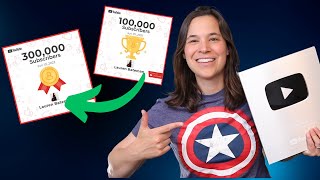
Lauren Bateman grew her guitar tutorial channel to 300,000 subscribers by studying competitors, repackaging old videos, and going live more often. She rereleased a 2020 finger-exercise video in 2023 and it hit 1M views faster the second time around.
Questions this video answers
She crossed over 300,000 subscribers.
Since 2017.
2020.
About four to four-and-a-half months.
A 30-day "YouTube jumpstart" course.
Chapters
I learned a lot of things on my journey to 100,000 YouTube subscribers. But what have I learned now? That I've just crossed over the 300,000 subscriber mark. Gonna share that with you in this video.
A lot of my friends who are guitar teachers or even people who are just starting on YouTube, you know, they reach out to me on Instagram and Facebook and they're like, lauren, what did you do to build such a big YouTube following? And I really kind of reflected on what I've been doing the last year and a half, which is a little bit different. Different than what I did when I tried to get to my first hundred thousand subscribers. So I'm going to go through each one of those points right now. One of the biggest things I've done is I've become a lot more strategic about the content I'm posting. What do I mean? I actually do research. When I first started on YouTube, I was just like, I'm going to record this video, I'm going to throw it up, and I'm going to see what happens. And sometimes it works and sometimes it didn't. It was a very haphazard kind of process. But now what I do is I actually spend time on YouTube, watching other people's YouTube content. I know who my top competitors are. I watch and see what works for them. What's not working, Will that work for my audience? All right, I have an audience that's an older audience. So if someone does something that seems like it's more for, like, a younger audience, probably not going to fit well on my channel. And what I'm doing is I'm looking for videos mostly that are successful that I can replicate. Either I'm going to watch their video, and I'm going to say, how can I make this better? Or can I put a completely different spin on this that makes it more valuable to my particular audience? YouTube has tons of information. Use the people who are successful and try and replicate the content that you think is going to work well for. For your audience. The next thing I did is I stopped worrying so much about, you know, Vid IQ and TubeBuddy. They're great tools. They really are. And I think in the beginning, especially when you're just getting started, focusing on the SEO and the search is a good thing. I mean, search is still the third way that people find my content on YouTube. It's a search engine. All right, well, that's what I tell YouTubers when they're just getting started. Remember, YouTube is a search engine, so make Content that is searchable. Find the top 10 questions that your clients or audience would have and make content around them. Okay. And find things that are searchable. But as I got into my YouTube journey, more and more, it started taking a lot of the fun out of just pressing record and recording content. And I've been doing that a lot on this channel. I haven't been worrying too much about what's the best keyword in the algorithm that's gonna, you know, that's not what's important. What's important for me at this stage is that I'm making content that I have fun making and that I enjoy. And it was really starting to burn me out. I was starting to get into, like, that content grind of being like, I really don't want to make content. All right? This is like the fifth or sixth video I'm making today. And I'm just in a mood to make content because I'm excited about what I'm doing. So if you're getting started with YouTube or you've been on YouTube for a while and you're feeling like fun is kind of being sucked out of it, my recommendation to you would be, go back to what was fun. Just start making content. Don't worry about if it's going to be a hit video or not. Just get back into the flow of making content, and I guarantee you some of those videos are going to be amazing and get you lots of views. Now, I've been on YouTube making guitar tutorials since 2, 2017, so I have a large backlog catalog at this point. And what I've been doing the last couple years is going back and saying, hey, which one of those old videos were successful? Can I redo it? Will it be better? I did this recently with a video of mine that I released in 2020, and it was a finger exercise video, and it got over a million views. And I think, like, it probably took at least a year to get to that million view mark, but it did, and it started going off. And then I noticed that, you know, the viewership was starting to decline on this video. And I said, you know what? It's been a few years. I'm gonna rebake that video. I'm gonna make, try and make it a little bit better, really focus on an amazing thumbnail, an amazing title. And I'm going to re release the 2023 version of this video. And when I did that, that video got to a million views in about four months. So it just goes to show you, you know, in 2020. I don't even think I had 100,000 subscribers in 2020. I probably only maybe had 30 to 40,000 subscribers on my channel. So you release a video and it could be a great video, but you don't have the subscribership or you don't have the YouTube authority on your channel, versus a channel that has 300,000 subscribers. YouTube knows what my channel is about. It knows who my audience is, what they're watching. So I rereleased this video, and like I said, within four and a half months, it's already over a million views. And I knew it was going to knock out of the park because it was a video that had already been successful. So even on a small scale, pay attention to the videos that are doing well. You know, if you have videos that are getting 100 views and then you release a video and it gets cheap, 200, 300 views, you're like, oh, I did something different here. What did people, like, do that again? I call them micro trends. Watch for the micro trends. And then as your channel grows and it gets older, start going back to your back catalog and saying which videos were good that I could remake that I know will be successful. And the next thing I found super helpful and a huge game changer was making more connections with my audience. I started going live on YouTube more. I started using more of the community and the story features, and I started just talking about myself more. The first I would say, two or three years of me being on YouTube, it was just like, here's a guitar lesson. Here's a guitar lesson. Here's a guitar lesson. And I didn't introduce any bits and pieces of my story. All right, well, why do I like this song? What's cool about this song? What's fun? Or just going live and doing Q and A and saying hello to people. Don't underestimate going live and connecting with people and just being like, hey, put in the chat where you're calling in from. Hey, Steven. Hey, Jen. Like, for someone to hear you say their name when they look up to you, when they're like, oh, my God, Lauren just said my name. Like, oh, my God. It's an exciting thing. I remember when I would watch people that I liked on social media, and they'd be live and they would say, oh, hey, Lauren Bateman. How's it going? I'd be like, oh, my God, they just. Did you hear that? They just said my name. And it's super exciting. So don't be afraid to share those personal moments, you know, those aren't the videos that are going to go viral or get millions of views, but they're the videos that are going to help you connect with your audience more. And the more you connect with your audience, the more they're going to align with you and your brand and the more likely they will be to buy products and services that you're offering. Probably the biggest thing I did that I changed in the last couple years was that I actually started getting some coaching in YouTube. I started going to networking events and going to live events around content creation and YouTube because, you know, I was always working with business coaches, but it's very like generic. So I really dialed in on people who were successful on YouTube, knew the INS and outs and could help me polish my strategy and help me get to the next level. And we really did a lot of focus the last couple years. Thumbnails, titles, you know, working on the community. These are all things I worked on with different YouTube coaches that I worked with that I learned. And I'm like, wow, this stuff is. This stuff's really great. And I feel like it really did help me catapult to the next level of YouTube. I was definitely, like I said, number one, became way more strategic about what I was doing. I make less content now than I did maybe two or three years ago, but I've been way more strategic about it and my views are still up from where I was two, three, four years ago. So if you're feeling like you're in a little bit of a rut with your YouTube channel and getting that content flow going, I highly recommend you go check out my YouTube jumpstart course. It's a 30 day guide to really get you more focused in and a little bit more strategic on the strategy you should be using when you are a smaller YouTuber. So go check that out in the link in the description below. I'll see you guys real soon.










