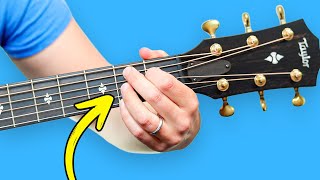
Lauren Bateman shows how to play an open B7 chord and why it sounds twangy. The trick: mute the top string, use your pinky on the first string, and practice switching between B7 and E minor. Try it with the Rolling Stones' "Paint It Black".
Chapters
Hey, guitar enthusiasts, I'm going to be showing you how to play a B7 chord in this video, and I'm going to show you a great little trick for practicing getting in and out of the chord and making it comfortable.
So the B7 chord has a very nice twang to it. It sounds like this. And the reason it sounds that way is because of that seven. All right? It's that bluesy seven twang. And it's a really great chord that pops up up in. In quite a few songs. It's common enough that you should know it. And if you're someone that loves blues guitar, then you're definitely going to want to know the seven chord. So first, let me tell you how we're going to play the B7 chord, and then I'll show you the little trick for practicing it. Now, there's a couple ways to do a B7 chord. You could do the open version that I'm going to show you here. There's also a couple bar chord versions.
But we're going to be focusing on the open version here. And where we're going to start is we're going to start with our second finger now. Now the second finger is going to go on the second fret, fifth string, okay? And the tricky thing about this that's awkward is we have to put three fingers on that second fret. But the cool thing is we're going to skip over the fourth fret, and we're going to put the third finger on the second fret of the third string. And the pinky is going to go all the way to the bottom on the E string, second fret. So it's like you have a finger on every opposite string. So. So let's do that again. So second finger on the fifth string. Second fret. Third finger on the third string. Second fret. Pinky on the first string, second fret. So basically every odd string number, we have a finger at the second fret. And then the first finger is going to come in on the fourth string, first fret. Okay? So let's make that shape. Put the first finger down. If you strum it, you should hear that twangy, bluesy sound now as a note. So you guys, my second finger is kind of muting this top string, okay? So I have. The tip of my finger is just barely touching that string. Because usually we don't want to play that top string on a B7 chord. It's gonna sound even worse than what it sounds like already. So we want to try and mute that string. And that's great because if you're strumming along with this chord, you don't have to worry about if you're accidentally hitting that top string. So one more time creating this chord shape, and then I'm gon show you the trick. For practicing this, we have the second finger on the second fret of the fifth string, third finger, second fret of the third string, pinky on the second fret of the first string, and the first finger on the first fret of the fourth string. There's also a couple bar chord versions.
And we have our beautiful B7 chord. Now the trick I show my students to practice this, and I'm going to recommend a song at the end of this video that you guys should definitely check out. We're going to be doing an E minor chord, but we're going to be doing it with the second and third fingers. So this is one application, because there's many ways to play an E minor chord, and they're all correct. But in this certain application, I would use the second and third fingers, because what does this do? Creates a pivot point. And you guys know, if you guys know me, I like to make guitar make sense and make it simple, right? So I love pivot points when we can find them. So this creates a pivot point from B minor. The second second finger is already in place. Now you just have to move that third finger down one string, put the pinky on the bottom, add the first finger. Okay, so this is how I practice B7 with my students. First, we'll go E minor to B7.
Okay. Just doing one strum per chord, back and forth. E minor, B7. E minor, B7, E minor, B7. And then what we'll do is we'll apply it to a song. And a really, really great song for practicing. Just this chord change and chord transition is painted black by the Rolling Stones. So if you guys want to learn how to play that song so that you can play this B7 chord, go check out that video right over there.