Tips for Learning Guitar in 2025 - This is YOUR year!
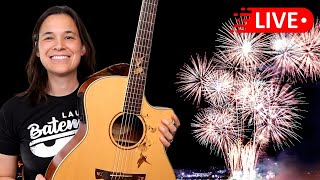
Lauren Bateman shares how to stick with guitar in 2025, starting with short focused practice sessions and a metronome. She says plateaus are normal, skip heavy theory at first, and track your progress in a notebook. Her teaching system includes 70 lessons with a 60-day money-back guarantee.
Questions this video answers
January 4, 2025.
To get students playing real songs in 14 days.
70 lessons and about 90 practice lessons.
A 60-day money-back guarantee.
Danvers, Massachusetts.
Chapters
Hello, hello, hello, Hello. Oh, we got lots of bright lights here. It's my first time going live in the new studio. Hello. Hello. Welcome. Happy New Year. James, Michael, Jose, Rob. Hello, David. Good morning. If you are here in the US and Canada. Good afternoon if you're in the UK and it's probably evening or very, very early in the morning, if you're in Australia. Hello and Happy New Year. You can see I'm in my new new office. Don't worry, I brought the turtles in the car. They're here, so don't worry. But you hear a little bit of an echo. It's because I'm still setting things up and treating the room. But thanks for being here so soon after the new year, because this is the time of year when I have a lot of new students who got a guitar for Christmas or they're just starting to learn, or maybe you've been with me for a few years and maybe you got off, you fell off the horse and you're trying to get back on because it's New Year's and we always make these great New Year's resolutions. The downside is that most people give up on their New Year's resolutions, usually by February. So my goal here is to help you not do that, is to help you continue. Because they say, I don't know if it was Fender who did a study or Gibson, but they say, I think it's like 80 to 90% of people who start playing guitar give up within the first year. And I would even say that's probably the first 90 days. And the reason for that is the plateau. Okay? So when you get started, you all know, some of you probably know I have a free crash course. Okay? So if you go to laurenbatement.com crash course, I have this free course. And the goal of that course is to show you one how I can help you. You know, how having a system and learning things in a specific order can really help you make progress faster on the guitar. But it's also to show you that it's. It's doable and that this is possible. Because my goal with that free course is to get you playing real music, real songs, and in. In 14 days, that's the goal. Someone says, I got my guitar for my 32nd birthday and been slacking. It's 2am in Australia. Holy smokes. I figured. I was like, it must be very early in the morning. Happy New Year, Dave. Delbert. Hello. Hello. And Grant. Hello. So like I said, the goal of that course is to help you play songs and people get really excited because they're like, yes, this is awesome, this is great. I can do this. You know, it's really important to get that confidence boost to know, because believing in yourself is probably the most important part of the process. And if I can help you believe in yourself in the first, you know, 14 days, that gets you over the first hump, okay? Because what's going to happen is you're going to start learning chords, okay? And you're going to have to, you're going to have to change between the chords and your fingers are going to have to move fast enough and it's going to get hard. It's going to get hard and you're going to start saying, maybe this isn't for me, maybe I'm not cut out for this, maybe I'm not talented enough. Let me, I wrote a quote down because I wanted to have it for today. Actually texted it to myself. It was a very, very great quote. And it was. Everything must be hard before it can be easy. I think it's a Chinese proverb. Again, everything must be hard before it can be easy. So learning the guitar is not easy. Okay? But we can break things up into like little bite sized snippets to make it more manageable. Like they say, the best way to eat an elephant, one bite at a time. Best way to learn guitar, one lesson at a time, okay? But there's going to come points. You're going to hit a plateau. There's no way to avoid this. And what happens in learning is you get bursts of progress and then you get a plateau where you feel like you're not really getting further along on the path. You kind of get stuck. And what you don't realize is within that plateau, you are building upon the foundation. And then all of a sudden, out of nowhere, you're going to start making another burst of progress and then there's going to be another plateau and another burst of progress and another plateau. And people tend to give up on those plateaus. It's just like weight loss, okay? People, they start losing weight, they lose, you know, three, four, five pounds very quickly in the first few weeks. And then all of a sudden they plateau. Like the weight's not coming down. Nothing's like nothing's happening. And they start thinking that the process isn't working. Going to the gym is not working, eating healthy. Why am I doing all of this? I'm not seeing any results. But for the people who stick with it and get through that plateau, on the other Side is another burst, okay? And it's the same thing with guitar. So that's my biggest thing. And what I would recommend. I'm going to reach down real quick. Should I start learning songs immediate or wait until I learn chords in theory? Great question, Wolf. Avoid theory in the beginning. Don't worry about theory. You don't need it in the beginning. As a beginner, my seven level guitar system, we really don't talk about theory because it's. It's not necessary. I didn't know much about theory myself. I wrote at least one full length album. I recorded a full album not even knowing what key my songs were in. That's how little music theory I knew. Eventually I did learn music theory because I do think it's important. But for beginners, I think it will bog you down and it'll be over your head because it's like a totally different language. So this is what you need, a notebook. Okay? And what you should be doing on this notebook is writing down your goals, your progress, what you're working on, but most importantly, your speeds. All right? So my seven level guitar system, I teach students. Use a metronome. Okay? Use a metronome. And a metronome is just a click. And it tells you how fast you can do something. Because whether you are getting better or not is subjective. It really is. So by having a number and watching that number go up every week, it shows you you're making progress, even if it's small increments. Okay.
I have, like little practice sheets. I have chord charts in my seven level system. And I tell students, fill it in week one, write in your time. Then week two, write in your time. Then Week 3, Week 4, right in your times. And then, you know, you're gonna see that moving up over time if you are practicing correctly. Okay? Yeah. You made it to the stream. Dave. Happy New Year. Joseph, how are you doing? And who else is on here? Stuart, any good suggestions for learning chords for someone with dyslexia? That's a tough one. My niece has dyslexia.
And I think the best thing is to really trust your ear. Because I know with the eyesight, it can kind of like make things go which way and the other. So the best thing is to trust your ear. So what I would do if you're someone with dyslexia, I would listen. Don't. Don't count on your sight listen. And then, you know, play your chord. You know, play it what it's supposed to sound clean. Know what a clean chord sounds like. Because then if you put your finger in the wrong spot, you know.
Like, oh, that doesn't sound right. So you can fix it by ear. So I would trust your ear more than your eyes as best as possible. So that would be my recommendation for that. Happy New Year. Yeah, I'm fighting chord. Mute the pads of my fingers. Yeah. And see, that's a. That's something a lot of students fight with. And that's a plateau point. It really is the chord muting and the pads of the fingers, and eventually you're going to develop calluses, and it will make playing the chords much easier. But this.
Okay, this. It takes time for that to go away. And it's. Sometimes it's not because you're doing something wrong. I mean, it is, but we're talking like little millimeters of change. It could be the angle of your wrist, it could be the thumb or. But I find for a lot of students, it's the stretch and it's the flexibility in your hands. You might not have the dexterity yet that you need to do this flawlessly and easily. That's why in my seven level system, I teach you the simple chords first because we really. I really focus on getting the fingers moving first because for all my students. So I specialize in helping older adults over, you know, 50 plus have fun playing the guitar. And I'm sure some of you are in, you know, on here. Are in my course or done my course. If you're in my course or you have done it, let me know in the chat there. Would love to hear from you. But I focus on finger dexterity a lot because I find that's a missing component that a lot of people don't focus on. But it's the biggest foundation that a lot of people are missing. And that's what it takes to really, one, get the chords moving faster so that you can start, you know, playing better strumming patterns. And two, it works on the nimbleness and the stretch of your hands. So something like a simple spider exercise. Okay. So if you take the free crash course, this is in there. Okay. And it's just a simple spider exercise to start stretching out your hand. Okay. Eventually you want to be able to do it up here. Okay. And you want it to sound clean. So some of you might be, you know, doing it like this, and that's okay. You start off by going slow. Okay. But then eventually you pick up the speaker. Okay. Good morning, Dave. Good morning, Star and happy New Year, Annika and Joey. Hello. Hello, Bob Russell. Yeah, you're fighting. Yeah, I already read that. Fighting the chord mute. Morning from Minnesota. Oh, you started my 14 day guitar course a couple years ago. It was amazing. Starting block. Yes. Thank you, Ginny. Yeah, and that's what it's there for, is to give you a system. And, you know, I find a lot, you know, I love YouTube. We're here on YouTube now. I get to say hello to everyone. I get to welcome you into the new year and share tips and tricks with you. The downside of YouTube is that there's so much information. And you'll watch a video by me and I'll say one thing and then you'll go watch Justin and he'll say another thing and then you'll go watch Andy and he'll say something totally different. And then you'll go watch Rick Beato and you're like, I have no clue what this guy's talking about. I love Rick. I love Rick. He's a great guy, but he's definitely like way advanced, even beyond my level. I watched some of his videos and I'm just like, I have no clue what he's talking about. But you'll listen to all these teachers and we all come at things from our personal experience and what's worked for our students and what hasn't worked. You know, a lot of them went to university, so they studied music at a music, you know, institute. And I kind of taught myself how to play guitar. So I learned how to do it from a fun perspective versus, you know, a university perspective. So that's the downside is there's so many different opinions. Okay? Because you can play an E minor chord like this, you can play it like this, you can play it like this if you want to. It all sounds the same. But the reason why I teach the E minor chord with the first and second fingers is for a very specific reason. It's because it creates a pivot point. Okay? I like creating pivot points in chords because it means you have to move less fingers to create the chord. And in the beginning, when you're learning guitar, moving one finger is hard enough, never mind moving three or four at the same time. And most teachers start you there. They start you with this C chord and this G chord and the D chord and the A chord, the A chords. A pain in the butt. I don't teach that until level four, but it's, it's a pain in the butt. And there's many different ways to play the A chord. But if you pick one person and it doesn't have to be me. If I'm not your person, that's okay. But I recommend pick one person and stick with them. All right? And if you're looking for a step by step system, definitely go check out my seven level system. Okay. Laurenbateman.com forward/course. I actually pinned a link. There's one below this in the description, but I pinned one to the chat here live. Go check that out. Okay. YouTube is a great resource, but you don't know if you're ready for the materials. Because YouTube be like, oh, you watch this next and then it won't be the right video for you. So I get a lot of students who are like, I learned this, I learned this, I learned that. I got a couple pieces of a song I can play here, but I can't play a full song, okay? Because they're kind of learning in this haphazard way, which tends to happen on YouTube. And the best way to learn anything is a system. Okay? Is a step by step process. Even if you put someone into a bad system, they will make better progress than someone who has no system at all because they're following along with a game plan. So my highest recommendation to you in 2020 is getting a system. And again, it doesn't have to be my system, okay? It could be someone else's system. I just recommend that you find a teacher that resonates with you, okay? Because my teaching style doesn't match with everyone's learning style. But if you feel that my teaching style resonates with you and you think it's going to help you get to that next step, I highly recommend that you go grab the course because it does give you the blueprint. Now, I have a lot of students who tell me, lauren, you know, I'm on a fixed income, Social Security disability. You know, I can't do the course. That's totally fine. There's the free crash course and then there is the stuff here on YouTube as well. Okay? It's just, it's not in order and it's kind of all over the place. And you might not know which songs are appropriate for your skill level. So like in the course, I'll say, hey, go learn these songs. This is appropriate for your skill level. Now go check these out and try and play along with them. And that's the benefit of the course versus learning here on YouTube because people ask me that all the time. Like, Lauren, you get so much free stuff on YouTube, why should I buy your course? There's a lot of practice stuff. What People don't. So there's 70 lessons in the course. But what people don't realize is there's 90 practice lessons in the course as well. So. So it's not just the materials, but there's videos where I'm like, okay, let's practice a C and a G chord. And we'll sit there together at different speeds. And I'll be like, okay, let's go. Let's practice a C and a G chord. Because I have found teaching in a room, it's easier for people to get their timing off of me and me playing versus using a metronome. Metronomes, especially for beginners, they're hard to tie in with. But if you're with me and I'm like, okay, let's go. Ready? I'm going to set the metronome. Keep up with me. Ready? Here we go. And C and G and C and G. All right. So I've had so many students tell me, Lauren, the chord change practice videos were the most beneficial thing that they have because most people, when they practice chord changes, they do this.
Like, okay, that was enough. And it's like, you did six chord changes. Really, you should be doing it for, like, two or three minutes at a time, really going slow, working on the motions. And that's what people were like, I just put the video on. I practiced with you. It's two or three minutes. And I know that I did the appropriate amount of practice for that particular chord change, so that's super helpful. And then there's strumming, play alongs, and there's a lot of application stuff that's in the course that you don't find on YouTube. So all the practice stuff, practicing along with me, that's in the course. You're not going to find any of that on YouTube. And I really think that's the most beneficial stuff because that's the thing people ask me all the time. How do I know what to practice? How do I know how long to practice it for? And how do I know when I'm ready to move on to the next thing? Okay. And I kind of give you guidelines in the course on that as well. You're just starting, Ruth. Yes. Yes. Dave says if I get your system, is it just for a year? Am I slow learning? Hi, Dave. No. Once you buy it, you own it. That's the great thing about it. Yeah. So if you buy it, you own it, and you get to keep it for as long as you need. Okay. At least as of right now, we have been Discussing possibly turning it into a subscription. But right now, if you buy it, you will own it and it will be yours for as long as you need it. So that's the great thing about that. And it says, so happy I found you. Alarm was giving up and felt totally useless. But I just found you and already found some hope for learning to play. Oh, Annika, that's awesome. Yeah, I'm so happy to help you. And you know, I. That's why I say you got to find the right teacher that you connect with because we all explain things in different ways. And again, like I said, if you're connecting with how I teach, the method, even the pace of how I teach, I've. I've watched a number of YouTube teachers on. It's funny because when I edit my videos, I'll be, you know, I'm usually in my office or sometimes I'm at the dining room table and I listen to my videos on 2x speed. So I go, so if it's a 15 minute video, I review it. It takes me about 7 minutes and I'll be listening to it on 2 times speed. And I'll be doing something where the student has to play along and my wife will walk by and she'll go, you know, the funny thing is you're at two times speed. And many of the YouTube teachers on guitar, that's how fast they teach, that is at that speed. So I tend to go a little bit slower, which I get yelled at all the time on YouTube like, you talk too much, you're too slow, speed it up. Which I will never do because that's just not my style. I'm a little bit more even kiltered. So Anton says, go for it guys. Trust me. I got. Oh, Anthony. Yeah, the course last year and I play now easier than ever. I completed the seven level course, the finger picking course, and the bar chord course. And it's been amazing progress. Well, thank you, thank you so much. Thank you for all for loving my Horse with no Name sounds like a song with no name. That's a great, that's a great point, Dave. Let's talk about that. So in the beginning, you know, one of the first songs I teach is Horse with no Name.
Now yours might not sound sound like that, Dave, right now. So when I teach it, it probably sounds more like this.
And if you just hear that, it's not really a lot to go off of and people are like, it doesn't sound like the song. So in the beginning we have to keep the strumming patterns. Simple. I. This is way too complicated.
By the time you get to the end of the seven level, you'll be able to play it like that. But in the beginning, I can't teach you that because, one, you don't have the timing and rhythm skills for it. Two, you can't change your chords that quick to do that Strumming. And there's a few other things we. We want to work on, but songs are layers, okay? So usually what makes a song recognizable is the melody. You know, I've been through the desert on a horse with no name. Once you put the melody in, it starts making sense. It starts sounding like a song. But you have to think of bands like the Eagles, who sometimes have three or four different guitar parts layered on top of each other. We have a drummer. We have a bass player. Sometimes we have violin. There's so many layers to a song that makes it a song, and that is a frustrating point for a lot of beginners. They're like, this doesn't really sound like the song yet. So, like, you'll play something like Brown Eyed Girl, which is gcgd.
I mean, it really could be any song. It really could be any song. And, you know, what makes it that is, you know, hey, where did we go? You start singing and people like, oh, yeah, it's Brown Eyed Girl. Awesome. That's so cool. So eventually, that's something students will want to get into. Some of my students, or a lot of them start singing and playing at the same time, which is. It's. Which is its own challenge, trust me. But that becomes a plateau point for people because they're like, I'm playing. I'm strumming. It doesn't sound like the song. This sucks. I'm going to quit. Okay, don't quit. Don't quit. Stick with it. Because it takes time to get your fingers up to speed, to learn more chords, to learn more strumming patterns. And I would say by the time you get to level six and seven, you're starting to feel like a really good guitarist. Are you amazing? No, but can you play around the campfire for family and friends? Absolutely. Could you play, you know, songs at the holidays? Sure, yeah. I've had people go and play in bands with their friends or do open mics, so you absolutely can. But understand, it's a process. Okay? To all my students, learning the guitar is a journey, okay? And it's unique to everyone because some people go fast, some people go slow. I saw someone earlier.
Say that, you know, I'm a slow learner. That's fine. If you move at a slower pace, totally fine. Not a problem. It's your journey. Okay, someone. Some people want to do country, some people want to do rock. Some people really want to do like the singer songwriter acoustic thing. Some people want to do blues. And I do. Some people don't know. I have a blues guitar course. I have a Blues Guitar 101 course if you're interested in that on the website laurenbatement.com courses I believe I have all my courses on the website. So even though, you know, you see me here and I mostly do, you know, the acoustic guitar kumbaya, strummy strum thing, I do have electric guitar courses. I have a lead guitar 101 course. I do have the blues guitar 101 course. Even in my strumming course I added a whole section for electric guitar and rock rhythm. So there, there's all kinds of fun stuff. So even if you're not an absolute beginner but you're looking for that next step, I have courses on my website that are beyond the absolute beginner level. Lauren is the most dedicated and authentic guitar teacher. Her course is a unique step by step lessons that will help you achieve your goals. Thank you so much. You make me blush. That's. Someone said. I just uploaded a video recapping how my first guitar Lesson back in 97 went. It was good hearing from my viewers. Their first lesson went, yeah, absolutely. You know, I've had a lot of students who, who've had very, very bad experiences with guitar teachers and I've had some myself. And you know, don't take that as you. There's a lot of really amazing guitar players out there who are not good guitar teachers. It's very, very hard. So you, some of you may know I own a music school in the Boston area. We just opened up a new one in Danvers, Massachusetts. So if you live in the Danvers, Mass. Area, come check us out. LB Music School. But we just opened a new music school and you know, I look at people's retention and you know, when people aren't doing well, it's very hard sometimes to have a conversation with someone and say, hey, listen, based on this data, it's telling me that you're not giving your students what they need. And I one teacher, he was very strict on sight reading, which I'm not a big fan of, but he had a system so I let him go with it. But he was losing a lot of students and usually I'd say particularly the Adult students, I would say, listen, take a lesson. Take lessons with me with. For one month for free. And if you are not happy, I'll just. I'll. I'll refund you some money. No, I never had to refund anyone any money, okay? Because my goal was I didn't teach on the university side. So sometimes I get teachers and they get stuck in that university mode, and it hurts their attention. I really have to train them and say, hey, listen, most of the people coming through our doors don't want to be professional musicians. They want to be, like, rock stars in their bedroom, rock stars at home. They might want to play Kumbaya or play with some friends, like in a garage. But most of our students aren't looking to matriculate and go to Berkeley, which is in Boston. So, you know, it's a very hard thing to get some of those really strict university types to become good teachers, because being a good teacher means you have to listen to the student and kind of give them what they want, but also what they need. So it's a fine line. It's a fine balance. So if you had a bad experience with a teacher, one, I apologize. I know it's not my fault. But, you know, there are good teachers out there. You probably just have one of those teachers who. Who doesn't know how to teach, but they might be a phenomenal guitar player. All right? There's. Most of the guitar teachers in my music school are better guitar players than me, but there's probably not many that are better teachers than me, because I do think they're. They're two different skill sets. I have a few that are just as good and some that might even be better. But very far and few between have I found teachers that can really connect with students and find that balance. It is really tough. So if you had a bad experience, just go find another teacher. All right? And if you don't, if you live someplace where there's not a lot of people locally, try an online course. I've had a lot of students tell me that my online course was better than the three, four, five, six months of lessons they took privately, one on one with another teacher. Okay? Because again, most teachers. I've had teachers start students on bar chords, which are hard. They are very hard. I would never teach a new student a bar chord. It's hard. It's frustrating. Okay? I rather you enjoy the instrument, have fun with it first, and then we can make it harder. Learning the guitar is hard enough, but if I can find ways to make it easier for you. I'd rather make it easier in the short term so that you can start having fun. Get to love the instrument. Because if you love the guitar, it's less likely that you're going to quit. It just. Is it. That's. If you love something, you'll want to practice, you'll want to keep doing it, and. And you'll love it. And that's what we want. I want you to love the guitar. First fall in love with the process so that when it starts getting harder, you can push through that. Because that is the biggest barrier is when it starts getting hard, which is usually 60 to 90 days in. Okay. It starts getting hard, and you start questioning whether you want to continue. Don't. Don't do that. Okay. Keep going. Get on a good program. Follow the process. Follow the journey. Okay. If you've ever gone on a hike before, sometimes there's easy parts, sometimes there's hard parts, but when you get to the top of that mountain, the view is almost always glorious. Okay. So it's worth the effort. I absolutely promise you it is worth the effort.
Is it possible to learn with really bad arthritis? That's. That's a tricky one. It really does depend on how bad the arthritis is. I had a lot of my students in full transparency. A lot of my students do have arthritis, and I recommend some things. So one, particularly for my students who have arthritis in the thumb, it's really hard for them to hold on to the guitar pick. So there's these great picks. I don't know if you can see it here. These are called black mountain picks. It's just a little spring on the back. It's more for finger picking. But now they make. They have these really thin ones, and I've been recommending them to students because you can strum the guitar.
Without needing to hold the pick. So that's been very helpful for a lot of my students with arthritis. Some of them. I had a student in person who had very. And my dad has rheumatoid arthritis. So trust me, I know how bad it can be. I have one student, she couldn't do bar chords like we tried, and she was just like. It just hurt her fingers too much. But she was able to do open chords. So whenever she needed to do a bar chord, we would just turn it into, like, a modified open cord for her. So there are ways to do things. Again, I don't know how bad your particular arthritis is, so I can't guarantee that it's possible. But I find also A lot of students with arthritis can usually do a lot of single note melody lines. So maybe like more like lead guitar, you know, where you only need one or two notes at a time, that's also a possibility. I really believe where there's a will, there's a way. And if you're willing to put the time in to figure it out, there's people who don't have hands who play the guitar with their feet. So I'm never going to tell a student no because I really do firmly believe that if there's a will, there's a way and you'll figure out a way that works for you that allows you to have fun. Is it my system? I'm not 100% sure. Um, but if you want to, you do have a sick. There's a 60 day money back guarantee. So if you want to buy the system and it's not going to work for you, that's totally fine. We'll just give you your money back. I want to make sure that if you're buying something that it's going to work for you. So you could always try it. And if it is too hard with your arthritis, just email my team and we would absolutely give you back your money. There is no question on that.
Someone says, I'm a teacher. Your pacing is always right on. Thank you so much. That's awesome. Lead, rhythm, chord, melody, practice, all equally. Philip asks, you can so lead. I mean, when you're playing lead guitar, you're still practicing rhythm. There's still phrasing. Okay. There's still, there's still timing to it. But in terms of chords, I would, I would. I usually break it up into sections. So if I'm going to practice chords, I'm going to do my chord changes or I'm going to learn new chords. I'm going to do that as a section of practice. Then if I'm going to, you know, do scales and work on lead guitar stuff, I would do that as its own section within my practice. And then, you know, chord, melody and all that stuff again, another section of my practice. I usually tell students, when you practice, break it up into two or three, three items. All right, so you have your warm up and then maybe you're going to practice chords, all right. Changing between chords. Then you're going to practice strumming. Then maybe you practice a song. I would consider those three. One of the song is actually the application. So application is also a kind of sub genre or a topic you could practice in. Because if you're Practicing five or six or seven different things, your body, it's hard for your body to retain that. So it's better to do short practices. I'm talking, you know, Even if it's 10 or 15 minutes, but a good 30 minute practice, breaking it into 10 minute sections is really a great way to, to practice a number of different things. Yeah. Tips for a blind player to remember all the chords to a song. Oh, Jeff. Yeah, that's a tough one.
You know, for me, it's even hard for me to remember things. When I was performing, I. I had a lot of songs memorized. I don't nearly have half as many. Maybe even like 10% of what I used to be able to play. I can't play anymore because it, it's just gone now. I'd have to remember them all. But what happens is if you play a song enough, it just becomes ingrained in your memory. And what do I mean by playing a song enough? You might have to play the song, the same song 300, 400, 500 times before you really have it. Like that's how much it takes to get something really performance ready for me. What I would do, you can really, if you're trying to learn and memorize songs, I wouldn't do more than like two songs at a time, maybe three max, because your, your brain can only absorb so much information. So what I would do is I would just. Usually I'd memorize the chorus first because that was the easy part, and then I would, I would write it down. But if you're blind, I don't know, maybe you can't see the writing as well. What I would do is I would just sit with the chorus and play it over and over again, over and over again until I had it inside and out. Then I would learn the verse and then I put it all together. But I wouldn't try and learn a song in its entirety in a single session. I do break it up. So that's the best way to do it. Hey, Lauren. From a snow free but cold buffalo. Yeah, I'm up in New Hampshire. It is cold. I don't know what the temp. Oh, actually I put a thermometer up here because I don't have heat up here yet. I just kind of have a space heater. We're working on that. Maybe in the spring. Let's see. I'm. I'm gonna guess it's maybe a comfy 65 up here. Let's see, I, I have like a little app. Oh, it's only 60. So it's 60 degrees up here. But my, my little space heaters right here, you can't see it. It's out of, it's out of frame. But I'm very comfortable and I'm wearing a long sleeve. So we're good to go. We're good to go. Up here in New Hampshire, John says, never had a lesson self taught, which means I learned from someone who doesn't know anything. I mean, I wouldn't say that. I wouldn't say that. I'm mostly self taught too. And I have bad habits. Trust me, I have things and I tell students like the way I hold my guitar pick. I don't know if you can see it. I hold it typically with my middle finger, which really isn't the best way to do it, but that's just how and what. When I finally took guitar lessons after playing guitar for like 10 years, I was like, I should probably get some lessons and learn how to do this the right way. My guitar teacher worked for a very hard time to get me to hold the pick a different way. And she's like, if at this point it's just what you do. So sometimes when you watch my videos, I'll hold it with this finger, sometimes I'll hold it with this finger, sometimes I'll hold it with both. And I don't think either way is wrong. As long as it's comfortable in the picks not falling on the floor, then it's a win. Okay, it's a success. So, you know, just because someone is self taught, I'm mostly self taught myself. They still have experience. You know, it's like someone with a college degree versus someone who's been in the field doing it for years.
Two very different things. I would take the person without the college degree and the field experience versus someone who has the degree with no field experience. So there's pluses and minuses for sure. There's always, always trade offs. Freezing in Germany. You were in the Air Force in Portsmouth? Yep. I'm. I'm about 20, 30 minutes from Portsmouth. William. Yep. I hear the planes go or I see the planes fly in. Sometimes the, the military planes, sometimes from the highway. Amy says, hi, Lauren. I got a guitar in May for my girlfriend and I've been learning with your videos. Awesome. Currently trying to learn Wonderwall. That's drumming pattern. Yeah, Wonderwall. That is a very. I don't have my capo here to make it sound like Wonder. It's a very difficult strumming pattern. I would consider that more intermediate.
So it's. It's a very syncopated pattern because the. The timing isn't always on the down strum, and the chords sometimes change on the upstrom, or a lot of the chords change on the upstrom. We call those hopping rhythms. I talk about those in my expressive rhythm course. It is a more into. The chords are easy enough. The chords are easier, but the strumming. The timing on that is very syncopated. Definitely more of a late beginner, early intermediate guitar song. But once you get it, it's so much fun. That's the song I used to teach students to make them finally feel like a real guitar player. Because when you play that, like, it sounds so good and it's so much fun. So keep at it, Amy. You'll get there eventually. So awesome. Jeff Harris. Maybe the number system is like. Okay. Yep. Hi, Lauren. Love your videos. Thank you so much. We got. I'm from Mexico and I have 20 years in the U.S. hello. Ruth from Virginia. Yeah, three weeks now. Teacher just teaching me A minor. E minor. I'm getting bored. Yeah, I mean, so that's from Snakebite. Let's talk about that.
And then that's the balance. Like I said, we can't always give you what you want because there's things you need to. Like, this is boring. This spider exercise is boring. It's not fun, but you need it. Okay? You absolutely need this as your warm up. Which is why I always try to get people to play a song or play music as quickly as possible, because that is the fun part. Unfortunately, you need chords to be able to do that, and you have to move between the chords to make it sound musical and fun. So there are some things we're coming up against, you know, Three weeks now, he's just teaching you A. E minor. I don't know. I don't think that's horrible. As long as he hasn't been teaching you three weeks of theory in preparation for those. You know, I usually teach people for their first chord and everything in their first lesson. Typically, I have someone playing a song by the end of their first lesson always. That was my goal when I taught privately. My goal was for you to leave my music studio being able to play a song in a single lesson. That's how I know I can teach you to play songs in 14 days. Because I could do it in 30 minutes. If you were in the room with me right now, I could get you to play a song probably in the next five or 10 minutes. I just know because I've done it so many times with so many different students, different ages, different skill levels, I can do it. That was always my goal. I don't, I don't know his system or his process, but I would give him, you know, give him another month or so to work his process. He might have a reason. And you know, I can't see your notes, so I can't tell you. He might have a reason that he did that. And maybe he was working on a lot of exercises to get your fingers in shape, which is totally fine. But if he's someone who's really highly focused on theory at the beginning stage, that would be a red flag to me. That would tell me they're a university based teacher, which means they're going to teach you the way they learned at university versus the way, you know, just someone who wants to have fun with guitar probably should learn. So just keep that in mind. If they're very music theory heavy, it might not be a good fit. That's, that's usually my biggest thing. But I always trust that teachers have a process and I want you to give the process a try first. But if after, you know, a couple months you're not playing a song, that's definitely a red flag. You should be playing a song within like your first month for sure. Absolutely. And the music theory for me is a huge red flag. If you go into your first lesson and they're teaching you music theory, do not go back. Just try. It's not, it's not going to work out in the long run. You're not going to have fun. Those are kind of like my two big red flags or someone who sits in their lesson and they play the guitar in your lesson almost the entire time. That was another. I've had teachers who did that. That's a big pet peeve of mine. Like, I'm not here to watch you play guitar. I, I'm here to learn guitar. Like, I'm really excited that you're amazing and you can do this, but I'm trying to learn. So those are like my, again, my three red flags. You don't learn a song within your first month. The teacher's highly focused on music theory. And three, they're more concerned with showing you how good they are as a guitar player versus helping you become a better guitar player. Those are my big ones. Rick Beato. I love Rick. Don't, don't get me wrong. He's, he has a very specific niche. He's very advanced and he's, you know, he's Worked in the music studios. The stuff he knows is absolutely phenomenal. The guy's a genius. But I watched some of his videos and I'm like, I have no. I honestly have no clue what he's talking about. Now, I have guitar teachers at my music school that absolutely love Rick Beato. They understand, and I tease them. I'm like, yeah, you know, a sharp 9 flat 5, add 2 divided by 5 and take the square root. And they all laugh at me because I'm like, music theory is not my strong suit. I know the basics, okay? And I can admit where I have weaknesses. Rick is. He's way over my head. But I know a lot of people who love him because he speaks their language. Rick doesn't speak my language, but he's great. He's very phenomenal. I love his interviews. His interviews with the musicians and the studio stuff is. Is so cool. But I think in his beginner course, he teaches the bar chord. So not a beginner teacher, you know? I love Rick Beato. I don't think he's. He's great for beginners, but if you get to that very late, intermediate, advanced stage, I think he's phenomenal. I really do. He's. He's a good guy. I love. I love. I love Rick. Good guy. Understanding the basic music theory helped me a ton, even though in the beginning I mostly play chord songs. Yeah. Having sprinkling it in here and there is fine. But if I started talking to a beginner, being like, okay, we're going to play the root note, and now we're going to flat the third, and I want you to play, you know, the tonic, and we start talking, you know, we're going to do a simple 1, 4, 5 progression. And you're a beginner and you're like, I don't know what 1, 4, 5 is. What's a flat? What's a third? And there's a lot of teachers who do that. They'll go into a music lesson and that's how they talk because they're so used to living in that world. That's their language. Okay? So the music theory is the language of music. And I do think it's important to learn in sprinkles. I wouldn't. I wouldn't hit a student with music theory on their first lesson because it can sound like French. So for sure, it's absolutely important. I love music theory, especially if you want to be a songwriter. Nothing against music theory at all. I think it has a time and a place, and I don't think it's really within the first three months of lessons. I think you really gotta just get to know the instrument. Love it. Because if I'm trying to talk to you about music theory and you're like, I don't even know what a C chord is like, having a little bit of understanding.
Will help you down the road once you start to learn music theory. Typically when I start talking about music theory, I've usually taught the students all their open chords. And then I'll teach them like an A7 chord or a D7 chord. You know, we'll play something like hey Jude. And it has an A7 or a D7. And the student usually goes, well, why is it an A7? Because up to that point they've only seen A, A minor, C, you know, G, E minor. And I'm like, what's A seven mean? And then I'm like, okay, good. They're asking me a question, which means they're curious, which means they're ready. Okay? So usually I lead my music theory discussions based on the questions I get in the lesson. So someone starts asking me why, they're now ready for the answer. Okay, they're ready for me to start talking. But at least they understand now that there's a musical Alphabet. Okay? They know what a sharp is, they know what a flat is. They might not know what a root, a third and a fifth is, or what a chord triad is, but we can start talking about that and they can kind of start. They might not fully understand, but they can start grasping the concept. And I think that's, that's important, knowing when to throw in the theory because it's great. I highly recommend everyone learn theory. I find my engineers love theory, my mathematical people, and I'm a mathematical person. Mathematical people really love music theory because it is very formula related and very mathematical. I find typically like the people who really like English, which is not my strong suit at all. If you've ever read an email from me, you will know that English is not my strong suit. But you know, I find those clients tend to, they understand the basics, but they tend not to like music theory as much. But my engineers, they absolutely like love the music theory, so. Fantastic. Better at answering that. Let's see. Do you think that you have those chords down pay pat? Okay, someone's struggling with chords. I guess I missed that question. Okay.
A year in, I still can't do bar chords. What the heck? I'm ready to give up on bar chords. Hi, Maggie. Okay, good. So year end is probably A good time to start learning bar chords. Let's talk about that briefly, because I know there's some people here who probably working on bar chords. One, take them to the middle. The F bar chord is the hardest bar chord to play. Okay. So usually what I do with students and my. I also. You might want to check out my bar chord course. So I start people off by just getting comfortable with the shape of the bar chord.
Moving it around without barring. So, you know.
So I have a bar chord shape. This is like playing an F bar chord.
Kind of reminds me of if by bread.
Because if you can get comfortable with the shape of it, then you can bar.
But the bars are always much easier to play up here. So that's tip number one. There's less tension in the middle of the guitar. Tip number two, I don't have an electric here yet. Play it on an electric guitar first. Electric guitars are much easier. You'll build the strength faster on the acoustic. But I find, you know, maybe eight out of 10 times, 80% of the time, a student that can't play a bar chord on the acoustic can play it on the electric because the strings are a little bit thinner, easier to press. So that's another thing. So you can work on it on the electric and then build the strength on the acoustic. Other thing use. You can angle. Everyone's hand is different. I like to angle my finger. I don't know if you can see it here. It's not flat. I'm angled like 45 degrees. So I'm actually using the side of my finger almost. Or the bone like a capo. I'm using the bone to push the other thing that I do that helps me leverage. And again, everyone's hands different. I don't play the first finger on this top string. My finger. Look at it. It's way. I don't know if you can see that it's way over the top of the fretboard. Because what happens is I found this. A lot of students, the bottom two strings, depending on the length and shape of your fingers, the bottom two strings get stuck under the knuckle versus the flesh. So by doing this, I now have the flesh. Flesh of the finger on these bottom two strings. Because those are the two people usually have the most trouble getting the sound.
And just by doing that, it gives you enough leverage to squeeze those bottom two strings.
And I find that fixes it for a lot of students. It really does help. But a lot of it's just a comfort thing. If you want my Process. Look at my hair. It's great. All over the place here. If you want my process, I do have a power and bar chord course on my website. You might want to go check that out. I have some finger stretching exercises to help you because this is. It's kind of hard and there is a strength component. But if you're a year in, I definitely think that you. You are ready to learn bar chords. What famous guitarist uses bar chords? Listen, if you're a singer, songwriter, you try and use capos as much. You try to avoid bar chords as much as possible. And you can do that. Like, I have a lesson on here. I actually have a Hotel California lesson. Now. Hotel California has a B minor chord.
But if you use a capo, now, I can play an A minor chord. So I show you how to play Hotel California without needing to use bar chords. Okay? So we can do that. All right? And I can do that because I know some music theory and I know how to change things. But capos are great things. And if anyone tells you you're not a real guitar player, if you use a capo, then. Then Tommy Emanuel is not a real guitar player. Neither is John Denver, Johnny Cash, or all these other musicians. All right? You can absolutely use a capo. And if it makes it more fun for you to play the guitar, use the capo, okay? There's nothing wrong with it. I love capos. I use them all the time. All right, everyone, well, we're about an hour in. I gotta hop off and I wanted to just say happy New Year. And again, if you're looking for a system, check out my seven level guitar system. I put a link below here and in the chat, but laurenbatemanguitar.com course, go check it out. I would love to help you in 2025. And the best way to be successful with guitar is to get a course. All right? Get a system again. If it's not mine, you're not going to hurt my feelings. But get on someone's system, because I guarantee you, you will have a better chance of success succeeding and being successful with this instrument than if you try and go it on your own. I did it for 10 years myself. I learned a guitar for 10 years on my own until I finally broke down and was like, you know what? I probably should get some help. And I learned more in that six months than I did an entire 10 years. And it made me a much, much better guitar player. So thank you, everyone. Have a happy new Year and I'll see you all in a lesson video real soon. Bye bye. It.










