What Content Should I Make On YouTube
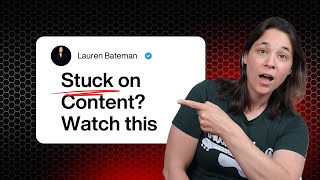
A YouTube video by Lauren Bateman advising creators how to choose focused content for their channel. It emphasizes defining a niche and ideal audience, answering that audience’s specific questions via videos, and using YouTube’s search/autocomplete (alphabet trick) to generate long lists of keyword-driven video ideas; ends with a mentorship/business pitch.
Chapters
So what should you be making content about here on YouTube? Hopefully, if you are asking yourself this question, you have already determined the topic for your channel and who your ideal audience is. If you have not done that, I'd highly recommend you go watch this video up here where I'll help you dial down the niche for your channel. This is super important before you go to making content. The reason for this is because we want our subscribers to follow our channel for a very specific reason. So if you're on YouTube and you're posting, you know, real estate content to your channel, you're posting food content, you're posting travel tips, you're posting diet tips, like, if you're posting all this different hodgepodge of stuff on YouTube, you're going to have like a split audience. So, so some of your subscribers are going to be following you for food, some are going to be following you for travel. And they'll be like, what is this channel about? What am I falling for? People want to follow something specific. So for example, if you were a cooking channel that maybe had recipes or how to cook tasty gluten free recipes, that's something very specific and is going to attract a very specific person, which makes it more likely that they're going to subscribe, subscribe to your channel and watch more of the content that you're going to be putting out. So if you're someone who does know your channel topic, you do know who your ideal client is. Awesome. I'm going to be showing you a cool trick a little later in this video to show you exactly what your audience is searching for. But before we get into that little tool, something real quick I want to talk about, we have to talk about questions. What are the questions that, that your person is going to type into a Google search or particularly a YouTube search query? So for me as a guitar teacher, you know, what are people searching for? What's the best guitar for a beginner? How do I hold my guitar? How do I tune my guitar? You know, what's the first song I should learn on the guitar? What's the first chord I should learn on the guitar? There's so many questions that beginners are asking. Say you're a fitness person. It could be, you know, what weight should I start working out with? Should I work out at home or should I work out at the gym? You know, how do I do a dumbbell exercise? You know, how do I work out my arms versus how do I work out my legs? There's so many questions that your ideal client is going to ask, and that should be the first content that you are putting over here on YouTube. Now, the whole point of using YouTube and using it correctly is someone's going to type something in search, they're going to ask one of these specific questions, and hopefully your video is going to be the one that shows up on the other end of that search. And what we' going to do is we're going to have an answer in our video and we're going to give, give, give. We're going to help these people. We're going to give them something for free and hopes that one they're going to like us. Which means they're probably going to subscribe to our channel, keep watching more of our content, and even potentially down the road, they could become a customer that will buy something from us. So what I want you to do, just take a few seconds, pause the video and write down the top 10 questions you think your audience would ask you specifically about your topic or whatever you're teaching on your YouTube channel. Bonus. If you can do the top 20, that's even better because what this is going to do is it's going to provide you the first 10 to 20 weeks of content for your YouTube channel. To be consistent on YouTube, I recommend that you're posting a video at least once a week. Okay, so if you do the top 10 to 20 questions, you're going to have 10 to 20 weeks of content that you can now upload to your YouTube channel. And it's super helpful because it's all the top questions that your clients have. So if they watch one, YouTube's going to suggest another one of your videos and they'll be like, oh, I also have that question. And maybe they'll go watch that video as well. Now, what I want you to do as well, I'm going to show you this really cool tool here that's in YouTube absolutely free, and it's going to show you specifically what your people are searching for. But I think this works best around a specific topic. So for me, for guitar, I teach a hymn, handful of general topics on my channel. So I teach about guitar strumming, I teach about finger picking, I teach chords, and I teach songs. Those are kind of the buckets of my topics that I teach on my channel. So what I could do is I could go over to YouTube search so I could type strumming in the search query. And you're going to see that there automatically YouTube's going to start filling in some stuff that people are searching for in relation to strumming. So you can see here, you know, strumming patterns. Strumming patterns for beginners. Strumming patterns for ukulele. Now, obviously I'm teaching guitar strumming without a pick. Okay? So these are some different topics that I can make content around. Now let's say you're a fitness person. So I did this example I did at home exercises. Okay? So as you see as I type in YouTube's fitness filling in the top searches related to this keyword, at home exercises. So to lose belly fat, to build muscle, get a bigger bum. Didn't know about that one. Or with, you know, four glutes with dumbbells. Lots of different examples here. Now this is cool by itself, but here's where the real magic comes in. And a lot of people don't know about this. So it's kind of like one of those cool, you know, if you don't know, you don't know. But now you do know. So what you can do is you can do it underscore A. And it didn't really change much here. But if you go through the Alphabet, it'll change the keywords depending on what you type in here. So it might give you some additional keywords that you weren't thinking about. At home exercise for back fat. I don't know if there's an exercise for that. At home exercise for thighs and buttocks. So see, it's doing at home exercises and then it's putting the letter F after it. So, so let's see what G has. At home glute exercises for women. Okay, so that could be at home glute workout. No equipment. Black woman. That's very, very super, super specific. At home glute workout with dumbbells. So you can see here we're getting keywords that are very. These are what people are typing into the search engine. So you can go through the entire, you know, Alphabet. H, I, J, K and you know, L, everything's going to change. And as long as there's something related to this. So I could do the same thing for guitar for different guitar topics. You know, I could even just go further. Let's just type in dumbbell exercises. So here would be the top dumbbell exercises for triceps for shoulders. Well, let's, you know, let's type it in and see what happens here. For back for beginners, for belly fat. As I change the, the letter here, it's going to change the keyword. Okay, so this is something you could do if you're like, okay, you're a fitness person. You're focusing at home, at home workouts. So you're probably not going to be doing a lot of stuff with gym equipment. You maybe you're going to be doing a little bit more body weight. So you could type in body weight exercises or maybe you're going to do things with dumbbells, so you would type in dumbbell exercises. You know, maybe you're going to do some stretching at home. So maybe you type in stretching and you go through all these different keywords and YouTube is going to fill it in for you. It's going to say, this is exactly what this audience is searching for. And then what you can do is you can scroll through all of these different keywords. I did this when I first got started. I made a little Excel sheet. I wrote down every keyword that I thought was relevant to me and my topic. Some of them are way off to the side. Some of them was like, oh, this would make a really, really good video. So I'd write them down. And then I went through all the keywords and I made videos for all the keywords that I thought would be great for my audience. So you see here you could go through this and create an entire list of content for the next one or two years from. For your YouTube channel. Channel. Simply just answering the questions to the keywords that people are already typing into YouTube search. If you found this video super helpful and you liked that little trick I just showed you, that's one of many things that I show clients in my mentorship program. I work with entrepreneurs to teach them how to really leverage the YouTube platform so that they can build a brand and a real business for themselves and here on the YouTube platform. And I'm talking about doing more than just making money off of YouTube ads. I make way more money selling courses and doing other things off of YouTube than I do on YouTube. But essentially what you saw in this video is what we're trying to do. We're trying to grow a brand around this search here in YouTube. And I teach clients how to better leverage YouTube so that they can make more money and have more freedom and time for for themselves. If you're someone that is looking to take YouTube more seriously, not just do it as a side project or hobby, you want to turn this into a real business, click the link below. Go watch my training. Would love to help you grow a business here on YouTube.










