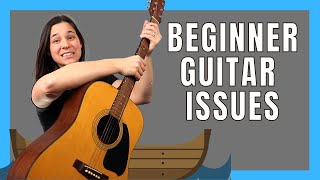
Lauren Bateman learned guitar on a cheap Ibanez and struggled until upgrading. A cheap first guitar can sabotage progress with poor tuning stability and high string action. She recommends spending $300 to $500 on a mid-range instrument like a Blue Ridge, and shares how her student Janet improved dramatically after making the switch.
Questions this video answers
January 27, 2022.
An Ibanez (described as a 'performance Pfizer 5'); her sister paid about $80 for it.
About six to seven years.
A Blue Ridge guitar for about $500.
Approximately $300–$500.
Chapters
Hey, guitar enthusiasts, I have a very special video for you here. It's featuring my first ever guitar that I learned to play the guitar on. But not only am I going to share the story of how I started playing guitar, I'm also going to share some of the downsides to my guitar versus the crafter that I play now.
So this here is my Ibanez. It is a performance Pfizer 5. My sister actually bought this for me. I didn't buy it. She paid like 80 bucks for it when she was in school. Some, some guy was selling it. It came with a case, it came with a book, and it came with like a VHS tape and some pics and maybe a tuner. And if you zoom in on this guitar, you can see it's been very loved. I got a nice little ding here. I got some scratches on the, the pick guard. This is all banged up. So she's been very, very loved. Now I played and learned guitar on this for probably about six, six or seven years before I went and bought another guitar. So I made my life hell learning the guitar and I'm going to tell you why. Now the things with these, these cheaper, beginner level guitars is the quality is just not as good. These tuning pegs, they come out of tune much more frequently than my crafter guitar. I mean, this thing's been in the case for like 10 years. There's like something inside rolling around. I also see like a chunk of hair inside of here. So she's just been the case hanging out. Because the crafter is so much easier to play. And there's a couple reasons. One is the quality is so much better on the crafter, but also the distance between the strings is much closer to the fretboard and the body of my crafter is much thinner. Let me show you guys what I mean. So I know it's probably very hard to see in the video, but my Ibanez is actually about a quarter inch thick, thicker, wider than my crafter guitar. That's why oftentimes I will refer to these beginning guitars as boat oars because this is really all they're good for, is for rowing a boat. But all kidding aside, they really are much harder to play. And I'm going to show you on a close up a reason why. Let's take a look at the distance of the string. Now what I want you to do is pay attention right here. You're going to see there's a lot of space underneath those strings between the fretboard and the strings might Be hard to see, but there is a lot of space. Now compare that with my crafter, where there is hardly any space between the strings and the fretboard. Now, why is this an important factor? Because imagine playing chords and having to press the strings this far versus this far. Okay? It's harder to press the strings this far away versus this far away. So my crafter is actually easier to play. And I'm going to tell you a story about a student I had. She was in her 60s, her name was Janet, and she used to come for in person lessons. And this, this, you may relate to this. So pay attention. So Janet was coming in and no matter what we did, you know, we had worked together for six months. She had played on her own for a little bit. So she was an absolute beginner coming through the door and her strumming her chords, everything just sounded horrible on this guitar. And I knew she was putting a lot of work in and should have been better than what she was. So what happened? One day I said, you know what, Janet, I don't think it's you. I think it's your guitar. I think you need to upgrade and get a better guitar. So what she did that week is she went and she bought a beautiful Blue Ridge guitar. I think she spent about $500. And she came back and she was like, it was a little more than I wanted to spend, but she was like, listen to this. Every single chord she played was absolutely perfect. So it just proved the point that the crappy beginner guitar that she had been playing for years was, wasn't making her a better player, a different guitar, a higher, better quality guitar actually made her a better guitar player. And I'm curious, if you guys comment below, let me know what guitar you're learning on right now. How much did you pay for it? Are you thinking about upgrading? Because I would recommend. If you've been learning on one of those beginner clunker boat oars, I would highly recommend upgrading to something within the 300 to 500 range. You're going to get better quality equipment. Your guitar will stay in tune better longer. The quality of the wood is much better, and you can do more adjustments. You know, going to a Luther, I could, you know, I could have the bridge raised or lowered on my guitar on this crappy one to make it a little bit more playable. But why would I spend a hundred dollars to go to a lutherer, have them do some work on my guitar when I'm better off just buying a $300 guitar? Now this guitar, this crafter here, I think was about $1,500, this crafter. So to spend $100 on a $1,500 guitar to get it set up and playing nice is definitely worth the investment. So if you've been playing guitar for, you know, six to 12 months and those chords just quite aren't sounding right, it might be time for you to upgrade your guitar. If you guys enjoyed this video, make sure to give me a thumbs up. And don't forget to tell me to the first guitar that you started learning to play on.