5 Fundraising and Startup Lessons from David Klein, Founder of Click Therapeutics.
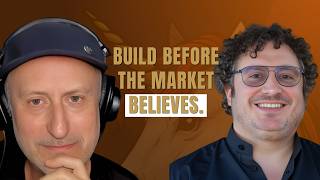
David Klein founded Click Therapeutics to use software as medicine, inspired by smartphone growth in 2012. He bootstrapped before raising over $100 million from insurers and biotech investors. Click's FDA-authorized migraine app showed a 3-point reduction in monthly migraine days in trials, launching widely in 2026.
Chapters
Hello. Today we have a very unique person in my podcast. His name is David Klein and he is founder and CEO of one of the first digital therapeutic companies, or maybe even the first digital therapeutic company that grew from zero to one for a relatively short time. I am Leon Eisen, PhD, serial entrepreneur, venture partner, and host of the Unicorn Breakdown podcast. So, like always, subscribe, like, and we're going to start. Hello, David. I'm so happy to have you on my podcast. We, for a long time, I'm following your company, KlickTherapeutic, even maybe from the beginning. And I had amazing opportunity to meet you in one of the recent conferences in New York. And even for the first conversation, I learned a lot. How it's really to get to the unicorn status. I know you're not there yet, but very soon, right? So let's start from, uh, from introducing yourself. So please, who are you? Sure.
Yeah. Um, nice to see you again, Leon, and thanks for having me here. Um, my name is David Klein and I'm the founder and CEO of a company called Click Therapeutics. Uh, we're developing software as medicine. Uh, it's a very exciting space and, uh, and it's a pleasure to be with you today.
Yeah, thank you, David. So how— I think everything starts from the idea. So how this amazing idea came over you? It was time when people didn't think about digital therapeutic. It was about everything about something like monitoring applications to manage something and suddenly digital therapeutic. So to train people and to treat people through their mobile. Something unusual. When it happened?
Yeah, it's a fair question, Leon, and it goes back all the way to 2012. 2012 when, um, when really the, the kind of mobile smartphones started to be much, much more prevalent. And at the time I was working with a fellow who was the head of clinical neuropsychiatry from Cornell, and we saw this kind of massive increase in mobile phone usage. And it was just something that was so clearly changing people's behavior. And we thought even, you know, in, in some cases rewiring their brains. And so we figured, look, if we could harness the power of behavioral and cognitive modification and target specific diseases with that, that, you know, those, those interventions could be, you know, as important, if not important, more important than many drugs. And ultimately combined with drugs. Someday to create safer and more efficacious treatments. So we created a, a, a term called digital therapeutics and a company called Qlik Therapeutics, really based on that premise that we would prove that software could drive clinical and ultimately health outcomes in randomized controlled kind of biotech-like clinical trials.
So what the, what, how did you start your company? How much have you raised on pre-seed and why, why people and investors were so much excited working with you?
Yeah. Um, well, you know, to be frank, Leon, they weren't excited. So, you know, I, I actually seeded the company myself. Um, if you want to go to kind of the pre-seed era, if, if that's even a thing, I, I'm not sure I've used that term, but I seeded the company with my own capital. Um, you know, obviously limited. Um, until we, we took our first round of what you'd call, I guess, seed capital from outside investors in 2015, right, right in the beginning of 2015. We are closed that.
So I can say you're a pure bootstrapper, right?
Yeah, to, to put it mildly, Leon.
Yeah. So interesting, because I, I was aware that you are— you just was in a good time, in a good place, but actually you, you did yourself, right?
You grew yourself. No, look, I thought, I knew we were in a good place, right? And I still firmly believe that. I hoped we were in a good time. You know, I thought, look, I'd go tell people this idea and they would say, you know, I would go tell Pharma or whoever and they would say, you're a genius. You, you're, you know, you solved one of the biggest issues in medicine, we're gonna give you the, you know, Nobel Prize and make a statue of you. And you know, that it didn't quite happen like that, Leon. It, it, it, you know, we're, we're, we're still kind of, you know, really kind of fighting to get the recognition for the space that it really deserves. But it's, it's become obviously a much more favorable environment, I think, as time has gone on. And as Qlik has hit, you know, pivotal trial after pivotal trial, now 3 in a row, you know, there's been, you know, much more widespread acceptance from, you know, both the academic community, the provider, the, the, the payers. And I think it's the, the one community that's always believed was the patient community. Uh, they were always big, big believers that this space could be helpful.
Interesting. And how much have you raised so far?
Oh, I don't know. Um, you know, probably a bit over $100 million.
$100 million. So what's the difference between raising the first million and raising the $100 million?
Well, It's just as stressful, Leon, but more stressful, right? I think it's, they're, they're all stressful, all these raises. Um, I think, you know, it's just been, it's a different group of investors when, when, when in our first round was much more like family offices and high net worth individuals and so on. Um, our first kind of institutional money came from actually a company called Magellan Health. Uh, mm-hmm. And that might've been in 2016. And that was a few million dollars out of Magellan, who ultimately actually, they were bought by Centene. So that's where our first kind of round of institutional money, as they say, came from Magellan. And then we did a Series A, which was, you know, kind of pharma VC backed. Then a Series B, which was, you know, some was oversubscribed and, and was done by, you know, very significant group of investors of, you know, very sophisticated kind of ranging from, you know, large-scale private equity companies to, you know, super smart biotech hedge funders and, and even an Israeli life science investor co-led that round called So what do you think, what is your key success factor or unique insight that allowed you to raise so much capital?
It's not, it's definitely not only traction and not only idea, it's something altogether, but some personal traits are very important here. So what is your unique insight like a person? Allowed to raise so much capital?
That's a good question, Leon. Um, you know, I, it's, it's a great question because it, it, it's not something I've ever thought about before. Um, but if I have to say one thing, you know, probably my charm, Leon. I mean, you met me, you know.
Yeah, I experienced this.
I'm an incredibly charming person. Um, yeah, no, I'm, I'm I'm just kidding. I think, you know, it's a great question. I think ultimately it's our data. I mean, you know, when you're talking about this level of sophisticated investors, that goes way beyond, in my view, the charisma or charm or intellect of a CEO. I mean, those I think are important, but But probably the, you know, key factors really are our software platform, our scientific integrity, um, and the strength of our clinical data. I mean, that's what really has been the, you know, deciding factor, I think, in these raises.
I think we have to, and founders should write it down because, you know, every time founder should turn himself or yourself, uh, and learn how to become founder. I call it fundable founder and fundable startup. It's not easy, totally agree. And what is your hobby? Have— one second— have an investor ask you about your habit?
My hobbies? No, I don't think any investors ever asked me about my hobbies.
That's interesting. I ask everybody.
My hobbies are healthcare, Leon, and you know, I, I think you, you, one of my hobbies I've really got into recently are, are like my personal health and I've started actually biking and, and kind of weightlifting a lot. And I think my, my like hobby is really in biometric data. I'm just fascinated with, you know, the, the kind of the, the increasing power of these sensors to really determine, you know, somebody's biometric data and I'm, You know, and, and I'd say AI is a huge hobby. If I'm ever not doing something, um, you know, health directly, health related, I'm using AI to like figure out healthcare stuff. Um, and I'm just fascinated with, with AI and I, and I used it in, in kind of every aspect of that.
Yeah, I understand this because I just see your watch so big, so stick.
Yeah.
It looks like it keeps all the database.
Yeah, no, no, it does. It's like a, it's got a, a, a nuclear battery here, Leon Eisen. Yeah, but look there. Charge it once a year. Yeah.
Amazing. So what's your pain for today? So now you are very well established entrepreneur. You are very, you have very well established company. And I know you are growing and you have some goals. So what's your pain today for your company?
Yeah, well, look, I think, um, you know, I think it's time to go to Israel, Leon. So that's, that's, that's, that's my next trip. I'm going to Israel. I haven't told you yet, but I'll be going to Israel, um, in for the week of February, uh, 10th and 11th. And, and that.
Amazing.
Yeah.
I would love to meet you here.
Yeah. So we're, there's like, it's like a health tech mission. I'll, I'll, I'll, I'll send you the details, um, offline.
Ah, okay. So you are included in David's, uh, technician. That's very nice. David, uh, Siegel, he was on my podcast and one of the first podcasts. Yeah.
Okay. Very cool.
Yeah, very cool. And cool guy. So, uh, but this is the pain? Go to Israel? I mean pain in your business.
Oh, I, I thought you said what's the next plan?
No, a plan. Okay. Sorry.
Well, that's the next plan. That's not a pain. That's an honor.
Amazing plan. Now let's talk about pain.
That, uh, that would be kind of messed up if I said that, Leon. Um, Look, it, it, you know, I, I'd say, um, if you asked me a couple years ago, I, I would've kicked back pretty hard on, on, on us being successful. I, I think we have a long way to go. Um, you know, now that we have the first ever FDA authorized app to treat depression, and that was done in collaboration with our partner Otsuka. And the first ever FDA authorized app to treat migraine, uh, which is a wholly owned Qlik asset. I think, I think, you know, that there is a certain level of success there that no one could ever take away, right? Those are very big deals and, and, and very important to the world and, and, and the world of medicine. Um, but we're nowhere near where I think we need to be or where I want to be or Look, I want digital medicine to enter into standard of care and, and, and, and that's not because I want to be a unicorn, Leon. I mean, I, I think tho— you know, that would be a nice side effect, right? But that's because I think that's where it belongs. You know, digital medicine, if someone goes to the doctor, no matter what they have, I mean, high blood pressure, you name it, you know, cognitive and, and behavioral modifications should be included in those medicines, right? And whether that's combined with the drug or in lieu of the drug, and that's what I want to see happen. So, you know, we have a long way to go. And then, you know, I'd love to knock down the access barriers in medicine, right? Our medicine can get anywhere in the world in a moment's notice, Right. And, um, so we have a long way to go before, you know, you'll hear me say that we've, that we're, you know, very successful.
That's amazing. So what's your plan specifically for 2026?
Um, well, look, I, I think, you know, some of the things I can talk about are, uh, no, you don't have, no, serious. We're, we're, um, you know, super excited about, you know, about really getting our migraine program out to patients in need. That program has phenomenal data. I mean, really showed a, a, you know, 3, 3-point monthly migraine reduction, right? So the, the average patient in that, in that pivotal trial went from, you know, about 7.5 monthly migraine days to about 4.5, which was statistically significantly greater than the control. We also had very significant results on things like the migraine-related quality of life scale and the migraine disability scale, something called the MIDAS, you know, very important to our patients. And this is an innovation that I think, you know, there's upwards of a billion people in the world who could benefit from it. So, you know, I'm very focused on, you know, getting this out to the world. And I think that's, You know, one of the big things that we have planned for this year.
You know, today what happens, most of the people still waiting for a month for appointment. So they have some pain, they have some problem, an appointment in a week, in a month, in a couple of months. So how to create awareness that company like yours exist and can really help?
Yeah, I mean, look, I, I, I think that's the next frontier for us, right? We've, we've never been much of a, you know, awareness drivers or PR company or marketing or, or anything like that. But it's become really clear that, that, that we, we have to really do that. I, and, and I think, um, and I think we're, we're kind of call it pivoting as a company into much more of a commercial entity. Where we will, you know, be getting that message out ourselves. And this will be a year for us on kind of marketing and commercial where we'll be trying to tell that story a lot more than we have been in the past.
Yeah, very good. You know, where every successful company is built on some fundamental values, principles, and specifically companies of your size. So what kind of values and culture you promote within your company?
Yeah, so, you know, we have something called the ClickWay, um, and you could, you could actually see that on our website, um, and, um, you know, I think it says how we roll or something cute like that, but, um, you know, we, we, we have you know, different philosophies that are extremely important to us, but that, you know, core, core, the number one Flick way is patients first. And that's to put really to put patients, um, and their loved ones at their center of everything we do. Um, and that's the number one philosophy. And, you know, it, it's mentioned in almost every internal meeting. Right? Is this putting the patient first? Is this putting the patient first? Um, and we firmly believe that that's the right way to develop our programs.
No, that's— I agree. I totally agree. I also cultivate such type of values in, in all my companies. That's great. So today it's a hard time for healthcare entrepreneurs, and I see a lot of new, uh, incumbent and founders who cannot do anything. They cannot raise money, they cannot make pilots, they cannot get grants. So there is a huge difference between what happened 15 years ago and today. So what do you think, is there any way to accelerate and improve um, startups development in healthcare?
Look, I, I think we're, we're doing our role to improve that. I, I think that, you know, Qlik being, and, and, and, you know, we need to make Qlik massively successful and get our software to hundreds of thousands and millions of patients, and that'll drag the whole sector with us, or, you know, certainly a, a subsector of of health tech, right? And there's, there's, there's no bigger thing that we can do to help the sector than to be successful.
So you believe in leadership in healthcare, so you are like a leader who could align all other people around you. But do you have any plan to help young entrepreneurs, or maybe you're doing this now?
Yeah, I mean, I help young entrepreneurs all the time. Leon Eisen, PhD, right? So I, you know, I, my, my door's always open and I always speak with people and, you know, not that I'm always right, right? I mean, you know, it's flattering sometimes that people want to speak with me and, you know, I can just give advice on what I think has worked thus far, right? But again, we have a long way to go even ourselves. But I have, you know, any number of entrepreneurs that I speak with You know, all the time and, and try to provide, you know, the most help that I can give. And, and, and, and that's an offer that I have outstanding to anyone anytime.
So taking, uh, your experience today, what do you think, what kind of things you would do differently?
You mean if I could rewind?
Yeah.
Well, look, I, you know, I don't think about that.
Just a little reflection.
Yeah. You know, I don't think about too much and dwell on the past. What can I do? I didn't do this. I didn't do that. You know, I'm much more of a future person, Leon. Um, so I'd have to think about that. Um, you know, there's, there's always stuff you could do differently, but But that's not really in a core of kind of who I am or how we run this business. And I think we're really much more focused on, sure, we learn from the past and apply those lessons to the future, but we're really focused on, you know, what we can do tomorrow and in a year and 5 years, as opposed to, oh, we should have done this differently or that differently. Um, so I'll have to come back to you on that.
So I think this is exactly your factor of success. So it's a huge lesson. Not everybody can think about future only and consider your experience like just to learn from this. People reflect, people just depressed. But when you have this stamina to think about future, I think this is behind your success. And this is what every entrepreneur should learn how to do it.
Yeah, possibly, possibly.
So what do you think today to change or improve to reach your goal? You said side goal to become unicorn, but real goal to help millions of patients. So what do you improve in the company now?
What do we improve?
Yes, yes. Do you have something what you are going to improve now?
Look, I think we're gonna improve our commercial and, and, and, you know, and our capabilities as it relates to going to market ourselves. I, I think, you know, I've a deep interest in taking the migraine program commercial and, and a lot of intent on getting this out to hundreds of thousands, millions, tens of millions, or even hundreds of millions of people. And that's in, that's a heavy lift for us, right? We're not kind of, innate marketers or commercial people. We, we have a couple very strong commercial folks, but it's not like we have a huge commercial organization. We've been much more focused on developing our platform into the premier AI-driven software as medical device platform in the world, I'd say by far. And we've had a focus on that and on generating meaningful important, uh, clinical data. Um, but we haven't focused really on the next phase of our journey, and that's really in commercialization. And I think that that's a big focus of mine and, and, and, you know, commercializing our own assets in starting with migraine.
You know, and I have maybe the last question to you. Yeah, I hope it is the last question. Every entrepreneur experience some danger time where, when they just on the brink of losing company, like Elon Musk, for example, had. Yeah. Have you had such time? Yeah. Could you share?
Yeah, for sure. Look, and, and, and if there's any advice I would say, and, and again, this is what's paid off for me, so, you know, everyone's different. But persistence is the most important attribute in my view that an entrepreneur can have. And there were plenty of times, not just one time, Leon, many times where, you know, I think it would have made sense to throw in the towel and just, you know, okay, give up. Right. And if there's one piece of advice I can leave, you know, anyone who's interested with. Is that persistence pays off and it's absolutely key to success. At least it has been for me. And I recognize everyone's path is different and hopefully someday we'll be truly, truly very successful. But without persistence, we certainly wouldn't be having this conversation today.
Okay, so you answer my another question already about what kind of message You are going to deliver it to— Yeah, that's it.
I think two for one, Leon. Yeah.
Yeah. So David, thank you very much for joining. Uh, I learned a lot and I think, uh, our audience will be happy to learn from you as well. How we can find you or your company? Sure.
Yeah. Look, you, you can find us on LinkedIn. That's a great place to follow us. Um, you can email me at david@clicktherapeutics.com if you want. You could go to our website and find us there. Um, those are, those are some, you know, very good ways to find and, and to follow us.
Okay. Thank you. So we had an amazing interview, uh, in my podcast called Unicorn Breakdown with founder and CEO of one of the first and maybe first digital therapeutic company, David Klein.
Thank you. Thank you for having me.
Yeah, thank you. Like, subscribe, and meet you soon again.









