#7 Intelligent Founder: Mendel Erlenwein, CEO and Founder of CareCo
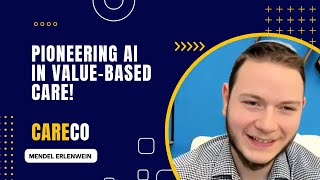
Mendel Erlenwein built Previva Health Group before founding CareCo, an AI co-pilot for care coordinators. He explains why care coordination is broken, how AI can fix it, and why CMS wants the entire industry on value-based care by 2030.
Chapters
We love being active, we love running around, we love moving. We can't stop. Just don't let yourself start talking until the other person closes their mouth and has completed their thought. If I can take one care coordinator and increase their caseload that now because of the intelligence of our brain, they can now take care of, instead of 200 patients, they can take care of 350 patients without increasing my overhead. I get paid per patient. Huge opportunity there, right? Every single patient in the United States to be part of a value based care arrangement by the year 2030. So it's something that we're aggressively moving towards as a country. And so that's obviously a multi trillion dollar opportun.
Hello. Hello. Hello. You know, sometimes I meet very promising founders and I meet them every day, but usually I can recognize some who stay out of the crowd. They have some kind of charisma that very attractive for investors and customers and not a lot of people like this. And today I am happy to host one of these amazing young entrepreneurs, Mandel Erenvine. Hello Mandel, good to see you. Good to have you on my podcast. I am really happy that you find time. You are crazy active. I know you have some mind blowing activity and thank you for coming to my podcast. And my first question, first of all.
So, so yeah, Leon, you make me blush. I appreciate it tremendously and it's an honor to be here. Thank you.
Yeah. So my first question is about, you know, I'm also a venture partner, I'm investor and we like founders who are focusing on their venture. But you have mind blowing activity. So you're building your, really, you're building your brand and this is very important for any founder. But how you manage all these brand development, I know you have very famous healthcare Trailblazers podcast, you host of this podcast and how you manage all your time and you have time to make your venture successful.
Yeah, appreciate the question. You know, it's funny because I don't. I actually find myself still bored. And I think the answer is a focus on boredom. I found in my own life that for entrepreneurially minded people, we love being active, we love running around, we love moving. We can't stop. And it's so painful to have nothing to do. But I also found that all of the good stuff, all of the good ideas, all of the, all of the, the innovation comes from boredom. It comes from a space that you have nothing to do but, but just flutter around in your head. You know, recently Jeff Bezos was on the, on that podcast.
What's his not on your podcast.
No, no, no. Yeah, but he was on, he was on.
Oh, he will, yes.
Anyway, he was talking about how in the morning he, he likes to wander. He gets up and for, for a couple hours, he, he specifically doesn't book any meetings until 10 o'. Clock. Cause he allows his mind to wander. And anyway, I digress a little bit, but the point is that I found that I found it in my life that it's extremely painful to do. It's extremely painful to have nothing to do. But it's the most important time for an entrepreneur. And so what I try doing with my life is I try making sure that I have bored time and I try to delegate. And so things will pile up on my plate and then I'll get to a point where I feel like I'm on, I'm on track. Like every 15 minutes I have something to do on my calendar. It's conversation, conversation to meetings, conversation to like everything. And then I say, okay, this is not a good thing. If I don't have any time to just space out, then this is, then I'm not delegating well enough. And then I try to look at my plate, figure out what I could get off that's not, you know, critically important for, for me to do. And then move that over to move that over to a team member, hire it, outsource it, whatever that is. And then this way I allow myself some time to breathe. And so I think actually focusing on the time when you have nothing to do is the only way to. And making it a priority is the only way to create that space. You have to force it. Because if you just go, if you just go with the flow and you let you know, you let tasks hit you, you'll never get a chance to breathe. And if you can't breathe, you can't think. And if you can't think, you can't innovate.
Yeah, totally, totally agree. For example, in my quantum business thinking theory, this is exactly about energy flows. So there is no such thing like time management or task management. There is a thing like energy management because all the, all, everything is about energy. So when you have, what is it? Attention. Attention. It's like, well, where you put attention, your energy flow there. So it's very important to manage the energy for the day. And by the way, in the morning, each morning I think about how to delegate and whom to delegate. Because if you don't know how to delegate, you cannot succeed. It's very important for founders because usually founders take everything on themselves. And this is totally wrong. Tell me about yourself. How did you come to creation of this Careco company called Careco, your startup. But I know this is not your first company, so you are, I would say serial entrepreneur already. First of all, how old are you?
I'm going to be turning 27 next week.
Wow, amazing. The best times, the best age I would say. So tell me about yourself A little bit.
Yeah, so I got married very early on. I'm an orthodox Jewish person. We tend to do things a little bit differently. We go to yeshiva for kind of the high school, college, college years, which is a, all day. It's a boarding school. Classes start at 7:30 in the morning, they end at 9:30 at night. It's a very involved schedule. And there's no secular studies at all. It's all, you know, Talmud and, and, and Bible studies and Jewish law and stuff like that. And so I wasn't the best of students. I'm not very studious and I, I left a little bit early at about 19 years old, maybe about six months early. Nothing too crazy. And typically when you leave yeshiva you have one of two options. Essentially you can either go and become a practicing rabbi in some form, either in a community or under another rabbi, but basically practice being a rabbi, or you can go into business. And so for me business was always the option. Like I mentioned, I'm not that studious. And so I'm going to leave the rabbinic practices to those better than I. And so I moved to California and started working in healthcare. I met this guy that had a kind of a conglomerate of healthcare companies, mostly in the long term care space, device manufacturing, distribution, different bunch of different companies. And he, I got to know him a little bit and he asked me what I wanted to do. And at that point I thought marketing was the, was, was the way to go to create a marketing company. And so I told him I wanted to start a marketing company and he said, you know what, why don't you start a marketing company for me? You'll support all of my different companies and then if you get external clients then great. And I said wonderful. So started this marketing company. Didn't go very well. And it didn't go very well because of two things. The first reason was I didn't really know what I was selling. I was looking around the market trying to see what the services were and then just kind of regurgitate. And the second thing was that I was trying to sell to doctors who turns out are not actually swimming in cash. And are not looking for ancillary services that may or may not be valuable to them. And so between those two reasons, I really didn't make very much sales. And so beyond just supporting kind of, you know, that the bare minimum, I wasn't. It wasn't really going anywhere. And it was so important, though, because it taught me. It taught me so much about knowing your space. And one of the most fascinating things that has changed between that business that did not work out of where I am today is my ability to run, is to. To run a meeting, to run a sales meeting. When, when I was trying to sell something that I didn't really fully understand. I felt, first of all, very nervous before I went into any kind of meeting. And second of all, I felt compelled to talk the entire time because I felt, and I didn't realize this consciously, but subconsciously, I felt like I had to control that meeting because if, God forbid, the conversation would, Would, would travel outside of the bounds of what I was comfortable with, with my very limited knowledge of this product or service, then I. It would be a catastrophe for me. I would, you know, the meeting would fail. And so I ended up just talking through the whole meeting and not really. And anyone that is good at sales knows that you don't sell by talking. You sell by listening. And you sell by asking.
By asking.
Yeah, exactly. As I know right now, I'm kind of contrary, but I am, I guess I'm the guest on this show.
So.
So it's my. It's my turn to talk a little bit. But typically I'm actually, at this point in my life a lot more comfortable asking the questions. And if you're somebody, if somebody in the audience is listening, has this issue, it's really, really easy to fix. Just don't let yourself start talking until the other person closes their mouth and has completed their thought. Because so often you're not even listening to the other person. All you're thinking about is what is my next comment? Where can I take this conversation? What can I answer to the question? You're not even thinking about the other person. And if you take the time to just stop talking, look at the other person's face, watch their mouth move, and listen with your ears to the things that they are saying and try to comprehend it, you will be in a much, much better position. And so that was kind of a very, very important lesson that I learned off that first business. But in the meantime, I had gotten married. I got married at 21 years old and stopped that. And pretty soon after I took over a company. So I wouldn't say I started the company, but I took over a company that was doing health care care coordination, care coordination services. It was a company that was started by somebody else but it was kind of at a very tough spot. It wasn't really scalable. The company at the time had two clients, a couple hundred patients and all the actual care was outsourced to a third party company. And so I called it and it's basically an invoicing company because you have a client and then you have someone that does the work and you just trade invoices back and forth and hoping that there's a margin. Right.
The best deal to say no.
Yes, yes. A lot of people practice in that space and so took it over, made it profitable pretty quickly just by changing some of the internal workflows. And then over the last couple of years it's the company that I've been still am CEO of, it's called Previva Health Group. And now we're a, we're a full blown care coordination service based company. We talked about 5,000 patients a month and growing. We're doing a couple million dollars of revenue and everything is in house. And so that's, that was one of the beauties of, of that transition because it really going back to the original point, you will never understand what you are selling until you're actually doing the thing that you are selling. And so if you're selling someone else's marketing service, you'll never understand it. Even if you watch it, even if you listen to their salespeople and you take their marketing collateral, you're never going to understand it. You have to actually do the service, get into the work. And that's something that was the last five years.
You have to get as a habit, you have to get automated responses and you have to, your subconscious mind should work automatically. Otherwise that doesn't work because you get nervous and you cannot get into the point. Wow, that's amazing. That's amazing story. So let's, let's get to your current company you are managing and your plan to grow. So tell me more about your company today.
Sure. So the startup that we're really getting into the thick of, Dao, is called Careco. And the story behind Careco is this company that I referenced earlier, this care coordination service based company. I've been growing it for the last five years. Like I said, we're talking about 5,000 patients. And so it really gave me the opportunity to understand care coordination, understand the ability for Good care coordination, the potential that it has to both better patient outcomes tremendously as well as lower costs. And the value proposition is that you take low level clinical staff and you, you have them implement these preventive care programs. So they're managing proactively a large patient population. And so let's say it's patients with two or more chronic conditions and you're calling them every month and they have a care plan and you're trying to push them on their goals and you're being proactive, you're seeing if they need anything. And then as you call them, you realize proactively, hey, they're running out of their medication, they haven't been able to get in touch with the office, they haven't filled their meds. So you go, you help them coordinate that. And now they didn't run out of their meds and end up in the hospital. Right. You find out that they don't have, you know, a shower bar and that they're based on their age and conditions, they are really at high risk for falling and breaking their hips. You do some coordination, you get that done. Well, guess what, you may have just potentially, well, statistically, you just saved the system, you know, $150,000 hip replacement surgery. Right. So the idea is that if you can, if you can do really good care coordination, it's a low, it's a way to take smart dollars and spend it at the outset to achieve large savings from keeping patients out of the hospital and keeping patients from getting to much higher risk and more expensive stages of their illness. Right. And so that, that's a beautiful concept and there's a lot, a lot of potential there. The problem is, I've also come to understand why it's so broken. And the reason why care coordination is broken and it's nowhere near as, as impactful as it could be, is because the very value proposition is its demise. Because the value proposition is in order to have, in order to do it in a low cost way, you can't have doctors doing it. So you have low level clinical staff, but the problem is you have low level clinical staff, which means that they're not very well experienced, they're not very well incentivized. And so more often than not, they're just checking off boxes and the conversations and the interactions that they're having with their patients are not very meaningful. And so that's, that coming to that realization has been, has been really, really interesting to me. And so we're looking to solve that by creating a, the, the the person really only of its kind. Co pilot for care coordinators. And so we're building out. Our mission is to build the brain of the care coordinator. I strongly believe in the, in the augmentation and, and not automation when it comes to AI and technology. And so I strongly believe in health care, that the human is really, really important. And so I'm not looking to take that away from the human. But what our approach is, you know, the human being is really, really good at the heart, right? The, the empathy, the personality, the delivery of care. But there's no question that technology, and especially AI powered technology has a much bigger advantage from a brain department. The ability to remember everything, to categorize everything, to weight different pieces of data, to personalize everything. There's just, it just has a much bigger advantage. So why don't we let technology focus on what technology is good at and let the human focus on what the human's good at. You put those two things together and you can have an instance where the human care coordinator can be a thousand times more impactful. And so our mission is to build the brain to amplify the heart of the care coordinator. And it's been, it's been a fascinating journey. One of the beautiful things about what I'm doing is that I'm not building this with the end user in mind. I'm actually building this with the end user because my, my care coordination service company is a great representation of the general demographic of care coordinators, which are middle aged women that hate technology because every time they've touched a piece of technology in their life, it's made their life harder. And so starting from that place puts us at a really, really interesting advantage as far as what we're building out. And every detail that we're doing really that, you know, that, that, that mindset in our approach really permeates it.
Yeah, that's amazing. And what, what kind of market do it have? So talk about, let's talk about opportunity in the market. You, you said about your value. You, you said about the problem you are solving. But actually how big is this problem?
Yeah, so there's two sides to the market. There's fee for service and there's value based care, at least in the United States, which is where we're focused. And so just to give a quick, a quick explanation, fee for service is what you're probably used to. Fee for service means that your doctor gets paid to do a thing. And so person gets sick, they go to the doctor, the doctor fixes the thing. The doctor gets paid. The problem with that system is that the doctor is really incentivized for the patient to be sick, not to be healthy. Because if the patient breaks their, their leg and they go and they get it fixed and then after that procedure they get an infection or wasn't done properly or the, the care, you know, once they went home wasn't really well managed. And so they get, they come back to the hospital, well, guess what? Doctor gets paid again, right? To fix the thing again. Uh, so the only person that really, that really suffers is the patient. And then our, our nation, because our cost is absolutely insane. We're spending trillions of dollars on health care and we need, we need, it's not sustainable. We need to figure out to bring down a way to bring down those costs. And so the, the general consensus is that if we were to move towards something called value based care, we could really make a dent. And what value based care looks like in its simplest form is, is just putting the doctors and the health systems at risk for the patient outcome. And so I think of all the different explanations you can give, the simplest one that I found is I was once in our, in our, one of our office locations and I chanced upon the water, the water cooler, right? Water dispenser. And perched on top of the water cooler was a little handwritten note from a, from a representative of the company. And it basically was dated for the day prior. So it was dated for the day before I was there. And it said, you know, Michael from this company was here yesterday. And here are all the preventive fixes that Michael put into this water machine. And it went through like a pretty extensive list. Internal filter, external filter, cleaning the outside, like doing a bunch of preventive maintenance on this machine. And I sat there for a second and I thought to myself, you know, why would a for profit company send somebody out to an office location in New York, by the way, where it's impossible to get around and your, your travel time is probably four times anywhere else to go fix a machine that no one complained about. And the only answer possible is that the company did an analysis and realized that they will make more money if they're doing preventive maintenance on their machines because they will end up with proactively happy customers, their machines will last longer. And, and, and, and they've determined that that will actually make them more money than if they just wait for their machines to break down and get complaints. Right? And so the reason why they made it is because they are responsible for the Outcome. If they lose that client, if the machine breaks down, they have risk. And so if we can map that over to health care and say, all right, I'm going to give you $1,000 for Mendel's health. But not just that, I'm going to give you a thousand dollars for 10,000 Mendel's health. But you're now responsible for Mendel's health care costs, period. Right. And so if, God forbid, I end up in the hospital, they're the, the, the, the person that takes the risk is paying the bill. If anything happens to me, they're paying the bill. What that does is it flips the incentive structure on its head and forces this system to think, okay, how can we take these dollars? So my job now is to spend less than a thousand dollars on Mendel. And if I can do that, I will make money. If I spend more than a thousand dollars, I will lose money. So my job becomes, how can I figure out how to take smart dollars and put them to use to keep Mendel proactively healthy, to employee preventive medicine to keep Mendel out of the hospital? And I think that if I have somebody calling Mendel every month and making sure he's getting his prescriptions filled, I think that'll, that'll cost me 300 bucks for the year. Right? And then maybe we're doing some preventive tests. We're doing this on the other side. I'm at, you know, 450, $500. Well, now there's a $500 spread there. I will make money. If I can do that, times the 10,000 patients, I'll make money. And so it flips the incentive structure where it forces innovation because it forces the systems to think, how do we keep these patients healthy? And if we can do that, everyone's happy to share those savings. And so to answer your original question about the market size in fee for service, there's still programs around preventive care where you can get paid just to do, just to do a specific program. An example of that would be like the Chronic Care Management program from, from CMS. That's a program that pays $62 per patient per month to have these, these, these conversations going. And so just in that program alone, I think there's somewhere between 11 and 20 million patients that are, that are in that program in the United States. And that was as of a couple of years ago. It's probably more at this point. And so with our system, if I can, if I can. So if I can take one care coordinator and increase their caseload that now because of the intelligence of our brain, they can now take care of, instead of 200 patients, they can take care of 350 patients. Without increasing my overhead, I get paid per patient. Huge opportunity there. Right. The bigger opportunity in my estimation is when we move over to the, to the latter. Which is, which is the value based care concept. If you can tell a system, hey you, if you want to be successful at value based care, you need to pull two levers. You need to lower costs and higher quality. That's the two things that you need to pull at the same time. And that's exactly what we're accomplishing because we're stripping down all the administrative burden and all the thinking around the care management and just leaving the human with the actual delivery, the actual points that they're, that they're good at. And so that decreased cost tremendously. And at the same time we're increasing quality by a thousand fold by being so much more intelligent about those interactions. And so the value based care market is, CMS has announced that they want every single patient in the United States to be part of a value based care arrangement by the year 2030. So it's something that we're aggressively moving towards as a country. And so that's obviously a multi trillion dollar opportunity.
Yeah, but this opportunity, not now, it will be 2030. So what happens today, how, how you can piggyback on any trends and opportunity. For example, if tomorrow or today you get to the market, market is not well developed yet, or value based market is not well developed, how are they going to solve this problem of market penetration? And market is still in development, your company development. So how to manage all this together?
Yeah, so I think you'd be surprised how well it actually is, is developing the United States. It's, it's, it's moving quite quickly. The 2030 mark is like an end game. But where we are now is actually there's a massive market opportunity. Parts of value based care arrangements could be all the Medicare Advantage plans, which is just millions and millions of patients. Any, any patients that are part of a practice that's part of an aco, which is an accountable care organization. I believe the numbers between 20 and 40% of all patients in this, in this bucket are already part of, of an accountable care organization membership through their doctor. And so there already is a tremendous market in, you know, in the billions of dollars, probably hundreds of billions of dollars. I mean Oak Street Health is a great example of a, of a fully value based care company. They just sold the CVS for $9 billion. And that was one of CVS's acquisitions around value based care. ChenMed, another great company. We've had Gordon Chen a couple times on the podcast. Great company. One of the most important primary care networks. Also a multi billion dollar company. Full value based care. And these are actual networks that are operating off these, these are actual care networks that are operating off off these principles. But you think all the ACOs, all the alignment, Health of the world, the signify Health of the world, the, the Medicare Advantage plans, the Health firsts, the every single insurance, Blue Cross, Blue Shields, Aetna, every single one of these insurances have entire verticals dedicated towards this. And so it's, it's, it's, it's, it's definitely a multi billion dollar opportunity.
Yeah, very very interesting. What about the stage of your company? How, how long time? I would say go to market time. How long?
Yeah. So again one of the beautiful things is, is training it with my current company and so we've been using it for, for about four months. The, the, the technology and been really marking and judging the, the increase in productivity, the decrease in burnout, the Inc. It's been really, really tremendous. We're currently over the Next, I'd say 60 to 90 days we'll be rolling out to partnerships that will cover a good couple hundred thousand patients. And so we're doing high level partnerships with care management platforms with some, some large data partners that have health systems involved. And so we're doing these kind of strategic partnerships that, that will will, will, will result over the next six months or so in a couple hundred thousand patients being being managed monthly over the over the technology. And the beautiful thing about what we're doing is that we're not really competition to anyone. We are, we are something that can attach onto any care management system, any insights based company, we can plug that in and we're building out this incredible marketplace and we can make, we can empower their technology to be a thousand times more impactful than what, what it already is. And so it's a great opportunity to, to just stack on top of some things that are already working and just amplify its ability to be impactful.
So this is what, yeah, this is what I was going to ask because you were talking about safe how you save money, save time, workload but very important component of any business not only say gain what people gain and you answer this question now that's amazing. So they gain even more than they say that's amazing. What about, let's talk about people. I know you are good in delegation as I understand already. So how many people in the company and do you have some outsourced people? So what happens?
Yeah, it's a really interesting shift I think that's going on in the market. Been having this conversation with a real good couple number of founders. It's a process that we're going through right now. Right now we have a pretty, we're sticking to a pretty lean team. We don't want to get caught up in any of the frivolousness that a lot of first startups get caught up in. I'm trying to use wisdom from people like Leon and some other people to be a second time, first time founder. So, you know, I think it's very interesting. When you watch founders and their first startup, very often they get excited about how many employees they have. They get excited about how much they raise and who led the round and how they raised from and all these kind of. But at the end of the day that doesn't matter what you find that by the time their second, third, fourth startup comes around, all of a sudden they're focused on how do I keep my overhead really low, how do I get to profitability ASAP and how do I create a real kick ass product and solution. Like that's the focus. And so really we're trying to adopt that mindset and just focus on the end goal. How quickly can we get this in the hands of people that it will actually make a difference in their lives? How quickly can we get, you know, hundreds and thousands of care coordinators to be using this and use it to affect tens of thousands and hundreds of thousands of patients. That's really the goal and that's what's driving us. And so, you know, there's a lot of various different people that have approached us to try to, try to try to put some, you know, try to give us money. And it's something that we're obviously taking seriously but at the same time we don't, we'd rather go the other way around. We'd rather determine what we need to achieve our goal and then work our way backwards to what is that going to cost and how do we achieve that rather than hey, let's be cool, let's raise $20 million and then we get to put out some articles about it and then we have to figure out how to spend it. Right. I'd rather know what I need to spend and then work my way backwards.
Yeah, it's very important Today at least today, when demand of money just more than two times bigger than, higher than demand of, of companies, I will say from money side, that's very important to calculate everything and to show investors that you, you are serious about raising capital. You know exactly where you're going to spend and you know exactly your timeline to the first customer. And so very simple question. So from your expectation, when you plan to have the first revenue.
Yeah, I think within 90 days.
90 days, wow. It's. It's like tomorrow.
Yeah.
That's amazing.
Out of my world. That's like 10 years.
Let's talk in 90 days. And wow, I just crossed my fingers. That's amazing. That's amazing. Mandel, thank you very much. But I ask people to share what kind of advice you have to your peers, entrepreneurs today, from your experience.
I'm not necessarily one, one to give advice, but when people ask me that question and when I look for advice, I don't like specific pieces of advice. I really appreciate frameworks. I really appreciate it when somebody says here's a framework that you can apply, apply to something and because that's a lot more transferable than just answering a specific question. And so there's a million different pieces of advice that can be given. Something that I've been focused on recently, more and more. It's something that I've. It's a framework that I've been building out and have seen work in my own companies multiple times. And I've seen it. I've seen other companies fail because they don't have this framework. And I think it's really important for entrepreneurs. So this is what I'll share. When you're delegating, all breakdowns in management and all breakdowns in delegation come from a mismatch, a misalignment of responsibility and authority. And so when you. There has to be a super alignment of those two things. When you have people that have the responsibility to do a thing in your company, but they do not have the authority to do that, that's a huge problem. An example of that would be the entrepreneur, the founder that delegates the responsibility of something to somebody but never relinquishes the authority to make those decisions. Right there. So they're saying you're responsible to grow to xyz, but I'm the one that hires everybody. Right? Something like that. So this person is. They have their hands tied behind their back. Right. And the opposite is true as well. And this is usually the most that this usually becomes a death blow at like middle management, where you have people that have the authority to do something, like a middle manager that has the authority to hire, fire, boss people around, give people, you know, assignments, get met, like make people miserable, but they don't bear the responsibility of what they're, of what their decision is going to make. If people start quitting because they can't stand the company, doesn't really matter to the middle manager manager to the executives and to the founders. And so those are extreme examples. But in every single, in every, every single level of management, it's really, really important to use that framework because you will see that if there's a misalignment, there will be a breakdown in your operation. And so consistently saying, okay, every single position in this company, do they have the authority to do what they need to do? And do they bear the responsibility of the thing that I've given them the authority to do?
Wow, so true. I have the formula for the freedom I call it. Freedom is the difference between responsibility and capability. This is what is freedom? This exactly. And final maybe tough question.
Yeah, sure.
How do you see our world look like in, I don't know, two, three years when you solve the problem you're solving today?
Yeah. I firmly believe that healthcare is going to be one of the most quickly transforming industries. I think it's ripe for innovation. And it took artificial intelligence to be the thing that will change health care. Because technology until now has been, you know, web 2.0, whatever you want to call it, the standard technology has only added to the administrative burdens around health care and health care. And as such, health care is always so behind because there's so much regulation. And so as long as the regulators don't stay out of the way and obviously regulation is important and we need that from safeguards perspective. But as long as they don't stifle innovation, artificial intelligence as a general core technology gives healthcare the opportunity to wash away with a tidal wave all of the administrative burden that comes with health care. It allows health care to go from if this then that type of decision to hyper personalized care. And so what I'm talking about is hyper personalized care coordination. But as artificial intelligence gets more advanced and more, and obviously, you know, more proven, it will continue to advance at the higher levels of, of, of, of health care. And the things that people are talking about are like specific drugs for you, for your DNA, right. Super specific diagnoses that can code, that can, that can use our, everything that you know about this person that's just physically impossible for one person to be able to do. And so I think it's a very exciting future after. Once we solve our problem, the world patients will be a lot happier. They'll have much easier access to their doctors. They will feel like they will have the level of access that you would expect from an Amazon purchase. For example, when you have an issue, if you know you don't, you don't hear of people just being on the phone forever with Amazon to do something as to reorder the product that they need.
Right.
And so I think that we will solve that. But I think even more exciting is what, is what success in our corner of, of health care will mean for the rest of the market. Because if we're being successful, that means that the technology is evolving and that means that it's going to be impactful in other areas of health care as well.
Amazing. Thank you very much, Mandel. And maybe we will meet next time in 90 days and you will, I would say, you report your revenue and I wish you a great success. As I said, I see your company yourself in the list of success. I even, I call it gotcha list. And so everything, everything should be okay. And I hope you will grow and you will show our world amazing technology. Thank you, Mandel.
Thank you so much, Leon. This was an absolute pleasure and an honor to be here and hold me accountable. Would love to check in in 90 days.
Yeah.









