Dan LeFave: How Top CEOs Rewire Their Decision-Making for 10X Growth.
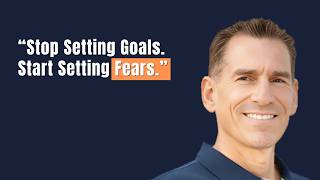
Executive coach Dan LeFave explains how CEOs at $5-$50 million companies can escape decision fatigue by upgrading their decision architecture. His 10X Operating System uses identity shifts, three-layer standards, and 12-week planning sprints to unlock growth, with one founder jumping from $5M to $20M revenue after reframing who they were as a leader.
Chapters
Hello. Glad to meet you on my new episode of podcast Venture Growth with Leon Eisen. You know, we all, when we are young, we all dream about happy life, very nice job, very nice family. And we somehow thinking maybe we are going to be astronaut or physician or somebody else. And with aging, we get married, we find some job that's somehow far from our dreams. So, how to get back to your dreams? How to decide correctly? How to make decisions that really bring you to your dreams instead of getting you far from your dreams, your dreams. And we will talk today with my good friend Dan Leferre, who wrote the book "Living the Life of Your Dreams." And we will ask him how actually to have happy life, very nice and successful business, and how to make right decisions for the business, for life. And by the way, he is a great coach for leadership, for CEOs, and help them to make this balance. Hello, Dan. Happy to see you. Hello, Leon. Happy to see you. And thanks for coming to my podcast.
Yes, pleasure to be here.
Thank you. I presented you, but I didn't, uh, Present everything what you are doing. You are a coach, you are author of two books, and you are amazing and bright person. So, thank you. Now please tell us what else I forget to mention. Sure.
Well, at the core of what I'm doing, aside from writing that book or, um, I'm helping CEOs eliminate decision fatigue. These are $5 to $50 million CEOs and their founders, and I help them upgrade their decision architecture. Because if you study anybody who's successful, we realize that success is nothing but a series of better decisions. I mean, if you look at Warren Buffett, he says he made 12 great decisions. I would argue that he made thousands, but You know, there was, there was 12 in there that he's, that, that are memorable.
So 12 big, yeah, big decisions. Yeah. 12 really big ones. Yeah.
Yeah. But the, the critical thing here is how do we make better decisions? And we've, we're stuck in an attention economy right now and people are struggling just to focus and, you know, distraction is normal now. And so it's like, how do you, how do you avoid all that distraction and all that confusion and decision fatigue. You know, that's, that's a common term today because people are not able to get through their day without getting a little tired of having to make so many decisions. You know, just, just a typical person. But take a founder who has maybe a team of 40, maybe 200, maybe 500 people, you know, but they have like 7 to 10 or more direct reports and a lot of activity going on. And then they have interactions with colleagues and partners and, you know, and then family on top of that, right? So it's like all these decisions to be made and of course there are surprises. So, you know, how do you get through your day and your week and your month and your year making better decisions?
Yeah, today we have AI, so usually people ask AI, so what, I have this problem, that problem, that pattern, how should I decide? And a lot of people, I know a lot of friends, they 100% rely on what AI offers them. So is it valuable, valuable coaching by AI, or maybe we have to think by ourself if what we want.
Well, I think AI helps, um, and it helps with this because here, here's the core problem that we're all running into, is that we're not thinking about what we're thinking. So we're just thinking something and it's based on experience, it's familiar. If we ask AI and it gives us a response and it doesn't create too much friction, then we just, you know, internal friction, then we just go ahead with it, right? Like, if AI says do this and, and you didn't stress test it, well, then, and then you do the thing and then you find out, well, that wasn't quite right because I didn't ask more questions. So that's, that's another part of the puzzle, which is unless we're asking effective questions, we're not— the best we can get is the right answers to the wrong questions. So I was, I always think of a triage center like this. Like if you go into a triage center and you're wounded, let's say you've been in a hurricane, you're wounded, and the doctor starts asking you questions. Yeah. They're not asking you arbitrary questions. They're asking very specific questions. Why? Because they have to put you in Group A or Group B. Group A, emergency, you know, internal bleeding, something like that. Right.
Group B.
You can wait, you know, so they're asking very specific questions. So unless you're asking the right questions, then you're, you know, you might get the right answers to the wrong questions and then, you know, you die, right? In that case, you know, so, so that's, that's a really critical point because people don't realize the power of questions and they don't realize the questions they're asking silently in their mind, usually questions like, Oh, I'm such— why was I such an idiot? Why did I make that mistake again? You know, those are the kind of questions we're asking versus, you know, how can I make this better? What's the right answer? Is this the right solution? You know, and we'll tap into this a little bit, but we have a really powerful mind. We have two parts of our mind. The one part we call the executive center, which is the prefrontal cortex, we're making decisions based on that every day. And we can only handle 3 to 4 challenges at a time versus we have this hard drive, the subconscious mind that can handle so much more, but we're not tapping into it because we're not asking effective questions. You know, if I, if I say, hey, you know, tell me what's going on with you and you do. And then suddenly I say, what are you up against? That's a question where you can't just ram, you can't just rhyme off some answer. You have to, it, it's a deeper question, you know, what are you up against here? Um, yeah, so, so that's, that's the thing about decision-making. It really requires, uh, you know, a different way of doing things, asking questions, and, and also, um, being open to the solutions, better, bigger and better solutions.
Yeah.
And oftentimes scary ones.
Right. What, what the role of wishful thinking in decision-making, in asking questions, because it's noise. And how to avoid it? And do you have any methodology or framework how to eliminate wishful thinking from your decision-making?
Well, once again, you know, it's about thinking about what you're thinking. So I eliminate that with my clients by doing this. Instead of just talking, because that's, you know, coaching could be talk therapy if you really, you know, boiled it down, right? It's talk therapy for most people. I've hired coaches and that's exactly what I got, talk therapy. And I took notes or they took notes and that was it. But what I do now is I open up a map, a mind map, and I map out their thoughts. So there's no wishful thinking at the end of that conversation because we're actually mapping out what they're thinking, the challenges, the problems, the solutions, the opportunities. And I have a 4-step process I take them through, and it takes you through the emotional cycle of change. And so, you know, the wishful thinking just gets crushed by that because at the end of it, at the end of it, there's no denying what they were thinking, right? Like, they can't, you know, they can't say, well, I really meant this. It's Like, well, this is what was said, right? So we have a map. And when I say a mind map, you know, it's like bubbles on a page, all the different thoughts there. And if you look at the mind, that's how it actually is set up. So thoughts are not stored in one place. They're in different areas of the mind. And so by mapping out their thoughts, then they have that clean and clear focus. And then of course, the scary part, which is what are the actions? And those are the tactics. Actions, takeaways, and they take action on that. They, they're not going to not take action on it because it's almost like saying, I knew better, but I didn't, right? I, I just didn't do the thing. So yeah, so that's, that's how we totally sidestep wishful thinking.
As I know, one of your expertise is neuromapping, exactly what we are talking about. Could you explain a little bit deeper about what is it and how it works. Sure.
Well, metacognitive mapping is pretty fascinating. And, you know, I'll say this, and I'm hoping, you know, you know Carl Jung, and I know other listeners probably listen, know about Carl Jung, but he said until you make the unconscious conscious, it will direct your life and you will call it fate. And I might have, I stumbled upon mind mapping as a solution to bringing that unconscious and making it conscious. So, so the metacognitive mapping for me is taking thoughts. Now, some people might just journal or, you know, take notes, but I think mapping them out in bubbles on a page, you know, like a mind, a nice big mind map with all the details, taking note of everything that's said, that gets like, that takes clarity to a new level. And, um, and, and I see it all the time. Like, you know, you see people light up, they're just like, oh, now I know what I've been resisting. Um, you know, like, uh, the, the, um, uh, what is it? Steven Pressfield. He wrote a whole book on resistance, right? So we know, we know that we have resistance. We have fear. Uh, we have fear of the unknown, fear it's uncertain, right? So how do we overcome that? Well, this mind mapping does that because it helps you get that clarity. And there's another principle that my whole system operates under, which is all progress starts with telling the truth. So, yeah, this system is a lie detector, right? It brings out the lies. It brings out the, you know, the fallacies, the, you know, misinterpretations. You know, the hidden challenges in psychology, they call the hidden challenges and hidden commitments. It brings those to the surface. So then once we know what those are, then, you know, then it's a question of, do you want to keep on feeding those? Do you want to keep on, you know, feeding the fear and feeding the doubt? Or are we actually going to take some micro steps in the right direction? And then that's where the better decisions come in. And then leverage, right? And, and I see it all the time. Like, I've, I had a client, he was doing projects for, you know, $5 million roughly in maximum. And then we worked on his identity because that's the surface level. That's what you wanna work on. You wanna go upstream surface, you know, that, that's, you know, having your identity really clear. So we worked on identity and, and all sorts of other factors. And then within a year, he got a $20 million project.
That's amazing.
So, yeah, that's a, that's a huge leap for him, but, but it's, it's a massive identity shift too.
It's a full reboot.
Yeah. Yeah. And, and it's not, look, as much as somebody like him wanted that $20 million project, now it's an identity shift. It's like stepping into a new identity. We, you know, he did step in a little bit, but then suddenly It was just, it's like winning the lottery. And then—
Yeah, identity is, I think understanding your identity is the most important thing because otherwise if you're doing many different things, you have to have some common denominator and your identity is a common denominator because for example, I'm a venture capitalist at the same time, I'm an entrepreneur, I'm a mentor. And teacher and after. And so at one point I just had some bipolar destruction because I couldn't understand who I am. Either I am entrepreneur, I continue to build companies, or I am an investor or mentor. And I start working on my identity. And I built neurocognition map, as you said, but I did it by myself. I'm not an expert, so I just learned about it. And I found that my identity to help startups, to help founders to grow their business and to realize their dreams. So what you said resonates. Very much with me. So, and even back to identity, people come to you aware about their problem, or you somehow make them conscious about problem. So, this is a big difference, because I call it inbound or outbound approach. So they come to you inbound, or they— or you just, when you see some problem with somebody, you offer your help.
Inbound is what I get most often. So, um, because people have tried so many different things and they're breaking down and they're frustrated, and then they see, you know, some unique perspective and then they say, okay, you know, I have a system called the 10X operating system. So they're like, well, what is 10X, right? And then, so then they want to understand that and realize, okay, well, if I want to 10X, what does that require? What kind of guidance do I need? And, you know, and that's where I come in. But, you know, the thing is they may be slightly aware, but I make them acutely aware. That's my job. You know, I have to, I have to take it to the next level of frustration, which is what happens 3 years from now if this problem is still the same? Yeah. You know, you push the pain, right? And then, and then they realize that, and then, and then you have to show them, you know, what it would look like if they adjusted that. But once again, we're talking about it, it's an identity shift and nobody raises their hand saying, I want to be somebody new next month. No way. It's very difficult to shift your identity and gradually is always better.
This is like in healthcare, you have, you're speaking about patient activation level. So there are 4 patient activation level and low conscious level and high awareness level. This is the highest level. And yeah, it's a take time to get patients from low activation to high activation to manage their health. Same here, because it's mental health that influences life, on decision-making. And finally, what is a strategy? Strategy is a set of decisions. So if you don't have good decision-making rules, you have a wrong strategy finally. Mm-hmm. Yeah.
Well, the strategy, it's not a strategy problem. It's a neurological problem. That's it. That's the issue. And it's hidden and it, that's the thing. It's hidden. People don't see it, so they don't know what's in their way. And they don't realize that event events are repeating themselves until lessons are learned and they don't learn the lesson. They don't make the shift and, uh, their identity stays the same and it's, it's just a, a lot of frustration.
Yeah.
I'll just mention this as well. So, so the, the, here's the unique thing about identity. Everybody knows their identity, so I can collect data on somebody just by looking at their social media and, you know, like LinkedIn and so on. So I captured their identity at the beginning and then we talk about their future identity. So we create a contrast between current identity and future identity and then On a monthly basis, we actually track where the needle moved towards the future identity because I've, you know, I'm a coach. We, we have all sorts of data. I have transcripts, I have maps, I have 12-week planner. I have all this information. Take all that data and we can see exactly, and I can tell them where the needle moved. And it's not, you know, it's not just, you know, information. It's actually, it's clear data, right? It's like, this is what was said. This is what was done. Here's the shift towards that identity. And then they start believing in themselves. They start believing that new identity, that new capability.
I'd like to have some lesson for you, from you. So people are driven by, usually most of the people, by fear and reward, unconscious people. Conscious people, they understand differently. Our life. But unconscious people, that is majority, they're driven by reward and fear. Fear in the first place, reward goes after that. So, what you apply, how you transform this identity to driven by greatness? How to transform people having fear and made all decisions based on fear and reward unconsciously to conscious greatness?
Good question. Well, here's the thing. We all have fear in us. It's an emotion, right? It's part of us, right? And it serves a purpose. But unfortunately, it served a purpose many eons ago where it kept us safe and secure from predatory animals. Now we don't need it. So actually, and you probably know this, we fabricate our fears, you know, because we, because as a part of us, it's almost like having a system that's not being utilized. And well, that's just not how we operate. So, so we have this, this mechanism in us. We have the amygdala, that's the flight or fright mechanism, right? So it gets activated. So, you know, a way to manage that better is to think of fear as it's a part of us, it's a component. So then how do we take it with us? Like we just, you know, how do we take it with us instead of letting it overtake us, which most people do? They, they start thinking of the worst-case scenarios. Dr. Joe Dispenza talks about that. He says, you know, we'll go to the worst-case scenario in our mind because if we can, if we can visualize that, then we can handle it. Right? We don't go any further than that. So, but that's, it's valuable. But then how do you leverage it instead of letting it stranglehold you? So, so the critical factor here is to know that it's part of us, but then to use it to our benefit. And when I'm talking about taking fear with us, it's, it's, you know, obviously stepping through what Bob Proctor, my mentor, talked about terror barriers. So How do you effectively step through a terror barrier? Well, you might have accountability. You know, you make commitments to, you know, to an accountability partner or to other people. And then you do the thing, you know, you do the thing even if you fear it and then you develop that mental muscle. But it's there, it's part of us. So why, you know, why let it just run its process and then, you know, run us down to the ground. We don't need to do that. So, you know, and there's different processes that I use. I like, there's a process about fear setting. So, you know, instead of goal setting, fear set, you know, actually.
Yeah, that's interesting.
Yeah, yeah, fear set. Like think about the fears and then set the objective to fulfill that fear, fear set. You know, that's a way of attacking it. Some people can do it. Other people might be a little bit, you know, too afraid to try that. But, you know, it's like this. We have 6 emotions and we think that we shouldn't fear things. Let's just be realistic, right? It's part of us. And it serves a purpose. And it does when you're in jeopardy, when you're in a car and you have to swerve real quickly, it serves its purpose. It gives you that empty feeling in your gut and you swerve and you miss the accident and then you're like, oh man, right? But we don't say, hey, well, thank you fear for helping me there.
Sometimes it helps, definitely. For example, in military, everything is based on the worst scenario. So they start from worst scenario to start from this. Yeah, very interesting. And what about positive thinking? For me, it's the most controversial stuff, positive thinking. I remember one interesting story when just airplane just goes down, drops down, and people cry around, "We are going to die, we are going to die." Just one guy with positive thinking says, said, so far so good. We're still alive. Yeah. So this is very controversial stuff. How you deal with these and what do you think about it?
Well, again, we're talking about fear and, you know, positive thinking versus, you know, fear-based thinking. So once again, the critical factor here is becoming aware because if we are not aware of what we're thinking and we can't dispute this, we are patterns. We're pattern creating beings. So until we recognize the patterns, pattern recognition, and that's what my system does. That's the first thing we want to recognize the pattern because if we don't see what the pattern is, then we don't, we don't know what we're trying to solve for. Right? So the first point is to be aware and then notice the patterns and then developing a pattern interrupt. Uh, as an example, I was driving one day and there was a dump truck in the lane ahead of me and, uh, a stone falls out of the truck. Bounces, hits my windshield, crack, right? And previously I probably would've been like cursing. I would've been maybe trying to get the guy's plate number or something like that and get somebody to, you know, pay for it. But because I was more aware, my pattern interrupt was, that's interesting. Why is this happening to me today? Right here, right now, you know, like I interrupted it with a question, with a, you know, a statement and then a question. And then I was like, what's this all about? A cracked windshield? Like, why do I need one? You know, like, does anybody need one? You know? So I just, you know, I started questioning the situation versus letting it suck me in because I don't know if you know about the victim loop. There's something called the victim loop and accountability loop. So the victim loop is where blame, complain, deny, lie. Apply all those, you know, all those fear-based perspectives. So how do we avoid getting caught in the victim loop and blaming others and taking responsibility? Like, if I was not on that same road at the same time as that dump truck, meaning I left at a different time, I would never have that incident. But I did. So I'm part of the, part of the accident. I'm part of the situation. I can't deny that, right? Like we can't, we can't deny that if two people are fighting, if both people weren't in the same space at the same time, then it would have never been a fight.
Yeah, exactly. So let's back to your 10x Operating System. Could you elaborate more on the framework?
Sure. Well, the 10x Operating System is quite, uh, quite the system. I've been developing this. You know, over 6 to 8 years. But one of the parts that I did mention, which is really the critical component, is the mapping. We're mapping out thoughts. It's meta-level thinking, thinking about what we're thinking. That is one of the critical components. I call it meta-mapping. So if you want to think at a meta-level, then you need to map out your thoughts. You need to think about what you're thinking. So that's one of the critical factors. And then there's other components that I have, which are based on identity, which I mentioned earlier. We want to track current identity, movements towards future identity. That's another component of it. The other thing is most companies do not have standards, standards, you know, standards of excellence. So what they have is values and principles and so on, and they're not the same. When I say standards, these are standards that they operate under. So there's no exceptions because, you know, if you think about it, let's say a company says, you know, they have like a hidden standard, maybe a silent one that you show up to meetings on time, but then somebody or maybe a few people are showing up late on a consistent basis. But if you don't have any standards, then it becomes the new rule. Like anybody can show up late. If those guys are showing up late, I can. It's that kind of mentality versus if you said, we always start meeting on time and everybody shows up on time, then the standard is high and everybody must abide by it. And if they don't show up, then anybody on the team can call them out. So that's the uniqueness of it. A CEO doesn't escape the standards. And so standards is another component. Of my system. So we need to have those standards. And it's not just business standards, it's personal standards. That's where we start because the leader of the company is the one who's going to, you know, is going to impress their standards upon others and live by them. So personal standards, team standards, and business standards. So you need to have all three combined. So that's, that's another part of my process. But then I, I have 12-week planning. I took the book, The 12-Week Year, totally dissected it, and I created an app. So this app is beautiful in my opinion. I bet you there's nothing better out there. And so 12-week planning, 10-year, 3-year, 1-year plans, and then we break it down into 12 weeks and we do 12-week sprints, tactics measured every week. We have a dashboard. So yeah, there's really, you know, in these circumstances, the founders I'm working with want something and they don't just want it. They, they need it. Like it's part of them. They need to grow and progress and they want to achieve excellence. So then this is the system. If they're not up for this, they will quit.
Could you remember or recall some most difficult most difficult situation or case where culture, company culture was broken totally and you somehow using your first principle separated, integrated and built this culture from the scratch again? Did it happen?
Sure. Yeah, yeah, well, actually there's something I'm going through right now, so we haven't quite solved yet, but we're on the path. So, um, most leaders are very responsible and sometimes to a fault. So they will lead and not let others take responsibility and control. And, you know, and then that causes, you know, that's disempowering, right? You're enabling them. You're basically saying, hey, you don't need to solve this. I'm, I'm I'm here, you know, I'm the solver. And so most founders are pro— good problem solvers. So they step into that role at the beginning, but then later on when they get so big, they have, you know, 50 employees, then what? You know, how do they handle it then? So there's a situation that we're working through right now, which is the leadership team isn't as accountable and as responsible as they could be. And it's because of this pattern that they develop. It's familiar, you know, show up to calls. If I'm on the leadership team, I don't need to be 100% accountable. Why? A leader is going to solve all the problem, right? They will have the problem, right? So what we're doing is quite unique. I'm using AI to do this. Right now. So what we're doing is we're using a project in ChatGPT and it has a series of questions that need to be answered prior to leadership team meetings. And it's basically, you pick, it's, it's something I dissected from a book called The Trillion Dollar Coach. I think it was, it's Bill, Bill Campbell. So they come up, they show up to the meeting with 5 words and they also have challenges that they are, um, that they want to address during the call. And if anything isn't on that list, then it gets parked for a later time or it's, it's taken offline. Um, so that, that's just one part of the process, but that's going to solve a lot of issues because what happens is meetings start going longer, other issues are brought up that weren't on the agenda. And, or that shouldn't be. And then it just, it just creates chaos and confusion. So if we're think, if we're aiming for clarity, clean and clear decisions, then we need to have systems so that the guardrails are there and people don't just go offline and, and do whatever, you know, off track and do what they want.
You are working with late-stage companies, $5, $10 million, $50 million revenue, but all the problems started when they, they were young. Company, early stage company, maybe just from the founder of first day. So what your opinion and your, based on your experience, when the culture start just get broken, when the culture just doesn't work as it is, when we have to think about building the right culture and apply right standards when it's a small company, I don't know, 3, 5, 10 people, or we can, we can reboot it. That's much more difficult in a later stage. So what, what, what is your, uh, recommendation to later stage founders?
Later stage is more difficult, but if, like, here's the thing about startups. They, they don't have enough experience. They don't have enough breakdowns, right? They, you know, because I've talked to some startups, you know, they have $3 million, they have investors, they're not concerned, right? They just, it's comfortable, right? And, uh, you know, they may have some objectives they need to meet and certain revenue targets they need to hit, but for now it's not stressful. So the reason why I'm working with later, uh, companies that are, that are later in their development is because they've had those experiences. They know what it feels like. Like experience is the critical factor here. So unless like the only reason, the reason why, the only thing that I would think a newer startup, even a second stage startup would engage with this kind of work is because they've done some reading, studying, and learning about this. And they understand that no matter what happens, they're going to end up in the same place as most every other startup. And, uh, so if they have that kind of awareness, then they might say, all right, I'm willing to go to that level. Um, because like I said, it's an identity shift, and most people don't do that unless they're under pressure.
Yeah. You know, uh, this is what I meet with almost all startups, even when they have advisory board. I usually ask when 'Have you talked to advisor last time?' And usually it's, 'Oh, 6 months ago.' 'So why do you keep advisory board?' 'Because this requirement from venture capital, they like to have and to see some good advisors in a board.' But actually it's some— they are like teenager, teenager mindset. So, 'Oh, I know everything by myself, and if I have to do it just to show somebody that habit. And this is what happens with seed and pre-seed startups founders. They know everything, they reject everything, we don't need anybody, they decide by themselves. And when they come to pitch, I immediately realize if this guy had advisor or coach or haven't. And this is bad because from the beginning they don't know how to pitch even, but they think they know. And this is teenager problem again, teenager mindset. Starting from round A, they start to understand, okay, we went through the chasm, we understood all the problems and many people help us to solve it. Maybe it's worth to make real board where people really can help us. And the most, at round B and C, this is where CEO just surround himself or themselves by advisors because they understand that without advisor they cannot move forward. They can cut years just, you know, because instead of doing all their mistakes, they can just learn it from other people. When I started my business in 2009, we didn't have advisors. We didn't have a lot of people who did exit. And it was many people who did wrong exit in '90s. And not because of good company, because of all these, you know. Double. And it was really a problem. I was looking for advisor, I couldn't find that really can help me. Today we have thousands of people, so it's just very nice place, very nice time to, to build a company and find advisor can help you. So yeah, that's very important, right?
Well, the, the critical factor is ignorance. They're ignorant. And, and of course, when you're ignorant, you don't know you're ignorant, right? You don't see yourself. And so like you're saying, a teenager mindset and they just, you know, they go around thinking they have the answers and then they find out. But I'll mention something here because I like studying different things. So there's in physics, there's something called a Burkhalter Chrome. So a Burkhalter Chrome is a pattern and it's the fastest path from A to B. A to B isn't a straight line. That's not the fastest path. It is not scientifically. It's a curve. It's a smooth curve. Yeah. It's, it's actually a cycloid. It's part of a, if you took a wheel and turned it, you, you'd make the path.
So it was like some acceleration in the middle.
Yeah. So the way that I interpret that in life is that what is that drop? What's that drop? You know, what's happening in that drop in business development? Well, that's where the mistakes are made. That's where the lessons are learned. And the faster you make mistakes and the faster you learn and the quicker you change your mind and your perceptions, then you can, then you can hit the glide pattern. But you don't hit the glide pattern unless you go through the drop, right? Yeah.
So that's not everybody get out from this drop. It's really important.
They don't.
They crash.
Yeah, they crash.
Yeah.
But the ones that do, then you just, you flip that on its side for 90 degrees and that's the, what they call the hockey stick. You know, you're, you're, you're, you're just going along and then suddenly you hit the sweet spot.
Overnight success.
Well, not, yeah, I don't know if it'd be overnight, but you know, it's like they did all the work in order to have that growth.
Yeah. It's, it's, it's compound effect. It works like this because, you know, well, you cannot go up continuously all the time because, you know, you are living in a real world and decisions are not always right. And if you don't use, for example, your approach to decision-making, there is a good chance you have the drop because—
Right. And you can always connect the dots.
—we move from experts. Yeah.
And you can always connect the dots looking backwards, so you can always see what led to the end results. Yeah. So, so I actually, my whole system is actually looking for evidence. We're looking for evidence indicators, right? 'Cause we can, we either are evidence-based or evidence-bound, right? And so I want people to look for evidence as indicators that they're moving in the right direction. So we're always collecting that, those little data points. Because what does that do? That shifts the beliefs, right? Because that's the critical factor that's in the way.
That's interesting because you remind me, uh, my question I was going to ask about signals. What kind of signals are you using to identify the stage of the company, a mind stage, state of, of the founder or CEO? So what kind of signal tells you, okay, this is a problem and here we're okay?
Uh, are you talking about like when I'm initially meeting somebody or, or—
No, yeah, you are initially meeting and you have some signals that, uh, people just, just you scan these signals. Yeah.
Well, there are very, some, some very simple ones. Uh, so I start off light, which is, you know, uh, what's the problem? And then, uh, what, what have they done about it? You know, tell me what they've done about it. And if there's absolutely nothing. Then I just say, you know what, this isn't the right time for us to work together, but thank you. And that's it. But if they're indicating that they've been reading, they've taken courses, they've done something, you know, that's that curve, right? What are they doing to try to solve the problem? If they're not doing anything to solve the problem, then they're just stuck in it. And, and I'm not that, I'm not that guy, you know, I'm not a psychologist, I'm not a therapist. So, uh, okay.
So, so you do not read psychological, uh, signals. You just read something. Mechanical.
No, I, I do as well. Um, I don't know if this is gonna make sense to a lot of people, but I use a couple different things. So there's a book called The Five Personality Patterns that tells me who people are at a deeper psychological level. Um, so I contrast it with that. So that gives me little indicators as to who they are. And, um, and so, so that I do, and then I do ask some other questions. That are, you could say they're, they're surface level, but they're psychological. And so then I, I bring to the surface, you know, what are, what are they doing? What's the challenge? You know, how bad is it? Like, if they don't rate it really high, like it's manageable, then it's like, well, then we're not going to start working on this because they're not ready yet. Most people, like, you know this, how many people do you know that, you know, get sick and die. Maybe like I've had relatives and they get, they get cancer, but the indicators were there many, many months before, but they just didn't pay attention. They didn't acknowledge them. They say, oh, there's an issue here. And so, so if they're in that ignorant phase, you know, that, that's a complete signal to me that I can't help them because I need them to be slightly more aware and ready to, You know, face to face.
How to name this personality type that is much more, the most difficult for coaching?
What is the most difficult?
Yeah, type of personality is most difficult for coaching.
Well, they call the, there's one called the leaving pattern. So that's people that quit. So if I can find out somebody has the leaving pattern, then what's the point, right? I'm just gonna, like, I don't, I have 100% success rate because I pre-qualify really high at the front end. Um, so, uh, if they have that leaving pattern, that, that's part of the 5 personality patterns, that's basically they're quitter, right? So, and if I can determine that in advance, then, you know, there's, there's no point in starting because they will quit. They'll, they will find a way out. They'll blame, complain, deny, lie. They'll live in the victim loop and they'll be gone, right?
Well, it's interesting because I know there are many algorithms that decide for, for business specifically, if this customer, client has such a good personality and just came here for his interests or really serious to make something. So what are the four personalities?
I don't know if I know them all, the other four personalities. So there's the rigid pattern, there's the aggressive pattern, leaving pattern, and the enduring pattern. And then there's one more that I'm not recalling right now. But, um, uh, but you know who you are once you flip the book open and look at the shape of the body, because that's, that's, it is psychological book.
Yeah. But the look, the shape of the body. Wow. Yeah. Yeah.
The shape of the body, but also the face matches the shape of the body, you know, like somebody who's heavy has a, you know, wider face and fattier face. So these are good indicators. Even my mentor, Bob Proctor, he gave us something called body forms. And it was the same thing. So as a simple rule of thumb, uh, the term is osseous. So if somebody has an osseous face, like very narrow, these are slow decision makers and I avoid them. I avoid them. Uh, you know, these are the kinds of people that I, I probably couldn't help. Uh, maybe a psychologist could. Um, but then the people that have wider faces, and if you look at people around the world, leaders. CEOs, they generally have wider faces. Not many have that narrow, roundish, you know, creator, creative type face. And so, so yeah, you're, you're actually, you know, the signal's right there in front of us. It's their shape of their body that tells us who they are. And of course I've, I've used AI. I take, you know, somebody's headshot from LinkedIn and I put it into AI and it tells me all sorts of indicators as to who they are. Questions to ask, and then I can pre-qualify them heavily right up front.
Yeah, and interesting, my observation that big guys have very small dog and small guys keep very big dog.
Yeah, well, it makes sense, right? If you're small, you want more protection. If you're big—
Yes, exactly, exactly. It was a very interesting conversation. I hope we will continue. And thank you very much. Then we today, we talk to then the Faith, my good friend, author of Living the Life of Your Dreams and founder and coach at 10X Operating System. Thank you. Subscribe, like, Like always, maybe make comments. See you next week.









