How to Get Investors to Say YES with Susan Treadgold.
This content was created by stable-brise. This content was uploaded by stable-brise. This is a YouTube video titled "How to Get Investors to Say YES with Susan Treadgold." It features a podcast-style conversation recorded on July 27, 2025, between Leon, the host, and Susan Treadgold, a businesswoman and author. They discuss Susan's background in investment banking, her transition to executive coaching, and her insights on energy management, leadership, and fundraising strategies for startups.
Chapters
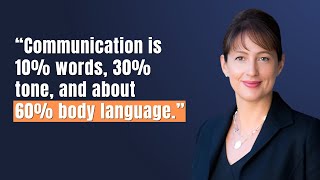
I call it mind energy. It is the thoughts you think, the images you visualize are those things. Are you clear? Are you on purpose? How is your time management? All of these things, the way you think about things are either going to overwhelm you or enhance your energy. Communication is approximately 10% words, approximately 30% tone, and about 60% body language. Low status mammals make themselves small. They don't want to be seen, they don't want to be eaten. They speak quickly, they move quickly, and they want to get in and get out before they get eaten. So that's something to think about when you're in the Zoom Room.
Hello. Today I'm happy to host in my podcast Susan Treadhall. She is tremendous woman who made herself like a businesswoman investor and who wrote several books. The most famous book is Success University for Women in Business and the High performing woman 52 Take action tips for Greater Confidence, Energy and impact. She spent 20 years in investing, banking, business and she knows everything about founders. She helped hundreds of founders to prepare for fundraising and to actually raise capital. So I expect very interesting conversation with Susan today. Hello, Susan. Thank you. Yeah, thanks for coming to my podcast.
Thank you, Leon, for having me.
That's amazing. So I expect very interesting conversation, but I would like to know more about you. Who are you actually? How did you come to investment banking and how did you come to writing books specifically for women to help women in business?
Yeah. So, gosh, where do I start? I'm from Detroit. Detroit, that fine French city. And therefore I was kind of born in the car industry. My father was a car executive and a couple of internships I had in college, one was at Chrysler and the other was at General Motors in Germany. And I studied abroad and I'm fluent in German. So I had this sort of German and car background. And I early on became a car analyst at a boutique investment called DLJ in New York. And then I quickly got an offer with Morgan Stanley in London to cover the car companies, the German car stocks, because back then they would have the analyst meeting in German first and then in English second. So whoever, whenever they had the results, you know, the Germans had a one hour leg up on what was going on and you could already see how the results were for, you know, what was happening in the DACs. And so I started off as a German auto analyst, which was a super fun job, you know, meeting, you know, the car companies and test driving the cars. And later on I went into institutional equity sales and I, you know, did a lot with selling IPOs and then I ran corporate marketing for Citigroup for Europe, Middle east and Africa. And I was kind of the go between between investors and the listed companies and helping them market themselves, market their capital raises, et cetera. So that's kind of my investment banking background. And then.
Yeah, it's supposed to be very interesting job. It's hard job, but it's very interesting because you should cope with so many things at the same time. It's marketing, investing, capital management. Not easy.
No. And during 2008, during, you know, the huge market turmoil, I got an offer to leave the, to leave Citigroup. And if you remember, December 2008, this, this share price had gone from $55 to under a dollar. And the headlines in the paper were, is it too big to fail? And so they were, you know, offered a special deal for people who put their hand up. And so I took that opportunity. To be honest, I was thinking I was going to just go work at another bank, but I used that opportunity. I had started a master's in corporate and executive coaching while I was at Citigroup because I had a large team and I thought it would make me a better leader. But I never had time to finish the dissertation. So after I left Citigroup, I did that. And at my first interview at another bank that was headhunting me, they asked, well, what have you been doing since you left Citi? And I said, well, funny you should ask. I just completed my master's in corporate and executive coaching. And, and they're like, we need coaches. And I'm like, shut the door. And I ended up getting my first job coaching before I even had a business card or a website. So therein began my new career in executive coaching, which then evolved into all sorts of things. Writing books, teaching masterclasses, lecturing at universities, doing leadership training. And then I got a high performance coaching credential. And all through all of that, I, you know, just as I was leaving, just after I left investment banking, I found out that I had breast cancer. So, you know, I had got quite burnt out.
Yeah, I'm sorry about it.
Yeah, yeah. And so I approached it as an investment banker researching all the ways to heal yourself. And I just realized that traditional standard of care, chemo, radiation, surgery was not for me. And I really got into the health and longevity space and attended so many conferences and really started to build a network there. And I'm really passionate about helping founders in the health and wellness and longevity space, particularly with pitching, presenting, positioning themselves, and, you know, strategic lead generation. Both Investors and business for them. So that's what I like to support. And I'm also happy to say I'm, you know, 100% okay. And no other cancer.
Good for you.
Yeah.
I heard that cancer survivors, they just sharp their senses and intuition. Is it right.
That their, that their intuition and senses are sharpened? I've never heard that before, but I do feel.
What do you feel? What do you feel?
Yeah, I do, I do feel that. I do feel like that I feel like it was, I mean, I don't, you know, it's a hard concept to, to share with some people that are going through it, but for me, I thought it was a gift. I call it the gift of cancer. And I feel like it somehow woke me up. And it also, you know, my body had been telling me for years, you know, you're burning the candle at both ends. And it was really, it took cancer to get my attention.
Oh, that's amazing. So how did you use your new capabilities or abilities to create your business? Fundraising business coaching business, as I understand you do together, you help fundraising and definitely if you bring hundred investors to founder and founder is not ready, doesn't have charisma, doesn't know how to pitch. Just do some simple talk. It doesn't help. You can bring him 2,000 investors, he won't raise anything. So you have to coach founder before bringing him to investor. So how you complement coaching, your culture, background, sharpening of your senses and intuition and fundraising, actual fundraising.
Leanne I think everything is energy really. And it is the number one common factor behind success in virtually anything. And I created a model in my book, the high performing Woman about how to. It's, there's, there's a energy wheel and to figure out what boosts your energy in each area and what decreases it. Because I think a lot of founders, they're doing so many things, they're wearing so many hats and one of the reasons they fail is that they burn out. And so energy influences so many things. It can influence, influence your executive presence. I do a lot with executive presence and how people show up full of energy, ready to bring their A game. I mean, that's what I would want to see as an investor, not somebody who's pulled consecutive all nighters and struggled to complete a sentence because they're so tired.
That's very interesting subject because I recently invested in a very interesting company they developed, it's called Alter. They developed some engine that reads your energy for the day and night and support you in time when it matters the most. To help you, to motivate you, to make your job. So just follow exactly the pattern of your energy and I would say nudge in appropriate time. That's very interesting and I like this subject very much.
Yeah, I just did a TED Talk, TEDx Talk on it. It's called fix your flat tire, how energy transforms your life. And I did that in Florence, Italy. In fact, I think it's coming out this week. So. So this is well timed. I mean a little Italian, you know, right after it. Like when is it going to be published? Two weeks or three months. So it's closer to the three month mark now, so it should be coming out any day. I see some of the other people that spoke at it came out. But what I was trying to share in that is that everything is energy.
So how actually you can manage it if you know exactly how to do it and how to manage it, you cannot manage energy from the energy because it's, you know, it's fixed. You can get energy from the goal. If you set up the goal, if you know what you're going to do, if it has a purpose, you can dramatically enhance your energy.
Absolutely. You know, people that are very purpose driven, that gives them energy. So, you know, some of the areas that affect our energy are what I call connection energy, how we interact and communicate with others that will. Are you an energy angel or an energy vampire? I mean, a lot of the reasons why startups fail are the people that they put around them and do they bring out the best in the people around them or are they poor leaders? So energy impacts everything. So, you know, poor leadership, they're going to, it's going to be constant bickering, confrontations, all of that is going to take down their energy. So when I say at the root of everything, it really is energy. There is.
So how do you use energy in your methodology of coaching or fundraising? So are you using energy? Are you using these, some tricks, how you do?
Yeah, there's all kinds of, I mean, so the number one thing for energy is really your foundation. The air, food, water, light, sleep supplements that you put into your body. So if you do not, if you're dehydrated, poorly nourished, not getting sunlight, not practicing breathing, you know, all of this is. That's the number one thing to burn you out. Then I call it mind energy. It is the thoughts you think, the images you visualize. So are those things, are you clear? Are you on purpose, how is your time management, all of these things, the way you think about things are either going to overwhelm you or enhance your energy. So I take people through my energy model, then the connection energy. Finding out the five people that you spend the most time with, are they enhancing your energy or draining it? And taking the first step yourself. Because you can't change other people, but you can change how you show up, which will allow them to show up differently as well. So then we have move energy. And this is not just exercise, but it's also posture and body language and being aware of how that energized the mind body connection and how that will enhance your energy and take it away. There is space energy, which is your environment. So from the things that you see in your visual environment, the ergonomics of where you are working, even the things that you wear, I mean, we all know now that polyester lets off microplastics into the body, which is an endocrine disruptor, which lowers your energy. So thinking about wearing natural fibers, cotton, silk, linen, you know, it's very technical. I have like in each category, there's so many things to consider. And so what I help people do is create their own energy blueprint and have a personal energy plan. And what gets done gets, what gets measured gets done. So I have like help people to start stacking new energy habits, like little things. You know, one of the things that I love is the five penny. The five penny habit. And what that is, this is about connection energy is to start the day with five pennies in your right pocket and by the end of the day they need to get to your left pocket. And the only way a penny can go from your right pocket to your left pocket is by praising, acknowledging, expressing gratitude to somebody.
Or going to magician.
Huh?
Or going to magician.
Yes, or go to a magician. Abracadabra. Yeah. But it is a magical result. So. So if you are consistently praising, acknowledging, expressing gratitude to five people a day, either in person, by text, by a phone call, that doesn't just energize them, but it'll tend to energize you. You'll feel good about yourself.
Yeah, I know that if you smile, you change your mood.
Chemistry.
And chemistry.
Yeah, yeah, yeah.
So this is one of the methods and what kind of other methods you're using. So for example, I come to you, I am serial entrepreneur and yeah, I raise capital. But every time it happened differently. So every time different time people become older and any fundraising, each fundraising is something different. You never full prepared to this. So do you have any methods that could give people to understand dynamics from moving from one investor to another, from one fundraising round to another fundraising round that happened in different times with different people.
So there's. There, that's like, that's it, that's it. And there's so many different types of investors as well. But before, what I like people to do, founders to do before they meet with any investor, like, some of them can be very prone to just like, oh, hi, here's my bitch deck. And they just immediately launch into the pitch deck. I think it's better to do what I say five minutes before to do something. What I call is a, is a quick, a quick pre pitch. And what you do is you make sure you have a personal story. Storytelling is very important because people learn differently through stories. You know, our mind, our, our, our, our brains light up differently on an MRI when we're about to hear a story.
Yeah.
So think about a story and then also think about the investor that you're going to be meeting with and think about what questions will they have. Now, they will have two types of questions. They will have questions that they will probably ask. When you think about it from their point of view, what type of investor they are, what type, you know, do a little bit of background on them, like what is important to them. Like, think about the questions that they will definitely ask and then think about the questions that they will have but won't ask. And they won't ask these questions for two reasons. Because it'll either make the founder embarrassed or look stupid, or it will make themselves. You know, they'll may, maybe they'll think it's a silly question that they should know the answers. So, so they won't ask it. So questions like, they may be snarky questions like the founder, like, well, why do you think you can do this? You're not even a doctor. Or why do you think you can do this? You've never had any management experience. Those are the questions they may have in their head but won't ask. But if you can be a mind reader and say things like, you may be wondering why I think I can do this when I don't have this particular background. Or if you can be a mind reader as a founder and answer those questions, that can be very powerful as well as, instead of just jumping straight in, you know, you can start off with like, well, what's important to you? You know, I have a few things that I think you might be of interest to you before we get into the pitch deck. Or how do you want to discuss this? How do you want to do you want to go straight into Q and A instead of just jumping in like tailor it to what they want, you know.
I totally agree with you. As an investor, I always pay attention on the first milliseconds of our meeting. How founder look at me. Or down to the floor or up to the ceiling. I don't know how. And what. Yeah. What kind of eye contact it happens because if eyes just down, it's a red flag for me. So my conscious mind immediately read it and it looks like decide not to invest. So all the conversation just justification biological brain. What my unconscious brain just decided. So this is what I found. So the first thing I I try to help founders is how to start conversation with investors. How to get with investor into the elevator and how to start elevator pitch. How to say the first words. So even there is a quadrants called fundables. These quadrants in a space of people consist of charisma multiplied by. By momentum. So if there is a momentum in the business coincides with charisma, this startup becomes fundable. If there is only momentum or only charisma. That's a big. It's not big problem, but it's a problem.
Find charisma or how do you think it's a teachable thing?
Totally teachable. Charisma is teachable. And I think you do this, you know better than me how to do it. And momentum is achievable.
Right? Okay, so but that you said that was a quadrant. What are the other two things? Charisma, momentum.
What are the other two things? And danger quadrant when you don't have danger quadrant, Danger space where you don't have Izuku, charisma or momentum.
Oh, I see.
It's a dangerous place to be. Okay, so when I start talking to founder, I immediately just automatically put this founder in some quadrants and then all the conversation just based on this.
So you want to be in the quadrant with charisma and momentum. But sometimes they may have charisma but no momentum. Other times the momentum. I see.
Yeah. If they have charisma I call it they have some God blessed because they have charisma. They know how to think, how to talk. So actually charisma wins over momentum using but together this founder becomes unstoppable.
Right? I love that. That's a great way of thinking about it.
And new method for you. I just share it for free. New method.
Yeah. Thank you, coach.
Of course.
And I. And there's also. There's also some tips maybe and I can even give you a Tip right now for free.
Wow.
Do you know that communication is approximately 10% words, approximately 30% tone and about 60% body language. Okay. So that's why there's a lot of misunderstanding in emails and texts. Because you don't have the tone, the vocal tone and you don't have the body language and facial expressions. Okay. So, you know, I'll just give you an example. Leon, I love you versus Leon, I love you.
I like you.
Exactly. Same words, same words.
And change my mood immediately.
But you change the tone and the.
Body language when you said in a good tone. Just my expectation raised.
Yes. So how do we maximize this communication? A lot of pitches are done via zoom. So what I suggest you do is own the zoom, maximize the communication. And so right now for me, you can see my hands, you can see my full body. Okay, so there's an important thing to see and it's subliminal is this body language. Mammals, alpha animals take up more space like elephants, gorillas, lights, tigers, bears. Okay. So you want to take up space in the zoom. The other thing is they low status mammals make themselves small. They don't want to be seen, they don't want to be eaten, they speak quickly, they move quickly, and they want to get in and get out before they get eaten. So that's something to think about when you're in the zoom room. So right now I have the top of my head. I still get my full focus, but I get to see something very crucial. And you don't see it so much with the shirt, but if I would like tighten the shirt. What is important to see is what I call your wings. Okay. When you are confident, you have wings. When you are nervous, you are clenching in and guarding your vital organs. And you will see people like at networking events and they're standing like this. You know, the confident ones just have their hands like, you know, maybe clasped by their belly button, just standing there confidently with their legs hip width apart. Whereas other people, I'll give you an example. It's kind of like, you know, you can see someone at a networking event standing like this all and stairs versus someone just like, hey, nice to see you. Like how different does that look?
And usually I put something what I, I prefer not to, not to hold something because it's also some sign of defendants.
Right? Yeah. People can go like this and that can be standing there. It's like a shield.
At the University tavern, it happened to university.
Yeah. It subliminally lets you know that people know that you're not confident and you can see people on stage clenching in. I call it doing the Mermaid. They're sitting there doing the clicker like this instead of being more confident. So one of the tips is for owning the zoom room is to actually show your wings. And actually, so you want to have a little bit of your torso so you can also see the body language of what you're talking about. And some of the things like when you're making strong points, you want to make them palms down or sideways, not up. Because if you say things like, I'll just give you an example. This is the best strategy versus this is the best strategy. So when you do a slight tilt down, it's called the predatory gaze. You do. And the palms down. It's almost like a school teacher. Listen here, young man. It gets people's attention very subliminally. But if you do palms up with the head tilted, especially if it's tilted back, this means without volume, it means, is it okay with you? Or I don't know. And that diminishes your authority. So I help people with body language as well and how that can be. They can be more powerful in their communication.
Wow, Susan, you are great. You are great.
No, the times you want to use palms up into the side is when you're expressing empathy or saying, hey, welcome, everyone. Great. See you.
Welcome is the best way to do it. Yeah. And you're welcome. You cannot say welcome. Welcome, guys, your place is here. Your place is here.
No, no welcome. You know, that would be horrible.
So that's very interesting.
But a lot of people will just say, so we're thinking of doing this versus this is what we're doing. It just can totally changes with the body language. It changes the subliminal author.
I would like to know what I'm doing wrong. Like investor in the meeting with founders. So could you tell me about red flags that could scare founders?
I mean, there's so many.
Wow.
You know, I notice with a lot of. A lot of people I want to work with, they often have a solution looking for a problem. They don't nest. They haven't really fleshed out the market need and really proven that there is a need. Like some. A lot of times they have, like, they seem like great ideas, but will people actually buy them and use them and. And, and they. So they may not be focused enough. That's another thing that I find that drives investors away. A lack of focus.
No, no, no. What drives founders away from investor. What is my mistake? Like investor who I'm doing in the meeting with founders. So not what drives investor from founders. What drives founder from investor. What the red flag founder could just to. Could could see during the meeting with investor that tells the founder, okay, it's not good investor, I am not aligned. So what kind of mistake I'm doing during the meeting?
Yeah, like setting up a win lose scenario, you know, really crushing the founders and over negotiating to the point that it's a win lose scenario. I think being a little bit too aggressive in the meeting and putting the founders on edge. I mean I've seen some real arrogance on behalf of investors and not, you know, not putting the investor at ease to bring the best of their presentation out and their ideas. I think also maybe I don't, you know, the investors that I work with are very purpose driven and if the investor is only in it for a quick buck and doesn't really believe in the mission and aren't able to support them, that's another I think red flag.
Okay, yeah, this happens. I think you are totally right and sometimes it happens. Sometimes when I have some bias against the founder or something like this, it happens even unconsciously I have the bias and I behave somehow like arrogant. Yeah, I think everybody has some meeting like this and yeah, thank you, that's very important to create algorithm for everything. I create algorithm. If I make mistake I get back home and the first thing I'm doing I create algorithm how to avoid this mistake next time. So I really see this situation and okay, I remember algorithm. Okay, how I get out from this situation immediately. And this is for everything, for personal life, for business life. Okay, so we are coming to the last part of our conversation and I would like to ask you about your forecast, your vision of future of capital market specifically for startups. Because you know, what's the problem I see today demand for the money in three times bigger than we have supply and not because of we have lack of money, because we have actually lack of good startups. Everybody who get fired from Apple, from Microsoft fired at 15,000 people recently. What people do write Microsoft in their bio and make startup and going to raise capital. And in pitch deck too it's written Microsoft. Yeah. So this is what happens. So what to do with all these people who are going to make startup and how capital should react on this?
I don't think that there's a lack of good startups. I mean maybe you're seeing something different. I think there are a lot of good startups out there and I think investors are overwhelmed. Like I hear statistics that you know they see sometimes like a thousand pitches and maybe two, choose three or four. So it's the overwhelm of going through so many. I guess then that proves your point that there's a lot of low quality ones. How do you find those gems? I also think particularly in the health and longevity and biotech space, there has been a lot of macro economic uncertainty. A lot of NIH grants have been pulled. And so there's been a lot of really great ideas that are withering on the vine because, you know, they've started, they may have already had their seed funding and then, you know, things have dried up. So I think that that is, I think there's a lot of idea companies out there where perhaps investors can step in and fill that funding gap that has been created. I think.
Finally it should be some love that connect people. Love in general. Right? Connect people, make people understand each other. So I like investor, I love my job, not like I love my job. And this love just goes to the people I am talking to about this stuff. So, and this is, I just recalled interesting saying I would like to share with you that humanity exists not for love, exist out of the love to make more love.
That's beautiful.
Yeah. So I thank you very much for visiting my podcast. I had amazing conversation with you. I'm still under impression and hope we will do it again. Thank you.
That was great. Thank you so much for having me.
Yeah. Thank you, Susan. Good luck and have a lot of love in your life.
Thank you. Thank you.









