James Church: The Fundraising Mistakes That Cost Founders Millions...
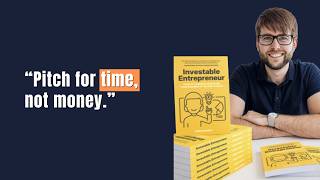
In this YouTube podcast, host Leon Eisen, PhD interviews UK fundraising advisor James Church, author of the bestseller Investable Entrepreneur. Church, who has helped founders raise roughly £250 million, shares why founders repeatedly stumble on the same fundraising pitfalls and how to avoid them. He explains that investors buy the founder, not the idea, and outlines the three‑part structure of his book: (1) the investment landscape and founder psychology, (2) the "6 Principles of the Perfect Pitch" that boost investor engagement six‑fold, and (3) a playbook for finding and courting investors. Church stresses the importance of starting fundraising conversations early on a parallel track to product development, building rapport before money is needed, and treating fundraising as a sales/marketing campaign. He discusses practical tactics such as warm introductions, using short personalized video pitches instead of decks (30‑second intro videos and 2‑minute pitch videos that achieve 30‑40% reply rates), and a multichannel outreach strategy that blends warm referrals, cold outreach, LinkedIn content, events, and pitch competitions. The conversation also clarifies the role of a fundraising coach: a hybrid of advisor, consultant, and doer who offloads heavy‑lifting (deck creation, financial modeling, outreach scripts) while keeping the founder in the driver’s seat. The episode concludes with a concise recommendation for founders to engage investors early, build a community of interested angels/VCs, and let the relationship mature over 12‑18 months before asking for capital.
Chapters
Hi everybody. Today our podcast is dedicated for founders. I think everybody tried to raise half a million, million, 3 million, 20 million, 60 million, even 100 million. And independent of the amount of money you are raising, you actually meet the same problem. Investor psychology, not ready cap table, not ready pitch deck. And also a lot of time you have to spend on fundraising instead of spending this time efficiently on product development and sales. And this is a big problem. So sometimes maybe it's worth to apply to professionals for fundraising, to their help, and cut the corners. So instead of spending a year, you can spend, I don't know, 3 months. Definitely, you have to choose the best fundraising coach to do it. So, and today we meet the amazing number one fundraising advisor and advisor of the year in UK, James Church. James helped to raise about £250 million for founders and they are wrote amazing testimonials and recommendations for him. So I invited James to my podcast and today we will talk about how to raise capital simple way, fast, and without many pitfalls. Hello, James. I'm happy to see you here. Ah, by the way, I forgot to mention that James wrote the number one bestseller called Investable Entrepreneur. So hello, James. Happy to see you on my podcast.
Hi. Thanks for, thanks for having me. What an introduction.
Thank you. Yeah, thank you. So tell us more about who are you, how did you start Fundraising Coach, and then we'll talk about your book because I, I, uh, was reading some summary. I didn't have to read the whole book, the whole, honestly, but I was amazed about the how deep, how deep you get into this subject. So let's start.
Cool.
Yeah.
So I'm a fundraising partner. I work closely with pre-seed, seed, and Series A founders to help them raise their funding rounds. I've worked with hundreds of founders over the last decade. As you say, raising nearly a quarter of a billion in the process, which is pretty exciting to see that amount of capital be unlocked. But You asked about my background, and I didn't start in fundraising. I'm not an ex-VC. I'm not, you know, I come at this from a very different angle to nearly everybody else. And I think that's why my message lands and why my book possibly has the kind of readership and reviews that it gets. I come from a brand and marketing background. So for me, this is, you know, I'm treating, and what my book kind of focuses on is the communication around your, your business. How do you get someone excited enough to want to part with their cash in exactly the same way you would try and sell your product. So I kind of came into this building brands and websites and marketing materials for businesses, a lot of startups. And they asked if I could help them with their pitch. And I kind of figured, look, this is a sales process. What we're doing here is we have an audience that want to buy something, investors want to buy shares, and we have a product that we want them to buy. That's our equity. And if I can apply the same kind of theories that I knew worked in sales, marketing, and brand to investment, I felt like my clients could have great success. And they did. And then it snowballed from there. And I can, you know, I wrote the book based on everything I learned over the first 2, 3 years of doing this. And then the launch of that book marked a pivot for me from moving from brand communication guy to investment partner for early-stage founders. So yeah, it's been quite the journey and a slightly different background to where many of my peers come from, but it works for me and it works for my clients.
I see a book on the shelves there behind you. Could you show it? Could you show it? You know?
I've got a copy here as well. There we go.
There's a— Oh, very nice. So I invite everybody to By the way, it's for free, right?
Yeah, well, you can get it on Amazon, you can get it in all good online bookshops. You can also head over to investable-entrepreneur.co.uk and you will be able to get yourself a free copy as well. I can only post them out in the UK though. Outside of the UK, it makes more sense, it would be cheaper to buy it on Amazon than post it overseas.
Okay, got it. Got it. So that's amazing. Thank you for the amazing Start. You know, I would like to dive a little bit into your book, what your book is about and why founders and investors like it.
So fundamentally, the book is a sales and marketing book, as I mentioned.
It's about how— By the way, yeah, so it's all about how to sell my pen, right?
How to sell your business opportunity to investors. So it goes through the So there's 3 key sections. The first is kind of setting the scene, talking about kind of the investment landscape, making sure everyone understands kind of the difference between pre-seed, seed, the inside, looking at the psychology of an investor, what they're actually looking for. Rather than a great idea, they're looking for an incredible founder they can believe can execute in that idea. They're not investing in the idea, they're investing in the founder that can turn ideas into reality and that reality into returns, which is why the book's called Investable Entrepreneur and not Investable Idea or Investable business.
Yes.
And then we move into, into the core methodology, which is the 6 principles of the perfect pitch. And that, that's, that's a key methodology I go through that, that really sets out the preparation work needed to, to be able to get to the point of a pitch that lands with investors. And when, when I take founders through that process myself, their, their pitches become— they get 6 times higher engagement from investors than, than they would on their, on their own. And then the final part of the book is like, right, I've got all of this, I've got this incredible business case, I've been able to articulate the pitch and absolutely nail the message, but where are all the investors? How do I get in front of them? So, so we then look at kind of sources of funding, but more specifically kind of what a marketing or what a fundraising campaign should look at and kind of go, well, how, how— what can we learn from B2B enterprise sales and, and the systems and processes that work there? And how can we apply that to fundraising to, to build a community, a network of investors that, that all want to I want to be a part of this. And looking at the power of FOMO and kind of saying, look, you can't just, you know, you need to build this community of investors around you that, and create this fear of missing out. If you really want to get the best deal and the best terms, you can't just be having a conversation with one investor and hoping for the best. You want to be having conversations with multiple investors and sort of play them off each other and build this sense of momentum and this sense of excitement. And once that happens, you know, investors invest in groups more often than not. And if you can create a sense of demand in your opportunity, then more interest follows as a result of that. So it talks about these three key phases, the sort of the psychology, the kind of practical, how do you get yourself prepared? And then the, now we're prepared, how do we find an investor and start?
Yeah. And let's start from the From the end, you know, I like backward, not backward thinking, not a good word, backward mapping. So let's start from the end. How you play with warm introduction? Because this is what the founder ask me all the time. I can tell you, they come to me and ask first all conversation, I'm investor, I'm venture capitalist, but at the same time, We cannot invest in all startups. So when we reject, they ask me, could you introduce me to somebody? And this is the best practice. That's okay, I can. But at the same time, if I don't know a company, how can I introduce you? I will lose my reputation if something wrong. So I have to spend time on due diligence of this company, specifically to introduce this company to investor. That actually doesn't work. I don't have time for this. I help some startups., but actually I don't have time. So how you manage warm introduction of startups to investors?
Well, you say it's a real challenge. So they really have to, you're not going to put your reputation on the line for someone you've only just met. So often I find that founders start way too early, um, way too late, sorry. They should start much earlier in the, in, in the process. So, so the general thinking is. I'm going to— they imagine the investment journey as if it's one linear process. And let's imagine we're on it, we're boarding the train of the startup journey, and we've got these stations, these stops along the way, along the track. And a typical founder will think, right, I'm getting on the startup train and it's moving off to the first destination. That first destination is a proof of concept. And then the second destination is some traction and validation. And the third destination is fundraising. And the fourth destination is scaling up, and they kind of think, well, once I get to destination 2 and I've got that traction, I'm now going to focus on fundraising and get to destination 3. I like to think of it as fundraising is a separate journey that's on a parallel track that's running side by side, and you are on startup train, and you're heading from the starting point to station 1, station 2, station 3. And what you want to be doing from that very first moment is start pitching and talking to investors, building a network of investment, Talking to industry leaders, talking to big players in your industry about, this is what we're building. We are going to, by the time we reach station 3, in say 6, 12, 18 months' time, we are going to be looking for funding. I'm not asking for money now, but would this be the sort of thing if we got to that point you'd be interested in? Just start having a chat, start having a conversation. And then you hopefully you build a rapport, you get a relationship and you can start updating. You're starting to load investors on this second track, this second train, and they're looking out the window in parallel, watching your journey progress. And you can update them along the way with your progress. They can see, you can update them via just LinkedIn posts and that kind of thing. But they can start to see your progress. And by the time you get to station 3, and you're ready to actually raise, you can go back to all of these people on this other train, on the parallel track and say, do you want to jump over to this, to this startup train now, because we're ready to go. A lot of them will be ready to bite because they've seen you make progress and they can see that you're a founder that can make stuff happen. But the ones where you're, where they're like, you're still a bit too early for us, or you're not the quite right fit, you've built that reputation, that rapport with. So someone like yourself is in a position to go, yeah, yeah, I can make an introduction because I know you, I like you, I trust you. You're not just someone who landed cold in my inbox. So, so the earlier you start those fundraising conversations, the earlier you start pitching, the sooner you build those, that rapport and that relationship, which then opens the doors that you need. When you get to the point of needing fundraising. So, so my biggest advice for founders is always start engaging in the fundraising process way earlier than you think, because one, it takes a lot longer than you expect, but two, there's never a wasted conversation if you approach it in the right way. You don't have to go out there pitching for money. You should be going out there to pitch for time, right? So, so flip it on its head. I'm not pitching for money, I'm pitching for the investor's time. I want them to spend 5 minutes just just looking over my concept deck. I want to then spend another 5 minutes looking over my update email. I want to invite them for coffee and spend 15 minutes chatting to them. Whatever it is, you know, you want to be pitching for their time before you start pitching for their money. Yeah, that's very interesting. You'll get on much better.
So you have to warm up investor, but how do you know that you are not wasting time? You don't have a lot of time like founder, you have to develop your company, marketing, sales to build traction. And so suddenly also have to think about how to please investors. Yeah.
Please them. I mean, there's a great quote in my book from a founder that said, you know, fundraising is a full-time job on top of the full-time job of being a founder.
And—
Yeah, exactly. There's some truth in that. Like if you're gonna go down this fundraising path, you need to carve out the time for it. And it needs to, you know, I mean, that's why people like me exist is because there isn't enough hours in the day. And if they can offload as much of it as possible to a partner, who doesn't just, you know, someone like me doesn't just come along and do an hour's Zoom call every couple of weeks to give you some pointers and advice or review your deck. I come on board as a fundraising partner and say, I will take on the handling. I will build out the business case, create the deck, do the financials, run the outreach campaign, start, you know, give you playbooks that you can follow to leverage your existing network, to get introductions and to build the first, get the first backers if you're around.
Yeah.
Lighten the load as much as possible and give them these proven playbooks that mean that their time is spent doing the things they love. That's the way you accelerate it. And often a lot of the founders I work with are sole founders or in co-founding teams that value not just the advice and it's, you know, yeah, they want the fundraise, but actually what they value is the additional capacity and knowledge and expertise that means that they don't waste months burning bridges. They don't waste months focusing on the wrong things. The amount of times I've spoken to a client and we're doing the onboarding and they're like, yeah, we're about to do this, that, and the other, build this feature, focus. And I'm like, whoa, slow down. You've done enough on product development. Let's start focusing on these areas. Spend your time here and that will really move the dial with investors. But just building more, adding more features or doing more of whatever, they're not really the high-value things that are going to drive investment. They might help, you know, they might make the product look a bit nicer, but unless it's going to fundamentally move some of the key metrics that the investors are looking for, don't waste your time on them. Let's focus on these areas instead. So it's just, you know, making sure that founders focus on the right things and do things in the right way can be, you know, massively shorten the learning curve. therefore bring the funding in much quicker.
So most of the job of founder advisor is to, of fundraising advisor, is to guide through the time. So efficient time, effective time spent, and guiding founder to navigate his fundraising, not to spend a lot of time. In any case, founder should work whole day on it. And it's a second job. It— nobody just— you cannot— founder cannot just delegate this job to advisor. You should do it by himself, right?
Um, or I mean, maybe you can, but that's not my model. That's not what's worked for me. I think there's— I'm somewhere in— I, I— it's a spectrum of support out there, right? And you've got people who are advisors or provide courses and programs and accelerators, and, and that's great. And then you've got, um, You know, then you've got the founder themselves doing absolutely everything themselves. And yeah, the spectrum, I would see myself as somewhere in the middle where, and I think this is where the sweet spot is. You can't just go to a broker, you can't just say to a broker, here's my business, go and find me the money. Because they've not got the passion, they're not, they can't pitch it properly at an early stage. Most, most investors will want to see the founder pitching and the founder have the skill of raising capital. So brokers don't really work at an early stage. On the other hand, the founder doesn't have all the time to do it all themselves. So I've kind of positioned it in a way of kind of the founder still needs to lead the round. They still need to be the ones in the meetings. They still need to be the ones doing the outreach to investors and leveraging their existing network and going to the networking events and building up the, going to the pitch events, all of that kind of stuff. They still need to be doing that. But if I can support them, advise them, guide them, and at the same time, take as much of the heavy lifting off them as possible, the stuff they don't need to do, like writing the pitch deck and tinkering about with it for months and just say, I'm writing it, I'm designing it, and this is what it needs to be. And you can trust me because I've got 10 years of experience and $250 million backing up that this is the right thing to be saying. Versus I'm on version 20 of the pitch deck because I keep changing it every time I get a bit of feedback.
Yeah.
Those sorts of things are highly valuable from an executional standpoint to be able to say, I'm following this playbook that I trust and the heavy lifting's being done by someone who can do this really efficiently and expertly as opposed to me figuring it out for myself along the way. So I see myself as a bit in the middle between coach, consultant, and doer. And creator of things to kind of help my clients get into the, be as efficient as possible in the fund. And I think that balance is right. So you don't outsource the whole fundraise, you outsource the bits you don't need to do for yourself. I might even, for some of my clients, I might even take over their LinkedIn profile and start communicating with people through that. They don't need to be sending, the messages look like they come from them, They don't have to come, they don't have to be the ones who wrote them. I can do that while they focus on building traction and validation and the stuff that I can't do that's going to materially improve the outcome of the fundraise, right? So I think that's where, that's where it works.
I remember when I started my company, it was 17 years ago. We didn't have any advisors. At that time, people didn't do a lot of exit deals. And they didn't have a, they didn't know how to build a startup. So I spent, I didn't know what I didn't know. So I spent almost all my time on polishing the pitch deck because I thought in the beginning that pitch deck is everything. So it's very important how I show the business and how I explain the business using pitch deck and this will help. But actually what I learned in the beginning It didn't help at all. So I raised after I put pitch deck aside and worked on my narration and right outreach. This is the most important. Pitch deck somewhere behind.
That might be the second or third engagement with an investor that the pitch deck is used.
Yes, exactly, exactly.
I've dropped the pitch deck entirely from outreach. We do quick 30-second video pitches if we're doing a cold outreach, or even if we're trying to get a warm introduction from someone in our network, a quick 30-second elevator pitch via video, um, because it's really human. It's really, you know, rather than text, rather than, you know, just a quick 30-second elevator pitch via video is super engaging. And then, and then if they want more information, we, we— I create a 2-minute pitch video with my clients, um, that, that has them presenting their idea for 2 minutes rather than send a deck. And then if they want the deck, they can request the deck for more info. But you then can, in just 2 and a half short minutes and a couple of interactions, the investor on the other end, the recipient feels like they already know you, they've heard you speak, they know what you look like, they've seen your passion because you're passionately presenting this. They know that you know your stuff because you've been able to very quickly in 2 minutes get across the core kind of investment case of the business. And that in itself builds so much trust and so much authority and so much credibility that they want to then take the conversation forward much more readily. And as a result of this, we're getting like 30 to 40% reply rates from investors. And to your point of kind of you don't know them well enough to make an introduction, well, what we are finding is even after that short, because it's so different and so engaging and you, in those 2 and a half minutes, you feel like you've got to know that person.
Yeah.
We're getting quite a high, compared to like an email outreach or something like that, we're getting a really high push-through rate to actually, yeah, I can think of someone to make an introduction to. Some people can't, that's fine, but actually it's way higher than normal because you've actually gone out of your way to build a human connection rather than just send a document.
I remember how we have met. I remember how we have met. You sent me a 30-second introduction video and it was very engaging. So I like it, so I immediately answered you.
Yeah, I teach my clients to do exactly the same. So if you end up getting a video from someone, you probably can guess that one of my clients.
Yeah, maybe I have to do the same because I didn't use it before, but maybe it's worth to do it.
You know, as an aside, I have a whole nother business that does that for businesses, coaches, consultants, agencies, and we just get incredible reply rates from doing cold outreach with— but leveraging video introductions rather than text-based messages because it's unique, it's intriguing. Someone sent me a video, what's that all about? I'm going to at least watch it. And then if within the first 2 or 3 seconds you've got the Hey Leon, you know, it's a personalized thing. It's like, oh, it's for me. And now I really am watching the whole thing. It's way more engaging and way more impressive than just getting a copy and pasted DM, right?
Yeah, that's amazing.
So, but you know, that I think founders head to cold outreach because they feel like they don't have a network of investors or they don't know any investors. So they're like, all I've got to do is cold outreach. And the reality is if we take this back to core principles of my thesis of being like, this is nothing more than a sales and marketing campaign, just for a specialist product to a specialist target audience. The best sales and marketing campaigns are multichannel. So yes, use your cold outreach, but also leverage your existing network for introductions. Also attend networking events, also go to pitch events. Also leverage inbound from LinkedIn by putting out authority content and optimizing your profile to to start commenting on other investors' posts who you admire. You know, all of the, the more channels you use, and again, this comes down to time versus reward, but the more channels that you use, the more likely you are to secure the investment you're looking for. And it isn't just warm introductions, it isn't just cold outreach, it's a combination of all these things that ultimately result in a successful round of funding.
Wow, James, thank you very much. It's very interesting and I think we can talk hours about this and it will be very, very productive for our founders. So maybe we'll have to meet again on another podcast. And now we have to wrap up and what is the most important suggestion to founder?
I think the, um, what I said earlier about thinking of this is earlier than you think you need to and kind of think about bringing investors along the journey with you prior to you needing to raise. And if they can build up that rapport and believe that you're capable as a result of seeing your journey firsthand, like most VC funds would be tracking someone for 12 to 18 months before they write a check. You can do the same with angels if you make sure you get to them early. You can allow them to track you for 12 to 18 months before you actually need them. Nice. So yeah, do that.
So thank you, James. We have met today. I, I, where I was sitting with James Charge, who is a bestseller author of Investable Entrepreneur. He's a pre-seed and seed coach, and he helped to raise about 250 million pounds for his clients, founders, and startups. Thank you, James. It was amazing to meet you. Subscribe, like this episode, and I'll bring you more interesting people you can learn from. Thank you very much. See you next week.









