Jeff Burningham: The Last Book Written by a Human.
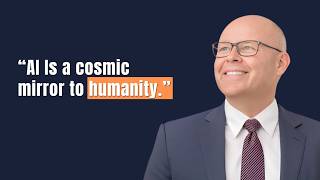
Jeff Burningham argues that as AI becomes a commodity, wisdom rooted in the body, heart, and lived relationships is what humans can't outsource. He tells entrepreneurs to use AI as a tool while staying grounded through meditation and embodied practice, keeping love and empathy at the center of their work.
Chapters
Hi, we are living in a very interesting time when intelligence, and specifically human intelligence, is becoming commodity. So what's left for human? What's left for us in the time of AI taking our world? And welcome to the Venture Grove with Leon Eisen. I am Leon Eisen, PhD. And today we will meet with incredible guest Jeff Burlingham. And he's entrepreneur, venture capitalist, and author of the national bestseller with a very provocative title, Last Book Written by a Human: Becoming Wise in the Age of AI. So today it's not only conversation about technology, about AI. Today's conversation about where technology is going and what left us as humans. It's conversation about leadership, about wisdom, about judgment, and definitely about love. Jeff.
Leon Eisen.
I'm so happy to have you on my podcast.
Oh, it's good to be with you, my friend. And I sure hope there's a lot of love. That's something that's left to us. And really, in the end, I think that all of this, everything could fade away and it becomes about the love story. I'm talking about existence. It becomes about a love story between people, between us and the divine, us and the Earth. And so, hey, if AI is going to leave us love, That's the best part. So it's good to be with you.
Evil does enough, right?
Yeah, that's the best part. And it is enough. Love, love is enough. Like I said, yeah, I have an interesting background in entrepreneurship and et cetera, et cetera. But all of that could fade to the background. I'm married to who I consider my soulmate, Sally. We have 4 beautiful children. I'm actually a grandpa. I have a 18-month-old grandson. Happens fast here in Utah, where I'm from. And, and it's about the love. The love is what remains. I think we're here to feel things. We're on Earth. We're in a body to feel. And that's obviously a major differentiator between us and highly intelligent machines or AI.
So my guess that this is one of the reasons that made you to write this book, right?
Yeah. Yeah. Yeah. I ran for governor in the state of Utah in 2020. I don't have a political background, but ran for this statewide office. I thought a political outsider could bring a fresh perspective. The issue facing our state is growth, and I have funded a lot of that growth via my venture firm. And so, I thought it would be an interesting perspective, but I lost during the pandemic. The most critical months were March, April, May, and June of 2020. And losing into the summer of 2020, Leon Eisen, PhD, PhD, PhD, I experienced something that I think a lot of people did. I had space and time for the first time in my adult life. I was 43 years old. And with space and time, anything can be created. And so, yeah, this book came out of love, came out of my venture background, my kind of early understanding of AI. I was already looking at a lot of AI companies and thinking a lot about AI in 2020, you know, before the general public for sure. And what struck me almost immediately, Leon, was the existential questions that I felt like it was going to cause a much larger percentage of the human population to ask themselves. Some of us are very philosophical, deep thinkers asking these questions. I kind of fit into that camp. Some of us don't. We don't have time. I think AI is going to force a vast— a majority of humanity to start really thinking about Wait a second, who am I? What is reality really? What is AI and how is my intelligence different than the intelligence of these machines? And so that's what the last book written by a human is about. It's really about human nature in the age of highly intelligent machines.
So maybe we're losing intelligence to machine. But in your book, it's written all about wisdom. So what's the difference between intelligence that we're losing to machine? Actually, it becomes commodity and wisdom that we can grow and machine cannot catch up with us on it.
Yeah, I think wisdom is embodied. It's felt in the heart. It's felt in love. It's felt in human relationship. Human relationships are transformational and that's what brings wisdom. Our bodies contain so much wisdom. There's so much wisdom in nature. And so I think that we're subtly being asked, and maybe not so subtly in some instances, to return to our being. We aren't human doings, Leon. I grew up in the Western United States. I've grown several very large companies. I mean, I could read off my résumé, quote unquote, and it's honestly a little embarrassing because I was addicted to doing, just do, do, do. But I think it's more about the being that we bring to our doing. And I had lost some of that. I think a lot of humanity has lost some of that. So I talk about AI as a cosmic mirror to humanity in my book. That's what I believe it is. And like I said, it's calling us back into our being, back into what you could say is our differentiator, because intelligence is not, like you said, intelligence is being commoditized. You know, you can be as smart as anyone in the room with a ChatGPT or whatever AI in your pocket. However, wisdom is not. And that is something that we need to cultivate. As our machines become more and more intelligent, Leon, the call to humanity is to become more wise.
Yeah, it means that consciousness is much more important today than it was before. I remember a famous professor in consciousness, Donald Hoffman. He said that everything what's around, we're living in conscious university, not university, universe. And so intelligence, it's a part of the consciousness, but could it— looks like, like it can exist without consciousness.
Yeah, that we're gonna find out. We're kind of— that's what we're experimenting with. You could think of AI as intelligence almost in search of consciousness. And/or in search of a body, maybe. We have, we are conscious. We know that. Um, we're having some experience here. You know, I'm seeing you.
Tony Hoffman says that this conscious as well.
Yeah. Well, I think there's consciousness and there's, you know, a bit of conscious. I think that consciousness is the base fabric of our universe. So is there a little bit of consciousness in everything? I would Are you yes? And, and so we're about to explore questions more deeply that will lead us to a better understanding of, like I said, who we really are and what reality actually is. A reflection is a powerful thing. And if AI is a cosmic mirror and provides a reflection to us as humans, we get to decide what to do with that reflection. Do we like what we see in the mirror? Do we double and triple down on the hate, the division that we experience day to day? Or do we pivot a little more into our heart, into love, into connection, into intimacy, our intuition, empathy, grief, even all of these things that only we as humans can feel?
It's interesting because my good friend, Keren Frost, who created European, uh, founder of European Consciousness University, uh, he even go further. He created artificial consciousness engine, and this is really very risky. I don't know. That's—
yeah. Well, I mean, the big question is, will AI become conscious? Is it already? You know, I don't know how we're going to determine that. And actually, I think it's almost the wrong question. I think the right question is, Leon, will there be a significant portion of the human population that believes AI is conscious or has some consciousness? And I think the answer to that is yes. I think there's a fairly significant percentage that already feel that way. And as we as humans have more interaction with AI, as we become more familiar with it, as we continue to become, I'll say, quote unquote, more intimate with it, more and more of us will feel that there is consciousness there, whether it is or not, you know. And so that's really probably what matters is, will we believe that it is conscious in some form or fashion? And I think the answer to that is, I think that the percentage of people that will feel that way will only increase from here.
Yeah, I, I, I think so as well. So, uh, you are a venture capitalist, you are entrepreneur, you build companies. So let's shift a little bit on how will it help, or would it help entrepreneurs if we're talking about consciousness, we're talking about AI, and they're building AI. Do they actually understand what they're doing?
Yeah. Do any of us understand what we're doing? You know, I mean, there's a good question. Um, you know, some of us understand maybe a little more than others, but I think all of us are being asked to step up and to become more conscious and more aware. So in terms of entrepreneurship, will it help entrepreneurs? Yes. Will it hurt entrepreneurs? Yes, it depends on the wisdom that you use AI with. And I'm a firm believer in the human experience and in the value of humanity. And so I think that entrepreneurs, CEOs such as myself, need to ensure that any AI that is enabled within an organization, a company that we've created, is focused squarely on human flourishing. And not human division or destruction. Now, this is very easy for you and I to say on a podcast in our home offices, just philosophizing. This gets very hard when the rubber meets the road. I do think there will be a lot of job displacement, and we need to figure out how we handle that. And that will be— that's why it's important that we're wise. That's why it's important that every leader that uses AI brings wisdom to the table and remembers that this is about a human experience and that business wasn't created to just serve the bottom line. The bottom line is always relationships and people, actually. Like, that's what matters most. And through a lot of pain, unfortunately, I think that we'll be reminded that that is the case. And I think that we'll return to that. You know, there's gonna be an arc, I think, here, an arc of pain, which leads to transformation and eventually evolution, I would even say, of our institutions and of the human species in general. I think that that's the potential that's out there.
So where do you think founders and CEO and executives in general confuse being smart and being, being wise?
That's a great question, and I think it's a personal one. Um, in the book, I talk about climbing my little mountain of success, and I built billion-dollar companies, I've invested in several billion-dollar companies, had thousands of employees in my career, and I talk about climbing my little mountain of success and getting to the top of the mountain And I said that there's nothing but a cold howling wind, just void and more void on top of that at the top. In other words, it's about the journey. So it's about the being that we bring to the ascent. And so while intelligence becomes commoditized, I think the differentiator of the future, maybe always, but I think the one that will be focused on in the future is our being. And so how do we know wisdom versus intelligence? We have to go inside, Leon. We are so conditioned and programmed to look outside of ourselves for validation, for success, for acquisition, for whatever it may be, for applause. But the answers that we're looking for, Leon, are really inside each one of us. So this mirror, I think, turns more and more people inside, meaning into themselves, into their awareness. This is how we grow wisdom is through reflection and understanding. And so, you know, there are daily practices that help me do that, meditation, prayer, breathwork, you know, hot and cold practices, obviously, uh, physical exercise, moving our bodies can get us a little bit out of our minds and into this flow state. But I think that every entrepreneur, every small business owner, CEO needs to continue to spend more and more time inside their bodies, inside their hearts, looking inside of themselves for, we could say, quote unquote, success. Confidence, belief, and less and less outside of themselves.
Yeah. Interesting because they are going to outsource as much as possible to AI.
Yeah.
And at, at which po— where is the red line? Something that you cannot outsource and actually it's, it, it, it will make some damage if you will do it.
Absolutely. We can't outsource our thinking to AI. After losing the governor's race, I became an adjunct entre— uh, professor of entrepreneurship at the university down the street from me. BYU, it's called. It's a large university here in the United States, 30,000 students. I had thousands of entrepreneurial students, and there was a big discussion in the business school about how AI should be used or not used in the classroom, and there was a lot of disagreement between professors about that. We cannot bury our heads in the sand and act as if AI isn't happening, or at least we could. I don't think that's a wise strategy. I don't think it's a wise strategy to lock AI out of learning because so much of the jobs of the future are going to be working with AI as a companion to improve yourself at your job, to improve output, to be more efficient, more effective, but again, in wisdom. So, um, we are at danger as a professor myself, and I have 4 children, like I told you, all the way from, you know, middle school to college, university. Um, we can't outsource our thinking to AI. Where is the line? We're about to find out. When I say about, Leon, We're going into a decade of experimentation and understanding of where the lines of a lot of things are. I don't have the right answer for you. This will be a community, a worldwide project to try to understand the line of using AI as a, in wisdom, as a companion to our learning versus outsourcing our thinking to the machine. I mean, that's one of the biggest risks to AI. You could certainly see, Leon, in a— again, I'm just going to use a decade— that a large percentage of the population, a significant percentage of the population of humanity, one that matters, has kind of become part of the machine. They almost are living a digital life, not embodied, not physically grounded. And they basically outsource their thinking and a lot of other things into the machine, they've been lost in the machine. People can make their own choices and there will be a lot of interesting choices coming up, but I think that we're embodied for a reason. I think that we're incarnated on Earth for a reason. I think we exist individually and collectively for a reason. So I think it's wise for us to stay in those places of wisdom and grounding. And AI will help us return to that, in my opinion. I think, let me just say one other quick thing. I think I'm rambling a little bit, but as is often the case here, Leon, I think that the obstacle becomes the way. So the obstacle of AI actually becomes the way for humans to transform and evolve.
Yeah, that's very powerful. So what I What I see in founders when they pitch me and in our portfolio companies that, you know, they don't understand clearly, I would say, your message that separate wisdom from intelligence. So what do you think the future of building startups and companies for leaders who truly understand your message, who can piggyback on this understanding, and what kind of difference it will make for the future generation of startups and founders.
Yeah, intelligence will always be an important part of business. Intelligence is being flattened and commoditized. Human intelligence is not alone, we could say, on the Earth. Anymore. There is now artificial intelligence, machine intelligence that is in a useful form for humans to interact with. So let's just say those are table stakes. You have to have a smart plan. You have to go after a good market. All the business principles still apply. However, I think that the businesses that will win in the future will be focused on human flourishing, and relationships. In other words, the human will not be taken out of the equation. I mean, the most valuable franchises in the world are the fastest growing, let's say, in valuation, et cetera, are in real life experiences. You know this, Leon, like sports franchises, concert venues, real in-life music. There's a reason that's the case. It's because people still want to get together. They want to feel something. And the way that we feel something is in community. It's in connection. It's in real life experience. And when you can have a relationship, quote unquote, which we all do with a chatbot, with AI, whatever, that's a frictionless relationship that doesn't really lead to growth. And Leon, I'm not sure your family situation, but I'm married, I have kids. Those relationships aren't frictionless. I mean, and it's through that friction that we grow and that we change. My chatbot thinks I'm the smartest person, the best looking guy ever, and that those things are just not true. You know, it constantly is glazing me, and I think that it's in real beautiful messy relationship where we grow. And my point is, I think humans are wired for that growth. So businesses will flourish when they remember that human connection is important. And that at the end of the day, although we can at times be lazy, we can outsource thinking, et cetera, et cetera. What we want is growth and transformation. And that comes through the human the lived human experience. And so those would be my thoughts.
So if all the business is grounded on human experience and human connections, it's a winning business.
Yeah, I think, I think that those will be, I think that those will be big businesses of the future and or those are businesses that I'm trying to lean into because I think it's good for humanity. There will certainly be AI startups where there's like a founder and AI that build the first billion-dollar company or whatever. I mean, that's going to happen. Hyper-efficiency is going to happen. I guess what I'm saying and what I'm trying to communicate in the last book written by a human is that we can't hyper-efficient everything out of our system or everything becomes flat. It becomes meaningless. It becomes nothing, empty. And so you see— I hope that everyone will pick up my book when you read it; you'll feel the humanness in it. Every word of this was written by me personally. The foreword is actually written by ChatGPT which I say at the end, which is kind of a cool twist but every other word was written by a flawed imperfect human myself and you feel that difference versus when you read "AI copy" (Leon Eisen) on Google or something like that? It's flat. You can tell it's almost like too perfect. This life is not about perfection. It's about transformation and evolution. And that's what we yearn for. I don't think we yearn for perfection. We yearn for growth. And so that happens in a human body, that happens in a human experience, and that happens in relationship with other humans.
Yeah, I totally agree. So even, uh, sometimes I'm thinking that efficiency, this is what AI does.
Yeah.
But human, human is all, all about effectiveness.
Yeah. I like it. Yeah, I think that's a good paradigm to look at. I, if you think of effectiveness as like transformation and growth, I completely agree. Yes. That's the most effective engine that we've created or mechanism. That we've created for transformation and growth. So let's not forget that. Let's not outsource that. Let's not give up on that. I think there'll be more and more humans that kind of give up on the human relationships because it's hard and it, there's disagreements and there's grief. But again, those are things we're meant to feel, Leon, and those are things that a chatbot can't feel. We need to remind young people that although your chatbot seems human, may respond in a human way, may act like it has empathy, it doesn't really feel empathy. That's reserved for humankind. And it's a special, miraculous differentiator. This spark is at the center of existence and what it means to be human and to be real.
So it's a, uh, it's a pure intelligence.
Yeah.
Stripped by all, all, uh, human biases and human wisdom.
Yeah. Yeah. I, I think so. Um, yeah. AI will reflect our biases. That's a danger of it. It could also reflect our wisdom. Which is upside if we use it wisely, if we train it wisely, if we make sure that it's focused on humanity and not just hyper-efficiency outcomes, et cetera.
It's interesting because when I'm using AI, in many cases, all input coming from my experience, from my biases, so all content I am going to create started from what I think. I don't ask AI, give me 30, they talk about this and that. This comes from my book, this comes from my experience you can find here. Please tell me how to frame it in the best way that reflects my understanding of the business end of the world. And usually, usually people ask me why I have 4 agents, but all agents just about doing something like, you know, like, uh, staff manager. I never outsource doing something like my thinking or writing something that is input. To, to, to some AI stuff. I do it by myself. And usually what I found, AI never can exactly, uh, and, uh, think like I think. So all the time, it wasn't any time when I didn't, uh, correct something. Mm-hmm.
Well, yeah, I think you're—
something.
Yeah, I think you're touching on— there are two parts of this reflection. In the cosmic mirror that is AI. There's the personal reflection, which is everything you just said. I'm Leon Eisen, you know me, we've spoken for a year. I've given you some data on me. You could search the web on me. You know who I am. Help me understand based on my understanding. However, AI is also using our collective reflection data and, or you can ask it to do that based on all recorded data in history that you have. All of the chats that you've had today with humans, what would be the best answer to this issue? Not just from my perspective, but from the collective perspective. And so, um, yeah, AI as a mirror takes our interaction with it and all of recorded data that it has and then provides a reflection back. And that can be specific to us, which is, can be powerful times. And it can also be, uh, again, a collective reflection. That can be powerful when we're looking at these macro issues or when we're trying to build a company or a market that will affect the world or affect, you know, whatever certain area that we may be looking at. So yeah, it can be a powerful reflection and it's one if used wisely, like all reflections are.
Yes, I think so. Yeah, so if we take this AI, And AI is based on probabilistic approach. It's actually probabilistic. It's math. Yeah. Yeah. And human brain and thinking probabilistic as well, based on probability. So now we have match of two probable entities based on probability and sometimes they miss each other. and sometimes they connect with, with each other and we never know when and how it happens.
Yeah, I think that I'm gonna push back a little bit on something you said. AI is probabilistic. It's math. You could simply say, I'm not sure humans are like that. I think that we mainly make decisions no matter how logical we are or probabilistic we think we are. On emotion, or at least—
This is exactly prob— prob— prob— based on probability. Yeah.
Yeah. Yeah. But we use our emotion or intuition in, in that. And I think that that adds a powerful layer and lens and one that, again, we can't outsource. We shouldn't outsource. And that affects all our thinking. Um, in terms of the last book written by a human is a book about personal transformation. And then world evolution, institutional evolution. So if we're going to change our institutions, if we're going to make sure that they are benefiting and blessing the lives of more humans, how do we do that? And I think that fundamental reform is called for in a lot of areas. And this happens through intuition, through emotion, based on experience. And yeah, they won't always match up, and I don't think we should ever You know, we need to use AI as a tool. Make, make sure that AI is not using you, but that you are using it. It's just a simple way to look at it. It's just another tool that humans have created. Now, I happen to believe it's the most powerful tool that we've ever created and the most transformative. And it's different in some ways in its agentic nature or desire a little bit of a desire to be an agent unto itself, which makes it a very interesting tool. But, but it's just a tool that we should use and not be used by it. Again, not being lost into the machine of AI, but making sure, like I've said, that it's focused on making humans better and making the human experience as good for as many of us as possible.
Our emotions are based on chemistry in our brain. And if we will introduce the same chemistry to machine, what will happen?
I don't know. What do you think will happen, Leon Eisen?
PhD. I think they become quantum cognitive entities.
Yeah. Yeah. This might be a part of quantum computing and or the future, right? I think that this will happen. Like we will try to do this. At some point. What will happen? We don't know. Let's see together. Let's just make sure that we do it in a humane, ethical, and again, in a good way for humans. That's the focus of—
They will have emotions finally. They will— machine will have emotions as we understand what is it emotion, because it's based on reaction, based on action. It's our reaction based on our chemistry.
It's based on chemicals. Can a machine inhabit? Can it, what am I trying to, like inhale these? I don't know, Leon. That's above my pay grade. That's too technical for me. But there's going to be a lot of interesting experiences that will cause a lot of deep questions for for humankind. And I just hope that we remember that no matter our differences as humans, we're always a lot more alike. We always share more in common than we are different. It doesn't matter our ethnicity, our socioeconomic status, our religion, our politics. Those can all be different, But the heart of the human condition, the message is that this experience bonds us together. And there's a divine, I think, oneness or unity in humanity that must be recognized and understood in a, in a more clear fashion in order for us to go where we want to go, in order for us, you could say, to reach our potential. This base layer of unity must be better understood, um, accepted, and integrated into our daily lives.
No, I, I was going to ask you for a last question, but you— it looks like you answered already. I was going to ask about your message to young entrepreneurs and investors. So how to, how to shape the future using all understanding we were talking about and maybe future development?
Yeah, I think that, um, to make sure to bring your being to all of your doing. As humans, as incarnated beings with bodies, there will always be enough to do, Leon. We're podcasting, we have meetings after this, we have to eat, we take care of people we love, you know, we build companies. There's always enough to do. The differentiator in the future will bring, will be the amount of being that you can bring to your doing.
Exactly.
And so I would encourage young entrepreneurs. I have young, I have a son who started a clothing company. He's a young entrepreneur. He's at college right now. And I encourage him to bring all of his being to all of his busyness and doing. I think that that will be a key differentiator. So maybe a, contrarian piece of advice that I would give to young listeners, entrepreneurs of your podcast.
Wow, thank you very much. And Jeff, this was a very timely and very deep conversation on AI. Not only in AI, we just went far away from AI and talk about humans, talk about wisdom. And I think today everything is connected in our world. That's why it's very interesting conversation and we covered only 5% of what your book is talking about. And I think, yeah, which is great thing of audience to, to learn more and to, to, to, to read your book. And, uh, by the way, I know that you had 70, uh, podcasts last month, so it's It's incredible. And I really appreciate your accepting my invitation to this podcast and to have this conversation.
Yeah, Leon, no, it's been great to be with you. My book can be found everywhere. It was written to be a conversation starter. So I hope that people will look it up and then I'm not hard to find just at Jeff Burningham on pretty much every social media. So let me know what you think about it after you read it, or you can listen to it on Audible. I'll show you. Anytime we're with another human being, Leon Eisen, uh, we're on sacred ground. So it's been my pleasure to be with you today.
Okay. Thank you very much. And thank you for being with us on this podcast with Jeff Beringham. Subscribe, like, and see you next week.









