Transforming Leadership From Manager to Visionary with Aaron Mikulsky
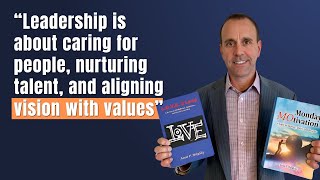
Transcript of a YouTube interview (Leon host) with Aaron Mikulsky about leadership transformation, coaching, and the thesis of his book Love to Lead. Mikulsky describes his coaching approach (self-awareness, values, focus, accountability), defines leadership as ‘love’ (acronym L•O•V•E with V = vision rooted in values), and gives practical examples and stories about converting managers into leaders and common organizational misalignments. The conversation covers when founders need coaching, coaching methods, communication practices (one-to-one vs all-hands), and the role of intrinsic motivation.
Chapters
I fully believe everyone should be seeing a therapist. I think just like we see a physical trainer, if you want to get physically fit, why aren't we all more of us seeing therapists to make sure our mental health is more solid. But there's then the whole life coaching piece about understanding who you are, who you want to be, how you define success. The biggest thing and the way that I structure my coaching sessions is at the very beginning, have those initial conversations to get to know the individual at their core. What makes them tick, what are their passions, what are their innate God given strengths? What, what do they truly value? How do they define success? And from there then you start digging into more of the business concept ideals of every session. Okay, bring your biggest opportunity or bring your biggest issue that you have right now. And then we're pragmatically working through the issue. I spend a lot of time asking challenging questions and making them rethink their thinking and testing some of their assumptions. We'll kind of get through different solution alternatives and I'll try to get their commitment to select a solution path that they think is the lowest risk, high reward. Then I'm really acting as their accountability partner. You know, I'm giving less advice and more of that mentorship or kind of, you know, less of a coach and more of like a guide. A lot of these founders tend to be really good in one of three areas and all three areas are critical. They're either really good at fundraising or marketing or they have the connections or they're really good with the product concept. Right? They're, they're great developers or technicians or they're really good operators.
Foreign hello. Today we have very interesting guest but first I would start to talk about how we create our values and our principles. Everything starts from worldview. When we are born, we build our shape, our worldview. And based on our specific worldview, we build our values. And based on values, we formate our principles and rules. That reflects on our experience, that in turn reflects on our character and habits. And everybody has different worldview. That's why we have such a variety of people, characters and companies they are building. So today we will discuss how it's possible to have so incredible worldview that create amazing leaders. And today my guest after of I think one of the best books about leadership called Love to Lead. He will help us to understand how to lead the companies and startups to success. You can say, oh, another book about leadership. But angle that Aaron Mikhalski had, it's totally different, totally unique that reflects his unique worldview. Please meet Aaron Mikalsky.
Thank you. Leon. Hi, pleasure to join you.
Yeah, that's great. We have second meeting and I was so much amazed from our first meeting that I think it's very important to have you on my podcast and to discuss leadership from totally new angle and actually to understand together how it's possible to change our character, to change our habits, to become great leader. But first I would like to hear your story.
Sure. So after 26 years in corporate America, working at various publicly traded companies and increasing my influence and responsibilities over that time, I had the opportunity to start my own company of doing executive coaching, management consulting, working with business leaders to transform their strategies, create more innovative cultures. Basically doing the things that I love to do the most in corporate America, but without all the other administrative headaches and what I would consider the non fun stuff. So I just decided during COVID to write and then publish my first book. Although the world probably didn't need another book on leadership, I thought, you know what, I've read close to a book a week for 25 years and doing that you start hearing the same themes and the same research and the same quotes and the same stories, examples. I really wanted to distill it down to what I thought the core principles of leadership were and we can get more into that. I would love to discuss that with you and your audience. But when I published the book, people started reaching out to me and asking if I would come and speak to their organizations, come and teach at the university. And it just kind of snowballed from there. And I wasn't really intending to start a company, but the book kind of prompted that. So, you know, I work on a day to day basis with founders, co founders, presidents, CEOs, from startups, very small companies to very large global companies. So it really spans across a lot of industries, various sizes. But the core component is how do individuals become more effective leaders? How do they create leaders within their team? And how do they instill that culture of continuous growth and development for them to execute their strategies to reap the results that their investors are requiring.
Yeah, very interesting, thank you. So I just want to get into details little bit. So you mentioned you are working across different industries and different stages of the companies. So what common between these and what the key differentiator?
Well, I would say, as you know, given your experience, your studies, your research, it's all about human behavior. And human behavior is very complex. No one has all the answers. No individual is the same. But for, for leaders. Right. First to lead yourself. The most important thing, how do you lead others effectively if you can't effectively lead yourself? So I work with a lot of people on that first component of self reflection, understanding yourself. And I think where you and I are very much aligned is everything is rooted in your core beliefs, your core values, which your thoughts can certainly.
Yeah, they have the same colors, right?
Right, exactly. Similar color, all spurring Green Bay packers green today.
We didn't, we didn't manage it specifically. No, no, it's.
Haven't that just. That just shows the, the symbiotic relationship that, that we have. But. No, but it, you know, it's, it's really the common problems, the common opportunities that people face are similar along the, the maturity trajectory of any organization. It's just managing people where they are and leading in, working with people on their unique problems, kind of where they are in their evolution of even their, their personal journeys to where their organization is in, you know, the funding rounds and the, the business maturity. You know, it's kind of different challenges obviously if you're trying to raise money versus if you're a publicly traded company, but still the core of, of leadership, if it is taking a business content concept in, you know, ideating on something to making products and services that people desire that make you unique, that rate it and scale it, you know, depending. Depending on where you are, where that organization is, those are, those are the areas that you're focusing on. But to me, for the most part it's fairly agnostic to the industry.
Yeah, it's interesting. Usually people separate some leadership processes from technical processes. So it could. They say it's a great manager, it's a great technologist, great engineer, he can build a product, but he cannot lead. And finally from my experience, company failed because he doesn't, he doesn't listen to people and decide voluntaristically, I would say. So how is possible to. So for example, we talk about evolution of people. So you have the worldview. So for example you were born and you know now you just had the problem with fire. Now you know that fire is very bad. You failed. You know that if you fail, you can broken your leg. It just shape your worldview. And some people get to their leadership with different, different type of evolution towards principles, values from their worldview. How is possible to correct it specifically for. To make this guy from evolution from manager to leader?
Well, I think a lot of it, it starts with being humble and not being a know it all, having that curiosity of seeking out people who think differently than you and creating a team that you can be open and honest with each other and learn from each other. I think about one of my idols in the business world, Peter Drucker, he said that the leader of the past, the leaders of the past knew how to tell. The leaders of the future will know how to ask. And I think that shows the humility there too. But it's also one of the critical pieces of, of building any leadership team is, is creating the right group and the dynamics and the diversity of thought and, and not just having a bunch of yes People around you that shake their heads and there is no constructive contention. But I think it's very, you have to be very intentional of, of how you create those teams and with that it's the culture that you build. So you know, I think having, having that knowledge and having that subject matter expertise that a lot of founders have, obviously that's important. Right? They're brilliant like you said many times, brilliant tacticians. But to have that consciousness, that awareness, that self awareness and then the intuition which to me is really that gut feel based on your experience which is like what you're saying is your worldview, you know, your, your worldview is your own. Your biases. So, so pe. When people think I'm not, I'm not biased, I'm not racist, I'm like that's a bunch of hogwash. We all are to some degree. Some much of it's subconscious. Right. There's an implicit bias that you read about.
It's embedded into, into the phenotype.
100%. So to me we have to, we have to acknowledge that. But then we have to create those, the system around us so that we're checking each other, that we're challenging each other. Always con, always professionally, always constructively. But to me that is foundational to create any type of organization that's not just going to survive but that's going to, that's going to thrive. And it doesn't even have to be technology. Sometimes we're, we're so, we're so. Get so excited overly excited about technology. Well, it's just, to me it's just about any, any organization. It could be the most non technological firm out there in the world. But it's. How are you best managing people in pursuit of your strategy, your goals to reap the right results? It's, it's a kind of a continuous paradigm. Yes. Yes.
As we know the most important ingredient of any cooking that really makes cooking tasty and food testing is love. So how did you projected Love into the business environment in your book.
Well, I mentioned this in the beginning of my book that for years I was inspired by a lot of different leadership thought leaders and the one word definition that kept popping up was influence. And I feel like influence is a huge part of being an effective leader. But I think as I started reading more and maybe becoming wiser in my old age and reading more about philosophy and you know, even based on biblical principles, I felt like if there's one word, a one word definition that is even better to describe what true leadership is, it is love. And I don't mean to sound, sound too subjective or squishy and feel like I'm minimalizing or marginalizing results and hitting numbers and growth. That's far from the truth. But to me leadership and love is how you get there. And I think you can be tough on results but softer on people. And when I say soft drawn people, I don't, I don't mean not holding them accountable because accountability is huge, but it's, it's how you treat people right. My, my V I, I used L O V E the, the acronym and, and created four key components of leadership. Even though my one word definition is love. The caring and nurturing for, for others. But the V stands for vision rooted in values. So there is only one V in love. But vision as a critical leader, you have to be focused on the vision. It has to be inspirational, but it has to be rooted in the values. And those values have to be consistent with the employees. If the employees personal values and beliefs aren't in alignment with the leaders and the organization, I think it's very difficult for that organization to get to a certain level. And we all know that there's a lot of successful, depending on how you define success by financial metrics and others. A lot of very successful companies out there during, you know, periods of time that are. No, no longer that, that have gone bankrupt, that have been fraudulent, that their business models have, have become obsolete because they've lost sight of their values because they've, they've done it in all the wrong ways because they've cut corners, because they've taking shortcuts. You know, they get themselves into trouble because they lose sight of the long term vision and their values because they're obsessed with hitting certain results for the, in the short run.
So how could you define love for business in business, in business environment in one sentence? Just define what is it? Love for business?
Well, well to, to me it's really caring and nurturing for other human beings. And it's having a purpose, a mission beyond yourself, beyond your own personal self interests.
And what kind of incentive should I have to have such a, such love? Why, for example, I had different worldview. Why should I change my worldview? So go back from habits, from all these stages I mentioned before back and change my worldview in order to change my beliefs and my principles. So why, what kind of incentive people should have to go through all these evolution back and again, again back.
Well, again it's really dismissing. Maybe dismissing is a strong word, but the extrinsic rewards and putting a greater emphasis on intrinsic rewards. So thinking about, at the end of the day, what truly matters to us as human beings. And I talk about this in the beginning of my book, before I even start talking about leadership really, it's how do you want to be remembered? What do you want people to say about you after you're dead? What do you want to be written in your epitaph? You know, at the end of the day, people aren't going to remember, oh yeah, he took four companies public and this was his net worth. And.
Yeah, and fired at 50 people. And fired at 50 people.
Right? Yeah, right. So, so think, think about the, the people that you fired, the people that you didn't care for, the people that you used and maybe abused in order to, to hit your number so that, you know, you got the big payday, you got the big bonus. You know, if some people could look at themselves in the mirror by, by doing that, I guess that's, that's them. But I think a lot, a lot of people, you know, they, they want. What, what do people really want? People want to be treated with respect. People want to be acknowledged. People want to be appreciated. People want, people want to be around people that care for them, that. Think about the people that you admire the most in your life. Think about the greatest leaders in the course of history, what they've done for humanity and for mankind. It's not just creating one company, one business, creating a lot of jobs and creating a lot of, you know, net worth. Not saying that those things are bad, but I think it's a, it's a but and it's not an or like we become so. Our society today has become so polarizing and it's, everything is so binary and I think we just gotta, we gotta stop because I think, I think you can, you can have both, but to me, the ends don't justify the means. I don't want to get all Machiavelli on you, but you Know we have to start paying more attention on, on. On the means, how we get there.
Arab, I have some challenging question to you. In his recent interview, Jensen and CEO of Nvidia said that he hates one to one meetings. He meet with everybody for whole company and fully transparent and deliver a message to everybody in his company. He doesn't hold one held one to one hold one to one meetings. So what do you think? Is it possible to show that you care about people for the crowd without one to one meeting and show your leadership that you care about people and learn from each one if you're talking to the crowd. So something controversial here. So what do you think?
So I would push back and just say why can't you do both? And I think you should do both. So you can't have a one on one meeting with everyone in the organization. But your direct reports that you're holding accountable for leading certain business units and profit centers and critical areas within the organization. If you're not meeting with them one on one and getting more into the nitty gritty and helping them improve and giving them tough, you know, brutally honest feedback and helping them grow and learn and develop and informing that rapport and that trust and that relationship. How do, how do you do those things if all your only mechanism to communicate is to the masses? I think you can and should communicate frequently with a lot of different means. Email, text, phone, voicemails to all employees, all hands meetings, off site meetings for all different purposes. But the frequency and consistency of communication across the entire employee base is critical. Every company I've worked for in my opinion never did that exceptionally well and should have done it more frequently in a more quality manner to get those key themes across. You know, sending out one email from the CEO and then thinking well I communicated that. That's not fair, that's not enough. Because everyone doesn't read email, read into things you know, you need to. You kind of have to communicate. I think the old research study says you have to communicate things seven times, seven different ways before anyone, before everyone really understands it. So, so I think you need to do both. But to dismiss one on one personalized communication, I, I don't think that's a smart idea. So I don't, I don't know the context of, of Jensen that comment or haven't heard that before, but I would challenge it if you just simply just not for one on one meetings or conversations.
I agree, I totally agree with you. It should be different types of conversations. So could you share some interesting story from Your experience like executive culture, when you really transform some very tough manager into the leader. Do you have such a story? Maybe it will be a story with humor, I don't know.
Well, I have a lot of examples, but here's one that I found interesting. Working with a CEO of a company whose name probably everyone in the audience would, would realize or recognize. But he was a humble, humble leader and actively sought out a coach he wasn't told to by the chairman of the board, the lead investor, that hey, you need a coach and you have these weaknesses that you need to improve upon, which many times is, is the reason why people do get coaches because they're told to get a coach. And if they're hesitant and defensive, not.
Everybody, everybody does it. Why not me?
Right? Right. Yeah, but, but, but if you're not open to it. And I've been a lot more selective in who, who I do business with and I've been saying no a lot more this past year or so because I've learned early on that I really don't want to take on new clients who really don't want to be helped if they're told that need. They need a leader, but they're resistant to, to it. The defensiveness and the lack of progress is, is frustrating for me. And I know that, that they're doing it with hesitation only because they're told to do it and they're not going to benefit from it to the degree that they should. So you know, this later came to me and we started poaching and for the first time, believe it or not, we did a 360 review process with not just his direct reports but the next level down. And we kind of looked at like 10, 10 different, different categories and seven of the 10 were actually quite negative. And he's, he's, he had really good success in the past in his previous company and was a major big name consulting guy in the past. Great education background, but he just wasn't as self aware as he probably needed to be. But he was smart enough to know that he needed to make improvements. And after I spent the first, the first day giving him the positive feedback, the second day I gave him the constructive feedback and I asked him what are the three areas that you need to focus on the most, that you want to focus on the most that you think are the most required. And we agreed on that and came up with a game plan to address those. And it was amazing because of his willingness and hard work, how he progressed and improved. But the best thing I think he did is he was humble enough to talk to his leadership team, and not just his leadership team, but the entire organization, basically saying, I want you all to know that I have a coach and I have a coach because I need to improve, I need to grow. And I also advocate that if you're serious about your own personal growth and development, you all should get help as well. And to me, I'm like, that. That wasn't me advising him to do that, that. But that showed me how serious he was about it. And, you know, the results spoke for themselves. Just another. Another quick example you would find interesting as well. And you said, mentioned something humorous. So maybe this is humorous or maybe it's sad, but this organization came to me and they said that we keep getting these employee survey results that our people leaders, or they just call them managers, are terrible at coaching their employees. I'm like, all right, well, why are they terrible coaching their employees? So the. The organization, their large organization, they had a very large learning and development group. So they decided, we're going to create this curriculum so that our. Our people leaders can become more effective. Coaches spent all this time running everyone through it, giving them new perspectives, possibly new skill sets, and expected the people to coach, you know, their staffs. Well, then the next employee survey comes along, the results are exactly the same, and they're like, how could this be? Like, we do all this work. We invested all this time and money into this training. Why aren't people coaching their employees? So I asked, like, well, can I. Can I see Just like your performance, performance objective plan, your performance management plan. So I'm. I'm digging through this stuff, and it just. It popped out. It popped out at me. When they rank their employees on a scale of 1 to 5 and they define each of those numbers, well, if you're considered a high performer at that organization, the way that they define. Defined being a high performer in the actual definition says this person does not need or require coaching. So. So that's your answer, right? People don't want to be judged as an. Not a high performer. And then having their compensation and bonus be impacted by that. Who do you think's gonna be raising their hand, say, I need help, I need coaching? Because then they're not gonna be ranked at 5. So, you know, things just. They didn't have the alignment there. And I found that somewhat humorous that no one in HR and no people leader ever connected those dots. And then they're all baffled by why isn't anyone asking for coaching. No one's Giving coaching because. And no one's asking for coaching.
Yeah, that's interesting story. So, you know, sometimes it happens. For example, I have I offer founders scorecard to identify the fundraising gap to make fund rising gap analysis to understand if they are ready and all all this stuff. And I thought all founders should have it because it's for them, it teaches them how to talk to investor if they're ready to investors. And in the beginning nobody want to take it. So I ask people why what happened? And you think you know everything? No, I was told we don't know everything but we don't want to lose confidence, that we want to raise money. So they cannot raise money. But what they afraid, they afraid to lose confidence, to lose belief in themselves. Taking such a gap analysis, that's crazy. I didn't think that it could be such a type of thinking. And 80% of founders think this way. If I will be told that I am not good, wow, what can I do with this? I won't raise money, I will lose my company. I have investors. What investors will tell me now, I will continue as it is. So yeah, there is some I would call thinking aberrations. And this is all about awareness. So my next question to you about awareness. So as I understand in your due diligence process for your clients, you pay attention on how your client is aware about the need of coaching. Right. So it's very difficult to convince people who do not aware. Not aware and don't understand the problem that there is a problem. So people come to you, they understand there is a problem but they don't have solution and they looking for solution and come to you. So what is your process of due diligence to understand that people come to you just for fun because everybody does it because they really worry about their problem.
Yeah. So I don't know what your thoughts are on the spectrum of raising money, but I would say that maybe starting at the series A is when people probably really need a coach. I don't know if you think it's generally earlier, generally later, but I just wanted your thought and opinion of that before I answer your question. About what about kind of where in the fundraising spectrum do you think that people most need a coach? I suggested maybe like series A people.
Most need the coach before they start the company as they have idea to to have the startup. The first thing they have to do to go to their some seasonal entrepreneur or make them the coach mentor, not coach mentor in this case. But unfortunately what happens and this is what I people pitch Me, I am venture partner. So people pitch me every day. And what I found that founders first, specifically first time founders, in the beginning, they think they know everything. They can move by gut feeling and they don't have to learn anything. So they go to accelerator. Okay, I know everything. I went through two accelerators, I know everything. And then they come back in half of a year and say, we don't have money anymore. Help us on success fees. You see, and this is what happens with early stage entrepreneurs. Somebody who succeeded to go from these stages to round A where they have money, they, where they learn already that they don't know anything. It should learn, you should learn that you don't know because from the beginning you know everything. Just remember your teenager kids, they know everything and then they start to learn that they don't know something. So actually the most, I think the most, the best, the best clients, the best founders for coaching are between seed and round B because beyond round B they have to go to, I don't know, Tony Robbins for coaching. The high level coaching should be unicorn coaching. But between seed and round B, they can go to you and they will accept it and they will like it. But before this, before this, they don't understand. They don't, they're not aware they need it.
Yeah. And I would, and I would say there's different types of coaching as well too. And many times we use, we blur the terms, but some people have called me a business person's therapist and I caution them that I am not a licensed therapist, but I am a certified life coach. And there's a lot of similarities between being a life coach, being a therapist, being a executive business coach. Because I truly believe that you should coach the whole person that you know and you know mental health. So refreshing now that this doesn't have such a negative stigma that it did when I was growing up. But I fully believe everyone should be seeing a therapist. I think just like we see a physical trainer, if you want to get physically fit, why aren't we all more of us seeing therapists to make sure our mental health is more solid? But there's then the whole life coaching piece about understanding who you are, who you want to be, how you define success, all those type of things. Like you said, before you even start your business, you have to understand you and kind of what, what motivates you and what's your purpose in life. And you know, those things are so critically so that you are in a strong, healthy state of mind so that regardless of what business you're in or start that, you know, you're just in a good place mentally, physically, some of us spiritually, so that we're well rounded and we can truly then make that impact in an organization.
Yeah, I agree. I totally agree. And I can tell you that for me, for example, it took about a year to go through the jungle of everything what I want at the same time multitasking. And just after I got, I got burned out, I succeeded to choose something, one thing I like the most, I want the most and I love the most and remove everything else. But it's very difficult, you know, because you like everything. You wanted this, you wanted that. But the most difficult, the most important, I think in life coaching, in life, and this is what life coaching should help with, to focus on one thing that you like, that you're capable and bring this thing to success. Otherwise multitasking work will absorb you.
Focus. It comes down to focus. And I think Warren Buffett gave the advice of write down a list of your 25 biggest priorities. And then he said, well, whittle that down to 10. Now whittle that down to five, throw out the other four. It's just like everyone says, well, I have 10 competing priorities. Well, what that means is you have no priorities.
Could you share, I don't know, some exercise people should do if they want to have good leaders. How they, I don't know how they get aware about their behavior. So what they have to do, just very brief, you know, outline what they have to do, what they have to start from to understand where they are from Love to lead point of view.
Well, I think, I think the biggest thing and the way that I structure my coaching sessions is at the very beginning you have those initial conversations to get to know the individual at their core again. What, what makes them tick? What are their passions? What are their innate God given strengths? What, what do they truly value? How do they define success? And from there then, then you start digging into more of the, the business concept ideals of every session. Like, okay, bring your biggest opportunity or bring your biggest issue that you have right now. And then we're pragmatically working through the issue. And I've spent a lot of time asking challenging questions and making them rethink their thinking. And I'm testing some of their assumptions and we'll kind of get through different solution alternatives and I'll try to get their commitment to select a solution path that they think is the lowest risk, high reward. And then I'm really acting as their accountability partner. You know, I'M giving less advice and more of that mentorship or kind of, you know, less of a coach and more of like a guide guiding their own thought process but then holding them accountable for, okay, you said you were going to do this by this period of time, our next session, what did you do? And try to ensure they're not procrastinating. And it could be a tangible outcome. It could be having a tough conversation, it could be a different way to communicate. It could be formulating a new, a new strategy. It could be something with their talent management process. But like what you said before, a lot of these founders tend to be really good in one of three areas and all three areas are critical. They're either really good at fundraising or marketing or they have the connections or they're really good with the product concept. Right. They're, they're great developers or technicians or they're really good operators.
We are good at micromanagement.
Well, and just like any small business owner, right. Many times starting out when you can't afford to the staff up and have all these different subject matter experts in these areas. As a small business owner, you are a jack of all trades, many times master of none or master of some or master of one. But you know, you are a little paranoid because it's your business, right. This is your livelihood. You've, you know, mortgaged your house or use your house as collateral or your, your 401k from a previous life to fund this business. Everything's riding on what you do. So I acknowledge and respect kind of that, that paranoia that can bleed into micromanaging because, you know, you don't want to lose your livelihood. Yeah.
Right. Thank you very much. It was amazing conversation and thank you for coming to my podcast. And we had amazing, amazing Persona, I would say. Aaron Mikalsky, who is author of, I think one of the best books in leadership, what I recommend to read, Lead, Love to lead. And also he is a very successful life coacher and executive coacher. So thank you Aaron for coming to my podcast.
Thank you, Leanne. And hopefully your, your audience found this beneficial and you know, if I could be of service to, to them in any way, I'd love for them to please reach out.
Thank you. We will know from, from the feedback.
Thank you.









