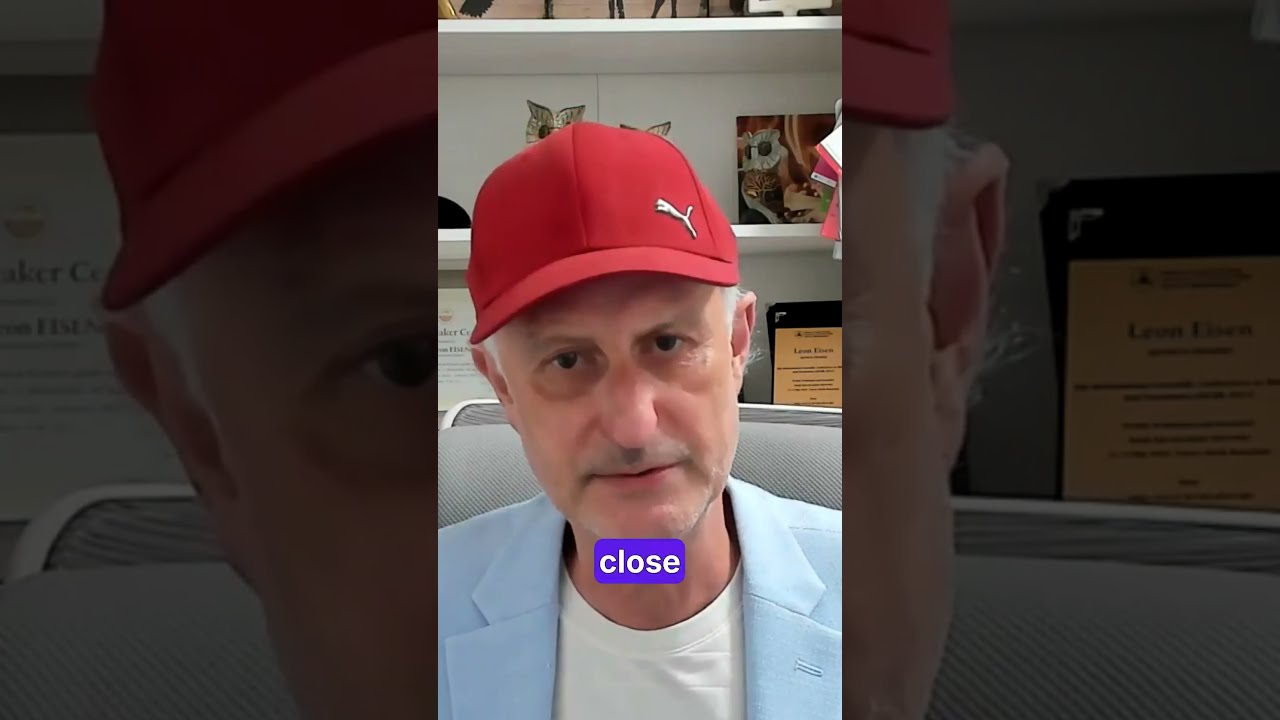
Why investors wait for someone else to say yes.

Leon Eisen, PhD, presents his weekly analysis of U.S. middle‑market venture rounds (US$5‑100 M) using his proprietary Eisen Fundability Score. He shows that the surge in healthcare funding is not due to superior companies but to the presence of "last signatures" – investors or entities that have already put money or risk at stake. Returning investors, reinsurers, regulators, government contracts, and product‑using corporate buyers act as underwriters, dramatically increasing round size. Two standout cases (Stand and Pathways) illustrate that a stranger‑lead investor or a major customer can also serve as the decisive signature. Eisen distills these insights into five fundraising rules (bring an underwriter, treat the last investor as a reference, secure a product‑using buyer, size seed to a milestone, name your lead) and a five‑step playbook (score your round, lock current investors, obtain an external fact, open with who already said yes, follow up with facts). He concludes with market observations about healthcare’s share, the role of lead investors, and the emerging trend of customers leading rounds, urging founders to secure the last signature before seeking venture capital.
Chapters
Hi. Yes, this is my new book. This book is all about how to raise capital, but not about visible part of raising capital. It's about invisible game, the secrets of the turn of sheet magnet. What really attracts money? to founders, and it's not numbers, and it's not, uh, even traction. It's all about chemistry between investor and founder. I spent 20 years on both sides of the table. I built 4 companies, and I'm a venture capitalist today, and I can tell you If I would know what's written in this book 20 years ago, I raised billion dollars, maybe. So I really recommend, I recommend, uh, founders and early-stage founders to learn from my experience and avoid doing their own mistakes. So let's back to the business today. I'm going to present you my, my understanding what happened last week in middle market venture capital. And last week, healthcare just took almost 44% of the money in middle-sized US startup rounds. One week earlier, it was 23%. So 9 healthcare rounds instead of 3, almost $400 million. If you read that headline, you already know the explanation. Healthcare is hot. But I don't think that's what happened because I score every one of these rounds. And the healthcare companies were not better than everyone else. So if they weren't better companies, what were investors actually paying for? Interesting question. So my name is Leon Eisen. I am a venture partner at Network VC, 4-time founder and author of Invisible Game. I showed you Every week I study the US round between $5 and $100 million. I call it middle market, and I score each one on my Eisen Fundability Score. It's my proprietary score. If you're raising, subscribe, like this video, and tell me in the comments what you think investors were paying for, and let's find out together. The healthcare story starts with one number on Eisen Fundability Score. So the score measures from 0 to 100 how fundable a round, a round looks to someone outside the company. Healthcare rounds average about 51. Everything else averaged about 49 in my score. A 2-point gap—that's that's not a premium; that's noise. So the money did not go to a better category; it went somewhere else, and healthcare happened to be standing there. To find out where, I stopped looking at the companies and start looking at. Who was writing the checks? The checks in the healthcare round had one thing in common. In all nine healthcare rounds, an investor from an early round wrote a check again and again. Hosler, Frye, and Sequoia came back at Abicare. Zoom and Philips came back at Saki. Index Ventures and GV came back together at Alara. 9 out of 9 outside healthcare, 10 out of 17. Across the week, the rounds with a returning investor took 86% of all the money. They averaged about $41 million. The rounds without one averaged 18. That looks like the answer. So returning investor, it really looks like the answer. But the Eisen Fundability Score gives points for a returning investor. So I tested whether the answer was circular. Rounds with the returning investor scored about 12 points higher. But my score gives points for investors who came back, so maybe I was counting the same thing twice. So I removed, removed those points from both groups. 11 points were still there. Those rounds were better built across the rest of the score too. So answer confirmed. Except it wasn't. When I looked at very top of the board, the explanation started to to break. The highest score of the week broke the returning investor explanation. The top score of the week went to a company called Stand. Seventy-three. Stand ensures. Homes where traditional insurers have pulled back, starting with California and Florida, and they have 73 in score. Stand raised $70 million. Its early investors came back, but they didn't lead. A new investor, Saga Ventures, set the price, and no customer invested. So the best round of the week was priced By a stranger. Then a second company broke the explanation from the other side. Interesting. The second company that broke the returning investor explanation was a small seed round. Pathways raised a six million dollar seed, the second smallest round of the week. It finished 4 on the Eisen Fundability Score, ahead of 21 bigger rounds, some of them 15 times its size. No famous founders, no giant checks. What Pathways had was a cement company. Heidelberg Materials is Pathways' largest customer. It runs the product at its sites in North America, Europe, and Australia. And in this round, Heidelberg Materials also invested. So now 2 winners didn't fit the returning investor story. An insurance company and a cement customer. What do they have in common? Stan's real advantage was hiding in the fine print of its round. Stan's policies are issued by insurers rated by 2 independent rating agencies, and behind Stan sits a panel of 5 reinsurers: ARK, Renaissance, Hanover, Nephila, and Hiscox. A reinsurer is the insurance company that insures the insurance company. Right. When the fire comes, the reinsurer pays a share of the losses. So, before any venture investor price turns around, 5 reinsurers had already run their own models with their own money and decided to carry part of the risk. Stan didn't ask investors to trust its model. It showed them who had already bet on it. So I went back through all 26 rounds looking for the same thing. Across all these rounds, the reinsurer pattern showed up in places I didn't expect. 11 rounds had the fact That somebody outside the company controls. Epicare is approved to be paid by Medicaid in eight states. Switched Souls is part of the five-year, ninety-nine million dollar Department of Energy grid project. Probably Genetic won a contract with IRPH, the Federal Health Research Agency. Those lay-on-the-rounds were 42% of the deals and took 54% of the money. Remove the points from my score, give 4 outside validations, and they still scored almost 12 points higher. So maybe that's the answer. Outside proof. Get a big name behind you. And the money follows. But watch where the pattern became strange. Big corporate names don't explain who got funded this week, and the corporate investors prove it. Plenty of famous corporations invested this week: Intel Capital, Microsoft M12, CVS Health Ventures, Baijia, Hitachi. If big names were the answer, those rounds should be at the top. They didn't. Did fine. They averaged 56. But the rounds where the corporate investor actually uses the product or sells it averaged 65. And Heidelberg runs pathways In its own plans. Zoom ships Socky inside its own telehealth product. ABB and Southwire sell to the same utility buyers as Switched sells. A logo on your investor list costs the corporation almost nothing. A buyer that changes how its plans run has something to lose. Right. And the outside-proof pattern still left one hole. And the hole was healthcare. 5 of the 9 healthcare rounds had no outside validation at all. No regulator, no reinsurer, no federal contract. And they still got funded. That did what those 5 have? The investor who were already there, a returning investor, is the only person in your eyes who has seen your board deck, your bank statement, and you under pressure. When that investor writes another check, every new investor reads it as a shortcut. Someone who sat inside. The company looked at everything and paid again. And this week, the role of those returning investors really changed. The change this week was about who set the price. Five rounds this week were led by investor from an early round. One week before, there was there was one. Look at Albert. Albert builds AI for chemists with customers like BASF, Henkel, and Clorox. In Albert's last round, TCV was a minority investor, one name on the list. This round, TCV stepped up and led $55 million. TCV had bought Albert from the inside. For nearly two years, it had seen seen numbers no new investor can see, and it chose to set the price and relationships built. Every new investor in that route just piggyback on their homework, and that's when the pieces finally fit together. Put the winners or the weak side by side. Are you sure? A state, a buyer, and the returning investor. 5 reinsurers that pay the losses if Stan is wrong. 8 state Medicaid programs that checked ABICARE and paid. A 10th company that changed how its plans run. An investor that saw the bank statement and chose to lead. Different words, same move. And each one said yes with something to lose: their money, their license, their operations, and their reputations. A famous logo with nothing at stake didn't count the same. The visible story is that healthcare is hot. Underneath it, something else is Venture investors are no longer the first to take the risk on your company. They fund risk that somebody else has already priced. And the venture check isn't the signature of your deal. It's the last one's signature. Healthcare took almost half the money because healthcare had the most of those signatures. Already in the room. That's the invisible game. The last signature pattern has a cost for any founder who asks a venture investor to sign first. Work into raise and ask a venture investor to take the risk first. And you are asking for the most expensive signature In the room. This week, rounds with no returning investor, average $18 million. Rounds with one returning investor, average about $41 million. The lowest round on the Eisen Fundability Score scored 33. Real companies, real money. But nobody outside had put anything at stake on them yet. Seed tells the same story. One week earlier, the average seed was over $41 million, carried by a few big bets on famous teams. This week, there were none of those, and seed averaged $6.4 million. The money is still there. It just wait to sign last. And the signatures that count exist in every market, not only in healthcare and insurance. Founders outside the healthcare hear outside validation, think FDA clearance, and decide it doesn't apply to them. But every market has someone who prices risk for a living: a lender, an insurer, a regulator, a certification body, a customer's procurement team. The question isn't whether that someone exists in your market. The question is whether that someone is in your race before the venture investor arrives. The last signature pattern comes down to five fundraising rules. Here are all five together. Fundraising rule one: Bring an underwriter, not a narrator. Fundraising rule two: Your last investor is your first reference. Rule three: Put a buyer on your investor list. Only if it uses your product. Rule 4: Size your seed to a milestone, not to a famous name. And rule 5: Name your lead before you raise. So fundraising rule 1 is about who speaks for your risk. It's bring an underwriter, not a narrator. A narrator tells investor what will happen, and underwriter has already put something at stake on it— skin in the game. Investors discount your model. They don't discount the reinsurance signature. One proof a stranger can check beats 10 claims only you can confirm. Fundraising rule 2 is about the investors you already have. So your last investor is your first reference. Every new investor asks the same question. What do your current investors think? And don't forget the investor at Albert. The next lead was a minority investor from the last round. Your greatest investor may be your next lead. Fundraising rule 3 is about corporate money. Fundraising, it's, you know, put a buyer on your investor list only if it uses your product. A check from the company that doesn't use is just a logo. A check from the company that runs you in its own operations It's your market logo. One warning: a buyer can ask the rights that limit who else you sell to, or you can buy you later. Agree a position with your lawyer before the offer arrives. So rule four is about how much raise at seed fundraising rule four means. Size your seed to a milestone, not to a famous name. Giant seed rounds belong to a handful of famous teams. Name the one milestone that makes your next round obvious. Cost it. Add 9 months of runway. Stop there. At seed, a milestone is easier to fund than a dream. And finally, rule 5 is about the lead investor. Name your lead before you raise. 25 of the 26 rounds this week had a named lead. Before you accept a second check, get one investor to confirm in writing that it will lead, set the price, and take The board sees it. Your underwriter signs first. Your lead signs next. Everyone else follows the lead. These 5 rules turn into 5 playbook steps you can start this week. Here are all 5 together. Step 1: Score your round like a stranger. Playbook step 2: Look at your current investors before you call a new one. Step 3: Get one fact that someone else controls. And step 4: Open your story with who already said yes. Final 5: Follow up with facts, not check-ins. So playbook step 1 is test your round before any investor meeting. It's score your round like a stranger. Score yourself on Eisen Fundability Score, counting only what a stranger could confirm without you. Above 65, raise now with a hard deadline. Between 50 and 65, spend 4 to 6 weeks fixing your weakest area first. Below 50, the gap is structural. No lead, no returning investor, or no outside proof. A better deck will not close it. So playbook step 2 starts with the investor you already have. Step 2: Lock your current investors before you call a new one. Ask every current investor 2 questions: How much will you put in? In writing. Is the terms alright? And would you lead this round? Then cut your target list to about 35 firms that have actually led a round at your stage in the last 90 days. Step 3 of my playbook is about one fact you don't control. Get one fact that someone else controls. List every outside approval you could earn in the next 6 months: a rating, a license, a government contract certification, a customer That deploys your— and invests. Write who grants each one and the earliest day it could land. Pick the fastest given owner and start this week. Approvals take months. Playbook step 4 is about the— how first sentence of your pitch changes everything. Open your story Who already said yes. Don't start with, we're building the AI platform for our industry, who cares. Start with your strongest commitment. Something like, our largest investor rounds you, us in its own plant and invested in this round. Start with a fact the investor can check, not a claim the investor has to believe. Playbook step 5 is about what happens after the first meeting. So follow up with facts, not check-ins. Run a 2-week process with a firm deadline for term, term sheets. Every follow-up carries real news. Never write just checking in. Right, our second plant went live this week, and here is the plant manager's number. The last signature pattern points to 3 things I'm watching over the next few weeks, plus one wild card. First, whether healthcare holds About 35% of the money with new lead investors joining. Investors protecting their position before year-end tend to keep writing. Second, later rounds. 4 Series C, D, and E rounds came back this week after none of the week before. If you are Series B, talk to growth funds now. Third, whether returning investors keep leading. If they do, having your investors in the round stops being enough. Having one lead becomes the signal. And the wild card. A customer takes the lead seat. 3 buyers invested this week, and none led yet. Here is the whole investigation in one picture. Healthcare took almost half the money this week. Not because healthcare was better. Because healthcare had the most people in the room who had already put something at stake. 19 rounds had an investor who had funded them before. 11 had a fact somebody else controls. 3 had a buyer who uses the product. You cannot create any of those by just next week, but you can start now with calls to people who already take yours. So stop asking how to convince an investor to take the risk. Ask who has already taken it and get them in the room first. The venture investor will sign. Last, if you are raising now, take my free 8-minute Eisen Fundability Score for your company. It shows where investors are likely to see strange and where they will hesitate. And the link is below. And tell me in the comments who has already put something at stake on your company. See you in the next week. Thank you, Leon.