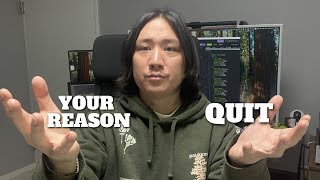
Phil Choi switched from teaching English to senior developer after 30, starting with a bootcamp and building client sites. He says perseverance, betting on yourself, and ignoring what others think matter more than talent. The real question isn't whether you can code, but whether you actually want to.
Chapters
Coding, I thought it wasn't for me. I had no hard skills and I was an English teacher for kids. And for a moment there, I thought this would be what I would do for the rest of my life. Fast forward eight years. I'm a dad and a husband and I'm grateful for the life that coding has given me. So is programming for you? This is a question you really have to ask yourself because before you start investing your time and money into this career, as much as you get back, you'll have to give a lot too. So my name is Phil. I became a senior developer after the age of 30. If this video becomes of use to you, please share and comment below. What is the reason you started programming? And really be honest about it. And let's get it discussion going. So I've told this story many times. I woke up, I was playing Madden. I was a little hungover from the night before. And I remember because I went to this meetup and it was at a coding boot camp and I picked up a brochure and out of the corner of my eye I saw that brochure when I was thinking, like, what am I going to do with my life? You know, because I was like teaching English, I didn't want that to be like my end goal, you know. And I picked up that brochure, found the phone number, gave him a call, went right ahead. And you know, in my head I was thinking, you know, I have to make a career change. I have to gain some hard skills, skills. And that's like what I really wanted because, you know, if I learn this, I can kind of like take it with me for the rest of my life and you could drop me off at anywhere. Like, I don't know, at that time I was thinking like being like remote developer in Chiang Mai and like, you know, wanting to be a digital nomad and all that kind of stuff and dreaming of that kind of stuff. And I remember I had some friends that were programmers as well at that time and I really looked up to them because I was like, oh, you can take on jobs and all this kind of stuff. So I remember trying to learn on my own, but then, you know, like, maybe motivation kind of gets like lost. And then, you know, I kind of of needed that thing where I don't know, like, like when I pay money for like course or like, like a video on Udemy or a video or like school, it kind of gives me motivation to keep going because it's like I don't want to waste my money I'm gonna. Rather than, like, free material or something. And I don't know what that is. I think it's something in, like, my head. Like, definitely I was that guy that wasn't, like, super smart or anything. I just wanted to. I wanted to change my life. You know, I wanted to learn how to program. And maybe when I was first starting, I wanted to, like, you know, it gets in Hollywood. It's like, showcase, like, this, like, smart guy or, like, quirky guy. And maybe that's, like, the image that I wanted that, like, knew, like, weird facts and, like, could talk people's ears off about stuff. Anyways, like, I felt like I had that in my, like, personality. But as a programmer, I kind of wanted to add that programing skill into my repository or into my tool belt. From there. I really. It was really hard for me because at first it just wasn't getting into my head at all. And, you know, like, I started. I thought programming would be a cool career path for me because, you know, like, after, like, school, high school, like, when I was younger, like, the first thing I do is, you know, go onto my computer, you know, with, like, DSL connection and hop on aim. It was like AOL Instant Messenger. Open up a browser or something, and listen to music on, like, Windows Media music player or something and watch the graphics and all that kind of stuff. That was like my afternoon, you know, after, like, homework and all that kind of stuff. I'd, like, perfectly position, like, each Instant messenger box and, like, try to get, like, eight of them onto the screen and, like, talk to people. And that was fun for me. Listening to music and talking to people, people watching a movie. And I liked being in front of the computer, so I thought maybe programming would be really cool for me. So I just, you know, I picked up that phone, I said, this is the way I'm gonna go. And I put in the time. And it was very hard. And if it came too easy, I think it wouldn't feel as good as it does now. Right. And, you know, one other thing is I always, like, you know, like, little, like, I guess, calculations and numbers a little bit. Like, I was okay at math and. But not that you need math for programming or anything, but I used to play, like, Magic the Gathering pretty heavily as, like, a kid. And there's a lot, like, keeping track of your life points and mana and all this kind of stuff. And I thought I could translate that kind of skill, like, in front of the computer. Yeah, I mean, like, I'm glad I did Magic the Gathering because it helped me, like, think in a way of, like, stacks and all that kind of stuff. And programming was really fun for me. It made me feel like I could replace that, like, maybe Magic the Gathering, even though I wasn't playing at the time, or, like, replace gaming or something with the soft, like, coding. And that's what I did. You know, after you reach a level, you have to find, like, a new mountain or, like, a new challenge. And with programming, it's a little bit endless, so you, like, never get really bored and never satisfied. And I think that's, like, the joy of it, right? So, yeah. Is that okay? After I was learning and I paid all that money for the boot camp, after the bootcamp, I was. I was a little bit lost. And, like, I know there's, like, some people. I hear, like, stories, like, people just end up, like, going back to their old, like, jobs or something after the bootcamp if they cannot find, like, a job or something. But luckily for me, it was, like, the height of the programming jobs. It was like 2017, and I was able to get a job pretty quickly, but I still didn't know, like, much, right? Like, I barely knew how to make a pool requests. I barely knew how to, like, upload my code. I barely knew how to deploy and just like, all this kind of stuff. But I remember, like, right after bootcamp, my programmer friend was like, here. Here's, like, a cool, like, site to buy domains, which was like, namecheap.com and here's like, a place you can get, like, cheap servers. I remember, I think that was sitegrounds. And I just. I used those sites and I was like, okay, here I have enough tools. I can fill people websites. That's, like, how I can make some extra money. Buying those things kind of, like, gave me, like, this kind of, like, dream, right? Like, oh, like, I can be an entrepreneur. I can build all these websites. So I went around, I look, yeah, I got a couple cool websites I made for, like, pretty reputable places. So not that I'm, like, super proud of that code or anything. It's just how. What I was doing at that time, it was really fun, you know? And that kept me going because I was like, okay, I'm paying all these server bills. At this point, I felt like I had no choice but to just keep going, you know? I think I've said it before, but I bet on myself a lot. And if you bet on yourself and you don't quit, that's a pretty good bet to take, you know? So I just I kept going and I just, I saw it as just one, like only one option. And I was going to make, at least released my money or I mean I was gonna make my money back from what I paid at the boot camp or whatever I was gonna make. You know, that was like my first goal. And then I was gonna make more money than that. So I recouped and I, that's what kept me going, you know. And I just didn't give up. Oh, my previous life before coding, I was, you know, teaching English. I was like drinking a lot. I think I was also boxing, like teaching boxing at a gym. And I was driving around, I was like, like I have like a hustler mindset a little bit like from like my English teaching. I find one on one tutors and I do that and you know, and I was doing many other jobs that I could find. It was, honestly, it was very tiring and I just couldn't see myself. I mean the one on one tutoring, it was fine, like the English teaching and stuff, but I just, I couldn't do it forever. It's not even like I was like a super great English speaker anyways. Like that's what I was doing. I was, I was always hustling like my whole life anyways. Like even before that I, maybe I was hustling in Oakland or like the Bay Area. And I always try to find ways to make money and programming was no different. I was always doing side jobs. I was always, you know, had a job, I was making money and it's a non stop process. So you know, I put it in my head, like I have one choice, I have one option. Like I won't do anything until I succeed, but definitely while you're climbing, right? Or whatever, like climbing a mountain or climbing whatever, those thoughts creep up in your mind like, oh, like I want to quit or this is too hard or is this even worth it? Is it a safe, is it a safe path to go? There's a lot more other talented people than me. Like, where am I going to fit in? Am I going to find a job? Even like with me, like I even. I grew up in America, so I had like a language barrier with like companies sometimes, right? So coding was a great way for me to kind of realize, like, yeah, like even if you have language barriers, like code is, it's written the same, right? And I think those times when, you know, I felt a little bit of like this quitting feeling or like this, like I don't want to do it kind of Feeling like I shook my head a little bit and I just said, get those thoughts out, you know, let's study something new. Let's. There's probably something, a deeper reason. Like, the reason why I want to quit is because maybe I'm comparing myself to people with much more experience and I need to. Maybe I'm not understanding something and it's too hard. So I quit. Like. Like, I don't know. Like, I think there's a quote from Muhammad Ali, right? Or something. I think Muhammad Ali. It's like, train, train hard today or in. Like, you can quit now or you can live the rest of your life as a champion or something. So I always kind of had that mentality, you know, like, even if it's hard, you know, just get through it. It's only gonna be hard for that moment, but then once you get through, you're gonna feel much better. And definitely, like, when something was hard and for me to figure that out wasn't, like, it's because I was kind of going at it, like, one way. But then I'd go back to the drawing board or I'd. I go to Google get up forms or stack overflow or ask my friends, and I'd find another way to kind of get into it and tackle the problem. And it made it easier. And that, that boosted my confidence to kind of keep going and. Sure, like, there's other factors, like not being able to make enough money in the beginning because obviously, like, I was always hustling, right? I was, like, trying to make, you know, money as much as possible, but it was kind of hard. Like, I was taking a pay cut at the time from teaching English at an academy, doing those tutors, and then I was going into programming. And that was a big switch in my life, right, Because I'm going into, like, as a junior and I don't know much at that time. You know, I persevered and I kept going and I saw what my other friends were making and I saw, you know, I could do it. I could have a good life, just never compare because, you know, that's. That's going to fall into a trap, like, no matter what. And like, I just. Snap yourself out of, like, that mindset and just do it for yourself. Because what really got me, like, you know, coding is kind of like. Or like any kind of skill is if you do it for yourself, you kind of level up much faster. Because I did see myself, like, maybe, like in the beginning I was saying, like, maybe I wanted to be looked at a certain way when I'm like a coder or whatever and, you know, be that smart, intelligent person that's like, quirky or whatever, but it's kind of like that's for the outside factors of how I wanted people to view me. In the end, that's all bullshit, to be honest. Like, I don't really care. Like, you. You kind of have to, like, really not care about what other people think and just do it for yourself to kind of level up yourself, to be honest. Like, I used to play guitar, like when I was young and obviously like, you know, in high school or like middle school, where you pick up the guitar, you want to get the girls and all this kind of stuff, and you're doing it for other people, right? So maybe to people that don't know guitar or something, you learn how to play like Wonder Wall or whatever or slide, and people are like, oh, this guy's good, or whatever. But you go to other guitar players and it's like, oh, that's all you can do. Or it's not like that, but it's kind of like, you know, there's so much more to do, right? And that goes with programing, right? Like, yeah, like, I can code up a storm in front of people that don't know how to code and they're like, oh, what are you doing? What are you doing? But then if you actually go up to other programmers and understand what you're doing, it's like you want to gain their respect too. It's not like. And then it's like, okay, if I want to gain the respect and honestly, respect giving and stuff like that, like, it's good, but I mean, you shouldn't really. That shouldn't really be a driving factor for you. It should be more like, oh, that guy can do that. Oh, that's cool. I'll learn, too. And honestly, like, in programming and everything, like, it's like, it's not like people are there to like. And then maybe like another point is like, people are never there to, like, shit on you or anything like that. Like, no one's there to say I'm. I'm this programming God or something, right? Like, nobody. And people like that like them anyways. Right? Anyways. But like, it's. Honestly, it's a team sport or like, it's. It's a place where you're trying to raise each other up anyways, and if I need help on something, I can reach out and, you know, maybe that person doesn't know now, but maybe that person will like, be better than me and like, I don't know, whatever it is, right? Like I and I can reach out and ask him to help me or her later on. And that's, I think that's a huge factor of what, you know, coding kind of is. Like you take like GitHub is like a great place where people want to showcase what they made. And you know, you can like get inspiration and references to kind of like put into your code. And you know, you can say thank you or, you know, you can always give credit to those people. But you know, it's always, you know, something you have to do for yourself to level up in anything. So is coding really for you? You have to ask yourself those questions. You really have to have a solid reason for why you want to keep coding to kind of get better at it and stay on your path. So coding saves lives.
More from Phil



day in the life of a software engineer | 5 hour productivity | building my dev agency 🔥


day in the life of a software engineer | 3 hour productivity | coding my 6-figure community startup


day in the life of a software engineer | 5 hour productivity | coding our sns startup app LFG



day in the life of a software engineer | 5 hour productivity | creating apps that makes big money
