Watch this before you go into your behavioral coding interviews to make a great first impression.
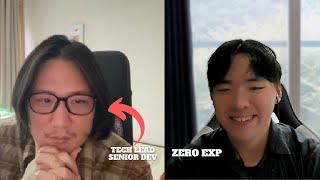
Phil Choi coaches Minnie through a behavioral coding interview. Keep your self-intro under two minutes, link your goals to what the company actually does, and when you talk about technical work, name the tools you used: debuggers, the event loop, promises. Authenticity beats polish.
Chapters
January is rolling around the corner. Many companies are looking for new hires. The job market is coming back slowly, and in some countries they need a ton of developers, like Japan or Germany. In this video, we're going to do a full mock interview divided into three parts so that you can see what these actually look like and prepare yourself accordingly when you get called up for one of these. So my name is Phil. I became a senior developer without a CS degree after the age of 30. I was actually in charge of interviewing and hiring as well in my previous company as a tech lead for 15 months. If you find this video useful to you, please share and like and comment. I am ready so that I know you have watched all the way to the end so you can ace your interviews. So this is Minnie. You know him well. By this point, he'll be the guy who's trying to get a job in my company. Let's say let Phil Enterprises. So just before we, like, do these questions and stuff, this is the behavioral part and, like, the behavioral screening. So maybe you got past the screening from, like, the headhunter, but now it's the behavioral one. So now it's with the company. So what the interviewers really want to know at this point, right, is to, like, get you on to, like, the next coding test or the tech technical interview, see if it's worth it, is how you'll be as an employee. So that's very important. So that's something you have to convey. Like, if I work here, I'm going to be like, this is an employee. I'm not going to be, like a bad employee. I'm going to work hard. And those kind of, like, things you want to include in your answers. What are your personal and professional interests? So personal interests, they want to get to know a little about you. Maybe some professional interests. Like, what kind of things do you do to, like, up your skills all the time and things like that, if that is part of what you do. And how do you fit into their culture? Right? Like, I don't know, like all these different companies, you have to read about the companies because no two companies will be the same. And they'll all have different cultures, they'll all have different mission statements. And you, like, say, like, they really want to help, like, mental health and, you know, like, journaling and all this kind of stuff, you know, maybe that you really fight for that kind of thing. And you'll fit into their culture and you'll be able to talk to everybody about, like, what you guys are building and all this Kind of stuff. Right. So how you will be as an employee, what are your personal. Personal and professional interests? How do you fit into their culture? So we'll start the interview.
All right, so let me just get in the zone real quick. You know, this actually reminds me of the time that I first met you, because our first meeting, I remember my bootcamp teacher, he introduced me to you. Right. And he didn't tell me it wasn't. It wasn't an interview, but you had your notebook out just like that. And I remember, like, I think the best interviews that come are the ones that really come from your heart and your experiences. It's not like the prepared ones. You just have to be authentic. So I haven't done interview in a long time, so, you know, feel free to correct me on how I should answer these. I'm just gonna answer the questions as best as I can. I don't know any of the questions that you prepare for me here. You know, every company's different, but, yeah, let's just get into it. Thank you for having me.
Yeah. So nice to meet you.
Nice to meet you too.
I'm Phil. So you're Minnie. Thanks for applying for the company, and I'm really excited. So, you know, we'll go through a couple questions. Can you just tell me a little bit about yourself?
Sure, sure. First, thank you for, you know, allowing me this time to be able to speak with you. And I just want to say that, you know, I'll try to make the most of most out of this opportunity as I can. I won't waste your time. So, about myself, you know, I've only been coding for about a year now, but I have a very strong interest in full stack development, not just front end and back end work. But right now, I only have experience in front end. I still have to learn the backend, and I'm learning that now. But I started coding during the pandemics, and I found a boot camp, the Left field Academy. Right. And from there I worked on projects like the Leadville website. There was like a playlist app, fantasy soccer game app that, you know, I thought it would be pretty cool for the community to play, and a social networking app as well that I got to work with a couple of other people. The reason I started coding is because I had a business that I wanted to scale for my mom, actually, and she needed a website, but I didn't know how to do that. So I wanted to have the skills necessary to be able to build something like that for my mother. My interest Took off from there and I was able to really find myself at home when I was coding because I love working with computers. I've always been like an avid video gamer. Right. So here I am right now, very interested in your company because I feel like I would be a very good fit. You know, I'm sure we'll get to that later. But yeah, just I love coding. Having, I'm having a ton of fun with it and I can see the power of coding and I feel like if I learn these skills then I could be valuable in anywhere I go. Yeah.
Okay. Awesome, awesome. Thank you, thank you. And just like to give my 2 cents outside of this interview situation now. Like so you know like this question is gonna be asked all the time, right? You don't have to make it long. Like short and sweet is very. Yeah, because like honestly like when you're talking I'm just like, and taking notes. I'm just trying to kind of like pick up like what you're like the important parts about what. What's going to be important. So like what I, what I picked up, right? Let me just say one year experience, right? Okay. That's pretty easy. You have interest in full stack but you only have experience in front end.
Yeah, right.
That's what I picked up. Started coding during boot camp. That's what I picked up and found projects to work on. So it shows him like some ambition and like the types of projects like a playlist app or like soccer fantasy football app or the email generator or whatever.
Right.
Or the social networking. These are like what kind of things I picked up on. Maybe I'd have follow up questions on those projects.
Right.
You don't have to go too much in the project because another question is going to come up like that. Right. And then, and you know, and then something else I picked up is like had a business and wanted to build a website. So that's like entrepreneurial thing. But like I don't. You wanted to build a website for your mom and then something I picked up one loves computers and games and honestly whenever I heard people liked games and like during my interviews I would like, I would honestly put like a minus point because I thought like they maybe like put like, like some of their attention would go somewhere else.
So you mean like when they're using the computer, like it wouldn't be just for coding, it'll be. Yeah, get distracted for other things. Gotcha. Exactly.
Because it's super easy to get distracted when you're coding. Right? That's like the scary Thing about being a programmer because you're. You have, like, the world that you're. Yeah, you have the world that you're. All the time. So those are, like, the things I picked up. But, like, definitely when I ask that kind of question, I kind of want, like, how long. How long have you been coding? What kind of things do you have experience in which. I know you said the projects, but like, maybe like more like granular, kind of like, oh, like, what requests or sockets? Or like, I've used this, but that's going to be in a Later. Right. But, like, I have found an experience using, like. And I really enjoy doing CSS stuff. Stuff there where I enjoyed connecting APIs and. But I'll tell you about that later, you know, or whatever. And then maybe like, like had a business and found projects that's kind of similar into your personality. I feel that just shows ambition. You're going to pick things up and work. Right?
Yeah.
And just keep it short and sweet and just make the points that you need to. I feel awesome.
Yeah, no, that's. I think that's very good points. Yeah. Like, because it's such a generic question, like, people, I think, tend to overshare out of maybe the vagueness of the question. Right.
And honestly, I think everybody's the same. Right. Everyone is trying to. Look, that's impossible. Right. Everyone trying to do all this. But it's honestly, like the interviewer or whatever, when I was the interviewer, like, say it was like, anyways, but like, the interview's taking away time. Right, like, true, true.
I saw that, actually.
Yeah.
Yeah.
So it's just. I'm just trying to get it over with, and most stuff is on the resume. So definitely, if I choose to talk to you, like, I'm excited on the resume already. You know what I mean?
100%.
I don't know. Like, no, that's.
That's. People forget, like, you've. They've already done a lot of screening on you before you get to this point. Right. So. Yeah, yeah, I got you. Yeah.
So short and sweet is always the best, right? All right, all right, back. Oh, thank you very much, Minnie. That was such a good explanation about yourself. It was really interesting hearing about your projects you've worked on. So let's roll that over into asking you, why do you want to work at our company?
So, you know, I've researched a lot and I've applied to a lot, actually. This is probably my, you know, hundredth or 200th job that I applied to. But, you know, As a one year, you just apply everywhere. But I found some uniqueness in this place because there's no companies like this that is run the way the left field enterprises is run. For example, you know, I've had a couple interviews already in other places, but they seemed very. There was a lot of people first of all, which meant that, you know me as a person who wanted to learn, who wants to contribute to the company, I felt like I wouldn't be able to contribute to the company because there wouldn't be someone guiding me to help me get to that point where I could potentially. You know, as I said before, I want to learn backend as well. I want to be full stack developer and be a complete package. But I felt like this is the place where I could feel I could learn the most as well as contribute to the company as best as I can because, you know, companies investing into me, then obviously I will have the skills necessary to be able to back them up in every area. So this was a very unique place because there were so many people who are very friendly. I felt like it's a small team, but there is a clear hierarchy system as well. And everyone seems to be respectful to one another in terms of the hierarchy as well. So I felt like I could really learn on the ropes. I could really shadow somebody and really learn everything possible that is to know, to not only just learn about the coding skills, but how to run a business, how to act appropriate appropriately to your seniors, and to just gain as much knowledge as possible so that I can at the end of the day contribute back to the company. So. Yeah.
All right, well, so by the way, there is no hierarchy. I love Phil. We're all the same. Anyway, I'm gonna go. This is like a, kind of a hard question, to be honest.
Yeah.
This, this mock place, because it's not like we're a real company.
Yeah.
Honestly, you probably want to talk about like, so, like, for me, like, all you could really talk about is like looking for help. There's a small team, it's a good place to learn. But honestly, like, if I'm a CEO of a company, right, let's say this is a company, it's not a school place.
Right. Like, right, right, right, right.
That is something you really have to kind of like differentiate. Right. You have to be like, like, were you guys paying me to teach you? You know what I mean? Like, there is some kind of like people that are going to be like that. Right. I have definitely worked at a company like that. Like, I'm not saying it's like the most correct thing, but like I remember like the CEO was looking at me, I was like, yeah, like, and then I had like a bunch of junior developers there and he was like, was this an academy? Like was, is this like. I was like, no, but no, it's a, it is a company at the end of the day, right. And the company's job is just to make money, right. Basically and provide. So anyways, I think for a real company or anything, you definitely have to like why do you want to work at a company that's going to be very similar to like, like how you're going to fit in and optimize that company? Like say they have a short shortage of developers or something. Right. But they're working in tech that you're very interested in like some kind of. I'll go back to the point of like mental health and journaling application, right? And you're. And you know that they need an app developer, right? Then you'd be like, okay, I looked at you guys stack and I'm very interested in your, your goals of trying to make like mental health and like make people aware of mental health and journaling. And I see you got your guys stack and it's react Native and all this. You guys can look that up anywhere and then be like, well I have experience in front end as I as I've told you and you can kind of. I pull things from my interest before just to kind of make myself a little bit more genuine my opinion, you know what I mean? Like oh, like I said in my last question or like my last, that last answer I said I do know like fronted front end in React right From maybe from my transition from react to react Native. It will not be too hard but that is somewhere I think I can help out and I'm willing to help out in anywhere like admin dashboard or like things like this. And they're very like a lot of ways you can kind of like say you want to work at the company like through their mission statement, through their needs and Right. Fit. And those are the two things I think I would look for. Right.
Awesome. Yeah, that's really good feedback. I didn't really think about that. I think, think I think this question is more so on, you know when they ask you like you're not supposed, you're not just complimenting or complimenting the company or talking about that. It's actually your chance to tell how you fit into that company, how you can fit into that company. Yeah, right. Right, right.
You know what I mean?
Yeah.
And also, like always during the interviews, kind of like a chain, like context, like you want to pull from your before enter. So you seem, I'm not saying like be a robot, but just be as genuine as possible because for sure the interviewers are human too, right?
Definitely, definitely.
And everyone tries to treat an interviewer kind of like they're this like, robot or, you know, like boss or something like scary thing.
Yeah, yeah.
They want to laugh. They want to get along just as much as possible too, I think, at least me. Right. So there are a couple, like, behavioral questions that we should go through. And I think those two questions will always be around no matter what.
Right.
So many. Thank you for your answer. I'm very excited for, from what you said, you know. Yes, we're looking for help and look, working on a small team, I think we could also help you a lot. And definitely. So we are gonna have to ask some, some of the hard questions. So, you know, like why don't you just tell me about a time when you had a problem within your code and had to go through several hoops to discover the root cause.
Right, right, right. So I don't have too much experience to draw on, but I specifically remember this one time I was building my. I don't know if you saw on the resume, there's a project called Divmon. It's a card game project made with actually vanilla JavaScript and it uses PHP and MySQL as a back. Back end of it. But I remember at the time because the bootcamp was three months old. Right. Coming out of that boot camp, I didn't really, I wasn't really taught on, you know, asynchronous data fetching. And it was something that I really had to learn because, you know, I thought that from Top to bottom, JavaScript runs in a chronological order. Right. Just as a new. New to. As a person who was new to programming. But I didn't realize that, you know, there were some things that, you know, happened beforehand before some of the other functions ran. So when this asynchronous data fetching bug happened, I realized that the data wasn't being produced on the UI correctly. Right. Because it wasn't getting fetched. So I had to spend a lot of time just not only learning about, you know, Await Async, but I also had to spend a lot of time logging. Right. Logging at different points with the, you know, console logs everywhere until I was able to find exactly pinpoint where, you know, the API Response was happening. So after debugging further, right. I realized that the problem was due to a race condition. So what happened was the UI was attempting to render for the data was being fully loaded. So obviously this is where I, you know, had to Google the magic of Google, right? Async a weight learn that search on YouTube. Some genius guy with an amazing Indian accent told me that Async Await everything I needed to know about it in five minutes. I tried it out and the data was being fetched completely before just, you know, I had to use this to really fetch the data completely before trying to display it. Right. So finally I was able to, you know, add some error handling for edge cases where the API might fail and this improve the reliability of the app as well as a side effect. So, yeah, so I just remember the specific time where I was able to. I encountered like such a difficult bug that I never ran into and it was like something new I had to learn on the spot. So through that I just learned about the asynchronous operations and also I learned how to structure the code so that I can avoid the timing issues as well.
Yeah, amazing.
Could have worded it better, but yeah, yeah.
So just one tip I have. Or in kind of like when they ask you a question that's like very like loaded.
Yeah.
Keep the question in your head, repeat the question to them. Like, just so you know exactly, like in your own words.
Right?
Like, or even if it's like repeating the question exactly, just repeat the question. Just. It makes them feel like that you. You listen and you're going to answer.
In the correct way.
And then. So tell me about a time you had a problem and had to go through several hoops to discover the root cause. So now the statement was, tell me about a time when you had a problem. Right? Okay, so I had a problem. And this and this and this happened. And then go through several. And I had to go through several hoops. So I had to go through the ringer, right? Like, I had to go through the code. I had to. You were telling me you had to console log everywhere. Maybe at this point I'd be like, oh, have you ever used a debugger inside of your VS code and made points and then try to find that. And then if you haven't, that's something you can learn when you come to my company, right? Or something like that. And then can you discover the root cause? And then it was a race condition or whatever, right? The UI being painted before the data was being there, Right, right. But maybe the root cause. And then if you went a little bit further, you could be like, okay, this is actually a JavaScript engine which you talked about, but then maybe you can start talking about the event loop and all this kind of stuff and just make yourself super knowledgeable. You are trying to give as much. They're trying to extract as much knowledge that you know of the problem and know how to solve. Right?
Yeah.
At this point, through your answer, I would just be as deep as possible as I could.
Awesome.
This is a diving deep question, so.
Yes, yes, for sure.
That. But I mean, great answer. Like what I extracted from your answer. Right?
Yeah.
Oh, you had a game called devman.
Yeah.
You had an async a weight issue. And then maybe when you speak about async a weight, if you're going to, you could just give a little bit of an explanation about what async await is like. It's the syntactical sugar around promises. Because JavaScript uses promises. Because you could have used Promises as well, probably with your problem. Right. And you had some event loop issue and you had to use console logs everywhere and you had to learn Async Gateway in. On the. On the go. Right. That's what your answer basically was.
Right, Right, right, right.
Am I missing something?
I don't know. No, that was really good. I think I could have made it shorter. I thought as well made it more succinct. You know, this is just like. Honestly, I'm just making up right now. Yeah, I.
More from Phil



day in the life of a software engineer | 5 hour productivity | building my dev agency 🔥


day in the life of a software engineer | 3 hour productivity | coding my 6-figure community startup


day in the life of a software engineer | 5 hour productivity | coding our sns startup app LFG



day in the life of a software engineer | 5 hour productivity | creating apps that makes big money
