A practical guide to six renovation categories and their costs, from simple refreshes to major restructures. Learn the formula that matters: end value minus costs minus desired profit equals your target purchase price. One strategy skips council approval entirely.
Chapters
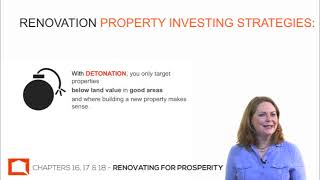
And now, ladies and gentlemen, to the part we've all been waiting for, the renovation. In this video, we'll explore the different types of renovations available and my proven formula for achieving a profitable renovation every time, and how you can avoid some of the common mistakes and traps for new players. Essentially, there is two types of renovations, cosmetic and structural. I believe within these definitions, property renovations fall into one of the following categories which I term the five Rs of renovation. The first is refresh. This is typically a clean up of a dirty, smelly property. A bit of paint and a good clean is all it needs. This is by far the easiest type of renovation, which, depending on how bad the property is, usually is not going to cost you a lot, but may only increase the value of the property incrementally. The benefit of this type of renovation is that you can confidently expect to get you an increase in rent. Then there's the repair. For this type of renovation you may need to invest in a toolbox. From my experience, you will be repairing and fixing things up. There may be some expenditure mainly on crack filler and in some cases improvements to items that are already there, such as a new bench top on an existing kitchen. This is an excellent renovation strategy for creating equity without a big budget, but also improving the look and creating a new feel. You may not really get a lot more rent for this type of renovation, but it will usually rent quicker as tenants like to have newness to the rental properties without having to necessarily pay for it. The next is rejuvenate. This is the typical renovation strategy that we've all seen and done. It would normally involve a new kitchen, at least a refresh of the bathroom, a new carpet, a or floor sanding, new window coverings and the age or fix all painting. The cost associated with this type of renovation is really based on the outcome you want, but on average it would be 10% of the purchase price. This would keep the renovation standard comparable to the property value and avoid the risk of over capitalizing. The next type of renovation is restructure. This is the structural renovation. This would require a building permit in nearly all cases. In some instances, such as the land being under a certain size or the property having an overlay, such as heritage. Council planning approval may also be necessary. It may involve restructuring the back of the property to open up the living area and creating the outside living space, or even creating extra bedrooms upstairs. These all require council approvals. As soon as I think of this, I think of delays. As part of your research, you you want to know how the council in the area you're looking at assesses these types of renovations. The real question then becomes what return can you expect from the investment? And we'll talk much more about that later. In some cases, it may even be worthwhile hiring a valuer to do a before estimate and then an after estimate so you can make a more informed decision. Then we have the revamp. This strategy is really about looking at the properties you already hold in your portfolio and maybe you've had them for some time, a few years and you've had some capital growth and you've done a little renovation and everything is coasting along. You had the means and the money to invest in another property, but I encourage you to reassess your current portfolio as you might be leaving some money on the table. If you've done all the research when you bought the property initially, then you're going to have a property where people want to live in a good growth area and you probably added value as well. At this point you can look at the comparison and advantages of using your equity growth in buying another property or refashioning the one you already have. You will make a savings on stamp duty and purchase costs of which could take your current property to the next level. You could create a new bedroom, complete the stairs and the attic for $35,000. This may have done well and hence the value of your property up to over $100,000 more. Or you could spend the same amount of money on a $250,000 property covering the 10% deposit and stamp duty. Finally we come to detonate. This is a complete demolition job and rebuild. This might sound drastic, but in my opinion, many a personal home renovation will be very well placed to have this strategy applied to it. As an investor, you might find a great location with a property that needs to be detonated. Consider doing this and putting on a new kid home, a relocatable home, or something like that. The strategy is drastic and will require lengthy council approvals and a high capital cost to build the property. But there is an opportunity, especially if you are buying the property at land value. And of course the rental yield will be much better and the tax deductions on a new property. So it's something to consider. Now look at restructure with a twist and I really like this one. A clever twist to this strategy is the restructure without requiring the time consuming council process. This is my favourite renovation technique. It involves looking at a property, be it an apartment or a house, and creating new rooms within the existing Floor plan in some councils, you may need to notify them if you are changing things internally, so you should ask. This means you can change a two bedroom property into a three bedroom property with a new wall. This does involve a bit more work on thinking creatively as we will see a bit later. But what it means is that you can bump up your property value into the next price range. That is, the median price for a two bedroom in your area might be $450,000 and the median price for a three bedroom $600,000. Now you need to make sure that the area you are renovating in has a large enough differential between the two bedroom and the three bedroom properties when it comes to price, as you have to pull off the renovation, so it looks like it should be there. If you construct a $5,000 wall in the middle of a lounge room in a unit, then don't expect the valuer to add $100,000 in value. This strategy, combined with a rejuvenation strategy, I believe will be the big winner for renovators creating equity and a substantially higher rent. Most renovators lie somewhere between the cosmetic and the structural renovation. This is usually a function of how much money they have to contribute and how much risk they have they're willing to take on. In my experience, the repair is where most property investors start as they build up their portfolio and build funds to contribute to the next strategy. The rejuvenate few investors have stumbled upon the amazing opportunity of the restructure with a twist. And very rarely does the experienced property investor consider the revamp. But they should, especially as they reach their borrowing limits. Finally, the detonation strategy could actually be the strategy which you only target to find properties at below land value in good areas and where building a new property makes sense. It all comes down to what suits you, your budget and where you want to end up. So we're back to your goals again. The reality is that renovations are going to cost you money and time. So you need to know how to assess properties with your strategy in mind. The costs and the outcome. So back to the fundamentals again. What is the current market value of the property? What will be the realistic resale and revalue price? What will be the total renovation costs, including fees? And who is the demographic that will buy or rent this property? If you know the end value and the costs, then you know what you need to buy the property for to make it work. In other words, take the end value minus the cost, minus the profit you want to make. And that leaves you with the purchase price.