Jane Slack-Smith and John answer questions from renovation students on suburb research, rental yields, and renovation strategy. They announce a Fast Track Ambassador program with one-on-one coaching and private webinars, and walk through tools like Residex reports and price-pin mapping on realestate.com.au and Domain.
Chapters
Hello, everyone. And it's 12:30 on Thursday, so it's time for some lunchtime learning. I'd like to start the call today with a very special announcement. A few hours ago, for those of you who are live on the call, you would have received an email about our fantastic new initiative, the Fast Track Ambassador program. Please type into the question box and let me know if you actually got that message. I'd love to hear if you've received it already. And let's see who's here online. Can you hear me, guys? We're waiting for some hellos. Don't be shy. Go and put the message in. Say hello. Yes, someone's received it. Kazia, well done. All right, I want to make sure everyone can hear me now, please just type it in the message box that you'll see that you can hear me and you're ready to get going.
Can you hear me?
I can hear you.
Okay, we can see that there's a lot of people here. You're not talking to me, guys. I'm going to start calling you out by name. Tanya, can you hear me? Yes, all good. Oh, fantastic. Maybe this wasn't big enough. Okay, well, let's get going today. I am glad to hear that people have been getting that email and it's really quite exciting. I'm excited. John, are you excited? It's an opportunity for two lucky people to receive one on one coaching from us, as well as some other fantastic support and resources. So we do require two volunteers for this program. You'll have to take a survey and there's going to be some stiff competition, but here's what you're in the running for. The successful applicant will undergo an accelerated program of one on one coaching, have access to the paid resources, and also get full and immediate access to the full 12 modules of the Ultimate Guide to Renovation 2014. John, how many questions are in the survey? Is it going to take them a while?
It's not too bad. I think it's three pages. It's not as bad as the one for the beta testers anyway.
That took people an hour and a half. So you could put a good 10 minutes away and nail this one.
Yeah, yeah. Fast track, fast survey.
Maybe 20 minutes. So be prepared. So becoming an ambassador for the Ultimate Guide to Renovation involves documenting and sharing your journey publicly in the form of written posts, photos and video posts. And the idea here is that we'll be putting our time and effort into you, but you have to be willing in turn to be generous with your time and be willing to take an active role in sharing your information. So it's going to assist others as well. Now, being an ambassador also involves taking the time to share experiences with new and prospective students. One on one. Coaching with myself and John is what you're going to get some of the rewards by three phone calls. Now that's one call with John, one call with me and an emergency back up call. So if you're in the middle of the renovation and something automatically goes completely wrong and you need some trade experience, John's your man.
Or if your loan falls through, if.
Your loan falls through. Oh, you go other things that you're going to see there, as you can see on the screen, you're going to get three private webinars for fast track Ambassador members only. Immediate Access to all 12 modules of the Ultimate Guide to Renovation 2014. Access to the new and exclusive Ambassador Facebook group. Free access to some paid resources such as Residex Reports, White House Property software and there's a few others. And last but not least, a free lending assessment from Investors Choice Mortgages. Now that's of course optional, but perhaps the biggest advantage is the benefit of accountability here will be basically keeping you responsible and we're going to monitor what you're doing and if you need someone to bouncing ideas off, that's what we're here for. Now you have some responsibilities as well as the investor. Now it's going to involve a firm commitment to undertake the necessary research and to follow the processes outlined in the Ultimate Guide to Renovation course. You need to be ready to buy now and have clearly defined goals. Be willing to document the entire process publicly via daily and weekly online posts. Now, when I say by now, I don't mean you have to rush out now and buy, but in the next three to five months we'd expect that you'd be buying a property.
Yeah, it's not just an exercise that you, you're doing it with the purpose of buying at the end of it. And in the documenting we're going to have a closed Facebook group, so there's a kind of requirement just to document each day as you're going through the course material and what you're learning. There'll also be questions there as you're doing it as well. And then at the end of that we'll be kind of compiling that and kind of running it as a bit of a story.
Yep. So, you know, you might want to take on a bit of a mentoring role and share your knowledge with new students inside the Facebook group as well. So that's in the formal renovator network and be available to provide feedback to people considering the course during the next intake, which I think we've had so much interest. We had people begging to get into the course after it's closed and there's some real hard life stories of people overseas and have just managed to get their finance already to buy the course and things. And so we kind of let them in that there's some of the latecomers, but there's a lot of people who are are waiting in the ranks. So that's exciting. Next time. So be available. We want you to be available to provide some feedback to people who are thinking about it next time. So there's a few responsibilities.
It's kind of happened already actually. There's been a couple of people that people have PM'd them on Facebook and so on because they've left comments and they've been really good and told them about the course and what was in it and what they can expect and that kind of stuff.
Well, especially module three. This is kind of like the module that we've got the most. I won't get into it yet, but the most feedback ever from. Okay, so now you should have got that email this morning regarding the Fast Track Ambassador application survey. I think it is. Look, a really exciting program. You know us here, we're always up for new things. We are just so dedicated to improving the ultimate guide to renovation one step at a time as we can. So if you think of anything that we're missing out on or some great ideas, please let us know now. This week, hopefully you did complete module 3, the suburb due diligence module, and found out what it takes to find the pockets of potential within a suburb. And like last module, some of you may be thinking, oh my gosh, this is so much work. In actual fact, some people have put messages on Facebook and they're still Overcome by Module 2, which is why you've got access to these forever. And the support of the reminder of.
The reaction of your sister when Peter when she did the pin map or when she did the video on the pin map and she sent us a message saying I would stick pins in my eyes rather than do that. But she did come around though.
She did, and she subsequently bought a property and renovated it and done really well. So, you know, those pins in the eyes are worthwhile. It's an interesting thing also because we get people who have many properties and have done this before and have said, I've never even considered the amount of effort really involved. And this is really given me a lot more clarity on making the next investment work from day one rather than waiting to see if it actually works out.
Yeah, it's really interesting, some of the feedback. I mean, some people just said there's probably three or four properties that they've got that they were just flying blind on and they've been, in some cases they've been lucky, but other cases not so much. But yeah, it is really. This is the bit, once you've done the work to select the right suburb. This is how to kind of leverage that and get every last bit out of that suburb.
Because we want people to make money from day one. So this is what it's all about. Now, I understand it's a lot of hard work, but just like finding the right suburb, the rewards are just so worth it. And I know it is overwhelming, but if you just take it in bite sized chunks one step at a time and follow the process step by step. Now this is why it's been devised this way, so that you can work through it and you can replicate it. Once you get this and you kind of practice it a little bit, you can do it time and time again. This is about building a sustainable portfolio. We're not just here to get your first property. This is for you guys to be able to come back to and build a portfolio out of. Once you start diving deep on the information about the stuff, it's incredible. The kind of stuff that you find out you saw in the pin map exercise, for instance, just how different the pricing disparity was from one street to the next. And people have told us that, as I said, this is really a very, very valuable exercise. They're simple tools that we use, but they're deceptively powerful. And it's really easy to think that you need to purchase fancy software or subscribe to this or that for hundreds a month. And potentially some of that could help you later. But the fundamentals that we're teaching you here always stay the same and they're really what you need to become a successful property investor. So it's about practice, not purchase. You don't need the fancy software to start with. You just need to understand the fundamentals and implement them until they become second nature. Now, I know there's going to be a lot of questions this week, so I will get quickly the housekeeping out of the way. If you're on a computer and you're experiencing any problems, hearing problems or etc. You can't hear our Questions. Maybe you should dial in using the telephone number. The telephone number can be found in the sidebar under the Audio options drop down menu. Go to the phone number. If you do call from a landline or mobile or like me, Skype, you can do that and you can get straight online. We have people doing that week in, week out. When you have a question, all you need to do is raise your hand by pressing the little hand icon in the sidebar menu. It's quite small and hard to see, but it lives directly above the audio tab and is at the very top of the GoToWebinar control panel. So clicking the hand button and notify me that you have a question and I'll unmute your line. And when I do that, you'll hear someone say, your line's now unmuted. That's when you know that you're on. You can also ask questions by writing your questions in the questions box. If you are having trouble finding that little hand signal, or if you're at work and you're trying to look busy over lunch, then please type your question in and I will answer you. I do give priority to the spoken questions, and that's because it's really a lot easier for me to understand the question fully, get to the bottom of what you're after, and give you some real feedback and check in with you that we've answered your question, and it's a lot more interesting. In actual fact, we even set up a special, special phone line this week, which will then be our second priority of people who had questions and no one's even used it.
No calls yet.
Gosh, all that research to find the best phone service so people can leave their answer nothing. Okay, well, next week, know that there's a Q and A call line waiting for you. And what's the number?
Two?
Okay, we'll tell you by the end. This week we released that great message service. I guess it's a 1300 number. As I said, it's free. Leave us a question. We'll play it for you during this recording. And it's something that we're trialling. If you don't like it, we'll lose it. It's either in or out. We're kind of fast on getting things into ultimate garden renovation and getting things out.
If it doesn't work, take it.
It's a bit like renovating, really, isn't it?
Yes.
Well, in actual fact, you should plan ahead. I was catching you out there, George.
I just agree with everything you say, don't I?
Sure.
Actually, if you want to, if you pull up your stream, we've got the number there. We've got the. On the Facebook page.
Oh, okay. I'm going to change presenter to me and I'm going to.
Pull up my.
Screen and share my page. So you should be able to see now the ultimate guide to renovation, the renovated network page.
Yep. And we thought that's a good place for you to leave your questions. I'll post that each week. That little. That image there and just a reminder that the Q and A call is coming up and you can leave your questions under that. That post there as well. So 130076 triple 19 easy when you know how.
Okay, so now back to John. These Q and A calls go for about an hour, hour and a half maximum. I just ask for your sake and the sake of the group that you limit yourself to one question and perhaps a quick follow up question so no one misses out. As always, be sure that you're making good use of that Facebook group. Ask your questions there too as they come up. You know, you don't have to wait out a week until we can answer your questions. There's some fantastic discussions going on there. This week someone actually organised a truck and headed off to a graze online auction and got some fantastic discounts. We had some other discounts for paint being shared. Then the masters online discount shared. We had some questions and queries and Chris put up his renovation details.
Yeah, that was good. The rental. So what did he get in the end of the. On the return?
It was I think about almost $4 for every $1 spent.
$3 something for every. Yeah, for every dollar he spent. Which is great.
So he got in, did a really quick little renovation and moved on.
Yeah. And I was privy to some of the. When he was doing the figures for that initially and he really did do it the right way. He started with finding out what the resale price was going to be and then he used that figure and worked backwards, you know, to what the value of the property currently was and then what his budget had to be to get his two for one, you know, $2 for every dollar.
Actually he posed a couple of questions about some extra spends that he thought he might put in and we jumped in and said no, don't do it. So I'm glad that I don't think they would have added any value. They would have bought that return down.
Yeah.
Fantastic. Seeing such a wonderful result for such a great guy and one of our alumni. So fantastic. As you'll see as you go through that renovated network, you'll see people have got their renovation stories up there and doing good.
Yep, good things are happening.
Tech support. I'm not into tech support. This is not a tech support call. I can't help you really on those things. But if you do have a question, an issue. SupportOurPropertySuccess.com look, we'll get someone on to fixing it straight away. We've got a query came through this week I did a demonstration swap quickly to my screen again. I did a demonstration on the property calculator on the Investors Choice Mortgages website. So the property calculator and did a quick little demonstration on, you know, working out what you could afford to buy and where and let's make it's a really big number and coming up with those comparable median prices and the 12 month and 10 year growth. This is a great little calculator but it turns out it only works on Chrome and Safari. So if you're on Internet Explorer or on Firefox, you may have some issues. So keep that in mind. But thank you for that technical issue. I'm glad we could fix that for you quickly and answer that question. Okay, so let's get on to this week. Oh my gosh, I love this week.
Yes, the is the best module or my favorite module anyway.
I think it's my favorite. I like Bang for your buck and box at the back. But I have to say module three, when we get down to actually the nitty gritty of finding a property like this transcends renovation. It transcends everything. This can be used to buying your home. You know, this is extraordinary stuff. So you know, this is all about, I guess a suburb due diligence system that we reveal. We come up with a pocket of potential within your chosen suburbs. The module was designed to show you exactly how to systematically research suburbs based on the criteria of your chosen property investment strategy. Then how to find exactly within these suburbs the best pockets per potential. Now some of the things that we covered this week were the pockets of potential within a suburb. The Residex Renovators Suburb report, the price pin map, the power of the web. So we looked at over 30 different websites. There's some tutorials on some of those on what you could do and how you can use them, the demographics and census stuff like you know me, I just love census and that is such good information as I shared with you in that tutorial. You know, it took me 18 emails and three months to work with the census team and try to Work out how we could get down to the street information of where the owner occupiers and renters were that they did have available in the 2006 census. They upgraded 2011. It became a whole lot more difficult. So I know that you guys are the only ones that have got access to that because I don't think anyone would be as persistent in finding out how to do it.
Can I just. But in there, the power of the web stuff, all the websites. There is a couple of websites. I just saw a report just before we started the call that they change their websites quite often. So sometimes that will move around a little bit. So, yeah, if you find out that it's bound to be still there. The information won't have been deleted or anything like that. So when you find it, just post to us where it is and we'll update it in the course.
Absolutely. Things change. I think even some of the locations for domain or real estate, they change their links and update their website. We've got breaking news here, guys. Chris has just come in and told us today he has rented out that property that is posted on Facebook. So clap to Chris. Well done. Good effort. I kind of love celebrating some of my successes. We get excited just when someone rents their place and before Easter as well. So that was the big. Do you want to have any more vacancies there? So I feel like, you know, having one of those, those cool things where you have one like a celebration. Okay. So we did through the census, we talked about becoming an area expert and this really. It does take three months. So, you know, we're talking about module three here, we'll go on to module four next week, etc. But we understand that the information that we're giving you here, we don't expect you to complete in a week. Become an area and expert, walk the streets, get to know it intimately, understand the council requirements, everything, infrastructure plans, whatever. It can take up to three months. So if you're really.
But at that point, once you've got that, when the deals come to you, you can make a decision quickly.
So quick.
When you get those off market stuff, once you've built the relationships with the.
Agents, I was going to say, usually if you do this kind of stuff, I find within a month you're getting down to within 5% of what the asking price is. You're really narrowing down your expertise. We went into the selective approach then. So how you visit properties at your resale and revaluation level so you have an understanding of what you're Actually renovating to the level you're renovating to and the potential, potential value that you're trying to tap into. We went through the open for inspection checklist. So what to record when you're assessing a property? We went through the rental property inspection checklist. What to record when assessing a rental property, the percentage differences between what the property was listed for and what it's sold for. Why that's important, how much per metre squared the property sold for buying around the median. A lot of this stuff just goes straight in a spreadsheet really, but it's around understanding all that information.
I tend to just clip. I do that little checklist and I just clip it to the brochure, I staple it to it and I just file away and I try and keep it. If it's two bedroom, three bedroom, four bedroom in an unrenovated section and then I have another section for renovate and that just gives me a quick filing system that I can go back to and have a look at.
I used to file by street in the suburb and it was amazing. You come back 12 months later and I was this one, it was in mossman in Sydney, 10 Holt street and we went up to our limit on it and walked away. And a year later it was back on for sale and I saw it in the paper and I went to my folder, pulled it out, had a look at the brochure, had a look at my inspection reports, went and had a look at the property again. These guys had done an incredible renovation, over capitalized and didn't make no money. But it was giving an opportunity to see what was happening in the market as well anyhow, so it's all good. So like last week, I know that unless you have superpowers, you won't have been able to get through all the module 3 suburb selection exercises. And as I said, that's okay because it does take you time to do this properly and it's really important. I think we've had someone on the Facebook page say, is there somewhere I could just jump ahead? It's like, no, no.
Can you show me the shortcut?
Yeah. Which one was that shortcut? It's like in ikea, you want to find that door that you can jump through. This you don't want. Guys, if you don't get the right property, there's no point even getting to renovate it. So today we're going to dive straight into your questions about this important module. I guess over to you guys. Who wants to go first? Please put up your Hand and I'll unmute your line. There's no one online. Look at how many people here online. Oh, we've got one question. Let's have a chat here to Vicki. Hey, Vicki, we're unlocking your line at the moment. Can you hear us?
Yes, I can. Can you hear me, Vicki? Yes.
Okay, we can't hear you, Vicki.
I think it's your speakers, Jane, because we can hear her here.
Oh, we can hear her there. Give another go. Hey, Vicki.
Hello, can you hear me?
Yes, I got you.
Oh, sorry about that. Yeah, you're quite right about the website's changing their structure and their information. One in point is realestate.com?
Yep.
So I was just going in there today and it's really interested in the supply and demand information and the graph that you were showing and all of that information has disappeared. I've got a little infographic about what the demand is like at the moment. But the graphs and chats and the information over time, especially that I think there was an 8 to 10 year span. All of that's missing.
Okay.
So I don't know whether it's hiding somewhere else, but it's certainly not under the suburb profile information.
Okay. All right, well how about we just jump straight on and have a look, see if we can fix this up now. And if we can, we can. If we can't, we'll get into it and see where we are. So this is under the suburb profile section.
Yeah.
So do you want to give me a suburb?
I was looking at some suburbs in Newcastle, like Islington, whatever. But then I tried Concord in Sydney as well and thinking that there may be a difference between regional and city information, but there's not.
Okay, so let's just. Can you see my screen?
Yes, I can.
Ok, so we have here some information about. Oh, okay. So now they've gone to. They've got a units, houses and the trend. Yep. And they've got. Okay, as you said, there's infographics now, supply and demand. So that graph that we had before that we were looking at how many people were looking at buying a property compared to how many people were looking at how many properties were on the market. So what you're saying here is we've actually just got how many people are looking compared to the rest of the state. We haven't got their listing of what they had there before, which I think was how many properties were actually listed as well.
Yes, that's that information over time and it's also sort of. It's the scale.
Yep.
That's missing.
Okay, so we've got some demographic information, top three, they've decided what we need to know and some property listing information. So let's just have a look because remember in Domain you actually had to jump into the property as well sometimes to get some extra information. So let's assume we've got a better suburb profile. Same profile. Okay, so that's interesting. Let's see if domain has any of the information that we're still. So basically the information that we were looking at there previously was a bit of the demand and supply curve. It gave us some indications about that, didn't it? Yeah, that was the major thing that's changed. See, trying to keep up to date with these guys is always interesting.
We've got.
And here we've got some information about the suburb still and the suburb performance. So we still have some information in Domain about suburb performance but not the supply and demand. And one of the other sites that we used to look at is suburb view. Yes, suburbview.com.
I noticed that. A change too from what you had in the video.
And that's the thing that you kind of have to. We've got to be careful of is that things change regularly but with the property results of the property information. So let me just grab this again. The property reports, you can go in here and they have a lot of that information about supply and demand in Suburb View. So you might find that that's where that information is going to come up. So the. Where are our reports?
So they've got the filters at the top on top of the map and you can drop those down.
Yeah. So this is the results. But they actually also have a.
They've changed everything up too, these guys.
Yeah, they've changed these up too. So they actually have some property. Used to have some property reports here.
Three months growth and all that stuff.
Yeah. So as websites get newer and more exciting, they're Kingsford. That's the one that I always use, isn't it? Things change. So. And it's about being. I mean if you find where. Oh, here they are here. So see these reports in here for the. There's the rent report, the yield reports and the sale reports. Some of these are going to be helping you out on that supply and demand information that we were looking at at real estate. So you've got areas you can go to. And remember that We've also got investsmart.com under property. And it's got some really good information in there as well. So you know there's that the top information by top performing and worst performing suburbs, but you can then filter down for house and units and you can go to the specific information for the growth as well. So, you know, there's a lot of different places that you can get the information from. The important thing is that you record where you got it from so you can go back and replicate it. So this data, you know who the actual data comes from. It might be Australian property monitors, it might be Residex. So it's kind of. It's about finding who's supplying the data and reporting that in your spreadsheet. So you have that listed. I can't see that just quickly, but here we go. Let's just choose this. They've got a price map, pricing map, so they've got some heat maps going on there and they've got median price movement. This is usually where I get the days in the market stuff from, and the discounting information from clearances, etc.
So.
It'S about looking at some good information and demographics, but it's about looking at the resources or the websites that we have and going through and seeing what information that you need and what you're trying to track down and then putting that together as part of becoming the expert for the suburb, isn't it?
Yeah. And as you did, just let us know if it has changed because we'll then revisit that when the next course comes out. Yeah, but it's impossible to keep up with them because they change every other week.
Oh, look at that. I changed my website last week. But no, that's really good, Vicki, because the important thing is that, you know, just like what we just did in this exercise, you know really quickly how you can jump in and find the information, but more particularly what information that you're actually after. So by knowing what you're after, there is, well, what is the supply and demand? Now there's some indicators that will give you that, which is like the discounting rate, the option clearance rate, as well as what we were looking at before is what real estate had up there, was how many people are looking this week. And definitely that historical information. I really like that. Maybe you should let them know I've got a couple of clients, mortgage clients that work for realestate.com, i might just have a little chat to them, see.
If we can pass on, lean on.
Some people.
Some feedback. So, Vicki, do you have any other questions?
I did, actually. When you talk about rental yields and you just gave an example of Kingsford that's I think 2.8. And you said that's not very good. What's an ideal maximum threshold that you would look for?
Well, I wouldn't never put a maximum on it because we always want to have more. But it's around what the state's individual. If you're looking capital city, I usually use in my calculations 4.5%. In capital cities, it's usually somewhere between 4 and 5 with that price point under 800,000. So remember, when we get to that price point over 800,000, the rental yields start dropping and that's a function of affordability and all those different types of things. But if I was looking at a standard property, I'd be looking at around that, the yield of around 4.5, 4.5%. I'll see if I can pull up a report. Where did I have most recent report the other day? From Residex. Their newsletters, often their weekly or fortnightly newsletters, they often have that information in there as well.
So are you talking about there what you'd like to see in a suburb rather than what you'd be trying to do with an individual property?
Yeah. So the thing is the suburb information gives you what the yield is. So you get an idea of what the expected yield for the suburb or the area is. And one of the things that you can do in the back of the magazines, often they have that yield listed as well, so you can get the information out of there. So if you're not just looking, but if I'm kind of looking at Sydney, for instance, I'd say 4.5%. So that's how I would start my investigations. And after that I would narrow down through the suburbs, through the back, API magazine, for instance. Getting to the back of the magazine and having a look at that.
Okay, great, thanks.
But yeah, 2.8% is not really good. You can put your money in your bank and be better off than that. So, you know, it's kind of about having the growth as an income as a growth and having the income as yield and looking at that as a total income. Right.
Okay, thank you.
Okay, I'm just going to see if I can find that. Okay. And I'm going to say goodbye to Vicki. And have we got anyone else with their hands up? Anyone have a question? Emilia has said that the suburb median price graphs have changed as well. Cannot keep up to date with the data, can we? We only recorded those a few weeks ago, so everything's there. Let's have a chat with Natasha. Natasha, did you have a question? Can you hear me?
Yes.
Excellent.
How are you going?
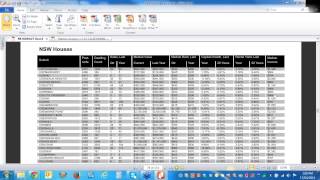
Good. How's the discounting rate calculated? What's that based on? That's a really good question. The discounting rate is based on basically the first reported data. So the first data that was reported for what the price was and then what the subsequent sale price was. So it's how much from an original listing through to what their final sale was that is recorded. So is that and is it a median that they're reporting? Sort of an average? Yeah. So it'd be the average for that period in that area. Okay. Yeah. Does that make sense? So the way that I use discounting, and it's just one of the different things that you might look at is that how hot is the market? So if I was being told that a property is worth $200,000 and the discounting was 10%, then you might want to start your offerings at 15% below that. So you might want to start at 170,000, for instance, as your first offer. Because from a first time of listing you might find that the property could be discounted up to 10%. So it kind of just gives you an idea for me, gives me an idea of where you might start that offering. So where properties are being sold above what they're being listed at and consistently, how is the discounting rate reported? The discounting rate would be near zero. So what we are seeing in Sydney at the moment is this, people are putting properties on the market. I had a client last week who put a property on the market sold for $100,000 more than they wanted or what they thought it was worth. And obviously that doesn't come out. I don't think they do negative discounting. I've only ever seen it go up to zero, but yeah, that's how they record that. Okay, thank you. Okey dokes. Any other question? Just pulling up some information here. I don't know if this is relevant or not. I was just pulling up the most recent Residex report and I'll give you an idea of what you kind of look at in these reports. Where am I going to do one? I'm going to try to pull one up of someone that is so old that they won't recognize it. Okay, so not yet. I'm just going to give you an idea where. We get some information from. So let me just share my screen and. I will show you those reports. Okay. So this is just a Residex report and it's gone through and it's done a so this is for a specific property. For a specific property. And what it does is it goes through and actually looks at the percentage of units sold in the last 12 months. So the number of units in the area and the percentage of those sold. It gives some growth information. So this is the specific residence reports on a specific property. It also goes through and gives some yield information. So this is kind of what Perth's yield is 5.2%. And this is what, which is the suburbs yield is 5.4%. So you can see here some of the information. Estimated time on the market. So this, as I said, this is a specific report that is for.
An.
Actual suburb, sorry, an actual property. So it gives you information on that actual property, does an estimate of the weekly rent and an estimate of what the value is. And then there's the full on Residex report. Now this is the reports that you can buy for $90 each which gives a state of the market. So this is one from December. So this gives you a large commentary on the market and gives you some of the top moving. Let me just get down to the information. Top moving areas. So for instance Sydney, what's Sydney doing at the moment? What's the houses and units compared to last year? What's the activity in the market? So they give you some brief information country and then they go down into a little bit best performing suburbs. The interesting thing about these reports, as you can see they're 130 pages is that if we go all the way down here, we actually get into the suburbs themselves. Keep going, keep going, keep going. Here we go. So New South Wales suburbs. So we've got, I've got a property here in Darlington. So let's have a look at Darlington. Makes me happy. So we've got here what the median price is. We've got the number of sales that actually occurred for the last quarter and the year the dwelling count. So we know how many of the houses are in that area, we know what the current median value is. The last median value we're looking at the current rent. So the comparison between December 2013, 2012, the capital growth. Now I had a conversation with John, he was actually in our studio last year and remember he said that he thought that in the next five years that the values of properties were going to be closer to the 20 year, 20 year tracking growth rather than and rent. And basically we said to him, well why are you putting 10 year growth into the reports? And all of a sudden he changes reports. So here we have 20 year growth. So he talks about total return. So he talks about what the total return of the growth and the rental yield is. So he'd add these numbers up and say, here we have what, 10% return completely, 4% from the yield, and we've got 5.94% from the growth. And this is also. You spend a lot of time looking at this income information here for a flipping strategy, don't you, John?
That's important. We use that with the census maps, so to identify pockets in a suburb which hold birds of a feather.
Yeah. So when you say birds of a feather stick together, we hang out with people who also earn the same amount as us. That's what we're saying. Okay. So I hope that assisted just a little bit of a diversion onto where to get extra information from. But rental yield, discounting, days on the market, auction clearance rates are all giving you an indication of how hot the market is or what's happening, really. So thank you for that question. Memmi, you have a question, which is, what should I look for in a suburb? Due diligence. If my strategy is flipping, it's in the spreadsheet, really, isn't it?
Yeah, follow the steps in the spreadsheet. But I think for flipping, the oxygen is pricing disparity between unrenovated and renovated properties. If you haven't got that, there's no point. There's just no point because you haven't got the benefits of the the renovate and hold or renovate to rent strategy, where you're going to get the benefits of capital growth over time. And you also lose probably about 7% in the transaction by the time you've got all you. And that's before you have to kind of navigate things like capital gains tax. So you really need that margin between the unrenovated and the renovated property before you take on a flipping property.
Yeah. And I guess the other thing is, I mean, as I said, you are always looking at homeowners, home ownership and then getting down to the streets using that sensitive information. The streets where the homeowners congregate rather than the renters.
Yeah. I tend to print out the income maps and print out the past sales. So I'll have a print out of. Of essentially a pin map, but a digital form that I can take around with me in the car, and also home ownership maps, the income maps, and just trying to work out where the overlap is between those things. Also, the demonstration that Jane does with the pin map and the Residex report is really good. I think that's the Starting point. Anyway, so marking the PIN map with the best streets out of the suburb report, the residential innovator suburb report, and then pinning that and that comes up. I mean, that's a really good demonstration. That PIM map where you show there's a street over on the boundary of Essendon there which has just got no disparity at all. I happen to know that street and it's so true that you could go into that suburb and just think it's a great suburb for renovating and if you didn't know the market well, you would buy in that street and there's no margin to be made at all. You'd over capitalize if you did a $30,000 renovation.
Wow. And 30,000 on those price points. That's well over a million, isn't it? Yeah, it's doing nothing interesting. Okay, well, where else are we at the moment? Hopefully that helps your question, Mimi. Great, thanks. We've got Lorraine has her hand up. So, Lorraine, let's open the line and have a chat to you.
Hello, Jane and John. I've been listening to you and I've got a. A couple of questions, but I'll just start off with the first one or two that are important to me. And that's going back to module two. I'm sorry.
That's okay.
I'm just having trouble with, you know, like I'm looking in the back of the magazines and I'll just say API one and I've got my price and I'm saying anything between 250 to 350. Okay. And obviously there's quite a lot of powders in that range, say in New South Wales. So I'm sort of highlighting them. And then I'm thinking maybe as I look at the price, maybe I should be looking at the days on market or should I be looking at the rental yields, you know, as I'm sort of first looking. So I don't put down suburbs that have got like been on the days on Market for 300 days or, you know. Or am I supposed to be just looking at the price to start off with?
It's a little bit harder when you're doing regional towns. We kind of picked up on this last week because as you said, there's so many of them. So when you're doing, for instance, Adelaide, there's only so many suburbs that have within the area that you've listed as your buying criteria of what you're really concentrating on. And it's kind of like when we get to the buying criteria, then Come back and you define this a little bit better. So it's kind of a bit of a juggling act.
Yeah, A bit of to and fro.
When you're doing it regionally, if you're going to be putting that effort into it and you have got that 250 to 350 kind of price point, as you said, you probably have most regional towns that were at some point being that point. So what you need to do is to make this a little bit easier for you now and reduce your stress. I would add some extra criteria into it as well. So what strategy is it that you're looking at, Lorraine? Buy and hold.
Buy and hold. And I don't mind doing sort of like a cosmetic type. Renault maybe adding a bedroom or doing painting or doing the front of the house up. Something. Nothing really major, not straight away anyway.
So some of the criteria that you might have around that buy and hold strategy is making sure that you've got a good rental demand. So making sure that the percentage of renters in the area is high so that you actually have what they're after. Have a look at the actual places themselves that are for sale. And if you look in the census information, it tells you that mum, dad and two kids is the most typical generic demographic or the largest demographic, then buying the smaller one bedroom unit is not going to work for you. Or buying maybe two bedroom house is not going to work either. Or not having the carport. That's when you kind of jump into the realestate.com or domain as well and you have a look at in that price range what the typical property looks like. And once you get a feel for what the typical property looks like, you can start having a feel for get to know more intimately what you're after. But to get from 150 suburbs down to a few, you're going to need a few criteria and it will let you do that quickly. And I'd be concentrating because you're doing buy and hold. I'd be concentrating on what growth has had in the past, trying to do a little bit of information or checking on what plans are there for that area in the future, if there is, what industries are the things that are buoyant for it. You go to the local council page and they usually have a lot of that information there as well. They're really quite proud of their local area and they have the information. The predictive growth is something that would be really beneficial. But of course the reports get that costs money. I just did my review of the magazines for this month for the Toolbox and there's a couple of really good articles this month which go through predicted growth for some areas across Australia and I kind of gather those so that you don't have to go out and buy a $90 report every time.
Because Residex doesn't have regional renovator reports for every state, does it? It's only a couple of states.
No, they, they do have the country. I, I believe they do have the country and the.
Because that's got the predictive graph.
Yeah. So they do have the predicted grade you're saying.
Yeah. Which is, which is a good way to narrow your criteria too. I think they're $250. Are they the statewide one? The top 100.
Let's have a look. So we're looking at the Residex renovator report and they have the New South Wales capital city or New South Wales country. They have Victoria capital city or Victoria country. They have one report that covers all of Queensland country and city and one report that covers all, all of Western Australia country and Sydney. So for those in South Australia and Tasmania, sorry, Northern Territory. So that report's $215. So there is those reports but you know, there's different ways trying to find some of the information as well. I think I share a report every spring and spring and autumn. The big Sunday papers, magazines have that lift out that they go through the local areas but they also have the country areas in the back as well where they do what's the Australian property monitors I think usually does it. What's the predicted growth for an area and they kind of give a bit of a range between 3 and 5%. So I grab those reports as well. So yeah, there's all that kind of information that you can pull out and have a look on.
Okay. So I should not just look at the price, I should look at maybe you know, like to start off on the area, either buy that prediction report for the country.
Yep.
And then maybe look at that. Or if I look at the back of the API magazines and the other ones look at maybe the price, maybe look at the 10 year growth and see what that was like and maybe sort of like reduce the amount of suburbs down through that.
So your idea is trying to get to three to five areas you're going to concentrate on.
I've got like 30 at least.
You've got 30. I was worried you had 100. I know but it's so confusing and with some of those areas, I mean seriously just jump onto the website A lot of them have, like the future plans on the council website of what they're doing and it will give you an indication of what's going on, what industries that are supporting it as well. One of the things I do when I'm looking at an area and particularly a suburb or a town, is I set up a Google alert for it and it might just be real estate in Goulburn or it might be property in Kenya. I don't know. If anything comes up in the local media, it will come to you. So this is kind of. You're putting the effort into it. And I know it's really frustrating. And when you're doing regional areas, it's harder because at that price point, you've got a lot more to choose from. But you really need to narrow it down. As you said, just getting the median price or what areas are good enough may not be good enough. And with regional areas, you kind of miss that ripple effect as well, because it's not like all of a sudden Dubbo becomes expensive, so Geary takes off. Anyone who's ever driven through Geary, sorry for anyone who lives in Geary, having been an old Dubbo girl myself, you're not going to be moving there. So that ripple effect really doesn't affect you. So what you're looking at the past growth is indicative of what the population demand has been and what the interest has been. But you are really particularly interested in what's happening in the future. And rather than spending a fortune and going out and buying individual reports, maybe that country report would be great for you. But some of the suburbs that you might or towns that you might want may not be in there because they just don't have the pricing disparity. But even if they're not in the report, there may be the one soft pricing disparity. There might be the desperate sale or whatever. You're kind of making that investment of $215 without knowing if the 30 suburbs that you like are going to or 30 towns you like. So I would be trying to drill down. We should be those Sunday papers, they should be up for another kind of installment of those soon, I'm pretty sure. Let me try to locate one. But yeah, that's the kind of stuff that I'd be drilling down to.
Okay, all right, that makes it clearer. And just lastly, you know the maps.
Yes.
I've had to go to the newsagents to go and buy like individual maps like the Hunter or Aubrey Wodonga. Are they good enough? Because I'm struggling with the maps.
To find a good map.
Yeah, to find the maps of that area. Like I sort of look online.
Yeah. I actually put an email through to mapworks yesterday just to. So could you give us a description of all your regional and metropolitan maps? Particularly with the metropolitan ones, I like to use the municipal ones which shows all the council boundaries. So I think I sent you someone, I'm not sure if it was you or not, that requested. Had a query about that to Jane yesterday. We sent back a link through to one. No, that was of Melbourne actually. Yeah, there's only two maps are the hard thing maps. Sorry, what's that address, Jane, that we're sending people to? Mapworks, mapworks.com.
They might be able to help you. The thing is, I mean if you haven't. I wouldn't be spending the money. If you've got 30 areas that you're looking at, I wouldn't be spending my money on those until you've got down to 3 or 4. Because the map that we're talking about is the map that you need for the price pin map for the sales, past sales to really get down to the property potential in the streets. So I wouldn't be necessarily running out.
And doing module three. Yeah, but. Yeah, that's right. So I don't know because. Yeah, because the. The dot map, it kind of kind of becomes a bit void with the.
Dot map's kind of country. Yeah, country New South Wales is what your dot map would be. It would be individual. I guess it could be hunter area, but yeah, it's bigger areas that incorporate a number of towns. I don't think it'd be worthwhile going out and doing that.
I was only going to do it, say, just for the interest of doing it, even though I wasn't going to actually maybe buy in the hunter. I might have, you know, I've already got one in the hunter. But I was just going to do it just for the. Doing the pin.
Oh, okay. Going through the exercise. Yes, yes, good.
Just so I wasn't behind.
I've just let me.
When I first did James Course I did exactly that. I didn't have a property that I was ready to get, so I just chose a price range and just did the entire exercise without actually, you know, just with a dummy property and it was great.
Yeah, that's what I thought.
So get through the exercise because once you know how to do it, it's worthwhile to do it again and again.
Skills that you never forget.
Well, I mean I was asked to write an article for Australian Property Investor magazine this week on a reader had asked me, I don't know why he asked me specifically. It's a bit of a worry to answer a question on should he keep his house in Gladstone or not or should he sell it? And you know, obviously the market's coming off there and I jumped on Residex and I looked at Gladstone. So I had access to those reports and I at looked. Gladstone has a south and a west and a metro. Gladstone and Metro was predicting 8% growth compared to Brisbane at 5% and the others were around about a 6% growth. So it really depends even just in one town where you're looking at as well. So some of those bigger towns I know I've got clients buying in Tamworth, for instance, and there's different postcodes for the different areas. So, you know, don't be disheartened. If you're going to choose an area that's maybe Hunter Valley, don't be disheartened and you know, give up, choose one area and maybe just have a look. Even Maitland, you know, some of the bigger areas, the areas that have some bigger differentials, sections north, south, east, west, Singleton and then they got Singleton Heights. When I lived in Singleton, they had all that as well. So consider that, I guess, is what I'm saying. Use a dummy exercise to get through the exercise without weighing yourself down. Because as you go into module four and five, you'll see we're getting to buying criteria and stuff and we don't want you to miss out on that.
No, fair enough.
I'll do that and then you can come back. I'm just going to once again share your screen. I mentioned those. Those.
I think you flipped it back to.
Maybe you have been watching my screen.
Okay.
Yeah, share my screen. There you go. So I did actually have in the domain I mentioned the Sunday papers. So this is for New South Wales and Sydney and how it's hard to get the predictive growth reports through. Now if you download these reports, what they have here, I don't know if I can make this screen bigger, but what you can see here is they actually go through and they do do some predictions of what's going to happen in the next year in these areas. So that's the domain reports that come out in the Sunday papers and they did them about twice a year. I think you can see that. Too many pages opened. You can see the. These reports. January, February, January 2013, 14. So these are the monthly domain reports, but this is the ones that come out in the newspapers. So these are usually a spring. A spring guide. So I've got like 10 years of the Sydney Morning Herald or Sun Telegraph or something for Victoria and Queensland and Sydney. But. So you're not out there buying the reports. It's kind of like if you look for these in the Sunday paper, you can actually see what their predictions are and you can see that that's really hard to see. I apologise for that. Let's see if I can make it a little bit bigger. So you can see here that they've got. Houses are going to be up 7%, what the median was in 212, 213, what the change was, what the trend is. And then they rank them as to what's going to happen. So this is when I say, you know, you kind of got to be a little bit of. Here's a great. Renovators get busy pushing up prices. You got to be a bit creative sometimes. So not to spend the money to go out and have them buy a report on every area. But this is the kind of information that we're after. And I know that when I was looking the Victorian one at the end of last year, they actually had some of the. So here's our West Portland, Lower Portland. So they had some of the. Let me see if they had some regional areas in there too. Regional? No, regional. They're all cbd.
So.
But, you know, that's a kind of starting point. You need to be able to find information where you can get readily and cheaply without having to break the bench. Yeah.
Well, thanks, Jane, and thanks, John.
Okay, good. Thank you. Over to you again. And I'm going to unmute you. See if we've got any other hands up. We've got some questions on the Facebook page. Okay. We've got Kazia. She can't talk, but she says if there's no discounting on the Sydney market at the moment, how can you buy a property below the market price? Understand the is a critical criteria to make money on your renovation. Great question. We talk about that as being part of the Trident strategy. One of the key prongs of having a backup plan is by being so intimately involved in an area that you can see opportunity and buying below the market. And the reality is that sometimes you can't have plan A, B and C working for you. So when the market is moving quickly, buying below the market could possibly just be the best price in the day, to be honest. And at least you have with the renovation as prong Two, to add value and three, buying a good capital growth area are the two extra ways of making money. And the reason I talk about the tried strategy of having a backup plan. A backup plan and a backup plan is creating equity in three ways. And if you think about it, most people buy property without even thinking of doing this. So they've got maybe a bit of a hope strategy. Some people buy thinking, well, it's in a good area and it's got a bit of demand. They've got one strategy and then find out that people are making money and renovating and they bought a property that was too new to renovate and can't do anything. What I try to do with the Trident strategy is give you, I guess, the opportunity to say, well, there's three ways to make money and if I get one wrong, that's fine. I've got two to fall back on if one just doesn't work for the time being. And that would. The only one that I would ever sacrifice would be buying below the market. I wouldn't sacrifice being able to add equity through renovating or doing something creative or being in a growth area unless I was flipping. Because obviously the growth area, you are interested in growth because it is indicative of some of the past growth, indicative of the population demand and people wanting to live there. But the future growth is not necessarily something that you're really fixated on. So, yeah, that's my thoughts on that. Does that answer your question, Kazia?
It's hard. I mean, we just try and avoid getting stuck in those auctions where you just got crazy bidding and people that are just willing to go way over what the property's worth. So if you can build those relationships with the agents and get the quiet ones that are off market, and even if you're paying, if you've got a couple of comparable sales that you can bring out that are three or four months old and the market's moving, well, that in itself is kind of buying below the market.
Exactly. I've bought in a hot market of someone who's. It was a property that was a four bedroom property. It was rented room by room. The rooms were all individually locked. They could never get the tenants there at one time to actually get the rooms unlocked. So you essentially seeing one bedroom and the other three you would see. And the guy was an overseas seller who was desperate to sell. And I picked that up below the market because everyone else was a bit scared off by it. I just kept turning up to see the rooms one by one when the tenants were there, but it is possible. It's just a whole lot harder in the Sydney market at the moment. It's not just investors that are looking there, it's homeowners that are afraid that they'll never be able to upgrade. So I'm working with a lot of homeowners in Sydney now who are buying properties because they don't see the possibility of buying their next property in the future because the market is so strong. Kazi says yes, thank you, that helped. I've got a question here about the Residex Top 100 Renovators reports. Does it give you different median price points or do you tend to be the more expensive suburbs listed on the report?
It favors the expensive suburbs, I have to say. Yeah, yeah, the top 100.
Is that because it's easy to have disparity between the higher.
Yeah, you get a greater spread of values the higher your price is in the street.
And that kind of comes back to what John Edwards says as well, is that you kind of have to be above that six to eight hundred dollar mark, thousand dollars mark to flip because of the disparities. Kind of going to cover up some mistakes as well.
Yeah, yeah. And his advice was to be selling at the 80% mark of the street too, not be trying to get up above that into the thin air of setting street records and that kind of thing. So yeah, there is, I mean there's bound to be particular if you're in a buy and hold strategy and you lower, you know, say 300 grand or something, it might be the case that your suburbs don't show up there. But if you've got a buy and hold strategy, you've got all the other stuff going on of capital growth and all that kind of thing too.
So it's all good. Okay, well why don't we jump over to. We've got a couple of questions here. John, on the Facebook page, Jeff Fang, what effect does a second airport in Sydney have in the property investing game, particularly for the western suburbs? That's a good question.
It was a good question.
If you've got an answer. I've got some interesting intellectual property on that. Believe it or not, this could be true. I don't know. My mother told me. Oh yeah, so this is mum's goss. She also thinks that I'm the best mortgage broker in Australia. So, you know, you've got to, you know, go with what my mum says. But my parents were visiting very good friends of theirs, local people out in the. This is Badgery Creek, I imagine we're talking about no Badgery Creek. So out in the western Sydney area and that's where the second airport has been approved to go after I don't know, 20 years have I been hearing about it. And so this local took them bush bashing with his ute and said come check this out. And he said, da da, da. Here's the rail line that's going to go to the new airport at Badgery's Creek and it's already been built by private enterprise. It's already there. So it would have taken three times as long if the government had done it. And it's been set up well ahead of time. Everyone knew that the approval was going to come through and they started working on that a few years ago and the railway is already in place. What you can find was a ute and a bit of bush bashing. So there's a little aside mum and dad said kind of thing. But the thing that you'd be interested about the Badgery or any airport or any major infrastructure is, you know, as we just alluded to, they promised for years that they're going to do something and they don't. We've heard about Sydney to Melbourne to Brisbane, fast trains for 100 years and Canberra and the like. And I think API magazine last month did a Where are we going to be in 20 years with a lot of new little satellite cities and fast trains and things. Some of those infrastructure things just don't go ahead. And we understand that. But this has now been approved in the last 24 hours. And if it does go ahead, what effect is that going to be? And I think the thing is there's going to be an effect of what we've seen in the mining industry. We're going to have some construction phase and we've seen it say Raymond Terrace, the bypass up around Newcastle with the roads, there's a lot of demand for rent. While the construction teams in Frankston, when they're building the freeway down there, Blue Mountains, there's only some short term rental demand. Gladstone, let's face it, that is going to be driven by the construction of having all the people there as an investment opportunity. I would be concerned and I would want to know about flight paths and sound. And I know that I looked at buying a Property back in 2006 in Arncliffe just next to the Mascot airport and I could download from the airport most amazing information on sound restrictions and where the sound was going depending on what day and the wind, etc. Just to make sure the property I was looking at wasn't in the affected area. And you know, so I think that I'd be concerned about being too close. But it definitely, I mean, gosh, it definitely is going to satisfy where the majority of the Sydney population is, which is out west. And it definitely should have, through a construction phase, an increased rental opportunity. I'd just be hesitant to, like we've seen in some of those construction phases of the resources boom. I'd be hesitant of putting all my eggs in one basket based on the fact that that kind of sustained rental activity will be there forever. And I would also, I think from an investment point of view, I think the airport, it's just one of those necessary things that's needed to meet the growing population of the area. I wouldn't necessarily think it would be a driver unless you own the land there and you've got to sell it to them.
Yeah. I wonder if there would be sweet spots though in and around there that aren't in the flight path but say good suburbs that now are commutable to. To the airport within 15 minutes or whatever. I know in Melbourne it's so much easier to get the airport from the northern side of town than it is if you're across the other side of the Yarra. So I wonder if that will have any effect or not.
And I mean, picking up on that, we've seen some suburbs. I know I've got clients who are on fly and fly out to mine sites and there's been a huge increase of price on properties in some of the funny little suburbs near the airports in Perth. And they've just had. They're using that place as a base. So they've actually rental yields have gone up because there's demand, because the fly and fly guys, there might be two weeks on, one week off or whatever, are actually using that as a base or using it as a home for their family so they don't have to travel a lot longer as well.
Yeah, imagine that. I've seen Perth Airport at five o' clock in the morning. It's just a sea of orange.
It is, isn't it?
Yeah.
I keep thinking I should go out there and hand out my book or something. Hey, I was in the mining street, so thanks a lot for that question, Jeff. I hope that answered it for you. I hope you grab this recording and see that we actually are chatting to you and Belinda, she needs to make a decision on flooring. This is a tough one. Okay. In our little rental, they've got a little rental and thinking of putting commercial voice vinyl planks in the kitchen living area and interested to know what people's experience has been with them in the way of durable and longevity. Any feedback, commercial vinyl planks. We have to think of one that it's commercial, that it have to have good durability. Wouldn't you?
So it's like vinyl flooring. I assume you're not meaning like, you know, imitation floorboards type. This is like a. A lino type kind of industrial kind of one surface.
That's why we need Belinda on the. On the core. I can pretend I'm Belinda. I'd say let's go both ways on that. I remember I bought a house that actually had the fake vinyl floorboards throughout their whole house and they were being used in a rental property and they had a lot of thoroughfare and there was, there was no wear on it. They looked like they could last through on you because they were explosion. Yeah, I mean I ripped them up and did the floorboards underneath. I've used vinyl in the kitchen areas from Harvey Norman and I've had to replace it after three years.
Yeah, mine last 10 did it, but then again I wasn't the best landlord.
So there was holes in the.
It was getting. It was ready to go.
Okay. Right at year six, probably. Yeah. My experience with vinyl was that it does wear, I mean, definitely more than tiles from a depreciation point of view. You probably could have depreciated it a lot faster, but I would, yeah. If it is the rental property and you've got a number of tenants in there and I'd be cautious of using it again. I think it's easy to put down like I went and grabbed a roll from Harvey Norman and put down this funky looking vinyl within about an hour and a half and glued it and it looked great. That was the subsequent one. The first one, I can see you looking at me going, oh, it's just your quality workmanship. J. But it wasn't. The first one was put down by a professional and the second one's years later, still going strong. But I've noticed that it wears. So if you're buying commercial grade stuff, it probably is, you know, better in its wearability. It's not the Harvey Norman, you know, local stuff.
So, yeah, as long as it doesn't look like a kind of municipal building or anything like that. But I think no matter what you choose, whether it's carpet or polish the boards or whatever, you're gonna have to go back in a few years, do something to it.
Yeah, yeah. Especially if you have a lot of, a lot of therapy. Okay, Candace, I think you have the last question for us for today. In the price pin map, what is the benefit of pinning the streets that haven't been recognised in the Residex suburb report as high renovation potential streets? Do you pin the entire suburb or just the streets that are indicated as high renovation potential? Well, the Residex report says one report that you're using really, isn't it? And it's kind of a, kind of a nice little verification.
Yeah. So we just said there's, there's likely. If you, for instance, if you're low on the market, you have a, let's say sub kind of four or five hundred thousand dollars and you've got a renovate to hold strategy, then there's a likelihood is that The Residex Top 100 report does favor more expensive suburbs because it's looking at.
Well, this is the actual suburb report.
The suburb report.
So it's like would you just pin the streets that the suburb report has or would you pin the whole suburb?
It's different, it's different data. So all you're looking at with the pins is past sales. So three years. And the Residex report, to my knowledge, uses modelling to work out the over time to work out that spread of values in the street. So and it's just another point, if nothing else, it's just another source of the information.
So you can, I mean my ideal, you saw me doing the tutorial basically, you know, we highlighted the streets that were in the renovation report. So we got a bit of an indication up front where the disparity was. I personally, depending on what my strategy is being flipping or holding, would jump into the census information and just check where those streets are particular to my criteria. If you're looking at not pinning the entire suburb and you've got a huge suburb there, Kansas. So I would then kind of have a look at where the renters want to be. If I had a buy and hold or the owner occupiers wanted to be those favoured streets and then I'd be price pinning on the part sails those streets. Well, that allows you to kind of, if you've got a huge area, which I'm assuming there's a lot of people looking for shortcuts here, but if I had a huge area and I was trying to, you know, optimize my time or where I was going to be, I'd possibly do that.
It takes a couple of hours to pin a map.
Yeah, yeah. Or unpin it.
But it shows. I mean, what the pins really show is you'll see that one end of the street is where all the sales are coming from. You don't get that in the Residex report. Or it'll be one side of the street. So it'll be often the higher side of the street that's getting all the good prices. Or there might even be something like a lane that backs on, which means one side of the street's got rear access and got all the garages at the back of their block, and that's why they're selling for 100 grand more. So if you're just looking at reports and there's a good range of prices in that street, but you don't actually know where in that street it is. So it's probably more with the flipping strategy. You have to know each street to that level to really be safe. You're not going to over capitalize.
I know. I did an analysis on a suburb once and I couldn't work out why there was that really higher price at one end of the street over the other. And it turned out it was close to the rail line, but it was at the top of the hill and you had to walk down the hill to get to the streets, the houses down the bottom, which meant the next morning you had to walk up the big hill and no one wanted to live down the hill.
So it makes sense.
Yeah, you know, I just have to drag rescue Flipman. I love the TV show Flipman.
I don't know.
Oh, it's fantastic.
I love it.
These guys go in there and they have. They're kind of like in Salt Lake City and stuff. And they go in and they buy a property in America that they can't even look at beforehand. And often they're walking around the outside and talking to the other guy going, buy it, buy it. So every day in America, you know, people who have defaulted on their loans, they did one this week that they had had security guards there overnight because of the tagging and the bad neighborhood. So it was a good suburb, but it was actually one area of the suburb that was just full of gangs and they had security guards and dogs and oh my God, it was horrible. And they're saying, we're going to be in and out of here renovating this in two weeks and we're going to sell it if we can keep alive. Basically. I was like, oh my gosh. Braver man than me.
Yeah, I remember reading one of those stories. I think it's still pretty popular, but Everyone investing in the US after the crash and there was one Australian that got off of the plane at the airport. I can't remember which city it was. It was somewhere on the east coast and said to the taxi driver where he wanted to go because he wanted to inspect the property and the taxi driver refused to take him.
That's when you know that you haven't done enough due diligence. I was speaking to a guy in Texas this morning and asking him about the property market and he said they just didn't have the high high that everyone else had, which meant that they haven't had the low low either. And the market's just booming because investors want to be there because there's no real discrepancy and it's good value. But there you go, American market, I wouldn't buy them, but that's another topic for another time. So, Candace. Yeah, look, I would get in there and depending on your strategy, if you really need to just look at one area, look at one area. But the Residextra suburb report is just one indication. Basically, you're highlighting a whole street there. The price pinning gets you down to one end of the street or one side of the street, so you can really start getting intimately involved, depending on how much data. Sometimes you go back to three years, don't you? But there's one year at the moment.
You want to be doing two years, I reckon on that, on your pins.
Anyhow, guys, I hope that has helped and I think that's a wrap for today. Look, if you do have any further questions, as you saw, we jumped onto the Facebook page and we answered those. Don't be shy. Let us know if you can't, you know, get on the call at lunchtime next Thursday. Then please.
Leave us a message.
Yeah, try that one, 300 number because we would love to talk to someone on it.
Tumbleweed lying around in there.
And if no one uses it, well, we'll just get rid of it and we'll put it down to experience. But we do have that, and obviously we'd love to hear your actual questions live on the call next Thursday. So, as always, if there's any information that's been disclosed on this call that you don't want to be part of the recordings, please let us know. As of tonight, we've got module four coming out, which is pretty exciting. Yep, we're loving that. We're just getting right down, aren't we? We've gone from state level to suburb level to street level to properties now. So this is when the building, the foundation of your property success really starts. So module four was designed to help you find potential properties that suit your own personal property investment goals. As we talked with Lorraine about. If you're not really ready to do the big picture down or you want to just test this and don't want to get held up, do the exercise for an area that you just choose and go through it so that you know what you're doing step by step through the process and then you can go back and refine that later. And this is really the exercise you'll be doing maybe the next property as well.
And it's a good chance to do it while other people are doing it too. So you can throw in your questions rather than just, oh, I'll get to it in six months time. You won't have the support there then.
Yeah, exactly. So it's bits on the ground time, guys. It's extremely important. Module. I look forward to your questions next week. Have a safe break if you're having a break over this period of time. And that's it from us.
See ya.
More from Let's


The Ultimate Guide To Renovation Course - Module 5: Self - Employed Low Doc Loans



Rob Flux Ambush - Convince me I should consider Property Developing as a strategy 3,2,1 GO!

The Ultimate Guide To Renovation Course - Module 4: Recognising a Property's Potential

YPS Club Mar 24: special Guest Peter Wargent describes how Australian properties are so resilient


The Ultimate Guide To Renovation Course - Module 5: Interest Only Lenders Exposure

