Recorded Module 4 Q&A (24-04-2014) with Jane and John, co-creators of the 'Ultimate Guide to Renovation.' Hosts review Module 4 materials — four-step property due diligence (initial inspection checklist; property appraisal/comparables; full costing and evaluation; council/legal/town-planner checks) — and take participant questions about price-pin mapping, which sales-period to use (2 vs 3 years), long-term vs short-term growth (10–20 years), data-source discrepancies (RP Data, Australian Property Monitors/API, Smart Property Investor, Residex), budgeting and profit margins (rule-of-thumb 15% profit, examples given), tools (MagicPlan app, laser measure), and practicalities (when to place offers, building/pest inspection limits, solicitor vs conveyancer). Several live demos reference Residex and MyRPData reports and show suburb-level stats (sales, turnover, yields).
Chapters
Hello everyone, it's Jane here and welcome to module 4, the Q& A call. And of course I have my co creator of the ultimate Guide to Renovation here, John. Hello, John.
We made it. A few disruptions getting going today, but we're all good now.
Let us know that you can hear us and you can see the screen with the Q and A call on it. Hopefully everyone's typing madly to let us know they can hear us. Great. This week you hopefully had time to complete module 4, the right property for renovation and found out how to go about choosing the right property to make a profit. So this week we are changing the format of the call slightly and we're doing this based on some feedback that we got. We're going to get into the questions a little sooner than in past calls and if we do have announcements we're going to leave them to the end. We realise a lot of people are listening to this on their lunch break. You may only have an hour, so let's get an hour of Q and A in. Make sure you do come back to the Corning and listen to the announcements. We've always got something interesting to say, haven't we John? Most times. So now we're always looking for the ways to improve the course. So as I said, this is based on feedback. Please let us know if there's anything that we can do. I know Scott had some questions about my Excel spread spreadsheet in Module 2. He's recommended some changes, so I might just upload his spreadsheet and put that in there for a price calculator. As I said, we're here to always make things better, so let us know if there is any improvements we can make. Now let's just get on to that boring housekeeping. If you're on your computer and you're experiencing problems hearing or perhaps we can't hear your questions, there is the option to call in on a telephone. The telephone number can be found in the sidebar under the drop down menu under Audio options. You can also call that number from a landline, mobile or Skype. So when you have a question, all you need to do is raise your hand. It's the icon in the side menu. It is hard to see, so have.
A look for it.
But I think most people by now have found that it does live directly above the audio tab in the very top of your GoToWebinar control panel. By clicking on the hand button it lets me know that you've got a question. I will give priority to those who are going to have a chat to me and. And anyone who writes a question in the question box. We will go to that later. We've had a few technical issues with our amazing phone in line.
Thanks, Lorraine, for supporting the message live.
Lorraine was amazing. She left four questions for us.
Yep, we're not going to get to you.
Sorry, we just can't play them.
No. We were so desperate to get the emails out in time because we realized there was a glitch in the system that we didn't get a chance to test it properly.
So we can hear it on this end and we will answer your questions, Lorraine, don't you worry about that. So, as I said, if I unmute you, you're going to hear the person say, your lines are muted. You know you're on. I'm not all about tech support. You know that by now. But if you do need some help. Supportourpropertysuccess.com so that brings me to this week, you receive the tools that we use to identify the right property and work out the feasibility of a project using the four steps of property due diligence. Now, I imagine that a lot of those who've renovated before haven't really gone through this much due diligence when assessing a property, but we're talking about making a profit, right?
Yep.
Yep. You've got a lot of money on the line too, so it's worth taking seriously and going through the steps.
And it's one of those things with the buy and hold strategy. Often people talk about the profit they've made, but in reality, a lot of that profit is sometimes mistakes and over capitalization, which is being covered up by capital growth and time, so gives a.
Lot of ills for capital growth.
And we're talking about making money straight up front. So. And as I said, you know, I spoke to a valuer really recently. He told me that of all the valuations they do on renovations, they believe that Most people get 30 cents back for every dollar. So we're talking at least, you know, a dollar for the dollar you spend.
Yep.
So important about doing the due diligence, getting the right property right for renovation. So let's have a look at step one of that four steps of property due diligence. You need to carry out an initial property inspection using the property inspection checklist. Now, this is the inspection checklist that you use when a property first comes on your radar. You organise an hour with the agent to go through the property and decide whether or not it's a contender for further investigation. You may have already visited it on a Saturday for the five minute walkthrough.
Yeah. So this is different from the Open for Inspection checklist. That's more when you're doing your due diligence, getting through all the opens, whether you're doing the area expert or more selective approach, where you're just looking at the stuff you're renovating up to. And the checklist there, the Open for Inspection checklist is just to kind of record what the kind of stock is in that area and that way get familiar with it. And that way you can compare apples with apples and keep a track of what the renovated properties are selling for and what the unrenovated properties are selling for.
And this is when you get a bit more serious. So this is like, you know, give me an hour and I really, I'm really serious. I need to go through. And this is what we talked about this, we want to do this by ourselves, not with another hundred people as a general free for all.
Yeah. And the agent will try that on nearly every time. You'll say, oh, by the way, I've just got someone else that I'm going to bring out. At the same time, the agent's trying to create the perception that there's competition there so he can play one off against the other.
And all you do is say, well.
I stand up and I just, I just go away. Again I say, listen, I needed to go through by myself. I've got a due diligence system that I use and you know, I'll come back later.
Good confidence. And it's a brave real estate agent happy to see a potential buyer walk.
Yeah, that's right.
So now the property inspection checklist is not to be confused, as I said, with the Open for inspection found in the module 3, which is under kind of that subject, due diligence. So just bear in mind this is the next step. This four steps is the getting into the detail. Now, step two, we want to carry out a full appraisal of the property's current and future renovated value using the Property Appraisal Checklist. By now you should have some knowledge about what you're renovating up to for the area as well, and what that standard looks like. This Property Appraisal checklist is a tool for looking at those comparable sales at the property's current level now and what, more importantly is the resale or revalue level? Because this is where your project becomes a deal or no deal. It's where it's become viable and where you're going to make some money. So remember our formula, the end value minus the renovation costs, minus all of the costs and your profit margin is actually the purchase price. So if you want to keep your renovation viable, then if you're going to offer $300,000 after you've done your numbers and all of a sudden there's a 305 or 310 on the table and you got to work out if you're going to be able to cut some money out of your budget for your innovation or cut your profit. And that's the two numbers where they come from. Potentially you can cut the time to do the renovation and a bit of the interest that you're paying, but that's really playing around the edges, the holding costs. And look, I know I looked at in Bondi junction, a nice two bedroom unit that I can convert to a three bedroom unit. I knew the purchase price, it went 5,000 over my offer and I walked and there was a potential $60,000 profit there, but I wasn't prepared to put the time and effort into getting less than 60 grand. So let's have a look at step three. This is where we carry out a full costing of the property using the Property Evaluation checklist. So the Property Evaluation Checklist is used to identify and record tasks and obtain quotations and prices. Like, guys, you're getting serious at this stage, right? This information is then entered into your budget spreadsheet, which you will discover in module five. And I have to say, I would buy the course alone balloon for that budget spreadsheet.
Yep, yep. So this is where all the information comes for, for that spreadsheet. So you, you tick it all in here, you get your quotes, write it in and then you take this. And I like to do this just as a paper, I have it on paper and I find it just, it's much easier to do it as I go. I can have it on site with me and, and on a, just a clipboard or whatever.
Yep.
And then you get home, then into, into the spreadsheet and you can start to work out your estimates.
Perfect. And look, just a reminder, you're going to get access to that budget spreadsheet tonight or tomorrow. But it has got over 20 years of intellectual property of estimates of per square metre, etc. So this is why it's important in this evaluation checklist that you record the square meters, etc. And there's some really great little apps for actually doing some measurement in rooms, etc. As well.
Yeah, I can't think of the name of one, there's one you can actually measure the room by. You go, you kind of take the photo or you hit the button and then you turn around to the next corner and you hit the button again and it does all the measurements for you. I found it a little bit slower than just pulling out the tape measure myself, but some people might like it, I think.
In the last toolbox I actually put in an app that two toolboxes ago that I did a bit of a trial for. But yeah, it's all good.
The other one to get is a little laser. I've got a little laser one that I use and that's quite good. It's not excellent in terms of its accuracy. Like if you're doing, you know, cutting steel or something like that, you wouldn't use it, you use a tape. But in terms of doing a floor plan, it's great.
So I guess, yeah. And that's why you want that information put into the budget. So to make sure you don't forget that when you're doing a property evaluation checklist. Hey, just out of interest, has anyone actually used the checklist this week at all on an actual property? I know there's a couple of you on the calls. Let me yes or no. I know many people are actually looking at still getting through their heat maps and pricing maps.
I saw one today with different coloured blue tack. That was awesome.
Oh really? What a great idea. Okay, we're going to have to pull.
That one up so you don't need all the fancy kind of translucent stickers and all the rest of it.
Okay.
Different color blue tack will do it. That app that I was talking about that measures the room is called Magic Plan and I assume it's available for both platforms, but it's definitely on the app store for iPhones.
Perfect Magic plan. Do you guys get that? Okay, so let's jump onto step four. Now this is where you carry out a full property due diligence using this property due diligence checklist. Now this checklist covers off some of the council and legal requirements and should be completed in consultation with with your conveyancer or solicitor and town planner often. I had a chat to a client today and she was talking about knocking a property house over and rebuilding a complete house. And I said you better check with the town planner and the local council about the ratio of what you can build on the area. I mean it changes council per council.
Yep, yep. When do you use a solicitor as opposed to a conveyancer?
Oh, I hate that question ring in. You know what? Every time I speak to someone about this, if I speak to a solicitor, they say, by using a conveyancer, you're not getting the full legal run through of every single clause, et cetera, in the contract. However, when you speak to the solicitors about, well, if you were going to run through every single clause in the contract, what would it cost? And I say, well, it's definitely not 1,500 bucks. It'd be more like $5,000 if I did that. So I don't think you're always getting that. And often, let's face it, the solicitor is putting it onto someone in their office to do anyhow. So it's usually the checks and things. I have used a number of solicitors and I've used conveyances in the past. There's a great price difference. Sometimes I've seen a real benefit where the solicitor or the conveyancer comes in and says things like, did you realise that your penalty interest was 10%? Okay, well, move it down to 4%. And they make those recommendations. Or when we did. I know over in Western Australia, there's a suburb over there where all of the fences and the property boundaries are actually out of whack. So you're not.
And the whole suburb.
Yeah.
So there's issues. And you want someone who's going to be picking that up rather than just doing a transaction. So I can't answer that. It's up for you to decide. When do you use them?
Well, I just. I've only really ever used a surveyor, I think, apart from one instance.
A surveyor.
Yes.
Solicitors?
No, A conveyancer. Conveyancer. Surveyors. I use surveyors too. They're good. Not so good for legal advice, though.
I was going to say, I like surveyors. I used to work on mine sites with a lot of surveyors, but yeah, in actual fact, as a mining student, I had to go out into Lake Malmora wearing waders to measure on the end of the stick. For the surveyor who was in the dry land, how much of the mine had subsided. The lake bottom, I think we're at like 0.001 millimeter. But hey, we like surveys. Let's move on.
Why is no good when they get water in the mole?
We promised these people we'd get onto the Q and A. So let's go on to some of the things that we covered up in module four. So we talked about buying around the median and why that's important. And we're talking about often the demographic of looking at what most people in the area want to rent and buy. You know, we're not looking at the worst place, we're not looking at the best place. The five biggest hidden costs, building and property inspections, professional property and building inspector where you use those low and no return items. And gosh, you know, I've made a few mistakes on those in my time. Recognising a property's potential, some renovation twists, turning an existing room into a bedroom, which is personally my favorite cosmetic renovation technique. Buying buyer objections and identifying a desirable location. So I reckon it's time we got into some questions. What do you reckon, John?
Yep, straight into it.
Let's not bore anyone any longer with us chatting. Okay.
We've got quite a few people on the line here.
Unfortunately Lorraine's questions that we had aren't able for us to.
Should we give it a try?
Has anyone got their hand up for a question? This could be very easy. We've got a lot of people online here but no one's got questions. Maybe they just haven't looked at module four. So if you're struggling with module one, two or three guys jump on and ask us about that as well. We did have a follow up question this week.
Yeah. What do you use? It was around the three years worth of price data for the price scheme map to two years worth of data. As a rule it's thought to be better.
Can you just repeat that again? Yeah.
So the question was to start back from the start in the price pin map in the video, Jane talks about using three years worth of sales data for your pins and then you take the pins for each different price range, whether that be $50,000 or $100,000 depending where you are in the market and then you pin all the different colors. So in the example we used in the video that was three years growth and that was in a pretty slow market, been slow for about two and a half, two and a half years at that stage. But now it would probably be more advisable to use two years worth of growth because that way you won't get an exaggerated result because the market's moved a bit and that bottom ends now come up. So those figures are going to be different. It's not so relevant. This is where I guess it's different from the renovator report where it's that uses modeling to show a spread of values whereas the pins is just past sales data. So if you had for instance a pinned street and the bottom of the street started at 600,000 three years on that might be up to, you know, over 700,000 where those pins were. So it wouldn't be, you know, an accurate guide of what you could actually purchase for at the bottom of that range. Does that make sense?
That makes sense, yes. I hope that makes sense to. I think it's macOS who asked the question. Yeah.
So two years for a moving market and three years for a kind of a slower market.
Okay, great. Okay, so we've got a few people here online. Let me know guys, if you've got a question. Otherwise we just. We're just going to have to ramble.
All right, well, I'm going to give this message line a go again. Okay, well, if you mute me this time.
Okay, let's. Are you.
I'm muted. Okay. All right, let's give it a go.
We're going to try to play Lorraine's four questions. Otherwise you might just have to listen to them and fill us in.
All right, here we go.
Let us know, guys, if you can hear the question.
In regards to.
Okay, let's move on.
And I'm going to.
Jump over here and I'm going to show my screen. So we've got some interesting stuff that's happened in the Facebook page this week. And as I said, Lorraine, you mentioned before, Lorraine's been on the doing her math exercise and here's a pretty innovative approach. She actually is using the colored blue tack. So I guess that's pretty easy to move it around, isn't it? Good idea.
Doesn't need to be fancy.
Perhaps that's not fancy. Mind you, I think colour blue tape is pretty fancy. So this gives an impression of what she's looking at in Brisbane. So she's looking at areas. So we've got some pink areas here below 5% growth. We've got some yellow areas here that have had five plus. We've then got the orange. So the orange areas have had the better growth. And no green or blue yet, although I see predictions for Brisbane for that. So what we're doing here is we've got the fact that we've got 6% growth happening here, 6% growth happening here, and we have the 5% growth in the yellow. So you can kind of see this is the current hot spot. This is where there's a bit of activity around these oranges. And if we were going to try to start looking at potentially areas that we might consider that could have a flow on effect, then we might start looking at the yellows and the pinks. So they haven't potentially had the growth so far. Some of the things that I might consider here, we've got a huge freeway here. Sometimes I know that when I did some research on Granville at one stage near Parramatta in Sydney, when I was looking at the listings and doing extra research, I found that the agents were saying things like, we're on the right side of the highway, so there might be some kind of issue that's associated being on the right or the wrong side of the highway. So that could be something that you might want to have a look at.
And.
Yeah. So, I mean, do you have anything else that you want to add to that? No. Good. And we had some really good conversations and some issues that people were having around looking at how to actually do their price pin mat. So if you have any of those problems and it's really holding you up. I know Lorraine, we had a bit of a chat to her regarding what we wanted to do with doing the price pin exercise. If you not actually have an area. So we were talking about, well, maybe you've got a current property that you could go and use the information that we're doing in the price pin in that to go back and have a look at that area and see if you were going to buy there today, is it an area that you would buy in? So that's the kind of information that I would say was worthwhile. And if you're going to go ahead and do that, then make sure that you would do the exercise and don't just move on to the next module, I guess, is my. The thing that I would say, because as you work through this, you're kind of building up the system of knowledge that you can replicate time and time again. So we're talking about making sure that you're looking at those kind of hotspots that we looked at in module two and where you would actually identify suburbs, three to five suburbs. You want to get into a bit more detail. Then you identify the suburbs as we looked at in module three and go in to get a little bit more detail. Now in module four, we're going down into the actual properties. Now, remember, we've got that census information that gives us some information on what streets the owner occupiers and rental people were in. Has anyone, just out of interest, I know we've got quite a few people here online. Has anyone actually gone through and had a look at the census tutorial and actually tried to use that for a particular area? If you could just answer in the question box yes or no. Has anyone had a Go at doing that. That would be great to, to see if anyone has tested that because it is quite clear when you have a look at it in the color delineation. So guys, activity here, I need someone to type something. Otherwise I might open up the line and ask you. Hello. No, no one's actually had a look at that. Look, I really encourage you before you go into that, the module 4, when you start looking at specific properties that you jump into that tutorial that we had there because it really does allow you to delineate where you're going to be spending your time. Okay, that's good. All right. As you can see here in module four, I've got my screen up that you can see in the bonus section here. This is where all of these property inspection checklists lives. So this is the step one, step two, step three, step four. Now obviously if you go through and do step two and find that this is a bit of a no show for you, it's not going to go ahead then make sure that you don't have to go through all of the extra steps. So this is really. There's a bit of time and effort involved in doing this. So you've already done your open for inspection checklist. This is when you're getting a bit more serious down the track. So is anyone. I mean, I know that a lot of people here online at the moment, some of you have got properties already. Have any of you actually been through such a due diligence exercise when you bought previous properties? And if so, do you want to put up your hand and would love to have a bit of a chat about what you've done in the past and how if you've done this module what you see or even if you haven't, and you're just looking at this now about the brief rundown that we've done, if you want to have a word about the difference really of what the standard approach of we're going to find a property and we kind of got a good area and that's start above most people, but then taking an extra step and saying, well, let's really make sure we can make some money here because a lot of renovation stuff doesn't go that great.
No. I remember having a chat to a mate of mine who was looking at buying a house for the time.
First.
First time. And he told me the area and so on. I asked him the question, how are you going to decide, you know, how much to pay for the property? And he was just like, is that a stupid question? He just thought. Or what they're asking for kind of thing. So some people don't even. They just take whatever the agent says as the gospel price. Yeah. And that's, that's it.
Yeah.
Sometimes they're way off. So like I've, I've seen it sometimes where they're a couple of hundred thousand dollars off. Yeah.
Based on what kind of value.
Yeah. Over the ones, but even low ones.
Yeah. It is amazing. And I guess, you know, at the moment across Australia we're seeing a very fast moving market and we've got it. I spoke to a client this morning who said, you know, I know my property's worth about 550, I think 560 on a good day. And all the agents are saying 610. Yeah, well, they're saying that because they probably want the business. Want the business. So, you know, there's a lot of, I guess, interesting techniques out there and ways of doing things. So as I said, you know, here's the information that we have in the bonus section. The next. The other thing that I just wanted to mention was the reason that we had this agent buying criteria that we already. We pulled up as well. And maybe I can just pull this up quickly is this is kind of what, a letter that. Well, you've used this quite a bit, haven't you?
Yeah.
To tell agents exactly what you're after. So, you know, in module one, we really. Two and three, basically we're really defining our criteria. You know, we went through the finance, we worked out what we can borrow, we kind of worked out what we can afford in spending for renovations, plus the borrowing costs. And this really helped you define your buying criteria. And this is kind of like putting it a bit on the line also for the agents and letting them know you're serious, you got some money, heads up, you're in the area and this is the area you're concentrating on, isn't it?
Yeah, it's a good thing to do. And it builds up the relationship with the agents too, is what you're trying to form those relationships and get guys to, you know, the first person they call when they have a listing come in, particularly if you can get it before it goes to market. Because getting it off market now is a really good thing to do because even if you bring up comparable sales of stuff that's sold in the last six months and the market's moving at the rate that is in some of the capital cities at the moment, that's still way ahead of the game. And you can present the evidence and say, look, here's five comparable sales. We're willing to pay market price and the vendor's willing to accept that. And you'll be way ahead of the game.
And agents like it too because often they want to be able to say to potential listees, I've got someone who would love this property. You're not going to have to have the marketing costs and we can get this done now.
Yeah. And it's, it's a quick transaction for them. They still get the same percentage. The, you know, the agency might miss out on the marketing fees, but that's small, small wikis compared to the rest of their fee.
And no pain turning up. Every Saturday, open the house up.
Yeah. Yep. So it happens some. You find that occasionally I'll give my criteria to an agent and he's, he doesn't even read that. He just bombards me with, with everything that comes in because he's just trying to get a quick sale across the line. And I have to say, go back and have a look at the criteria. Look, that's way off. It's a busy road and it's whatever. But other agents, it cuts down your time too of taking phone calls that are useless leads, I guess. And so when a phone call does come in, you can go out and have a look at it straight away because you know that it's ticking the boxes that you know the property that you need to be looking at.
I think also, I mean, I remember When I was 2006, I was looking at buying. They had three four bedroom, great old California bungalow type properties in arncliffe for around 500,000 and seemed like a pretty good deal to us. And it got to the stage where we actually got quite serious on a couple of the properties and went in and put in offers based on the real estate agent's estimate. And the properties went ahead to auction and sold, as you said, $200,000 more up to 7, 800,000. And the agent was talking to us about 520 being the price. And it was this one agent in the area. And these were properties that there was obviously a bit of a demand as well. And they were a little bit better and bigger blocks, but then the median. But whenever his name popped up on a potential property, I just walked. It got to the stage where I could not even tolerate the age and it just, it upset me so greatly. I was like, I'm out of here. So, you know, you will find that if you get a good relationship with, with agents then you're going to have the opportunity to start talking to them about what your criteria is and what's important to you. Which, you know, is the really, I think important thing when we look at it in the end of the day, isn't it?
Yeah, it's hard to bite your tongue sometimes. The important thing to remember is that they're a pretty close knit community and they all talk and it gets around the offices. You know, there might be only five or six office in a suburb and stuff gets around between the offices really quickly. So if you do particularly relevant, if you, for instance, if you brought a lead and then you were to approach the vendor directly or something like that, you could burn yourself really, really quickly if you did something like that.
So yeah, I think actually it's funny I got, I'm saying propositions but I got sent a, an email yesterday via LinkedIn from someone who was in the quantity surveying game who was recommending something that was not, was a bit different. And I sent it off to One of the CAs that I know, one of the conductors, huge quantity surveying companies in Australia. And he came back and said this is a joke. And he set it off to be another CEO who I also knew. And it was all a bit of this new player on the market was kind of bashing them out. Although there's competition, I know with mortgage broking, I speak to a lot of different mortgage brokers. There's enough clients for everyone, no one needs to be fighting about it.
And all of those agents have worked in different agencies at time and time. They all know each other.
Exactly. So and that's what you want, agents who know the area as well. So okay, where are we? Does anyone have any questions?
I've got Lorraine's questions. She asked about price point in relation to profit. So if you're lower, she was talking about she's had renovations in the past around the 320k mark. And her question was basically, and I hope to do this justice, Lorraine, is the profit margin directly related to where it is in the market? So the buy price, for instance, if you're buying at a lower price, is therefore your profit also less. So I guess it's a question around where you want to be. What kind of purchase price is a good place to be buying?
That's a tough question. I mean you've seen our formulas and we're kind of adding a 15% there for the profit. You spend 10%, maybe 40 grand on the renovation and 60,000, 15% would be around the profit margin. Part of it from a cosmetic Renovation point of view, I would have to say that I don't think I would move. I wouldn't change that percentage. And percentage is really a portion of the purchase price, I think potentially. And I would use that as the bottom kind of profit that I would use. I think you can always increase it. But when we're talking 15%, I know there's people out there say you can get $3 and $4 and $5 for every dollar that you spend. But when. When we're talking about the spend a dollar, make two kind of thing, add two dollars in value, I think it's really important to. In my mind, that's kind of the minimum that you want to do. So that's why it kind of goes across all of the price points. Does that make sense?
Yeah. So the ratio doesn't change that much. So I guess following that, the further you go up, the more profit margin should be there. Because if the ratio is remaining the.
Same, the more profit should be there, not the ratio.
Yeah, yeah, yeah. So the profit margin would be the same. You'd be hoping to get the same percentage profit margin, but your buy price would be higher. Therefore, your profit would be higher.
Yeah. So if you're talking about a $300,000 property, and we're talking about a $45,000 profit, so that's 15%, and we're talking about a $900,000 property, and 15% is 135,000. So the amount changes, but I think the percentage is. And you know, guys, everyone kind of wants a rule of thumb on everything. And we're kind of about. And you'll see this in the budget spreadsheet, and then at the end as well, when we do the renovation review.
Right.
In module 12, it's about creating your own rule of thumb so next time you can use it. And there is some rules of thumb that do change. You know, we talk. We throw out a number and say, you know, cosmetic renovation, 10%, structural, 45. 40 to 45% of the value of the property. But the reality is we're kind of basing that numbers on. So the structural. We've got a fantastic box at the back that's cheaper than anywhere else. You should.
Yeah. Depending on if. So if you haven't got much to do, the existing house at the front, you can get way below 40% on that kind of box on the back kind of job.
And same with cosmetic.
You know, they're almost more of a guide for what not to go over more than anything. But then again, there's some cases where there is capacity to go over as well.
And that's what I was just going to say, you know, the 10% of the cosmetic, you know, if we're talking about doing a cosmetic renovation in gosh, Port Hedland, where every trade is actually in the mines and you can't get your chippy or your plumber in for less than 100 bucks an hour, those prices are going to go up. So, you know, and if you got a project manager involved, so, you know, there is, there is, there's changes and it's going to come down to where you buy. We had an interesting conversation last week with, I think it was Lorraine again about the regional, you know, buying regionally and trying to do the dot map and. Yeah, how do you do a dot map across the whole state kind of thing? It's like, well, you don't really have the flow on effect. So you know, this is, we're trying to give you the system that you can use but this is very much for you to then as we said, we've got the recipe and we know the recipe works but sometimes you're going to have to change that a little bit for circumstances. What you need specifically, I think the.
Thing is with those rules of thumb with the buyer price and renovation costs and everything, the only way to really do it properly is starting with that end value and working backwards. And that means working out your renovation costs essentially before you settle. So ideally as a part of the offer process, so subject to. But yeah, that's really the only reliable way to work out exactly what your numbers are, is to be starting from what the value is that needs to be or what the standard is it needs to be renovated up to. So what the revalue resale level is going to be and then working out what needs to be done on the house, how much that's going to cost you and that then determines what you need to buy the property for to make it profitable.
And Joel, when would you actually in this four step process put your offer in?
Normally before. Ideally before. Yeah.
And this is your due diligence based on your offer being accepted.
Yeah. So I might have gone through the property and just done the open for inspection checklist. And then ideally now if you, as we say, as you say in the videos, if, if it's an auction campaign, it's very hard to, you know, offers are way more complicated to put in. But if it's a straight up, if you're getting it off market and you kind of say, yep, I could pay this for this property. I'm willing to put it in writing, but it's going to be subject to my due diligence or whatever you can get away with. If you can get away with due diligence, then great. If it's building and pest inspection to your satisfaction, or finance to your satisfaction or whatever, your solicitor, Green, your conveyancer.
The solicitors, based on solicitor's advice is pretty much the catch. All of get out of anything. My solicitor told me.
No. Yeah, that's right. And then, and then you, you know, you know, whether it's viable or not, you're not guessing about, you know, doing rules of thumb. And then it turns out that you need to replace a whole kind of, you know, back area that's lined with asbestos and all sorts of stuff.
Well, and look, I know I've had piston building done it and anyone who's had a pestilence building done knows there's a big disclaimer that says, you know, we didn't get in the roof and under the floors and behind the walls. And, you know, if you do find something that we didn't find, not our fault.
Yeah.
So they're really looking for the obvious stuff often. Having said that, I had a great building inspector once who went up into a roof cavity and said, the house has had a significant fire, the place is covered in soot and I had to take some photos because they, for some reason they've changed some of the ceiling tiles and they put them in upside down and back to front. So that's why you've got a leak here. So interesting things, people who can get into the ceiling cavity. But I bought a property and as soon as we started knocking off the lean to at the back, we found termite damage that hadn't been highlighted before. It's just active termites. Obviously you're worried about. This was past termite damage and, you know, there's no recourse from that kind of stuff. So sometimes you've got to go inside unseen. And of course the time that we found the toilet went to ground rather than to a sewage system. Fantastic. Anyhow, all very nice. And so, yeah, I mean, obviously you don't want to put all this effort into step 1, 2, 3, 4, checklists and then put your offer in and find that they've said that 500,000 is not enough and you've done your numbers on that. So putting the offer in and having that tentative and then going and putting the work in, this is when you're really getting down to the pointy end. And you're serious in it?
Yeah.
Yep.
Lorraine had another question regarding the benchtop paint and the benchtop tiles. The tile paint that we used. Oh, we actually, we didn't use it in the cosmetic renovation. We just mentioned it and the tiles. We did, yeah, the tile paint. But we did resurface the bath and we did resurface the bench top and the cupboards.
Painters.
Yeah. And she had a question about how, how it wore over time. Like, you know, for instance, you've had a tenant a couple of years down the track who was cleaning it with whether it had come off or whether that's going to create headaches down the track. So she kind of wanted to know how good it was, I guess.
Well, I have to say, I know way back in, gosh, say 2000, my mother was painting tiles in the kitchen and never needed to be repainted. I don't know from a time period on the bench tops I haven't seen.
No, I don't think they have a.
Warranty even on the painting, because you have to apply it yourself and apply it.
There's a kind of a natural time period anyway with kitchens just purely. I mean, not only wear and tear, but just because they date as well. So I, I kind of tend to think that you're going to have to go back and do in between that kind of seven to. I don't know, what would you say? Ten years, you're going to have to go back and do some stuff. Anyway. I, I think it, nine times out of 10, it's going to get you through that period.
And I mean, I know, you know, most tenancies last more than two years anyhow. And usually at the end of the tenancy you want to go in and do a bit of a cleanup and, you know, pulling out the paint again and doing a bit of a touch up, I don't think is ever an issue. I haven't, I have to say, I have never redone doors that have been painted in the past, but on kitchens. But the. Imagine if you actually had a professional do the spraying of the bath, that. That would be under a warranty and that would be under quite a high warranty. 14 years, at least.
Yeah, yeah. I'd be very surprised if they had any problems with that. But even that one, the tub and tile that we used on the cosmetic renovation, that looked great, 25 bucks or whatever it was, that's just brilliant.
And often with those older baths, there's just a bit of black enamel. The Enamels come off and you just have one or two spots sometimes that you just need to. Yep, pretty so. Yes. Okay, well Lorraine, did you have one more question? We haven't heard that one yet.
No, I haven't heard.
Okay guys, well look, we're here to answer your questions so you know, you can use the time to your advantage. Oh, Vicky's put a hand up.
Oh, good on you Vicky.
Vicki, thank goodness for that. Otherwise we were about to go and have lunch, weren't we? Hey Vicki, we can hear you. Hello?
Yes, can you hear me?
We got you.
Oh great. Okay, I'm doing my own dot pin map as well and with the percentages for the 10 year growth, they're all sort of under 7% and they don't look that appealing. When you see the 5% growth, this is around the new carpal area. They're all going through the roof. Like some of them are up around 44%.
There's a whole swagger.
Suburbs up over 20. How much credibility do you put on that five year growth figure as opposed to the ten year growth figure?
Yeah, it's a good question. The ten year growth is. I tend to look at longer term rather than shorter term and I think there was a question on the Facebook page that I answered this week regarding how someone was reading 24 month data based on 12 month data and they couldn't really understand how you'd have a period of zero growth and then a large period of growth, etc. And sometimes it can get really quite confusing when you start looking at that smaller time frame because the aberrations that we have of the freeway extension and the works that have been done to beautify the centre of Newcastle and the fact that the council and some of those larger government groups moved out to some of the outer suburbs from the city, all those kind of things have been driving the price and changing things. But what you find over a longer period of time, in my mind the 10 to 20 years is that it kind of flattens out. So you have those peaks, you have those troughs. And I often think, and that's why I don't use the one year growth and I have absolutely no faith at all in the three month kind of figures. When you see those on the back of the magazines, mainly because they just, in my mind they just don't give you a full representation of what's happening. So I think it's interesting for you to. If you have a look at the 10 year growth and it's all about 5%, did you say it was.
Yeah, there's some up around, there's only one over seven and everything else is pretty much around five or under.
And what you've done exactly is right, is you kind of like you've done the 10 year and you've gone, well, jeez, there's not much of a discrepancy here. How am I going to delineate or try to get a little bit more information here? And by overlaying that with the five year, it kind of gives you an idea of where the growth has been. But if you, if everything is 5% and only half the suburbs are like 40% and the other half, let's say are 12%, then you're going to have to look at the other half that are maybe 12% and assume that in the previous five years they probably had the growth. If it all ends out as an equal of 5%, then the ones that have had the most growth in the last five years, can you see what I'm saying? Is the equal amount that have had, that haven't had that growth but are still at the median of 5% in the long term means that they had the growth beforehand. So you can almost start plotting a picture of the growth in those original suburbs that moved. Moved first and then in the subsequent ones, these are now moving. So if you can kind of keep that in your mind and when you overload that 10 and 5, you might then have a look at, well, where's the next suburbs that haven't moved it yet at all. So you might be trying to then delineate a bit further down to is there kind of like a flow on effect from what moved originally, what's moved in the last five years and where potentially the growth could be in the future?
Right, yeah, that's what I've done. I've actually overlaid the dots on the different suburbs. So I put a dot down for 10 and another one on the top.
Of that for five for the help. Thank you. I think that's really important because, you know, you need to sometimes. I mean, getting 40%, how good is that? That's pretty impressive. But I think that, you know, you often need to kind of look at the information and step back and say, you know, exactly what, what is it telling me? And we've had the conversation with quite a few people who are trying to buy in Sydney who've said there's absolutely no delineation over 10 years. You know what's going on and it's hard to get 20 year growth.
Yeah, well, what they ended up doing was reducing their percentage to, for the colors of their dots. So instead of having them at whatever, you know, 1%, they had them at 0.5% each and stuff like that just so they could see their clean Asia.
Yeah. And I think, you know, it's really important that you kind of, you grab that information and you manipulate it to what you're trying to achieve and what's the information that you're actually after because, and that comes down to your buying criteria again because, you know, your buying criteria might mean that, you know, you're looking for something with a lot of growth potential and you know, by being able to sometimes take the 10 year growth go down to five years, I wouldn't, I mean maybe three years, but I wouldn't. Just to get a little bit more of a clarity, if you're still a little unsure or changing the price pin scale could, could work. So I'm just going to see if anyone else has got a question. Please put your, your hand up. But I'm just trying to. I did get a recent Residex report this week and I know that there was some when I had a chat to John Edwards at one stage he was definitely saying that 20 years was what he thought was going to be going forward, what we were going to see Australia experience as in the growth rise. And I'm just going to try to find this report. Barbara, Evan, anyone else have any questions whilst we're trying to pull that up? And I don't think I pulled up this report last week, did I? No, I pulled up the individual state reports on different things. Let me just. Maybe I did just see. Vicki, if there is anything here of interest that could actually give you a little bit. Seems no one's asking questions. We may as well help you out and give you a little bit more detail on what's going on. So what I'm doing here is I'm just about to unmute you for a second. I'm just about to change the presenter and I'm going to show you this report. Now, Vicki, is there anywhere particular in Newcastle that you were, you're looking at.
Up around Mayfield, Tyers Hill, Adamstown, North Lantern.
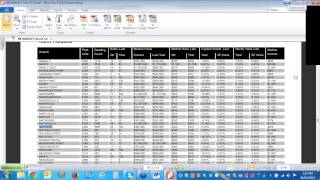
Okay, let's see what we can do. We can add a little bit of value here and see what else is in that information. These reports are quite big. So this is just the Residex, the general Residex report. So what you can see here, this is from December, so we're waiting this week on the March one. So we've got Mayfield Here, let me just see if I can pull up a nice little highlighter.
Mayfield here.
Here's some interesting information. So there's 3,698 dwellings in the area. The sales last year was 192. So some good sales, some medium values, 387,500. Last year 357. So there's movement, some rent this quarter versus the year. So the rent's going up a little bit. The capital growth in the last year. So this is the 12 month number, 8, 3 5, the 20 year number. So this gives you a little bit more extra information, the 20 years. And this is what as I said, you know, John had said to us that he believed that was going to be more characteristics in the future of what you're going to see the growth being. So that was Mayfield there at 694 and the rental yields have over the long term been 651. So you know, here's some information. I don't know if it adds a little bit more to the kind of work that you're doing. Is there any other areas that you were mentioned?
Yes, Hye Hill. Thanks. And yeah, this is really valuable. Which report is this, Jane?
So this is the actual. So tell me that address. So where's the suburb again? Sorry?
Tighe Hill. T I G H E S Hill.
This is the Residex report. So this is a report. I think it's $90 that you can buy. It comes out quarterly. If you subscribe for the annual subscription you also in September get an additional report. And the reason that I like this is that it actually goes through and it gives you some additional information. The annual report give you some additional information as well. But this report gives you a state of the nation. So here's Tyers hill. We've got 729 dwellings. 30 were sold last year. So it gives you an idea of the demand and supply as well. And I think what you were saying about the question that we had earlier about the price pin map when we talk about using the three year sales or the two year sales and you were saying Ivanhoe, you know it's held for.
Yeah, there's certain suburbs in Melbourne for instance, Ivanhoe and Eaglemont are two suburbs where I think they've got a. The stock doesn't turn over for it's got about a 12 year average. So people hold on to their houses for 12 years before they sell. I think it's even 13 years for one of those suburbs which is really high. I think the average Across Australia is maybe, I don't know, maybe six or seven.
Yep, yep.
So, you know, so if you've got a low turnover stock, you can, that can be another thing that's affecting your prices.
So we're talking about 4% there. So you know, 4% turnover, 29 divided by 729. So you know, and you know, if this was. So look at this here, Thornton in the last quarter. So the sales in the last quarter, 41 compared to 125. That means there's been a real uptake in stock turnover in the last quarter. So this is kind of like, you know how we talked about realestate.com when we had that supply and demand and we looked at discounting and we're looking at clearance rates. This is kind of like, you know, the turnover is also giving you indication of movement in the area.
So. Yeah, which can explain why some of the other things are happening too.
Exactly.
Is that the only place you know where to find the 20 year growth that we call.
Yep. And the reason why is when I had, when I was chatting to John about this and he said, yeah, 20 year growth is where I think Australia is heading in the next five to 10 years. And they said, well, the reports say 10 year growth. When we get a report say 20 year growth, that's when you change this to the 20 year growth. So as I said, you know, there's so much information in this, in this Residex report. I like this kind of overview. This is an economic overview of Australia, but it also gives you an idea of the effects that we're going to have from other areas and then depending on the report you buy. So this is the New South Wales report. So when the March one comes out, I've subscribed to March and Queensland this time and it gives you the information happening in New South Wales and the housing market and Acts covered at the same time. Then we go into the actual details of this suburb information. So, you know, I think it's a really valuable report. It allows me really quickly to pick up on, you know, what's happening in the market and where things are going. So, you know, if you subscribe to Residex newsletters, you're going to get this kind of information sent to you anyhow. But this kind of 20 year growth information, I think if that's where one of the major experts reckons that we're going to be settling down after this period of a bit of growth we're experiencing now, then it's all good.
Yeah, it's always Tempting to look at the shorter periods of growth, isn't it? I know, I'm drawn to it too, but I remember when the ripple, well, I live in Brunswick and Melbourne, when the ripple effect kind of come through and our prices went up and the suburbs closer to the city, you know, Carlton and North Carlton and those suburbs went up and then ours went up and then Coburg went up, which is the next suburb away from us. But that took a period of years before that kind of tipping point where people were pushed into the next suburb. So it didn't kind of happen over, you know, let's say it was three or four years where it got to the point where the majority of people or a mass of people couldn't afford that suburb. And then what happened where we were, because we're kind of in a city is the units and, and the townhouses and flats went up and then it tipped over into the house in the neighboring suburb, the next one, which is Coburg, and it suddenly had three or four years worth of sharp growth. But that didn't, you know, you wouldn't have picked that on three months growth or 12 month growth or whatever. That took a period of time to, to reach that tipping point.
Yeah. So yeah, hopefully, you know, that gives you a bit of information about the area. Mickey. Okay, well, has anyone else got a question for us? Let's throw it back out there again because if not, we will, we will move on. We've got a couple of questions here from, We've got one from Kazia who says, I'm assuming she can't speak, so she's written it. Does it apply to flipping as well or should you look at the last 12 months to 3 years as well? That might have been an earlier question. Kazi, what's that in reference to?
I think it's the ten year growth.
The ten year growth.
Okay, I'm guessing.
Well, I guess the thing is, I mean, you're working on a lot shorter time frame, aren't you, for the flipping strategy. So you are kind of, you're interested in what is happening right in the.
Market.
At the moment. Because from a point of view of the, you know, when we talk about the Trident strategy and having capital growth as one way of making money, that's obviously not relevant in the flipping strategy because we're really in and out. But I still think the demand for the area and the potential for astute homeowners for buying properties and looking at an area that is going up in value and what do you say? Like attracts like yeah.
Birds of feather stick together.
Birds of feather stick together is that if people are moving to an area and it is going up in value and you are picking that up through that long term growth, then as you go down to the short term growth, if you need to overlay it and you are seeing that there are some immediate price changes there, then yes, from a flipping point of view, I still think it's quite relevant to look at.
The long term and changing suburbs. A driver for that price, that spread of values too.
Yeah.
And Lisa. Yeah.
No, I just had one thing, Jad state that you can't do your numbers on predicting. Like you can't do your resale figures on predicting it's going to go up by X amount of.
Oh, no, no, no. It's got to be resale, it's got to be now.
Yeah. Buy and sell on the same market. You've got it. That's how you've got to do your numbers.
Exactly.
Make sure that your renovation doesn't take too long so you can buy and sell in the same market with. Because sometimes the market moves really, really quickly, doesn't it?
Yeah, not always the way you like it.
Okay. Anissa has a question for us and she doesn't have a hand up, so I'm assuming she's sitting at work looking very diligent as well. So talking about the dot maps, is it enough to compare two data sources, API and Smart Property Investor, and use an average of the two for the 10 year growth? Because there seems to be huge differences between the two. So API and Smart Property Investor. So that's an interesting question. I'm going to just grab my magazines and have a quick little look at them here. Okay. All right. So Australian Property Investor magazine, if so, I'm in the May 1st. Well, I actually am in the May 1st this month three times. But I have my hands on the May 1st right at the moment if I start looking at the market information. So Australian Property Investor. The information comes from the Australian property monitors. Smart Property Investor magazine, tell you what, they do not want me to subscribe to them. I've tried the last three months to renew my subscription and they won't let me. So I have your investment property magazine here and it's from RP Data. So your Investment Property magazine gets the information from RP Data and Australian Property monitors have their information from. The Australian Property investor has it from Australian property monitors. Now, did you have a particular suburban Issa? Because I just want to clarify this because I haven't seen a substantial Change. And I would not Normally average the 10 years between the two because when you come back to this and probably try to do it again in two or three years, you're going to have to remember the formula and where you got the information from. So I'd always recommend that you probably stick to the one source of information. So if you want to just type in an area.
So who do you trust more of those two? RP data or apm.
They just calculate their stuff differently. And I would have to say it doesn't come down to a trust point of view. They both use new stock where Residex doesn't. And that's why I would normally tend towards the Residex stuff, just because it's a resale of existing stuff and it's not clouded by new, new developments and information.
Would it be a good idea to take the lowest number perhaps and go conservative?
As long as you're using the same number, I don't think it's a big deal, you know, because you're using the same information that they're, they're actually working on. Just. Anissa, do you want to tell us, Give us a suburb or a town or something or I'm just going to have to choose one. Where have we got here? New South Wales Houses. I'm going to choose. Oh, Campsi. There's been a bit of movement in Campsie. Let me have a look here. New South Wales Houses. Campsi. So according to Australian property monitors, Campsie, over the last 10 years has had the grand old total of 3.6% growth. And Campsie, according to the RP Data information has had. 4.07. I wouldn't normally call that a big difference. So let's choose somewhere else. Budgie woy. So we're going to go a little bit closer up towards the Gosford area and we're going to look at the 10 year growth there.
0.05.
Wow. Poor Budgie boy. I used to live in Budgie Woo when I was in a caravan doing a three month term. 4.7. Okay, so 1.15. Okay, so there's potentially a 1% difference. I wouldn't necessarily call that a big deal. Let me try to find somewhere that's got quite a significant broken heel. Gosh, let's go really remote here. Broken heel. And if I'm looking at broken heel, 11.37% according to RP data and broken heel is 10.2%. So it's kind of about a 1% difference. Oh, Anisa says that she can talk.
Okay.
That's good. I'm going to unmute her. There we go. And Anisa, is there any particular area that you wanted us to have a look at as we were talking?
I was looking through some of them that were quite substantially different before, but now as it would happen, put on.
The spot a couple. Don't you hate that?
Some of them were about 4 or 5% difference. Like it was quite a big percentage. So I was wondering how accurate one particular source of data was compared to the other.
And I'm quite happy to go with.
One source because to do the maps, obviously as everyone would have experienced, it's a lot easier to go from one source. But I thought maybe as a rule it would be better to compare the two sources just to make sure that you were getting accurate information from two sources instead of taking information from one and it perhaps not being as accurate as another. When I was looking through your investment property, I think they only go up to a five year look.
They're a bit confusing because if you look at your investment property, I think we had this conversation last week and I couldn't find the max. Here it is, here. If you open it up to your investment property, you'll see across the top it says postcode, median price, quarterly growth, 12 month growth, average annual growth. That average annual is actually 10 years.
Oh, okay, Yep. That clarifies that then.
Yeah. So I think sometimes you have to go and have to read in the front where they actually tell you how they decipher this information and in what they call the data bank. And when you get into that, it will actually say to you, this is the, in the glossary side of it, the average annual growth is actually means the 10 year growth. So yeah, it's a little bit strange with your investment property magazine because you kind of think that you're missing out, but it is actually there. They just haven't named it nicely. Maybe a bit of feedback we can give them. I gave realestate.com bit of feedback this morning and told them that we're really upset that we were losing the graph over the long term based on the conversation we had last week.
Went to all that trouble to make the video.
Yeah, Tutorial, everything. Well, we expect people to change things but don't, don't get rid of good quality information that we want fix things up and add it to us. So yeah.
Another quick question while I was there about MYRP that you mentioned in one of the. I was trying to find that same data on and couldn't find out. I Can't even remember, sorry. Where you said to go to in it. But I couldn't find the MYRP. How to find that data on my RP. My. I think it was a 10 year growth year. Trying to say we could also find. Use that source to get that information.
I think so. Postcode first.
I think let's. Let's do it live. Why not with it kind of people here always give it a go.
Hey.
Okay, so let me just type it in. So we've got my RP data. So as we said, RP data is in your investment property magazine. Vicki says who uses Resdex data? I don't think any of them use Resex data. Every now and then Resex data is actually. They do come in and they give a bit of information. I know API. I really enjoy getting the API newsletters because often they'll have a renovation suburb where RP Residex is actually giving you for a particular suburb. The streets to buy and it goes through that renovation report stuff. So have a look for that, guys. But here's myrpdata.com we have to put a suburb in.
Yeah. What pacific info you're looking for there that you couldn't find in my apidata?
Anisa's lost her.
Sorry.
Her audio.
I think. Have you muted her?
Oh, yeah, I muted her.
Sorry, we muted you.
It was obviously a clip. Hey, Anisa, can you hear me? No, she's lost her.
Sorry, my audio keeps dropping out. I'm sorry about that.
Yep. Any particular suburb you want us to do for you or type it in?
I think we're looking at Ballarat.
Ballarat spent a lovely week in Bendigo this weekend. I did. So Ballarat. Interesting. So we talked last week about even looking regionally, that there can be different under the same postcode. There can be different areas. So when you record. So any particular one? Go round. We're at Victoria. Pull it up. And stats.
Key stats.
Yeah.
That was the thing that I couldn't find. I think the key stats had. Whether it had changed or if I just couldn't find the.
Can you see it? Can you see it now? Where we get in to get that? No.
No.
Can you see the key stats at the top here?
No. All I can see is I haven't got a page up in front of me.
Oh, can you see my screen?
No, all I can see is the front. The Q and A. Call for screen. I don't know if something happened before when I lost the audio. Maybe if I lost that.
The screen's frozen. There.
Yeah, it could have been. Well, basically, if you go into my. Can anyone else see our screen? You can see my screen?
Yeah, I can see your screen on my different computer.
Anyone on MyrpData.com anyone on my. If you go to Anisa, MyrpData.com, type in a specific suburb. So I've just typed in Ballarat. And then you'll see some tabs across the top. They'll say the suburb report, they'll say the suburb map. So there's a report that they want you to buy. And the information obviously is from RP data. They give you a bit of information about the properties that are available. They give you all the streets in Ballarat. So, you know, you could go through and have a look at some information on the streets, for instance, and you could go across the top and you can have a look at the suburb reports that they want to sell you. And the suburb map. So you can have a look, a bit more detail about the map. And then the third tab across the top is actually that suburb key stats. So the key stats information.
Yep.
Okay. Okay. So the key stats is the. Goes down, it goes to the age to sex ratio, does an income ratio, does a structure of, you know, is it single parents or is it couples with children? Interestingly enough, for Ballarat, 31% of single parents. And then it goes through and gives you also the information on occupancy as well. So that kind of information is there. So that's where those key stats are. I hope that helps. And was the growth information in there.
As well or can you find that in those from RP data or my RP?
Which particular growth were you after, Anisa?
The 10% growth. Sorry, sorry, because I left in and out a bit.
The market stats. They have the 12 month, the three years and the 10 year growth there.
Yeah, that's in there as well.
Yeah. And they actually have the growth as a price. So a property price. Okay. Yep. Okay.
Thanks a lot for your help.
Sorry. Okay, no problem. We'll speak soon. Okay, we've got a few people having a few issues with audio here. Lyndall, are you okay? So no one can actually see the screen. Can anyone see the screen at the moment? We've got a screen up for RP data. Yes, everyone can see it. Okay, good, good, good. So basically, let's just see if Anissa can see it again. Anisa Joyce, type in if you can see it. So basically this is where we were looking. So we're under my LP data We've gone in and typed an actual. Nope, she's still trying to find it. Strange. Typed in an actual suburb. We've gone into the key stats and under the key stats we've gone down and look at 10 years and they've actually given us the price point or the median point for that 10 years. So this is Ballarat versus the Ballarat local government area. So you know, we're looking at specific areas here. Okay, let's just see if anyone else has a question. No. Hands up. Anyone have anything else that they would like to say? Vicki? Okay. Oh, Vicki's now found massive price disparity between Australian property investor and your investment property. 6% versus 20%. Oh, Vicki, that's worth finding out what suburb that is. I'm going to put you back online. Vicki, what's the suburb that you found that great difference in?
Okay. I've noticed that in a whole heap of suburbs around Newcastle. So one of them is Adamstown.
Yep.
Okay, let's have a look at that. So Adamstown, 10 year growth. 10 year growth. So we're looking.
I'm sorry, this is five. This is five year. I don't know where the five years are.
Okay, Adamstown, we've got under the annual growth, I've got 643 in RP data. What have you got?
10U.
10U. Okay, 6, 6.0, 6.0 versus 6.3.
Are you looking at five year or five year growth? No, if you look at five years, quite extreme.
Wow, you're right. They've got 8% for Australian property monitors.
And 48% and smart property investment's got 52. So I've got the three mags and I've done an average of the three in a spreadsheet. Got it all sort of set up automatically.
Yeah, good.
But they're quite extreme differences. And another one is say Belmont North 5.8 versus 34.2.
Yep. I've got 34.2 with RP data.
Five year, 5.9.
5.9. We might have to have a chat too.
Auspoppy investor seems excited. Extremely conservative. I mean coming in around 10, 20% lower than some of the others.
Yeah.
And this is kind of why we talk about getting that different data source. So you can build up the one that you kind of think is the right one and that you want to use. But it also gives you the indication of what you're picking up. Now for this area, that may be the way that Australian property monitors gathering their information is quite different to the way that RP data is doing it. So, you know, I think that's what you're highlighting, the importance of having that spreadsheet not just depending on one data source and having a look at it. I mean, I wouldn't be averaging that when I was doing my dot map. I would. I mean if 2 of the data sources are the same, they're probably the same. You've got smart property investor there, who's. Who provides that information. It should tell you on the bottom of the page, Probably RP data.
Rp, yeah, because their prices are quite similar to your investment property.
So that's why they should. And the reason why they should be similar is actually the same data source. So you probably don't need to go into a lot of extra effort in actually replicating your smart property investor and your investment property because magazine data.
Yeah, in saying that on the whole, yes, they are quite similar. But there's another one down here called Bolton Point. Now your investment property's got minus 17. Smart property investment's got minus 9. So there's a disparity there of 50%.
And your investment property's got minus 7.
Your investment property's got minus 17. Smart Property Investments got minus 9, just as an example. And they're both using RP data. So even if they're using the same data source, I can see massive disband.
And it's kind of confusing when you find information like that and you're trying to go ahead and do your dot maps. I know that I've. I mean I've got 10 years worth of API magazines just because I'm a hoarder than I am and I've run seminars for people, for groups and I've kind of handed out. Well, John, you were part of one of those seminars handed out the magazines that covered about six years and we looked at a specific suburb and we went through and we mapped the differences. And I think the importance really is that sometimes month to month you see some discrepancies and it just depends on how they get their data. The different magazines, I mean, to be honest, RP data, if they're supplying two magazines with information, you'd have to expect it to be the same. But the reason that I really suggest that you go across and you have a look at the different data sources and record where you get your information from is so that you know which one you've chosen. And for Newcastle, it sounds to me that API Australian Property monitors information that is in the API magazine is way too conservative. Whereas the ARPA RP Data, choose one of those magazines. The information should be consistent. And it might just be that it's a month off. And you might. For the Bolton point, what you might actually find is over the quarterly growth, the quarterly growth is 13%. The annual growth has been 18%. If there's that much movement in that period of time, and you might be looking at different the time ranges. So if I'm Looking here in April 2014, your investment property magazine, and it very clearly tells me at the bottom of the magazine that the source is RP data from January. So what you might actually find is that you're looking at the April magazine for Smart Property Investor. I can tell you absolutely the April Smart Property Investor magazine came out in March. So Smart Property Investment, if you go and have a look at the newsstand, you'll see that Smart Property Investor is possibly. So their magazine should be out this week. And they might have. It's probably the June one. So we're currently the end of March. But what they've got listed down as their source is probably the month before. So although you might be comparing what you think is RP data information for the same month, have a look at the source information below and the source information. If we've got that much growth, 18% in 12 months, 13% in the last four months, then just that one month movement of the data that they're pulling in could actually make that difference. But it's a really good observation.
Is it still okay to do what I'm doing and just recording the three sources and getting an average across the three.
Look, if that's how you want to do it and you want to do that going forward and it gives you more of a confidence that you've taken all of the stuff into account. Absolutely. It's how you want to do it and how you can replicate it. I just would encourage you to, at the top of your, or at the bottom of your spreadsheet, just write down your notes on what you're going to do. Write yourself a standard operating procedure of how you're going to do this next time, which is go through the three magazines, gather in the information in the areas you're interested in, average them, and then do your dot map.
Yep. Okay, cool.
Yep.
Thank you.
It's about what works for you, but also the information can be confusing. And that's why, you know, I'm not. I don't say just go to one magazine and use it because, you know, all the magazines use SQM for their vacancy rates, which is Great. So they should all be consistent, but it's just about getting the one understanding the difference in information, how it's reported. Have a look at the bottom of the page in those data banks when you're looking at the back of the magazines and see what month the actual data is from. Because you'll see that it's already three months old once it gets into the magazines. And I know I'm writing an article, Kashi, for API magazine that's due tomorrow about. What is it? Should you be following the crowd to mining towns? I mean, as far as I'm concerned, the crowd left mining towns a while ago. But that's going to be for a magazine in six weeks time that comes out. You know, it's not for the next magazine. So in theory, my opinions could be that much dated. And you know, that's just the way things are.
So.
Yeah. Hope that helped Vicki. Yep. She said really quickly before Jane rudely cut her off. Well, I can't see any more. Hands up, John. And I know everyone has to pretty much get back to work and do the things they need to do. So hopefully Anissa found the page that we're on again that MYRP data and we might, I guess, wrap up. Sorry to Lorraine that we couldn't use our fancy pants technology and listen to the call. I know you're busy building a studio next door, so maybe next week we'll be in there doing some great sound stuff.
We'll replay your questions just because we can.
Yeah, just show how clever we are sometimes. Okay, so let's wrap this up. I mean, I know that some of you, and I've had some private messages from you saying that you're still a bit overwhelmed by module two, and you're still doing your heat map, and that's just fine. These calls are being recorded so that you've got them forever. And as you've seen, we will keep chatting and come up with things to say and show you some stuff so that you can get added value. And if people don't have questions, as you've seen today, we're happy to jump in and do some special specific answering of your specific questions in the specific areas that you're looking at, if we can, to assist you. So it's really worth being on the call live. So there you go. Hey, do you want to have a chat about the investor program?
Yeah, that's been great. So we've had a bunch of entries for that. We're looking through those at the moment. There's still a few days if you want to pop in an entry if you're interested in becoming part of that program. So basically the access to the course, plus three lots of webinars, additional webinars and some one on one stuff as well. So, yeah, still time to apply for that, if you'd like to.
We really need someone who's ready to go in the next three or four months to renovate, start looking for properties and want some extra help and assistance and keen to go, go, go. So we want to kind of document your journey and how you've gone about doing it and the success that you have. And we're here to help you create that success, answer some questions for you. So we might just go on, basically. If you have any other questions, please paste them in the Facebook group. We're still there, we're there to answer. And it's all about having, I guess, being part of the community and if you've got any issues or problems and if there are silly little things that are holding you up that you think are silly little things, but in actual fact there might be something that other people are thinking about as well. I mean, not that it was a silly little thing, but potentially what Vicki was finding with the discrepancy in the data and just trying to understand some of that, sometimes it's just not understandable. But if we can get to the bottom of it, I can make complaints to realestate.com and get them to put that graph back on. That'd be fantastic as well. So, you know, we really, we're here to help and I mean, we've got some relationships with some really good companies and if you need something specifically, let us know. And you know, some people have had a bit of technical issues this week with some of the downloads and, you know, we're right on fixing those up and making things better. But module five is going to be available very, very, very soon and, wow, that's where we get into the budget. Now, I know one particular person, Scott, I'm talking to you, who has had to refrain from jumping into the bonus section before watching the videos because he just busts to get into any Excel spreadsheets and bust them apart and add some really great suggestions for us. You have my permission to jump straight into this budget spreadsheet, Scott, because it is going to blow you away. And I know everyone who's seen it, it's pretty, pretty amazed about it. So there you go. Anyhow, as I said, questions, guys. If you've got questions, put them on Facebook. We're going to have the audio recording of this call and future calls available up in the bonus section very soon. And please make sure it probably within the next 24 hours. Please make sure that if you don't want any information that was disclosed on this call made public, let us know ASAP, because we'll be editing the next 10 minutes and getting that up there now. Module 5. So this is. Gosh, we are getting to the point here. We're about to start renovating. Module 7 is the renovation stuff. Module 6. First 6 are all about finding the right property, next 6 are all about renovating. So we're getting to the really exciting stuff. Now we've got a property and we're about to make some magic, isn't it? Anyhow, so we've worked in Module 5. We work out exactly how much your renovation is going to cost and then the steps needed to obtain finance. So this is really, really important. It's what you need to do to actually secure the property. As John said, the Ambassador program, we're running through that. We've asked everyone for their addresses for the trade cards. We're pretty excited about that coming out. We're working with a partner on that and she's busy. I think she handprints the cards. So we're still. We're still probably 10 days away to getting out. We've got hundreds of cards to go out.
So she's really helpful too. So her name's Viv and we'll be introducing you to her shortly. And she can. Yeah, she can assist going forward. You take suggestions too. If you've got suggestions from all suppliers.
And all that good stuff. And she kind of goes beyond the call as well. People having trouble actually getting things organised because her agreements are with national, so suppliers and national offices. She'll actually jump on the phone and order it for you. So, you know, nothing's too hard for us here, really. We're here to help and keep up that activity on the Facebook page, guys. Fantastic. Some of the questions we've had this week and, you know, any issues that you have, you know. SupportOurPropertySuccess.com we're here for you and I think it's time to let these guys get into Module five.
Hey.
Yep.
Okay. Well, all the best.
See you next week.
Bye.
More from Let's


The Ultimate Guide To Renovation Course - Module 5: Self - Employed Low Doc Loans



Rob Flux Ambush - Convince me I should consider Property Developing as a strategy 3,2,1 GO!

The Ultimate Guide To Renovation Course - Module 4: Recognising a Property's Potential

YPS Club Mar 24: special Guest Peter Wargent describes how Australian properties are so resilient


The Ultimate Guide To Renovation Course - Module 5: Interest Only Lenders Exposure

