Jane and John answer questions on managing renovation budgets, hiring tradespeople, and scheduling tools. They cover cosmetic renovations like kitchen staging (AUD 1,600–2,500) and structural work including the box-at-the-back strategy. Kelvin walks through his spreadsheet to discuss valuation and land size.
Chapters
Hello everyone, it is Jane here. Just quickly I'll get you to type into the question box that you can hear me loud and clear. Perfect. Lots of hellos coming through. Well, hello everyone, it's Jane and welcome to the call on tonight's Q and A call. We're going to be doing things a little bit differently and instead of just taking questions about one module, we're going to be taking questions about all three. And in actual fact I think they're my favourite modules. So I'm glad that they're all pulled together. Modules 7, 8 and 9, managing your renovation, A budget schedule and tradespeople. Both our cosmetic and structural renovation case studies. So let the fun begin. I have to mention that my good friend John is here, the co creator of the Ultimate Guide to Renovation. Hello John.
This is good. We should do this every week. Well, these are my favourite modules actually, these three. So this is great.
This is kind of like the shiny stuff, isn't it? Yeah.
Oh yeah, this is the good part. No sticking pins and maps here.
I know, I can relate to that. Look, as always I look forward to your questions this week. Please make sure that you type them in so we can get to you. We'd love to hear and answer as many as possible. I'd love to just to hear what you think about these modules. We know that a lot of people aren't keeping up and that's one of the things and the benefits of this course is that you can do it at your own pace and there will be people listening to this recording months from now. So that's all good as well. Look, if you are on the computer experiencing any problems hearing or perhaps you just can't hear during the questions, there is an option to call in on the telephone and the telephone number can be found in the sidebar under the audio options drop down menu. You can call that number from a landline, mobile or Skype account. So when you have a question, remember all you need to do is raise your hand and I will be looking diligently to make sure that people have raised their hands and we'll be unmuting you at that time so that you can ask your question. If you're on a bus or at work or somewhere where you can't or you don't have your microphone working, can't take the call. Just let me know when you raise your hand and type your question in for me. When I do unmute your line once again, you'll hear a message that says your line is unmuted. You Know that you're on. You can also ask questions by writing. As I said, just go straight to the question box. A lot of you have already written in things there already, which is great. So as always, there's never a silly question. I really encourage you to raise your hand and just have a chat. Now, I want to remind you also about the Facebook private page. This is the Renovator Network. Now, why don't you just tell me about this, John, that you're engaged in some of the other renovation forums and this is the most exciting one you've ever seen.
It is, it is. We won't name names, but this is great. I'm just so pleased with the way it's turned out. The Renovator Network, just the. The amount of or the quality of the contributions I reckon is the thing that's really outstanding.
And even sometimes we just need a little prodded along. I know Tracy's put in a couple of motivational quotes for us every now and then as well.
Thanks, Tracey.
Keeps me going. Thanks, Trace. But there's some really great content. Actually. We might slip over there a bit later and have a look at those. What do you think?
Yep, let's do that.
Now, lastly, this is not a tech support call and seriously, you really don't want me to be doing tech support. So if you are having trouble with anything, you can't download a video. It's not working. Whatever. You know, we're here to help. We've changed things around quite a lot in the last few weeks and listen to feedback from our beta testers. We've got shorter videos. You can download them now. You can download the audio. You can download them to your itunes account on audio with all the names and the naming done for you as well. So any issues, go to support@yourpropertysuccess.com and we'd be more than happy to help help you out. So now let's have a look at these three big humdinger modules that we've got going on this evening. Let's just start with module seven. This is the one about managing a budget schedule and a tradesperson or tradespeople. And I have to say, John, this is. Of all the courses that I do and questions I get on social media, this comes up so often and I think it's just a real fear that people have that they're going to be ripped off and they're going to be taken for a ride and all the planning just goes down the drain.
Yeah, I think you kind of got to Take a leap of faith sometimes when you don't know how to do something and you're relying on someone else to give you that information and know how. And, yeah, one of the most common questions is, where do you find good tradesmen? Which we spent a bit of time on in this module. How do you find good tradesmen?
Look, I think word of mouth to me is. Is a real key criteria. Right now we're getting quotes to paint the front of our house and, you know, it's three storeys and it's got electrical line running across it, so, you know, they had on $3,000 just to turn up with a scissor lift, unfortunately. But, you know, there's a big discrepancy and actually, I had this conversation with one of our beta testers, Chris Yong, the other day, and he was saying he managed painting quotes for the front of their block of units where he resides. And the first one came in at $200,000. They had another at 90,001 at 50, and you got the guy at 50 down to 40. So, you know, that's a huge discrepancy. I mean, obviously they're big numbers because we're talking a block of units.
That's a big job.
That just goes to show. So, for me, I always start with word of mouth and if I've got some. Really, I share this with you in the course. If I've got a really, really good tradesperson and they're clean, they tidy up, they quote, they don't hit me with variations. They manage the project well, they understand time frames and they do an A1 job. I'm more than happy to go to that person, ask that person for recommendation for the trade that I want, because usually they only work with someone similar type. Standard.
Yep, for sure.
So let's have a look at the actual content in module 7. The information about managing the trades, the fixed price versus the hourly rate, that's always an interesting one. What do you prefer?
I use people on hourly rate.
And.
I don't think it's always suitable for when you. Particularly when you're starting out, you kind of got to know you're going to have a little bit of knowledge to make sure you're not being ripped off. But my personal opinion is the sooner you can switch over to doing that second or third project, the better, because if you can supply the material. Well, put it this way, all trades put a margin on when they quote because they essentially want the odds to be stacked in their favour. So they'll add a Couple of days they might put 10 or 20% on the material. And if you can. The way I try and run a job is I'm the builder in their eyes. So they turn up to work and all they have to worry about is getting there on time. They've got the material there. If they need extra material, they tell me and I'll get it either delivered that afternoon or myself or a labourer will run out and grab it. And that's the way I like to do it. And that way I can shop around for the material. Because one thing, and you kind of think, oh well, builders get builders rates and 10% off and all that kind of thing. A builder will never run around, shop and shop for the best price they can get for you. They'll go to where their account is, into the most convenient location and they'll pass on that cost to you. Because it's no skin off air. No. And sometimes, like for instance, I'll be getting on an extension, for instance, my, my framing timber alone. So my 90 by 45 kind of, and all the framing timber, the RSJs and, and all that kind of stuff, floor joists and ceiling joists, you know, I might save kind of 10 or $15,000 in the, in the timber alone because I sourced the timber separately and don't just get them to deliver it from there.
That's the cost of kitchen for me.
Yeah, that's right. So I think that's what you should probably aim towards, in my opinion.
It's a good point. I think one of the absolute keys of the budget also is the way the budget's been developed is that it really allows you to go through and quote up in the way that suits you. So from anyone, please quote for a medium style bathroom through to. Oh, gosh, what Some of the things. Chalking, cement.
Caulking'S the bit in the. In between. So you're not allowed to with internal corners in bathrooms these days. And it might be different in some states, but as far as I know, in New South Wales and Victoria for sure you're not allowed to put grout on the internal corners because it cracks over time. Because that's a movement, a stress point where the wall meets the floor, so you have to caulk it. So you use whatever color your tile grout is. You match that with a. It's basically like coloured silicone and that goes in all your internal corners and you have a corker that does that and he charges, I think about six bucks a meter, something like that, to do Your caulking.
Imagine going to a party. What do you do? I'm a corker. Fantastic. Pull one out of this one, buddy. And yeah, I think that, I mean, has anyone here just let me know with saying yes or raising hands. I mean, has anyone here actually had a little adventure into the budget as yet? We're very excited about the budget, as you can tell and we keep pushing people to go and check it out. Really is the best for market guys. Next week we're going to have some people looking at it. Next week some people have had a look at it and they're delighted. Well, you're definitely going to be delighted when you come to quote up your next job. And you know, it's just saying that, John, I pulled up in the course at one stage when I kind of had a conversation with you about having done a renovation and going back and what you'd learnt and re budgeting, you saved quite a considerable amount of money. So it's not like you can't go back and put your existing or past renovation into the budget either.
Yeah, absolutely. Yeah. I think of it like it's a bit like when you do testing. I forget where the term comes from, but you have control and that's the best price you've got. You're always trying to beat that and knock it off and get a new control.
Best practice management.
Yeah.
In the corporate world, set your KPI, your key performance indicator. The other thing is that I really like that you shared also. Gosh, my brain just went blank. Was after you'd finished a job, you have people come in and quote on actually, hey, here's the kitchen I want in the next property. Here's what it looks like. Here it is. Or here's the bench top or whatever.
Yeah, I kind of look at it because I try and get four quotes and it's happened to me several times where that fourth quote comes in and it's the good one and that's where you get the good guy kind of thing. But then at the end, so I think of that each job you're kind of getting better and better because you get four quotes each time on each trade. So in theory you should be kind of fine tuning that. But then at the other end of the job you can do the same thing. So you can end up with eight quotes for one thing on the same job. So for instance, the one that I really had a big win was the bench top where I was using Caesar Stone and I got four stonemasons to come in and quote on using a replica stone and, you know, shaved about $1,500 off my bench tops on the next job kind of thing, and looked identical.
You know, it reminds me. Okay, here's my slight aside. My first memory, not the last, for the evening. It reminds me of a Yellow Pages ad from, like, the 1980s. And there's this little girl, and she's on Yellow Pages, hi, I want to buy a chainsaw. And she's looking, like, for her father's Father's Day. And the guy said, oh, do you want. You know, and I don't know the terms, twin action, double A, blah, blah, blah, 5,000 hertz or something. And she's going, oh, what's better? And by the time she's up to the next one, the last guy, she's like, hey, I'm after a Kawasaki 15 blade. Blah, blah, blah, blah, blah. It's kind of like when you go through the quoting process, you become an expert and you know what to ask. And when they start throwing questions back to you like, oh, did you want this? Or this? You're like, okay, let me just check on that and get back to you and note it down. Or go and find out what. What you want. Because then you start getting the specific quotes, the specific thing that you want, rather than the variances you can get. If you just say, can you come quote on doing the electricals in my house?
Yep, yep. Absolutely. It's an education.
I'm going to have to YouTube that. Find that little thing now, and I'll post it on the. I'll post it on the Facebook. Mind you, I think Yellow Pages is going to. Then what else have we got here? Managing the schedule software and the productivity software. So you've got a few favorites that you use for managing the schedule.
Yeah, I try and run everything off an iPad now because I've trashed a few laptops over the years. But the one I use is Omniplan. And I also just use for productivity software like Evernote. And Omnifocus is another one from Omnigroup that makes Omni Plan. I like using that. I know there was a few suggestions from the testers, too, and I can't recall what that software was off the top of my head, but I know Steve Perich has got another couple options for tablet and iPad too, that he uses, but my aim is to just iPad for everything. If I can run and I use Google Docs.
You're a mad Google Doc user.
Yeah, I love that you've got the Google Drive on the iPad and that combined with Omniplan and Omnifocus, I can basically run the job from.
Well, I've used Ms. Project for managing mine.
I used to use that too.
Yeah, I think it was kind of handy. The corporate world I used to live in sent me off on some five day, $2,000 course to learn how to use. So if you know it right, it helps but really it is monkey see, monkey do and it's all about just understanding what comes next really, isn't it? And that schedule of works. But it's important, I think when we're looking at the software and the productivity gains with all of this stuff, it's a tool for you to use to save your time and it's not something to bog you down and go off to a two day course and learn about. This is just something that you can put in place to assist you. I've found that pulling the schedule out and sharing it with the trades and letting them know how important their role is and how they fit into this is really, you know, really important.
Yeah, for sure.
We might just jump back to the discussion about costing on trades whilst we're here because Tracy's asked a question. Tracey, I'm going to open your line up if you want to say hi. Hi, Trace. We can't hear you, Tracey. Is your microphone in? Maybe not. Okay, well, we'll come back. She's got a question here. She's unmuted. Interesting. Unmuted, but we can't hear you, so the microphone's not working. She's on the iPad.
Does it work on the iPad?
Nor does that little hand.
There's no hand. But I thought you'd be able to. Oh, well.
So Tracy's got a question that says do you ever find that the loyalty to a good tradie backfires sometimes and they start to quote high knowing that you're their favourite. They're their favourite tradie.
Yeah, I reckon that's true. And not for everyone but I think there's a kind of no that comes with being familiar with someone and they get a bit comfortable and they go, I'm in here, I'm his whatever. And yeah, so I still like. I've got my plumber, for instance. I'm really good friends with it. He's a property investor as well and we'll have a beer together and everything. But I still get three quotes for plumbing every time.
Why painter? Kind of. It wasn't that he put his prices up, Tracy. He actually just became really complacent. So he put in his price and his price was still really good. But he just kept delaying me because there was new clients to satisfy. And I've had that happen also with a roofer and came back in with a really great price and had looked after us time and time again. And he just kept saying, oh, look, I'll get you next week. He's got this new client, I'll get you next week. Two weeks of saying that she was all over. So we went back and got someone else. Sometimes, as you say, when they become familiar with you, they may increase the price, but they also may play you a bit too on the scheduling.
Yeah. Probably just get a bit comfortable. I find that normally it's the price rather than if you've got a good relationship with them and you've established that you pay quickly. Pay is overall the biggest thing that tradesmen worry about. If you can sort that out and they know you're a good payer, they'll jump through hoops to come when you need them and all that. But I think what tends to happen is the price tends to creep up and they don't do it as tight as they possibly could kind of thing. And the other thing is, if you say to them, hey, next job, I will be getting quotes, and you're really open about it and it kind of keeps them on their toes a bit. Hopefully hang around.
Good point. I hope that Tracy makes a good point. She says another reason they're likely to have extra clients is because you've recommended them. Yes. They should know where those referrals come from as well. Good point. Hope that answers your question there, Tracy. Anyone else have any questions specifically about the module 7? We're just heading into module 8, so we've talked about supplying materials, saving a bit of money, going through the budgeting spreadsheet we've got. Actually, there's a really great little.
I'll just pick up just while you're pulling it up. That point about payment, it's probably worth even emphasising again, because nine times out of 10, I reckon when you see a relationship go south on a site and it's normally family, friends and whatever, and they're not in the kind of game like we are, but it's nearly always because there's been a mention of money and. Or money being withheld until this or what or whatever, that that kind of spirals downhill really quickly. And tradesmen are notoriously paranoid about getting paid because they get ripped off all the time and they haven't got, you know, huge bank accounts, a lot of them, to take people to court. And it's really messy process trying to.
Get money back if you need it ripped off.
So that really plays on their mind. So if you can have really clear expectations about when they're going to get paid and how much and if there's progress, payments when they are, and all that kind of thing, and pay when you say you're going to, then I.
Think it's probably one of the biggest tips of dealing with trades, because as you said, it all comes down to the dollar and you've spent your time and effort in getting the right price and what you think is the right person, so you should reward them for what they do, bottom line. And I think also, you know, we also talked about in module seven, how to actually select a tradesperson. So I just brought up here that little quick little checklist as well, and some of the things that you're looking for in a tradesperson. And as you said, setting the expectations early is really important. And we've just got a few little tips for that you can go through and just start building up the information. You might just print this out and do one of these for every trade, and that just goes into that file that you have that you can pull up next time and you've got working for you. One of the things Pet hates that I have about trades is that they shit off to do the next job, quote whilst they're doing yours. So just making sure that almost impossible.
For them to not do that because they need to take up the next job.
So be aware. But when your job's coming to an end, that's probably where they are, which isn't if you've got an agreement that they have to have something done by a certain date, as long as they get it done.
That's right, yeah.
So just jump into that module seven guys and have a look at that. Selecting a checklist. We've got, as you said, lots of things there to really assist you. And, you know, we're adding things, as you say, that we're kind of missing out on. Oh, Anna wants to know. Anna, let's see if you can actually ask a question yourself. We're going to unmute you. Hi, Anna, can you hear us? She's probably on her iPad as well. Hannah. Hannah. No, she dropped out. Okay. Oh, regional New South Wales. Yeah, that happens. Well, look, Anna's got a really good question which says, could we do a tutorial for Omni Plan? Yeah, that was a quick answer.
Yep, we should. And we Would. And we will.
Okay.
That was one of the things we've actually discussed that and it's in the pipeline, so.
And one of the reasons a little bit delayed is that we have just been sending out the brand new studio.
Yeah. So hopefully we're going to pick up a lot of those little bits and pieces like that.
Yeah, no, that's really good. So Chris, jotting that down will definitely put that on the list of things that we want to do. We've got quite a few little things that we haven't told you about that we want to add as well. So you'll be hearing about that. All right, so let me move on to module eight. Very exciting. Module eight, my favourite module.
Cosmetic renovation.
I love them. I just love them. Took a bang for your buck, hey?
Well, that's one of the. I remember. Who was it that in Queensland. She said that she was amazed with how little was spent on that renovation and what was the value it added and how little actually had to be done. And she'd been doing renovations for years where she'd been ripping out kitchens and ripping out bathrooms.
Craig said that too.
Yeah, yeah, he said, he went.
He had planned an entire renovation and watched Module 8 and went, okay, we don't have to rip everything out and start again. Let's see how we can repurpose.
Yeah. I think when you've done a few and you've done made those mistakes, the penny really drops there where you really don't. Peter's just done that as well, hasn't she? Where she's. I know you helped, but.
No, I'm not. She'll tell you that could have helped.
More, but she's done. I mean, she's got an excellent result there. And she really didn't do a lot.
No, no. Even though she, you know, was almost convinced to go down the line of adding a deck.
Yeah.
You know, she's got a. A tenant for six months that's paying a lot higher than she wanted. And you know, I know. I think I shared my little 10 day, $10,000, 10 day, $14,000 renovation where we rushed into a little two bedroom unit and, you know, replaced the carpet, did the painting, did an entire kitchen tiling in this little kitchen, hung some curtains and the place looks, you know, 10,000 times better. Natural fact. Got an extra hundred thousand dollars value when we had a value or have a look at it, you know, two weeks after.
$14,000. Yeah, that's great.
And it took 10 days, but it took six weeks planning to get. Well, let's be honest. It took a few months and actually finding the property, six weeks of the settlement time from signing to settlement to actually get the trades in. So that day one, they picked up the keys and it was all go. And in actual fact, on the end of seven days, we had an open for inspection and we had future tenants coming in and the agent was coached in saying things like, and there will be new carpet here next week. So we had it rented before even the rental had finished.
Oh, really?
Yeah. So I'm hoping everyone else has got good connection going on here. I'm hearing Anna's got us dropping in and out. Are other people having any issues with our.
You want someone to talk to?
Yeah, we're pretty happy. Maybe Emma's thinking it's us that's dropping in and out.
That's what I'm wondering.
Oh, maybe everyone else hearing us. A. Okay, we're going to push on and keep chatting anyhow. Quite a few people here. Yeah, great to see. All right, so let's push on. Module 8, my favorite cosmetic renovations. I guess the big learnings from this were that it's not about you, it's about who you're renovating for.
It's such a biggie. It just comes. So many people have trouble kind of getting over this hurdle. And yeah, people can talk to it, but when it comes down to actually doing it, they say, oh, no, they want to do this. I've seen this in a magazine and just start rationalizing that, oh, it'll be so much better quality if I do this or do that kind of thing. For me, it always just comes down to that end price. You've got to decide your budget before you start. And then if you want to go and do something, if you're convinced that it's worth doing and expected value. Yeah, that money has to come out of the budget somewhere else because that end value doesn't change. The comparable sales don't get better on the street all of a sudden.
Well, I mean, there could be potential it could change value considerably. But gosh, you really would have had to overlook something to start with to make a change. To do that with a cosmetic renovation.
Yeah, that's right. But I also think too, you shouldn't be thinking about it in terms of setting straight records because, I mean, people think, oh, well, if I added a pool or if I reroofed it, best.
House in the street, not what we want. And I guess the other thing too, you know, I wanted to make it quite clear that I definitely don't see that cosmetic renovations have a lot by themselves without buying really, really well. Have a lot of ability for a quick flip.
Yeah, absolutely.
I just see people trying to do it and I just. I rarely have seen anyone be able to achieve anything like that.
Yeah, I think the lower you are in the market, the harder it is because you just lose, what is it, 6, 7% of the transaction every time. That's a lot of. That's a big whack out of.
Yeah. So, having said that, had an interesting conversation as a sideline here about flipping finances. I think I've maybe found an interesting flipping financer I'm working, so might have to pick that up another time.
Is it. No, Doc.
Well, funny you should say that. No questions asked.
Doc.
Is that what they call him?
He's not down here on Lygon street, is he?
No, I think that underbelly is about to start very soon. All right, so we talked about perceived value. So understanding what perceived value is as well, rather than, you know, versus the actual content cost to your renovation. Being able to spend $10,000 on a kitchen bathroom and then go and add so much more value than that. And it's the perceived value rather than the $300 mosaic glass tiles per meter, $300 per meter. Having a $30 per meter that has the same kind of result. And as you shared earlier, the sea sustain bench top with the imitation, 1500 bucks. It's a big saving.
Yep, absolutely.
So kitchen renovations, my favourite bathroom renovations, always surprise me that they cost almost the same as the kitchen and usually about half the size. And that's all that tiling.
And as soon as you start ripping stuff out. Yeah. You kind of almost got to be prepared to gut the thing. Once you start ripping stuff out, something always goes wrong.
When you start ripping things out, you always try to do it carefully. Gave you some color tips. Color schemes. There's been a bit of conversation about whites on the Facebook page. I've seen recently what color schemes people are using.
I don't personally. As long as they're neutral. I don't get too hung up on exactly what colour there are because you can have lots of variations that are still neutral and they look really good. You've got a few favourite whites. I've got a few favourite whites.
Now, you painted in the studio a white. That just doesn't look white, does it?
No, I think that's because we've got fluoro lighting, because it looks green, doesn't it? We put bright white on the walls. Whisper white. Yeah.
Whisper white's usually a lovely fresh white, isn't it?
It's supposed to be a cool white, but it looks green in there. But in my house at home, I've got high ceilings, period at the front and modern at the back. And I've got a box at the back. Right, A box at the back, yeah. And I've got white blush on my ceilings, which is a kind of a warmer pinky one because it's slightly darker in the Victorian house and in the old section it's slightly darker and that. That works really well because it warms. Warms the place up a bit.
No, it's. Anyhow, I hope people appreciated some of the colour schemes we shared. Don't need to get out a material decorator, however, I understand if you do. I think the $250 with Dulux and you buy a Dulux paint, you get the money back. So, you know, we got a decorator to do one color scheme. We just kind of replicated it so it's well worth the money.
What else?
Window coverings, landscaping, furniture staging, accommodating renters. So furniture staging. We saw a great example with that Brisbane property the other day on the Facebook page.
Do you remember how much that was?
1600.
Yeah. I think that's what their case study was doing around there.
So I convinced you to go and get a revaluation at the same time whilst it was furnished.
Yeah. So glad you did.
It's amazing. I talked to valuers and I know we've got a couple here on.
But.
I talk them all the time about how much does furnishing or setting the scene really make a difference in valuation? They always come back and say it doesn't. It's a numbers game. We're just validating what we see. But the results that you see when they walk through and you've got this staged property, compared to this white shell of the clump, clump, clump of your floors echoing off the walls. Gee, it makes a difference.
You can't not be influenced.
No. And for 1600 bucks, it's a, you know, good exercise to just cover your bases. I think that was a three bedroom house. That was 1600, I think when I had my quote done for, you know, a three story, four bedroom, three living room kind of place, it was in around about 2500, something like that.
Yeah. I think the box on the back case study was. It was close to four somewhere around there. There was a fair bit of furniture in there.
He had pictures.
Lots of art. Yeah.
Talking about art. Got A new picture here in my office today. Very exciting. Hugh Jackman. My husband's just finished his portrait.
That's so good.
That is, isn't it?
We're not in a visual medium though, unfortunately.
I know, I know. Maybe I have to post it on Facebook just to show you what it looks like. It looked fantastic hanging on the wall until it broke and broke the frame. So I've got the picture just hanging around. So module eight, James is talking on here. $1,600 for how many days? I think that was three weeks. Two weeks. I think she had it for two weeks. So enough time for renters to get in and have a look. Two lots of opens, I believe. And for the valuer to be.
I think the standard length is five weeks.
Yeah, yeah, and good point, Tracey. You know, once you have those photos, you have those photos forever for renting it out. I remember when I bought a little unit once and it was unfurnished and I couldn't afford to furnish it and I was letting it and the agent's photos were really boring and I went back to the photos that were on the website when I bought it and the person had all this really nice furniture in there. So we used those photos. So for the rooms that hadn't been renovated, made it look a lot nicer.
Yep.
So anyone, any feedback? Has anyone actually been to module 8 and had a look at that fantastic case study? Oh, the silence is golden here. Not at all. No planning on it. Hush, don't tell anyone. We'll just keep talking about how good this is and I know that one day you guys will get to this stuff.
They're probably taking it. They're diligently going through the due diligence is what's happening.
Exactly. Well, by the time you get up to this, you'll know what we're talking about and you'll probably have a lot of questions and. Oh, it's good to see some people have been looking at it with smiley faces all over the place. Great. And you know, one of the reasons that we've kind of released these modules a week at a time is, you know, John and I have done both, done a lot of research about how people learn well and, you know, we don't want to be another one of those courses that 5% of people actually do something with this. We really want to give you the support to take you through and do everything you need to do. So Module nine, let's push on. This is your favourite.
It is, yeah.
This is all John really isn't it?
I just love just ripping things out and putting them back together again.
Oh, my gosh. Well, structural renovations and the magic box at the back. Now, this is a proven strategy, I have to admit. When I was filming some of this video, we had to stop every now and then while I got my pronunciation of the words of lathe and bathe and correct. And we actually pulled.
Because it's typical, you know, boys, I took it too technical because I remember in the end we pulled some stuff out.
Okay, John, I just don't even understand this. What have I just said? So, yeah, we were looking at the pictures we were going through.
So we're going to show you how to actually do lavender plaster at one point.
Yeah, almost. Yeah. So anyone who wants to know lather and plastering. I think we have a video.
There might be from the outtakes. We could make another course. The Ultimate Guide to DIY Renovation.
Oh, my gosh. I remember there was one section of this where. And it was probably in the safety section as well, where I was talking about how to pull down your ceiling. And you should be standing above the ceiling, not underneath it, obviously. And you have your mask on and take some. Take some tiles off the roof to ventilate. And then we had a few photos of it. And it's like, are people actually going to do this or this? Need to know how to do this and keep safety right on site, end.
Up in court for the next 20 years.
So, you know, one of the things, and especially, you know, there's a lot of demolition involved in renovations and more. So usually with the structural. And, you know, we really should just make sure that, you know, you do sign off on watching the video on the safety, because, you know, it's one of the things that is very important. I have just in the last week spoken to another client who has fallen off their roof and ended up in hospital for many a week. And it's just. It's not pretty. So, you know, guys, just make sure that when you're. When you're out there doing this kind of stuff, be aware of others on your site. You're responsible for them, but also be aware of what's going on. And even though you may not be doing the work yourself, project managing people and just making sure that they're following the right safety procedures is really important.
Yeah.
So one of the things that we did love here was the box at the back. So we shared with everyone the actual look and feel of this. I love this. I'm hoping that people can see this. But I just love this great big window in the kitchen.
Yeah. Well, it was for a family buyer, this house, and there was nose prints on it because Mum would walk straight up there and look out at the backyard. And it was just thinking, I can be in the kitchen up and watch the kids. Kids.
Yep. You know, I stayed with some friends over the holidays and they have a similar beautiful window like that that looks straight down the pool.
Yep.
So straight out of the kitchen, straight down the pool and so your mum can watch them. Mind you, on Christmas Day, they had that pool at 32 degrees.
Really?
Yeah. Really nice and warm. Really warm. That's my kind of bath pool kind of thing.
So.
Yeah. And these also here you've shared some of your learnings from using some of the commercial window.
That was another one of those. That review that we talked about on the Coburg renovation that preceded this renovation. I used both there and a lot less area and I actually was able to do it with industrial stacker doors for less than I was with just one bi fold, essentially. So those are aluminium and I use black. I just use. You know, I'm no kind of style guru by any means, so I just try and use simple principles like contrast. So I like to use white on the walls. For instance, a bathroom, I use a dark tile and dark neutral on the floor and a light on the wall. If I can get away with it, like in that place and I can make it modern throughout, I'll spray everything white and use again, just contrast. So dark trims. So they're black aluminium windows. And just using that simple principle kind of gets you. It works kind of nine times out of ten, you know.
Yep.
And then that one had the dark floors as well. It had the dark water floors and all of it together. And then you put lots of color into the artwork and it. And that just really pops.
That's what I like about the neutral colour scheme. So you allow the person to decorate it to their own colour scheme. That's why I kind of keep all my kitchens white, so that they can throw in the splash of color and we don't upset anyone.
No. And it also gives the stager, because they're the real experts at it. It gives them a blank canvas and they come in and you see it. I mean, it looks good, but you see it before and after the stager comes in and it's like kind of work of art's being created, you know, and they stick all the beautiful pictures up and all that kind of stuff. So, yeah, industrial stackers they were extra high. So instead of having standard doorways 2.1, there are 2.4, those doors. So they're higher than normal and they're quite a thick frame.
And for those who haven't got to the.
Sorry, James, I should just mention in case you don't know what a stacker is. If you look at that picture there, we're still up on that. It's the far left hand side window where James Cursor is there. Now that is a fixed panel and the other two panels slide across. So there's two tracks, top and bottom and those other two panes of door actually slide across and they sit. So unlike bifolds, the whole space doesn't open up. You're always left with one pane of glass. So just to explain what a stacker is, in case, you know, someone wasn't 100% sure.
Good. Appreciate that. The other thing also is, I mean for those who haven't got to the absolute genius of this, the absolute skill here is the way that you mean there's no roof, is there?
Is there a roof or hidden roof?
Tell us how you've done this.
Well, that's what you've got your cursor on. There is a parapet wall and all the parapet wall means is. Is it just. It's a level wall that just conceals what's behind it. So you see that on an old. For instance, old terrace shops and that.
Kind of thing and they have those pretty little ornate things like that.
Yeah. And everything's in behind the gutter. And everything's in behind. So the reason that we use a parapet wall there is so it doesn't look like what it is, which is a lean to. So imagine the old. Yeah, I'll draw a lean to there. The old 50s kind of 60s all the way up to the 80s even, which is just a sloped roof coming straight up.
A lot of those bathrooms off the back of houses.
Yeah. So it's just a sculion roof and that's essentially what we're doing except by using these alveols and pozi struts. Laminated veneer lumber, I think that's right. Yeah, laminated veneer lumber. So that's what we use for the ceiling bearers and joists. But on the. To get that ceiling span we use a thing called a posi strut. The posi strut is just essentially two bits of timber with normally an aluminium webbing in between and they're really, really strong. Normally used for the floor on a two Story house. So you normally when you see a two story house getting built, the posi struts go on the ceiling and the ceiling goes on the underside and the floor of the second story goes on the top. And the reason that we use them for the box on the back and the reason that this lean to is possible is they stand long way like that for instance is a span of over nearly 7 meters. I think 6 probably says it there. So I better be careful what I say.
6.7.
Yep. But the width of the Pozi strut is only about 270 millimeters. And why that's important is because you're governed by the ceiling height of the existing house. So that meant that I would still end up with a ceiling height of about 2.8. Yeah, 2.8. Problem with a box like that, when you get down below about 2.6, 2.5, it feels like a low ceiling because it's such a large open area. 2.4 ceilings feel a lot like, you know, those 80s renovations did do. So that's. Yeah, that's the posi strut allows you to get that distance that was in the hut.
And that in essence is the beauty. I don't even think we can see that. But that's the beauty of this box at the back is you've got this. You've got the beautiful windows, cheaper than normal and you've got that high ceiling without having to really put the skeleton or the large roof on and lower cost.
And that's just such a simple construction that goes up in few, a few days. It was literally two days and we had it all up.
We've got a time lapse there.
Yeah.
So look, the structural renovation, you know, we've got. Oh gosh, you know, we go through pretty much. We do everything from the demolition and strip out all the way up. So the lath and plaster, gyprocking, restumping, electrical rewiring, plumbing, tiling. We had a bit of a conversation against about porcelain versus ceramic tiles. Do you want to pick up on that? Because that was something that always, you know, I found interesting.
Well, that might be another one that might be in a little pickup video that we get to with our new studio. But the gist of it is if you go into any kind of high end hotel and you've got, you know, that's where we get the ceilings, the floor to ceiling tiles from. That's that look, that hotel look where you've got tiles that go all the way up the ceiling. And then normally the larger tiles, you know, 600 by 600 or 600 by 300. So we're trying to imitate that look with the porcelain tiles and the characteristics of porcelain tiles, they have a very sharp square edge on them because they're essentially what they are is the porcelain is polished, so it doesn't have a veneer put on top of it. It's actually the porcelain itself that's polished and they're kind of cut out of the slab. So they've got a very sharp edge on them. So when you see it just looks expensive because we're used to seeing them in hotels and whatever. And the other characteristic of them is they're not completely white. You can't get porcelain. So if you put a ceramic white tile, which is cheaper by the way, next to a porcelain tile, the porcelain tile will look a more creamy kind of eggshell color and the ceramic tile will almost look like a bit of paper, like really bright white. So the trick is if you use a ceramic tile with a rectified edge which gives you that sharp edge and you get it in an alabaster or an eggshell or an off white that looks, it's almost indistinguishable between a porcelain tyre and a.
What's the cost difference?
Generally if you're getting them really cheap, for me it's probably around 12 bucks, 12 to 15 bucks difference for me to speak. If you're in say a run of the mill store, like a child mart or something like that, it could be the difference of 30 or 40 bucks between the two.
Keep the line going to save people's houses.
Yeah, yeah. So it's great. And for the walls, if you are doing, if you're in it now, if you're in a. I don't know, every market's different but if you're on a 3 or $400,000 cosmetic renovation, you wouldn't be doing tiles to the ceiling because that's the demographic doesn't require that. But if you're in a larger, you know, let's. I'm not even going to put a number on it, but if it's a. It's higher up in the market, I'd go 700. 700, okay. And you've got a couple of en suites in a main bathroom. That adds up to a lot of money. That's five, six thousand dollars. Where you get caught out is the floor if you want to use. Because I try and go, and we say it throughout the modules, you know, the shiny cells and we're trying to Go shiny. Everything high gloss. And I like.
We're all about the gloss.
All about the gloss because it looks great and people, you know, rub their hands on it. But where you get caught out is on the floor. And there's a bit of a debate about this, but there's a safety. Yeah, there's a safety issue with gloss ceramic tiles on the floor. And so for that reason I use porcelain tiles on the floor and because the floor area is smaller, I am paying 10 or $15 more per square meter. But it's only a couple of square meters, you know, of the floor.
And you try to match them to the wall? Tom?
No, So I tend to use a dark, like a. Some kind of neutral like a slate or an occasion. I've used like a mocha or something like that. I tend to like a more gray color.
Yeah, I don't like the mochas because I find that talcum powder shows up.
Right. I think also the mocha was pretty big a few years back too. I don't know how current it still is.
Always enjoy a good mocha.
Yeah, I like just contrast is the dark on the floor light on the walls. You can't go wrong.
Now I'm outside of my complete knowledge base here, but I have rented many a property over the years and some of them had limestone or real rock type finish or what seams rock type finish tiles. And a simple spill will stain it completely.
Yep.
Is that the porcelain being. Not having a veneer on it? Is that. Is there you run a risk of it being stained.
Yeah. So if you get a polished porcelain tile and this might change. But in my experience they don't require sealing. Yeah, but yeah, the. Yeah, there's one. I know there's plenty that do many porcelain tiles that do. But yeah, I probably didn't quite finish where I was with the porcelain tiles being. You can run those into your shower if you do like we did in the box on the back there where you make a shower recess with a strip grate at the end. So all the tiles run down into the strip grate instead of. As opposed to having a waste in the middle of your shower.
And.
And then you have to cut your tiles on an angle so that the middle has a kind of dip in it. Yeah. So all the water drains away. Then you can use polished porcelain tiles for that for shower bases. And it's recommended you don't do that with ceramic gloss.
I do like those strip drains.
Yeah, I do too. There's a huge difference in price between.
Those two I remember looking at them and she strip drain was like go up to thousands.
Yeah, Some of them are like 1300 bucks.
Now I've got a question here from Kelvin. Kelvin, are you going to be able to talk to us? Desperate to hear anyone else's voice, to be honest. Hopefully he can. We'll just unmute you and see.
Kelvin, can you hear me?
Yes, yes, that's good.
How are you?
Good, good.
Yourself? Go ahead.
Yeah, very good, thank you. I just got excited with the box thing which I'm planning to put at the back of my house. And since you were talking about it, I was thinking of sending you my rough floor plan for comments.
Post it on a Facebook page.
Go on. Oh, yeah, yeah, yeah. Okay, I should do that.
Absolutely.
Could I just do that later then?
Yes, absolutely.
Actually, I have a second question about valuation. Can I ask you now because I sent the Excel file to your email already. Is that something that. Is this a time for you to have a look or do you prefer to look at it later?
Tell me what your question is. I'll see if I can add some value to the group.
Right, so basically I've done my evaluation for the property around my area and I noticed for the past three to six months there are not many transactions within 500 meters. And so I start to struggle to see how can I get a reliable figure. And I would like to find out like, you know, what's the difference between a 500 meter radius and a 1k radius and also like in terms of the floor area, sorry, the land size. So basically there are property transactions of maybe one and a half times of my land size around the area and there is a certain price and I don't know how that price can get reflected on my property, if that makes sense.
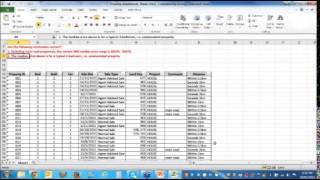
Okay, so let's just, I guess pick up on a couple of things here. The distance around your property that you're looking at comparable sales, really there isn't a hard or fast answer to what that is. Because sometimes, for instance, you might be looking at, well, let's just say in Sydney, Granville, for instance, you're going through realestate.com you're looking at two bedroom units in Granville and you've got on the advertisement they say, and this is on the right side of Parramatta Road. Now you could be on the right side of Parramatta Road and the wrong side could be 20 meters away. So you don't want to be the comparables from that area in your comparable range. And quite equally you could be, you know, at point cook in In Melbourne where there's a development that covers 2km and most of the properties there are comparable. So from that point of view, when you're doing your research and you're building up that knowledge, you know where the comparables are and you definitely know when you start moving over from one suburb from Kedron, Brisbane to Chermside, you know, within a couple of kilometres, you know that there's a definite price difference and a different demographic to some degree. So my thoughts there would be, to answer your first question, around, you know what distance is around where the comparables are. Your second question is around the land size. You know, just I guess the thing that is important about the land size is that for any valuation to come back the valuer has to find three comparable sales. And this is probably how John said earlier that having the best property in the street and you might have the only 12 bedroom mansion, if they can't find three other 12 bedroom mansions and they'll usually push it back greater than six months just to try to help out and find these comparables. But there will be a disclaimer on the valuation that says, by the way, this valuation, we had to go back a long way to find these comparables. If they can't find comparables they can't do the valuation and very rarely will the bank actually accept that property as a security. So if your property is. So I'm just going to share my screen here for a second. Can I share this spreadsheet, Kelvin?
Yeah, sure, sure.
So if I was looking at what you've got here, you're talking about your land size. The land size of the property in question is Happy.
My land size I'm looking at about maybe 470.
Okay, 470. So I can see here, you know, a lot of these are a lot bigger than what your standard land size is and they don't, they definitely don't won't be considered comparable. But sometimes you know what you will find in a valuation document and in the comparable sales. What the valuer would do is they'll pull up a number of properties and they will make the comment saying superior renovation, superior land size is property superior throughout. I've had a few valuations come back today, but let me just think which ones. No storm privacy. I can't actually share any of those with you, none of them I've paid for. They're all bank ones. So it's important to understand how the valuer will actually look at the comparables. And if you've got a question like this, I really encourage you once again put your floor plan up on the renovators network. Also put this spreadsheet up and ask a comment because we've got valuers who are actually participants in this course and you'll get someone who's out there three times a day looking at properties and who can give you some very definitive information.
Yep, okay.
But yeah, when we're looking at comparables, we're definitely doing, you know, like for like. And the land size is important and if you've got, you know, the, the house at the back as opposed to the box at the back. So someone subdivided a property and you've got, you know, a 400 square meter property and all the rest in the area, 800 square meters, then don't expect that you're going to get a like for like valuation and it's equally right.
So land size is pretty important in.
That land is where the money is. Essentially. You know, land goes up in value, houses go down in value. That's why we depreciate the property. So you know, that's, you know, the rates notice comes back and says the land value is this. Then land is really king. Although we're renovating things and trying to improve them, the land value and that size is really what you're aiming there for. And I mentioned just earlier Point Cook and comparables based on within the same area. It's equally important to mention point Cook because the developers who started developing out there did develop very large blocks and now the block sizes have diminished so much. But I still have conversations with people who say, wow, a house in my street went for $800,000. Like yeah, but your block's only like a quarter of the size. So it's not comparable when. And developers a bit sneaky like that, they bring the land size back when they need to keep the price the same, but they need to sell properties. So just be aware, land is important and land gives you the flexibility to be able to do other things. So it gives you the flexibility to do a development or subdivide or add the box at the back rather than having the, you know, tiny little footprint that you might have on a small piece of land. Anything you'd like.
So for a land size of about 470, can I say anything below 500 will be comparable, maybe between 450 and 500.
And your lens is 480.
Did you say 470 for example?
Yeah, look, I reckon you could push it up to the five. What's the 500? 470 percentage wise. I, I think you could, I mean obviously getting something comparable is more important in this, in the size and in the like construction type. And you know we're not, we're not comparing four bedroom weather boards with three bedroom brick houses. So it's kind of comparing comparable build is important but the comparable landslide is equally as important. And you know I saw, I've seen a couple of valuations today and one was for a client who is adding a house, a four bedroom house at the back of their block. And it's pretty interesting how the valuer did the valuation. Actually usually what they do is you know, property, because it's not subdivided, property value plus the construction and they come in at that price. But this guy's, which I always thought.
It was such a flawed method.
I know, silly isn't it? But this guy was interesting. He said to the client, you're going to be delighted because I think the end value is going to be a whole lot more than what you think the end value is going to be. So they got really quite excited and he did, he thought the end value of the finished product properties subdivided was going to be somewhere near 2.4 million. And then he had this incredible calculation that said because this is one of the properties owner occupied and one of the which reduces the risk will only take off a 20% over budget loss. So he took 20% of that off. So 240,000 came off, took off 10% for GST. So another 240. Oh sorry. 480 came off for the risk, 240 came off. So we ended up getting down to like a 1.6 Val and there'd been like 800,000 cut off and I was like, wow. So they were pretty happy with what he thought the end value was going to be. But the value came back at 1.6. So it was strange. Anyhow, value was, you know, we gotta love them. They know what they're doing, they go to university and they learn how to do this kind of stuff. We just need to understand the process so that we know what we're doing when we're putting together our properties. Did that help out?
Yeah, no, no, I think that's good. I wouldn't put a priority on the distance of the comparable properties. It's more of the feature and the land size and yeah.
Calvin, is this for a place that you're looking at buying or is it to pull equity out of it?
Actually it's my current place. I'm thinking of doing an extension, putting A box at the back of my house. So just to prevent over capitalizing, I'm just trying to evaluate what is a typical three bedroom median price. And then I want to base on the median price and then minus of my purchase price. That would be my additional money that I can spend on the renovation.
Yeah, gotcha. Yeah, that's the way to do it.
Is that a fair assumption or what do you think?
Well, I think establishing what its current price is and what its end value will be is absolutely the right way to go about it. And that way you know what you're. And then you've got a fixed budget, you know you can work towards.
Right, okay.
Or work within, I should say.
Yeah, okay. And I'm guessing from this sale data I'm looking at more of a typical unrenovated houses and hopefully that gives me a bit of buffer in terms of budget and I'm not capitalizing it.
Yeah. Have you done the. I know the way we kind of look at suburbs now as it's all in just little pockets. Sometimes I'll split a suburb up into four or five kind of pockets and they're really the only realistic comparable sales at both ends in terms of what I think I need to be buying it for or what would be a fair price to buy it for. But more importantly what I'm going to be selling for realistically. And what really helps me with that is the price pin map because that illustrates that straight away where all your little pockets are of higher pricing disparity.
I did a price pin map, but because the data for my area is not that many and it's a little bit scattered.
How many years was that, Colin?
Oh, sorry. The price pin map was for the past maybe two years.
Okay.
And still wasn't that many sales.
Actually, sorry to clarify, I think I only pinned it for the past year. I should pin it for the past two years, is that right?
Yeah, if you need more. Because you're not relying on that, you're not relying on the data, the actual sales data. It's more to give you an idea of contrast. So literally the contrast between the colors, but you're trying to see where that spread of values is. So I mean we'd probably be. I know we say in the course at the time we did that estimate map, it was quite flat for a couple of years, so we used three years. So two years is probably a good number at the moment if your market like everywhere else seems to be moving. So two years should give you some reasonable sale data. You Would think unless you're in one of these markets that's just got a really slow turnover in stock like this. I know we were looking earlier last year at Ivanhoe and Eaglemont in Melbourne and they've got an average turnover of 15 years. People stay in there like most, most places are like seven years. So.
Yeah, so my suburb is about 10 years, is it?
Yeah. Okay, so that would, that would seem reasonably high.
So I'll be trying to identify which are the pockets of. With higher pricing disparity, is that correct? And try to renovate my property to that target.
Well in your case, because you've got your home already, you want to know what your pocket is.
So you're just finding your pocket and what the disparity is. Am I looking at your spreadsheet right here and noticing there's no prices?
Yeah, I'm quite surprised. I must have missed out something. Now actually, in the spreadsheet I intend to send to you, they should have all the prices there.
Maybe E. Wait a second, I can see that there's a hidden. It seems to be a hidden. Gosh, I'm still putting my arrow all over the place.
Oh yeah, yeah, there's an E which might be hidden there.
It's like I don't know how to use Excel, isn't it? All I've done here, Kelvin, is I've taken the 53 records that you've had and I've taken, I've only selected the 460 to the 512 and then I took out the properties that had the main road. So you're not on the main road, are you?
No, no I'm not, thank God.
And I've taken out the three car parks. How many car parks do you have?
Currently I have one I intend to renovate to a two car park.
Okay. So we might keep two there for a bit of a disparity there. And we've got, I mean obviously this is a real high end sale and if we did a quick average, interesting to see the average there is the 828 of that selection.
Okay.
So you know, which is very close to what you've. Excluding the main rows, which is what we've just done. In actual fact, I don't know if that formula only picks up the 12. No, I think it might. No, I think that formula is a lousy formula. Don't trust me on that because I think it's just picked up all the hidden rows as well. But these sales are probably a bit too old. February 2003. 13. Sorry. And April. So you probably want to take out some of those older sales as well, the old ones.
Yep, I did. In my analysis, I only took sales from July onwards.
Yeah. So, I mean, this. You see some pricing spread here. I'd be interested in seeing where these actual properties are on the. On the price pin map. If they're in one area, if you've had some of these high prices in an area that's not the same as yours, but the lower ones are in your area, it might just actually show you that spending $100,000 on a box at the back is over capitalizing. And that would be the biggest fear that I have. And remember, now you're using the resources that you have to evaluate your current portfolio, so it really should give you some clarity. So don't try to justify your purchase that you've already made by going add a box at the back. It's okay. The process that you're going through now is perfect. Which is. Is this really worth it?
Yeah, absolutely.
And that's what most people do. They miss that, you know, oh, gosh, I've got a few schools here and I know how to do this, and I can. I can add some value. And you're in a price point, which would indicate to me that you probably could make some money in the structural innovation. But I'm not convinced. There's a lot of disparity there. So you always want to price pin it over two years and see where those pockets are and then make sure that the properties that you're comparing against are in that pocket that you're in. Right.
Okay. The only other.
Yep.
Sorry. No, you go. You go ahead.
No, my question was I intend to live here, for example, for another three to five years. When I renovate or put the box at the back, do I consider that at all or should I not consider that?
Good question. Can you say that again? Sorry.
I intend to, after renovation, to live in a property for at least three to five years. When I calculate how much budget I should spend on renovation, should I consider that or should I not consider that?
The time continuum question. You know, I love capital growth, and time heals all wounds in most property purchases. But I think if you're going to be a. And renovations, if you're going to be honest with yourself, with the value that you add, you need to look at today's prices, because the reality is the comparables that you're using, they're in the same pockets that you're in should be coming up at the Same rate. So if you're planning on what will be the future value of my property and you can get involved in, is it 7%, is it 5%, is it 2%? And in three to five years time, if I move out in three years, what will be the value in five years? The reality is bring it back to today's numbers. If you're looking like, for like, it will give you the greatest clarity without having to put predictive kind of measures onto it.
And the other thing is, if you get into the murky kind of area, is it a project or is it my home kind of thing? If it's your home, you start justifying heated pools and all sorts of things. Oh, we're going to be here for three years, you know, we can afford, you know.
Exactly. So that's, I think, you know, using the box at the back for your own home. Well, John's done it himself for his own home. But it's a clever strategy to add value. And the exercise you're going through and making sure there is the disparity and it's going to add value. Not the best house in the street, etc, etc, you know, that's.
Yeah. And then your three years of growth just multiplies your gains. Yeah. Way better position.
Right.
So the other thing I just wanted to mention, Calvin, the box on the back, what's your ceiling height, where you'd be tacking the box onto. Do you know what your ceiling height is in that back area?
My current ceiling height is 2.8.
Okay. Yeah, that might be all right.
Is that good enough or.
It's tight. You could probably do it and it's going to. It always kind of depends on where the pitch of the roof and that kind of thing is. So it's pretty hard to give you a definitive answer. But the two things that tend to interfere with the box in the back are the ceiling height being a little bit low and also the block sloping up at the back. If it's sloping down, it's not such a big problem. But if it's sloping up on the back, then it's a pain because you've got to take out soil and as soon as you start touching soil, you're into cost.
Right. My back is pretty flat. So basically what I have at the back is just a deck now. So I intend to remove the deck and extend the whole area to become a living area.
Great.
Yeah. Anyway, I'll post the floor plan on.
Facebook and everyone can have a quick discussion.
Yeah.
Okay. Well, John, is there anything on that list, the kitchen solution, anything you particularly proud of that you want to chat to?
No, I think, I know we've discussed it a lot of times, but anything custom made, avoid like the plague, I think equals profit. If you can use a pre made kitchen, pre made, vanity, pre made, pretty well anything. And that's the reason in the higher end ones where you can use a butler's pantry, which is reasonably low cost, use open cabinets inside of that that can be cut down and adjusted to whatever size and then using that buttless pantry wall just to push up to the edge of your kitchen. And that way, you know, normally you're at least saving kind of 2, 3, 4 grand on a kitchen, depending on the size of it then. And I just think again, using replicas so you can get, you know, for instance, in the box on the back, we use a square chrome tap throughout the property. You can buy those at Reese. They're about 300 bucks a pop. You buy the replica of the same thing, they're about, you know, 80 bucks, for instance.
And where are you buying those before someone else asks?
A lot of those Ebay stores, so I can't quite recall where I. Because I tend to just do the rounds each time because different place will have different stocking. But a lot of those ebays. We mentioned a couple in the course.
Okay, good.
What's the one you like? Renault Boys.
No, Renault Renovation D. Renovation D, Yeah. Renault Boys are a little bit more expensive.
Anything like that. We can use replicas, I think, and I've used them in my own home and they're Australian standard and, you know, no different whatsoever. So I don't have any. There's no kind of ethical dilemmas there.
Okay, do we have any final questions? Someone let us know. We lost sound for a few seconds there. I hope it wasn't too long, but we'll try to fix it up on the recording. Any other questions anyone has on? Well, anything really, but module seven, eight and nine, our favourites. We've got some volunteers at the moment who are doing renovations who said that we could come and do some more filming. So, yeah, this is pretty exciting. You've got a renovation that you're doing and you. You're happy to share some before and.
Afters and want a camera crew following you around. Oh my. Like the block.
Oh my. I watched some. What's that woman? Beanie. Sarah.
Sarah Beanie?
Yeah.
Sarah Beanie's nightmare renovation the other night. I was like, it's so good to see a professional actually have a nightmare renovation.
Yeah.
90 bedrooms in this place that they. What that.
Remember her show Property Ladder? And every show was about the person personalize their innovation.
Yeah. It's so great. Grand science, same thing, only we're a million dollars over budget. Where are these people getting this money from? Anyhow, I would like to call our attention actually to the Facebook page. There's no more questions? I don't think I can see any more at the moment. No. Great. So we'll wrap up the questions for this week on 789. And I just wanted to show you the Renovation Network and what's going on, or has been going on this week. We've had some interesting. We had a bit of discussion at one stage about the renovation reports of Residex, and Nicole Blesser went out and asked them, and there's a 20% discount on that, on the renovation suburb reports if you buy three or more. So they're normally $215 a renovation. So if you guys are looking at actually a renovation, a suburb, you guys are actually looking at purchasing a renovation report. It might be handy that you just post up that you're interested in getting one, and you can combine your efforts and go for the big discount. So that's what this is all about, combining your knowledge and purchasing power. Also, the question was, how often are the reports updated? Now that top hundred report is updated every three months, and there'll be a new one out next month, which will be February. But as I thought, the actual suburb reports are updated daily with new comparable sales, so that information comes through. So just to reiterate, the top 100 report you purchase for your state, usually capital city or regional in Queensland, they combine them, and that gives you an indication of what suburbs have the greatest pricing disparity. And then you would delve down into the suburbs that you're actually interested in. You might purchase a couple of them for that.
And you get the predicted growth in there as well with the suburb ones.
Yes.
Which is good.
Well, I remember having a chat with John Edwards about it, and he was just saying, like, seriously, you're getting comparable sales. You're getting predicted growth, you know, predicted growth per suburb at $90 a report. So. And you're getting street by street information. So there you go.
Yeah, they're really good.
Interesting. Here. Keith Hughes is back from New Zealand. He's active again. He's doing his reno in the Hunter Valley. Now, Keith mentions that we bought a stowed range hood for his renovation today from Winning Appliances. Now, the interesting thing about Winning Appliances, I used to live around the corner from them. Winning Appliances is a huge group that was situated in Dank street in Sydney in Waterloo Zetland for another that area. They've moved out. But the son of Mr. Winning Appliances actually has his own company called Appliances Online that are usually cheaper than Winning Appliances. So I remember going to Winning Appliances and being introduced by my builder back then and he got me the builder's package. But since then Appliances Online has come online and they do pretty good. They do have up to 50% off. But even Winnings Appliances that Keith mentions, they actually have a really good clearance area as well. So I've been there and tried to convince my long suffering husband that it'd be great to put three ovens in the garage.
We just store them because they're only.
200 bucks each rather than 1200. But we don't have a garage so.
Eileen doesn't fall for that one anymore.
No. Oh yes. Here's a great little picture that I shared with the group. This nice little renovation. You never know when you want to have a toilet next to your kitchen. This is taking that keep the plumbing together a little bit too far, isn't it? Or it's like oh no, I suppose supposed to not be a glass wall. It was supposed to be particle board or something.
It's a safe distance if you're trying some experimental food perhaps.
And few comments on this. Steve has actually shared a picture. This is the before the before shot of the renovation. This stems from a great cause from gosh, what's it called? Real estate. Terrible real estate photos. And I think I posted it up here at one stage. The link to it. If you ever want a really, really good laugh, like I'm talking pant wetting laugh, go onto this website and check out. And it's actually people who submit photos from usually open homes, et cetera, from advertising and whomever the blogger is. It has the driest, wittiest sense of humor. Anyhow, hours of fun for the renovator. There's Cassie giving us a little bit of a prep up for the day. Keith shared some of the before, before, before photos of his renovation. Pete. Once again, Pete's uploaded all of her details for her evaluation. And what else have we got here? Oh yeah, this is where Christine put that toilet up originally. This is too precious. Too precious. And here Nicole, crazy lady. So for those of you who've been through the auction and negotiation component of the modules, we had a bit of a chat about that last week. That was module six. There was a conversation about the crazy out lady outfit and costume and really the Dixie girl with the pigtails. Really? I think that's where we're going. Was it?
And you're denying that's you? Is that, is that what's happening here?
I can play Dixie girl pretty well. Remember, I wish to work underground with 300 men. I had to get my own way. I had to be Dixie. Sometimes, sometimes we have to do these things with trades people as well.
Yeah.
Ask the dumb questions, make them feel very comfortable and important and you learn.
A bit along the way.
So you know, guys, once again get in there, post your stuff. Kelvin, we'd love to see your floor plan and have a chat. That website was appliancesonline.com so everything you buy through there might get 50%. Just joking. No affiliation with them whatsoever. Just own the company. No, I don't. Just joking again. Okay. Obviously getting late when I start making jokes for your. So basically guys, please get onto that Facebook group. I really, you know, really encourage you to go in there and share some stuff. I might even put up my photo of Hugh Jackson later tonight. Hugh, Jacqueline, my husband painted the other day and feel free to share some thoughts. Could be the next wallping in one of the properties we still look. The really exciting thing is tonight you guys get access to the very last module. This is module 12. And you know, I know that a lot of you are kind of running a world. Running, running behind on looking at the stuff. If you're comparing it to the webinars that you're up to. A lot of you are listening to these anyhow in the bonus section and you know as you go through the course, you're listening to them. If we've added some value, great. If you've got some questions that we missed and you're just getting up to those modules now, you have access to that Facebook page for the year. So put up your questions because we really wanted to hear from you and I guess next week we are going to schedule a special call next week and this is a call of action really out there to all of you. Eight o' clock next Tuesday night. I'm going to do things a little bit differently. I know that we've got a few modules that we haven't done 10, 11, 12. And if you have any questions of those 10, 11, 12, please come along as we really want to cover off anything that you feel that we haven't talked about as yet. There'll be some more calls coming up for you in about two months time. So as part of our Commitment to helping you out. By then everyone should have been quite through those modules and be dot mapping and price pinning and finding suburbs and getting on Facebook page and sharing things. But next week we think we might do a bit of a live Facebook group, don't we?
Yeah.
Gonna do it a bit different.
Facebook with microphones.
Yeah, that's nice. So bring your microphones. Don't be on your iPad. What I really, really want from you guys is just to reflect on some of the biggest takeaways that you personally got out of the course. And I really just want you to share them with us, really, you know, one, because, well, gee, it just makes us feel good.
You'd like a pat on the back?
Yeah. We're human. We like to think that we're not just chatting to ourselves, working out. But we really would love for you to let us know how we have helped you. And you know, this is. We're kind of getting ready to open enrolments again at the end of March and you'll be hearing a bit more about that later. But we want to know what we're doing right, what we're doing wrong, what you found of value. What was your aha moment where you just went crap box at the back on the back of my home. Who would have thought? Or I'm renovating to the nth degree and I don't need to. I can repurpose and retool and do things. Whatever it is, we just want to hear it. We want you to bring your microphones, we want you to bring your, you.
Know, your questions, your phone will do.
Your phone will do. Just ring.
Yeah.
And call in because we'll send you.
Yeah. Speak to us would be the best. Yeah. Get in a place where you can.
Have a chat because we're seriously. We're here for your success and we want to make sure that we understand what you need and what we're doing right. And on next week's call, you know, let us know what your next step is. I'd love for you to come along and you might have seen my. Your property success toolbox earlier in the week, last week where I put out some challenges around the fact that New Year's resolutions don't work. And I think you need to be looking 10 years ahead of where you want to be and look 10 years behind and where you were and look at now and where you're going to end up if you keep doing what you're doing now and setting some real goals and then bringing them back to an annual Goal and a monthly goal and a weekly goal and start living in these one year. New Year's resolutions don't work. So jump onto the toolbox of your property Success. If you want some tools to help you with that. But I want to hear what your goals are, what you want to achieve. You've had your brain opened a bit with the course and the material, and we're getting great feedback. Thank you to everyone who sends us emails, et cetera. And we'd love to see it on Facebook too. If you're in the middle of module 5 and all of a sudden you're having this, you know, absolute aha, just get on there and share with us what you learned. What was the big takeaway? I'd love to see some of that this week on Facebook.
Yep.
Yep. And it's also sometimes one person's aha moment will be completely missed by someone else. So it highlights the significance of some of the content that perhaps others would have missed. So it's not only for us, as much as we like to hear it.
That's what I said to my sickness year old the other day. Why do you keep going back and watching the same movie time and time again? It's amazing. I keep picking things up that I haven't seen before. You got access to this material because as you go through the next renovation and then go maybe in two years time to start it again, you're going to turn around and you're going to go, wait a second, let's go back over this material. Because it might, with the new perspective you have, make a whole difference to you.
So, yeah.
And as I said, please let us know what your goals are, what you're going to do next, what your next steps are, because we won't be talking to you for about two months and. Well, on webinars anyhow.
Good accountability, too. You talk about having an unreasonable friend, so you put it out there and you're kind of committed to it.
Absolutely. I've got some pretty big goals on the Facebook group this year. And yeah, I don't step up. I need someone to hit me around the head. So that's why I have a group of unreasonable friends that keep me accountable. And look, you know, what better way to do this and share it within the confines of this closed group? And we're getting requests from people all the time to join this Facebook group, you know, and you guys are in. They're not. Make use of it. That's all I'm going to say.
Yep.
Okay. Well, thank you so much for all the people who've been on tonight. There's so many of you here. It been great. Really appreciate your contributions and, you know, I guess that's us. Have a good week.
See ya.
More from Let's


The Ultimate Guide To Renovation Course - Module 5: Self - Employed Low Doc Loans



Rob Flux Ambush - Convince me I should consider Property Developing as a strategy 3,2,1 GO!

The Ultimate Guide To Renovation Course - Module 4: Recognising a Property's Potential

YPS Club Mar 24: special Guest Peter Wargent describes how Australian properties are so resilient


The Ultimate Guide To Renovation Course - Module 5: Interest Only Lenders Exposure

