The Ultimate Guide To Renovation Course - Module 7: Schedule & Site Management
Module 7 covers practical site- and schedule-management for renovations: how to sequence trades (examples for bathroom and kitchen), tools for scheduling (Gantt, Microsoft Project, Omniplan) and productivity (Omnifocus, Evernote), strategies for supplying materials to trades, safety and insurance requirements, and cost-saving waste-management and salvage strategies.
Chapters
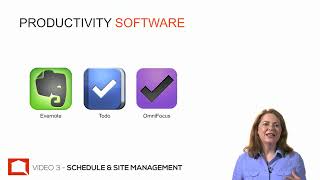
So let's have a look at the schedule. In all renovations, there is a sequence in which the work needs to take place. For instance, you can't get your glazier to start making the glass kitchen splashback until you have the kitchen bench top fitted. There are a lot of little sequential jobs such as this throughout the entire renovation process, and you need to know them. With a new construction, such as extensions, it is mostly a matter of working from the bottom up, starting at the foundations and working up to the roof. With a cosmetic renovation, you are often working in reverse, top down, that is Paint the ceiling before you polish the floors, or you end up with painted, polished floors. Often, a cosmetic renovation is a quick rejuvenation, which means clean and paint and maybe repolish the floor floor and replace windows and light fittings. However, to be more specific, this flow of works for a bathroom renovation will give you an idea of the sequence of events. First of all, disconnect the services. Demolition, wall relocation and framing if necessary. Plumbing is then roughed in. Electrical is then roughed in after the plumbing. Then the walls are plastered or rendered. There's waterproofing done, then the tiling. Then the plumber comes back and actually fits off, as does the electrician. Then there's the carpentry fit off. The shower screen is then measured after the tiling is done and fitted, and then any defects are fixed. And here's how a schedule for a kitchen renovation might look. First of all, the demolition carpentry. So framing, the electrical and plumbing being roughed in, then the plastering being done, the actual kitchen being installed, the silicon on the top of the base, cupboards around the sink area, etc. Then we're looking at fireboard or cement sheet to install above the stove area, the glass or tile splashback installed, caulking, plumbing fit off, electrical fit off, cleaning and then painting. And as you can see, I've also put down who's responsible for what on this schedule. So let's manage that schedule. There's software available. Most scheduling software uses a Gantt chart system, which I showed you earlier. The industry standard of this is Microsoft Project. While Microsoft Project is a very powerful tool, its complexity has drawbacks in my opinion. In recent years, some new players have arrived on the scene, and my pick of these is Omniplan for the iPad. I find using an iPad on site far more convenient than using a laptop, and Omniplan seems to be the best option for iPad that I found. It also has the ability to sync one schedule between multiple iPads very handy. If you're collaborating with a partner, you simply enter your task in, allot the amount of time the task will take, link it to its previous task and voila, the schedule starts taking place all by itself. You can assign which tradesperson is responsible for a task, as well as noting the materials that need to be required for that task. It also syncs with your calendar and allows you to set alerts for upcoming tasks. It's from Omniplan that I print out email or fax. Using the email to fax individual schedules to tradespeople, be sure to look in the bonus section for a complete Omniplan tutorial and template. Now let's move on to productivity software. In addition to scheduling software, you might consider also using productivity software. Productivity software is for creating to do lists, filing information on the go, and keeping organized. More generally, Evernote or To do are some of the most popular productivity software. I choose to use another Omni Group product called omnifocus. I can use this simultaneously on my iPad and iPhone and it syncs and when combined with Omniplan, it's a really good way to stay organized. However, not everyone is electrically fitted out. So for your tradespeople, I suggest that you turn up each day with a printout of what needs to be done for the day, the task at hand, and what the next task is so they know where they fit in. Now, I often actually garrup a white board marker and write on one of the windows what needs to be done for the day and any questions or queries or notes that I need to leave. For people. However, you need to have something printed out so you might need to have information for materials that are turning up. So it's really great to keep something on site where you can keep all of your paperwork and that is going to keep you organised and keep your tradespeople on time and on budget. As I stated earlier, I prefer to provide the materials for my tradespeople. Now, there's a number of reasons for this. Tradespeople often put a commission from 10 to 15% on the top of the material cost. Now they do this to compensate themselves for being out of pocket. Remember how I told you how they've often had experience in the past of being ripped off? This covers that for them. After all, they've pretty much paid your capital expense out of their pocket. They could be ripped off, left with you not paying the bill and with all that material they don't need. That brings me to the second point. Tradespeople don't often have a lot of information in the quotes if you're just getting a fixed quote. Now obviously their quote is made up of materials and labour. Now if they need to, let's say, buffer their risk factor a little, what you'll find is that usually goes into the quote kind of hidden behind the material costs. Now if you took a quote and you took out what you know the material cost to be, you'll probably find that their labor rates could be $600, $700, $800 a day compared to the norm of maybe 3, 4, $500. So this is a way that they can factor that into their quote. As I said, I believe that you should buy the materials yourself. And there's another good reason for that. If you've got a credit card and one linked to frequent flyers, you probably have paid for your holiday at the end of the renovation. And you know what, you're going to need it. So let's look at supplying material in the days prior to work commencing or at the time of quotation. Meet with a tradesman to make a list of the materials needed. Repeat this every morning with each individual tradesperson. This is also a chance to discuss the schedule, any hold ups or variations. So here's some of the typical materials I supply for the electrician. Power points, lights and light fittings, light switches, exhaust fans, ceiling fans and smoke alarms for the plumber, roofing and guttering, PVC sewer and storm pipes, water pipes, plastic ones, fittings and tapware for the painter, obviously the paint gap, filler builder's bog, plastic tape and any stain that's needed. You may find some trades resistant to this because it's out of the norm. But explain you're doing it for your frequent flyer points and they're normally OK with that. They also get used to having everything there when they need it pretty fast, which is always attractive. Now let's just talk about safety. Safety is paramount on the building site and is heavily regulated. Building sites are regularly visited by safety inspectors who can issue large on the spot fines. Far worse is that someone could actually seriously get hurt. That goes too for environmental issues. Keep rubbish water, etc. On your site. Remember also that there will be insurances such as third party insurance and you will need to have the right work cover. If you're a registered owner builder. Protect yourself, protect your workers, protect the public and your investment. Insurance may seem like a big cost, but it can save you thousands. Remember, safety first. Here's some safety measures that I'd consider. Temporary fencing to exclude people from entering onto the work site. Guardrails on the roof. Often a plumber will say look, don't worry about it, but if they fall, it's your responsibility. Protective equipment Safety glasses still cap, boots, dust masks, gloves, high visibility vests, just to name a few. You're a professional, you need to run this professionally. Let's have a look at rubbish removal. This is a cost that most don't think about when tipping fees are sky high. Skip bins are expensive and also it's often hard to get a receipt out of the driver which makes it inexpensive and non claimable for tax purposes. It's not unusual for builders on larger jobs to allow $6, 10,000 for skips alone. Let's look at green waste. Green waste bins fill up quickly because it doesn't compact well. A good alternative when dealing with green waste is to hire a green waste contractor using a truck and a mulcher. These services charge by the hour and can be less than half the price of hiring a scip for steel, iron and metal. Don't throw this in the skip. Cape it to your local metal merchants for cash. You can't be bothered. Then call them up and let them deliver you a free metal skip. That's one less thing to pay for. And don't throw things away. Sell it. Use ebay. Be sure to advertise everything you pull out of an old house on ebay or equivalent online auction site. You will be amazed what people will buy. I even sold the existing kitchen on ebay of one of my properties so I could afford a fancy tap that I wanted that wasn't in my budget. So these are the kind of things that you can sell. Light fittings, curtains, doors, stoves, kitchens, baths, vanities. Really anything.
More from Let's


The Ultimate Guide To Renovation Course - Module 5: Self - Employed Low Doc Loans



Rob Flux Ambush - Convince me I should consider Property Developing as a strategy 3,2,1 GO!

The Ultimate Guide To Renovation Course - Module 4: Recognising a Property's Potential

YPS Club Mar 24: special Guest Peter Wargent describes how Australian properties are so resilient


The Ultimate Guide To Renovation Course - Module 5: Interest Only Lenders Exposure

