Review your finished renovation by getting quotes from trades on site, auditing unexpected costs like hidden pest damage, and checking whether your schedule held up. Assess if DIY work actually saved time or hurt quality, and track your rental metrics.
Chapters
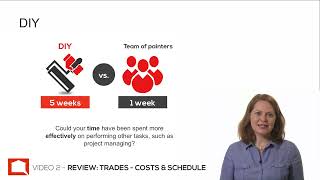
Trades at the end of a project before a house has settled or been tenanted. It's also an opportunity to interview new tradespeople, invite them to your finished project to quote on the works that have already been done. This may seem strange, but it serves several purposes. It demonstrates to the tradesman the type of projects that you do and the reoccurring nature of your business, and it also shows the type and standard of finish required. I make it clear to the tradesman on the phone prior to the quotation that this is not a job that is ready to start. Now. I simply would like to meet with them and discuss the types of options that they might bring to the table for future developments. To give you an idea, I called a new stonemason to one of my finished projects. He measured up my finished Caesar stone bench top and put together a quote for me based on supplying a replica Chinese made stone. This gave me the ability to compare apples with apples. His quote was $570 less than my current bench top and looked identical Low Return Item Audit in hindsight, when you're not really in the middle of your renovation, it's easy easier to look objectively at your finished product. What really were the low or no return items that you spent money on? Were some of these avoidable? Would it have been possible to repair and replace that fence, for instance, instead of what turned out to be quite a big job? Or could you have simply re clad that garage rather than building a new one? For me, no matter how disciplined I've been or tried to be, there's always some items that in hindsight I could have done without. But each time I put myself through this review process, I get a bit better at recognizing these items on my next project. Unexpected Costs what were the unexpected costs and expenses that occurred during your project? Why were these not picked up during the initial inspection or full house evaluation prior to the purchase? This could be a white ant damage that was behind walls that your pest inspector couldn't detect. If that's the case, why not call them up and let them know and ask them how in the future when they look at properties, you would they be able to detect this? Now you're not blaming them and there's little recourse for compensation at all. After all, they can only see what they can see. They can't pull back the walls, but they may have some thoughts on what to look for so you could use these in your next inspection. I once had a property that had a toilet in the laundry. It was going to ground There was no sewage connection. Nothing. Now, let's be honest. There's a toilet, so you expect that the necessary piping is connected. We missed it during the inspection. This was an unexpected cost, but one I could not be blamed for missing. However, on review of the budget, I realised I didn't stop and ask myself, did I need a second toilet? In actual fact, the answer was no. $8,000 could have been saved. So revisit your inspection and evaluation checklists and make improvements where necessary. Let's have a look at your schedule. Did you finish on schedule? Did the project run as smooth as it could have? Where were the bottlenecks, delays or schedule conflicts? Were certain tasks out of sequence? Was there a particular tradesperson who, despite their assurances, did not show up when they said they would? Perhaps it's worth interviewing someone else if that's the case. Our goal in reviewing the schedule is to update and improve our schedule document to make it more realistic for next time in your scheduling spreadsheet or software. Now, we discussed Omniplan as one solution to that. I have a template set up which is updated after each renovation. When it comes time to start planning a new project, I simply adjust the amount of time allocated to suit each of the new tasks. DIY how much DIY did you do on this project and was it worth it? Sometimes this is not the most straightforward thing to calculate, but nonetheless you really should attempt this exercise. At a minimum, this could be calculated as extra holding costs. For instance, if you decided to take on the painting yourself and it took you five weeks, and a team of painters would have taken only one week. And how much did you actually save? Is this amount worth taking five weeks of your time? Could your time have been spent more effectively performing other tasks such as project managing? Even if you are unwilling, as some people seem to be, to put a dollar amount on your own time, then you should at the very least estimate how much longer the task took. How much faster? Would it have been a professional to do the same task? Lets be honest and check out the quality as well and make the decision now if you should be doing the same task yourself or leaving it to a professional for your next renovation project. One of my pet hates is seeing a beautifully renovated property at the open for inspection only get to the bathroom and find the owners have obviously tried to tile themselves. So be brutally honest with the quality of your work. Did shifting your attention to the DIY tasks also cost you money because you're too busy to effectively source material at below retail price? Did the schedule suffer because you didn't pay enough attention to managing it effectively? These may or may not be the case, but these are the questions that should be asked. Property improvements open for inspections or rental opens are a great opportunity for feedback. Most importantly, what was the negative feedback about the house or unit? It's vital that your agent passes this information on to you and does not try to sugarcoat it for the fear of hurting your feelings. If a significant portion of buyers, for instance, commented that the yard was too small, this is very important information that you need to know. Your understanding of what to provide that particular demographic will need to be adjusted accordingly. By the same token, what did they really like? Can you do more of the same thing in the next project? Why not attend the open yourself and hear what people are saying? Also, you can check out the rental agent or even send a friend along to do this for you if you think your presence may affect their performance. Also, monitor their online marketing. Are they using up to date photos? What extra directions can you give the agent next time on how you want the property presented to their database and online? Don't leave this to chance. You need to review everything, even make suggestions about the copy that they use. Make sure you record how long the rental campaign takes, that is how long to get a tenant paying rent and any changes in the weekly rent you requested. Trust me, you will forget this in the long term and it's important that you remember it.