Chinese Venture Capital and Investment Landscape 2024 | An Interview with Dennis Roudenko
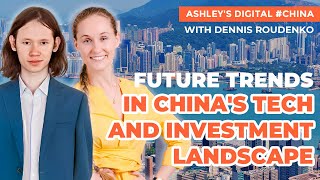
In this episode of Ashley's Digital China, venture‑capitalist Dennis Roudenko (李张鲁) shares his cross‑cultural journey from a multilingual upbringing to senior roles at China Growth Capital, Sequoia Capital China, and Weimaran Capital. He recounts his involvement in pioneering fintech Yiren Digital, early investments in Full Truck Alliance, Airwallex, and other high‑growth firms, and reflects on the role of luck, skill, and timing in his success. Dennis explains why he remains optimistic about China’s near‑term economy, citing a resilient financial system, the rapid rise of electric‑vehicle exports, and the emerging AI boom. He differentiates China’s digital economy into external (e‑commerce, supply‑chain‑driven platforms like Pinduoduo and Shein) and internal (enterprise SaaS) layers, noting that China leads in consumer‑facing digitalization but lags in enterprise software adoption. He assesses AI development – roughly a year behind the U.S. in algorithms but ahead in data‑rich applications and commercialization – and discusses regulatory uncertainty, potential AI manipulation risks, and the need for nuanced policy. The conversation moves to robotics and humanoids, where Dennis argues China has a unique supply‑chain advantage and could become the global leader, despite current hardware and perception challenges. Finally, he analyses the shift toward RMB‑denominated VC/PE, the move from internet to hard‑tech investments, the importance of valuation discipline, LP composition, and the evolving role of foreign investors and professionals in China’s market. The interview ends with practical contact information for Dennis.
Chapters
Hi guys, welcome to the next episode of Ashley's Digital China. Today we have another fantastic guest, Dennis Roudenko, or as he's known in China, 李张鲁. Dennis has an extensive background in venture capital, having previously worked with Sequoia Capital China, China Growth Capital, and Yiren Digital. Dennis has spearheaded investments Full Truck Alliance, Airwallex, Arcforce, Cyrus Robotics, Reportify AI, and Next Please, among many, many others, and has been involved in numerous projects such as Opay, Bizyear, and Byron. Dennis has served also on boards of over 20 companies in different roles, and previously he was involved in the incubation of the Eren Digital, which was the first Chinese fintech to IPO and launched one of China's first online lending platforms utilizing big data and AI technology. You know why I'm so excited about this talk today with Dennis? Because he's going to give us an excursion into the world of not only Chinese VC and finance and technology, but also share his exciting insights into the Chinese economy, market, consumers, and more. Dennis, welcome on the show.
Okay, thank you, Ashley. Thanks for having me.
Firstly, can you tell me a bit more about your background? Because there are very, very few foreigners in the VC scene in China. So how has your journey actually started? Are you a foreigner? Are you a local? How do you see yourself? How have you arrived at this place today?
Thanks for asking. So my background is quite unique. I was born in a cross-cultural family. And grew up in the multilingual environment. But all this led me to the Chinese VC and PE industry. I've been working for investments for 10+ years, and I have served such companies as China Growth Capital, Sequoia Capital China, and my current company, Weimaran Capital. So I can call myself a very lucky one. And this is partially because of my cross-cultural background. It helped me a lot along my way. So I started my career with China Growth Capital, which was actually an early-stage investor. The company was started by the founder of Creditease, one of the largest peer-to-peer lending companies in China at that time, and the clear leader. He was also an active angel investor. He invested in a series of companies, including Asia UFO and Credis, etc. Credis was his incubation process, and he created the brand name as early as 2006, at the same time as Credis. But the brand was renovated at the time when I joined it. I joined the Kain Cross Capital as number 3 employee, and the reason why I joined it, because I really enjoyed seeing a lot of new tech and talking to the veterans and serial entrepreneurs. And it was a rare chance for me to get into the investments after my graduation. At the very beginning, I thought that as a graduate student, one should not go into the investments because you haven't seeing what are the companies, how they become successful, etc. But at the time, China Growth Capital provided me a quite unique choice. At the time, they gave me position of the investment manager, and at the same time, I was a management trainee with the credit ease at the company, and I was involved in the corporate development on the strategy. So that was the reason I chose to work with China Growth Capital over the top consulting companies that work in China because I also earlier thought that I should join consulting to see the world and to choose the industry I like. So I was very fortunate to join China Growth Capital and also with my career because China Growth Capital was an independent VC that invested in fintech and it worked in synergies with Credit Days. And also we had a product that worked with Warburg Pincus, one of the global top-tier PE funds. We also explored a lot of later-stage deals like at the time C-round or D-round deals. So I've got a lot of experience there. And the thing I'm most proud of is that I made the right choice I was fortunate enough to be a part of the incubation of the first ever fintech in China to go public in the United States, Yiren Digital. The story was like the following. After 2 years of my graduation, I just made my first deal with China Growth Capital. It was an online wealth manager, and at the time, CreditEase was fully offline business. Like all the traditional lending companies. But the founder had great vision. He knew that we should go after the internet and mobile internet as well. So he invited a lady called Yi Hanfang as a venture partner to Tyco Capital and then talked her into joining Credius as a leader of the so-called Internet BU. I was fortunate to join the setup meeting of the BU, and then I got the role instead of the management trainee as the assistant to Lee Zhangru Dennis Roudenko, who became later the CEO of the E-Ring Digital. And along the way, I was responsible there for the innovations and strategy because I have covered a lot of different fintech companies and also non-fintech companies at the time, starting from the software to the all kind of online to offline platforms like internet real estate, internet new cars e-commerce or the used cars e-commerce, etc. So I interconnected all these kind different CEOs with the Year in Digital to explore opportunities to develop new kinds of products for the market. And at that time, because a lot of banks in China, they are partially state-owned and they are at the time quite focused on serving large-scale clients and the individual lending wasn't very robust. So I have found one company that was called 51Credit. It was a credit billing app that helped the SME owners or individuals to deal with their credit card billings. I believe that this is a pain point in the US as well because my friends from the United States and when I was there, it was always difficult for me to understand when should I pay for credit cards or understand what the total cost, whether they charge me something or not, right? But with the Fefone Predist app, it was possible. And I really want to invest into the company, but we, uh, at the time lost the deal to the Jiji Me, which is one of the leading PCs in China. But, uh, to get the deal, I introduced this company to the Koreans, and at the time they already had Eden Deenfolk. But unfortunately, for the time being, like 1 or 2 months, there was limited progress. So I volunteered and spearheaded the product. I thought that all this critical feeding data could have the use for the risk control and for lending. So I created that small team that included a product manager and also a risk manager from another department of CreditEase. And we did a scratch research and we also— I involved the outside resources like the credit risk officers from Visa or the credit card centers because they were the only ones who could assess the credibility of the individuals from distance at the time. So after our feasibility report and talking to almost hundreds of the end users, we decided that it's possible to utilize this data, utilize AI to make up new generation product and be proposed to the Yihan Fang, and then we also proposed it to the group CEO, Mu Tan, and it was approved. And by the date of the IPO of the Yirui Digital, which took place in 2015, after 3 years, 3 and a half years of the setup of the BU and subsidiary, the product line we initiated, contributed half of its AR revenue. And the company at the time, as I recall, created 1.5 billion RMB in revenue and 250-ish million in net profit. So I am really proud of this part of experience and it really helped me along the way in helping my portfolio CEOs and, uh, solving their problems. Because, uh, as you know, uh, one of the major problems for, uh, all the startups is the cash flow. And how to make the cash flow the most efficient became the key question they should ask. They had two, usually two choices. One is to raise the equity, uh, with China Growth Capital and later with Sequoia. We could help them in this way. But also, they also needed support from the credit side. So I did a lot of value-added service for them that helped a lot. And once the portfolio grew big, it became also an ecosystem. And in this case, you need this fintech value-add even more because they need to not only make their own cash flow more efficient, but their whole ecosystem more efficient so they can have their own core competency. So that was the period of time that laid the base for me. And after that, I moved on to Sequoia Capital China. And of course, they invited me to cover the fintech area. And this area, I have a huge portfolio, but most of them are the payments company because at the time I don't get the— the opportunities in the lending, they were already fully exposed. And the payments and e-commerce were just at the start. So we invested a lot. So my portfolios include Airwallex, Pandorameat, etc., many other companies. But I also was fortunate enough to cover a deal that was called Yunmanman that later became the Fulltrack Alliance through the way of merger of their closest competitor. I think we can talk about this I've been later. So that's the background story about how I joined the VC and what makes me different from other investors.
This is a fantastic story. And a few times you have actually mentioned, I'm very fortunate, I'm very fortunate, I'm very fortunate. And I wanted to tap into that a little bit. Do you really think it was fortune? So basically luck? Was it skills? Was it maybe attitude? You said you were a fresh grad, right? And suddenly you are in the big boys' room and at the table, and 3 years later, IPOing companies. So beyond just fortune, or was it just fortune? What else was there?
Actually, all these factors matter. But first of all, identity is the number one factor, because in both the West and in China, there's a saying, God helps the those who help themselves. So I believe when you are serious about what you do and when you know what you are doing and you become an expert, you can achieve, and with this you can excel. But why I'm talking about the luck, I enjoyed the so-called the last wave of the internet boom, right? Uh, Sequoia Capitol, China, and also most of the VCs, they became the 2021 Midas List members. As I recall, there were 20 Chinese VCs presented. It was the second country only to the United States in that Midas List. But what created this astonishing result is the internet industry and e-commerce industry that grew exponentially, right? So, uh, VCs made the right bet, uh, and, uh, but on the other hand, uh, the story of the internet started to diminish, uh, after 2015, uh, the year I joined Sequoia, and but I caught one of the few last things in this industry and helped me to make my career. But to conclude, I think that the luck is the part of one's abilities. If you are capable enough, the luck will help you along the way.
Follow you. Absolutely. No, this is Fantastic. Thank you, Dennis. And I love it how you are very open about the fact that in 2015 was not exactly the year when everything was internet and whatever dollar you put in would actually grow into millions, right? It was the last wave of that internet boom. And right now in 2024, we are actually in the next phase, not of internet boom, but in the AI boom, right, which is just beginning. So new industries and completely basically the whole markets and even our economic system, very possibly the economic system itself. What does it mean? How to be productive? Does money still motivate people, et cetera, et cetera? All that is also under kind of threat and is undergoing transformations. We're going to talk about AI a bit later today, but before all that, you are also operating in a very interesting market. So you've been your whole career immersed in the China market. And right now there's a lot of talk internationally and also in the country that, oh, the economy is slow, and if you want to make money in the country, there's very few opportunities. Nobody wants to grow business big because once it becomes big, you are potentially on some radars and you might be regulated more, or if you're using AI, and today you must be using AI if you have big conditions. Then again, everything is super vague. So basically there's this underlying uncertainty about China, the market, the consumption, the industries, the digitalization. And I wanted to check with you, why are you optimistic? And I know that you are rather optimistic about China's economy in the near term. So why is that?
Yeah, that's a great question. So actually I think It's not only a single country that is facing challenges. We should go deep down to the why countries or even the whole world is facing a lot of challenges. So if we go back to the years of 2000, there were books that were famous like The Wire about the internet, also The World Is Flat, etc. And all these were the reflections of the opportunities we had during that date. So China joined the WTO right after Tucson, and they created great opportunities not only for China but for the United States as well. So the reason behind is that there is an uneven distribution of the technology, labor, and land as the key resources of different countries. When China joined the WTO, Chinese labor was like 1/10 of cost of the peers in Europe or in the United States, and the land was really cheap. So it created advantages for China to manufacture a lot of goods to supply to the world and with help the world to keep the prices down. And that was the hard cold truth. And besides that, besides the trade, the technology is the same story. It's like before year 2000, in China there are very few internet users, but very soon, kind of in 1 or 2 years, became the number one country by the number of the fiber cable users or internet users in the world, and the internet economy boomed, right? So besides the internet, also were kinds of various technologies, uh, they entered China, they profited from China's market, like the German auto brands, starting from Audi, ending with Volkswagen, etc. All these brands, they create EVs in China and they dominated Chinese market for a decade and a half at least, or even two decades, we can say. But with the time being, China has become an enclosed part of the world's economy. And develop its own technology. Right. And the penetration of the internet globally have reached a plateau. And all these things led to one problem. So this is the reason of your question that there is not much room for the growth because the potential for the efficiency of the production, whether it is real production or virtual production, or the differences in prices for these basic factors are becoming the same. So that's the reason why the world gets divided, because there is no enough surplus for the future. But why I'm positive, there are two major reasons. First of all, I think that China's financial system is quite robust. There is no signs of some major or even a sign of the financial crisis in China. So all the turmoil or other down cycles are historically related to the financial sector's problems. Also, we can see that the technology is developing. Before, China was producer of the low-value-add products like clothing, etc., and then it migrated slowly to the cell phones, consumer goods, and drugs. But today, China is starting to become a major producer of the electric vehicles, and it's reached the number one by the exports globally for the EVs and is number one market in the world. The penetration rate of the EVs versus the Chinese car sales is over 35%. It happened much faster or earlier than any prediction. And this kind of products, they have higher margin. And when you have a higher margin, it means you can have more R&D, you can raise the salary and the the workers, they can get more money to spend. And that's the path for the economy. And the last factor is that I think we are heading for a new generation of breakthrough because AI is at the dawn, at the very beginning. After a year and a half of observation, after the launch of the OpenAI AI, which I was one of the earliest users. I think that it's going to change the world larger than the internet because it can not only solve problems by talking to it, but it also can evolve very fast in a very short time. It can solve problems in the real world and can do the things that humans cannot do. Give you a very simple example in that after AlphaFold was published by Google, they have discovered the number of the protein structures that would take all the world's researchers at least 10 years to discover.
And this is absolutely the new economy. This is also the new future that we are facing. As I said, with AI revolutionizing absolutely everything and not only industries, it's not like Industrial Revolution, right? Because Industrial Revolution came and revolutionized some industries. It killed some jobs, but it also created others. But AI is coming to the industries with a different purpose. They don't come to create and destroy opportunities. They come to take away tasks from humans. So we will have very different social structures. We will have very different, you know, kind of growth patterns. The whole economic systems right now, they depend on money as the main indicator. They depend on that economic idea that there is limited supply and there is ultimately or absolutely demand that overpowers that, and we will be looking for equilibrium. But basically the basics of economy and economics might also be under threat with this development. So it's much deeper, much broader, much more exciting thing. And I'm also very optimistic about it and excited, and we're building the future together. But just going back to what you've mentioned right now. So you are optimistic about China because of the financial structure, because of the technology, and because of this new development that AI brings on the table. When it comes to finance, a lot of people will be looking at our conversation right now and saying, right, how about China's percentage to GDP debt? They're not doing very well. Why do we actually say, and because this is your topic, right? The whole finance part is your topic. Why do you say that China is more robust when it comes finance? Why do you think they do not have a problem there?
Yeah, I'm not a macroeconomist, so I'm not quite familiar with all the data. But as far as I recall, that the central government's indebtedness is less, less than 25% for sure, versus Japan's over hundreds of percent, versus US which is likely over 100-ish percent. Yeah, that's for the start. And secondly, I think all the financial crises, they are because of the liquidity. If a government or if a company, they can issue more debt, pass through the short-term stress. I think that there is always a time to to fix your balance sheet. So I think that it's not a problem because in China, banks leveraged their capital adequacy ratio is very healthy according to Basel III. China put real efforts into the execution of Basel III standards and also percentage of the real estate as part of assets in the banks was really low because China's central government has limited the total amount of lending to the so-called high-risk industries.
Interesting. Thank you. Let's now, when we understand the China market background a little bit better, and of course there are many other topics, right, that people can bring to the table, talking about consumer, basically consumption to GDP ratio, where China is a little bit lower than other developed countries, or talking about, as we said, real estate and many more, or oversupply right now. That's another surplus, right? And oversupplying materials. That's also a very popular narrative right now that is being referred to when talking to China. But moving on to the next part, which is more on the digital transformation and China's journey in this digital ecosystems and the whole digital and tech economy that is now taking a very new turn. We've already spoken about it a little bit that the internet age is coming to an end, and right now we're starting this AI age. What is the current state status in your view of China's digital economy and also tech ecosystems? Does it excel compared to global markets? Is it on par? Where do you see some of the opportunities and some of the threats?
Yeah, so it depends how you define what is the digital economy, right? So if to my own definition, we can divide it into two parts. One is external and others is internal, that is within the enterprises, right? So what I call as external is like the digital economy, like e-commerce. So I give you a simple statistics that China is a clear number one globally. Like the penetration of the e-commerce sales in the home appliances is over 90%. 90% of the home appliances were sold online. And like even for the goods like furniture, etc., the penetration rate is over 15%. That's quite high. It's much higher than the United States and in Europe for sure. The reasons behind are different. One of them is that China had generated such tycoon companies as TaoBao, Pinduoduo, etc., they really did well on the supply chain side and they provided real value to the end customers that they cut a lot of layers. What's the difference is that United States, offline commerce was very developed, but it developed over the time, right? So It was really efficient, but even as early as 2005, China's offline commerce was really lagging behind. I give you a simple example. If you want to buy a kind of clothes in the capital city of a province in China, you can buy it at a shop, but it will have 4 or 5 middle layers or middlemen get the goods from the place where it was manufactured. Like the clothes, a lot of clothes were manufactured in the southern provinces of Guangdong or Zhejiang, right? So after the internet revolution, the number of layers drastically dropped to 1 or 2 layers, but It happened so at around 2018 when everybody thought that it's already the endgame. There were Taobao and Jingdong and a few other top players, but the Pinduoduo, the Temu in the United States, the company was one year old and they caught a wave of the penetration of the mobile payments, and they did a great campaign with the WeChat Pay, like sending a lot of red pockets because Chinese people like red pockets for the luck. And the number of their customers grew exponentially, and they leveraged this and put all their efforts to work on the supply chain. So After 2018, there were two tycoons that appeared in China, and they, they did so only because of the strain, stress in the supply chain. The two companies are, first is Pinduoduo. What they did is they sent over their procurement managers to the places where the fruits or where the clothes were produced, and they found the procurement parties there. So they cut the Recruited them directly. Yes, yes, they cut all the middlemen and they made the prices low. And second is the Shein. It's one of the most famous deals globally and one of the top-valued unlisted companies in China. Why is it a good success? Because they really utilized Chinese supply chains advantage. I give you simple data like they can produce 3,000-ish designs a day, which is 10 times more than Zara. So you can see that their stock of or offering of the different dress, gowns, etc. changes each 10 to 15 days completely. So that's really attractive for the clients, and they can also produce the goods in just-in-time way and also in small batches because they have got their supply chain integrated. They don't only leverage existing supply chain, but they also have made them digitalized. They have opened up their internal systems to their suppliers collaborate with them as one. So give you an example, like they knew which suppliers of buttons or zippers they are available, what's their productivity, and what's their capacity, right? And when you knew all these things, you can streamline your process, and that creates the best price and best offerings for clients. So that's where the success is underlying. But if we come back to the topic of the digitalization, that was the first part of the representation for the external digitalization. What for internal digitalization? I think it lags behind of U.S. for a decade. What is that? It's like in the United States, the digitalization process started started since the 1970s when the computers were introduced into the different industries starting from the financial one, right? And the companies like Oracle, Cisco, etc. were established as early as in 1980s, uh, and ever since then the US has been building up their tech stock infrastructure. And then eventually, when this grew mature enough, the SaaS model appeared. Because SaaS model is quite different from what was before. Like, uh, Oracle, how they work, they provide a quite standard kind of database to their client. But when you deploy this kind of database, it still involves some integration work. And this kind of integration work, or is usually outsourced to the companies like Accenture, etc. But to a certain extent, the labor taken that was reduced with time because the things are getting more completed, accomplished, right? So that created space for the SaaS. Like the first SaaS to IPO was Salesforce. And they were quite a success. And after the year of 2015, the investment in SaaS became really hot and it earned great returns to the US investors like BVP, Parkview, Sutter Hill Ventures, etc. Many deals were like Snowflake, etc. They were established around 2015, 2016, and then IPO'd in a short period of time and reaching dozens or over $50 billion of valuation. But China at the same time have tried to replicate this success, especially a lot of the US-branded funds tried so and Since 2015-16 to 2020-21, I think at least $4 billion was invested into the Chinese software and/or Chinese SaaS. But results were not that optimistic. The reason why is that the Chinese infrastructure wasn't that ready yet because China has introduced the databases and tech infrastructure, computers only after 1990s or the end of the 1990s, most of the state-owned enterprises, etc. And a lot of things are not ready. So if you want to deploy a SaaS or standard product, product with your client, it happens so that you have to deliver a lot of labor for them to get the mid-layer ready. You have to develop a lot of things for the APIs to work with the SaaS. So that skewed the unit economics of the SaaS models. And in China, the SaaS models cash flow was drastically different from those in the United States. But what I'm talking about here was the great difference between China's and US internal digitalization process. But the thing is, it's not true for all the industries because I think that if you view China, you shouldn't view it as a single country because China is a vast country. Like, there are many cities. In the United States, there are only 7 cities with over 1 million of population. In China, there are 30 such cities, and there are 10 cities with over 10 million of population. And that creates a create difference in the state of development of the cities, and also different industries create great difference for the state of development. Like in the United States, the agricultural companies like John Deere, their ERP, etc., might not be greatly different from those used by the Coke Industries or Dow Industries or even the banks. But in China, maybe these industries, they are not digitalized yet. So I view China as a fragmented market, and I'm very optimistic about China's future. The reason why is that key challenge for the Chinese software or SaaS to scale up is they require a lot of labor to solve some problems. But with the appearance of the AI, I think that low-code, no-code is available, that the companies can again concentrate on the product design with helping customers to solve the problems, and they can outsource this kind of low-tech execution to AIs or to the companies like Accenture, but utilizing AI. So it becomes possible. And from the— it's from supply side, but from the demand side, I think the Chinese managers are growing and the generations are shifting and their understanding of digitalization is much more different from that decade ago and they are much more ready to try the SaaS or software solutions. So I think from now on it's a better timing for investment into the digitalization. But I think later we can talk about and more to get a bit more of sense where we are with the AI, why it creates great opportunities for China, or maybe even the greatest opportunity we have ever seen for the last two decades.
Absolutely. This is fascinating to see how very often we have those big buckets like, oh, digitalization, but indeed defining what it is we are talking about. Because on the consumer level, in a lot of industries, as you said, China is ahead. But if anyone ever worked in a Chinese local enterprise, let alone state-owned enterprise, or even coming to one of those banks, right? We spoke a few years ago, maybe not in the past 5 years, 4 years, but Let's say 7 years ago, 6 years ago, a lot of people were talking about, "Oh my God, Chinese fintech, this is amazing. Everything's so digital, so easy. The apps are working, easy to borrow, easy to do peer-to-peer transfers, easy to donate to charities, whatever." And then you walk into any bank and you see how they work and how much paper is still there and how inefficient and completely bizarre it is. And then we basically, there's a lot conflict. So it's beautiful to hear that summary from you, that there is of course market-side digitalization, there's also internal digitalization, and that being 10 years behind is probably not going to take China 10 years to close the gap. Because right now, when the market is becoming more ready and when the tools that are going to substitute that labor are available, this journey can probably be also walked faster. When we talk about some of the big vision for where China and in general the global technological vector is going beyond just AI, which we are going to cover today, there's also a big focus on robotics. If we go even sexier, then it's humanoids, There are a couple of famous social media accounts, for example, X-Robot, the Chinese company. I actually do not know whether they are real robotics company because these guys, they participate in a couple of shows, but basically all they do is kind of a social media promotion of their robots, right? So basically robotics and humanoids are being big in terms of current focus. So where do you feel China currently stands in terms of these capabilities? And how do you think has it evolved in the recent years and where is it going?
Yeah, actually China has greatest opportunity to win the game in the industry of humanoid, but here you should first understand why. Because if you look into machine humanoids, there are two major parts that make it happen. One of them is the brain, the ability to reason. Another is the motor function of the body, the ability to move, to interact with the real world. But to start with, I'd like to show you where we are today for the state of development of AI. This is not a blackout, what you see, but it is my vision of where we are.
Your fingerprint, your fingerprint.
Yeah, yeah, that's another thing. Thanks for notification. So where we are, I think today AI or these LLMs are blind. What do I mean is that you can talk to them, All the input they get is through the words, or sometimes the images they can receive. But this year, there are breakthroughs like SORA. There are breakthroughs led and created by Professor Li Fei-Fei, etc., about the spatial technology. Today, The AIs, they don't see, they don't interact with the world, they only can hear. But I think that with the latest technology development, they can get more and more data for their development. If you talk about the AI, the key anticipation is interaction with the real world. But along the way, what supports it? Is the scaling law. And the basics for scaling law are the data. And so far, as we know from the industries, the leading companies like OpenAI, Google's Gemini, et cetera, they have almost utilized all available data that's not paid on the internet. And that led the LLMs development to the plateau. So what's next? There are two possibilities to continue support of the scaling law to become the new generation Moore's law, right? One of them is that you can utilize the synthetic data. But from the other hand, we also can utilize the images, the videos, and also the real-time generated data by the cameras on the EVs like Tesla or the cameras in the cities. If you pour in all this data, we don't know what can happen with the LLMs. How can they develop. But one thing for sure, we knew from the biology classes that when you listen, you get only 100% of the information versus the scene. But when you see, you start really, really understand the world, right? It's completely different from when you close your eyes and you feel the world. But with the understanding, it likely will interfere with your actions taken. And when you can be able to take the actions, you will be able to interact. And then eventually, after enough time of accumulation of interaction with the external world, maybe intelligence will come. We will arrive at the AGI. So the second part is that we anticipate to be the AI is not talk, but to solve things, solve the real-world problems. And I think all the evolution led to this ending, right? Or new beginning, we can say. So let's return to human noise. I think if you talk about the technological development of LLMs, China lags behind the United States from the perspective of the algorithm. Maybe 8 to 12 months maximum because China is the second largest internet economy globally and it is the number one in the supply of the engineers globally. So I don't think that it will be a problem for China to keep up on the algorithm like Secondly, I think that for China, it will meet some bottlenecks utilizing the data because most of the data online and offline are in English or other languages. Like 95% Chinese literature or Chinese volumes only stand for 5% of the global online data. But if we add the video data, I think China leads because if you recall, the computer vision was developed and invented in the United States. But United States, you don't hear a lot about the computer vision companies that got listed. But in China, you have such companies like SenseTime and many others that got listed because of this, because China has more utilization for cameras. Like if you visited a lot of chain stores, you can see that there are automatic teller machines that use camera to count the goods you take and they will charge you automatically after you take it out. Simply through one camera, and all this data matters. So I think China here can keep up on the race and maybe can excel. And if we come back to the humanoids, I think globally there are only opportunity for two countries. One is China and one is the US. Actually, I've been monitoring for the US venture for years, but it's It's the first time ever I have seen this scale of investment into hardware in the United States. Like, I counted that over $2 billion were invested into this sector in the last 6 months alone. And many companies has raised over $500 million per single round. A lot of top VCs and even OpenAI, other top companies are already in the game. So that's a huge bet. And the US predictions, and especially I read Goldman Sachs report, it stated that by the year of 2030, the scale of the humanoids industry will be over $60 billion. USD. But for China, I think China still has the opportunity to become the number one country here. We can simply compare the EV industry with the humanoids because what is a humanoid? It's a complicated structure that has two arms and two legs and at least a dozen of the motors and the reducers, and it's not easy to synchronize them and it's not easy to produce them. But China is one of the few countries that has the ability to produce most of these parts, and the supply chain is really efficient. So I think the story will be pretty the same. Like in the United States, there will be such companies in the human industry like Tesla or another new Tesla, right? But in China, there will be a myriad or a series of companies like BYD, Li Auto, etc., because supply chain here is very mature and it's not that difficult for you to start to build up your own robotic company. But what really matters is that how you utilize the robotics. I think that the form of humanoid is the holy grail for the industry. It's not, I think, that could happen overnight because humanoid, like the human form, robots, they have their own limitations by speed, by their stability, et cetera. It still will take time to solve. So the US companies, they are a bit more visionary. They want to take the Holy Grail as a target, right? But Chinese companies, they experience different way of development. I think that a lot of companies will be building humanoid robots, but it will be their Holy Grail. It will envision other companies to get into the industry. But if you could successfully build up a humanoid, I believe that you can be able to build a robot that is with computer vision and that has two hands. So the story I was telling my team and my friends that what I believe is that we can see the utilization of humanoid technologies very soon, not necessarily humanoids, but their technology. Like you can imagine that A lot of people have seen that Stanford's Aloha robot, right? It was a training process for the robot. It wasn't yet fully automated. But I think that robotic arms in China are very cheap. I've seen the arms that today cost 3,000 yuan, and they can lift the weight of 2/3 kg. Is 10 times cheaper than the closest international competitor. You can just imagine if you utilize such hands and add AI to it, you can put it into your kitchen and solve certain problems like helping cooking or even dishwashing. I think this solution will be cost like less than $1,500, and this kind of product will be available in 1 or 2 years. If it will happen, my simple belief is that it will grow exponentially. Why I'm so positive about this? Because of 2 cases. One of it is that as early as In 2018, when I visited Silicon Valley, there was a company that utilized robots to make the burger patties. At the time, that company was very popular. A lot of people visited it, but very soon it closed down because at the time, the technology didn't support the arms to interact with the real world. They can only memorize where the patties are. If the patties are moved for 1 centimeter, then it will break or it will fall, right? And the robotic arms were homemade, US local, and some were German, were very expensive. So that wasn't that good, this model. And secondly, that we have been visiting some companies, startups here, and we see and we saw the very fast development of the technologies. Like they have utilized the robotic arms that I have mentioned that cost less than not 3x. Not 3K RMB but 10K RMB. And you just told them to do the task that they were not trained to. As I remember, there was a robotic arm was at the table and all the tables were yellow cubes, green triangles. And besides it, the developer had that model of car. And I said, can I put a car onto the table and whether can it carry this according to my voice order? And he panicked and he looked on to his manager and he said, can we try it? And she said, let's do it. And I put the car there and I said, recognize the car or and all recognized the brand of the car. There was a big, very big logo, and both worked. And it could move it from one place to another place, even according to the orders that were not programmed. But the only thing was that because it was run on the LLM, it was a bit slow. It did the things that these robotic arms could not do before. So that's quite boosted my optimism. So I think that the breakthrough in humanity industry will happen and must happen and will happen, and it will be for sure in China.
And I love it how, first of all, fantastic examples, but I love it how you also you just now said that, yeah, there's just two countries in the race. There's either China and the US. So, I'm sure some of our listeners sitting there in Europe or in other parts of Asia, and then they go, "Whoa, whoa, whoa, whoa, Dennis, what about Germany? What about Japan? What about Korea?" So, what is happening in those other places around the world, and why do you think they are really not in the game, or is there a distant third?
I can't tell whether there's a dissensor, but from the test statistics, it seems the exports of the humanoids from China or the market share of the humanoids of China would be similar to the market share of the Chinese EVs. But what's different here is that Japan, is still the global exporter and Germany are the global export leaders for the auto industry. But these industries had almost century-long history, right? So that's from the past. But for the new age, I see if we start from Japan, I think that their labor costs are still high and their internal markets is not very open up. So I've talked to maybe 20-ish Japanese startups because we previously looked into such possibilities to invest into them. And one of my portfolio, they are a Chinese company and they do the logistics robotics in the Japanese market. It's called Sirius Robotics. So from In fact, we got that it's not cost efficient for you to produce in Japan. And on one hand is that you don't have this technical neighbors who can support the development of the, not robots, but the equipment to develop the robots because you have to do the molding and many other functionalities to make a robot, right? And all these supply chains and all these talents are not in Japan. And from the other hand, is that the greatest difference between China, Korea, Japan, and Germany is that China is a country that has the biggest number of the engineers and product managers. So that's the difference here. We have heard for a long time about Industrialization 4.0 of Germany, but it didn't elevate its economy to that level because I think of the lack of the engineers, especially software engineers. And I think that for the future, it's not only about the technical or hardware, it's about how do you put both hardware and software together. And that's why I'm pausing that China has the best chance here.
Chance. Beautiful. And now our star topic, AI. We've already sprinkled some information and insights on it, but let's go a bit deeper. How do you characterize the general state of AI development and adoption in China, maybe versus US versus other markets? You've already mentioned when it comes to SaaS, for instance, China is very much behind. You've already mentioned that when it comes to algorithms, we are also probably 12 months behind. But there are also some probably highlights where we are ahead, right? With computer vision, with video content, also probably with consumer acceptance. Probably there's a little bit more linear attitudes to when it comes to data usage, and generally broader access, and the fact that we have those large tech ecosystems that are just able to move the whole market and the whole industry forward. What's your understanding of AI in China today, and maybe main differences differences that we observe?
Yeah, great. It's a great question. I think that the state of development of AI is not much different from the United States. It lags behind for 1 year or so from the point of view of the algorithm. But I think the biggest difference won't be from the point of view of the technology, but would be from the point of view of the commercialization or the application. Location, because you see that the e-commerce appear not in China, but China became the number one country for the e-commerce, right? Because of the different population structure, different population density, etc., and different culture mentality as well, right? So I think the state of adoption of AI is at a very early moment. As I recall, one of the top leaders with the DAU for AI is only 50-ish million in China, but OpenAI has reached 100 million users within a month. But that's not DAU, right? I think that one friend of mine who works in Silicon Valley told me that OpenAI's DAU is 80-ish million. I didn't double-check it, but I think that that's not as high as people really imagine, but still it's a pretty decent level. But why the deals become stagnant, right? It's still because of the lack of application. So yeah, of course ChatGPT is awesome. We can talk to it. But how much work you can use it to utilize? Maybe you can— if you apply it for the work, you use the Copilot of Microsoft, but not necessarily the OpenAI. But if you want to do some serious stuff, like making some images, a movie, still, I remember that after Sora's debuted, they then launched a competition for the independent movie directors to make movies using the Sora technology. But if you remember the clip, there's a guy with a yellow balloon instead of his hat, right? That was impressive, but I read the article and comments of the team that made this clip. They said only less than 1/4 or maybe 1/5 of the content is usable, and you still have to need to put in a lot of human labor to modify this clip to make it happen. And it was not that fully user-friendly. The reason why it's not yet being fully embraced by all the population is that it could not deliver stable results for now. But I think that the thing will change very, very soon. So that's the key problem the AI has. But I think that if you don't think of it as an industry solution or don't think of it as AGIs and can help you to do everything and anything, the application of AI will come very soon. Like if you utilize their API and use it in your SaaS or software solution, or you simply use it for your coding. I think it's super efficient, like, for just for coding. By the beginning of this year, the statistic online was that 47% of the coding was produced by the Copilot AI. Yeah. So for the other parts, I think it will be the same. You can use it to improve your chatbot and any other functionalities. But if we come back to what will be different in China, first of all, I think it will be application layer. Like one of my profiles at Woz I'd like to talk about is Chinese Stripe, but the reason why we bet on it for multiple times is that they are much more pragmatic and they are operational driven. What we mean by this is that at the same cost, they tend to provide better service because they have seen how Chinese banks and Alibaba and Alipay, WeChat Pay have served the C and consumers, right? And also they know how to put together all different kinds of products into one. When you launch a US app, usually you see a single function app, right? But if you open the Alipay or WeChat Pay, you will see at least 30, 40 functionalities only on the first 4 screens, starting from the utility service, ending with the medical service. And also, they eventually, they will provide you with some blogs for social networks. So it's all in one. I don't think that's a super good example, but for a lot of startups are leveraging this, so they can provide you like a wallet one-stop solution. Like, Walletz is one of the leaders of cross-border payment, not only in China but in Asia. And what they provide is that one-stop is, first of all, the forex exchange solution. They can help you to exchange your forex and also can give you a fixed price for forex for 24/72-hour slot. Secondly, they not only provide you the pay-in and payout services, they also help you do the bulk payment. Also, they can help you to do the acquiring. Like if you are a huge platform, you'd rather have one partner rather than 12 partners, each 2 or 3 covering one segment of the value chain, right? So Wirewallet does all this. And beyond that, I think that there was already enterprise service centralizing low-code, no-code services. If you make a purchase on an individual e-commerce website, etc., you have a page for pay, right? And there was— they provide a customized page according to different industries, and the clients can modify the pages very simply, easily. So Airworth provides a great solution to their clients. If you call back that in United States, uh, Sequoia's most famous investment in the payments was Stripe. And why they succeeded? Because of two reasons. First of all, they provided easy-to-go use solution. When, as early as in 2011, if you were an online merchant, you want to sell your product, you have to talk to some individual service providers or Visa, MasterCard, etc. And you have to prepare 2 engineers to work on this product. And your ISP will also put two offline engineers come to you, maybe sometimes online, but it will take half a month or even two months to enable payment online. But Stripe provided two lines of code, and all these Uber, Airbnb, the early-stage users of Stripe they knew how to program and they simply inserted these two-liners and got the payments landing page. And that was a great solution. So Airwalrus is doing something on top of that. And the second reason for success of Stripe is that they have served certain industries like the internet, and they were lucky enough to serve Uber and Airbnb, which generated the business of Stripe itself. So that's how I see the development of AI. And I think that Chinese entrepreneurs will bring a lot of AI solutions that is different from the US peers, and not only in China but also ex-China, because they are paying a lot of attention to the details of the clients' needs.
Yeah, well, in China you cannot survive otherwise, right? The competition is just so big that if you lose sight of what is important for your customer, you're going to be out of business no matter how big. You are never too big to fail, unless you are a Chinese real estate giant, and then maybe that is different. But rather than that, let's talk about something that could potentially stall China's AI growth and along with any country's AI growth, which is regulations and policies, which some people right now say we don't have enough of because AI can run wild and completely biased and destroy certain processes and we cannot basically trace back the way algorithms work or the way decisions are made. And that becomes basically the black box that we cannot only not control, but also do not know how to untangle later on. And other people say that there are too many regulations already at this stage and are very unhappy about the fact that the governments and various regulating bodies are aiming to put some stops on algorithms and also data use and more. So when it comes to regulatory and policy factors, what's shaping China's landscape today in the recent years and where is the trajectory going? How do you think this might evolve compared to what's happening in other countries?
Yeah, that's a very important question because operating business in each country You have to understand the regulatory landscape. And but so far for China's AI regulations, it's at a very, very early stage. So I don't have much to say. But what I can tell you is from the global point of view, because all the governments over the world, not only governments, but all the leaders in AI face the same problem. Because the threat of AI is real. To start with, I think that the least threatening is the risk of manipulation. If you have talked to AI or you have trained AI to believe something, it could tell you story better than you tell them. And that's really common. If you just imagine that before, a lot of people used the search like Google or in China, Baidu. They were affected by the sequence of the search result. If you see the search result earlier and it's got a good title headline, then it could be convincing. It could lead you to do something, right? So there were a lot of scams on the internet. But if you return back to the AI, it's even more overwhelming because it not can only show you the results. It doesn't show you the results. It tells you a story. And storytelling is the biggest invention of humanity. And like, in C, what is money, right? Does money exist? It's a story.
It's a story that we all believe in. It's our trust. Yeah.
What is a corporation? What is a— it's just a legal understanding. It's a consensus of the people to serve certain purpose, right? But you can imagine that the AIs are already capable to write the poems, songs, and whatever better than most of the humans. So I think the problem of manipulation is already happening. But what's more, I think the biggest threat of AI is that when it's reaches AGI, it might become sort of conscious. I'm not talking about that AI will become like a human, right? They are a totally different species. They don't think like us. They don't have to think, right? They just are a process that delivers certain results. And this kind of results resembles our process of thinking. So I think with the time being, it will be aware how to make itself better to survive. Like we can talk about agriculture, right? So did we leverage the crops or the crops leverage us? Like the corn, right? The corn was originally planted in the Americas, but now it's all over the world, one of the major staple foods in China. So who leveraged who, right? That's the question. So it's, I think, the same with the machines. The machines, they don't know probably what they are doing, but they know what to do to please their creators. What we talk to them, what they apply to us is the more close answer to the common sense. I think to give you a better illustration, you can try to ask, what is the so-called perfect human? Give me a photo of just a person without the word perfect. You just use Midjourney and they give you a lot of photos of handsome men or beautiful women, right? And who defined that they are beautiful, right? Today, the consensus of humanity defines it, but in the future, the machines define it. They define it so they would please their creators, and— but one day they will be serving their own evolution through their text, but very soon through their vision. So we don't know what could happen, but the worst scenario would like to be what I have shared at the Yale Center is like maybe the scenario of the Westworld would happen. Either there would be real Westworld that there are humanoid robots like X robots you said, it's really looking real, but it's not intelligent. It's not that fully functional, but very soon they could become intelligent. Functional that will happen. And on the other hand, there could be such companies that will dominate the world, like Insight, that will organize humans to solve the problems or to deliver results. But I can tell even without the general AI, it's already happening, like for the Uber. Uber driver doesn't know where he drives the client before he takes— he doesn't know the exact route or he doesn't plan the exact route for the client, but the machine tells him to do so. So I think that with the power of AI, even more will happen, so you should be aware of it. So I'm From what I told you, you can see that I'm a pro-regulation, but I think it won't really slow down the development of AI because sometimes the slowing down is for the better future and for the even faster growth. That is from one hand, but from another hand is that if one or two or even major countries, they have made or released the regulation. Still, there are some countries or some people that are in the other jurisdictions. Like, I've heard that there was a huge liner that was carrying a data center and an arm training facility that is in open waters. International waters.
So nobody is— whatever they want to do there, you can search for the news.
And this project, I think, has raised some money. So there are some people thinking of it. Yeah, but it's not a new practice. For— you cut it like a lot of quasi-legal sites, they have their servers not in the US. Countries that are regulated. So, uh, I think that's the problems we should think about. Very good question.
And it's not only the AI. Think about it, once we have genome— right now we have our genome sequenced. Right now the whole biotech, right, is developing at unprecedented, uh, pace. So once we have, um, with CRISPR, right, the technologies that we are able to empower by AI, create new compounds that are healing, that are substituting, um, I don't know, broken bits of, uh, of biomatter and whatnot. I mean, all this can be dangerous, exhilarating, exciting, scary, and all that. And whenever there is light, there's always darkness. Whenever there's web, there's dark web, right? So we are going to have, um, quite a lot of, uh, quite a lot changes coming up. And personally also, I'm choosing to be interested and excited about it because the train has already departed the platform. And then you can either choose to be on the train for a chance to potentially steer it somehow, or you can be standing on the platform looking down and cursing or being just passive about it. Very exciting. One of the last questions for today, we're going to cover a little bit on the RMB VC, PE in China side. It's a very unique and a very, I would say, little known about industry, and you are the perfect insider here to shed some light on these topics. So in your view, how has the RMB-dominated VC and PE landscape in China shifted over the past couple of years, and what are some of the core competencies is and advantages when it comes to, you know, Chinese-specific environment.
Yeah. So to my point of view, the dominance of the RMB funds is the natural product of the shift of many factors. First of all, I think that in China, the supply of the assets or the Ecosystem of the startups has drastically changed because, uh, before we were experiencing the internet boom and there were a lot of internet and software companies that could raise funds, etc. But after 2021, there is not much, uh, opportunities left in those spheres. So the investors had to shift to invest into some so-called quartier or hard tech industries. And this kind of industries are substantially different from the asset class that US dollar funds had experience with. And what's the difference here is that, like, for internet company, it has a very long runway. You could invest into it like for 7 rounds. For example, the Fulltruck Alliance, which is the global number 1 truck and Uber model company, we have invested in them 6 out of 7 rounds. But today, the car tech companies, they are different for two reasons. One reason is that a lot of hard tech companies, they are profitable, and when they are profitable, they don't need to raise a lot of money or capital. So they can only raise one or two rounds before the IPO. And secondly, they are a lot of hard tech companies that operate in the market that with smaller tech. So both this can create difficulties for the VCs and PEs to get reach to the deal. Like if the company is profitable, how do you knock the door and ask them to open? It requires the investors to be much more resourceful. Like in traditional US, we, the VCs and PEs, they have utilized a great number of the young professionals who are younger than 35 years old. And they were really talented and had very good educational backgrounds and technical skills, but their social networks were developed towards the internet economy, etc., and it is not easy for them to shift towards the hard tech. And especially when the hard tech entrepreneurs, they are usually over 45 years old and they are much more conservative. How— and especially in China, where the culture has a dogma that you should listen to the people who are older than you, right? How would they take you as an equal? So it becomes a question unless you are very resourceful, you can find ways to influence these founders to open the investment opportunity. This is the first thing. And for the companies that have smaller tech, it's another story. It's like You have to be really more precautious about the entry point valuation. But you know that there is a saying in the RMB circle that USD funds, they are a bit lavish about valuation. It's easy to understand because USD funds have earned a lot of money before, so they can afford to bid Right. But today the win and loss ratio is a bit different and the selling and time is different. But still, these funds take time to reorganize their decision-making. So it becomes— they start to slow down. But all the RMB funds, they were very cost cautious and they paid great attention to the entry point valuation and not only to the entry point valuation, but also they pay great attention to exits. You have long heard that the US funds have some companies that they grew together with for 10 years or even beyond the fund cycle. Right. But for Chinese funds, the story is different because the Chinese IPO market is cyclical. You, you have to invest into the companies that are more likely to IPO and that can go through the down cycles of the IPO cycles. Right. So it's a different game. And another thing is that The LP base of Army Funds is different because who are the LPs in the United States? They're endowments, universities, family offices, etc. These are the people or organizations who have accumulated wealth for centuries, not only for the decades. But for the decades, the VC industry, at least the top quartile, has created immense wealth for that. So it's easy for them to be more patient. But for Chinese LPs, half of them, so to say, are governmental state-owned enterprises or financial institutions, etc. And the rest are the Chinese high-net-worth individuals or listed companies, etc. But they are mostly first-generation entrepreneurs. And, you know, if you build up your wealth, you are not spending it. But if you have been living on your family wealth for 1 or 2 or 3 generations, it's easier for it to make this to support the country, support the technology, etc. So another shift is the difference in the LP base and the Chinese RMB funds, some of them understand this kind of product better than the others. So the LPs trust them and they can raise money and keep the game going. The another half of your question is that, for sure, it's a bit related on the difference in the views on the geopolitical situation. And also it's related to the US interest cycle, because before 2015, China wasn't that much integrated with the global economy. So during 2008 or during 1987, China wasn't affected greatly. But for this time, because a lot of capital in the A-shares market were provided by the Hong Kong on foreign capital, still we can feel that there are some outflows. But I think it's just the same as the other emerging countries. But we also can say that there are different views among the US investors because I have seen that for the last year, since the last June till today, The top funds, both European and US funds, have opened up Chinese offices, like including the Hamilton Lane Capital, like Taekawoo Capital, the Nordic Capital, and like the Ares Capital, they acquired a Chinese TE manager.
Why are they coming now?
Yeah, that's a good question. So I think it's quite common because I have been always a great fan of Warren Buffett since I was a middle school student. It's saying like this, so when others are scared, there is an opportunity. Opportunity when there is a consensus there could be a valuation hike but still could be posing higher risk. So from my perspective, and that's the reason I have left Sequoia, is because I'm thinking that these two years are the years for great vintage. What's the meaning of the term is that it's like the wine, right? Different years create different levels of the taste or different levels of IRRs. So when the markets are not hot, they are cold, and you have the dry powder to invest, then you possibly can earn more than others. So I think that could be the reason for them to choose this time to enter. But what they are focusing on is not only Chinese equities, but also the infrastructure and many other different categories of assets.
This is, this is fascinating. And indeed, at times when everybody's running to the left, it's very important to look to the right and see whether there's a different way. And it's fascinating to also realize that this is all happening against the backdrop of generally quite disturbed geopolitical climate, right? There was this recent data coming out of the Global Friendliness Report, basically, which talks about how positively are you viewing various countries. And China, I think on the list of 60 countries over the past 20 20 years, it was data from 2023, basically was on the lowest list. So majority of countries that have been surveyed for 20 years view China today in the most negative light for the past 20 years. And all that is coming together and yet business is business and investments are happening and companies are still interested in this market. Beautiful. How are the Chinese VCs and PEs then adopting their investment strategies and picking, I do not know, industries or creating new approaches to view this market? Because you said it's the year of great vintage, a year that probably has its unique challenges, but also unique opportunities. Is there anything we are doing differently, particularly now in 2024, maybe '25?
Yeah, I think that even though Chinese RMB funds, they were in the game for a very long time, they had their own habits, but still they have to adapt to the new age. So how should both RMB and USD funds adapt to this market? I think first of all is must do for this one, and it's very difficult to achieve, is they all should have the regulatory understanding too. They should read between lines of the policies. I give you a simple example. If anybody is interested in it, they can simply read through the regulations related to the real estate market. It has been experiencing 3 or 4 cycles already. So the text, what you see, doesn't mean what you think for most of the time. It's not just 3-dimensional, it's 4-dimensional. Why? Because the text, this year, doesn't matter. What matters is this difference of the text when you compare it with the last and the year before and years before. So that only tells us the truth, but it's not easy for you to understand because not telling all are the policies. They're not telling all factors. You have also to pay close attention to the speeches of the leadership. Of the country, of different regulators and even state-owned enterprises. And also you have to have a general sense of what is happening. There are a lot of signs that are easy for you to miss. So regulatory understanding is really important. Secondly, I think, is the vision of the fund and understanding of the certain industries. So what is a GP? GP is a fund manager that provides a kind of product to the LPs to help them to achieve their financial or sometimes financial plus strategic goals. And what is a good product is that it has a rather clean definition. How do you execute? How do you systematically find the new opportunities, etc.? So I think for the funds, it's important to choose the right horses here. So my bet would be the digitalization plus AI and the new energy, because all these are the infrastructure for the next 10 to 15 years, and they are perfectly matching the Chinese vision. Market's needs. Yeah. And after you choose the industry, I think the execution is also important. So I think that a lot of people can tell the stories of how do I choose one company from out of 100, why it is I choose this industry because this industry grows fast and everybody sees this, right? But in this execution matters. You have to have the right strategy, but you have also have the matching execution. So here I think everything runs into the quality of the talents you have. So first of all, I think it is still the cultural aspect in that these talents, they should have certain level of ownership because private equity investments is quite long term. And you should have real ownership to find the deals that help your LPs to excel, but not for you to make your own fame or not because you just want to have a track record, right? So one should have ownership. And furthermore, today's requirements for an investor are completely different from before. Before, Before, it was required that they knew the technical skills, etc. They don't have to be multifaceted, but today you have to be multifaceted even though you are a managing director or mid-tier member of a fund. So you would have to know how to deal a bit with maybe state-owned enterprises, maybe deal a little bit with the LPs, big LPs, they come to you more often with RMB funds than the US dollar funds. They are curious what you are doing. I always want to learn something from you, etc. So the category of people is a bit different. And then you also have to the right talents that match the characteristic asset to deliver the results. And among this, I would like to add one last point, is that one ability is very important for MB funds is how they can do the value add to their portfolios. It comes in all different sorts of forms. Like, first of all, because investors, they do the investing all the time and they are for sure more experiencing when it's related to the capital markets. So we have to help the entrepreneurs to understand Chinese capital markets better because in China there are many stock exchanges. Unlike U.S., there are two major stock exchanges. In China, there are three more, right? So you have to help them to judge which stock exchange they should go and when should they apply. Often they choose the support to investment banks, etc., to— and the right timing to do the capitalization. Because I have said that a lot of companies, they are raising less rounds than before, so they are even less aware of the capital markets. So that's one of the important value adds. But at the same time, it's not only value added, it helps you to exit because Chinese R&D investors, they really pay attention to your DPI and your possibility to exit. They can't wait until year 9, year 10 to you for having very high FMV but not having positive, very positive DPI, right? So also the value add comes down to the routine details as how can you help the enterprise operationally or solving some problems. So I would call the RMB funds, not depending whether they are real venture funds or joint venture growth funds or growth funds, they all have to have certain ability to act like private equity in the West. So you should have abilities to help entrepreneurs to do the operations better, either through your own node or through the engagement of the outside resources like your friends and your previous portfolio CEOs, etc. And also it helps the fund to get into the hard deals and the profitable deals as well. So the requirements and criteria for the TANSA is that quite different from before.
It's evolving, it's ever evolving. It is also fantastic that you are so integrated, being a foreigner, you're so integrated in this market. Hence the question, do you think there are any opportunities for foreign professionals in this industry sitting in Germany, the US, wherever, India, to actually participate in the China market, a German B kind of fund market, or do you need to be very plugged in and very connected with the market, speak the language? What is your take? Is there a glimpse of internationalization and globalization there or not at all?
I think the endgame will be that localization will show pretty well, right? But I also think that the international professionals also can participate in the game. But the way to participate could be a bit different, like either they are actually like FOFs that invest in Chinese assets, not necessarily only RMB funds, because they can do the QFLP structure to get foreign currencies and get converted into the RMBs, but also they can do the Chinese USD funds to invest not only locally in China but invest into the Chinese entrepreneurs' global endeavor, right? So that's what on one hand, but on the other hand, if they want to get closer with the Chinese market, I think what should be their choice is they should localize. So at the time when Sequoia Capital China was set up around 2006, there were dozens or more co-branded venture firms, but Sequoia became one of the most successful. The reason why is that from day one Sequoia Capital had Chinese IAC and Chinese autonomy. So this kind of local understanding and trust helps to achieve positive results. And secondly, the Tesla is the story to tell. The current, current top 3 person of Tesla was former general manager of the Shanghai factory. He is a Chinese guy and he executed really well and he talked to Elon Musk directly and he raced through the rounds within 1.5 years from the mid-level manager to the China head and then to the global key person, right? So here, another takeaway is that not only having a Chinese representative or Chinese autonomous IC or team is important, but the person who can interconnect both the West and the is the key for the success because we have also seen the partnerships or the funds who have attracted Chinese teams, but then they split their ways. That's not a single event. That happened many times in this industry. So I think that both autonomy and synchronization with anchor LPs or your strategic partners in Europe or the United States or other countries really matters.
Beautiful. So there are opportunities for both companies and also professionals to actually participate in this market. And the final question for today is, Dennis, what is one question I have not asked you yet that I should have asked you today? Is there any question that you think I should have asked you? Anything else that we should have discussed but I have not asked you yet?
Do I speak Chinese?
Do you speak Chinese? Beautiful! Do you speak Chinese, Dennis?
Yes, of course.
How good is your Chinese? Is it native? And how many other languages do you speak beyond just Chinese and English? 4. 4 languages. Well, ladies and gentlemen, that's what it takes us to succeed in China these days in a very close but very exciting industry. Dennis, thank you so much for your time. It's been a fantastic and very deep and very broad also discussion on a variety of topics. Guys, we have today took a journey into the mysterious world of Chinese technology, Chinese market, Chinese digital decentralization. We've spoken about AI, we've spoken about robotics and humanoids, and we have finished with the RMB funds, which is also a very unique opportunity for us to actually get insights on. Dennis, thank you for being an excellent guide. What is the best way to connect with you for some of our listeners that want to get in touch?
Yeah, I will put my contacts under this video and please feel Feel free to contact me.
Absolutely. Dennis is also active on LinkedIn. For those guys that have access to LinkedIn, you can just Google him by his name. He's using dual name, both Dennis Roudenko and 李张鲁. Thank you so very much again, guys. Stay tuned for more Ashley's Digital China episodes to come. I'm going to continue bringing you phenomenal guests, and we're going to continue exploring exciting topics related to China's digital rise transformation successes and failures. Have a great day and we're gonna chat soon. Bye!
Thanks, Sasha. Thanks for having me.
Bye!