2026 Texas Franchise Tax Filing Q&A

In this live YouTube Q&A, the host (known as Loma Whisper / MomoWhisperer) walks viewers through the 2026 Texas franchise tax filing requirements, emphasizing the recent increase of the no‑tax‑due threshold to $2.65 million and explaining that businesses below that level only need to submit the Public Information Report (PIR). The session covers common pitfalls such as the confusing office‑address field on the online form, how and when to update LLC member or manager information (free if done by the May 15 filing deadline, otherwise a $125 amendment fee), and the process for changing mailing or registered‑agent addresses (free for mailing changes, $15 fee through SOS Direct for agent updates). The host notes the removal of the $50 late‑fee (effective 2024) and describes the grace period after the May 15 deadline. Risks of non‑compliance are highlighted, including loss of the business name to third parties and the costly reinstatement process ($75 SOS fee plus any back taxes and penalties). The discussion also touches on Dallas Central Appraisal District’s new $125,000 exemption for business personal‑property tax, how the appraisal and protest process works, and the annualized gross‑receipts calculation used for first‑year and final‑year filings. Throughout, the host stresses accuracy, answers live chat questions, explains why short‑form content is posted on other platforms, and outlines plans to edit and republish the live stream for future viewers.
Chapters
Hi, how are you doing? Have you had a chance to file your franchise taxes yet? Yes, actually, there's been an update on the threshold, which was pretty interesting. It went from 0.475 I'm sorry, $2.47 million to $2.67 million, I believe. I think, let me see, I posted about it. Pull up my notes. But they did change it. So now basically the way you look at it is that the state of Texas is pro-business owners, and they're allowing small business owners to reach that level of income before they actually start, like, taxing you on it, as far as from the state side. And you want to make sure the only thing you file is that public information report, because there's no need to file anything else, um, as long as you're, you're filing like a recent return. Yeah, the threshold went to $2.65 million this year. It's— that's applicable for this year and next year. So as long as your income doesn't go above those two amount— but above those— that amount for the next two years, you're good and you won't owe any franchise taxes. One of the things I did notice is that on the online form, the comptroller did make a mistake, and on the line that asks you for your Your office information, it says like your office information, then your place of business address. That information, it's confusing because really what they're asking for is the address of your office, just like they used to in the actual filings. Like, that was normal. But this year, for some reason, I don't know if anybody noticed at the Comptroller's Office, but they've listed the box incorrectly. And so I noticed that people were getting confused about what information are they asking for, and all they're looking for is the, um, is the actual address where you keep your paperwork and then your actual address for where you actually conduct business. Christian, I see you say you followed my video and filed your taxes yesterday. That's wonderful. Keep in mind that every year when you're filing, you want to make sure that by this time, around this time, if they're— if you're expecting any changes as far as the information of who the members are of your LLC or who the owners are, or if you're going to incorporate a manager that you want for to have like a, a really high level of control over your company, like if you wanted a manager to be able to go open up bank accounts or lines of credit or anything like that, that's when you would add their name to your Public Information Report, and they would be able to use that information to like take into, you know, a bank, for example, and be able to set up an account. But you want to make sure that you want for that person to have that level of control. And when you're filing your franchise tax return on May 15th or before May 15th, around that time, that's like the only time you can change that information for free. Because otherwise, if you need that change to be reflected in the Texas Secretary of State's records and the comptroller records, you would have to pay like $125, I believe it is, for an amendment in order to get that information updated. So every year, just kind of make sure you think about what information needs to go there. If you need to update any information on there, you can always— just want to make sure you have those changes ready before you actually file this franchise tax Public Information Report, because that's when you can update that information. And then the other thing to keep in mind is that if you just need to change your mailing address for the company, you can do that at any time and it'll get updated on the Comptroller site, and then the Secretary of State will have that updated information. All you do is log into the portal and then up— choose the option to change the address or the contact information, and that way you can do that at any time. As that information changes, because you want to make sure you don't ever miss a letter from the Comptroller or the Secretary of State. And then the other thing to, to keep in mind is that on the— as far as the due date, yes, it's due May 15th every year, but they've got like a bit of a grace period situation going on. So if you don't manage to get it done quite exactly on by the 15th of May, you probably still have another, like, 2 months or so before they— before you'll get, like, a letter following up, or even an email, because I noticed they started sending out emails. The Comptroller would send out an email reminding people to file their franchise tax public information report, or even they might even mention the EZ or long-form report. But for most people, unless you reach that threshold of income, it's not going to apply to you. So you'll still have that grace period. There's no late fee ever since 2024. They stopped charging a late fee, so there's no $50 penalty anymore. The only time that somebody really has to think about that is if they are like catching up. So if they have like a 2023 or before return that they need to file, they would still be filing the old form, which, which is the no tax due form in addition to the public information report in order to, you know, be in compliance and whatnot. And then they get charged like the $50 penalty for each year. And if they wait too long, so this is another thing that, that my husband was telling me about. He brought up a video he was watching and it's become a thing where if for these, for the LLC owners that don't update their information on time and stay in compliance and, and in, and make sure that their LLC is in the active status with the Comptroller and the Secretary of State. They have— there are people that are actually looking through the public records and seeing what companies exist that have not done their filing yet, and then they go in after a certain point where it shows that it's inactive or that they've lost their, their ability to conduct business in, in the state of Texas, these people will go in and register that business name with the Secretary of State. And because that original company just didn't, just didn't update their report and go ahead and file, they can, they can actually lose their business name. And if they— that happens in this scenario, this— the example was is that these people, once they bought the name, what they do is they'll send the original company a cease and desist letter so that, um, to telling them basically stop using the name because they don't own it anymore. And then they'll— I feel like it's kind of like blackmail. They're gonna— they're gonna charge them like $25,000 just to get their name back. So, you know, any business that's doing well out there, y'all are kind of a target for this type of, this type of activity. It's perfectly legal, but it sucks if you end up losing your name just because you forgot to file. So that was something that I noticed was out there, and that's— I can't imagine having to go through that. I've got, I've got clients that I help with, with this filing to make sure that they're all done in a timely manner and make sure I know what the updates are, when they need updates and things like that, so that they don't ever have to run into this issue. But hopefully everybody out there is, is more proactive about it and becoming more aware. The Comptroller has been trying to do more proactive things. I said they've been sending out like reminder emails. That's new. That's actually really helpful because before, um, an LLC owner wouldn't even know that they were not in compliance, uh, until way past the time, you know, the point of no return where they would end up having to go through a whole reinstatement process. And if they're lucky, nobody has taken their name by that point. And if you have to do a reinstatement, the Texas— the Comptroller doesn't charge you anything for like requesting a reinstatement letter, a clearance letter, but the Texas Secretary of State charges $75. So if you ever are someone that— or if you open like an LLC and you forgot to do anything with it, like it was just sitting there not doing anything, not only do you lose your name, but then you're still responsible for the old filings. And then if you ever wanted to get that account back up and going, you're going to end up having to catch up the filings, pay any penalties with the Comptroller if it was like from 2023 or before, um, and then you would also have to pay the Secretary of State $75 to get it reinstated. So that's a lot to go through just for forgetting to file this form, the Public Information Form Report. It only takes like 3 minutes to do. It's super easy. So that's why I made the video to make sure, you know, because I know that things are always scary and hard to figure out how to do when you've never done it before. So first time out, you never know. It's like not knowing what's behind the door. So that's why I created the video so it can show you exactly what to expect when you, when you start down this path and what you have to do. And it's just so simple because it's asking for basic information: name, address, phone number, you know, who's the owner, make sure you have a registered agent. So that's another big one, and then you just submit it. So on the registered agent, that's another way that you could lose your— that's another way you can lose your ability to like have an active status if the Secretary of State sends out a letter, or if they there's any like court paperwork that's sent out to your registered agent's address, but that registered agent is no longer, doesn't have like a valid address anymore. Like say if you were your own registered agent, a lot of people try to save money that way and they're not too worried about the whole privacy situation, so they give out their home addresses and to be their own registered agent. But when they do that, if they move, and they forget to provide the updated information, um, that they can lose their ability to conduct business in the state of Texas. Um, and that information cannot be updated with the Comptroller. So if you have a new registered agent or you need to update your registered agent's address, you have to go through the Texas Secretary of State's website, and they charge $15 to update that information. You go through their SOS Direct portal, just set up an account. It's free to set up an account, the portal. You enter your card information and then you go ahead and just file the form to update the address and then pay the $15 and it automatically will update. They'll send you an email and let you know once they've updated it, which only takes usually like a day or two. They're pretty fast about that. But that little thing, it is so important just to make sure that your registered agent is up to date, uh, for whatever they have on file. Because, um, I know that like when you're filing your no public, your, uh, your public information report, at the bottom it asks you about your registered agent and it even lets you like change the information. That information does not transfer over to the Secretary of State so that it never actually gets changed even though you entered it right there. On the public information report. So you have to make sure you remember to always go to the Texas Secretary of State's website and submit the form there and pay the $15 to get it updated. If anybody has like a brick and mortar and you've ever received like a letter from Dallas CAD, Dallas Central Appraisal Central Appraisal District. They charge for personal prop— business personal property tax, basically for anything you own inside the business location. You have to pay tax on it. And like April, every April 15th, you're supposed to turn in basically like a report, an official report that says what is the value of the things that you have inside, so that the Dallas CAD, Dallas Central Appraisal District, can assess How much you owe. Well, starting this year, they, they provided a waiver for up to $125,000 worth of the value of the things that you have inside your business. And they did this again. This is, I feel like this is another way to support small business owners. So it happened at the state level. So no matter which city or county or town or whatnot you're in, in Texas. This was a statewide change, this $125,000 exemption. But I thought that was really great because when I had my location, I received a bill. And originally the bill was like $15,000 because they made an assumption of how much property was inside the building. And I had to go through a whole protest and everything to just to get it down to like a couple of grand. So it's wild if you don't take care of these type of things. It normally comes like a letter will be green, it'll be like a green, it'll be a white envelope with a green letter inside. And it literally is something that you're supposed to like fill out and tell them exactly, you know, what the value is of the properties that you have inside. And then every year as you file like a new one, you're able to, update the information according to what you still have in the property as of like January 1st each year. And then you can also provide like a reduced value based on depreciation of the items. So it's kind of the concept of, you know, what's the— what's kind of like the street sale value of it. And that way you can like kind of continue to lower the tax amount that you're paying when it comes to the business personal property tax. But, and I know that like, uh, like in Texas it's supposed to be like, um, businesses, like even if you have like your business at home, home-based businesses, you're supposed to file for this or whatnot. But I haven't ever really found anybody that was sent like a letter saying, hey, you're running a business from home, you know, you need to assess the property, the business property that you have inside your home. In order to pay the tax on it. So for the most part, the Dallas CAD, they tend to catch the people that have an actual, like, brick-and-mortar location, and those are the ones that normally get, like, the letter saying, like, if they can't come in to, like, look— they actually have people that walk the streets and drive around and looking for businesses that exist that are not already paying taxes, and they'll If they can't come inside, like say the business is closed at the time, like it's whatever, after hours or whatnot, then they'll make an assessment of what they think the value is and they'll charge them. Well, they'll provide them an appraisal based on that, and then that business owner will get a letter in the mail. What they'll have to do is provide— they'll have to fill out their own rendition is what it's called, where you assess the value of all your, your business personal property within the location. And then you have to turn that in by April 15th. And if you need a little bit more time, they'll give you like a 30-day extension to May 15th if you file for the extension before, or at least by April 15th. And then they'll assess what you sent to them and they'll either agree to what you did what you decided the value was of the property inside, and then they'll just send you a bill that's going to be due January 31st or the following year. Or they're going to disagree with your assessment, provide you their assessment, and then you're going to have to protest it. And they've got like a, uh, an informal protest process where you end up speaking to like a representative and providing any documentations that you have to kind of prove your, your position of what, what the value is of your property. And, and if they agree with it and they are, let's just say the representative that's on the other line, they're going to be actively looking for values on the internet to confirm or deny your request for the actual value that you're trying to say that your business personal property is. And it's kind of like a negotiating situation, and to an extent, like, because their hands are kind of tied based on the values that they look up, because then they have to also answer to the state. And so they can't just, you know, give you whatever value it is that you're asking them to lower it down to. So once that, that informal protest is handled and you guys agree, then you, you redact your request for the protest, and then they'll sign off on the settlement, and then you just get a bill for what y'all settled on. But if for some reason you and the representative can't come to an agreement, then you're going to end up having to go further and present your case to like a— it's almost like a jury type of scenario. And they do actually have people that volunteer, like from the city, whatnot, to be on the board, so to speak, that will listen to your case to decide whether or not your position is valid or not, or whether They're going to go with their own assessment in order to determine the final bill that you'll end up having to pay the following January 31st. That's another bill that most people, most business owners don't anticipate, but it's definitely there. That is one of the state, you know, expenses that you have to deal with. Hi, Nancy, how you doing? Have you had a chance to file your franchise tax return yet? I think there's a delay on the, the video and the feed, so I'm not sure how long it takes for that information to update. Okay, Nancy asked, do I have to file the franchise tax long form report? The answer is probably not. The thresholds changed, and as long as you're making less than $2.65 million, um, then you wouldn't have to file the long form report. The only thing you'd have to file is the public information report. I'm not sure how to get used to this delay. It's so long. Not sure if it's my signal. I thought it was pretty decent. Hi Stanley, how you doing? Then you should be good to go, Nancy. Someone said, I want to go buy food. Not sure what you mean. Oh, see, okay, Nancy said you found she filed the Other Ownership Report. The Ownership Report is actually for, it's actually for like larger companies that have like subsidiaries and things like that. So you want to file the Public Information Report if it still lets you. Stanley, you're still asking about the total cost of the food for each family. We're talking about franchise taxes today, so I'm not sure how. If that question really relates or if you're just being funny. Nancy said, my used to be tax person tried to charge me $180. She's saying that I need to report the long before She said that I haven't done it. No, that's not correct. So here's where it shows you, um, the threshold. The no tax due threshold is $2.65 million for the year. And so the only thing you need to file is the public information report. And then the public information report. It's similar, but there's— it's only for like larger entities. So entities above the no-tax due threshold for their gross receipts, they have to file both the EZ or the long. Yeah, I have found, um, there are accountants and even CPAs that don't know the rules regarding the franchise tax report. And I don't know if— and some of it, some people don't know anything about it at all like the requirements that are there are to file, and some just have outdated information. Like I said, in 2024 they made quite a few changes. They kind of streamlined everything for what people have to actually do, like actually file to be in compliance. They took away the $50 late fee. They took away the, the actual no tax due report, there's not one anymore. But like the EZ report and the long form report, I believe they have like a, a box that can be checked if that's their situation. But, um, it just depends. There's like the, the rules involved with the EZ and the long form are much more complicated as far as, um, whether or not there's like deductions that they can take into consideration to reduce the amount that they would actually have to use this kind of like a marker of whether or not they actually need to pay any tax on it. Nancy said, yes, I follow you and I followed your steps. I don't know how come she's trying to say, hey, because they're gonna find me. No, no, they're not. I'm not sure. I wonder if she's confused with another filing, because that doesn't make any sense. Long as you're, um, you're a Texas-based business and your income doesn't go above that threshold, then you are not required to file anything except for the public information report, and that's just a I'll stay in compliance with the state. Yep, the same rule for filing the no tax due— I mean, the same requirement for filing the public information report that applies to LLCs, to corporations, C-Corp, S-Corp, partnerships. It applies to all of them. So, um, it— that's not— that wouldn't change whether or not this filing requirement is the only one that you have to file, because it's based on income. And if you don't have enough income to meet the threshold, and, and the math on it is not as simple as that. So, um, it's not the same as the way the IRS calculates income. The IRS calculates whatever income you have from January all the way to the end of December. And, and then that's like what they consider your total, uh, like gross income, right, before you add in your expenses. When it comes to this threshold that's, um, that applies to the franchise tax report with Texas, they're talking about the annualized gross, uh, income. And so annualized, basically the way that they calculate it is that, um, say if you started the business in December and you made like a whole bunch of money, like $50,000, $100,000, something like that. What happens is for annualized calculations is they'll take that amount, divide it by the number of days that you— that it took for you to make that money, and then apply the math as if that times 365 days, like on the day They'd find out the daily value of your gross income, then multiply that times 365 days. And if that number adds up to $2.65 million or more, then you end up having to file either the EZ or the long form. But that's still like a— that would be like the only reason I can imagine she would say that you would need to file is if you made like a whole bunch of money and it was your first year. This only applies to the first year, um, and so, and the last year. So the first year and last year, the only times you have to really take into consideration the annualized gross receipts that you have. And then there's still deductions. There's certain deductions that the, uh, that the comptroller will allow you to take, but it's not the same as what you would see like on a regular income tax return with IRS. So that's different. But, and I could show you, let me see. It's on like one of the old videos. There's like a whole calculation process to it. My old video, which one is it? I had another video where I showed people how to file. What there was too, that was like set put out at the same— about the same time. It's already been like about maybe 3 or 4 years now. But the— there was 2 that I put out. One was if you actually had like zero income and how to file that. The other one was for if you had income, like you're on your— like your IRS tax return, you actually had income. And so that's when you had to file one of the other forms, either the EZ or the long form. And I took, you step by step through that form on how to do the calculations to figure out whether or not you would end up having to pay any taxes or not. But that only applies— like, that would be the best. I would probably have to do like a new video, and I'm not sure how much of my audience actually reaches that level of income threshold to where they'll need that information. But like, as you grow, as you start to make more money, it's going to be important to know what, how to do that so that you know whether or not you actually have to file more. Uh, you said, oh no, I make a little more than $20,000. Yeah, you're fine. You're fine. And you don't have to worry about that. It's just, you know, as you start, if you grow and you really start growing your business out, if you choose to go down that route. And then, uh, as you said, she's, maybe she's mad that I have all of you. It could be. People could get jealous, you know, of you listening to more than one person, especially when they feel like they're the authority. But, um, my thing is this. I don't know everything, but I'm going to do my best to find the right answer. And I'm not just going to look in one place to find the answer. I'm going to keep looking in different places until all the information matches up and kind of aligns to make sense, uh, before I provide that guidance to somebody. And so, uh, it takes a lot for me to put a video out because I want to make sure I'm like 100% accurate. Because I know there's people out there watching the videos and following the guidance that I provide. And so, you know, I take that responsibility seriously whenever I put out a video. If you have any other questions, let me know. I'm probably gonna hop off in a few minutes. I did notice there was like quite a few people, uh, watching my videos in the last few hours. I know everybody's kind of like watching the deadline and stuff to see, um, you know, trying to make sure that they get filed on time, which is great. And they're pulling up my video because like my YouTube, uh, show shows me how many people— like in the last couple of days it's been almost 1,000 people come to view the videos, and they're watching like multiple videos on this topic that I put out. And so, um, yeah, they're probably like following all the step-by-step on how to file. So I thought, well, maybe in case they see that I've got a live going where I'm answering questions live, I wanted to make myself available. I didn't, um, let people know in advance. Um, I might try to schedule something, um, for, um, another day soon and then just like set it up as a premiere. That way if anybody's subscribed, they'll be able to see when I'll be going live, and that way more people can come in and participate and ask questions, whatnot. Maybe I can figure out how to deal with this delayed video because that's kind of weird to have, like, somebody asking questions in the chat and then it's taking, like, I feel like even minutes before you get the answer in the actual video. So that's why I have the chat pulled up too, for so I could go ahead and hop in and, and provide the answers. I did talk about like business personal property tax, which was off topic, but I did think it was something that, that people are going to want to know about. I'm sure I'll do a video about it, um, that way everybody knows what the update is on that, because that was such a huge win for small business owners to have a $125,000 of business personal property tax waived. Um, so that is super cool. Um, uh, my other pages I have, my website is Momo Whisperer. Com, and then all of my YouTube, all of my, uh, my handles on like all the platforms is Loma Whisper. So, uh, so you'll see like more shorts and stuff like that. I try to normally post at least the short form content. I try to make it post. I use a service called Metricool and have it post like across all the different social media platforms so that I can have some content on each platform. But YouTube is the main one where I'll put out like anything long form that has like detailed instructions and stuff like that because the short form, most people when they're on the other platforms, they're not really in the mood to listen to a lot of education on anything. But at least with the YouTube, the information will always be there. That way, whenever you guys have time, you're able to hop in and take a look at it. What I'll probably end up doing is editing this live once YouTube finishes processing it and then kind of cut out all the, the quiet parts where I'm not talking because of the delayed reactions and whatnot. And hopefully it'll be more helpful to people that watch it at a later time. Nancy, I want to appreciate you and everyone else that came in to watch, or that's still in. I see you've been quite active in the chat. I appreciate you. And everybody, I appreciate you coming in. If you have any questions, you can always leave a comment for this video, and I can always answer the questions later because I have— I keep up with my comments. So whenever you send one, I usually answer within 24 hours. All right guys, I see y'all later. Hopefully I can get a video out soon.
More from Loma


Texas LLC Warning Franchise Tax: How to Prevent Business Name Forfeiture & Theft
Texas LLC Franchise Tax Account Reinstated in 24 Hours: A Step-by-Step Success Story






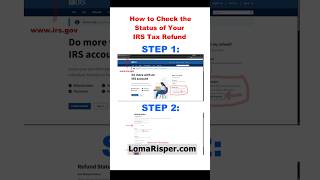
How to Find Out if There is an IRS OFFSET Order Pending Against Your Tax Refund