HOW TO FIND BETTER SOCIAL SUPPORT // This is the most important part of relationships!
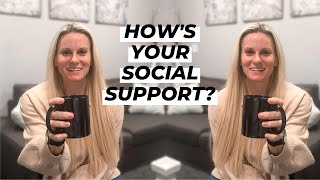
A YouTube video by Lori Streator explaining the importance of social support for physical, mental, and emotional health. The speaker defines four types of social support (emotional, instrumental, informational, appraisal), recommends taking an inventory of one’s relationships (quality over quantity) using a simple 1–10 rating, and outlines common barriers to building support (pandemic/current times, introversion, anxiety, big life changes, poor communication). The piece is practical and advisory, aimed at helping viewers identify gaps and improve social networks.
Chapters
What's going on? Welcome back to my channel. I want to talk today all about social support and support in general. Because humans are social creatures, we are social. We need people to survive. But having people around you to support you, knowing that you have people to go to, knowing that you can turn to someone if you need some information or you need someone to hear you out about something, is one of the most important parts of human relationships. So we know human relationships is one of the things that we need to survive. We need people. But support is one of the most important parts of those relationships. We can't just have relationships just to have them. And we know that when we have toxic or problematic relationships that it's a detriment to our health and our well being, our, our physical health, our mental health. So making sure that those relationships are supportive is a key factor in having healthy relationships to help your physical, emotional and mental health. One of the big things you need to think about first is how is your support. If you look around at your family and your friends and the people that you spend time with, the people that you go to, this isn't about how many people you have. I am a big advocate personally of quality over quantity. You could have all the people around you, but if they are not solid, healthy, supportive relationships, it kind of doesn't matter. And it could be detrimental to your goals and your growth and your ability to thrive as a human. So we want to make sure that the people around you, the people that you choose to spend your time with, are supportive and they're loving and they're empathetic and they're good, solid relationships. So first look around you and just kind of loosely identify what are some problematic relationships if they exist in your life, and what are some really healthy relationships that exist in your life. And what's the difference? Is it family versus co workers? Are the people that you choose to spend your time with like your friends or the people that you go out with or you're social with, are they really great? But the people that you work with really drag you down or you have a hard time with? Just take a quick inventory of where do I have some great relationships and where do I have some not great relationships? Then overall, just kind of look at things, just maybe on a scale of 1 to 10, one being that they're not great and they need a ton of improvement, and 10 being that you couldn't ask for better social support. So being able to kind of rate your social support and just the people around you on a general scale you first have to start with that awareness. You have to know what's going on in your life, what you're surrounded with, what kind of people you have around you. Then you can figure out what to do about it. But if you haven't ever really like I said, taken inventory of your support, you're not even going to know where to start. Family, friends, work, whatever that might be. And then maybe just generally rate your relationships on a scale of 1 to 10. Again, one being not great needs a ton of improvement. 10 being, it's amazing, and you couldn't ask for more. Now, I don't want to go too far down a rabbit hole here, but there's generally four types of social support in psychology, in this world that I live in, that we've identified over time. And by we, I mean the researchers and not me. But what they are is emotional, informational, instrumental, and appraisal. And this is where you can kind of look at your relationships and see if they fit into any of these buckets, or if you're lacking in any area, then rate those areas or take an inventory of those areas of your life and your support to see what might need improvement. So when we talk about emotional support, that's like the people that are around you for empathy and love and caring and compassion, right? These are the people that you go to if you have a problem or you just need someone to hear you or you need a hug. The people around you that provide you with the compassion and love and empathy and feeling cared for. That, again, we need as human beings. The second one is instrumental. This. This is more tangible. It's more of like aid to your life, and it's instrumental in you being able to get things done. So it's more of like a service, but maybe not even necessarily a service that you pay for, but it's instrumental in your life for you to be able to accomplish things, take care of yourself, prioritize yourself, and things like that. Again, I don't want to get too far into these, but I want you to have an idea to. So that you can look at social support and look at these four areas and really kind of figure out what needs improvement and what you can do about it if they do need improvement. The third one is informational. These are like advice suggestions, right? Maybe it's your therapist, maybe it's your coach, maybe you have a dietitian, maybe it's your doctor, Maybe it's a group you go to for informational support. I teach classes at a local medical clinic for weight Loss and it is a really good sense of social support for the patients. But they get a lot of information there, right? They come to the classes for the support, but there's an informational piece to it where they're learning about mindset or diet or exercise or things like that. So information is pretty self explanatory. Where do you go if you need advice or suggestions or things like that again, to help you move forward or get things done. And then the last one really quickly is appraisal. This looks more like you going to a friend with an issue and the friend reminding you of your strengths so that you want to keep moving forward in a tough time. This is the type of support that helps you appraise, right. Evaluate yourself so that you can continue on. It's kind of people around you, maybe it's people at work or your boss and that reminds you that you're a really good employee and you need to keep going with that project. So they're all kind of self explanatory by their titles, Emotional, instrumental, informational and appraisal. But they all fit under this umbrella of social support. So social support is really important. But when you look at those four areas, you can kind of see maybe again in your life where you're lacking, where you could work on it and, and maybe what's going really well that you could ramp up because it is such a strong source of connection for you and it helps you in your life. So we always want to be fostering the relationships in our lives that are going well and we want to put energy into them and we always want to be able to have the awareness and identify what's maybe not going well so that we can work on those relationships and that might be struggling or that bucket, right, of those four types that might be causing you some problems or might be holding you back from getting what you need or achieving what you want to achieve. The last piece of making sure that we have social support around us to support our lives, to support our physical health, our mental health, our emotional health, are barriers. We all at some point or another have had an issue with a relationship. Current times, like the world we're living in right now during this pandemic, this is creating a lot of issues for people in regards to them getting the support that they need or reaching out or seeing friends again. Screens are great and they're keeping us connected, but we need that face to face time. And this is causing a lot of problems for people. So using these barriers that I'm about to name One of them being the current times that we're living in. And identifying what maybe really is a struggle for you and what to do about it can help you move forward. Another thing that could be a barrier to somebody finding or developing really solid social support is if they're an introvert. Now, introverts do not hate people. I'm an introvert. It just means that we recharge when we're alone. You're not going to find me going to breakfast, going to lunch, going to dinner, and then going out at night. That's too much. That is too much. So I love people, I love to be around them, but I don't recharge by being with people. I need my time alone to then be able to go out again or to emotionally recharge. So introversion is not just different from extroversion because one likes being around people and one doesn't. We like people. It's just how people recharge. So if you're more of an introvert, it could be a little bit of a barrier for you in developing or fostering good social support because it might stop you from wanting to go out, or you might think, oh, I really just need to stay in this weekend, or I don't feel like answering my phone. I really want to be alone right now. And you kind of indirectly, like, withdraw or cut yourself off from people that are just like, wanting to hang out or wanting to check in or chat with you for a little bit. So if you're an introvert, it's not a bad thing. Again, it doesn't mean that you don't like being around people. It just might provide some issues, for lack of better word, that could cause you to not maybe reach out or spend a lot of time with people or connect on a regular basis because you do like your alone time with that. We find that anxiety can be a barrier to social support because when we're feeling anxious, the last thing we want to do usually is put ourselves in positions that is going to maybe exacerbate that anxiety. So somebody who struggles a lot with anxiety, but even social anxiety is maybe even going to make it worse and they're going to withdraw. They're not going to want to be around people, or the anxiety around having a conversation or being in a group of people or whatever that looks like for them, might cause them a bunch of stress. And without even realizing it, they deny invitations, they don't go places, or they don't do a lot of things socially to connect, because that anxiety can just be too much, so they just avoid it altogether. But then that creates its own set of issues. So if you're struggling with anxiety and get help, work with somebody. Because the last thing you want to do is cut yourself off from people who want to support you, because that is only feeding the anxiety by avoiding those relationships and then it's again making the whole situation worse. So current times, introversion, anxiety, they're all things that could be a barrier to you developing and fostering really good social support. Couple other things might be something like big life changes if we get a divorce or we move, that can create a big issue around the support system that maybe we used to have or that we need now, but we didn't have before. Anytime there's a big change in your life, it doesn't have to happen this way, but it might be a source of you maybe struggling with that social support or withdrawing or, or if you move states, you might just not have people around you that you know and you're going to have to work a little harder and put a little extra workout on the front end to develop those new relationships now that you live in an entirely different space. One more is communication. If you struggle with communication skills, connecting with people, whatever that is, seek some resources, read books, listen to podcasts, find a coach, find a therapist. But there are literally people who can teach you how to communicate and how to connect with people and how to raise your emotional intelligence so that you feel again connected to other human beings, so that you can develop that social support that you need. So even things like communication skills can be a barrier to people developing good social support. All in all, there are many barriers to social support that can stop us from getting what we need socially. There's a lot of different types of social support. You don't have to worry about remembering them all the time or classifying all the people in your life, but just having an idea of who you have around you just so that you know, so that you can take inventory of, of the support that you have. We know as therapists, as clinicians, people who have support around them, people that can provide them with information, or people that they can go to, or that can hear them out or provide compassion and empathy that can be really, really important to somebody's well being. So if you're struggling with anything, one of the things to look at is what does your social support look like? We are humans, we need people around us. It doesn't matter how many people, but what matters is the quality of those people, or at least in my opinion, that's what matters. So making sure whether it's one person or a hundred people, that they're good, solid sources of social support for you can be really indicative of how you're doing and just the people that you have around you to lift you up during hard times and keep you going and support you. Right. It's directly in the name social support. Take a quick scan of your social support. Look at any barriers that you might be facing, look at any things that you might be having a hard time with, and make sure that you figure out how to develop good social support in your life if it is something that you are struggling with. I will see you back here next Wednesday with another video. Sam.
More from Lori

WHAT ARE SOME SYMPTOMS OF SOCIAL ANXIETY DISORDER? // Are you struggling with Social Anxiety?

WHERE TO FIND THE BEST THERAPIST FOR YOU // Who to call when you need to talk to someone



4 SIGNS OF ANXIETY YOU SHOULDN’T IGNORE // Anxiety symptoms you should pay attention to



WHAT IS THE DIFFERENCE BETWEEN STRESS AND ANXIETY // How to Tell What's Going On

5 WAYS TO HELP A CHILD WITH ANXIETY // How to Help Your Child with Their Emotions

BEAT HOLIDAY STRESS BEFORE IT STARTS // 4 tips to manage anxiety about the holidays
