How to Build Your LinkedIn Presence - National Urban League | Keynote Speaker | Lorraine K. Lee
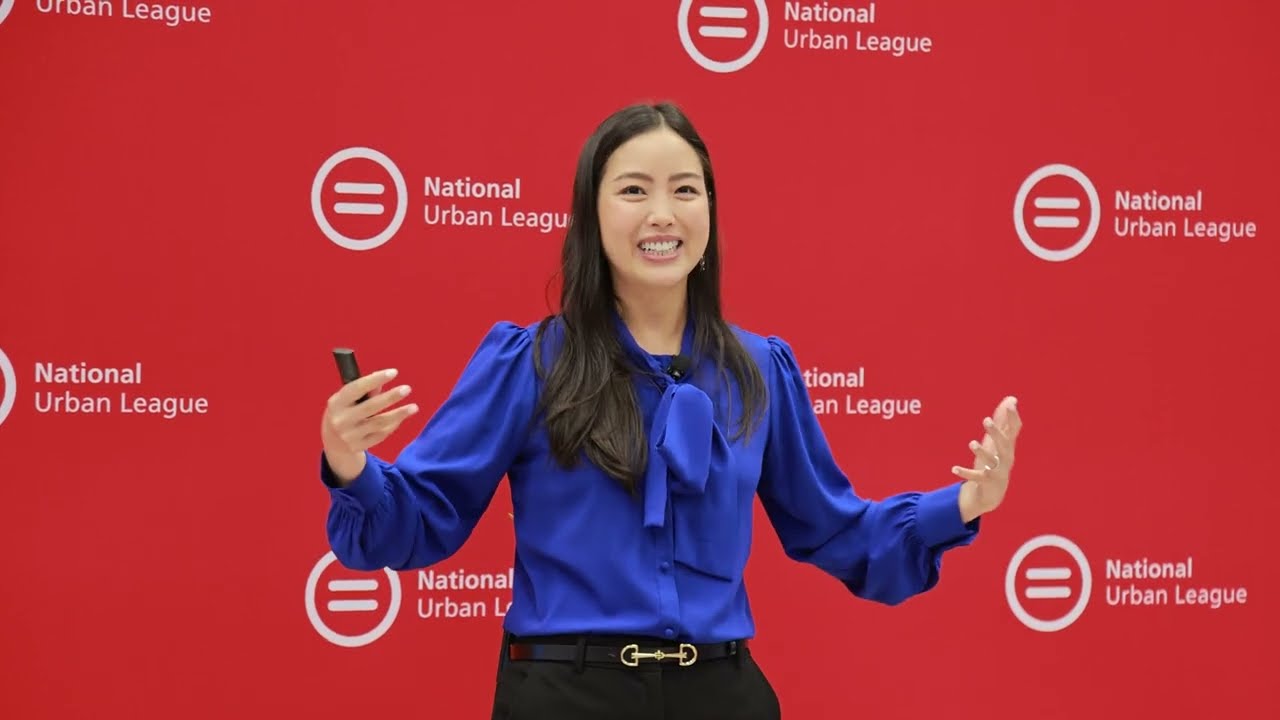
In this keynote for the Digital Careers Success Series, Lorraine K. Lee—former LinkedIn editor, author, and consultant—delivers a data‑driven, step‑by‑step guide to turning LinkedIn from a simple job board into a powerful professional presence platform. She opens with striking statistics (a hire every 8 minutes, 3 million daily posts, 82 % of buyers research sellers on LinkedIn) to underscore the opportunity. The talk is organized around three pillars: (1) Profile Optimization – selecting a high‑impact profile photo (using a genuine Duchenne smile, neutral background, close‑up framing) and crafting a headline that fills the 220‑character limit with job title, targeted keywords, and a concise mission/value statement; (2) Content Creation – starting with thoughtful, 15‑word comments that showcase expertise, then experimenting with various formats (text, image, video, articles, documents/carousels, polls) while noting that image posts double comment rates and that only 1 % of monthly users actively post, leaving ample room for visibility; (3) Relationship Leverage – proactively connecting with strangers using personalized connection‑request notes, requesting highly specific recommendations aligned with career goals, and treating LinkedIn as a community for networking, not just a resume repository. Throughout, Lee mixes research‑backed insights (e.g., 100 ms snap judgments, 14× higher opportunity rate with a photo) with concrete examples of effective headlines and comment styles. She concludes with a recap of the three pillars and invites the audience to connect with her on LinkedIn.
Chapters
Urban Leaguers, it is that time. We are about to get back on stage and have another conversation. But let me ask you this. How did you enjoy the Experian panels? How did you enjoy them? Clap it up. Woo! A lot of information shared, a lot of jewels shared. So make sure you stop by Experian. They definitely have some goodies for you. But I am excited to bring to the stage DCSS Live. So we're going to get into the LinkedIn Labs. But before we do that, DCSS Live, Digital Careers Success Series. I'm excited to introduce their host, Kenneth Johnson.
Good afternoon. Hold on, what are we, afternoon? Good afternoon, everyone. Look, thank you for coming out. I really appreciate it. I'm extremely excited today to introduce my friend, actually, Lorraine K. Lee. Lorraine is a top-rated keynote speaker, consultant, and author of more than 10 popular LinkedIn Learning courses. She was a founding editor at LinkedIn, where she worked for 6 years leading editorial strategies for products like LinkedIn Newsletters and LinkedIn Daily Rundown. She has more than 300,000 followers, and she turned— they turned to her for daily insights, career insights, and advice. And she was named top 15 LinkedIn expert in San Francisco by Influencer Digest. Please give Lorraine Lee a warm Urban League welcome. Lorraine Lee.
Most people don't use LinkedIn correctly. Today, I'm going to make sure you are not one of those people. Now, most people think of LinkedIn as a job site. And they're right. LinkedIn is a wonderful job site, but it is no longer just a job site. The platform is now centered around conversations and community. I love talking about LinkedIn presence because presence encompasses 2 very important things: how you come across to others and where others come across you. When you can do these 2 things well, that is when you truly stand out as a professional and stay competitive both in good markets and more difficult ones. I want to share some data with you. For all my job seekers in the audience, every 8 minutes someone is hired on LinkedIn. For anyone looking to become a thought leader or an expert in their industry, 3 million people post on LinkedIn. And for anyone trying to do business on LinkedIn, 82% of buyers will look up a seller on LinkedIn before replying to prospecting efforts. So how do we take advantage of all this opportunity? Today we're going to be covering 3 main topics: how to optimize your profile, how to create content, and how to embrace relationships. So I want to start off talking about our profile photos. Now, looking at these pictures here, we are making snap judgments about them. In fact, we judge new faces in as little as 100 milliseconds. That means now is the time for us to find the perfect profile picture so that we exude competence, confidence, and approachability. If you're still not quite convinced about the power of a profile picture, having a profile picture on your LinkedIn will make you 14 times more likely to be found and receive new opportunities. Now, we're so lucky that National Urban League has multiple stations for us to take professional photos, so I encourage you all to do that after the session today. Now, what exactly goes into a perfect profile picture? Well, there are 3 things: your smile, your background, and your framing. Now, looking at these smiles here, these are all wonderful profile pictures. They look happy, approachable, genuine, and of course, they are smiling. But they're not just smiling, they are exhibiting something called the Duchenne smile. So let's take a closer look at what a Duchenne smile is. We have 2 photos of yours truly. I'm smiling in both of them, right? My mouth is upturned, but they're giving off different energies. Fair enough. Now, this first photo here is what you would call a social smile or a polite smile. You're not really feeling the happiness there. The second photo, however, there are some key differences, primarily crinkled eyes, lifted cheeks, and of course the upturned smile. So my whole face is working as part of the smile. And when you take your headshots later today, I want you to try to exhibit this type of smile. Next, let's talk about our backgrounds. Now, we don't have to worry as much about our backgrounds here because we have professional backdrops, but when you do take your photos, I want you to make sure that you have a background that is neutral, that is not distracting. So this first photo here, great background, nothing distracting us. These 2 on the bottom, we see some cropped people in the photos, some The second person maybe looks like they're at a sporting event or some sort of concert, so it's taking away attention from their face. Now, I encourage you all, even after the session today, to take more photos in different places. Get creative with it. So for my profile picture, I actually am standing in front of a wall of plants. Plants to me exude warmth, approachability, and so it really just depends what vibe you're trying to give off. If you want to give off a more serious vibe, maybe you take a picture— in an office setting. Now, lastly, I want to talk about our framing. So again, we have 2 really nice profile pictures here, nice smiles, nice backgrounds, but how can we make this better? We want to get up close and personal with our profile pictures. Now, our profile pictures on LinkedIn, they're not very big, so we want to make sure people can really see our face. We want to make sure we're zooming in, and especially on mobile, Our faces are even smaller, so this is very important in that scenario. All right, next I want to talk about our LinkedIn headlines. Now, if I had to make a guess, most of you probably have your job title and your company name in your LinkedIn headline, right? But you probably don't have anything else, and that's understandable because LinkedIn positions our LinkedIn headlines to talk about what we do. However, LinkedIn gives us 220 characters for a reason, so we want to fill up all of that space. So a good formula to follow is your job title, keywords, and a mission and value statement. So you probably all have the job title part down. When it comes to keywords, I want you to think about what, what terms do you want to be searched for? What do you want to be discovered for? How can you describe yourself more holistically as a professional? For example, are you an ERG leader? Are you very passionate about DEI? Are you an SEO expert? Have you taken a certification that's important for your industry? So add those in your keywords. And then think about your mission and value statement. What is it that you do? How can you describe the value that you provide that does not include your job title or any sort of industry jargon? So let's look at 2 examples here to help us. We have my friend Jean Kang. I help you to land your next program manager job without a PMP. So her mission and value statement is right up and center. She also adds additional things that she does professionally to add some credibility. So she's a Maven instructor. We have her senior program manager at Figma, so her job title and company, and she's also worked at companies like LinkedIn, Meta, and Pinterest. So if you have worked at companies that are recognizable names, definitely encourage you all to add that into your headline for added credibility. We have my friend Terry Rice. He's an Entrepreneur Magazine expert in residence. I create content to help entrepreneurs make money, save time, and avoid burnout. So very clear mission and value statement. And he's also a keynote speaker and podcast host. So you can bet if someone is looking for a keynote speaker, if they're looking to get involved in podcasts, Terry's profile is going to rank up higher in search because he has those keywords in his headline. So to summarize, to optimize your profile, I want you all to think about your perfect profile picture and your headline. Next, let's talk about creating content on the platform. Now, when I talk to people about posting on LinkedIn, they're often very nervous or hesitant to do so. They wonder if anyone even wants to hear what they have to say. They wonder if they're going to sound smart. You know, they don't want to sound stupid in front of their colleagues. They don't know what to say. So what I like to recommend for people like that is to start commenting first. Now when you comment on LinkedIn, I want you to avoid this common trap. So we see a lot of this on LinkedIn. I agree. Well said. Thanks for sharing. Now these are all very supportive, very nice comments, but they're not really showing me your area of expertise or what you can bring to the conversation. Instead, you're going to want to try comments like this. I agree with you here. I'd also add LinkedIn isn't just a place for your job. Your whole professional brand and identity is represented here. And so with a comment like this, you can see you're adding your area of expertise. You're opening the door to more conversation and more back and forth. And when you do that, more conversation leads to more visibility for the comment, more visibility for the post, and you're going to get seen by more people and likely gain some followers on the way. Now, when you comment, try to comment with at least 15 words as that signals to the algorithm that you are providing something of value instead of these typical 3-word, 2-word type comments. Now, next, I want to talk about content formats. So once you're getting comfortable with commenting, you want to start thinking about What content format makes the most sense for you? So we have a lot on LinkedIn, thankfully, so we'll choose which one works best for us. So we have text only, text and a link, maybe text and an image, which tends to get 2 times the number of comments, so that's a good one to try. Maybe you like video, you like taking selfie videos, that's a great option and does not need to be a professional video at all. Articles and newsletters, so if you like longer form writing, that might be a good option for for you. Documents and carousels, so if you're a very visual person, this would be a good option. And polls. Now, earlier I said that 3 million people are posting content on LinkedIn, and it sounds like a big number, but it's actually only 1% of LinkedIn's monthly users. So there's still a lot of opportunity here for you all to get noticed through your content. So we summarized, we talked about 2 great ways to create content. So we're gonna think about commenting, and we're gonna think about which content formats we want to experiment with. Lastly, I wanna talk about relationships on the platform. So earlier I said LinkedIn is not just a job site. Well, it's also not a place for you to only connect with people you already know. This is my call to all of you to start connecting with strangers on the platform. And speaking from personal experience, speaking to strangers has opened so many doors for me. I have met new friends, virtual collaborators, people like Ken. I have this opportunity here because I met Ken and he brought me here. So it really just opens up a whole lot of doors. Now when you network with strangers on LinkedIn, I want you to make sure you're sending a personalized message, something like this. Hi name, I'm a title at company. I've been following your content and I found it really valuable as I look to grow my expertise on topic. I'd love to connect with you. Now, if the person isn't already posting content on LinkedIn, no problem. You're just going to want to personalize this so it makes the most sense for whoever you're reaching out to. So maybe something in their career trajectory stood out to you. Maybe you went to the same university. So just make sure that this is personalized. And this is the one thing I really want you all to pay attention to. When you send this message, make sure you are sending it In this note section here. Do not click send. When you add it as a note, it will accompany the connection request, and so the message and the connection request come together, and it makes it a lot more likely that your connection request will be accepted. Now a lot of people on LinkedIn, they will send that connection request and just fingers crossed hope that the person accepts it and then send the message afterwards. Or they will send the message first, and because they're not connected, It just goes automatically to their other inbox and they never see it. So this is a surefire way and a much more likely way that your connection request will be received. Next, I want to talk about recommendations. When we go try a new service, want to try a new restaurant, what do we usually do? We go online, go on Yelp, go on Google, look up recommendations. Recommendations on LinkedIn are the same thing for us. They are social proof for us as professionals. Now, when you ask for recommendations on LinkedIn, I want to make sure that you're getting really, really specific with your asks. So think about what is your goal, what are you trying to reach, and make sure that your recommendation is going to help you get there. So do you want them to highlight that you are a good communicator? Do you want them to highlight that you are a wonderful writer, that you have a great design eye, that you lead really big productive teams? So whatever you're goal is, whether it's a new job or you're trying to get promoted, make sure the recommendation is going to be targeted to help you reach that. Now to summarize, to embrace and leverage relationships on LinkedIn, we're going to want to think about networking with strangers and recommendations. Let's go into our recap. So we covered a lot today. Just want to do a quick recap so everything really sticks. So we talked about how to optimize our profiles, which includes finding the perfect profile picture, And thinking more thoughtfully about our headlines. Then we talked about creating content. So start off with commenting first, and then think through what content formats might make the most sense for you. And then make sure to embrace and leverage your relationships. So that involves networking, reaching out to strangers, and then also making sure that you ask for recommendations that help you get closer to your goal. Thank you so much, everyone, for attending my session today. Thank you. I hope you feel more energized and empowered to tackle your LinkedIn presence And definitely connect with me on LinkedIn, and I will see you there.
Thank you so much. That was fantastic. I don't know, we were taking notes and scanning our LinkedIn profiles to see how we ranked and how we were performing. So Lorraine K. Lee, we certainly thank you for that.