1. Bea Stotzer - New Economics for Women
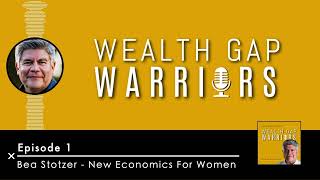
Podcast interview (Wealth Gap Warriors) hosted by Louis Barajas with Bea Stotzer (founder/CEO of New Economics for Women). Bea recounts her first-generation Latina upbringing in poverty, formative influences (mother, social worker, Chicana feminist organizing), and co-founding New Economics for Women in 1985 to center women in economic development. The organization started by building 110 family housing units with childcare and has expanded to about 1,600 affordable housing units, charter schools, entrepreneurial hubs, a lending arm (NCI), and family resource centers. Bea discusses program approaches (meeting basic needs, education, and thriving), measurable impacts during COVID (disbursed over $100M, served >100,000 people), challenges with philanthropy and policy, leadership lessons, and aspirations to scale New internationally and engage with AI and technology.
Questions this video answers
1985
Around 1,600 units
110 units, four-bedroom units with onsite childcare and learning center space; kitchen counter space designed for Latinas (award-winning design).
Over $100 million
Served more than 100,000 people during COVID vs ~15,000 before COVID
Chapters
Foreign.
Welcome to the Wealth Gap Warriors Podcast where we dive deep into the pressing issue of wealth inequality in communities of color, cultural money beliefs and personal finance.
Some of our families are struggling. Even people are actually homeless.
Join us as we interview inspiring individuals and organizations across the United States who are dedicated to eradicating this disparity through their creative solutions and innovative approaches.
Together, let's explore how we can build a more equitable society for all. Here's your host, Luis Barajas. Let's get into it.
Welcome everybody to Wealth Gap warriors. And today we have Beast Dodger. And for our inaugural episode of our podcast, Beast Dodger is the person that I decided was going to be number one on the show and she's number one in my life. I've known before God B I don't know how long we've known each other, but I want to introduce you by reading something that I have for you. A small little bio and then you can add to it. But here we go. So Beatrice Olvera Staatser is a CEO of New Capital, Inc. A real estate development firm in Los Angeles. BE is a nationally recognized business leader and family advocate who has devoted her life to creating economic and business solutions for poor families. Her extensive business and economic development work in the Los Angeles region has been invaluable to setting the vision for several organizations as well as helping to establish long lasting economic and business opportunities for which she has received national and local recognition. BE currently serves on several boards and is a founding board member of several organizations such as Inner City Arts, Hope Women's Law center and what we're going to be talking about today, New Economics for Women, through which she leveraged an initial 97,000 United Way grant into a successful 260 million in investment for new S.O. b, thank you so much. I probably missed like several pages of.
Information about you, but I would love for you to tell us what did an I'd say that's near and dear to your heart that you've been involved in that I missed.
Well, the only well, there are a couple of ones. One of my proudest moments besides Net New and Inner City Arts is being a founding board member of NalCab, which is the national association of Latino Community Asset Builders. It is an association of Latino economic development corporations throughout the United States. When we first started, we were only 11 of us, maybe 12. Now we have over 240 members throughout the United States that's dedicated to building assets for Latino families. So I'm very proud of that and very proud and honored that you've been a speaker at some of the conferences. So that would be the only thing I would add other than I have an amazing husband and two wonderful adults, children, boys that I'm very proud of.
That's great.
So the reason why we brought you on here as inaugural member, because I have known you to be one of the most purest of hard persons who's always had a heart to helping others and helping people in poverty. And so the purpose of this podcast is going to be for other people in leadership positions in national organizations dealing with poverty and communities of color to kind of, you know, listen to somebody like you, who's probably going through issues that you're going through so they, they can understand that, that other people are out there who are struggling, who are working hard, who can contact you, who can, you know, you can share stories of, of, you know, wonderful things that have happened, but also things that could have been done better, things that could be done better. And so that's what the purpose of this podcast is about. So I would love though first for you to give us some context as to why did you make this your life's purpose? What, what is it that caused you to launch New Economics for Women? Because they're, normally there's a story behind a purpose, there's a why behind it. So I'd like to know.
You know, that's a very deep question because it depends on the day and the time on how I answer it, but because there's so many elements to it. But we started.
New Economics for Women.
As a member. Let me go back a little bit to my childhood because I think that'll give a little bit more context as to what steered that passion in me to do something.
And I don't, you know, growing up I didn't have a lot of memories of my childhood and there were reasons for that. But I remember we, you know, I'm first generation Latina immigrant, a family of six kids. My dad was a very famous musician in Mexico. We came to LA because of his first love of jazz. We were a family of six living in a one bedroom house, extremely poor. My parents bedroom was in the kitchen floor because the kids had to have the den in the living room and the one bedroom that was available.
But throughout it all, I remember being happy. I remember not even knowing that we were living in poverty. I remember very vividly my mom constantly talking about how grateful we are living in this country because it was founded on the premise and that government was there to ensure that we Had a life of life, liberty and the pursuit of happiness. She always ingrained in me that level of understanding that we lived in such an amazing country that truly cared about us. And I had a brother and sister with muscular dystrophy. So throughout my childhood there were people and individuals and organizations that helped our family try to succeed. I remember later on that, you know, it was a very difficult childhood.
Regarding, you know, such sharp, vivid memories now about the abuse, the violence, you know, the days we begged for food. I begged for food with my mom.
And the. And the desperation and the shame that we both had that we had to do all of that. But we endured. And my mom was very tireless about making sure that I understood that no matter how dire the situation was, there was always a greater purpose, a divine plan that we might only grasp later on in the future. And now that I look back, I understand that all of that was integral to the reason why when I became a member of Comision Feminine Mexicana Nacional, which is a Chicana feminist advocate organization around the Reagan administration, when, you know, that whole.
Stupid theory of trickle down economics, we didn't believe it, we couldn't understand it. And they were using women as a reason why for our welfare, to get rid of all of the social programs that would really protecting kids from hunger and families from extreme poverty.
So we ended up organizing ourselves around the idea that we as women, we were being excluded from really addressing the issues of poverty. And we went around looking at answers as to how, why poverty exists and what is this economic development concept that everybody was talking about as to why from the top down you would end up on the bottom having more economic opportunity when on a day to day basis we knew it was virtualized.
That turned into a two year conversation and discovery that really economic development was a term that nobody really understood it was used. And that the underpinning of all economic opportunity we believe centered around women, centered around as mothers, we were respons for how values were instilled in our families. The five of us that were responsible for starting, you really understood that our life experience as children and what we believed in, which was a great education, having a great job, earning enough money to make a better future for our children, learning about investments and income. And all of that would not have happened if it had not been our mother's believing in this country, insisting that we have a good education and being committed to the values of our Latino community.
So we went about.
Identifying that, you know, that centered around.
Creating new economics for women. And the name was Very intentional. It was new economics for women because we were excluded from the equation. And we truly believe that women are the epitome of creating, not only strengthening our democracy, but creating opportunity for themselves, for their family and community. Without stable.
Stability of women and having the resources that they need, we don't have a strong fabric as a democracy. I truly believe that. And that's why we started New Economics.
Yeah, but, you know, so the people that are listening right now, there are a lot of people who are going through what you went through. Right. I mean, the stories that you and I have shared about each other's lives and what we've had to overcome. But very few people would have then figured out how to take that step, the next step to actually opening up an organization and finding funding for it and fighting to get money for it. Right. That's not. That's a huge step. That's a big disconnect. So was it after, like, did you go to college? Tell me about. I mean, the context is there, so the corazon is there. Right, I get that part. But the part, though is that what I'm still missing now is what happened? Did you go to college? Did you meet people? Did you guys get together as a group of, I don't know, mothers and decide you're going to do something? And everybody had different unique abilities. I just want to know what that missing step, because there are a lot of people that are going through poverty, but to do what you've done, there's something that we still need to know about. Tell me what happened. What's that step that's missing?
Wow, that's a great question.
What happened while in commission? We decided to form New Economics for Women.
With the understanding that it was about changing the mindset around economic opportunity for women.
And.
But let me take a step back real quick. Let me take a step back. So to get to commission, did you getting out of, like, for example, I came out of Boyle Heights, right. And I was fortunate enough that little did I know that if it weren't for a teacher that did the application for UCLA and Stanford, I've never would have gone. I would have been a welder at an ornamental iron shop at this point right now, probably pretty good one, but that's what I would have done. Did you go to college after high school? Did you go to high school? I mean, where did you meet these powerful women to get together to think about the next step of building that? I just want people to understand where, you know, you got to a certain level. But did you go to college? What did you study? Where did you get these ideas? Where did you form these ideas? And where did you get the knowledge to take the next step to actually build what you've built?
So when I, when my, my mom was forced to get on welfare.
It was a very traumatic experience. And we had a wealth. And this was a time where the welfare worker would go in, in the home and say, and make sure that they looked at your closets, looked at the cabinets to make sure that the guy wasn't there. You know. And my mom had a. Thank God, a social worker, a male guy who came in and still crying, would tell him that she did not want to be on welfare, that she did not want the check. And he, she said, he said, this is the greatest country that is giving you money to be a good mom and let me share with you that I'm here for you. And then he said, all right, all the children, you line up on the. And I remember the turquoise couch that we had in the living room. And he looked at every single one of us and said, your mom is getting paid to be a good mom. You are now responsible for being good students. And you also have an obligation to pay back the government, everything that we're giving your mom by making sure that you are of service to this country. That was etched in us in almost every conversation that.
I think that was the beginning.
The next thing is that I, you know, we. Because of my obligations of working, I had two jobs when I was in high school, so we can eat. And then I ended up going to. To East LA College. And at East LA College I had a professor who insisted that I apply for State College. She thought that I should have gone to university. I told her we couldn't afford it.
She was able to help me get into Cal State Northridge, which is now Cal State Northridge, and there forming a mecha. And I helped start Chicanos for Law in Northridge and Cal State la. The whole issue around how does policy work? Was an argument that we had all the time in conversations.
And I got introduced right after I got my, my.
My master's. I then went, got married, got my master's and came back to LA because we had to take care of my. My sister. My brother had just passed away and got into the city of la and somebody, one of my co workers introduced me to commission Feminil.
And you need to understand that at that point in my life, I was a wallflower. I was afraid of everything. I was afraid that I didn't know enough that I needed to understand how I was going to go back. So working for the city of LA was my way of saying, okay, I've done my duty, no more. That's it. Right. Well, my commission.
Days opened up my eyes to the whole issue of how oppressed women were. And it was really a conversation with Gloria Molina, because she was one of the women.
Where she said we needed to be at the table. And it was about what I was going to do, that it had nothing to do with anybody else. And she told me, bea, if you're going to be part of this, you need to know that it doesn't matter who's in the room. What matters is how are you going to help women.
Chicanas at that time. And that stayed with me, you know, so the whole issue on the povertization of.
What is it, the how poverty was created, the whole issue around how the economy works against families was constantly in my mind, because that was the experience that I had as a child. We didn't ever had enough.
And everything that drives me, I think, is centered around that this government and this democracy is centered around creating a better life for all of us, not just one race or one color or one entity, that if we lose faith in our government, we lose our fabric of our community because we need to have a safety valve for those that can't do it for themselves.
So I think that kind of is the missing link.
I also was very much.
Involved in trying to understand how government works.
That power and government, because of what we had to go through to even get enough to eat.
Why does it work that way? For me, it was something that was constantly in my mind. And why were women constantly being victimized as a result of how they were treated intentionally? So.
I think those were the two questions that I've always centered around. What I do.
That's a phenomenal story.
You know, I was going to go into your organization, but I want to talk about something that you brought up. So, you know, my dad, I don't think maybe just recently knows who the president is, but my dad was never involved. My dad just put one foot, you know, would wake up, put one foot in front of the other, opened up his ornamental iron shop, worked every day, did really well, saved his money invested. But tell me about how much. How involved should a person get an individual in understanding the politics of what's going on? Are they having a lot of influence? Is it for their organization? Do they need to really get involved on the political side? Because it seems Like Gloria Molina. I don't know if she was your mentor or you had other mentors who gave you information, kind of gave you inside information as to learning about the politics of the county of Los Angeles, for example, to go out and get funding. And if you wouldn't have had that knowledge, maybe you wouldn't have beaten other organizations to get money for your organization. But how important is it to get involved in local or community, the regional politics or national politics for an organization that's fighting poverty?
It's a fine line because, yes, you have to get involved. But I want to go back a little bit, Luis, to really help everyone understand that everything that you do is political.
The way you spend your money, where you invest your money, how you invest your money, and why you invest your money. And invest means buying a Coke versus a Pepsi, right? Saving $10 versus 100.
Supporting a candidate who doesn't like gay people because of your religious beliefs. Those are all political decisions.
For us as an organization and many of the organizations that I sit on the boards, it is incredibly critical for every organization to take a stand against economic injustice and to fight for economic equity because we're losing the fabric of the middle class. We're constantly thinking about the 1% who now owns more, has more assets and wealth, and all of the middle class put together in the United States. That was unheard of when I was growing up. I didn't understand, you know, any of that until. Until we start making the shareholder the primary purpose of why the economy should work.
So for organizations that are involved in wealth building.
Getting rid of barriers, simple barriers that you know that are. You know that your clients or your residents are dealing with is important in order to make it more just and more equitable. I'll give you an example.
Right now we have an incredible CGEN program, we call it. It's a promotora program. There's seven of them that went out and recruited close to 300 micro businesses. We're helping 100 of them with grants and technical assistance so they can formalize be have their business formal with their license and everything. And one of the things that they've discovered is that if they open a business account, it costs them $20 a month. Masamenos, I don't know the exact number, when they're only making 200 extra dollars a month to help balance their paycheck and their budget. That $20 is huge in comparison to the revenue that they're bringing in.
So can we ask financial institutions to waive that fee for two years? Until their income justifies a certain percentage of their revenue. Those are the kinds of things that are critical. They're minor, but they're huge when it comes to helping women get out of poverty and helping women who are entrepreneurs have a better way of building their revenue and a better way of creating capital, you know, and opportunities for themselves and for the community.
Fantastic. Tell us about New Economics for Women. Just kind of the year it started, what your original intentions were, where you are now, all the services you provide. Where, where do you provide these services?
Tell us about you.
Oh, my gosh.
Well, like I said, New Economics for Women was founded in 1985 by five Latinas Chicanas who truly believed that in order.
For us to prove that you can reduce poverty, that we were going to form an organization that centered around helping women understand their mindset about money and understand the opportunities offered to them in order to get out of poverty. And in order to do that, we truly believe that we had to meet Maslow's hierarchy of needs.
Where you have to have the safety of hunger first before you have the education and then the level of thriving. So everything we've done has been centered around those three pillars.
You know, the safety, taking care of, getting the education that you need in order to know how your finances work and the services you need to help your family. And then what's going to help you thrive? What's going to help you get to the middle class and those that are in the middle class, what are you going to help to get it make it even better?
So we have. We were the first Latino organizations formed for economic development in the United States. We were the first to build 110 units with four bedrooms for our Latino families in the state of California. That was our first project, by the way.
And the funny thing about it is that I had no idea how to go about any of this. So if anybody's listening out there, you don't have to have the knowledge. You have to have the convention and the courage and the understanding to be in the room and explain your passion and your outcome.
So our first project.
The city believed in our vision to build housing with childcare on site, with four bedrooms for large families and with learning center space on site. We were the first to build enough counter space in the kitchens for Latinas to be able to cook, which we got an award for its design to. Now we are moving for today, we're an organization that's close to. No, it's over 200 employees. We had started two charter schools in Order to meet the needs of our children because they were horrifically being neglected in the neighborhood. We were the first to build a charter school planned community in Canoga park that has been awarded and nationally recognized for being a nonprofit that built a charter school, had the school district buy it and then we rent it for a dollar a year.
High performing schools. We created an entrepreneurial hub to help women not only to start from the micro businesses and start their own business, but also for those that already have their business, provide the technical assistance, bring in the capital that they need through such initiatives as Empresario which is a crowdfunding program that's grant or focused Kiva as well as microlending that we have, we have a women's business center. We've built around 1600 units of affordable housing. We have one facility that's specifically for those women who are experiencing homelessness with children with one child.
We have family Source centers, we have two that really create.
A whole center around basic needs counseling, financial. We call them prosperity coaches.
Let's see what else can I tell you? God, there's so much that we do.
And it's, it's, it's just completely unbelievable. You know, there is no way that anyone could really understand the all the wonderful things that you're doing at New and what you started with that one idea and whether was it the five founding members and where it's gone to. And I can only imagine with your thought process of where this the organization is going to be, you know, 10, 15, 20 years from now as well. How big is the organization? How many employees do you have? Is it just is only in the state of California. What does the organizational structure look like?
We have created several entities so that we don't have mission creep that are specific to their purpose. New Academy, that's where we have the two charter schools. As I mentioned before, it's New Community Investment nci that is our lending arm for new. That's where we hope to do not only micro business lending but mortgage lending eventually and also lending for pre development for affordable housing. And I don't mean subsidized housing. I really truly mean to really help in first time homeowner programs and things like that so families can really earn equity, can really begin a good life.
We each of our.
We started New Capital which is ahead of that. That's our real estate and that's our property management.
So each organization has.
I think New Academy has over close to 100. New economics for women has over 100.
New capital has close to 45, I think, or 40. NCI has six and growing. It's a challenge to be able to manage and really help get philanthropy to understand.
What asset building and investment in women should be. Because philanthropy, as you know, does not have a history of investing in our community at all. And yet we are the ones that have lifted the economy. We're responsible for the economic engine of this United States. And less than 2% philanthropic dollars go to Latino communities, let alone Latina organizations.
Right. It's again, absolutely amazing everything you've done, the number of people you employ and pay, the families that are being taken care of. And so I know that people that are out there who are just starting their nonprofits or their organizations or starting their fight against economic disparity in the United States looking at you and say, God one day just to be as successful as you. But I would love for you to share still today, what do you still tolerate? What is, what is frustrating to you? What are the challenges that you still face that, you know, you thought you would probably overcome by now? What are the big challenges that, that are out there in your fight against economic disparity?
Luis, what a big question.
I think that we're.
I think from a. There's several things that frustrate me. One is not really understanding the suffering of families as it, as it's occurring. That government public officials, no matter what side you're on.
Are so focused on the short term gain and short term solution that we don't have a long term structural.
Answers to the kinds of things that impede capital to community.
Frustrates me that.
Gen Z and all of the younger generations.
Don'T have visions. They know social media, they know what doesn't feel like. But contributors to climate change, yes, contributors to something that imports. But what is the greater vision for humanity? What are the things that are going to be important when we're gone that they want to lift and carry on and be responsible for? My purpose is a very simple one. I don't want anyone to suffer the way my mom did.
Her pain is still in me. It was so bad.
Yet I know and I'm optimistic that.
A higher force and God will give me an answer if I ask a question right? In that I have relationships that will give me the truth and that I am. I truly believe that I am as transparent as I can be and really live my life on the sole purpose of what God has for me that day.
I don't question.
The barriers. I question when it, when no one wants to address it. It Just infuriates me.
So I think for me, not asking the right questions in a meeting frustrates me. When we're dealing with poverty or we're dealing with women that need or families that need an apartment. Right now we have such a crisis on homelessness and we have such a crisis on evictions because of COVID We're not talking about higher incomes in order for people to pay their rent. We're not talking about incentives for landlords to forgive rent so they can have better incentives to keep them in place.
Yes, a lot of families took advantage of it, but a lot of families didn't. And they're really in desperate need. And do we really want children on the streets? I mean, what are we doing to ourselves? You know, so those are the things right now today are frustrating me.
Great be. You know, you've got so much knowledge and experience, but throughout your career I'm sure you must have received some epiphanies or lessons that you never had thought about that you now think about differently.
I'll give you an example. You know my story, as everybody knows, I left working with really super wealthy people, go back to the battle and open up a firm. And because everybody needed, I thought everybody in Boyle Heights could use some wisdom. And I had a lot of education behind me on financial planning and I saw a lot of people who were hurting and I thought my, my biggest epiphany was that I thought that I could help everybody who was out there hurting and I was there for them. And, and then I realized, I'll give you an analogy. You and I are on this wonderful cruise ship and we see somebody drowning and we throw out a lifesaver, right? And whether they're drowning in my situation because of financial plan or drowning in debt or drowning in the water, and we say hold on to the lifesaver. BNI on this beautiful ship, we'll bring you on board, there's blankets, there's food and drinks and just hold on to it. And going back to the body when I was there on Whittier and Calzona, I would do that and people would push away that lifesaver, right? They didn't, they weren't ready for the help or didn't want the help. So it was a big epiphany for me. What lessons have you learned or thought process that that have changed over the years?
That, that, that, that have come through the experience of working in this environment?
God, there's so many. I think that the one thing that, that for those that are in this, you know, wealth cap warriors that you called understand that. That your organization and your life is a reflection of what you don't want to deal with.
Your kukuis are the ones that drive.
Sometimes the things are not right. You know.
I've learned that the organization reflects my inadequacies, and I need to, you know, I need to address those inadequacies all the time. And I'm constantly learning. I've also learned that you're not a hero. And you've taught me this in your own community, necessarily.
That you have to be. You have to be aware.
Of where you're going constantly to make sure if it's making sense today. I think that has really helped me. By living your core values, you shouldn't be in conflict, but to get there, you need to really understand what they are.
And I think instinctively my mom helped me and my family experience. I knew what they were, which is country, family, and community at the time. And I still believe in country, family, and community.
I'm not conflicted because I truly am living who I think I am and the values that I cherish.
The other lessons that I've learned is that people lie.
You know, for their own benefit.
And it's okay. Just make sure they're not a part of your life, you know.
And. And there are. There are a lot of leaders that are jealous of other leaders that, you know, try to put you down. Don't let it get it to you. Just because you're. You're different doesn't mean you're not powerful. Just because you are a woman doesn't mean you don't have a place in the room. I learned through my Boyle Heights experience, like you. Gentes, Gente. You know, when you connect with a good soul. The first moment you and I met, it was like, wow, this feels so wonderful and natural. And we've been friends ever since. Yeah.
We've been kindred spirits, as they say.
Absolutely. What other lessons have I learned? That I'm my worst enemy.
Many times. And I have to really have given myself the time not to be so hard on myself. I've learned to really own my own Crab Ola and make sure that I don't need to tell it to anybody. Sometimes I tell it to my friends who are open to hear it.
Yeah.
And many times I ask for forgiveness and help, which I've always. You know, you and I have talked about that many years. We need each other's help. Find those individuals that will give you that kind of nonjudgment. And an honest feedback about what you're doing and why you're seeing things the way they are and understand your trauma. You really. What triggers you? Certain things triggered me, you know, and I've never, I've, I've said this to very few people. When, when Trump got elected, I had a hard time the first year. There was something about it that I just couldn't understand.
About me because I was not on the street. I was not, you know, running around going crazy with all the stupid things that he said. But I realized it triggered me when I was a little girl that I had to observe abuse. I had to observe the situation in order to figure out how I was going to survive.
And it was not until I realized he said something and I don't know what it was that I may said, oh my God, I'm looking at my dad. Oh my God, this is what he did, you know.
And that was very.
Hurtful. I mean, I was astonished that I thought I had dealt with that when I didn't, because certain things trigger and bring it up. So now I know. I, now I know that.
That trauma comes back. I didn't think it would. I thought I healed. I thought I could count, you know, I was fine. No, it comes back and it's okay.
And you need to, you just need to ask for help.
And that was one of the recent, most urgent lessons that I learned around that, is that, you know, certain things can trigger your trauma that you thought you had dealt with in the past.
That is, that's a brutally honest. That's what I love about you. I mean, you never hold back. As we end this podcast going towards the end now here, if you can share maybe one or two things that you would have done differently from the get go, starting your organization or you would have known. What would you have done differently if you could have done one or two things differently? I mean, you've done everything right, I mean, to get to where you. You've done. I know that we make a lot of mistakes and we learn and we grow, but if you had to go back and say, I wish I would have known this from the get go so I could have done it a little differently. Is there anything that, that you can think of?
I don't think so, Luis, because I made a lot of mistakes, but I was not afraid. You know, I had a very, I was very clear about what we wanted to create. We wanted to create affordable housing that was specifically designed for women, for Latinas, large families that we were going to Provide services that helped them understand their economic opportunities, how to get to the dreams that they wanted, that we were going to prove. We were going to reduce poverty by helping women. And we measured that from the very beginning.
Just during COVID we distribute over $100 million directly to families and created opportunities for them to buy homes. And we served more than 100,000 people when before COVID we were at 15,000. I mean, it's crazy, right?
What I think I didn't know then that I would have known is how racist philanthropy is.
I didn't know how racist philanthropy was.
Can you prepare for, I mean, so knowing now that you know that, right. And you didn't know it before because you had made an assumption that it shouldn't be racist because philanthropy, people are giving and whatever, but can that be changed? I mean, I mean, knowing that, or can you prepare for that? Or is it just understanding that so your heart isn't broken when you find out that it's racist?
Right. I mean, it's you. You know that now. But maybe you came in under the assumptive that it wasn't that. And then at some point, either that made you really upset or you had to accept that fact and still deal with it to continue to help the families you're helping with. Or maybe it broke your heart and it took you a while to get over it. I don't know.
Well, it did set me back when I realized that no matter what corporation or philanthropy we were dealing with.
We only had a small stake.
And opportunity. It wasn't about the big picture or.
It was not a McKinsey Scott moment.
We're not a McKinsey Scott moment either.
But at the time, I think I was really taken aback at how generous people were in my community. And philanthropy was generous. It wasn't generous enough and I didn't understand it. And I think it really hurt to see that no matter who I was talking to on the other side, the constraints and the lack of transparency of philanthropy, foundations are not obligated to do a 990. They're not obligated to create an annual report, really astounded me.
And I know racist saying that philanthropy is racist is very harsh.
But if I look back throughout the years, if I would have known how much loops I had to go through in order to get the small amount of money that we did, I would have gone to and did a lot, would have done a lot more to have.
Relationships and philanthropy that would have given me more money instead of trying to get the 10 or the 20 or the 30,000, because that's that they weren't going to give us any more than that. No.
Yeah. So what part of what you do on a daily basis gives you the most joy at this point?
What do you do now that you know, if you could do it all your time? Right. We as, as actually as somebody who's running and helping run such so many people and organizations and getting involved in boards. But what gives you the most amount of joy in your heart?
Oh, my God. There's so many things when.
I think hearing from staff that we've helped someone, you know, they tell me the description. But what I love doing is.
You know, we do mindset for more training, which is on your how the mind works and your relationship to money and what kind of investments you need to make in order to create wealth. I could be on that. And time just doesn't exist. I love that. I also, what gives me the greatest joy is helping leaders understand their own wealth and their own mindset in order to be better. I mean, and to really understand how poverty works with women and, and whether they even understand what poverty is. Because poverty is not about money. Poverty is a mindset. You can have a lot of money and still be poor in relationships, in resources. You can be poor in the fact that you feel alone. It is not about money. It's really about the emotion that you have, the joy that you have and how you live your life that is congruent with your values.
Absolutely.
Wow, that's amazing.
So last quick final questions. What book or documentary or movie or song could you share with us that's inspired you that, that, that other people in this industry would love to read? Right. Is there a book. You know, I've read, I've read lots of books. And I mean, as you can tell, I read, you know, I read a hundred books a year. I've been reading 100 books a year for the last 20, 30 years. And I can, you know, share three or four books that really I've given away, sent out, you know, bought for others. But anything that, that, that you can think of that you would want somebody to read or watch or listen to.
That had inspiration to you, that, that kept you going.
There's been so many. You and I have had both. But I think right now, what, what I'm, I'm looking at, and I've read now twice, that really goes back to my strategic Coach days, is 10x is better than 2x or. Right?
Something like that.
Yeah. That's fantastic. And then there's another one that I just. That's by Dan.
So by the way, that's by Dan Sullivan.
Yes, Dan Sullivan. How he describes the 10x is what I hope that leaders who are listening can really look at. Because your 10x will determine what you can get rid of in order to really look at who you want to be and start organizing your life around who you want to be, which is fantastic. And then Vivid Vision by Cameron. Is it Cameron? I can't remember. Yeah, I just started reading that. That's really a good one.
That's a great book. Yeah. You turn your big goals into vivid. Into vivid visions. That's absolutely book.
Yeah.
All right, last question and we'll wrap it up here. But I will share with you. I am just listening to you today. I can't wait for other people to hear this podcast. I am so proud of who you are. I am so blessed to have gotten to know you. The last question for you is what do you still want to achieve?
What's something that you've always wanted to do or have or become that you haven't been able to get there yet? And what do you want to achieve?
Well.
I would.
What I want to achieve is for new to be internationally known for changing the mindset of poverty among the world.
I want to understand AI.
And how it's going to democratize our community if it ever will, and really understand how technology could amplify.
That global understanding that we have to help each other.
And without service to others, we won't get nowhere.
B thank you so much for being my inaugural podcast.
Interview. I. I promise you that I will be probably. I'll probably airing this on the 50th and the hundred and fiftieth podcast. Seriously, I want everybody to know who you are, where your heart is, what your vision is, what you've accomplished in your lifetime and what you have to accomplish. And I also know that you mentor a lot of people and you are somebody that I have looked up to my whole life and whenever I've had a problem, just want everybody listening to. Whenever I've had a doubt, whenever I've needed honesty, I've picked up the phone and called Bea Stodzer because I can actually really call her my friend. I love you, Bea. Thank you so much for being with me today.
You have honored me greatly and you've made me cry. So thank you.
Thank you, Bea.
Thank you for listening. Listening to the Wealth Gap warriors podcast. We hope you enjoyed today's episode. I love the show, guys. You're awesome.
Join Lewis next time as we continue our wealth gap warrior journey, creating a brighter future for all.









