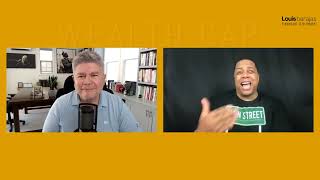
Ryan Mack went from caddying in Detroit poverty to Wall Street trading, then pivoted to financial education for underbanked communities. He founded Optimum Capital Management after his first paid client check for $250 in August 2005, and now partners with unions like 1199 SEIU to reach 450,000 members through digital financial literacy programs.
Questions this video answers
University of Michigan
August 2005; US$250
Circa September 2004
A Monday in September 2000 (flew out that weekend for an interview in Jersey City)
(917) 809-4231
Chapters
Foreign.
Welcome to the Wealth Gap warriors podcast where we dive deep into the pressing issue of wealth inequality in communities of color, cultural money beliefs and personal finance. Some of our families are struggling. Even people are actually homeless. Join us as we interview inspiring individuals and organizations across the United States who are dedicated to eradicating this disparity through their creative solutions and innovative approaches.
Together, let's explore how we can build.
A more equitable society for all.
Here's your host, Luis Barajas. Let's get into it.
Today on our podcast from Wealth Gap warriors, we have Ryan Mack, who is. Well, actually we looked a little different, but we're kind of. He's like my brother from another mother. Ryan and I have known each other from CNN days. We were back in New York shooting on live on cnn and he was a gentleman who's just impressed me. But back then, when I knew Ryan, it looked like he was wearing suits and ties and, and looks like he was headed for Wall street. And then all of a sudden he blows me away. And he's now on Main Street. And if you go to his podcast, I mean, you know, go to his, his, the, all his social media, Instagram, Facebook, TikTok, you're going to see how he's changing the world in communities of color and how he is a wealth gap warrior. Ryan, it's a pleasure to have you here, my brother.
It's always, always a pleasure being here with you. And it's always been a pleasure seeing the work, seeing the walk that you've been walking. You've been doing some stuff yourself out there, you know, lightweight. You've been in this game. I look up to you and see the stuff you're doing. So kudos to you and all the stuff you continue to do so.
Well, I appreciate that. But today's about you, Ryan. And again, I go back to Ryan's out there in communities of color, teaching people all about financial literacy and cutting the bullshit out, right? None of this, none of this selling crap and insurance, you know what to buy. He's not selling anything. What he's selling is the idea that you've got to change as a person to overcome poverty. Now today, though, we want to hear about your journey. We want to get to know who you are. We want other people who are wealth gap warriors to realize that you have the same struggles and, and, and tolerations and upsets and also success stories. But tell us where you come from. Tell us how you got started in the industry and then how you made that shift into, from, from Wall street to Main Street.
It was a. I was a stock trader. I got my University of Michigan business school, finance. I wanted to. My job was. When I was in business school, I always wanted to get to New York, But I'm from Detroit, so growing up in Detroit, I was no stranger to poverty. In my own family, even. I'm very familiar with the cheese that doesn't melt in the oven and the box of. The white box of cornflakes. We didn't know Tony the Tiger in our house. We just knew.
The black letters of cornflakes. And actually, it took some brothers that I was teaching in prison to teach me about the peanut butter that we used to have to eat because my plastic fork would always break off in our peanut butter. From the government growing up, he said you had to put a little oil in it. Put a little oil and stir it up. So that's the household that we grew up in. But I went to Michigan, went to business school, interviewed a lot. I want to get to Wall Street, Wall Street. And when I got. I got an offer from a stock trading firm, a small stock trading firm in Detroit. I wanted to go to the largest NASDAQ trading firm. I hustled my way there. They gave me an offer about. About a year after, right before the market crashed in 2000.
And then I got to New York, working in, technically, Jersey City, but it was a Wall street firm, and I was trading biotechnology stocks and.
All right, hold on, hold on, hold on a second here. So what you're doing is you're leaving out the best part. It told us all the probably food that you now go back and think about. Man, you know, I kind of missed that food. I mean, I. I knew that when it was poor, right? But. But here's the thing. Tell us about your household, because from where you're coming from, the household you were in, nobody was talking about stocks. Nobody was talking about money. Nobody was talking. Nobody. To this day, they probably don't know a lot about money only because of you, you know?
So who.
Who inspired you? What teacher? What. What gave you the presence? Or was there a person in your life that you met maybe through school or through high school or junior high or some mentor that changed your mind or gave you the courage and the confidence to even go to college?
Truthfully, it was, well, going to college, there's no question. My mother. It was no question I was going to college, right? She was. The re. Enrolled us in a program called the Wall Street. I mean, not the Western Golf association program, which is A caddy. So I caddied for nine, for about nine years from my first job was 11. And after that, at the age of 11, the bag was taller than me. Call me small fry. Literally the bag was up here and I was struggling to carry it. And I'm running behind the golfers. But most of those guys that I would caddy for, they were doctors, lawyers, I remember. So I was. I would say that not only did they pay me a full ride scholarship to go to school, the experience of that I did the keynote to the caddy banquet. It was the best free speech I ever gave, that I got to see all the caddies that were coming up like.
How I used to. It was just a beautiful, like to see their walk in the sea and tell stories about how like I know your shoes stink and I know that your towel stinks and there's got to be your house to keep your smelly shoes and towels when you come home from work. And how when you count your money at like you 11 years old, you get your first hundred dollars. I laid it out all on the kitchen table and it was just a beautiful thing. Man, I've never seen that much money. And I squandered all of it. I spent it all on two ugly short sets on 8 mile and a Baker Square pie and a Whopper. I bought a two double Whopper combo meal from Burger King and that was a hundred bucks gone in like two days. That was the first money lesson I had. So my mother said, she let me do it and she said, okay, I'm glad you're happy spending all that money. But now you're. You just turned. I was 11, so I just turned 12. Now when you go back to school next year, you're buying all your school clothes yourself. Cause if you got that much money to squander all that stuff, all your school. So from 12 on, I had to buy all my school clothes with the Caddy money so that, that those lessons and I, And I didn't know my mother was struggling. I didn't, you know, we, we were content. We was just happy just to be watching the black and white television with the pliers, the hanger and the wire and whatnot. We was happy to watch that little tv that was good for us. But.
Years later my mother told me that she used to shop at the thrift, that she would go window shopping at Somerset Mall at the highfalutin spot. And then she would come back on her side of the tracks and would window by the same stuff she saw in the window in the thrift store for like $5 an outfit. So I didn't know that she was struggling like that. We didn't. She shielded all of us from that. But she taught us money lessons. She taught us how to save. She taught. She made me spend money, like every money I spent. When I started buying all my school clothes, it had a purpose, had value. And I knew that we didn't have as much toys and whatnot as everybody else had. So that kind of frustrated me that we had. I knew that there. There was evidence that we didn't have as much as others did, but I didn't feel the lack because we always had food. I liked the government cheese and made the best omelets in the world. And we just. We always had food on the table. But I think if anybody.
Yeah, but I'm thinking, you know. Right. I mean, I didn't learn how to play golf until I was in my 40s because I was so intimidated, not by the sport, but because I thought it was a rich man's sport. And, and. And, you know, you're telling me you're a cat. Where I've played, I haven't even seen caddies. So the thing is that you had to somehow been influenced by certain people that were already professionals. I don't know how many blacks are playing golf at. At the golf course you were at, but I don't know if anybody gave you words of wisdom or. Because you saw them, you saw them as regular people who are professionals. And maybe you felt, you know, because one of the things that I did, I was at ucla, I worked in the partnership program where my job was to bring kids from Compton and East LA for a week at ucla, to get them out of their neighborhoods and out of their environments, to get them so they can understand and not be intimidated by college kids. Right. It seemed like at that point. I'll tell you what, when I first played golf in my 40s, I didn't know what I was supposed to wear. Shorts or a college shirt or how it's supposed to be. It was really intimidating for me. Right. And. And I mean, when I grew up, we used golf clubs as weapons, brother. Weapons.
Well, we did, too. Trust me.
Yeah.
So.
So, yeah, so there had to have been. Besides your mother. Seems like your mother was a real big influence. But indirectly, they were. Maybe you were getting advice from professionals because they saw this young black kid who was there who was helping them out with golf game. So there had to be some level of mind shifts there. Right.
And Absolutely. Because we. I remember my first tip. Like it's just certain. There's so many lessons and it accumulated. Like Dr. Chris Sim. I always quote him. He's one of the best brothers in education. He's always talking about you're always being educated, even when you people on the street corner and the cipher freestyling, that's an educational lesson. So there's always education everywhere we're at. So I got taught by Jack Scobie. The cheapest tip, my first tip, $3. I didn't. I got there at 6am and I got there at 5am because it's my first day. I didn't get a loop go around until 11am because I was too short. Nobody wanted to pick me and he played slow. So I didn't get back off the course till 4pm $8 flat rate, $3 tip. I was happy with 11 bucks. And my father kind of looked at me like, whoa, you happy with $11? But that was a money lesson that like at least I have money. I never had my own money. That was my first money.
Right.
He was the first doctor I talked to. He was, he told me he didn't really talk a lot about like the day to day of being a doctor, but just his family and just talking about how long he's been a doctor and where he went to school. And he took a strong interest in me. I never knew he was this old white guy like concerned about me, you know, like, who is this guy? Like I'm. I'm not familiar with a lot of white folks period. But here's this guy really taking an interest in me and he's a one, he is a doctor. I guess doctors are pretty cool people. So at 11 years old, 12 years old, I'm already starting to see the world in a more expansive light than just what my current surroundings are. At 11, 12 years old, I'm seeing doctors as normal, cool people. I'm seeing.
Tommy and I forget Tommy Raymond, who was a financial planner and he was a baller, but he had a huge temper tantrum. So he would throw his clubs all the time. So I used to have to go pick his clubs up. So I'm seeing him throw temper tantrums. I'm seeing the old people, the, the older, the 80 years old, they, the couples playing golf together and they're still together. And I'm like, wow, you all have been made how long? 50 years. Oh, wow. So now I'm, you know, learning about relationships through them and see so it's. Everything was A lesson I learned about gambling. They would gamble and play, talk every day with the money. So I lost my. I lost 50 bucks, that. I lost 50 bucks. And. And my father said, you know, that's the last time you gonna gamble. I said, yeah, I'm not doing that anymore. I can't do it. So that became my gambling lesson. It was so many lessons from Caddy and that, yeah, I got. I got to go to University of Michigan free of charge with, like, I tell them all the time. That was like a perk, right? That was like the, the perk of it. I wish that all people had when I. And like, I. Seeing those kids and seeing. And them going through the same walk, I said, man, I want to come back next year, just spend some time with them and talk to them, because I don't think they really understood the true value of what type of relationship experiences they're having.
Right.
Having at every single day over the summer time. It's a beautiful.
Hey, yeah. So. So now you're, you know, you Caddy, you go to college, you come out, you become, you know, I guess money interests you, so you go to Canada, Wall street, you become a stockbroker, right?
Yes, that's that.
And, and I don't know how. What type of, what type of client tell. Like, when we were at cnn, what type of client base did you have then? What were you working with? And. And were you, instead of trying to help others get wealthy and much were you more focused on you to get wealthy at that time or what Back then, Where was your mindset prior to shifting over to Main Street?
When we met, I had already left Wall street as a stock trader. When we met, I was doing optimum capital management.
Yes.
And that was.
I told you I'm not a good salesman, but CNN helped me with my sales. That helped me sustain. The reason I did that and the way I did it, man, it's a couple things, right? So first of all, when I applied, I had a small stock trading position in Detroit. So the full story how I got that was I said, what's the biggest NASDAQ trading firm out there? And then my friend Rich Weiss was like, not equity market. This is 1999. I just graduated Michigan. I knew I wanted to go to New York. And he said, well, you know, you're not going to be able to get a job at night. They're all Jewish and they don't hire anybody. He was Jewish. So I'm like, well, how come they didn't hire you? He said, well, you're just not going to be able to get a job. I remember he said that. So whenever he would tell me stuff like that, automatically get, I get hard headed and I say, well no, we have, we got to get it done. So I started to route all my order flow tonight. That was our job as a stock, as a beginner fresh out of school. We didn't trade stocks, we routed orders that we didn't make a market in. Right. We start to route all the orders. I routed everything tonight. So, Steve Kukan, long story short, we developed a relationship over about seven, eight months. I had to hit the agenda. I called him one day after the market was closed. I said, hey, you all hiring? And he was like, yeah, you looking? He's not gonna say no because I made him a lot of money. And he kept trying to give me tickets to like Mike Tyson fights and stuff like that back in the day, I was like, no, I think I'm good. I declined. Every time he wanted to give me like a big gift, like a, like a treat. I didn't want it because I wanted a little something a little bit bigger. You're not going, you know, for that. It's legal for me to offer that. I said, but I want something bigger than what you saying. But I remember September 2000, right before the market crashes, October, that when things really start to hit The Fan in 2000. But he gave me a phone interview and Maria set up a phone interview. I flew out and I just showed up. I was like, hey, it was a Monday in September 2000. And I showed up, flew out on a Friday, hung on my boys. That weekend, Monday I went to Jersey City, like, hey, I'm here for my interview. And they were like, this supposed to be a phone interview. I was like, I thought you said.
So. And I talked to Jim Ryan. He said he's still a good buddy of mine this day to this day. And he gave me a date, interviewed, gave me a job offer on the spot. So that's how I got my Wall street start at the largest NASDAQ trading firm.
Wow.
But then I started to trade stocks and my aunt called me one day and she was like, ryan, what's the stock? And I've been doing it for like four years at that point. And I'm like, yo, you don't. Aunt Sharon, you don't know what a stock is? She said, no, what is a stock? And that hit me. Cause I'm like, why am I doing this? And my family doesn't even know what I'm Doing this gotta be something. So I started to write newsletters. I started up a. Called a Yahoo chat group back in 2003 or four or Yahoo chats. I was the big deal, right? So I would write newsletters and I would write about stocks and I wrote about all the stocks and whatnot. And stocks were still hot. People were still scared of them because of the Internet bust, bubble, bust. But there was this. They were still hot in a little bit. I started to write about them and write, right? And then I started to get questions about more than just stocks that I really wasn't that familiar with, like credit or estate planning. And I said, man, I gotta learn this stuff. I'm getting all these questions. I don't know. I don't know a lot about this stuff. So I started to do research and read about all the other stuff that's out there. And then I said, you know what? I'm just going to financial planning. And then I got. I decided to take an interview with at the time is Merrill lynch. And this black dude, man, it hit me to this day I wish, I wish I remember his name because I promise I want to reach out to him again. He said, as I'm gonna take Meryl to the, my, my New York City to the Housing Authority, I'm gonna take it to my church. I'm gonna take y' all all over. And he said, unless you work with only high net worth individuals, everybody else is a waste of time. And it just. My heart, because I, at that point I was ready to resign. My heart just sunk.
Yep.
Because I just knew I was going to work with my. I said, mom, help my mom, help my family. And I'm just, I'm just, I'm just making. I was movement. I want to, I want to help the people where I came from. And he told me everything was a waste of time. So I said, whoa. So I said, well, I got to talk to my lawyer. I'm a side of this stuff and tomorrow I'll be back. I didn't have a lawyer. I just lied and walked out. But that's when I interviewed with John Hancock, American Express, Equitable.
Raymond. They all.
They all gave me, they all gave me offers, but they were all product pushers. And AXA even had a list of different mutual funds. Had like eight of them. And I was like, eight mutual funds. This is what we sell to our clients. And I was like, well, where's the rest of them? He said, well, I said, well, these are, I said, these are all loaded funds out There. He's like, yeah. I was like, what about the. You know, no.
Loaded funds are commission funds. If you. Yeah, if you don't know what.
Basically he was like, we got to sell commission funds. How are we supposed to make money? I said, well, what if there. And I asked him this question. I said, what if there is a no load fund that can provide just as good of a return? Are you able to give that to your client now? And then he said, how we supposed to make money? And I was like, whoa. All right. That's when I started Optimum Capital. That's when I was like, you know what? I'm gonna just start Optimum Capital Management. Cause I don't like sales, but I'm gonna just do it anyway. And how I got Optimum going. I was teaching at that point every Friday, financial, I mean, step to a group of elementary school kids. But then I started to. They started asking me questions about the stock market. Every time we would do step. I would leave the stock market at 4 on Friday. And every time we would do it, they would always. We would step for a little bit, do a trade for the competition I was getting them ready for. Then they were like, so, Mr. Matt. And I'd be like, don't call me Mr. Matt. Call me Ryan. Mr. Ryan. Okay, whatever, whatever. And they would say, well, what are you? Like, what is this stock stuff? So we started having informal sessions saying, you know, let me go to high school. So I went to the high school the next year. And that's when I just left Wall street.
To start. And I started teaching at the high school. And I would just volunteer every Wednesday. Teach kids, work, financial education. But then I got. We all got. They loved it. I got bored of being in the classroom. I said, we gotta hit the streets. So I took those kids and we started. I said, y' all gonna do the workshop instead of me doing. Because y' all been learning this stuff long enough. So it's like 16, 17 year olds. I started grooming them to teach financial education to adults.
And what do you survive? You. Are you actually getting paid as a teacher now?
Are you working here?
So, okay, so what are you doing to survive? I mean, you're.
You said you're Optimum Capital Management. I got first client at that point. My first check for 250 bucks came in eight. August 2005, it was. I left Wall Street. September. No. Yeah, I think it was there. September 2004. August 2005, that's where I got my first check. Michelle Kulakowski, who I was actually sitting down as a financial client and working with her and putting. And I formed. I put my business together. I got my adv 1 and 2, which, you know, all the paperwork and all that stuff, filing all that stuff down. State of New York at that point. It was even easier back in those days. This is the pre Elliot Spitzer days when they. The regulations got a lot more strict. Right after I say 2007. Eight, for sure. But back in those days, I did all that. I had all that stuff was. Was together. And that's when I started taking on clients. I started work with individuals. And many individuals didn't have enough money. Most many people did. But the insurance. I got my insurance licenses.
God was a huge piece of it because I stayed prayed up. I said, God, I got this walk, and I just didn't like sales. And so he fixed the sales piece because that's when we started doing cnn. Because.
I only got on CNN because I saw Jerry Willis on tv. And at this point, I'm doing free workshops all throughout the community. I'm in the community. I'm in the streets doing free workshops, and I'm teaching the kids for free on Wednesdays.
It was so dynamic. These kids in the snow during the Christmas time when the school was closed, Went to the school, asked the janitor to let them in on a Wednesday and called me and said, Mr. Mack, where you at? I said, there's no school today. It was like, well, we came. I said, well, how'd y' all get in? They said, we had to get the janitor to let us in. We wanna learn this stuff. So I was like, well, dang, I'm all right. I'm gonna get my clothes on and let's go. So I had to change and walk through the snow to go teach. But those same kids got noticed by Black Enterprise. And at that point, they. Black Enterprise did an article about kids teaching financial literacy. And that's when that group of kids, me and all my mentees doing that, that's when my first publicity came about. And from this newsletter, I saw Dre Willis on tv. You remember Jay Willis?
Yeah, absolutely. I was on the show a couple times.
So when I saw her on television, it was a Wednesday. And I was like, God, you told me I'm supposed to be making moves and teaching millions. She's the personal finance editor. I can do just as what she's doing. I want to do what she's doing. That's talking to millions of people want to do that. That was a Wednesday by that next Friday, nine days later, I ran into Alicia Stewart, who happened to be reading my newsletters. I was teaching writing, teaching writing, going through the communities. Every time I would teach four or five people in public housing, I would take a picture and slant it in such a way, make it look like it's like 50 people in the audience, but it'd be like three or four people in the audience, and I'll write a newsletter. Ryan goes to Lafayette Garden, New York City Housing Authority. Da, da, da. So that kind of got a little traction. And Alicia Stewart said, hey, man, I see you doing all these workshops. You ever thought about being on cnn? And nine days before, I was just saying, God, I want to do that. So 13 days later, Jen Eichland called and was like, let's get. I'd like. You have to come on. So literally 13 days later, after I was yelling at the screen, telling God, I want to talk to millions. That's my first time on CNN with Jerry Willis on tv, because I told God I'm ready for it, you know, and so that was like. That was a. To me, that helped me with the lack. The inability I have the ability to sell. I just don't like it because I always talk myself out of the cell. Always.
Well, brother, let me just share with you, right? We're all selling, right? Whether we're selling advice, whether we're selling, you know, our mindset to somebody else, or, you know, we're always selling. The problem is that it was more. You probably felt that selling a product was very different than selling, you know, information. Right. That people really needed to have. Right. Because as a teacher, teachers are selling all the time. Yeah. And so.
But it's not the normal trajectory, the normal path that most advisors take. Right. Because. Because the same thing, Right. My story was, you know, I was working with multi millionaires, billionaires, and I go back to the body. I mean, I'm in Boyle Heights.
Right?
You're. You're working in Detroit, you're working in New York, and, And you're working with kids that a lot of advisors are not going. It's only kind of. Back then, it was more of the real estate agents, probably insurance agents that were kind of helping these people out.
Yeah. Then it was. It's true.
But, but. But when you went, you knew that there wasn't going to be a lot of money. Just like the guy told you, he goes, well, we're not working with them because we're not, you know, you got to make money. Right. So it feels a lot Like God was leading you on this path. You're having conversations with God and, and he's opening up doors for you because he's probably sensing that your, your heart is in the right place. Right. You're doing things that are coming out to help others instead of trying to, like I said, sell them stuff. Right. I had the same thing with Ameriprise, which was.
I was opening up bank accounts for Latinos because 60 something percent of the Latinos were unbanked at the time and they didn't even have a checking account or a savings account. They didn't go into banks. It was all cash. And the manager sat me down and he says, well, you know, I goes, what are you doing? He goes, well, I'm doing financial plans, but I'm opening up bank accounts for them and I'm building them cash reserves. Well, you know, you could do that through an annuity. It's good for you and it's good for them. And put the money in the money market account of the annuity and then you get a 5% commission.
Right?
And I go, well, hold on a second. I'm going to get a 5% commission. But they're only earning 5%. I go, back then there was the earning and. And I go, how are they making any money? And I said, now that's when. I mean, I left. Actually I left the profession for a few years because I just said I will never go into financial planning. Here I'm back helping people again. But so, okay, so are you now you're. When you're on with Jerry Willis and. Or you're on CNN and you still have optimum health, do you still have, I mean, optimum wealth? Do you still have optimum wealth now?
I don't have optimum now. I'm fully educational now.
When did you make that transition?
Well, it was a few things. Well, I'll tell you, like from 1995. And one of the reasons why I really wanted to work with kids from 1995 to 2005.
Yep.
I had five of my. A godbrother, a God sister, two fraternity brothers and a really good friend in Detroit all murdered from gun violence. Wow. And so I'm seeing. And then in April, April 2000. Right. I started Optimum. So it was April and I saw, I was walking home and it was on Putnam and I saw. And I knew a lot of the bloods in my neighborhood, we would speak to them. They were like, oh, that's the money guy. Because even back then I would always talk to everybody hey, man, what's up? How y' all doing? You know what's up with Meg Everest College? Y' all get some Kenneth TK that type stuff, right? But I knew where they hung out. I knew where they laid, but I knew that some Crips at one wrong place at wrong time. So I saw a little girl being pulled with a sheet over her head. She had taken a stray bullet. And I said, man, God, there's gotta be something better than this, man. And I knew, this is the thing, right? I know that any one of those people that took my friends, my Godbrother, my God sister and my friends away from me, if we could have got to them and show them a better way, they'd have took a different path. But someone had to just sit down. And this is why you talk about education and have an educational infrastructure of like, let's talk about decisions, let's talk about opportunity and creation of your own opportunity. Let's talk about what. Because a lot of the bloods I've worked with, it's the same thing from. I started to work with a lot of returning citizens in that period as well. Because in matter of fact, over a period of two years, we worked with. With Donnell Canada, rest his soul, good buddy of mine, he spent seven years in Attica, but he's passed away. Martin Allen. We still work together now. Over 3,000 brothers and sisters coming home from prison. We trained, and I was the money guy. Teaching and using optimum as a way to earn my money. But I will go teach them for free. Just do financial education.
Yeah.
But, like, I just know that.
The common theme amongst all of them is if I had a dollar, every time I heard this, hey, when I see someone wearing a jacket, I look at that as a way to feed my family, right? When I see someone with a nice car or a phone, I look at that. It's some pocket change to help me give my girl some money. Because I ain't got my name on the lease, but at least I can throw her some bread to put some food on the table, right? And I'm like, wait a minute, so you're.
And it's hard, right? Because I'm big on accountability. I'm a law and order guy, too. A lot of people don't think I'm conservative, but when they hear me, I'm there. Are you conservative? Like, yeah, I'm more conservative than you think. But at the same time, I had to take the judgment out is like, if all I had to, if I really couldn't If I didn't know any other way to feed my family but to Rob, would I do that? But then, wait a minute. You've been taught differently than that. Your mother showed you different. So someone was there to show you, why can't we be there to show them? Why can't we be there to show other people? So that's kind of, that's why I went with that path, was like, there's gotta be a way to inspire millions to do better and to help create a scalable movement that helps individuals to do exactly what you're talking about, closing the wealth gap. Because many of those individuals just haven't had the right exposure. So Optimum transitioned from. I made enough sales with insurance to make sure that I can keep my lights on and pay the bills. But then I started. I wrote my first book, Living in the Village. And that right around that time, I created the nonprofit. I said, let me try the nonprofit route. But I hated begging for money. I got a grant from George Soros Open Society. That became my first national tour. Book sales really helped a lot. Speaking gigs was going crazy back then. It was like, you know, 15 grand a pop. You know, back then it was crazy. And this is all before the market crash, 2007. Eight, obviously. But so it went from Optimum Capital Management, I kept that, to the non profit, the Optimum Institute of Economic Empowerment, where that became my primary focus. And I started to use that to do the youth programming. I got, I got a decent amount of funding. We made six figures in terms of funds, but all that went out in terms of expenses and whatnot. So my primary driver was always Optimum Capital Management to support the work of the nonprofit.
But what's, what are you, what are you trying to do? What's your ideal outcome? So you know, you're, you're. Now, you're not nonprofit anymore, right? It's. It's for profit. If it's for profit. Right, Right. So it's. So then my question to you is, with all the education.
Who'S your demographic? Who's your ideal target audience and what's the ideal outcome that you'd like to see? Cause I again, I see you, I follow you. You're teaching about budgeting, you're teaching about, you know, not how to use.
Credit cards and not to avoid paying such high interest rates. And what's your ideal outcome? What are you trying to accomplish and how do you know if it's working or not?
I know if it's working. One, the main thing I know is working is the testimonials and the feedback from the various surveys that we give out to the groups. I've. I've developed a very special niche and being able to gain the trust of large organizations that have influence. For instance, 1199 SEIU, they have 450,000 members and they're a healthcare admin union. I became the first and I actually beat out Chase for this. Wow. First because they were going for the same contract. The first financial education program and curriculum because it was based upon the blended learning ecosystem model that was able to effectively engage 450,000 people over a period of time. The old model, the antipated model of just doing workshops as old and stale. There is no follow through, there's no feedback.
Right.
We hope that people learn. But this way of doing it where you're having multiple ways where in most of the work that I'm doing now is not even seen to the public. It's seen internally by these organizations who only use it for their member base. So 1199 SEIU, we create short videos. It goes up on their social media outlet. It goes to the entire media, to the entire email list. Sir. So I'll get 30,000 people reading, 40,000 people looking at a various video because they're sending it from a trusted source. They trust the people that are sending it internally. And now we're directing them back to a digital platform that now we've created with a whole lot of content for further education. If they have questions, they text me. If they have email questions, they text or email me. So now they watch the video. Blended learning means I can watch a video but at the same time now I want to engage. Old model is after I see that video, what happens now I watch the video, I ask that person a question. I get a response of 24 hours. Now we're having conversations and then we're referring them to local resources for the actual one on one counseling for actually the actual sit down, the financial coaches and whatnot.
Okay. So they are so because, because for me, let me just share with you one of the things that I. That I went from financial planning to financial doing because I read this wonderful book years ago. I'm foolish that even though I've been doing financial planning forever, it said that only 11% of people that ever meet with a finance over pay for financial planning to meet with a financial planner ever execute. Right. And the author of this book was the LA Times writer who used to do financial makeovers. And so she went back like 15 years and interviewed every Single family. She had put together with one of the top financial planners in Los Angeles to see how, like, how advanced they were compared to other people, because they had met with this, the top planner in LA in a long time. And so what happened is that she realized that only 11% of the people that had actually met with a financial planner had ever executed on the advice. And they were no better off. They were none, no better off than the person who had never met with a financial planner.
Right.
And that's why, like, the whole concept that I have is about financial doing, not financial planning.
Right.
Are there ways that, like you said, now you've got. You've got a pathway that people will get the information, get engaged, and then they can sit down with coaches and then how do you get them to execute on the advice? Right? How do you get them to do the trust? How do you get them to get the term insurance policy? How do you get them to think about, you know, how are they going to send their kids to college or, or, or retire or have enough money to be able to retire? So where's that gap? How are, how are you guys working on that?
Blended learning ecosystems. The core of it is relationship building.
Okay?
And so the relationship, the relationship is not with consumer and coach. The relationship is with consumer and Ryan, because Ryan is the guy who, I saw him on the live session, I chatted with him, I asked him questions, he responds back. He seems cool. I'm motivated, I'm inspired. And now he's saying, I need to go talk to this person. And so they go. So the conversations we were having went from old model. That was a great seminar. New model Ryan. For the past six or seven months, my FICO score is now going up to 650. But when I first started with you, it was only 600. Thank you for that advice. Let me tell you what else I did. Let me tell you how we implemented this strategy from couples. Literally, I'm seeing couples who are at each other's throats, and then a year later they're buying a house, right? And they're actually learning how to work together because I had to give them a little couple's strategy. And here's some strategy on how to work together as a couple or Ryan, I've never bought a stock before and I'm scared to do it. I said, well, I can't tell you what stock to buy. I can't give you that, but I can tell you how to go about doing it. Let's sit in this workshop. Let me tell you the questions to ask an advisor before you sit down with them. Do they have a cfp, those type things before you sit down with them? Okay, Ryan, I just met it. Six months later, I got an advisor. Thanks for that advice. You know those. I'm seeing it over and over again only because of the relationship and the consistent. That's why the goal is not easy. But you have to have consistent communication. The videos I'll make where there's not a week that goes by when I'm not creating two or three videos, especially for 1199.
Right.
We're continuously just poking the bear. Poking a bear. Videos, newsletters, text messages, live sessions. Will neither cohorts serve as a piece of a much larger communication strategy where it's like, yeah, Ryan, thank you for that advice. So my thing is, if I can do it for 450,000 people, why can't we do it for millions, right? So like we just met with KRS1, the hip hop alliance chairman, and I said, look, I need your voice. I need your voice. We need to do a digital platform for the Hip Hop Alliance. Why can't we do that? So literally. And I was going to tell you as soon as once he said the meeting up, I got to tell Louis about this because I'm sure he knows all these people like Harris1, Chuck D.
Curtis Blow, MC Light, her manager. We're supposed to be meeting in the next week or two to talk about how to use hip hop the 50th anniversary. What if we use hip hop the 50th anniversary as a means to create an economic movement? Use a digital platform where you all are now promoting that same same method. If I say pay your bill on time, that's 35%. Paying your bill on time is your fiber score. That's whatever. But if Curtis Blow says it, his people now say, oh, what's he talking about? Go to this platform. Now we got a movement where we're trying to get at these folks. UAW is another one, 180,000 people. Talking to Margaret Scott, the secretary treasurer, I said, look, you just give me a letter of commitment that you're willing to utilize a digital program for your members. We can get it under it by either Fifth Third bank or a PNC bank who wants us customers and educate. But they have to educate in a different way because you've agreed that this is the style, blended learning that you want to communicate with this base. I honestly believe that we can create a national movement utilizing this where millions of folks can go to ideally in my head, years down the line. Three, four. Three or four, matter of fact, a centralized platform where everyone goes to gets educated and then gets referred to a local resource. But then they come back to that platform for ongoing conversation.
Right. So people who are listening to us, you know, when, when you go into financial planning, right. They tell you you got to work with the high net worth or ultra high net worth and then the top really like 1% most Americans. Right. But we'll say they want you to work with the top 10% or higher. Who are you working with? What's your demographic? Is it upper middle class? Middle class, lower middle class? What, what's your demographic? Who are you reaching? Who are you changing minds? Who are you helping me?
The majority right now because of the various unions. We are. It's probably middle class majority. That's the people who keep my lights on.
Okay.
The utility Workers Union, SEIU, UnitedHealthcare Michigan 1199, SEIU, AARP New York. They just came on board. We're doing work. A lot of them are individuals who have a decent amount of means. I don't think they're. The questions that I'm getting from them are, you know, more lying. The questions of, you know, I have a house, I own a home and I'm thinking about retirement as opposed to. I've never, I'm never checked to Tuesday. But so that the keeping the people that keep my lights on with those organizations are probably in that bracket. What I want to go to is that 80 to 90 million folks who are underbanked, under unbanked that are. We're working with Young Male Initiative, Young Male Incorporated. It's an organization for returning citizens. We just reached out to the Federal Bureau of Prisons to see if we can do a digital platform for all 130,000 inmates of the federal prison system. I think we can get that done. So we're in the middle of talking about that. There are obviously little or no resources, but when they get out, need to get some avenue to get reintegrated back into society effectively. So that's who I feel I would like to go to. Also we just started another contract with Metro Family Services out of Detroit. I mean out of Chicago where they deal with a lot of returning citizens. So it looks like I'm kind of shifting to a lot of those who are either returning citizens or individuals who are living Check to Tuesday.
Just trying to just make it. But I want more of that market because I don't. I just see and I wanted to place you talk about it is a lot of the leadership of these type of organizations. There's a disconnect, like Church of God in Christ, right?
A lot of people in the Church of God in Christ, they have over 4 million members. There's a disconnect between that leadership and what they feel is great. Pray. I pray. I love Jesus. I'm a Jesus man all day long. But Jesus said, we got to work, we got to walk. Right? We got to walk. We have to have action. Faith without. Have not works is dead. I love. Must not be thinking horses. Fine talk. It must be a thing of action and sincerity. First John 3:18. It's not about just talking about it. Yeah, you can go to church on the Sunday and get a good word, but what about the action that's affiliated with empowering your members? And I think there's a disconnect between that. So.
I'm trying to get Church of God in Christ and Bishop Sheared, he had his people call me back, was like, we're not interested. I'm like, all right, y', all, I'm gonna get to you. I'm. We're gonna see. Because you have too many. You have too many people under your guidance to not be interested and try to see how we can educate all in the United States, 1 to 2 million members.
Wow. So you talk about we. How big is your team? What does your organization look like? So it's a. It's a not. Not for profit, right? It's a for profit organization. Who. Who's part of your team? Who helps you out?
It's mostly me with a whole lot of partnerships, like the only with soul strivers on various partnerships. We partner on various things, like on the AARP contract, or it's just me for 1199 contract.
It's really inspirational to hear you say this one man here is talking as a capacity to talk for 450,000 people. Right. Or have them have the capability to log in somewhere to get your message, to get your training, to get your tutelage.
I'm sitting here listening to like, darn, how big is his team? Because he's talking to me and he's doing a lot. It's I. The passion, the purpose. So you know I'm doing this. I know it's not easy. I definitely know it's not easy. Sometimes I wake up and I say, well, hold on a second. What am I doing? And do I just stop other people out there, the other Ryans and James and whoever are listening to us, who. Sometimes we feel like quitting.
Share with us even to this day, now that you've broken through, all these huge organizations know about you.
Right.
Because one of the things is, it's not who you know, it's who knows you. Right. I can say I know Barack Obama, but he doesn't know who I am.
Right, Right.
And. And so they're aware of you now. Right. But what do you still struggle with? What. What are the. What are the struggles that you deal with? What are some of the tolerations?
What are the. What are the days where you just kind of say, you know, am I on the right? Where you even doubt the work that you're doing? Do you have those days?
I do have those days. Absolutely. I know that God told me to do millions. 450,000 is not enough.
Right.
To make a change, a substantial impact and a substantial change. I pray for the day. Literally, I pray for the day where we have so many. My mom says. I said, ryan, all these potential pans in the fire, you know, you have these current clients who we're dealing with now you're not gonna be able to deal with. I said, ma, I pray for that day to happen. I want that day to happen where I'm too busy to take all this stuff on. And I have a whole lineup of other individuals that we. I've worked with previously who also can take on various contracts to manage that particular contract. But at this point, I'm not a capacity. And that saying. Even saying that is like, oh, you know, Because I know what we do works. I know what we do is needed, and I know what we do makes change for people. Like, I've seen it. If. And what keeps me going is those. I got a call just the other day where someone calls around. I'm here to check on you. And I was like, he's. I haven't seen your name pop up. And I was like, realizing, okay. He said, yeah. He said, I saved you his life. I said, what? He says, I saved you as life because the stuff you've done for me, you really. You literally gave me life. And. And I just. And I was like, oh, man, brother, man. I just trying to help folks out, man. You know? He said, no, brother, I'm sorry. I know you always call to check on me, but I want to call a check on you. Wow. Pause those calls. Like, if I never had it, if I never saw any results, I would quit yesterday, you know? But I keep seeing results. I keep seeing people buy homes. I keep seeing FICO scores go up. I keep seeing people retire. I keep seeing people crying because they got out of debt. I keep seeing this stuff. So I know it works. So my thing is we gotta take the top off the vision and make sure we can reach those millions. And, and I know for those folks that are struggling, you got to just understand this, this is on the other side of the blood, the sweat tears and there's somebody waiting on you to bless them and then if you quit, you robbing them of the blessing you're supposed to give that person. So I know and there's many scripture that I look at, you know, Second Kings, I'm thinking about how does the, you know, Elijah the Tisbite walked the walk and ended up going through the, the desert, the dry desert to breathe life into the widow's child. We need to breathe life into these people. And there's not a lot of folks that's willing to do that. If we, if we can do that, then who else is going to do it? You know who else? You said the other day, like how much time we got left? I said, brother, I got all the time. Because I promise you I'm going to be doing this, I'm too hard headed to quit because I know that this year the work we doing, this stuff works, man, it works.
You're a blessing. Because the thing is that I meet so many young black and Latino young kids going in the financial planning industry and they're thinking about it. Get I go back to, yeah, I can't wait to break into the ultra high net worth market helping these people. They've kind of forgotten where their parents have come from. They've kind of forgotten sometimes the communities that they've come from and the need and, and, and that God's given them so much information and so much opportunity to be able to help. Right. And they always talk about doing some pro bono work. Yeah, I'll go back and you know, maybe a couple times a year and I'll spend a day and do pro bono work. I said the need is greater than that, right? Much greater than that. Share with me some epiphanies, some things that you've learned though, you know, when you went back and started working and the communities that you're working. Let me just share one with you. Right. I, I was in Newport, I had come out of Boyle Heights, California, you know, back east Los Angeles, made it out, started working with some really high profile people. When we, you and I were on, on, on cnn, I was working with some really high profile people and then had got back to the body I had some tragedy, went back to the body. Then I realized there's a lot of need here. And back then I told you, I think most people weren't back. And then I realized I would see people in so much need. Now, I had an mba, I was a certified financial planner. I'd work with really super wealthy people. I'm coming back to the community. I could see the need. And I would approach these people with help and they would be. So they thought I was going to rip them off.
Yeah.
Because I'm coming back from this community, coming back to that community and think I'm trying to take advantage of them. Because in our community where I grew up, there's a scarcity mindset and people were kind of screwing each over, right. And so they're thinking, I'm coming back and I'm here to help them, but I'm going to screw them over. Or I would see people in huge need and I would. I always tell this story to everybody. It's like you and I see somebody drowning, right? And drowning in water, drowning in debt. And I see Ryan, and we're on this beautiful yacht, throwing the lightsaber, Ryan, throwing the lightsaber. You throw it out there and then you tell them, hey, come on board. Hold on to the lifesaver. We'll bring you up. And Ryan, I have blankets for you and we have, we have champagne for you, we have food. Come on board. And the epiphany that I got was I throw on the lifesaver and they're, they're drowning, like I said, drowning in water or drowning in debt. And they lifesaver away. They just push it away. And I go, hold on to it, buddy. I can, we can help you. I have, you know, I can, I can guide you. Come on, come on. And they would still push it away. And the biggest epiphany that I learned working going back in that community was not everybody who's in desperate need wants to help or needs the help or they've even blocked themselves from wanting to help because they think that they're even going to end up being worse if they go to the wrong person.
Right.
Because they've been taken advantage by their own family members sometimes. So I realized that at some point I had to get my message out and I had wait for people to come who were attracted to that message and were willing to work that message right and execute any epiphanies you had.
Hey, friends of them. I know what the biggest epiphany even along that line is that Sometimes.
Not everyone can be saved, but everyone is worth saving.
Say that again one more time, please.
Not everyone can be saved, but everyone is worth saving. And even those individuals that turned me down, I still have love for him, and I still. And you might not be the right messenger for that person.
You have to be humble enough to understand that not everyone's going to want to listen to me. Right? Right. So.
There'S different messengers that are carrying this message of economic empowerment. And that's all beautiful that they're able to have a diverse message that goes out to so many people. Because. Which is one of the reasons why I started to take the gang members and I said, look, brother Damon, why don't you go teach this stuff to the Bloods? Right? I might not be able to get to all of them, but you have a relationship with them. If I can show you just a little bit that you can go and inspire them, then we can do more together. Because now you're influencing them, and I know they trust you. I don't have to be the messenger all the time. A lot of times we want to put the whole world like Atlas holding up the whole world on our shoulders. It don't have to be about all us. I just want to. I don't care who the message comes from. I want people to receive it. And we have to be humble enough to understand and step to the side and say, this person trusts this person. And then also listen is more important than talking, especially in the hood, because they don't know you. I came back. I'm Mr. Wall street in Detroit.
Right?
I'm Mr. Wall Street. You just think. You just. And that you think. And that's okay. So let me listen to you. And the more you listen to what they say, and sometimes you listen to a whole bunch of stuff. There's a whole bunch of bullshit. It don't even mean anything because. But they just wanted to vet. Well, let me. Let me. Let me rephrase that. It means something. It wasn't clear and it wasn't coherent, but it means something to them because they just wanted to get it off their chest. And the fact that you were there when they hurt to just bit. Now they trust. But you got to have time. You got to put some time in these. Spending with the people in our community and listening to them because they got also another epiphany. They go through so much pain. I understand the pain that they're dealing with. Right. I've been through that poverty pain. I've been through the pain of Losing loved ones through violence and crime. I've been through the poverty pain of feeling like you are not loved. I've been through that. I've been through that pain. My family's been through that pain. You gotta understand where it comes from and when that. When you going in and they reject you. That pain, that animosity is not about you. And we gotta be so. We can't be so narcissistic in our delivery of message. And that's been something I've done. I'm like, no, I'm right. I'm coming. Sometimes I gotta humble myself and understand that this brother, this sister is lashing out at me. She's not lashing out at me. She's lashing out at the pain that she's dealing with. Understanding that will give her the space and give him the space to let them do their thing and know I'll be back. Because it's going to be time when I come back. I can't tell how many times I've done workshops where after the third or the fourth time coming back, that one person that had so much hatred, pain towards me ended up being good friends because we broke through the ice and now we willing to talk. And now they start telling me about some of the most deepest personal financial issues that they're dealing with.
Yeah.
Heavy.
Well, reminds me of the quote that I once heard in church. Right? Hurt people. Hurt people.
Yeah.
You got to be patient with them, Right? Because they're hurting. It's. It's. They're hurting. We're going to start wrapping this up, but a couple of questions. If you were to recommend a book or a resource or a movie or a documentary to somebody who's a wealth gap warrior that has gotten you, you know, inspired to continue or gotten information that's helped you on your path, is there anything that you would recommend?
I always say the first book that really changed my life because I was. I was. I do a lot of workshops from a biblical perspective.
Okay.
And the book Provisions for Abundance is from a biblical perspective that I wrote. But I do a lot of workshops that way because when I first started reading, I was reading the Terry Savage, Bob Brinker and Dave Ramsey, Susan Ormonds of the World. And then I saw this one book and it was sticking out in the church after. After the sermon. It was a moving sermon, brought me to tears from my pastor. And I went in this sermon. This book was sticking out right there. And it was Lee Jenkins taking care of business and establishing financial legacy for African American, African Americans. And it was sticking out in such a way that I knew I had to read it because I read at that point, I had read all of Susie Orman's books, right? I read all of them. That was my go to. She was. She could do no wrong to me. I hate that I had to feud with her over her prepaid debit card, but that's a whole nother story. Jerry Willis helped me set that down about.
I, I remember that. I remember that. I watched that.
But I was like, jerry, how much, how much am I supposed to be dogging on this dog on card every other week? But anyway, but that, that was that. But after that Lee Jenkins book, it opened me up to a whole universe of.
Ron Blues. Larry Burkett, rest his soul. Dick Brussels.
Larry Burkett was actually probably one of the best I've ever read, man.
Larry Brown, he's my man.
That was the deepest. He was. It was one of some of the deepest advice he had. I mean, if you read his book and back then.
It was.
Financial planning, but for Christians. But it was for everybody. It was, it was the best advice. If you've gone to college and studied tax and studying estate plan, whatever. It was real advice. It wasn't advice manipulated to try to sell your product. Right? It was real advice. Yeah, it was real.
But Larry Burkett's my favorite. Gone too Soon. But Ryan Blue was good, right behind him. Ron Blue, they did a lot of stuff together. But that whole space. Randy Alcorn, guru on mutual funds from a biblical man. But that Lee Jenkins book, I had never read a book.
That used the Bible as a basis for teaching about money. I never read it. And that was the first one I read that changed my entire spectrum. And it feels like I was going to say and everything became word focused. It became word focused, biblically based, where I really wanted to make sure that if I have a strong foundation in the word of God because God's been leading me all along the way. So I would definitely recommend that Lee Jenkins taking care of business.
Fantastic.
It's all one, but it's definitely still. It's timeless to me.
Fantastic. We'll leave it the last question here.
And if you could give just one, maybe a couple of pieces of advice to another wealth gap warrior who out there who's kind of struggling, what would you. What advice would you give them?
I would say make sure you write a to do list every day and you try to get it done every day. In those days when you just feel it's so heavy, where that to do list just goes heavy. Make the to do list as simple as possible if you're going through depression. Because see, people that are in this space, they feel it so heavy that when it doesn't work, all the success that they had had before is eliminated on that day. It don't matter. I've been there. I'm. Exactly.
Because the people in the space are working from their heart as well as their head. Right. They're working but. But it starts. They're, they're here. They're not caught up. They're not quants. Right. It's not all about quantitative. It's a qualitative. It's a love that you, you have for another human being to try to make their lives easier.
Right. Yeah. Forgive. Forgive your Write that to do list. Forgive yourself. Do as much as you can for those days where you just can't really seem to move because it's gotten so heavy. Make that to do list as simple as possible. I don't care if it's change a roll of toilet paper on in the bathroom, put it on your to do list, get it done and be happy that you got that done at least. And then build on that. Who you calling? Just keep moving because at the end of the day, that passion is going to change lives and you have to believe that because you would not have that passion and God would not have gave it to you if it wasn't meant to change lives. And you don't think it's going to be a lot of enemy attacks to make sure is not successful. So no, that keeps me going because I'm like, oh shoot. I know that if the enemy is attacking me like this, I'm on the right track. So that would be my advice. Just keep on going, keep getting wonderful.
Ryan Mack, tell us how to get a hold of you.
What?
Where do we go buy your books? How do we find you? What? Tell us the social media. What's your handle on social media so we all can follow you?
Please this Text me the Main street hotline, 917-809-4231. That's 917-80-94231. Text that number there if you want to get a hold of me. I get that I have other folks that help me monitor that, but we have over 18,000 nonprofits all across the country that we can refer folks to for free. One on one help. If you need additional support. You want a partner, text that number as well. Ryan CMAC on or Main Street Empowerment on Instagram. But text that number, we can definitely want to work together.
Fantastic. Ryan, I honestly have to tell you that you and I have been kindred spirits. We've kind of followed similar paths. I don't know how the hell I ended up in New York doing CNN with you, but we stayed connected, and we will continue to stay connected. I love you, brother. And let's keep in touch.
I love you. Thank you. Thank you for having me, man.
Thank you for listening to the Wealth Gap warriors podcast.
We hope.
Hope you enjoyed today's episode. I love the show, guys. You're awesome.
Join Lewis next time as we continue our Wealth Gap Warrior journey, creating a brighter future for all.









