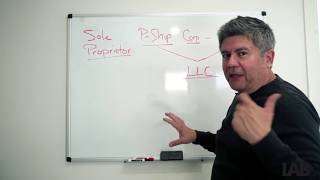
Short, informal YouTube explainer by Louis Barajas giving a quick rundown of common business entity choices for new entrepreneurs. Covers how receiving payment can make you a sole proprietor, when to form a partnership, and trade-offs among corporations (C vs S), LLCs, and partnerships — emphasizing liability protection and tax consequences (pass-through taxation vs double taxation).
Chapters
Hey, everyone. So you're asking for more videos instead of me writing motivational stuff and whatever, so let's just do this. So I'm going to try to get a video or two out every week, mostly about stuff that's coming my way. And so this week it's Friday, but we've gotten three calls on three new clients who are thinking about starting their own business. And a lot of people are becoming entrepreneurs these days and they don't know how to set up. So I'm going to give you a quick rundown, right, Just a couple minute, videos. Otherwise you're going to turn this thing off after a couple minutes. So you're starting a business. So if you start a business and somebody hands you a check, what do you do? Well, you can just. They can hand you a check in your own name and you can now you become what's called a sole proprietor. You're going to put that money in a separate checking account because you don't want to commingle your business with your personal stuff. And that's it. And if you want to call yourself something different now, you got to go get a fictitious business name with a county in which you live so you can get a filing so you can go to the bank and open up a bank account with another name. Now what happens if there's another person involved in your business? Well, you can't have a sole proprietorship, sole being one. You can now have a partnership.
And so now you are a partner. But as a partner, you can do several things as well. You can also set up as a corporation, an S corp or an llc, but you can also set up as individuals on all of these, except for being a partner. So again, you want to talk to your tax accountant to see what's best for you based on the type of business that you have and how you can do in your bookkeeping. But let's continue. So let's just say that you want some liability protection for your business. And you say, if I'm a sole proprietor and if they sue me, can they come after my personal assets? Yes, they can. So if you set up an entity, it'll help you protect you from any kind of lawsuits on the personal side. So you want to set up normally as a corporation. And all corporations are set up like C corporations. And then most people, what they'll do is they'll elect to be taxed as an S corporation. Now, partnerships, s Corps and LLCs, they call them pass through entities, meaning that the tax returns are used to report Your business income, your expenses and any profits or losses will pass through to your personal tax return. And if you're a C corp, you may have to pay tax twice. One taxes on your profits at the corporate level. Right. And if you pull the money out, they consider dividends and you have to pay taxes on again. So most people, when they set up a business, if they're going to set up as an entity, are going to set up as a S Corp or an llc. And so why do I have here an LLC in between? Because kind of an LLC runs like a partnership now. There are single member LLCs for the people out there that are accountants listening to this.
And so the LLCs, if you have more than one partner, kind of like a hybrid between the S Corp and the llc, because it's a pass through entity and they have actually more flexibility, you can have different structure for the assets, for the equity, the ownership structure between the partners, and you can also have different profit structures for the partners. Okay, so really quick, these are kind of your main choices of what you're going to do. If you start a business by yourself, you're going to set up as a sole proprietor. If you got a partnership, partnership. And again, if you're on your own, you can also set up as a corporation. Nobody's going to know that. It's just you. And if you have any questions, leave me the questions here on Facebook and I guess on Instagram and wherever my son Eddie's posting it on social media. Talk to you next time.