Alejandro Martinez: Building a Life They Said Was Not Possible
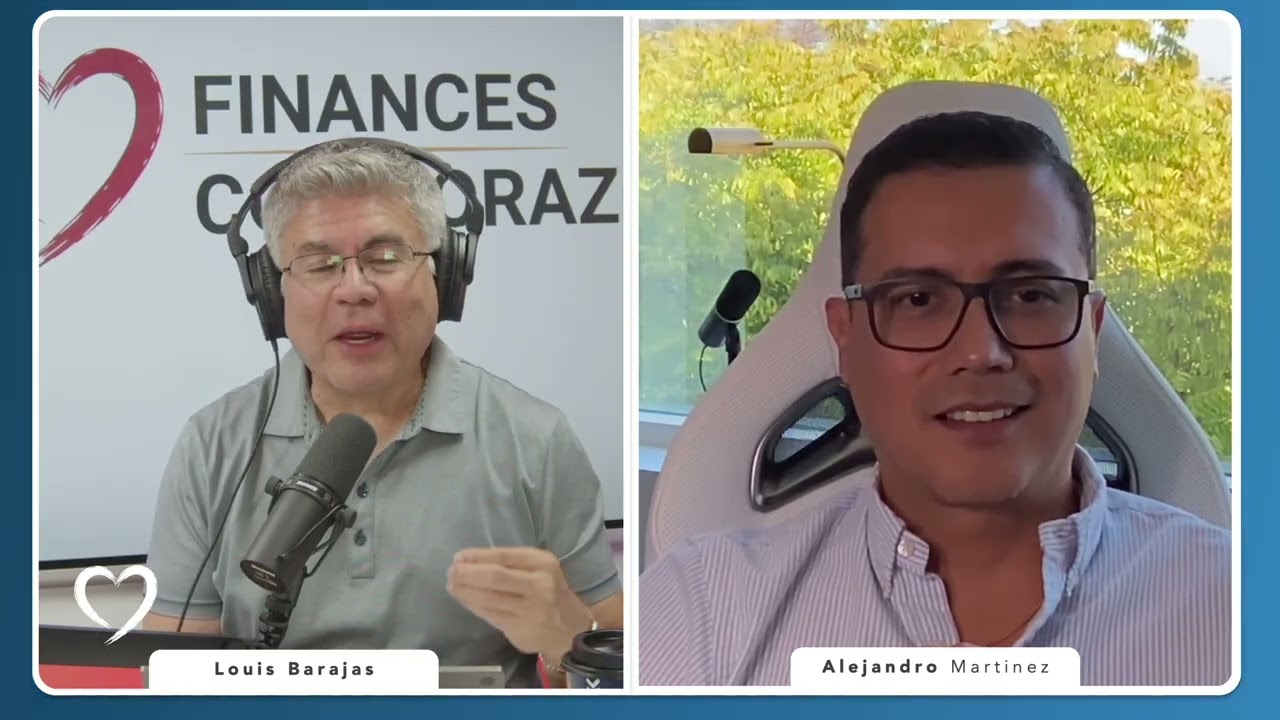
In this Finanzas con Corazón podcast episode, host Louis Barajas interviews Alejandro Martinez, COO of Martinez Immigration Global Law Firm and co‑founder (with his wife Kathleen) of several complementary businesses. Alejandro shares his immigrant upbringing in Mexico, his path to U.S. citizenship, and how he transitioned from a mechanical engineering career to building an immigration law practice. The conversation covers the couple’s distinctive pink branding, the creation of an online immigration‑paralegal training program, and how they balance family life with a rapidly growing business. Alejandro offers concrete advice for first‑generation immigrants on education, financial aid, and leveraging free online resources, and he reflects on the evolving meaning of the American Dream, the importance of financial dignity, and a legacy of community service. He also discusses increasing political engagement to protect immigrant rights and ends with practical steps for listeners seeking immigration help, including website and social‑media contacts.
Chapters
Okay. Welcome to the Finances con Corazón podcast. I'm Louis Barajas, and this is where money meets meaning. Together, we're going to explore financial dignity, family, business, health, and legacy, because true wealth is more than money. It's about living a life of purpose, impact, and corazón. So whether you're building wealth, overcoming challenges, or creating a legacy for future generations, you're in the right place. Welcome to the journey. Now today I've got a very, very special guest, Alejandro Martinez. He's going to talk to us a little bit. I'm going to introduce him, but I just want to share with you before we start that I have been following him and his wife now for the last, I guess, year and a half, especially since we've had all the ICE raids. He has been my Aaron Parnas. I follow him with all the news regarding Latinos and immigration. And so I am just very fortunate to feel that he's, He's here today with us. So let me give you a little bit of background for him. So Alejandro Martinez is the Chief Operating Officer of Martinez Immigration Global Law Firm and co-founder of multiple businesses alongside his wife, Kathleen Martinez, whose Pink Legal brand and social media presence have reached millions of followers. Together, they've built thriving companies, served immigrant communities across the country, are raising two young boys while balancing family and business. Alejandro's own journey began as a young immigrant from Mexico And today he's helping countless others create opportunities for themselves and for their families. Alejandro, welcome to Finanzas con Corazón podcast.
Thank you so much for having me, Louis Barajas. I'm honored to be a guest on your show.
That's, that's fantastic. And thank you so much. You guys are— you and your wife are providing so much information to everyone and so much opportunity. But I'd like to start with everyone that comes on to our podcast. We want to know a little bit about who they were. Or are actually, and we want you to tell us about the little Alejandro, when you started and where you come from so people know that you're not living in Orange County and were given a silver spoon and how you've gotten here to where you're at. If you just give us a little bit of background about yourself.
Yeah, so I was actually born in Mexico and I went to school in Mexico, kinder, first, and a little bit of second grade. And then eventually my family, my two brothers and my parents and I, we moved to the US and that's where I, you know, started my life. So I was fortunate enough to learn some Spanish, going to kinder, going to first grade, learning some math and also kind of learning a little bit of the culture because I didn't want to lose that. And then moving to the US, I still wanted to be connected to my roots. So every summer I remember I would leave to Monterrey, Mexico. I would jump on a Greyhound bus by myself. I was little and I would just go every single summer. I was like gone. I just love, um, that Mexican culture, my roots, my family out there. But yeah, moved to the US, um, fast forward, eventually became a US citizen and, uh, met my, my wonderful wife, um, Kathleen Martinez. Um, I was already done with school. Um, I became an engineer and at the time my wife had just passed the bar exam and she was starting family law in Texas. So we met in San Antonio, Texas. I remember when I met her, I was like, well, I really like this girl, but at the time I was actually moving for a different role as an engineer to Ann Arbor, Michigan. And I was like, I really like this girl, but I'm going to be moving. In how is this going to work? Long distance relationships never work. But there was one thing that I'll remember that always kind of connected her and I, which was the immigrant topic, right? And because I shared with her my story and she, to this day, she tells me like, wow, I'm so impressed by your background, by your story. You came from, you know, this type of background as an immigrant working hard with nothing. The typical Hispanic parents that don't push you to go this way or that way to eventually become, you know, get a professional degree and then do something with it and help your community with it kind of thing. So that's a little bit about me. Now we have two little ones. We live in Orange County, South Orange County, California. And yep, like you mentioned, we are every day trying to share as much as we can to educate the immigrant community and hopefully provide some help and support on how to guide them through these difficult times.
Luli, so I want a little bit more about that, though. You and Kathleen haven't just built a law firm, right? You've built multiple businesses. But what you guys are doing is more than just what a typical immigration lawyer does, right? What Kathleen is doing, you guys are giving information on a daily basis. You're also entertaining us. You're very compassionate. You— I mean, What is it that you and her have decided that you were going to be more than just a law firm? And also, if you get a chance, explain to us the other businesses that you have.
Yeah, okay. So regarding a law firm, you know, ever since I was little, I always wanted to do something with my life that would help others. I get it. A lot of us always have the drive and passion and motivation to maybe make more money, just be successful, whether it means like having a big house, having the nice cars, whatever, right? But there was one thing that I always wanted to do, which was help people that needed it, right? And at the time when I was little, I didn't know what that meant or how I would do that. But meeting my wife and us starting an immigration law firm, that was one thing that we were just felt really passionate about. Yes, it's our business. Yes, it's how we, you know, we feed our family. And how we also provide more jobs for our staff, which are wonderful. But at the same time, it just felt right, where like, if you're going to do something with your career, with your job, do something that at the end of the day, it makes you feel accomplished. It makes you feel like you're making a true difference in the world. You're literally helping someone by guiding them and taking them where they need to be or where they want to be, right? And yes, we also have some other businesses. For example, we have an immigration paralegal training course, and it's not only for paralegals or aspiring paralegals, it's all— it's also for attorneys that don't practice immigration and that want to expand their practice and provide immigration services. Because I think especially at this time, we need more people to be educated on the current immigration laws, on how to navigate through the different options that individuals may have. So yeah, that's one of the things that we provide through our business is we have an online course that teaches individuals how to eventually become hopefully an immigration paralegal, right? And we have taken the things that we have learned from our firm, the dos and don'ts and best practices, and we have applied it to this program so that hopefully it's more of a real-world experience on how to take this information and then hopefully apply it if you're working as a professional, as an attorney or something, and want to expand into immigration.
Yeah, that's fantastic. And you do some incredible work now. So if you haven't had a chance, this is for the listener. If you haven't had a chance to go to their social media sites, especially Kathleen's site, right? It's Immigration Martinez or Martinez Immigration, her site.
So it's Attorney Martinez.
Yeah. So what's going to happen is you're going to see the real Legally Blonde. If you ever saw the movie, you're going to see that Kathleen is a really good— she is most of the time in pink. You've done some great, great, great branding around that. I'm sure, you know, both of you work together as a team to do all the branding. Tell us a little bit about how you got to that branding and what you're doing, because I mean, you got millions of followers now and you guys are a voice in our community, not just locally, but nationally and internationally. How did you come up with the branding and how— and then also with that, I'd love to then ask you a follow-up question on how you and your wife work together, because a lot of people who follow us are very— are entrepreneurs as well, and they use money to live a better quality of life. But we know that money is just a tool to live a better quality of life. But how do you and your wife manage working together, the finances, all that? We'll talk about that, but talk to me about the branding first.
Great question. So I think Let me go back to how maybe it all started, right? So we, I remember we, my wife and I were in Portland, Oregon. I was working as an engineer and she was, um, um, we had our little one, we had our oldest and I get a text from her on my work. I get a text from her at the time. She was working for another, um, another firm. She got a text from her and she says, I want to start my own firm. Can you help me? Build a little office in our house. And as soon as I saw that text, I just instantly became so excited. I was excited. I was really passionate about what she was asking me to help her with. And I said, absolutely, of course. I don't know what I was working at the time, but I was like, I just got that out of my head. And I was like, let me start thinking about what I can do to help her put this little office together. And we were living in this townhome that had a little room where our garage used to be, and we called it the dungeon room because it was super— it was a 3-story, like, townhome. It was very narrow so that they had to make them a little tall, right? But if you go through the garage, there was a little room back there, no windows, nothing. That's where the water heater was and things like that. So we called it the dungeon room because it was way in there. It had no flooring. And then I was okay, she really likes the color pink. I don't really have time or the funds to put some flooring in there right now. So I bought a bunch of pink rugs. Um, I don't remember the exact dimensions, but I had to get a bunch of them and just put them all together like tiles to create a walking environment for her. And then we got a little desk, a printer, and then she started to record informational videos and posting them on YouTube on sharing with people what to do depending on their immigration option, stance, and background. And that's kind of how like the whole pink started, right? I know she liked pink. So we're like, I'm just going to start decorating her office with pink. And then fast forward a little bit. Um, yes, we grew in size. Our firm started to grow and we were, we were thinking about, um, putting up a billboard and this is what, this was when we used to live in Texas. And then I remember the billboard company was asking us, well, what would you like on there? Um, we were used to the typical Texas attorney billboards, like, um, the something hammer, uh, very cheesy kind of stuff, right? And I said, why don't we just make it pink? And then for a while they were like, wait, no, no one does that. That's, it's weird. People might laugh at that. And then I think she just really embraced it. She said, yeah, you know what? Yeah. Uh, I want to make a bold stance. We should make it pink. And I think that was the real moment when we just started like using pink a lot. And now, I was like, you mentioned, yes, her office, if you go to her office, it's like super pink in there.
Um, one point I saw, like, I saw a TikTok where he had like a pink car, I think. I don't know if it was a Mercedes or it was—
right, we used to have a pink car. Um, we don't have it anymore. Yeah, but, but she, she really liked, um, uh, the Maserati. So the Maserati GranTurismo I think even the Barbie figure had one as a toy, right? So we got one. It was like used. And if you know anything about cars, Maseratis, they're not reliable. So it was a used Maserati and we were like, let's get it. We got it for a good deal and then we got it wrapped in pink and it looked pretty cool. It looked amazing. But unfortunately, it gave us a lot of issues and we were like, we need to get rid of this car. Like it's not reliable. It was a really cool car. It sounded great. I mean, it had an amazing V8 naturally aspirated engine. But yes, the pink car was very iconic for us.
Yeah. What a great story. I mean, just from where you started from and where you guys are at right now. Now, I know that at some point then you leave your engineering job and to join her and really kind of be the CEO to help expand her practice. And then you guys also create the other virtual consulting practice where you teach paralegals and other attorneys about the immigration business as well. Talk to me about now. Now you got— you were talking about your first son, but now you have a second son, right? Talk to me what it's like now to work together as a couple where you're so close on everything that you do. I think I guess all decisions are made by both of you guys together, right? You're probably living and breathing this business 24/7. How do you manage the relationship? How do you manage the family? I'd love to know because I think a lot of people who find that the same thing with like, you know, everybody asked me the same question, Angie and I, our partners in everything that we do so that everybody's more worried about like, how do you guys stay together? Because if you're working 24/7, tell us a little about the relationship with you and Kathleen and the business.
Yeah, and you're right. I've gotten the opportunity and pleasure to meet your wife, Angie, and you guys are great. You guys are a great team. And I feel like we share a lot of similarities with things like that, right? Because same with me. I— my wife and I, we are very involved in our projects, in our businesses. And yes, we have two little ones. So it's anyone out there that has little ones, can understand the level of difficulty when you want to accomplish certain things, right? And also be a present parent, play with your kids, things like that. So I will say it's not easy, by all means. It's not easy. It's difficult. Every day is a challenge, but we focus on the little wins and the big wins. Every day is a learning opportunity for us. And when it's all said and done, we feel very proud. We feel proud parents, proud business owners. But, you know, one thing that we never lose sight of is where are we trying to go? And let's not lose the force and the momentum that we started with, regardless of how busy things get. We wanted to be parents. And we're really busy, that doesn't mean that because we, you know, things are getting pretty stressful and tough that we should dilute how good of parents we want to strive to be, right? The same with our business, the same with our staff. We want to make sure that we're always there present for our clients, for our staff, for each other, for our kids. It's not easy, but if you really, really want to do, you know, make that happen, then you will find a way. Some, some days you may lose some sleep. Some days you will have to work really, really hard. But at the end of the day, you, you feel very accomplished when you, when you take that route. And then it starts to not become so, like burdensome anymore. I remember before we had business, before we had kids, I was like, how are we going to do this? I'm used to like sleeping a lot. I love sleeping. We're about to have a little one. How's that going to work? What's going to happen to my sleep, right? Obviously, like, this is really like kind of silly things to worry about. But then it's like you get used to it. You get used to sleeping less. But yeah, it's challenging. It's tough, but very rewarding.
Yeah, I see you guys together. And it's interesting because I know you guys away from the business. And I see like, I see her on social media. And she is very tough and got a lot of information and very straightforward. And then I see you where you love to kind of play around and you love to, you know, you're more entertaining on your social media content as well. But when I see you guys together, I see kind of like a relaxed, more, you know, it's not what I'm seeing on social media. You're very relaxed with each other. And I know, but I know how hard it is. You don't have to tell me there's ups and downs and everything else, but, you know, I would listen. So part of Finanzas en Corazón, I always talk about financial dignity and the purpose of financial dignity is just to live a life where your money aligns with your values and your purpose and your meaning.. And we see all the wonderful work that you're doing. But I would love, we would love some insight, right? For all the Metiche that are here with us today, including me, we would love some insight. What is the vision that you and your wife have for your career, for your lives together, for your children? You know, and do you plan for that intentionally? You know, I always talk about that it's important to have intention and attention if you want to achieve a certain and happiness, because the problem is that we can get used to making a lot of money, but if we're not focused on using that money for our highest and best purpose, for our best intentions, then we can become very wealthy, but very poor at the same time because our relationships aren't strong. Our, you know, our relationships with our spouse or our children aren't strong, or maybe our parents. We're not using money to, you know, to say that once we get to, you get the Ferrari, you get the, let's say you get the pink Lamborghini, You know, but you write and you say, is this all there is? How are you intentionally, you and your wife, focused on building a better life and maybe using the money that you're starting to build with your company to do that?
Yeah, that's a great question, right? Because I think that's something that individuals maybe don't think about that much, especially from people like my background, because my parents, that was not a thing. So for us, our vision for our business, for our family, for our kids is always like, let's help on building some sort of way for our kids to be independent, for us to have more free time to take a vacation, to spend some time with our family, to hopefully maybe afford to give our staff more vacation, PTO, paid time off, things like that, right? So that We try to find, we want to strive for a better work-life balance. Right now it's tough, it's difficult. I think our business is still fairly young, fairly new compared to, you know, other things out there. And we're focusing on working really hard right now so that hopefully later we can enjoy some more free time and then get to look back and say, hey, we worked really hard to build that, to leave that for our kids, to help our clients. To help our staff level up in roles within our company. And there's just some, a lot of sense of feeling proud to doing all of this, right? And not just living for the moment, not just spending money like crazy if you are generating well income from your business. I think you have to invest a lot into your business, into yourself, into your family, and then be smart about it so that you can see the fruit of that in the future.
Yeah, that's fantastic. It's, you know, I'll be honest with you. I've gone through all of this that you've gone through. I'm a lot older than you guys and, and I learned something that it's really hard to have balance. I, I, I think I reframed the whole concept of when we talk about like life balance where we should work 8 hours at work, so many hours of the family. So many, you know, when you have a thriving business that's growing really fast, which I've had, I, I've changed the terms to call it life integration. Meaning that, you know, there's gonna be days where I'm gonna be working 15, 16-hour days and I'm gonna have to have— well, I used to have a, a caretaker also pick up the kids from school where I couldn't do it, but I would also block off time just to take a vacation and be with the family and be with the kids and not take the work with me. Right. And I would give them 100% over a certain time. So I would try to integrate that, uh, as much as possible. One of the things that I could not integrate that caught up to me was my health. Health. I realized that, that I cannot hire somebody to take care of my health. I mean, I've got to get up and do the exercise every single morning because when I, and when I don't, it's just when things get out of control for me. But life integration seems to work a lot better. So, all right, I want you to tell me about— well, here, I would love for you to give our listeners and our, and our audience who's, who's watching this on, on YouTube is what would you tell immigrants? Because I attract a lot of Latino immigrants to our podcast who are working hard but just feel stuck, can't seem to move forward, can't seem to get ahead, always feel like behind the, you know, the 8-ball. What advice would you give them based on what you've already learned from where you come from? You know who I'm talking about as well because you deal with people like that every single day. You probably even have family members back in El Paso that are are like that.
Yeah.
If you could give them advice of where you came from, where you're at now, what epiphanies you might have had, what learning experience that you wish you would have known maybe 5, 10, 15 years ago that would have accelerated progress for you, um, share with us some life learning lessons, especially about, you know, because a lot of people from outside are going to see you very, very successful, and I know what it's taken for you to get here. And I know where you plan to, to go as well, but this year is very successful. What can you share with them?
Yeah, I would say find out exactly what it is you want. Find that goal, establish that goal, right? I think that's always going to be step one, and sometimes people don't even do that. They generally know more or less what they— where they would want to be, how they would like to live, what they would like to do for a living. But I would say get very specific on what you want. I, I didn't do that when I was little, when I was young. I just knew that I wanted something better. I, I grew up in a very low-income family. Um, it was rough. Yes. And, and historically and, and, um, culturally, this is not something that, um, people like me were raised with. I would see that from other friends when I was little. I would see how involved their parents were in guiding them and shaping them and speaking to the school counselor about, hey, what are you— what classes are you going to take when you go to university? I didn't have any of that. I didn't even know that I was going to go to a university until I graduated from high school. I graduated from high school and I was like, what do I do now? I guess I'll go to school. I don't even know what the first step is to getting registered. So I started doing some research on my own. And then later on, I realized that other students, they already had everything lined up. Of course, parents guide them, help them. The counselors would get involved with them and help them. Unfortunately, they didn't do that for me. I think some counselors would focus more on like, hey, let's focus on these students. These over here, I just think that they don't need it. They're not going to do it. So don't worry. Let's not worry about those. Let's focus on these students that come from specific families and backgrounds and parents on guiding them to, to get into the right school that they want to go into. So for me, it was education, right? Um, and then breaking the, that, that generation curse of, uh, people in, in our family don't go to school because I'm the first one in my family to, to go to school and to get an engineering degree, which was not tough. Um, and I mean, which was not easy. I'm sorry. And another thing was, what am I going to do? What am I going to study? I know, okay, I already forgot for Step 1. Now I'm going to go to school, but what do I want to study? I didn't know. I started with pre-med biochem. I thought I was going to maybe go into medicine. I said, I want to pick something I want to pick something hard. I just don't know what that is. So I started taking a lot of chemistry, biology classes, and I really liked that. I was doing great at it. But I was like, this is not really what I want to do. So then I picked engineering and I said, well, kind of, okay, well, as I said, what kind of engineering should I sort of follow? I want to pick something hard. I decided I'm going into mechanical engineering. And the reason why is because I've always loved cars. I've always had a passion for performance and engineering and innovation and technology., and making things more efficient, making things better. So that was my passion, um, and why I wanted to go into engineering. So yeah, I, I worked as an engineer for a while for a big, um, for, for the world's largest, uh, automotive company. And I really enjoyed that.
Um, but let me, let me stop you here. Hold on a second because you got something. So I'm going to take it back because I want— I'm, I'm putting myself as a listener. Let's just say that I'm an immigrant here. Or let's say I'm first generation, but my parents never went to college and I never ended up graduating past high school. And I'm listening to you, right? And I'm looking at my kids right now. I've got a 12-year-old, a 13-year-old. And I always have this thing that when I do a lot of coaching, I have what's called a belief circle. I said, this is what this— and the belief circle has little slivers and it says, this is what you know. This is what you know that you don't want to know. This is what you know that you don't know. And this is what you don't even know that you don't even know. And so, on the don't even know, didn't even know. Like for example, you didn't have parents that went to college, right? I, I don't, I don't think so. You're the first one. And so how do you tell someone like who's listening, like a, like a person like me who's never been to college, never had parents that went to college, where can they, what would be your first steps? And if you were mentoring them, where would they go to get that information? Who would they go to? Because obviously If I don't know, I wouldn't even know where to start to look for it, right? You were fortunate that you were really brilliant. Like, for example, I just think that there are certain people that have come out of specific communities, whether it was El Paso, Juárez, whether it was, you know, East LA, Boyle Heights, like where I come from, that we just had it in us. We were just kind of these type of personalities. We just looked. I mean, we tried and we kept, you know, like they would say, terqueando. We would just not give up. But there are a lot of people that would want to have this information but just can't even think about where they would go. What advice would you give? And let's say you're talking to me and you say, you know, and I would tell you in Spanish, you know, Alejandro, yo quiero que mis hijos también vayan al colegio, pero no sé de dónde comenzar. ¿Cómo comienzo?
Yeah, I mean, I think it all starts with that wanting to have that passion and motivation, right? Back then, I mean, of course, internet search engine has gone a lot better now compared to when I was in high school. So I would say obviously find the tools and resources available to you, disposable to you, for example, the internet. Find out what school you want to go to, right? Do you need financial aid? That was one thing that was a big plus for me. I was able to get financial aid because I, of course, I didn't have money to pay for school. I was working part-time. And at, at Best Buy Geek Squad, I was one of those Geek Squad guys that would help fix the computer. And I could only do that on weekends to pay for my gas and my car insurance. But find out online what you want to do, right? Um, find out what it takes to— do you need to take like an entry exam? Um, an ACT, SAT, um, find out what the school requirements are to, to enter there. Finding out how much it is. Can you afford it? Do you need to get on financial aid? Do you need to get loans? Do you need to work part-time? And then also, how long is it going to take for you to complete that, that career that you want to follow, right? And I think it's important to follow education. And then this, I've been maybe talking a lot about this, like, what did I do? And it was everything. Aligned with education. Knowledge is power. Depending on what you want to do with your life, get yourself educated. I mean, yes, it's tough right now because a lot of people may say, you know, yes, I went to school, I got a degree, and I don't make any money with it. I have this other job that pays really well. I didn't even go to school, which is fine. I think that works great for some people. However, I think an education And knowledge, that is something that is priceless. That is something that you can always use to your advantage, pass it on to your offspring, and then also maybe do something and help your community with it.
Yeah. Okay. But so, okay. So that's fantastic, right? Because I mean, at my age, there definitely was no internet and it was up to us to find somebody and we wouldn't know anybody. And so I guess now there's a lot of resources, free resources available. But let me ask you. So you, what you, what I heard from you is that you didn't come from wealth. Your parents didn't have a lot of money. Um, you were raised in a community that didn't have a lot of money. And so did you ever think, well, I can't go to college and become an engineer because I don't have any money? Or was that ever a thought? Or, because again, I, one of the things that it's important for people who want to grow, who are listening to this, because this podcast is about life and money, right? Or using money to build a better life. But I want people to, to understand and to hear that sometimes you don't need to have a lot of money or you don't make the re— you don't make money the reason why you can't go to college or you can't get more information. There's a lot of resources out there, but what was your mindset when it came to as a student? Did you ever think about it? So, well, I'm just going to go to college. I'll figure it out. Cause that's how I did it. But yeah. How did you do that?
Yeah, I think I'm almost the same because it's everything. It was a very first time for me. Um, no one really explained to me what would happen had I, if I continued going down that path. For example, like when I talk to my kids, when they get to that age, I'll tell them like, if you go to school, if you want to study this, and then you finish, this is what you should expect. I didn't get any of that. It was just like, I was just doing it, um, day by day as I go, figuring it out as I go. And of course it's more challenging that way. It's more difficult that way. I think like you mentioned. Sometimes we either are just blessed, we get lucky, and we are that one person that made it through all these obstacles. But it doesn't have to be that way for everyone. Maybe someone actually could benefit from some information, from some guidance. And I think that's always going to be— try to maybe hear a podcast like yourself trying to share this information with others that are in that situation. Hear things like this. Let that spark up a thought, an idea in your head. And then do something with it. For me, when I was little, unfortunately, I think most of us are always envisioned with money, right? Money is going to be the thing that does everything, takes care of everything for the most part. Unfortunately, yes, it does, but money is not everything. So for me, like maybe that was the first driving motivator. I really like cars. I think every little boy likes cars. I was like, I want to have this like super cool Ferrari or Lamborghini or Porsche or whatever, but unfortunately those things are really expensive. So I got to work hard to get that. And maybe that was, maybe that was one motivator for me. But at the same time, I was also always thinking like, okay, I know I didn't come from, from a wealthy background, far from it. And I said, whatever I do with my life, I want to make sure that I can share some, some learning, Opportunities with others, help others. I don't know how that's going to be. When I was— I mean, when I was little, I didn't think about that, but I always knew that I wanted to do something with that, not just like, hey, I'm going to work hard, make money, and buy some pretty things. I wanted to make sure that it might— my role, my career was fulfilling to help others, to share information, whether it's regarding— there could come in many ways, shape, or forms, whether it's you're donated donating to the right foundation or sharing information with others to help them. I think we live in a time where we can utilize social media and spread awareness of what to do so that others hopefully don't have to learn the hard way.
Yeah, those are great, great solutions to what you just talked— what we talked about. I want to get into some legacy questions. We're getting to the end of our time here, so I really I think these are the most important ones for me. Um, I will start with the very last ones. Is that if your boys were listening to this episode 30 years from now, what message would you want them to hear from their dad?
Um, I would, um, if my, if my boys were listening 30 years from now, I would want them to, to see how hard their mom and dad worked. For others, for them to hopefully show them where they are now. My wife Kathleen and I have worked really hard to build a reputable firm to help clients, right? And, but also to leave that for our kids in the future so that they continue the legacy that we started and hopefully them take over and make more jobs, help more clients, help more immigrants, spread awareness, spread educational information material to help others. And then be like, hey, you know what? Look, my dad and my mom worked really hard. I didn't really see it when I was little, but all of that has really shaped us to be where we are now. They went through the hardships so that we could be here. Hopefully, that's always our goal, right? That they can see that and appreciate that. Unfortunately, I didn't have that. Um, I had a pretty rough upbringing with my parents. Um, so I was like, you know what, whatever I didn't get as a kid, as a childhood, I want to make sure that I provide that to my kids because I always wanted to be a father. Um, and, and I want to make sure that, um, it's, it's fulfilling all the way through until, like you'd mentioned, until they're like grownups and can look back and be proud to say, hey, I love my dad. I love my mom. They work really hard to do this for me and for others. They are good people.
Well, I think that the struggle with parents and their children— I've got grown-up children now— is that, you know, sometimes struggle and sometimes certain challenges are what make you as a person. Sometimes when we remove some of those struggles and challenges from our kids, we don't give them that same resilience. And so that's what I've had to kind of work with, right? It's like, how do my kids have the same resilience that I had when I had nothing? When technically they pretty much have had everything. So that's that struggle. All right, next question. What does the American dream mean today and has it changed? So what does the American dream mean for you today and do you think it's changed based on what you've been seeing over the last few years?
Yeah, I think the American dream has changed so much. And, and obviously people have different versions of it, of what they would want their American dream to be. Um, I think the American dream needs to be, uh, revisited based on what we have been seeing, um, in the past, uh, year or so, right? I think you have, for example, you have an immigrant that comes from another country, comes to the US, and they want to start the American dream. And to me, the American dream now is is helping others. I think in the past, maybe where people were like, you know what, I'm going to go to the US, make a lot of money, have a big house, have all the cars, whatever, be famous. I don't know. But that's not life fulfilling in my opinion. The American dream should be, hey, if you're coming from another country, work really hard and establish yourself, make a name for yourself, help the community. And then like, What you, what you talk about all the time is, is work on your wealth and wealth can mean a lot of things, right? It's not just money. It can be work on things that you're going to see in the future for your kids, for your family, for your business, for your staff. Leave, leave a good impression once you're gone. That should be the American dream, helping others, be respectful and, and not close the door behind you for others. Some of the things that I worked really hard to do, I will never say, hey, I did it this way, the hard way. No one should get the easy pass. They should do it as hard as I did or harder. Absolutely not. That should not be our mindset. That should not be the way we behave with each other. We should be respectful, helping each other, and just working as a community to get to the next level and teach our kids to do that. That should be the American dream, in my opinion.
That's a great dream. And just one more question. When, you know, I always talk about living with financial dignity and living with corazón. And so what does living with corazón mean to you now? What is it? Because let me just share, and I think I'm actually being redundant because I've seen it throughout this podcast already. It seems like your heart is in helping other people. While you're helping, you know, your business grow and your family grow as well. Um, I guess let me just change the question a little bit. Where do you and Kathleen see yourselves in the next— I don't even want to go 5 years out because it's some— it used to be we can go 10 years out. We don't even know what's going to happen the next couple years. Where do you guys see yourselves in the next maybe say 2 to 3 years with your business, with, um, you know, the career, with the children? What's your vision of, of the future? Where you guys Paint a picture of, tell me where you're heading.
Yeah, so obviously we started with immigration, right? Our goal and purpose was to help people attain their green cards, their citizenship, their work permit, their status. But now we feel like we've had to get more politically involved. Um, else, and that can mean a lot of things, right? So if there are candidates that are running for this and that, Study what they stand for, study what they're trying to do for the community. For us, we see ourselves getting more and more involved with that, spreading that information, that awareness on social media, using our platform, using our following to spread the information and then explain it in such a way that people can understand it and then make the decision of, hey, this is right, this is wrong, I should support that. Put some light on that, and that's not, you know, something that we should be supporting. So yeah, I see ourselves just getting more and more involved with politics. No, I don't think people really, you know, they don't say, oh yeah, politics is just so much fun, it's my dream. I mean, for some it is. For us, we've had to, you know, start with our firm in immigration and helping others with immigration. But now we have to add this mix too, right? Because whatever's happening with politics right now is directly affecting our clients. It's making it more and more difficult for them. And not only that, but they've also experienced an increase in discrimination, which people would probably say, oh yeah, that was in the past. That doesn't exist anymore. No, not at all. I mean, that thing in discrimination, racism is still very much alive. Unfortunately, our immigrant community, our brothers and sisters and family members that come from Mexico or other countries, they've experienced that a lot just because of the color of their skin. So for us, like I said, yeah, we are just getting more and more involved. I see more of that in the future for Kathleen and I so that we can help in any way we can.
I want to leave with just one One thing that will inspire, if people are listening to us and if they know, if they have a relative, or if they're listening and they are here, um, and they're having immigration status problems, um, what kind of hope can you give them? What, what do you see in the future? Is anything changing to help them out? Listen, you and your wife, and then before you leave, I want you to give us all your contact information because you guys are just incredible incredible people and the work that you're doing to help the community. So I want people to reach out to you if they need help as well. But what kind of sense of hope can you give to somebody who's been here for a while, maybe is still undocumented, hasn't gone back to their country or trying to get immigrated to the United States and, and they're Latinos? What is it that there's still hope? I mean, what advice can you give them?
Yeah, I would say start with a consultation. Whether it's with our firm or find any, any immigration firm that you're comfortable with that you can trust and, and understand what options you may have because some people may not know that there are options for them. And a lot of times people are like, well, I married a U.S. citizen. I entered the U.S. with a visa. Everything is a green light. Everything is good. And that's probably the only way one can get a green card or citizenship. But no, there's a lot more things. Immigration is a very complex type of law that is changing all the time depending on whatever administration we have, right? So consult with, with your attorney and find out if you have any options. Because sometimes when we talk to clients, they find out that there's something that could be done. Now, of course, there's going to be a lot that maybe don't qualify. But I am hopeful that in the future, immigration laws are going to change because immigration has been such a hot topic right now, especially with this administration, that there's going to be a lot more push for politicians to do something with it, to introduce hopefully some sort of reform or change. So there are more options for individuals, especially for like DACA individuals. That's such an important topic right now that we need to help these folks with a pathway to citizenship. They've always been here since they were little. They are working day in, day out to help this economy. This is all they know. We can't just be sending these individuals back to wherever they came from because they don't have a life there. I mean, you're just sending someone somewhere and they don't, you know, maybe they don't fully understand the laws and the language. And if they need to get some sort of work authorization to be there, to buy a house there, I mean, this is their life. This is what they know. And a lot of them, they, you know, they're just helping the community. They're helping support their family. They don't have any criminal background, whatever it is this administration is claiming that they have. They can't even have things like that in order to have that DACA status. So yes, I think in the future we need to be more focused on that and push that for our politicians to help our immigrant community.
Alejandro, thank you so much for today. I really appreciate all your words of wisdom. I appreciate all the work that you and Kathleen are doing to basically inform and educate our community and everything that you're doing even on the political side. Tell us or tell the audience how they can get a hold of you. Where can they see you? Yeah, give us that information.
Yeah, so the easiest thing is go to our website, martinezimmigration.net. We have everything there. If you need immigration services, follow us on social media. Um, my social media profile is Mr. Alejandro Martinez. My wife's is Attorney Martinez. We're on TikTok, we're on, on Instagram. Um, and then also, if anyone is interested in pursuing an immigration training course, they can go to our, our immigration program, which is vfcimmigrationacademy.net. That's one where they can get more information on that.
That's fantastic. It's also an opportunity for you to start your own business, right? As an immigration paralegal as well. You can do that, I think.
Yeah, yeah, yeah. So they'll need to work with an immigration attorney, but yeah, absolutely. That's a great way to get started and going in that pathway.
Fantastic. Thank you so much. I appreciate your time, your candor. I appreciate everything that you're doing and everybody who's listening to us on the podcast, a financial corazón. Um, we'll see you next time. Thank you guys for listening.
Thank you, Louis. Thank you, you team. Thank you.









