Episode 2 - Claudia Camargo: Your Money Story Starts in Your Mind
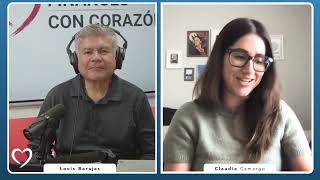
In this episode of the Finances with Corazón podcast, host Louis Barajas interviews licensed clinical social worker and founder of Blue Moon Counseling, Claudia Camargo. The conversation explores how mental health and cultural money beliefs intersect for Latino first‑generation families. Claudia shares her personal story—her Bolivian‑Colombian immigrant parents, being the first in her immediate family to graduate college, and the path that led her to become a therapist focused on Latino children and families. Together they discuss common Latino money narratives such as survival‑first mindsets, risk aversion, the "poor vs. broke" identity, and the emotional weight of money rooted in migration trauma. They compare the roles of therapy and financial coaching, noting that many financial mistakes stem from fear and greed, and that money is fundamentally an emotional issue. Both highlight client frustrations: shame, avoidance, repeating patterns, and difficulty sustaining engagement. Louis introduces his "puzzle‑box" metaphor for holistic wealth planning, while Claudia emphasizes the need for culturally competent mental‑health support and the importance of breaking stigma. The episode also touches on broader socioeconomic trends, including a Latino male crisis and generational differences. Finally, Claudia outlines her future vision for Blue Moon Counseling—remote work, speaking, training, and expanding services to continue healing the Latino community.
Chapters
Welcome everybody to Finances with Corazón podcast, where we talk about money, but more importantly, we talk about the stories of struggles and the mindset behind it. Because here we believe that building wealth isn't just about what you earn. It's about what you believe and what you've been through and how you heal. And today's conversation is a special one because we're diving into something that doesn't get talked about enough in our community, and that's connection between mental health and money. So I am excited to be talking to Claudia Guevara. I actually saw a TikTok video of her, and then I have been following her, been watching all her TikToks. She's a licensed clinical social worker, founder of Blue Moon Counseling, a platform dedicated to helping our community access culturally competent mental health support. And you're gonna love her, guys. She's fantastic. Now, through her work and her powerful voice on social media, Claudia is helping people unpack trauma, break generational cycles, and start having honest conversations about healing. And today we're gonna go beyond the surface. We're gonna talk about where she comes from, the experiences that have shaped her, the emotional and cultural beliefs around money that many of us carry, and how healing those beliefs can completely change our financial future. Because sometimes the biggest barrier to building wealth isn't income, it's what we've been taught to believe about ourselves. Claudia, thank you for being here. And I'm really looking forward to this conversation.
Thank you for having me.
No, it's my pleasure. I, it's, and listen, so this is how it works before we get started. Cause I want to talk about the work that you're doing and how you're healing and everything that you're talking about, especially with Latinos, because that's what this, this podcast is focused just for money for Latinos. Um, is tell us a little bit about who you are, where you came from, where your parents are from. How, you know, I don't know if your parents are highly educated or not, how you went through college, who supported you, who got you there, and then why did you choose your profession? A little bit more. We want more context before we go into the meat and potatoes of what we're gonna talk about.
Sure, sure, sure. So I am a first-gen child. My mom is from Bolivia and my dad is from Colombia. So I always get people are like, that's a different combination there. But They met here in the US and I grew up in Silver Spring, Maryland, and kind of been here all of my life. Um, and I grew up with my mom, my dad, and my older brother. I do have a lot of— I have like 7 half-sisters from my dad's side. He's a busy man. Um, but primarily grew up with my brother and just the four of us. And really, you know, you asked me kind of like, how, how did I get here? I was the first person in our immediate family to graduate from college, so that was pretty cool. Uh, my brother started, but just, you know, a million reasons, he just didn't finish, but he did go back at one point and get his associate's. So that was something we were really proud of. But that, the question you even asked there was really interesting because I really kind of had to figure it out on my own, um, in terms of like applying for college and just that whole process was really not, I mean, it was very unfamiliar to my parents. They didn't know, you know, how to help me navigate that. And I, I've always been one of those, those kids that's like, well, I'm just going to figure it out. Um, like my mom was always like, and I'll probably go back and forth in Spanish, but like my mom was like, Claudia es tremenda, like she's, she wants something, she's going to figure out how to do it. Um, so I've always, I've been like that since I was little. Yeah.
So, so then hold on a second. But, but okay, but what did your parents do? What did your parents do?
Yeah. So my mom, when she moved here from Bolivia, she was in her early 30s. And she started working as a housekeeper at a hotel. So we actually lived in California. That's— I was born in Virginia, then we moved to California, because my dad lost his job. And he had a friend there. And he's like, I I have a job for you here. So we all moved there. Um, and so my mom, um, worked in the hotel industry for a really long, long time and worked her way up. And by the time that she ended up retiring, she was a manager, like a housekeeping manager for the hotels. Um, so she— that lady is a hard worker. Um, my dad was an accountant. So my dad passed away many, many years ago, but he was a numbers guy, and so he did accounting. But neither of them— my mom went to, you know, school in Bolivia after high school, but it was more, um, like it sounded like it was more like a certification type program. And my dad did take some college courses, but he didn't finish. Um, so it was hard, I would say, growing up, especially when we lived in California. We certainly didn't have a lot of money, but we had what we needed. But we were definitely like, it was tight. And then my dad lost his job again in California, and I was like 5 or 6, and that was really hard too, um, which landed us back in Maryland after that.
All right, so then how do you— so who pushes you into higher education? Was, was it your mom and your dad? Was it, uh, a teacher? Because again, it, it was, I don't know if you had somebody that was pushing you or, and then how do you end up going to college and then end up with the career path that you currently have? What, what motivated you? What inspired you? Was there any kind of epiphany that led you to this career path?
Sure. So I would say it was definitely my mom. I mean, even though both of my parents didn't go to college or finish college, my Mom was always very— the expectation was you need to do well in school. That was always, like, since I was little, like, all the way as I got turned 18, that was my priority. And my mom always said something, and that's a whole nother thing, but she's always like, she would always say, you don't want to have to depend on anyone to survive, and I don't want you to ever be in that position. So she always was like, she's like, and the only way that you're not going to do that is through education, because that is for you. And she'd always be like, yes, es para nadie más. Lo que tú tienes en tu cabeza no es para nadie más. So she was definitely always pushing that. And then as we got older and my mom also started making more money, we, like I said, we moved back to Montgomery County and Montgomery County, if you haven't heard about it, it is a very, very diverse county in Maryland. Um, and my high school was, I like, love, absolutely love. I feel like that's what also pushed me to go to college. We had really good teachers and I kind of started hanging out with, I would say, people that were more affluent than me because that just, there wasn't that many Latinas there. Um, and they became my best friends. And as I was going through high school, I saw that, like, for them, it was no question that they were going to college, and they'd start talking about, like, where they were gonna apply and the process. And then I was like, oh, like, I have to do this. Like, this is what I'm gonna do. Like, it, it kind of just started to be like, this is what you're doing. Um, and that kind of helped me because being around, it was like there was no question, like I was going, um, because that's what I was supposed to do. That's what it felt like in that environment. So when the time came, I started, you know, meeting with my school counselor and, um, quickly realizing that I was not going to go out of state because we did not have money for that. So that was hard. Um, and then I was like, well, that's not gonna stop me. I can get school loans. Like my mom said, like she was like, she's gonna figure it out. So I got school loans, but it was hard and it was, I'm so glad I did it, but it definitely wasn't something that, um, came easily. And you know, like I, when I remember my, my friends were applying to like 15, 20 different colleges and you know, every time you apply for one, you have to pay. And I was like, well, my parents are like complaining about paying for like 5 of these. So it was tough.
You know, it's interesting, right? And so let me just tell you my observation. So you grew up in a little bit more of diversified but more affluent kind of community. And I see your work now because I follow you and you're so in tune to the Latino community and you're in tune to a Latino community that maybe doesn't have a lot of access to money and/or emotional health or mental health, you know, to get where they actually, you know, where I grew up, if you went to go see a therapist or you want to go see somebody like that, it's not local, you know, you were crazy, right? And you're very, very in tune. And even though you went to college and you lived in that community in Montgomery, What's kept you in the loop working with Latinos? Because I don't know if that's your, you know, well, tell here before we go into that, I want, we'll come back to this question that I just asked you. Tell the audience that is listening to you right now and actually seeing you as well, what exactly do you do? Because, and I don't know if your practice, if your professional practice is really in line with what you're talking about in social media. And whether you see that type of clientele or you're seeing a very different clientele trying to help a Latino audience on social media that may not go and, and, and see you. Because I kind of have that. I do a lot of financial coaching to underserved and marginalized communities, but even though they would be ideal clients for me to work with and help them, I actually see more affluent Latinos because they believe that they need the help, where the less affluent, the more kind of regular Latino that grew up in the barrio that I did don't feel like they even could get the help where I'd be willing to help them. So I would love to see how do you align that or tell us about your practice and when you're talking on social media and a little of the Latino experience with you.
Yeah, so, and I'll answer your question, but I'm gonna start.
Yeah, yeah.
Like here.
Anyway.
So I, Like, I grew up— my parents, you know, were immigrants, Latinos. So I grew up in an immigrant parent household. So I know how that is. And my dad was an alcoholic. It was really difficult for us. And my mom put up with a lot of stuff that maybe she shouldn't have. And we've done a lot of healing around it. But I think from a young age, I was parentified. I had to translate for my mom in the beginning. I had to help her fill out forms. I had to— so I think I got really exposed to this, to being kind of like an adult very young. And so I would help my mom's friends like translate stuff, and I would help my mom like when she moved on up and she had to write performance reviews, she would tell them to me in Spanish and then I would write them in English for her. So I grew up kind of quickly because we had to and things were hard. And so I've always been, um, a helper. I've always enjoyed helping. And on top of that, I've always been very sensitive when things are not equitable or equal for people. And it was sometimes like a point of contention with me and my dad because he would say, you, like what she says, she would be like, eres la defensora de todos, like you're always like quick to like fight for someone, like the underdog. And so I think that, that, I think that's just my nature, like innately. And so as I got older and I had to go to therapy myself because due to all of these things that were going on in my house, I had really bad anxiety in high school, like, like very debilitating anxiety. And I had a therapist that was a white woman, and God bless her, she did her best. She really did. But she didn't get it. She didn't get like the nuances of growing up with Latino immigrant parents. I felt like there was like a ton of times where she was like, well, have you tried this or have you tried that? And I'm like, no, no, no, lady. Like, that's not going to work with my parents. My parents are Latinos. Like, I can't just talk to them like this and then they're just going to listen. So That's when I think it— the spark kind of went off in my head, and I was like, I want to be a therapist so that when Latino kids have these issues that happen in our community, unfortunately, I want them to be able to come into my office and feel seen and understood. And I want to be able to work with the parents and educate them and provide them support to how to navigate these difficult things with their kids. So that's really— so that was like a really long way to answer your question is kind of like where it came from. It definitely started within me and kind of my experience growing up. And then when I finished college and I interned at this federally qualified health center, it was called Mary Center, they primarily worked with the Latino community and they needed Spanish-speaking therapists.. So I interned there. They offered me a job after I finished school, which I was so grateful for. And then I was like really in the trenches because I was working with individuals who had so many barriers, but it was the best place to learn. All my clients were Spanish-speaking Latinos or first gens, and it was— I was just immersed so quickly into like how to help or try to help this community. Um, so that's where a lot of my experience came from.
But that's not a long-winded, you know, answer to my question. That's beautiful. I can now connect the dots. I can now see why you're doing what you're doing and why it means so much to you. Um, so then you go to school, graduate, get experience, probably working with someone else, most likely. And then you decide, then you open up your own practice. And now is your practice basically, is it who's the target audience for your practice when you're marketing? Is it for Latinos? Who are you helping right now? Like, you know, who's your client base right now? And if they are Latinos coming to you, Um, is there a socioeconomic demographic? Is, you know, are they wealthy Latinos? Um, who's coming to you and, and what are the things that you're, you're seeing? Because I want to get into the work that we do, because I think that our work is really compatible when it comes to finances, because let me just share, I'm going to give you a quick story. I left working with multimillionaires and billionaires. And in 1990, I made a decision when I had some tragedy and something great happened to me in my life. And I quit and I went back to the barrio back in East LA and Boyle Heights. And when I got back there, you have to remember, you probably weren't even born, but back in the 1990, back in 1990, there was no internet. There was no Latinos in the barrios that were certified financial planners helping them that were fee-only. And there was no literacy. There were no books on financial planning for Latinos. And so everybody kept saying in the community that I grew up in, there was a 50% dropout rate, not including the kids that dropped out of high, junior high, right? And only 3% would go to the local East Los Angeles Community College. And then of those that went on to graduate at Cal State Los Angeles or UCLA or USC, I mean, it was minimal. I mean, you can count 'em on one hand. So I go back and everybody's saying the reason Latinos are poor is because they lack financial literacy or they lack financial literacy, they lack financial literacy. So I quit and I go back and I'm a, I have an MBA from Claremont Graduate School. I studied when Peter Drucker was there. I have an MBA in finance. I was handling the money and doing financial planning with some of the wealthiest people. I was a certified financial planner, the first, if not one of the first Latino CFPs in the country. So I go back and I don't go back to help. I go back to open up an office there and stay there. And then after being there, I would just say months, I went back and I told my wife, I said, holy shit, financial literacy is what these people don't need. It's a financial mindset and there's a lot of financial trauma and it's, I'm listening to how people speak because I grew up in that community. But when I was poor, I didn't know that I was poor cuz I was very fortunate. I had a mom and a dad. My mom stayed home. She was a, she was a homemaker. My dad had a, uh, his own ornamental iron business, self-employed. And just like you helping my dad translate and do every, all the paperwork. I even did his tax return when I was 13 years old. And then I realized that I then go to UCLA, then I get my MBA, then I'm working with these big wide-angle clients that are multimillionaires. We had a couple billionaire clients. And all those years my mindset changed, but without me even knowing, right? The dicho, dime con quién andas y diré quién eres. Like, well, that's who you hung out with. That's why you went to college because of people there. And so, Um, and so that's what, that's what happened to, to me. I go back and I realize, so I wrote a book called The Latino Journey to Financial Greatness, which is about overcoming limiting cultural beliefs about money. But I started helping people reach a certain level of wealth, and then when they got there, they would sabotage themselves and lose everything because I had not worked through their emotional trauma that they had grown up in that community. The limiting cultural beliefs that even though I helped them reach a certain level of financial success, in their mind, they didn't believe it, that they should be there. And so they would somehow sabotage their, their success. And that's why some people have called me, uh, well, you kind of do financial therapy. Well, so no, I'm not a financial therapist. I'm, I'm a financial planner who has, like you said, like when you went to go see that therapist who was Anglo, who didn't know the nuances of that community. I know the nuances of the community. I could talk to them, but I grew up in that community. I grew up really, really poor in that community. So I think the work that you and I probably could do together, we probably could write a book together about it, you know, is that we need to heal people. And so going back to, but for me it was, then I started writing books and speaking all across the country and not just to Latino audiences, to Black audiences, to Middle Eastern audiences, to Cuban Americans, Mexican Americans, you know, Hondureños, Salvadoranos, Colombianos. And it was more of a socioeconomic issue. If you grew up poor, you went through a lot of similar things. Now, there were nuances, but if you grew up poor, there was a lot of similar things. And so that's what I work with. And but when I hear you on the TikTok, I hear you talking to the audience that I'm trying to reach out to. And so I'd love for you to share me who's seeing you. Is it a socioeconomic thing? Do you talk to people when they're like that are more fluent in a different way? Do people that grew up poor, what are they sharing with you?
So amazing. I think we are talking, we are talking, I think, to the same people, the same audience. And I think when I look at my followers and then like the comments and things like that, It kind of happened by accident, if I'm completely honest. I start— I have a full-time job, and I for a long time have been wanting to open this practice, and I was scared. I was kind of like, I was like, what? I don't know anything about how to do this, and how am I going to own a business? And it took me probably like 2 years because I kept dragging my feet, like, to figure out how to do this. And I had it open and I had zero clients and I was like, what do I do? And my brother randomly was like, you know what? Like I heard like a lot of people get a lot of their information from TikTok. Um, and I was on TikTok, but I had never occurred to me to like utilize it. So I was like, what's the worst that could happen? Like, I'll just open this TikTok and see what happens. And literally within like a month, I had people submitting like the inquiry form on my Blue Moon thing and being like, oh, like I, I want to work with you. Like I want a Latina therapist, da da da da da. And I was like, what? Like how? This isn't how, like that wasn't like my target audience. So if I'm like super honest, like I am mostly trained to work with children and families and like little kids. And it's like near and dear to my heart. I love it. And I've worked with adults my entire life, but where my heart loves to be is working with children. But I had all of these first-gen Latinas that were reaching out to me, breaking the mold, I would say, for their families, going to college, lawyers, nurses. And I was like, oh my gosh, they don't have— they're struggling with what I struggled with when I was a teen, not having someone that understands this journey and the nuances to it. And so right now, most of my clients are first-gen Latinas, which I love because I feel like I finally got to break down that stigma of like, no, es para los locos. You don't need to talk to anybody. You just have to keep going. And these women were reaching out to me. And the funny thing about it is that in some ways, when I left my not my, not my full-time job now, but my previous job before that, I, I thought I was like leaving that community behind. And that was hard for me because it was the whole reason that I went into this was because I wanted to help this community. And so it almost like went full circle with Blue Moon because they weren't my target audience, but now they are and I love it and I'm so thankful, um, for them. And they're all, like you said, we all kind of have experienced some variation of the same struggles. Um, and so it's really nice to see these, these women, and I've had some, some men outreach too, but these women say like, I need help, I'm struggling, or I just want more support to process some of these things that like nobody ever talks about.
Yeah, actually, I wish more men would probably reach out to you. I think that for Latino men, right, there's that whole thing of machismo, the ego, that we don't seek help. And I think we need it more than ever, to be quite honest with you right now. I'm seeing a big Latino male crisis in America, especially. We're seeing more Latina women going to college, less men going to college, Latino men. I think more Latino men struggling. That's something that if my Latino men are listening to this, you know, we got Claudia here, guys, to help you out as well.
Yeah, no shame.
Yeah, no, and I really believe, I believe in therapy a lot. And so what are the, right now, when, what do you feel, forget about what your clients are coming to you right now, what do you feel are the biggest issues when it comes to our Latino community? You're talking to a lot of the first gen, right? And I will share with you that when I talk to people and I'm trying to break them out of poverty, they, I have to kind of break their identity that they've, that their identity of who they are. You know, it's a concept of are you poor or are you broke? Poor is permanent. Broke is temporary, right? When I talk to them, I said, well, I'm like right now I've got clients who were worth millions and they went bankrupt, but they go, I'm just broke. I'll, I'll rebuild it. I'll, I'll make it again. But I've had people say, well, I'm poor and this is the way it's always been. And this is the, the, the, the, the hand that I was dealt with and I just gotta do the best I can. And there's a fatalism around it, right? There's kind of like the, the church thing around it. It's like, well, this is how God wants me to be. I'm gonna be poor. I'm never gonna be rich. I'm never gonna have money. Or their identity that money is good or money is bad. And they believe that money is bad. And you know, that if you're gonna be a saint, you shouldn't have any money. And so I work a lot around identity when it comes to building money. I know that I'm talking to them about their 401s and their IRAs and the Roth IRAs and And their 529 plans and education and all that. But I, I have to go through all of that. I, I wanna align their values to all that, but if I don't change their identity about money, like I said, they're gonna sabotage themselves. What are you seeing that are some just pretty critical issues in the Latino community that if we overcame, um, we would be a, a more powerful culture in America?
So I think that's a great question. And I think one of the main money beliefs, uh, in the Latino community are really rooted in survival, migration, and this family responsibility, right? Like, so what I see a lot is You know, our parents, or my parents, came here and struggled, and I think they're a really good example because somehow, some way, they got us out of that. I mean, we're very blessed in that sense. But the tra— I think the— there's so much trauma in the migration stories, but then they come here, and then it's this belief, I think, that we have to just survive, like, like, kind of like what you just said, like, we have to just survive, like, if we can put food on the table and have clothes and food, then that's fine. There's not a lot of, like, thought or reflection, I think, about, okay, but how do we go beyond the surviving? And I think that's where a lot of us get stuck. Um, it's more kind of what you mentioned was this belief that, well, we, you know, my mom was poor, my abuelita was poor, we're just going to be poor. Which is, it's so limiting to have that, that mindset. And I think that's the other part with our, with our community sometimes is that we're, I don't want to speak for everyone because that's not true, but sometimes we're very close-minded and, you know, like we, we take ourselves out of the ring. When we just very much deserve to be there just as much as anybody else. Um, and I used to do that. I definitely used to do that. And I would say that my husband has been one of those people that he's like, when I wanted even to start Blue Moon, he's like, why wouldn't, why wouldn't you be able to do it? Everybody else does it. Why can't you do it? Because you're like a woman and you're Latina? Like, no, that's not a good reason for you not to be able to do it. And so that, that, that mindset of like, oh, like I'm scared, I'm fearful, I'm I'm not going to, you know, this is fine, I don't need more. Those mentalities really limit us in kind of, I think sometimes you gotta take a little bit of risk. And I think our Latino community is very risk-averse.
Well, it's, you know, it's yes and no, right? Because for example, our parents, especially like, for example, my parents are Mexican immigrants. Every culture is different. Every Latino culture is different. And we're in Southern California. So the people that came from Mexico to California that crossed the borders or went through Texas, they were the poorest of the poor, right? And because if you were in Mexico and you were even middle class, you had a nanny, you had a housekeeper, you wouldn't want to come to United States. You had to come and look for something better because it was not going to be found in Mexico. But the mindset was a mindset of the obrero, the hard worker, the hardworking person, right? The good person, a hardworking person. And to cross the rivers, to cross the deserts to get here took a tremendous amount of risk to leave your homeland where you don't even speak English. And then the parents become so risk averse for their kids when they get here, right? You know, like I have friends.
It doesn't make, it's like the complete contradiction, right? It is. You come, you take this risk of going to a new country. You don't know the language. You don't know like anything about anything. It's like 10 times bigger than what like my mom's little city in Bolivia was. And then they're like, oh, but like, ten cuidado, no puedes hacer eso. You just have to put your head down. You have to work and you just have to be quiet. It's like, what do you like? They're so different.
Yeah. Well, I think the problem is that we feel like we don't belong here. We just have to, you know, not cause any waves and whatever. So. And let me tell you, like you said, I, I felt the same way. I, you know, I was on, I've been on national boards, national financial planning boards, and I always, at the beginning, years ago, I used to feel, oh my God, I'm so lucky to be here. I'm the only Latino. I was on one board. I was the first minority ever on that national board. I am so lucky to be here with all these, all my mentors, all these giants. And I realize now that they were lucky to have me on the board and get, and, and, and, and get all my experience and get the where I was coming from so I can teach them. But it didn't feel like that that way. Now it does. Now I say, hey, thank you. You know, somebody wants me on board. Yeah, they're lucky to have me because I have so much education, experience, and working with the community that I work in. But it took a long time to feel that way, right? And I had to have a lot of success, more success I think than most people to be able to feel that way. And, and I know that, you know, so I go back to is the mindset that we have Is it just learned? Um, or we've, you know, the stories, is it trauma? Do we see a therapist for this? Or do we just do, you know, or do we just, uh, make people conscious of the way they're thinking, conscious of the way they, they belong in, in the, in the US? Um, what is that? Because again, I'm doing coaching around that. My entire whole financial planning coaching process is around The, the money stories, the beliefs, the limiting cultural beliefs, um, their self-esteem around money, how they talk about money. Again, I'm not doing therapy. It's just making them aware of everything that I've ever seen from other clients to say, you know what, maybe I am thinking that way. Maybe I need to change. This is how successful people in America think. Now, when I say successful people, and I'm not talking about, not at this point, successful people having lots of money, living in a big house. I know a lot of people who have a big house, lots of money, who are very unhappy. They're not aligned with their values, right? My, my goal is how do you do it and maintain your cultural values and align with what's important to you, but understand that there's other games, other rules of the money game that you have to learn also. And we have to figure out how to blend those to be, to be genuinely happy because there are many Latinos that do become very successful, but they become so disconnected to their community, so disconnected to their family that they don't even talk to their family anymore. And that's not what it's about. It's about still being connected, but knowing that there are other opportunities, there are other options that you can have as well. But is that making somebody conscious of that, or is there trauma around that? Do they work with both of us? I work on the money side, you work on the third. How does— what's your take on that?
So my first thought is money is emotional. It is. And people maybe don't necessarily, when they think about money immediately, they don't think about emotions, but it is. If you just think about, sit for one second, you think about money, it is something that is very emotional for people. If you grew up in instability and you, you know, you really didn't know where your parents were going to pay that month's rent from, you are active— your nervous system is going to be actively dysregulated because there's instability and insecurity. So that dysregulation, it doesn't just go away. Even if you end up— because I've seen this before, like you said, I've seen people who've had an opportunity with lots of money and they blew it. And I'm like, what? Yeah, but it's a lot of unresolved things that, that lead to that, that we have to talk about and that we have to, um, untangle because You're— it's, it's just, I would say it's just like any other thing that causes like a lot of emotion. If you, if you have a lot of emotion tied to it, it's gonna come up in other areas— how you spend your money or how you save your money, or, you know, um, your, your feelings of worthiness. Do I deserve this money? Um, so the— I think the answer is Not only do we need to create, like what you're saying, like the coaching, this, the education around financial literacy, but we also need to understand where we got these beliefs and where we learned what we learned about money.
Yeah. Well, I will share with you in 40 years of working with clients, the two biggest money mistakes are based on emotion. It's either Fear or greed. I will share with you, if I've had Latinos in poor communities, in marginalized communities, in underserved communities who've never had anything and lost even their life savings, it was based on somebody conning them that they can make a lot of money instantly without having to do anything special, without going through the discipline, the hard work, the long-term savings, the delayed gratification. And it was based on greed, or they lining up to buy the lotto ticket and spending their money there based on greed. Or they were doing, you know, they had money in their 401 and the market turns down and because they're fearful, they pull the money out and leave it in cash and never put it back in. And then they didn't ever make money again. So based on those two, fear and greed, and that's all based on emotions, 90%. My job is for most of my clients is to hold their hand when the market's down and to say, hey, when, when they hear about some crazy wild idea that somebody's putting them into crypto options, that's fake. It's not real. That's not gonna work. Yeah, it's not gonna work. Let's go back to identity, and I wanna share something with you, and I'm gonna bring something up that might be a little, there might be conflict around it. I'm hearing for the very first time when I see a lot of younger, professional Latinos, when I see them on their social media or when I see them talking to other people where they say, hey, I'm first gen, I've never had the opportunity to— it seems like to me their identity is, well, I've never had the opportunity to learn anything. I grew up in this environment. I'm first gen. I've suffered. I'm trying to make it through. And most of the people that I work with, so I work with a lot of very famous or highly touted Latinos, Latinos who were in the White House. I work with clients that are Latinos that are at the Smithsonian. These are all Latinos that they grew up there. Their parents were immigrants. They were born here. I know that first gen could be people who come who are immigrants, first generation, or people who are born here as well. We, we kind of get that kind of blurred a little bit, but I work with, and they've never mentioned to me that they're first generation. And they're all highly successful working in government jobs. I know politicians that I grew up with who are highly successful and they've, I've never once heard them say they're first gen. I grew up here in the barrio, Claudia, as poor as poor can be, Claudia. And I've never said first gen. And I hear that a lot now. And when we grew up, like for example, I would go to conferences, would be 3,000 people there. I was the only Latino there. I didn't have any mentors. I didn't have any, there were no books. I can right now go onto the internet. I can go to ChatGPT and get every information that I've ever needed and not feel like I'm, uh, I don't have access to information, right? People did have lack access to information. Do you, do you believe that maybe not everybody, some people say first gen, just so just know where they're coming from. But I sometimes feel when I'm listening to certain Latinos or Latinas that they're using it kind of as a crutch. Is that an identity thing? Like, you know, to me, is it, are they poor or are they broke? And I don't know, but I've been, that's something I'm asking you because you're much younger than I am. You're professional. You're also a first gen. How do you feel about what I just said?
I don't know if they're using it as a crutch, but I, I do think that there is sometimes this mentality of struggle to me. Yeah, like a defeatist, a defeatist.
Yes, yes, yes, that's what I meant to say.
Mindset where it's like, well, I'm first gen and like my parents are poor and like what am I gonna do? And like kind of like that's like their, their, their crutch in a way.
That's what I'm—
yeah, yeah. And I don't I don't know where— so that's hard for me to connect to because, like I said, like, I've always been like a problem solver. And I'm like, no, like, I quickly learned, like, me being Latina, me being a Spanish speaker, me being able to read and write in Spanish and provide like these services in Spanish, like, this is— this sets me apart. This makes me different, um, and I'm gonna make this work for me, uh, but I think it— I almost kind of think it's, it's about age, if I'm being honest. Like, I feel— because I'm, I'm almost— I'm turning 39 in a couple of months, but I feel like I hear the younger, right, generation say this more, whereas, you know, I'm a millennial, and I think that we were taught our generation is more like, you gotta work, you gotta like be the hustler, and you got to do X, Y, and Z, and then everything's gonna be all right. Which we did, and then it turns out like the world is shit right now. So they lied to us. But yeah, I feel like the Gen Zers, those though, they have more of this mentality. And honestly, I, I attribute that to possibly them having to have grown up in a very different time than we did. Um, you know, they— when I think about my, my stepdaughter, she— most of her elementary was here in the home because of COVID So I feel like these things really shaped that generation differently. And millennials were— we were kind of like already adults when all of this happened. Um, so I don't know, I don't— I know what you mean, but I do think it's more of like an age thing.
And yeah, yeah, because, you know, the thing is that I have, I have a stepson and two daughters, and I don't— we all are like big-time Latinos. We speak English and Spanish. We have our parties, and, you know, we listen to Spanish music. But I don't want them to say that they are not successful because they're Latino. Or now they're second generation and now they have no excuse. No, everybody suffers. Everybody goes through their own things. Everybody does that. And I don't, you know, for me it's, it's, uh, you know, now listen, I speak to, and if you go to my TikTok page, it's for Latinos and you will see my comments. Well, this pertains to everybody, not just Latinos. Like, oh yeah. I said, but this is what I know. This is who I am. This is where I grew up. And when I'm speaking, I'm speaking with authority and credibility to Latinos. I don't know what it is to live in a Black community. I don't know what it is to have a Black father. I don't know what it is. And they go, well, that's the same thing in our community. And because the thing is, I'm talking like, as I mentioned to you, a kind of a similar socioeconomic kind of level, meaning more to people that are underserved communities, marginalized communities, and they identify with that. But they say, why are you talking about Latinos, only Latinos? I said, I'm not, I'm talking to everybody, but The thing is that I can tell you what it is to be poor because I was poor. You know, I wasn't given a golden spoon. I wasn't— my college wasn't paid for. I had to figure it out myself. I had to help my parents out. I continue to help my parents out. And so it's like, I just kind of want— I don't want people using or having identities of— it's almost kind of, well, I'm going to— because I'm first gen, I have to struggle harder. No, I want them to just say, hey, listen, I'm beautiful. I'm Latina. I'm beautiful. I'm strong. I'm Latino, but I fit in. I walk in. I have the same access to any education. Right now, everybody has access to a lot of information. Now they may not have access because some people look like they're opening the doors for us, but they're really not opening the doors. They're making it look like that. That I get. I get that, that type of racism that we now see more. Than we've seen in decades, believe it or not, right? I see that. I have never— I don't remember anybody making a racist remark to me. I'm a lighter-skinned Latino. I haven't had any racist remarks. And in the last— I will share with you, in the last 2, 3 years, I have had some pretty harsh comments made directly to me.
Oh my gosh.
As a Latino.
I believe it because the lid has popped off and now people Yeah, it's horrible.
Yeah. And so this political climate has emboldened a lot of people to do that stuff. And I get that part, right? But I don't throw the Latino card right now. I don't personally. I just say, hey, I'm Latino. This is who I am because I grew up and I love my culture. I love the people. I love the passion and the pleitos that we have. And, you know, the arguments get heated, but we love each other afterwards and the music and everything else. I, I, and to me, like I said, when I'm meeting with people and I'm talking to them about their finances, I'm really kind of listening to what they're saying to see if there's anything that they're saying is giving me clues of what's gonna stop them. And like I said, we talked about earlier about identity, right? Uh, like I said, am I broke or am I poor? What stopped you from achieving your dreams? What, what are you not talking about that you should talk about? What have you already given up? What kind of defeatist mindset do you have? Or is there a tinge of hopelessness? And you know, some people come to me and will call me and they say, Louis, I wanna work with you. I wanna, I wanna build wealth like you say. And they get excited. They have that, that, that momentary wealth seizure. And then I call them back and then I'll call them back and then they're nowhere to be heard and they no longer respond. And then they disappear. And I've had people call me back 2 or 3 years later and I said, hey, where'd you go? I called you like 3 or 4 times. You were so excited to work with me. Yeah, but these things happen and I just kind of felt like, you know, I wasn't really gonna do anything or be successful.
Mm-hmm.
And then again, they get this momentary twinge of that they can do it again, but it's that hopelessness. And I don't know sometimes how to break through that. And that's why I think that that's where the, if I would've worked with a therapist with that client, maybe the first 2 or 3 meetings with that client, with a therapist, we could have found out what that foundation was like.
The roots of these thoughts, right? These beliefs of, I'm, I'm just not gonna be able to do. There's a lot of shame too around money in, in our, you know, not just with Latinos, but I think generally. And what you're saying to me is people have these very fixed beliefs about like whether they're going to be able to do something, whether they deserve to, to get out of, out of brokenness or being poor, or, or whether they're even going to be able to manage it if they have money, right? And so there's these deep-rooted beliefs, but all of these beliefs come from somewhere. And if you are someone that tends to think, to have these negative thoughts, then it's going to be very difficult for you to work with someone that's saying, okay, well, you have to do this X, Y, or Z, because those negative thoughts are constantly going to be coming into your head telling you that you can't do it, that you're not worthy, that you're wasting your time, that, you know, you know, whatever the— those negative comments that we tell each other or tell ourselves, that's really going to impact your ability to make progress. So You have to kind of untangle that first, or not, maybe not first, but in tandem so that then they can have an open mind when it comes to working with you or working and having to like really look at their finances and be like, oh man, like this isn't great, but I'm working on it.
Yeah. No, no, no, absolutely. I think it's really important. I, I think that one of my biggest frustrations is when I have them, I say, if I could wave a magic wand over you and you could have anything you want, and you could describe to me what an ideal life would look like for you and where you would live and what environment, um, especially with people who are financially struggling, who can't see kind of a long distance away, a time horizon away, they have a hard time articulating what that is. Because they're just seeing like, how am I gonna make it past this month? Right? I can't get them to get past that. Um, how I, I don't know if you work with some of this, and I'll share with you something that I'm writing in my book. I, I, I don't know, I have a puzzle box in my office that I've covered with white paper and I open it up. I have like 500 pieces and I literally to throw it out on my desk. I said, my job is to put all these pieces together because money is a tool to help you live a better quality of life. For you to have better emotional care, healthcare, spiritual care, relationship, uh, care. And we use money to be, to be a whole human being. And I need to put these pieces together. And when I do that, I need to take a look at the picture on the puzzle box. But right now there's no picture on the puzzle box, and I need to see what your life looks like when it's complete. And what am I using money to build for you? And I will share with you, Claudia, that I they have a hard time. It takes us a few meetings to be able to paint that picture on the puzzle box. What is your biggest frustration when you're working with clients? What, when, especially Latino clients who reach out to you where you say, God, you know, I, it's taking me longer than I should because, hmm.
Wow. That's a good, my biggest frustration.
Do you, for example, like when you meet with a client and they're excited to meet with you, do they go, maybe you need to meet with them for an entire year, for 6 months. Do they just come to 1 or 2 sessions and then drop off? Um, you know, in your practice, what is it? Uh, you know, is it maybe that you feel that they're telling you stuff, but maybe not telling you everything because there's shame around them, or maybe they, You know, they, they feel like they maybe can't be vulnerable with you. I don't know. I'm just trying to figure out what is your biggest frustration when you're working, uh, with your clients? Okay.
I think I, I have an, an answer for, I think my, my biggest frustration is, um, when the, they have a, there's patterns that repeat themselves, right? And when you, with, with me as a therapist and I'm like, hey, 'Pulanita, you know, I've noticed X, Y, or Z.' And then instead of like taking a minute and being like, 'Let me reflect on this. This is a pattern. She's noticed it here, here, here.' It's like complete like shutdown. And then it turns into, 'Well, no, but everybody— it's everybody else's fault.' That's my one of my biggest frustrations is like when I think we have a hard time sometimes with hearing that maybe we need to do something different and that it's not necessarily everybody else's job to do something different, but that I have to do something different. And I always tell clients in therapy, I can't change the people around you because they're not in here with me. But you are here with me and we are working together so I can help you make a different choice. And people have a hard time with that.
So it's a concept that I talk about, you know, I talk about my 4 cornerstones is truth, awareness, responsibility, and courage. And it's the responsibility, it's that personal agency where they have to feel like, hey, what's happening in my life outside is because of how I'm behaving inside or how I'm thinking and how I'm behaving. And I gotta take personal responsibility because I can't change anybody else. I can just only change myself. So I think that's what I'm, I'm hearing from you.
Absolutely. Yeah. And so change is hard. So it's— so no, you know, when you're not ready for it and someone is like, hey, you know, maybe you gotta look in the mirror and you gotta do a little bit of changing yourself, that, that's hard. That's really hard for people.
Yeah. Have you had an opportunity— I know you said you worked with a lot of kids and you work with a lot of individuals— have you had the opportunity to work with any couples where maybe money might have been an issue and they just can't communicate around that, or they have a hard time. I— so when I meet with clients, I'll sit down and I'll say, listen, and I— and you're gonna— you're gonna laugh at me, but I ask this question every single time. On a scale of 1 to 10, where is your marriage? Remember, they're hiring me to do long-term planning for them, to do retirement planning or personal financial independence planning, 5, 10, 20 years from now, sometimes 30 years from now. And one of the goals that after we've done that picture on the puzzle box where they see themselves holding hands and having grandchildren and loving each other, but I wanna know where they're currently at. I've had couples tell me independently that on a scale of 1 to 10, they're at a level 4.
Mm-hmm.
And I say, wow. And I go, where would you have to be to be contemplating maybe divorce? And I've had them say level 3. Or level 2. And I go, so you're hiring me to show you where to invest money in your 401 for the next 20, 30 years. Yeah. You don't know if you're gonna be married in a year or 2 or 3, or maybe you're not happily married. And I'd rather use, I'd rather use that money and instead of putting more money into their retirement plan, use it and hiring a marriage counselor, a family therapist to get them to a level 7 or 8 where they can visually see themselves in the future together. Using that money to live a better quality of life. But most of the time, the reason why is because they have a lot— they're coming to me with the finances because they're having a lot of financial pressure. And, and, you know, they're young, they have children, they're both working really hard. The kids take up a lot of time. Their careers are taking up a lot of time. And I call it, I need to know the elephant in the room. What is it that you're not telling me that you stopped talking to each other about, that if you do bring it up, it ends up in a fight, you end up disagreeing, you end up not communicating about it, where either I have to hear it because that's gonna sabotage our work, our long-term work together. Um, and so I call it the, the elephant in the room. I call it the white elephant, but the elephant in the room. Um, have you had an opportunity to work with couples who maybe stopped communicating with each other, especially when it comes to stress around money?
So I have not, because I do not see couples because I'm not trained to do so. Um, and it— I— it's just never really been like an interest of mine to work with couples. But in, in my individual work with clients You know, money, people are very funny about money. And so it always surprises me how, how like the lack of communication that there is around it. And that can be for so many reasons, right? And I, again, I do think it goes back to also, you know, you know, generational trauma and things, you know, what you see in the home. Um, and then, you know, your, just your lived experiences. So it definitely comes up for my clients in individual therapy, but I can't say that I've worked with it in couples therapy. Um, yeah.
All right. So if right now, and we're getting towards the end of our time, so I wanna get into more about you a little bit more. Um, if somebody is listening to us and they're having, uh, they're not communicating as a couple or an individual, um, what do you suggest to them? Do you suggest that they see a marriage counselor, a marriage therapist? You see somebody who can have them have that conversation? If they're coming to you and let's say there's a, a woman who's, who's married and says, you know what, we're having financial troubles, I just can't talk to my husband about that, I don't know, what do you suggest to them? What, what would be your recommendation? If they're listening to us?
I would certainly say if you're not at the point where you guys can have a good conversation around it, start with yourself. You want to start, and maybe you can do that on your own if, you know, that's where you're at, right? Because I think in therapy, you have— in order to be successful, the client has to be ready. And if they're not ready to talk to someone openly about it, then I would say open up your, your finances, whatever you need to look at, and maybe just start noticing where things are at. Because another thing that I see a lot of the times is avoidance, um, this, this fear. You feel frozen. It's easier to just not deal with it. I might as well just not look. But that's creating anxiety because you know that you're not looking and you know that there's issues, right? So I would say if that's where you're at, start Noticing with no shame, just give yourself permission to look at it, see it. That, that's like the first step, because if you can't even do that, then, you know, we're not going to have a— it's going to be difficult for you to make any progress. But if you're at the point where you are ready to talk to someone about it, again, I would say come to— come seek out a therapist and really try to learn where— what your relationship with money is and where that came from. Because I think I always say this to my clients, I my therapy, my work is always very attachment-based. It's like, wait, these things come from somewhere. We don't just have these beliefs and ideas out of thin air. They come from a place, and a lot of that's from our parents or from experiences. And so when you start to understand where these things come from, then you kind of can understand why you are the way that you are today, or why you have certain beliefs, and how those beliefs are either holding you back or keeping you in place or moving you forward.
You know, I, I'd like to not end it with that, but I'd like to end it with, in this case, or get close to the end here, is once they start working with you and they start identifying, like that was, I mean, that was one of the best responses I've heard in a long time. It's coming from somewhere. They've attached from somewhere, right? You just didn't make 'em up. It, you either learned 'em, something happened. There's, stories around that. Once you work through those stories with an individual, what happens to that individual? You know, some— are they happier? Are they worse off because they're like, oh shit, now I know more than I should know? Um, what, what's the goal of someone who's working with you?
What—
when, when you work through these things, what's the benefit to working with you therapist and identifying and now taking these beliefs that were maybe we were unaware of that we didn't even know that we didn't even know. And now maybe we, or maybe we know that, but we don't know how to fix them. And now I come to you and now I know you, you got me to understand the reason why I have them. And maybe so I don't go back into the pattern of having it because change is hard. But after they've worked with you for a while, what's the consequence to working with a therapist? Why would I want to do that? Why would I want to? And, and how is my life any different?
So the goal is always, whenever I start working with anyone, I have the client and I work together on what your goal is because your, your version of happy or stable or secure might look very different than what mine does. So I always work with what the client wants to achieve. And so once he— I, I always— one of the things that I like or observe in my clients is once they understand where this stuff is coming from, I think that allows them to, one, have more compassion towards themselves. A lot of, a lot of people are very hard on themselves for the things that they want to change but find difficult to change. But once you have an understanding of why and where it came from, it's almost like there's like a release. Like, oh, I didn't just— it's not a little vacuum that this happened in. I'm like this for a reason. And that almost allows for the healing to happen, right? Now that I know where these things are coming from and I understand it, Now when I go into this room and I can maybe pick up on an interaction or a pattern that I'm used to having, and I know that what, where it's coming from, I can choose to react differently, or I can choose to internalize this differently, or I can listen to my mom say this thing and maybe not have the same reaction that I usually have. And so that's like where the he— these little moments are where like the healing happens and being, and just in general. Being, feeling happier and whatever that happy looks like for them, right? Because it's different for everyone. But I do feel like as someone that's like deeply rooted in attachment work, it's like, you got to know the roots of this so that we can flourish as a tree later on.
Beautifully said. I, um, if you're watching this, if you're listening to us, if you're Latino, Latina, I've said that, you know, Claudia said that there's these little moments, but these little moments turn into our big life. And, you know, I've never seen a U-Haul behind a hearse. We're not going to take anything with us, even though I focus on making you guys a lot of money. But at the end of the day, I use money as a tool to live a better quality or more financially dignified life. It is a lot of time, a lot of the things as Latinos that we suffer have been created up here in the mind. It's not a lack of it. We've, we've created them and sometimes we need to see them differently. And you're not gonna fix it yourself, guys. It's really complicated. We are just complicated human beings going through a lot in a current environment that is very complicated where people are very stressed out. And I will share with you that working through with a therapist is one of the best investments. People tell me, what's the best investment you can make? I said the best investment is gonna be number one is always in yourself. And if you can, uh, you don't need to find the money, you make it. 'Cause I, I guarantee you every single client that wants to go, that wanted to go see Bad Bunny or one of my clients perform, they always have money for the tickets. Claudia always have money even though they don't have money sometimes to put away for the retirement plan. You have to make a decision that you are more important than anyone else. And I always tell our listeners and our audience that please support professionals that know you, who understand you, who have worked really hard through school and gotten training and who are doing their best to stay in this profession that need to be supported by people like us. Um, please reach out to Claudia. She's fantastic. Watch her on social media. She's phenomenal. You learn something every single day. You may not agree with everything she says because nobody agrees with everything that I say, but it's there to make you think. And sometimes people need to be poked a little bit. Claudia, I want to end with this. And sorry, I did a commercial for you, Claudia, but not because I did a commercial, because I firmly believe that if we are going to what I call create a Latino economic revolution, in the US and build wealth, we need to get emotionally healthy. We need to get mentally healthy and physically healthy as well. And like I said, you know, it used to be the golden rule, do unto others, right? The biblical golden rule. Now it seems like unfortunately that he who has the gold makes the rules. And I want Latinos, I want Latinos to have the gold so we can make the rules. But we've gotta get healthy, guys. We gotta build a strong foundation. Tell us a little bit as we end this. I want to know about your vision now. What is it that you want to see happen with your consulting firm, with your social media? Is there a book in the future? Are you speaking? What's, what's your— I want you to paint the professional career path, the puzzle box. Paint me your picture of what you would love to see happen for you, uh, in the future.
Sure. So my goal is to have a finca in Medellín where I can work remotely. Um, no, yes, that is my goal, but I would really love to do my Blue Moon Counseling, um, consulting, speaking engagements full-time. That is my ultimate goal. Um, I am looking to get trained, um, in some other modalities and hopefully maybe bring those to other areas, um, and train other people. So I really want to work for myself. That's— I would say that's my ultimate goal. Um, I want to really just have my own business and kind of set my own rules and set my own schedule and things like that, and definitely continue to work in reducing the stigma of mental health in the Latino community. I mean, I think that's always been near and dear to my heart, and I want to help our community. So if I can do that, then I will be really happy with that. And because of social media, I think it's allowed me to have these opportunities, like being on your podcast today and other speaking engagements. So I love doing more of that. Course. But my, my, my dream really is to be my own boss and continue to work with the Latino community and really just helping people heal and feel better and know that, you know, things happen, life is hard, but that doesn't have to be the end of the story. You know, we can feel better, we can be better.
Thank you so much. Is there anything that you would love to share with our audience that we didn't touch upon?
No, I think that one of the things that really comes up, or just like the main thing, and was one of the questions that you, you had sent me, was money is very emotional. And the more I think that people avoid it, I think the more charged it gets for people, and it gets more dysregulating. So I, I don't— I wish people would just not have so much shame around it if they're in a really tough spot and know that like, yes, you can dig yourself out of that hole. It's hard. It doesn't mean that that's the way it's going to be forever. I think that's like my biggest thing is like, we can do this.
Yeah, that's, that's beautiful to end with. I've said, I, there isn't anyone that can't be helped. Everyone can be helped no matter their, their situation. There's always a solution. To every problem. And we, you know, don't take it so seriously that, I mean, it's always very serious, but there are people out there and there are solutions out there to help you if you're listening to us. Claudia, I appreciate you. Thank you so much. I reached out to you. I DM'd you through social media. I didn't think you'd answer me back. If you listen to this and you loved it, please share it with other people. Let other people know about Claudia as well. And we will see you next time on Finanzas del Corazón. Thank you very much, guys. Thank you for listening to us.









