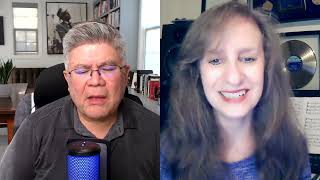
Heather Edwards founded AHA Broadway, a nonprofit that teaches musical theater and performing arts to students from age 3 to 87 across New York City and beyond. She discusses launching during the pandemic, serving veterans and seniors alongside children, and the funding challenges that force nonprofits to pay for grants upfront before reimbursement arrives.
Questions this video answers
August 2020
April 2020 (pivoted to virtual due to the pandemic)
3 years old to 87 years old
ahabroadway.org
Chapters
Foreign.
Warriors podcast where we dive deep into the pressing issue of wealth inequality in communities of color, cultural money beliefs and personal finance.
Some of our families are struggling. Even people are actually homeless.
Join us as we interview inspiring individuals and organizations across the United States who are dedicated to eradicating this disparity through their creative solutions and innovative approaches.
Together, let's explore how we can build a more equitable society for all. Here's your host, Luis Barajas. Let's get into it.
Hey everyone, it's Luis Barajas with Wealth Gap Warriors. And today we have a very special guest named Heather Edwards. Heather is a is a trained as a classical penis and graduated from Berkeley College of Music. She's an active teaching artist in New York City schools and more importantly has co founded the performing arts education nonprofit AHA Broadway in 2019 in New York City. She also be we're going to focus on the AHA Broadway, the the nonprofit and what she's doing and changing. Actually lives in New York City, but I also want you to know that she works as a pianist, songwriter, recording artist who's also performed with many types of bands, from funk and rock to jazz and country, and toured internationally with musical theater productions. She also conducts, directs and regularly performs in musical theater around the New York area. Welcome Heather. It is an honor for always me to invite someone who is making a big impact in the world and I would love for whatever I didn't share with the audience who's listening to us to tell us more about a little bit more about who you are. And I want us to kind of focus on your trajectory as a recording artist to what helped you create the thought of that you needed to create a nonprofit to help children in New York City.
Well, thank you very much. I'm really excited to talk about this with you because it's a passion of mine. And basically I was a very lucky child growing up because my parents brought a piano into the house. I dabbled around on it, said I can't, I don't know how. They said, well, you have to take piano lessons. And from there that I knew. I just, I was very lucky that I always knew I wanted to be creative and in the performing arts. I love music, I love acting and dancing. And so that's where it all began. And something that they also instilled in me was a very strong work ethic. And so I knew because of just, you know, finding out from the public in general, but also the performing arts is not an easy route to take, you know, so they Said you should find something to fall back on. And I did acting, which wasn't what they meant, but you know, it again, it went hand in hand. So when you're in holding on a set of a television show or movies, you've got some time to meet the other people. And I would hear other actors saying, oh, my agent just called me and I'm supposed to do an audition tomorrow and I have to bring my own accompanist. How am I supposed to find one if I'm sitting here and I'd say, hi, nice to meet you. So there I would find more work. And just from meeting people and hearing their stories and finding out, how do people get started in the arts? What did people have or what didn't they have really helped me understand that not everyone has an equal opportunity to have access. And in New York City, it's strange because there are 19 states in the United States that arts education is not a mandatory part of the curriculum. And New York, being the cultural center that it is, is one of those 19 states. And I learned that.
The schools really don't have that programming. And so for my quote unquote day job, that's where arts education came in. So I was still getting to create and I was still getting to meet people that were choreographers and directors and artistic. And that's how that was born, basically discovery, through hearing other people talk about it and learned about it and dabbled in it with other companies. And I really, I knew that I could make an impact and give other teaching artists opportunities where they were respected and appreciated and allowed to create. And I love it when good people who are talented people can be supported properly. And.
It really is all over New York City. I work in the Bronx, Manhattan, Queens and Brooklyn for the most part. And we did start thinking about launching AHA Broadway in 2019, but it was to supplement my other jobs where it would be weekends, spring break, summertime, et cetera. But then when the pandemic hit, that's when we received our nonprofit status was in August 2020. And our official launch was supposed to be April of 2020. So we did a complete pivot to to be virtual and thank goodness for virtual learning and the access to being online with people everywhere. And so that was kind of a strange silver lining was we went from the four boroughs to being national and then Canada. And then this year we have. We just started another.
Clientele in Europe. So that's pretty neat. And so we really don't base it on where people come from, what their Financial background is what their ethnic background is. We want to serve people who don't have access and that's all there is to it.
Share with me so I've been on your website. It's phenomenal, right? I love your website. And you've got the kids there on a video talking about it. And I see a lot of working in communities of color on trying to minimize the wealth gap.
Yes.
Share with me how you are finding these young songwriters, singers, actors, young kids who never would have had an opportunity to even pay for something like this. How are you finding them? How are you paying for this? Now share with me kind of the demographics of the students that you're bringing into your organization.
Sure. So New York City is very interesting in that there is great diversity, but there's also pockets of people that are like we have neighborhoods that are my neighborhood, for instance, where I live is very mixed, but it's mostly Puerto Rican, Dominican.
Some Orthodox and Russian background. But then there are certain areas like Chinatown is mostly, you know, Mandarin and Cantonese speaking families and what have you. So the way that we find our schools is word of mouth through council members, through social media, and just trying to get the word out there going and calling principals, assistant principals, parent teacher coordinators.
Just doing all of the footwork to educate people that we exist and we're here for them and we get funding many, many ways. That's, it's a tricky situation. There are grants, but with, and you know, with the pandemic, the increase for need was multiplied by, you can't even imagine. So it's, it can be frustrating and sometimes gives me anxiety and stress because you just want to do, you know, the, the right thing by people. And unfortunately it's not always easy to get the funding. So applying for grants, applying to foundations, holding fundraisers in person, fundraisers, obviously we haven't been able to do, you know, during the pandemic, so we tried virtual.
And what else? What else? There are City Council and Department of Education grants, but there's a lot of red tape. In fact, there were some really good articles recently. NY and Media was one. But the mayor is recognizing that there's a lot, a lot, a lot of red tape that nonprofits have to go through. And most of the grants in the.
Education system are reimbursable grants, which means we have to put the money up front first. So it's kind of a sticky situation because you've got to have the money to get the money. And so it's never ending. It's constant and so we do hint some in house programming where we do our musical theater summer workshops, which is incredible. We do a full production with musical direction, choreography, costumes, a band for students, with students and their families invitation in a real theater in the midtown area, Times Square. And it's exciting. It's really. They do it Monday through Friday and then put up the show in two weeks. So it's a lot of work. But they always, they always, you know, make it, it's just, it's really cool.
So tell me. Okay, so the phenomenal. Right. I can I have an idea of what your organization is doing, especially these communities.
My question to you is how normally right now, what's like the age range of the students there that are, that are performing and you know, you told me where they come from, you told me about the communities, you told me about the boroughs where they're from. Right. I'd love to know kind of like just kind of what the age range of the, of the, of these theater students are. Also I'd love to know beyond them having a chance to act, what are some of the positive consequences of them being able to attend an organization, being able to be students and take the classes and learn and do the theater, what are they getting out of it besides again, just being able to have a place to perform?
Sure. So our students range from 3 years old currently to 87. And so we do, yes, it's phenomenal. So we have moving up ceremonies for the little wee ones at the end of the school year and we teach them songs and movement. We teach dance, the middle school, elementary school, high school. We have programs, 1940s radio hour where we recreate 1940s radio programs. We have full musicals, we have plays, improvisation, comedy, passport around the World through song and dance where we teach them about different cultures and languages and dance and we do literacy to life where we take stories, books that the schools may be implementing for the school year and we bring those to life through theater. And we also have.
Comedy workshops in 1940s for adults, specifically giving priority to senior citizens and veterans because those are very underfunded areas as well. And a lot of the veteran centers, well, all of them, all of the vet centers and senior centers closed during the pandemic. And a lot of people are homebound, so they didn't have that connection and some of them are still homebound. So thank goodness we have zoom so we can still continue and we hold these classes and then they get to perform and then some of our seniors and veterans in fact go on to perform. For the senior centers and vet centers in a program that we call loud laughter at lunchtime. And so it's kind of a payoff that they've graduated and moved on to being able to perform in certain venues. And the biggest thing, I think, is that by giving these opportunities to people, making them accessible low to no cost, and is that.
They discover themselves. They discover talents they didn't have. They have a sense of community, they have a sense of purpose. There's a camaraderie, I'm telling you. On Mondays, we have our.
Senior and veteran comedy classes. And you can have the most rotten Monday ever and come to this class and it's done, it's over. It all fades away into the background because it's just exciting. We have our Monday class right now has someone. We've got people from Texas, California, Florida, Italy, and of course, the New York City area. They wouldn't have met if we didn't have this. And they're buddies now. I mean, they talk outside of class. When everything opened up and it was safe to travel, there was actually a few meetups in New York City where people came from around the country and had lunch together and went to comedy clubs together. It was. Is very special. And to see someone discover that in themselves. And it's. There are dozens of studies about how music improves math skills and singing and acting improve public speaking and language and literacy. I mean, it all goes hand in hand. And some of it's very obvious. But.
So what I did.
And I saw the videos there, and I saw a lot of the testimonials from the kids, right? And I. And I saw a lot of the Dominican kids, Latino kids that were there, and it seemed to me that what they said, what they were getting out of, it was a lot of confidence, right? The word confidence would keep coming up. And I also saw that sometimes I see when the kids have confidence, it also keeps them in school, right? A lot of kids that are not able to sometimes finish school because of that confidence, because the public speaking, you know, when you're doing theater, you're actually doing public speaking. And that's one of the. One of the things that Most big Fortune 500 companies, when they're interviewing, they love people who can articulate and speak and have a certain level of confidence. So it seems to me that that's some of the positive impact that you're offering, whether they go into theater or make it, because as you said, you know, the entertainment business is a really complicated and really difficult business to go. And I mean, on my, my day job and I'm a business manager for a lot of some of the most iconic Latin entertainers. And I always tell my wife, I go, man, I would never have my kids going to the performing arts. It is such a difficult. It's such a brutal industry and it's so hard and not too many people make it. But I know that a lot of the people that I meet are really well spoken because like I said, if you're going to get up there in front of the stage, in front of an audience, that is. Is really hard. For most people. There's. It takes a tremendous amount of confidence.
Well, the children, for instance, a lot of them say, I don't know how to do that. And I said, well, no one was born knowing how to do everything. So you, right off the bat, you let them know it's okay to make mistakes. And if you tell me you need help, I can fix it. I can't fix what I don't know. So communicate. And we all have each other's backs and we're all part of a team. And so all of the children are given these, I call, you know, positive ways to set up the program from the get go so they know we're all going to be there for each other. This isn't something where we make someone feel bad or the students tell each other they did something wrong. We help each other. If someone forgets a line, we, we don't criticize them for it. We support them and say, there's other ways to find that line. Let's work on some techniques. And we show them that we care, that they're heard, we're listening to them. And I think it's very sad that a lot of these kids haven't had that before. They're just told to stay in place, be quiet, sit still, and.
They'Re stifled. And so when we give them the outlet and when we give them the support and we listen to them and we really hear what they're saying and show them that we care and give them the positive feedback and let them know, even if something isn't exact, we don't put it in a way that lessens the experience for them. I never, ever want someone to walk away and say, well, I'm glad that's over, or I never want to do that again, you know, and we have had children who say, I don't want to be on stage, but I would like to be a stage manager. How can I do that instead? Or, you know, or I don't I don't like singing. What else can I do? I would rather help someone sing. So maybe they want to be a sound engineer, you know. And so we show them behind the scenes because in a show like on Broadway, we say that where would the singers be without the light technicians, the costume designers, the stage manager? I mean all the backstage right.
People that don't get all the glory need to be recognized. You know, even though we don't see them, they're a huge piece of that puzzle. And then the same thing with our adults, you know, they're given more confidence whether it's just amongst their peers or whether they're still working. We have had people who do it our comedy classes, because humor is a huge part of connecting with people and giving a speech. If you give it little tidbits of humor, it definitely, people listen and engage more and it brings a human side to whatever people are talking about. So people have walked away from the same thing with the adults. They say, well, I've never done this before. I'm not going to be good at it. Like, don't shut yourself down from the get go. And you know, they say, well, I'm not funny, but I wanted to try this because my friend said I should. I'm like, well, good for your friend. Thank them for us. And they say, well, I don't even know where to start. So it can just start with a simple funny story because the funniest things come from truth and from life. So start with a funny story. And then we help them polish it into a tight five minute set to perform in the showcase. And their friends and family come and they're just blown away or they're like, see, I told you you could do it. You know, and that's just, I mean it's, it's, it's really nice to see that flourish and, and find, you know, they find the funny in themselves and they believe in themselves.
That's fantastic. I want to translate you now to you, to the, you know, I, I don't need the mechanics of how you went and opened up a non profit.
Sure.
Because you know, there's something that you said, well, I saw a need, I saw a need, but everybody sees a need. But not very many people go out and say, I need to do something, I'm going to open up a non profit. And maybe you didn't even know that. You didn't even know what it would take to do that and what the funding was like and what to write grants and what the people you need and all the tax work that has to be done behind the scenes and everything else. But I want to know what, take what tugged in your heart to really make that transition from thinking about God, we need this in our community, but to actually do something. And I would also like you to share and I'll re. Ask some of these questions again because I'm going to give you everything right now. But what, what are some of the things that now that you know? Right. A couple years later, almost three years later, someone started this non profit that if you wouldn't, if you would know now, would you, if you, you know, if you knew now back then what you would have done differently, I would, I would love to you to share with the audience, with other people that are listening to you, that are also running non profits and working with not a lot of money and trying to help their communities out what struggles you've had to overcome. Because everybody sees, you know, every, we all see the, the websites with these beautiful videos and colors and, and the mission statement, but a lot of people aren't really aware of how difficult it is for someone with a thought to transition into something in reality. But the struggles that they continue to hold. Right. So if you can share with us some of, some of those, some of those things about what struggles you, you've gone through.
Yes, well, it's hard. It's definitely difficult. It is challenging in many ways. It's challenging in that if you are someone like me and you're very passionate about it and you care, it's hard sometimes not to take things personally, like what am I not doing? What is in the picture that I'm not seeing? What is there that I could do better? What more can I do?
Why do we have to sleep so much? I need the time, you know, I need more time in the day. And it's constant. It's not fundraising once, it's not a one and done. It's constant. It's networking, it is vetting people, it's being careful.
And.
Like I said, my parents raised me with a strong work ethic and budgeting is extremely important. You cannot be frivolous. You've got to really look at the big picture. And every grant that you apply for is not the same. So it's not like you can have a template. Everybody wants different information, different supporting documents, supplemental materials, etc. So to have as much upfront and be prepared, to be overly prepared so that you can pull from things when you need them and say, ah, I've already got that in my Pocket. I'll pull that out for this because this will work, you know. Well.
Research your biggest frustrations running a nonprofit. What do you, what do you. Are you like, short on money? Do you have not. Do you don't have the right staff? What are the biggest frustrations that you have to deal with as a CEO of a nonprofit?
My biggest frustration is really just there's a lot of rules that are not applicable in this day and age. I find that there are a lot of policies that are old and the people who are in charge aren't aware of them because when they come into office they say, well, what did the last guy do? Oh, well, let's just keep going that way. And sometimes that is detrimental to everything. I'll just do a. For instance, when we were coming out of the pandemic and schools were reopening, they were on and off again, hybrid learning. And there was a big article in the Gothamist that said all of these after school programs were being shut down because there are no teaching artists, which was absolutely not true. There were teaching artists. I had teaching artists. The thing is that there are rules in place that a company must have filed X amount years of taxes to be qualified. And there were a lot of exceptions made during the pandemic. Restaurants could have outside dining and, you know, these facilities that were built overnight and things like that. So I was hopeful that the same would be made for the nonprofits, that maybe they weren't around for X amount of years. But collectively, the teaching artists have decades of experience. They're all DOE fingerprinted and vetted with experience, lesson plans and ready to go. And so I spoke to council members, assembly members and senators, and I said, are you aware that we're here? We just haven't been around that many years as an entity, but we are happy to serve. Put us in there. And they didn't even know what I was talking about. They had no idea that. And they were like, well, those are not really.
Things that like that rule. Just, it doesn't serve nowadays. And it's very hard for smaller nonprofits, upcoming young nonprofits, to break through that barrier if they've got to wait X amount of years to even have contracts or grants because of that stipulation. So unfortunately, things take time. Things get pushed through, you know, expeditiously. And but at least by advocating and making people aware, maybe things will change faster than had I not spoken out and say, are you aware that this is in many people's way and we're happy to do this Work, and we're there for you. But we have this big, huge hurdle. And so that's my biggest frustration, is that there's a lot of rules in place that don't serve the community anymore. They may have been there for a reason in the past, but in this day and age and with technology and being able to vet people faster and more easily, I don't think that it's. Does anyone, you know, any great service and fundraising. It's just. It's just constant. And right now, like I said, people are still navigating, getting out of the pandemic. And I know a lot of people around the world and in this country don't understand that. New York was a very specific case because we all live in this bubble on top of each other and, you know, where it's very tight. And so we had a lot of school closing, open, closing, open, closing, open. And the quarantine period was much, much different. We didn't have a backyard or a car. We could jump in and go for a drive. We all live in apartment buildings and what have you. So we had a lot of children who, for instance, they were an only child and they had no one to play with. So when we got them out of the, you know, once the pandemic was over and declared over, they. They were just starved for companionship. And we had anxiety problems and we had anger issues, and we had families who before it was a money issue, perhaps for them to attend. Now these families are taking on two jobs to make up for the income loss. So even if they did have the money to bring them to programs, they don't have anyone to bring the child to the program or pick them up. And that was something that I don't think that people had counted on because we had sponsorships that we were hopeful to give children, and they said we'd love to do it, but I have no one to bring them to this function or pick them up afterwards. So we're still navigating. And I kind of knew because I lived in New York City during 9, 11, and it took about four years for things to come back to kind of normal. We didn't have tourism, we didn't have, you know, restaurants. It's very similar restaurants, Broadway filming productions, all that stuff shut down and wasn't available. People were afraid to come here, and a lot of people moved out. So I kind of knew what to expect with the pandemic. And that's kind of showing, to be accurate, that's we're still not 100% yet. We're. It's getting better, but we're still.
Making our way.
Great. What is.
What's your ideal vision? What. What. Now that you've started this nonprofit, you're seeing the kids, you know, you're starting to see that it's starting to thrive. What would you like to see? If. If, when it's all said and done, give me a vision of what you. You would like to see accomplished through this nonprofit. Assume that we're now 50 years from now, maybe you're not running the nonprofit. What would you like to see this nonprofit look like? What kind of vision do you have for it?
I would like to be able to give anybody who needs or wants our services without worrying, without worrying about funding, without worrying about.
Scheduling where it was, where it would just be smooth. It would just be so nice to have things run smoothly, to be able to schedule it without the schools or the parents or the senior centers having to worry. There's still a lot of worry. Where's the money going to come from? How are we going to fit it in? What are we allowed to do? So I would love to take all that worry away from people, including ourselves, and I would love to have it be accessible without a lot of red tape. Obviously, we want safety, and there are guidelines that are in place for a reason, but to make it more accessible without all of the hurdles, because there are still a lot of hurdles. We still have a lot of schools who call us and say, how do I get this done? Can you please. Can we work on this together? Because we're trying to navigate it, and they've got a lot on their plates. I don't think people realize there are. I mean, schools are overwhelmed. They've got a lot on their plate. They've got a lot to navigate. So anything that we can do to help expedite that and make it as smooth and pain free as possible, that would be ideal. That would really be where we can just. Yeah. Yeah.
Last question that I have for you in what brings you the biggest joy?
Oh, gosh.
Within your job that, you know, I know that you're doing all the business side of the nonprofit, but for you share a story or something that. A success story that, that, you know, you. You can share to the world that. That it's worth all the headaches and all the administrative paperwork and all the, you know, fundraising. Share with us a. A great story to leave us with to inspire people of all the good that you're doing.
Well, I still do musical direction and choreography and Directing. And I still work with all of the teaching artists and making sure that they're all happy as well. Because like I said, they're human gold because they're talented and they're good people and they deserve a place that where they work, they feel respected and appreciated. And so whether I'm in that production or coming to watch the production, watching the children, the seniors, the families that are in the audience, seeing the joy and hearing the applause and when they say, I did it, I did it. And it's incredible. And I don't know how to transfer that to everyone by osmosis or something. It's just. It is the greatest feeling. And that's what really makes me say, we did it. We did it.
Fantastic. Heather, you're blessing. You're a blessing. You know, there are people, like I said, always think about doing something great like this. But you're going out and you're doing it now. You're raising money. You're helping all these students out, like I said, from the ages of 3 to 87. I want to thank you. Why don't you share with us? How do we get a hold of you if anybody wants to donate money to your organization, your website, Share with the World.
Oh, yes.
How we can help your organization out?
Well, we are always fundraising. We know that there are companies that people have donor matching. So ask your employer if they've got a donor matching program. We have a donor portal on our website, ahabroadway.org so it's a H H A B R O A d w a way.org O R G. We are on Facebook for donations. I know that lots of people like to go that route. We will be a part of Giving Tuesday again this year. So anyone who's on our social media at Aha. Broadway, on Twitter, on Facebook, on Instagram, we also have a LinkedIn page if you want to read more on the business side of things. Share it. Like it. I mean, we, we were really fortunate. A few years ago, Humans of New York featured my husband and he mentioned Aha. Broadway. And we had a windfall. Incredible experience with the donors and it just proved $5 can make the difference because those people, thousands of people, $5. And we were able to do programming for a year and we were able to provide computers to children who didn't have computers so they could do their virtual learning during the pandemic. It was, I mean, that's why when I say give up a cup of coffee for a day and you'll be helping a child and it's not a lot of hooey. It's the truth. It all adds up. It's amazing. So, yeah. Thank you. Follow us, Share the message. Give wonderful thoughts.
Heather, thank you so much for being with us today. I hope everybody gets a chance. Please go to their social media sites, go to their website, take a look at the kids on their website. It's very inspiring. I appreciate you and thank you for being with us today.
Thank you too. I really appreciate it. And thank you.
Thank you. Bye Bye.
Thank you for listening to the Wealth Gap warriors podcast. We hope you enjoyed today's episode. I love the show, guys. You're awesome.
Join Louis next time as we continue our Wealth Gap Warrior journey, creating a brighter future for all.
All.









