Finances Con Corazón Podcast: Episode 1: From 0.0 GPA to Dr. Dad W/ Dr. Salvador Bueno
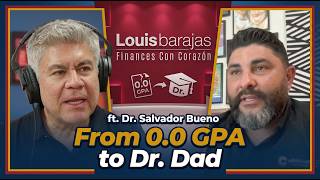
In the inaugural episode of the rebranded "Finanzas con Corazón" podcast, host Louis Barajas interviews Dr. Salvador "Dr. Dad" Bueno, founder of Collabucate LLC and assistant professor at Fresno Pacific University. The conversation traces Dr. Bueno’s journey from a 0.0 GPA, multiple expulsions, and life in East Oakland to community‑college redemption, a scholarship‑filled path to a PhD, and his current roles as a researcher, consultant, and father. They discuss the pivotal influence of mentors (a high‑school teacher, his wife, his abuelita, and a community‑college coach), the financial hurdles of graduate school (credit‑score drops, student loans, cash‑flow mis‑management), and the meaning behind the nickname "Dr. Dad." The dialogue expands to broader themes of Latino representation in higher education, the concept of "uncommon leadership," and the importance of aligning money with personal values to achieve "financial dignity." Both hosts emphasize mentorship, self‑belief, and community uplift as tools for younger Latino men and women to break cycles of poverty and achieve significance beyond material success. The episode ends with a call to share the story, build generational wealth, and keep the conversation rooted in heart‑centered purpose.
Chapters
Hey everybody, welcome to Finanzas con Corazón podcast. It's a resurgence of— we rebuilt, branding it from Wealth Gap Warriors podcast, but we're here to talk about money, talk about more importantly about the stories, the struggles, and the mindsets behind the people that we're interviewing. Uh, we believe that building wealth isn't just about numbers. It's about dignity. It's about purpose. And it's about creating a better future for ourselves, our families, and our community. Now, today, I'm really excited about this conversation because I have been following this gentleman, probably, I don't even know how long now on, I follow him on TikTok and I see him post. I don't know how many times a day, but I see him 2 or 3 times a day. And I am joined by someone who represents what it means to rise, to lead, and to give back. It's Dr. Salvador Bueno, who's also known as Dr. Dad. Dr. Bueno is the principal consultant and founder of— I hope I say this right, doctor, and you can, you can, uh, you can help me out, but it's Collabucate, Collabucate, Collabucate LLC, a research-based and data-driven consultant, uh, firm that collaborates with clients in education environments, organizations, and the community in need of program management, operational redesign, Strategic Insight and Professional Development. And in addition, he's an assistant professor of business and the disciplinary lead of the MBA, the Master's in Business Association program at Fresno Pacific University. His work focuses on organizational leadership, higher education, and developing the next generation of leaders. Now, however, amongst the academic accolades, his number one job is to be a dad. Everything else is a byproduct of that. So, but what really stands out about Salvador is his heart for mentorship, his belief in what he calls uncommon leadership, and his commitment to helping others unlock their full potential through education and guidance. And today we're going to go beyond the titles. We're going to talk about where he comes from, the lessons he's learned growing up, the struggles he's faced along the way, and how his relationship with money, leadership, and purpose has evolved over time. Because at the end of the day, this isn't just about success. It's about the journey to becoming, you what you're meant to be. Dr. Bueno, it is my honor for you to be here. I have been following you. You inspire me. I know we chit-chat and we DM through TikTok. And finally, I get to meet you. Well, not in person yet. We will meet in person. I'm sure we will meet in person.
But thank you so much for being here. Absolutely. Yeah. Absolutely. Thank you. Thank you for the amazing introduction. Thank you for reaching out. Um, and I love that prior to this we started and said, man, it feels like we know each other. Um, because friendship is very critical to me. Uh, friendship is very critical to myself, to those individuals that I partner with, um, and ultimately from a branding standpoint. And yes, you said it correctly, Collabucate. And if you notice, the U, right, is the university component. But the importance about putting Collaboration in Education or Collaboration for Education. And we'll talk a little about, you know, I don't know how in-depth we get about the importance of bridging the gap between industry and education, vice versa, right? It's important for us to bridge that gap. There's a lot going on. So there's so much I want to say. I won't jump ahead of myself.
No, brother, let me say Yeah, listen, brother, the thing is here is what we want to do is we want to inspire people who are going to watch this podcast, who are going to listen to this podcast, and to associate that we have reached certain levels, but we started where they started, or maybe we're just maybe one step ahead of them. And there are going to be some people listening to us, brother, that are friends of ours that are one step ahead of us. Absolutely. And it is about get them to get to know who we really are. No bullshit. No, no, no, nothing that we're gonna, you know, we're not trying to impress anybody. We're trying to impress, you know, that life is beautiful. Being Latinos is beautiful, but life is hard. And even going through the educational system is hard. And somebody to be a PhD, a Latino PhD, it's few and far between. There aren't that many out there. And I, you know, I am so proud of what you've gotten so far. Yeah. But thank you. Let's start from the beginning. Let's start. Tell us a little bit about, you know, a little bit about where you grew up, who your parents were, what they did, what you got from them, what inspired you to get to where you're at. Give me just a little background. Give us a context of who you really are.
Awesome. I love it. I love it because this weekend I was in the Bay Area. So I am, I was born in Fresno, raised in Oakland, East Oakland. To be exact. Um, and so my mother, you know, unfortunately or fortunately depending on how we view this, um, didn't graduate high school. My father joined the service. They were married at a young age. And so, um, we spent majority of our time in East Oakland. Uh, and so I was in the Bay Area. I was visiting— if you see the previous TikTok, I was visiting my alma mater, Chabot College. And so, you know, number one, community college will change your life. Number two, community college is a space that provides second chances. I was a 0.0 GPA high school student in East Oakland, Fremont High School. I was expelled for various reasons. I went across the bridge, if you will, literally to Alameda, to a high school there. I was expelled there. I ended up in continuation school. And I barely graduated in continuation school and, or from continuation school. And so while, while at this continuation school, I was met face to face with one of my teachers at the time. And of course, you know, I wasn't a good student, possibly wasn't even a good human at the time, just considering the environment that I was associated with. Um, or that I chose to, to live, uh, this individual said, you know what, you have a snowman's chance in hell to make it. And so when we talk about expectations and setting the bar, if my bar and my expectation is to live, number one, to be alive, right, past a certain age group or age range, excuse me, and to stay out of prison, like this was the norm, right? And no disrespect to any of those. I have worked in the, you know, CDCR system as a faculty, and so I got much respect for individuals and anybody doing whatever they're doing, you know, whether it's right or wrong. I'm not the one to judge because I navigated some spaces before. And so when we have those expectations, and what I mean is we are living out of fight or flight every single day just because we're in these spaces. I don't know what the homicide rate was at the time, you know, it was fairly high. And so, you know, you always operated on, you know, just high, high intensity, highly alert, vigilant, what's around you. Um, and so with that being said, you know, having a military father, um, you know, um, and, and Education wasn't by far the norm. Again, I don't want to take anything away from my parents. I was also raised by my grandmother, so I don't want to go into the nuances of what that looks like, but maybe some of you have families and households that are like that where nuestra abuelita nos está criando, right? In addition to, you know, you have some parents. So it was an interesting dynamic. And so I mean, you know, I saluted to you because, you know, in this space, I mean, that's what I was taught. You know, my father served as an Airborne in the military, honorably discharged, etc. And so I seen the dynamics of what that looks like. He was a roofer, his stepfather was a roofer, I became a roofer. And so I really just learned, you know, how to work with my hands, how to sobrevivir, you know, in a space of of financial need, uh, or holding your weight, etc. And so I just, I just, I worked, um, and, you know, um, I worked for, for things that I wanted, you know. Some of it was gifted to me as well from, from my abuelita, you know. A lot of, a lot of our abuelitos, abuelitas are very nurturing. They want to see us rise. They want to, uh, support us, you know. They want to, uh, carry on these these legacies. She was an immigrant, uh, from Chihuahua. And again, I'll just state— I'll state those parameters there. And so I want to circle back just to the educational component, because yes, we can elevate, right? We can elevate. And there are some nuances. We can elevate out of the environment that we are at, um, but we are individuals Como dice abuelita, dime con quién andas y te diré quién eres. And so sometimes we have to disassociate ourselves from some of these spaces. And higher education did that for me. I mean, it wasn't easy. I mentioned that I was in the Bay and I visited my alma mater and I gave them a shout out because when I went to community college, I had a full-time job. I was working for Southwest Airlines. And, um, when I went to college again, I was a 0.0 GPA, um, barely graduated from, from continuation school, or what we call now alternative education, right? But when I got there, I took an entrance exam. Mind you, this was after going to other trade schools that I did not pass the entrance exam. And I'm so self-aware that I'll share some of this information. When I got to community college to take the entrance exam, I believe I had, you know, and I'm giving myself credit, I believe I was tested at a 7th grade reading level. And some of you out there might say, yeah, it sounds like it, right? I just operate in full authenticity because I know that individuals watching this or where platform, wherever this goes, I know that there are people who possibly look like me or don't look like me who come from some of these spaces, that it's possible. It's possible to navigate these spaces. It's possible to elevate, whether it's financially, educationally, and then bring your family with you. Um, and I know I've gone through several of these, uh, questions already so that I could set the platform to take a deeper dive. Um, but ultimately, that's where I was from. If you have some questions, we can lead further into, we can, like I communicated, we can unpack.
Yeah, man. So let me just share with you. So I'm not a therapist here, but let's go back. Yeah, talk to me. So listen, so when I'm thinking, because I've worked, I worked when I was at UCLA at the Partnership Program, I worked in East LA, I worked in Compton, I worked with kids. Anybody who had a 0.0 GPA or expelled, Nowhere. If I worked with 100 students, if there were just one student that would think, you know what, education is the thing for me, they would drop out. 90% of those kids that were expelled, they were basically going to continuation school, ended up working with their dads at the manufacturing plant, wherever their parents worked. And that was their life for the rest of their life. Right? So, Okay. So the thing is this, yeah, I need to know. Yeah. What the heck happened to you where somebody who's expelled isn't thinking I'm gonna be a PhD or I'm gonna go to college, I'm gonna graduate from college. You're thinking, shit, this is not for me. You, you have to have been thinking, okay. And then there's certain beliefs at that point. If, because at that point that your teachers have given up on you, your counselors have given up on you. I don't know even if your parents have given up on you.
Yeah.
And they say, well, mijo, you know, I see that he is who he is and he's going to work and that's his life. He's not going to go to college. Somebody had to break through. Like for me, when I was at youth, when I went to, when I was in high school, I was going to go work for my dad's ornamental iron business, wrought iron business in East LA on Whittier and Indiana. Next street over is Calzona. I was going to be a welder, work with my dad, and that was going to be whatever. And some teacher stopped me and he goes, He said, Louis, I said, I, are you gonna go to college? I go, no, I'm gonna go work with my dad. And he said, listen, you're so smart. I'm gonna help you fill out application. Oh, uh, it was, it was Richard Smith. And I go, Mr. Smith, I, I don't, I don't have money for the application process. He goes, but you know, and he goes, no, no, no, don't worry. I'm gonna get a waiver for you. We're gonna fill out the UCLA app, the UC apps. I got into UCLA, I got to UC Irvine, and then they applied for Stanford. I got into Stanford. I only reason I went to UCLA cuz it was close by my parents, my dad's shop, so I could continue helping him with his business. So there was somebody who saw the potential in me, made me believe it, and then hold on a second. He made me believe it, but he could have made me believe it. But if he wouldn't have filled out that application for me, I would not be where I'm at today. There had to be somebody who saw something in you who said, dude, you can, you can be somebody better. Because again, I go back to, that's the part that I'm missing though. I want to go back to what was your mindset and who the hell changed your mindset that you were even willing to do that?
Love it, love it. I tell my kids every single day, and if they watch this, uh, their mother, my wife, is, is the reason, the reason of, uh, making a change. Um, we were high school sweethearts, uh, we are, right? Um, and you know, she, she drove me to, um, to these trade schools Um, you know, just to enroll into college, she was, she was doing the, the thing, man. She was going to school. And, and, you know, my wife and I don't— didn't have an opportunity to, to go into a 4-year brick-and-mortar traditional. Um, you know, I went to community college, she went to a trade school, and she was just doing, doing her thing, man. She was working in offices. And, and I don't know, I can't coin a conversation, but I know that she says I need to do something else. Um, and you know, when you're booed up, you just want to be booed up. And whatever they want you to do and whatever's going to keep you guys together, that's what you do. Number one, that's the key component, man. My abuelita believed in me far beyond anybody else, right? And I'll be real, my pops didn't believe in me, right? If I, if, if I left some of those spaces, I'm, I'm I'm the shalan, I'm the helper that's gone, right? And, and we could jump into that too, but most importantly, I just wanted to be booed up and whatever my boo was doing, and she was around, you know, some educated individuals, and I wanted to, um, and so I did that. I, I, I went to school, and it was, it was because of her. Now, while I was at school, because I was struggling, right? You just found out that you possibly have a 5th to 7th grade reading level, so You know, um, I, I took the remedials for the remedials, right? Um, I noticed that I was off in another building. I don't know if they call that ESL now or anything else or any other terms that we're using now, uh, for alternative learning. Um, but I know that I was separate away from other students, and so I had to take these courses, uh, before I can, you know, take my my English 1A, right? That's gonna help me get into all these other courses. And so I remember that I walked from one end of the building to another end of the building. Shout out to Tony Igwe, who was my coach at the time at Chabot College. But that was the third component that kept me in education. And so I was walking through the hall And I seen this flyer, um, I love the, the lime green color, um, and that just stood out. Mind you, it had a soccer ball on it. And, you know, to go into depth, I don't know if this was a psychological component. Igwe was from Nigeria. He played on the Nigerian national team. He, he, he was a 4-year champion at USF, um, and so I don't know if, if, if he knew what he was doing was going to draw me near. And so I seen this flyer And then they were like, hey, it's over at the 2600 building. And I'm like, where the hell's that? What is that? What does that mean? And so I walked through it, through, uh, across campus. Uh, he wasn't in his office. I had to write a handwritten note. Mind you, it's possible, allegedly, that I was kicked out of high school for, uh, also conducting graffiti. So that's my, my manuscript, right?
Um, And so artist as well.
Absolutely, absolutely. And so, uh, hence the pictures in the background, right, uh, that my kids made. And so I left this note, which my wife and I were talking about this weekend. She was like, he probably didn't even read it, all he did was call you. And I was like, yeah. And so I share that because again, the only reason why I made a change is because I wanted to be booed up. Right? Uh, number 2 is I truly believe that, man, my grandmother's prayer— and she seen something in me. She seen something in me. And I'll tell you, that's why currently I look for individuals' vibes, right? I look how they— I, I observe, right? We're talking about from, from the streets, from the hood. I observe how people move, how they communicate with other people. I see how people interact with their children. My kids are highly involved in our local soccer environment, and so I make connections that way. And so I view individuals because my abuelita would do that, right? Observe other people. Mind you, somebody who immigrated, who didn't know the language, who had to navigate these spaces. And so these were some of the hidden rules that, you know, were shown to me. And, and being unmenso, and I couldn't read, and I couldn't read things, etc., I really had to observe what was going on around me and emulate what was happening, right? And so, um, I, I was just having a meeting prior to coming here with, with two amazing people, Dr. Nolan Hernandez and Dr. Joshua McWelt, who are also on, on social media platforms And I kind of just briefly talked about this, and it's my life, it's my story of the friendship. And I literally told both of them, we would not be here if I did not identify that you individuals have a good heart, treat your kids well, right? And you have a positive vibe. And so I, I'm fairly authentic, which sometimes harms some of the spaces that I'm involved in. But I learned that from my abuelita, right? She was okay with not speaking the language well. She showed us how to get into good jobs and how to navigate those spaces. And so, yeah, long-winded to circle back. Number one, I wanted to be boot up with my wife, and I didn't want her to end up with some educated person Number 2 is the support and the love and the continuous prayers from my abuelita. I know it. And then lastly, just for the community college system to be present so that I can take whatever skill set that I had. It wasn't academic. It was this tool, the sport that I had that kept me involved. And then I don't want to jump into much of the mentorship component from Mi Güey.
Yeah, let me just share with you. So, Okay. So, so the thing is that as you're growing up, you do really crappy in school. You got 0.0 GPA. You're expelled. You find your boo. But again, I go back to, so you had a specific identity. You had to, in your mind, your mindset was a specific identity at any time. Yeah. Did you see yourself? Look, cause some people say, you know what, like for example, there are children right now who are not doing well in school because why? Because they're so They're so smart. They're so curious. They're so bored. But then there are other people who, when I talk to them, when I, when I go and I mentor high school students, I'm a loser. I'm never going to be anything. My parents don't believe in me. My teachers don't believe in me. I don't know what the hell I'm going to do. So there's an identity to that, right? Yeah.
Okay. Yeah, for sure.
And so I get that. And so, because again, I go back to your identity. I'd like to just quickly just, you know, Share what identity did you have? Not what other people thought of you, inside of you, inside your mind. And then when was the epiphany? At what point, right? That you say, I'm going to be a PhD.
Yes.
Because let me just share with you, I have an MBA, I have a master's degree. I could have gotten a PhD. And I said, the hell, no way I'm gonna do it. I just don't have the time, the energy. And I also said, I don't know if I'm that smart to go get a PhD. Me, right? So there was, there was some epiphany that later on changed your identity to say, I'm no longer this person. I am now an academic. Cause your identity is as an academic, right? Sure. You identify those two things because again, what I love people to listen to is I want them to see that life can change in a second. Sometimes it takes a while, but there's somebody that comes to you, somebody that changes your mind, or there's a belief. And it all starts with how you believe about yourself, because I'll tell you what, I could put a lot of pressure on you. I can motivate you, but it is up to you. You know, it is your responsibility to follow up and follow through. And I know I grew up in East L.A. where 50% dropout rates, very few people went to East L.A. College, and the ones that did, very few ever transferred and even got a bachelor's degree. Right. And so at the end of the day, it took a certain amount of belief in you. And I get, I get your boo, I get the boo part, but, but you still had to, you still had to believe at some point. There's a lot of boos that believe in their, in their, in their, in their boyfriends.
Yeah.
And they still don't do it. They still aren't gonna be as, as, uh, effective as you've been now. Yeah, those two things. So quickly to tell me what I did, and then We'll go into the doctor dad part, you know, we'll go into your education, but the doctor dad part, and why is that so important to you?
Louis, I love it. I love it because, you know, to this day, having some conversation with those individuals that have higher levels of education and research and have gone to Ivy League schools, I'm, I'm, I'm in these spaces, right? And so, and I wouldn't say that it's an imposter syndrome. Imposterism. I love that you mentioned the identity component, because if I'm being real, to those individuals that are out there, I'm still trying to identify what that looks like for me. Because on occasions I'm like, man, I'm giving up my, my identity— this, this individual who works with his hands, who's a trade person, right, who's a screw-up, right, um, who's a degenerate, if you will. And, and, um, I, I took that to heart, you know, and I'll circle back to this individual. This individual unfortunately was a, a specific gender, was a specific, uh, um, ethnicity, um, and, and that day I was like, man, I'll freaking show you, right? I'll show you that I'll stay alive. I'll show you that, that, um, I'll stay out of prison, um, which, you know I have returned to both juvenile hall and, you know, prison, but as a faculty. And as a volunteer. And as, you know, a mentor. And so I still have yet to identify what is my identity and have I taken on this new identity. And, again, shout out to Dr. Nolan Hernandez because we are working on a research project Embodying Leadership, Identity, Culture, and Leader. And so we're tapping into some of this research where individuals like ourselves talk about the datasets and what's easier to be and what identities are easiest to take on. And sometimes in academia, we tend to think about, let's assimilate to elevate, right? Or some individuals take on some situational leadership identities, like I'm gonna be this person, you know, or whether we call it code switching, etc. My identity is survival and whatever that means and wherever that is. And so, um, I really tapped into that and I told this individual, you know, internally, I internalized, I'll show you. Um, and every single day I still do that. I'll show you, you know. Um, I, I didn't earn a PhD, um, because I'm smart. I earned a PhD because soy terco. I'm too dumb to give up, you know. Um, I, I, I have to invest extra time. I have to read books 3 to 4 times when some of my colleagues and some of my peers and some of the other students that I was with were like, got it. Um, no, you know. And so that's, that's kind of the, the identity component of where we are. That— and remind me the second part.
The second part that we're just basically now going into with this, but let me just take a step back here because what you said was amazing. Um, let me tell you, I have a feeling that you and I are very, very similar. We're kindred spirits. I'm thinking that your wife probably kicks you underneath the table sometimes when you're with friends and say things that you shouldn't be saying. Uh, I have a lot of bruises on my leg because I guess we just tell it like it is. And, and, uh, sometimes what is it, we're too authentic. We're too—
Louis Barajas, bro, literally, she was like— I showed some of the notes and she's like, please don't share this, please don't share this, please don't share this. Um, yeah, and, and I personally feel if, if I show you my heart and it's not what you like, fantastic. Sabes qué, let Chuyito, Diosito, Chuchito, let them close that door, right?
And we're good. Yeah. Well, that's the reason why we call it Finances con Corazón. This is all about the heart. Talk to me about now, you're in grad school, you're getting your PhD, and share with us basically what your life looks like because one, You probably are probably working. Maybe you're working, you're married now, right? I don't know if you have any kids while you're getting your PhD. Yeah. Because I want people to understand that it, it, we need to be tercos. We need to be stubborn. We need to be willing to work hard, you know, show, talk to people who, who would one day want to maybe be there, who are looking at you right now and saying, what does it take? To get to where you're at right now. I want to be a professor at a university. I'm a Latino. I'm a Latina. I want to be there. But don't sugarcoat this shit for me. Tell me what was it like and how you got there. And then we're going to go into the Dr. Dad.
Okay. Okay. For sure. So fast forward, right? Uh, defended dissertation 2022, Factors Contributing to Latino Male Successful Experience in Higher Education Leadership. A qualitative narrative. I needed to identify how people like me made it because that was my trajectory. That's what I wanted to do. Along the way, I had faculty members and, and, uh, one of the, one of the faculty members, uh, I met him in an elevator and I was like, oh, he was taking his roller bag and I was like, what are you doing? You done for the day? He's like, no, I'm gonna go home, take a nap, and then come back.. And I said, okay, I can resonate. Te vas a tomar una siesta, right? Un sueñecito. And I said, man, that's legit. I want to do that. And so I wanted to identify how people got there who look like me. No disrespect to anybody else. This was my story. I was living it. How can we get there? Part of the research was identifying that let's tell a different narrative. Meaning we know that many of us are going to drop out community college, uh, colleges, right? Our attrition rate is through the roof, not just in those spaces for all students, specifically for us, for Latino men who identify as Latino men, because we're going into trades. Backtrack, historically I was always guided to woodshop, carpentry, mechanic shop, etc., right? Don't mind you, I'm a jack of all trades. I can do it all. Um, but part of my research is I didn't see people like me. Many of them, my instructors, I mean, many of them were amazing, um, but I really just couldn't connect, right? Uh, I couldn't connect to those individuals. And so I really wanted to identify, well, how do you become a faculty? How do you go through this process? Yes, I did have kids along the way, and yes, I had alternative routes and different pathways than, you know, uh, yourself and those individuals that are listening. I just, I knew how to adapt and I took whatever was in front of me, right? So, uh, what does, what does Tupac say? Trying to make a dollar out of 15 cents, right? I had 15 cents and I'm trying to figure these things out. So I needed to know, um, prior it was very, it was a very negative, um, title, um, where some individuals provided me some advice and say, hey, that dissertation is not going to fly, bro. It's not even going to get past your chair or anybody else. It has a very negative tone, and you're going to start pointing out all the negativity. And I was thinking, well, what do I do, right? The reason why we're not in spaces is because of the negativity or the view upon us, right? And, you know, and all I did was show people, yep, I'm living up to that expectation, to that bias, to that stereotype, right? 0.0 GPA, high school, expelled, etc. And so I wanted to see for those individuals that have made it, um, how did they get there. And so part of it, you know, part of this, this research study and, and the findings and the result, my last theme, theme number 5, was to believe in yourself. And so to circle back all the way to, uh, um, you know, my boo, my grandmother, Igwe, At some point, at some point every single day, I, I hold true to myself that I believe in myself. And the reality is, when no one else— I've been there, right? And you may have been there, and people who are watching have been there— that if it's cool when someone else says, yeah, you know, let me fill out that application for you, right? But internally, if you don't believe that you can do it right? We are what we think, right? If we think somos desmadrosos, we're going to be— vamos hacer un desmadre, right? And so at this point, it's internally— I had to say, man, I could do that. And it was a struggle, and it was a fight, and I had to appeal, and I failed classes, but I knew, I knew that I could get there because I believed in myself. I just find a different way. I find a different way to figure these things out. You know, I find the proper books to read. You know, I observe, I emulate, but most importantly, again, from the findings, I'll just talk about my theme 5 is believe in yourself.
Dr. Bueno, how, since we call this Finanzas del Corazón, and I speak to a lot of parents and students who say, I would love to go to college, but I don't have the money. I'd love to go even community college. I, I'm gonna go get a work. I don't, I don't have the money. And they start, but then they say, I don't have the money. I, I would love for you to share is that I don't have.
Yeah.
Because again, I, I never, let me tell you, I went to UCLA. I got an MBA at Claremont Graduate School. I didn't have a penny. My parents didn't give me a nickel for school. I had to figure it out, but I never thought about, I didn't have the money. I just thought about, I'll figure it out. I'll find a way how to get there. Cause I've always done that. I just said, I'll just figure it out. I don't even know how I, how I made it, but I never even thought about the money. Share with us. I mean, did that ever come to your mindset?
Absolutely. And I'm, I'm dealing with it now. My credit score dropped some points as of, uh, I want to say 2 years ago, uh, because I funded this myself and, and this is totally contrary. Right? These are the pitfalls of financial, uh, awareness, right? Um, is that sadly, for, for some of this, I, I put on a credit card. I was living off a credit card. And, you know, this credit card and, you know, financial aid— we got to remember, right? Grants, Cal Grants, etc., which I probably didn't get because I didn't have high enough, uh, GPA. Um, but the rest of it was student loans., and I share every day with, with, with students, if you have an academic opportunity to receive funding for your studies, do it. I'll circle back to community college. I, I, I happened to get a, uh, 3.5. I think I was at 3.5, 3.7. I, I varied within that. Um, I was a decent player. Um, I was you know, uh, MVP, Most Valuable Midfielder. I was awarded accolades from, um, at the time the, the, the JUCO commissioner, etc. So this means coaches came together to evaluate who these players are, right? And I share that because there were opportunities to go play, there were opportunities to, to get education paid for. But I chose not to, right? And, and maybe that was out of fear, uh, moving away or what that looks like. And so I understand that I created self-inflicted, uh, self-sabotage, uh, some of these problems for myself. So, um, if you have an opportunity, take it. If, if, if you're at a great academic scholar, um, and you know, you're, you're awarded some, some free education, if you will. Have at it. I didn't, mind you. Does that, does that carry on into different lineages? No. Are my kids receiving some academic, uh, uh, scholarships? Yes. Are we— is Dad paying some of it? Yes. As a family, as a household, are we? Yes. Are we supporting Absolutely. So my point to this is there are, there are many ways in which we can elevate through the educational components. Like you've seen yourself, some of us have mentors, some of us have sponsorships, uh, key term, right? Sponsorships. People who are literally opening the door for them and connecting them to sources and, and, and, um, scholarships, right? I didn't have any of that. Um, and so I don't, I don't know what it's like to, but now if I have conversations with my kids and every single day with some of the students that I interact with, I share this part of the story, right? Because, um, I tell them to this day, literally 2 years ago, my credit score dropped because I took out student loans, a private loan, because I'm trying to work, I'm trying to manage a home, I'm trying to get through this dissertation process. I failed some classes. I had to be a cash-paying student. And so the list goes on. Hopefully it answered some of those questions.
You know, you did. And what I want people to hear is that we all have that. We all have that. And you could have used the excuses. I'm not going to go to college. I'm not going to finish school because I have all this other stuff. And you, and, and you persevered, you were resilient and you know that, you know, and so what, so the credit score is down right now, but at, there will be a point where we'll be making enough money where it'll take care of itself. But the thing is you had to have a, listen, at some point to go through all of that, your vision of your future has to be brighter than what you're currently living right now. Otherwise you said, What's the purpose? Why am I gonna struggle if my future doesn't look better? So here's what I'm gonna take you now. At any time was getting your PhD just a goal of being faculty or being a person seen at a university? Or at any time do you have a bigger vision and a bigger mission that you will use your PhD, that you will use it through academics, that you will use it through your new company to create transformation, create change. I have a feeling that in your head, you can be not only a professor, not only an entrepreneur, but also a transformational leader in maybe something that the world currently needs. This is my observation because nobody—
I love it.
Nobody gets on TikTok and, and does what you do and posts every single day, because I'm seeing in your eyes that you believe that you can create change. And I'm trying to figure out right now, what is it that you're— because I want you to tell me, listen, I'm going to share real quick. I'm one of the first, if not the first Latino certified financial planners in the country, right? I'm on the national board of the CFP. I'm on this national, this one, but that wasn't my goal. My goal was to work with people in the barrios, to show that, hey, it's your thinking, it's your mindset. It's not lack of knowledge. It is, it is a belief in yourself that you can have, uh, financial dignity, right? So for me, it's, it's a, what I call it, it's an occupation, not an occupation. It's a calling. What is your, what is your call? Tell us really, what are you trying to do? Because at the end of your life, at the end of your life, when people are sitting there doing your eulogy, what are they talking about? Because I want to know what your real mission is. I want you to tell us what you're really trying to do.
Yeah, Louis, bro, this is deep, and hopefully I can get through it, uh, and the emotions might hit in, man. I was sitting through, uh, the pandemic, uh, my abuelita was sick. She was 80, 85 years old. She finally moved in with us. My sister and I shared uh, taking care of her, um, and I, and, and I'm trying to get through my comps, you know. It's like the dissertation before the dissertation, right? So dear God, I got to write two books. And I was sitting in my, sitting in my office, mind you, the pandemic, so we had to move some things around. And so, you know, now our, our, our, um, our owner's suite of the home, uh, now became the offices. Um, and my wife, man, she moved our kitchen table into, uh, the office— excuse me, our, our bedroom— and, uh, set up a, a computer for me. And, and there's some pictures that I posted on LinkedIn and, and, and things like that of my journey through the process. And I sat at the table, uh, literally while my abuelita was literally dying. And I had to, I had to tell my sister that, hey, uh, uh, tell Grandma that, that I'll, man, I'll catch up with her on Monday because I really need to get through this test. Um, I have— I had failed prompt number 5, uh, twice. I've never— I don't know what it's— what it means to start a, a college, academic institution. I don't know. I'm just going through this process. And, and I sat there and, and, uh, whether people are believers or not, and, and, um, man, it was literally life, life or death for me. And this is the first time, this is the first time that anybody's hearing this, is that I sat there and I said, man, if I don't, if I don't finish this, I'll be a failure. I would have failed my abuelita. I would have failed my kids. I would have failed everything that I built. So why this hits is because you said your eulogy, and, uh, bro, I wanted everybody to be like— I didn't want him to be like, damn, he punked out, man. He gave up. He took his life because he couldn't face failure. And so, um, yeah, I, I, I, I, I can't say it was a vision or anything else like that, but I seen what life would be like if I didn't. And I was able to see what life would be like if I did. And don't get me wrong, you know, there are, uh, faculty members and prestigious authors that are making coin, and, and, and I connect with them and I talk to them. But what my expectation was so low— life, death, stay out of prison, right? Like a standard low-level academic position or, or, or, or stability paycheck was good enough for me. And so, man, what, what, what, uh, what makes me feel good is that, you know, I, I, I did a, a post that My daughter, my kids, man, they're able to stand up when faculty members ask them, "How far did your parents get an education?" And it's great to see sometimes that, you know, whether my family members communicate that directly to me, I can hear by conversations, subtle conversations of, oh, did you hear about Sal? And things like that. One that really hit was, was, uh, I told one of my friends, they were like, oh, what do you do? And I was like, oh, I work at a university. At the time it was just a different space, so not, not associated with the current university. And they're like, damn, bro, good one. Like, what do you really do? And so those are things that really I hold dear and near to my heart, and I love that I can show up into some of these spaces and make connections with some of these people and have conversations for our youth. That if I can, you can. The worst, the bottom, like God went to the pit of hell to bring me out so that I can communicate. And I hold that true that I'll continuously show up to these spaces and I'll say things wrong and I won't pronounce and I'll get terminologies wrong. But it's important that I show up in a space and I keep showing up in a space and I'm comfortable with being uncomfortable. Wow.
Take a deep breath here. That was amazing. Let's talk about, you know, you talk about your boo, you talk about your wife, you talk about your children. Yeah. Let's go to the origin of Dr. Dad. Sure. That is right now, like I said, I, you know, right now my focus has been really putting a lot of TikToks and I just run them on Instagram and Facebook, but I run on TikTok. Yeah, yeah. That's where I watch you and And from, you know, from Rufer to DeGeneres to Dr. Dad. Um, tell me about that. What— and, and, and, you know, it seems to me that with everything that you going on with all the important stuff you're going on, the most important thing in your life is being a father. Yeah. Otherwise it seems like we talked about identity. You started in the hood and then you make it out and then identity is a— now you're an academic. But you, and you know, PhD, but you still want to be known as a father. That comes first. Tell me about that.
Yeah, Louis, that's a byproduct, right? Everything else that I've done is a byproduct. I've missed out on some deals because I made a choice to be present with respect to my upbringing. I think I shouldn't say I think, I know, I know that, you know, sometimes we look up to those individuals, our parents, and, and, and, you know, sometimes I, I say this lightly because I know that not everybody has a, a, um, fully functional, whatever is considered a functioning family, uh, both parents, etc. Um, and, and I really need that. I needed that, you know. Uh, I've seen that my father worked hard. I've seen that, you know, he went out to work Uh, without getting into too many dynamics of that, um, but I, I know that I needed more, and I know that, you know, part of the, the, the ill relationship early on is a lot of my upbringing and, and my misbehavior and, and, and things of that nature. And so I know that what I didn't want, right, I didn't know how how to create that friendship and that partnership with my kids. Mind you, I made many errors, um, and as my kids experienced this journey, you know, we were at the kitchen table and, and, and one of my kids, they were younger, and so I was trying to express, like, I was probably stressed out and, you know, I was yelling. And, and to my babies that are watching, they're not babies, but they're still my babies. To my babies that are watching, they're They know I apologize. I apologize every single day for not knowing how to manage the stress, not knowing how to manage the dysfunction. And we were sitting at the table, and, and one of my kids, uh, matter of fact, yesterday my wife and I were trying to figure out who, which one said it, uh, but one of my kids, I was expressing like, number one, why is Dad going crazy? Why does he need the house to be quiet? What's he trying to do? And at the kitchen table, I just said, you know, I'm trying to, I'm trying to earn this, this, uh, this doctorate degree, and, uh, and I'm trying to be a doctor. And, and I was like, but not like a medical doctor, not where I can help you and heal you and things like that. And one of the kids was like, so you're Dr. Dad? And that's where it stood. It, it, it, it, it stuck right there, right? Um, and I just carried that. And And I said, yeah, man, I want to be a Dr. Dad. I want to be the best freaking dad. I want to be the best dad as possible and be present and do whatever I can to provide. And so that's kind of where— I shouldn't say kind of, that's literally where Dr. Dad came from. And I was just comfortable in my skin and to share it now and to have conversations with other individuals. And I only partner again with individuals and people that I could see their connections with their kids. I think it's important for us to, um, what do I say, being present is the present.
You know, let me just share with you the work that I do when I meet with clients. The reason why we call it Finances del Corazón and trying to create financial dignity is that I, one of the, in our very first meeting with a client, I give them what I call the values conversation. We make a list of their values and what's more important to them to see if it's aligned to how they're spending their money, right? There's this, there's this trajectory where I have, where people start off, they're in survival mode like you were, and then you move to the struggle mode, then you get to stability mode, then you get to success mode. You become the PhD, you start making money, your kids are grown up, you know, you're at. But the problem was when they get to success mode, if they don't have the right values, They say, is this all there is? The goal is when we align their values with their money, they go to the, they go to the highest level, which I call significance. That in my very first book, when I wrote The Latino Journey to Financial Greatness, was showing you how to make money to have significance. I'm going to tell you right now, there are very few people that I meet where I think you are definitely for sure on that trajectory. And I, and I, and I think that you realize that being a PhD for anyone in our community is at one of the pinnacles of success. And, and it may not be financial success, but it will be. But the thing is that significance, because here's, here's the vision that I have in my eulogy. You meet my children and you say, hey, I met your dad. He talked about values. He talked about money, but he talked about you can't take it with you. Money's just a tool. On a scale of 1 to 10, what kind of a dad was he? Because you would want me, my kids to say he was a 10. And they're never going to say he was a 10 because he bought me a car or he paid for my college, because he spent time with me. Because a lot of kids spell love T-I-M-E. And, or, or, you know, or he was there for me whenever needed. He dropped whatever, whatever it had to be when I came first. And even though he was busy, he, my kids knew that that if they called me, I would pick up the phone, I would drop whatever I had because they came first. You have it. Yeah. You're in alignment, brother. You're, you're, I'm so proud of you. Talk to me, you know, we've got just a few minutes left. But I don't want to end this early because I love, I love everything that you're, you're, you're, you're talking to me about. Just, just kind of right now, If you had to talk to a group of, and the reason why I'm saying right now young men, because I believe that there's a crisis among young Latino men, a big Latino crisis, right? There's a gentleman named Scott Galloway who's been talking about that. I've been telling my son for probably about 5 years, I've got to write a book for Latino men. There are more women, Latina women going to college right now.
Right.
Let's do it like 60/40. Right. If you were to sit down and talk to yourself, to, to, to young Sal who's listening to us, or we can get this to a young Sal, somebody who's maybe in high school right now, in junior high, in high school, who's said, man, I've got a 1.5 GPA. Yeah. Nobody's expecting crap from me. Yeah. Um, maybe hanging around the wrong people. Um, You know, who, cause dude, I believe, I believe everybody has a purpose in life and everybody's meant to be great. And you can take the high road, you can take the low road, but it isn't until they meet somebody like you, somebody like me that can inspire them. Because, you know, I talk to people and say, well, you don't know what it is. Cause you've been hanging around really super wealthy. What are you talking about, brother? I grew up in Boyle Heights in the '60s and '70s, one of the most gang-infested places in the country. Um, I want you to leave us with your— what you have learned. So your words of wisdom, what you would want to share to a kid right now that's listening to In the Bible right now. Oh man, talk to me like if you were talking to like, I was a teenager, I was— I'm a, I'm a, I'm a junior in high school, I'm a sophomore in high school, I'm maybe in community college. And I'm just trying to figure this shit out because I'm hearing, you know, right now, AI, I may not even have a job. I don't even know what career everybody's talking about. I don't know if there's going to be college in 5, 10 years from now. I mean, what do we tell these young kids? What do you do? Because dude, what you're going to tell us is going to be the truth, right? Tell us your truth.
Man, this is tough, right? Because, uh, Our tongue is the rudder of this big ship, and this big ship is involved in a huge wave, right? A tsunami, if you will. And so, um, I'll take the approach of a dad, and I'm not trying to be anybody's dad. I'll take the approach that, that I'm talking to my kids. Number one is I love you. We love you. We love you. To our generation, our younger generation, we love you. We need you. You, you are, you are going to take on this race for us. You are going to complete this race for us. We're prepared to pass the batons. Um, And so you don't have to figure it all out. Uh, we are imperfect, right? We, we are, we are born with birth defects, and, you know, we, we learn along the way. Um, it's important to identify a mentor, right? Uh, sometimes, you know, we can, we can, we can hear or see or experience where people say, oh, I want to be your mentor, right? You got to be, got to be wary of that. Again, I'm talking to my kids. You got to be wary about that. You need to identify, you need to observe, right? You need to see, uh, uh, the fruits of specific labor and where they are. Um, so attach to some form of positive mentor. Sponsors, uh, people who can open the door like, like you received, Louis, you know. Um, sometimes you got to, you got to continuously show up even though it's uncomfortable. You have to tap into self-awareness, love yourself and all your quirks and everything else. And, and, man, like I tell my kids every day, when you leave the house, échale putazos, chingadasos, work hard. Um, possibly not the best translation, but, but, but, um, you know, we, we hear theories like grit, right? And, and, and, uh, I haven't coined it, I'm probably going to work on it, but the chingale theory, right? Just let's see, and so those of you that find yourself 1 point, 0 point 4.0, no matter, because I know people who had 4.0s and they still struggle. And, and I would tell my kids that we have to identify the importance of timing, man, whether you're spiritual or not spiritual, and, and divine appointments or luck. And you have to identify the reality of the component. And so I, I don't want to share fluff. Um, I had to identify that I couldn't read, so I had to learn how to read. We go through our MBA program not because we master business. Shout out to Doris, who coined this. She said, I didn't master business, I managed— I mastered learning. And, and you have to master what works for you. And the truth is, the reality is the reality. We have to pivot, and, and we have to take some of those theories and, and we have to Frankenstein them and alter them into our current reality, right? The reality is that even a PhD like myself was unemployed during the pandemic. So guess what? I went outside and worked with my hands and, and, and got side jobs. And, and, and sometimes it's just the timing. Sometimes you sit back and like, why me? And, and I'm fortunate to be in a space right now, and you don't know how important, Louis, this was for you to reach out to me. I would have never accepted this in the past. And so, um, it's time now. It's time now for us to continue to press forward, to seguirle echando chingadasos. And to be authentic, wholehearted, and connect with people.
Absolutely. This is phenomenal. Listen, we were gonna end with this, and because this is Finanzas con Corazón. Yeah, talk about it. And just real quick, what, you know, right now, let me tell you what I'm working on. I'm kind of very disappointed in what we see going on in our world, right? In the US right now. And it used to be my grandmother who was Catholic, then converted to Christian, used to talk to me about the golden rule. You know, other people called it karma. Mijo, you know, how you treat people, it's going to come back to you. Right? And I keep saying now, he who has the gold makes the rules. And Latinos financially, we're struggling out there in the US, right? The thing is we are big spenders. We talk about the $4.1 trillion spending power, but the reason right now I feel we are getting so much pressure and we can't, and we can't stand up for ourselves because we don't have the wealth to do that. And so what I'm trying to do is to get people to recognize that, to say, hey, I mean, hay que chingarle, let's save, let's as a team, that's a community, let's help each other out. And again, listen, you and I are real, man, because at the end of the day, all my TikToks, people say to me, you know, but I've been screwed over by another Latino. Why should I help another Latino, right? This is the time where we have to let that down and we've got to make a decision. We got to change, but I want to, I want you to tell me, yeah. What is fine from taking care of your family? What is financial dignity? That's what I focus. Financial dignity. What does that mean to you? If I said, you know what, I want to help you build financial dignity in your head, what's financial dignity to you? Not only to you, but to your kids, to our community, to your parents, to, you know, everybody else. What does financial dignity mean to you?
I love it. Uh, uh, number one, this isn't a, uh, $10 drink. It's the standard $2.29 or whatever. Uh, but when I walk around with this, it looks like I'm drinking a $10 drink, right? Um, and I share that because my biggest error has been, uh, um, cash flow out. My mentality has been, hey, just all we gotta do is make more, right? We just make more money, we work more hours. Um, and I credit to La Doña, my wife, she is the accountant of the house because I would mismanagement— I would mismanage it, excuse me. And historically I've done so working in, in construction. And, you know, uh, in my past, uh, there's been times where I was paid for a job and I went directly to the bar. I'm touching on something that maybe might make people uncomfortable because it's also cultural norms. And internally in households, you know, a veces es el macho, es el gallo que manda, right? And no disrespect to that, but what works best for me and for my household, and so that we are not in financial ruin— the reason why my my credit score dropped is because I was so terco and wanted to do some things on my own that I, I totally failed to pay one of my, um, one of my loans. Um, and you know, I kept it away. I kept the information away from my accountant, AKA la doña, my wife.
Um, who—
this is what she deals with every single day. She manages, right? She manages spreadsheets and and budgets, and, you know, I'm knowledgeable enough to review them and sit with them. You couldn't pay me enough. I can make a living teaching statistics and teaching finance and econ, and, you know, but it's not my forte. I don't ooze with passion, right? And so part of that is my mentality of just make more work more hours, you know, my wife's like, hey, no, man, let's, let's make some adjustments here. Let's reduce some of these, uh, costs, right? These operating costs. And so I think of my household like, as we should, a business, right? Uh, she's the CFO, the COO, right? Uh, um, and so that dynamics, without jumping into other spaces, that dynamics is a paradigm shift for me. Mental shift for me to say, hey, it's okay that we are partners and that you know how to do things better than I can, uh, and we have our norms. And I shout out to my suegra, uh, because she identified some components that if you want to marry my daughter, this is what she does and what she doesn't do, and this is where you need to fill in gaps. And, and, uh, we learned along the way, um, but I say that because I would love to get credit to myself that because of the degrees and because of the financial, stability and managing, um, balance sheets, etc. But my check goes into the account, the accountant says, hey, this is where we're at, this is what we need to monitor. So you can't have your $10 drinks, you're going to have to reduce that to, to, uh, the $2 drink, uh, you may have to take your own creamer, etc., even though it's free now at, at some spaces. But I share that because when we talk about gifts and talents from a household that we want to advance, right, when we talk about legacy, financial legacy, and, and, um, generational wealth, these are conversations that we need to have. These are conversations that we need to have with our younger men. These are conversations that we need to have with our younger couples, that true partnership means that we are going to have to change the paradigm have these difficult conversations. And if that means I can't buy a car, I can't buy these things— I'll share, literally this weekend I said I'm glad that God hasn't blessed me with millions right now, because if I'm being honest, I would go buy a boat and just chill. I wouldn't take any, uh, uh, uh, I, I say I'm gonna go fishing and not take any fishing equipment. Because I'm just gonna go sit out there. And my wife says, yep, you'd be broke, bro. You'd be out there with, you know, a Bugatti and, and, and all these other things, and, and, and no financial plan because my mindset, right? So may the Lord bless me when I'm ready and I'm able to manage that, and, and, and I get rid of, uh, selfish selfishness, and I get rid of, uh, indulgence, and I get rid of these things, right?
Brother, you're, you're, you're, you're, you've done so much, and you're very young still. You've done so much, you need a break. But I will share with you, God will bless you with a lot. Yeah. And when you have those millions, I'll manage, I'll manage it for you. You won't, you won't lose it for several generations. Here, here's a, here's the thing. I want to thank you so much for keeping it real. The purpose of this podcast is to bring on people who are authentic, who are real, who don't hold back, who they've gone through life and están chingando. And let me just share with you, as much as I, if you go to like my LinkedIn page and you look at all my accolades, We're still working it. We're still working on it. We're not done. Dr. Bueno's not done. He's got so much more to go. He's got books to write. He's got people to talk to. He's got businesses to grow. Um, Dr. Bueno, this is a start of a friendship for you and I. Um, I will be there for you. You need any financial help, you reach out to me. I will share with you that, uh, it is all about the corazón. It is about the heart. You have it for our community. I know that you're there for everybody else. Thank you. Thank you. Thank you. I'm going to promote the heck out of this one because I want as many people to watch it. We're going to promote it on YouTube. We're going to promote it on all our social media sites. We're going to promote it on LinkedIn. I want people to listen to this. And please, please, please, if you went, got through this whole podcast, share it with other people, share it with another Latino that needs to hear this, please. Um, yeah, that is the help that we need. We need, because we have voices, we've gone through a lot, and again, we've not made it. We're trying to make sure that other people are listening to all the hard work and effort and what we've learned. We want to teach it to younger generations. So, so we're giving them a hand up so they don't go through half the shit that we've gone through.
Yeah.
So they can get there faster.
Okay.
Yeah. Thank you so much, everybody. Thank you for listening to us, and we'll see you next time on Finanzas con Corazón.









