https://www.youtube.com/watch?v=xQp_Jx9Wbjw
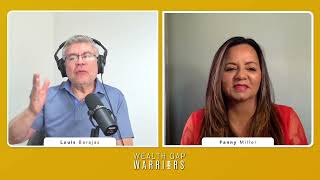
Luis Barajas talks with Fannie Miller, CEO of Elatino newspaper, about building her business in a male-dominated industry and launching the Celebrando Latinas conference to empower Latina women. Miller shares the challenges she faced as a Latina entrepreneur and how she grew her publication from the ground up.
Foreign.
This is Luis Barajas, host of Wealth Gap Warriors. Wealth Gap warriors is a podcast to introduce you to heroes working in organizations or companies that focus on helping eradicate financial injustice and economic disparity in underserved communities. And today, I am excited to introduce you to Fannie Miller. Fannie Miller is the CEO founder of Elatino newspaper. She started with six people, but she's the one that ended up with the newspaper. Largest Latino newspaper in California owned by a woman. Also a founder of the largest women's conference in the US Latina women's conference in the US Called Celebrando Latinas. In fact, I had a chance to speak last year. I think I may be speaking this year. It's going to be Saturday, August 2nd. And I will share with you that I have been to many conferences, had a chance to speak at a lot of conferences. One of the most inspiring, most motivating. I've never seen more Latina women dressed to the nines, learning from each other, sharing from each other, learning at workshops. And they had an incredible lunch. And so if you're listening to me and you live near San Diego, Los Angeles, if you haven't reached out, reach out to Fannie, go to, I think, Celebrando Latinas, they can look it online, right? And then find that. And so I want to introduce you now, Fannie Miller. She's going to share a little bit of her story, her background story, which is, I mean, everybody goes through some difficult times, but I think she actually has how she's gotten to where she's at right now and where she started from. It's just unbelievable. Instead of me sitting there and just kind of giving a little synopsis of your story, Fanny, I would love for you to, you know, say hi, introduce yourself, and then tell us a little bit about your, your backstory and then how you got to opening up a Latino newspaper.
Thank you, Luis. Thank you for having me. It's really a pleasure to see you. And so my story is kind of, I always say it's short and long. So I'm from Colombia. I came to the States when I was 13 years old. I was adopted. That's where the Miller comes into place. I was adopted by my aunt that was married to a Miller and lived with her for about three years. You know, then I did ended up in Utah for a year. And I, I was kind of, you know, kicked out and put in a plane and sent to Utah. And I ran away, came back to California, to San Diego. And I been ever since kind of, you know, on my own. So how the newspaper started. I was 21 years old, and there were six of us, one of. One of three sisters with me, four sisters. And we. One of them had the idea. She had worked in the newspaper up in the north county of San Diego in a small city with a gentleman that had a newspaper. And she had all these ideas. And, you know, he wasn't really into it. He was more of a bookkeeping guy and kind of keeping that structure of the numbers and how much they're spending. So she came to us, and at the time, I was going to what I call a drive through college. You know, the ones that you're supposed to do two years and you're doing six months. And so I was doing that. I was working at a store back then was the Kmart stores. And so, you know, she came with the idea. We got together. I think it was $15,000, and six of us, the four girls, and then two. One husband, one of my sisters, and then another friend. And we just got the money together. And of course, I said, I don't have any money, but I have, you know, I. I could work. And so that's how pretty much Elatino began. You know, it's. I was in 1988, and I was young. You know, a lot of people will ask me how, you know, you know, what inspire you, what, you know, how did you. How did you know to. To do this? And I always said it was an opportunity. You know, it was an opportunity. I took it, and I stuck with it, because the first three months, four of them left, and then it was just me and another sister. And then I bought her out in 94. You know, we had some differences. And then from 94 on, you know, I've been working on my own and, you know, newspaper, you're like, you probably know, it's a. It's a hard business. But I always said, what's not a hard business? All businesses are hard. You know, you have to work the business. You have to, you know, learn. You know, I did not know anything about publishing. What I became was a salesperson, you know, and I became, you know, I don't know, it happens to a lot of Latinos. You know, when you really want to get something done, you do it, no matter what you have to do. And. And I learned. I learned a lot about. I learned about sales. I learned about. I learned about pasting. I used to do everything by hand back then, and we had a lot of struggles. So that's that's the short story of.
Well, hold on, hold on there. So let me, let me just give, we have time for the longer story. And let me interject here, because here I think that people who are listening to us and me as a metiche now kind of want a little bit more in depth. And I, I know you'll tell us a little more in depth because I've seen it written. All right, so you tell everybody, hey, so I was adopted by my tia, right? So there's a reason why you went from Colombia. Then you was adopted. So I'm thinking to go, well, what happened to her parents? Secondly is then you share the story. Well then you get sent to Utah and we're thinking, okay, well then what happened that she got sent to Utah and then what happened that she comes back? Okay, just kind of get an idea because again, that's not an easy story. You know, you bypass that. And you know, and I know that as growing up, those kinds of things really affect who we are. And they can break us or they can make us stronger. And a lot of people can use that story to create a victimhood, kind of be victims of what's going on. And some people use that story to become heroes. And then I'm going to, and then I'm going to so share that with us so people kind of get an understanding of who you really are. Because the whole pro. The premise of the show is to really people to understand that everyone who is successful that I'm interviewing, whether they're running multinational corporations where they're, they're running the biggest non profits and Latinos are running the biggest non profits in the country, or you one of the most prominent women in, in publishing in the United States. You know, it wasn't easy. And people who are right now, we're going through a lot of struggles with, you know, you know, today is what, today's the 13th, June 13th. And everybody knows what's going on with all the ICE raids. We're struggling here as a community. And I want them to find, I want them to embrace what you've been through, but also to find and get inspired by your story as well. So share with us a little bit, give us a little more detail. And then I'm going to, then stop you and then talk about when at 21 years old, you know, and, and the newspaper thing.
So the reason that I was adopted, it was actually five of us that was, were adopted. My parents, my biological parents, which my father was the brother of my adopted mother. You know, they Had a. It was a really messy relationship. They had a lot of domestic violence. They had a lot of, you know, addictions. You know, my father did, and, you know, he came from, actually from a middle upper class in Colombia in Bogota. And my mom came from, you know, a very low poverty, you know, side of this, the city. So they got together. They. I guess they loved each other at the beginning and, you know, they had problems. And he started having addictions and it just became unbearable. So my grandma from my father's side is the one that decided that we had to leave the country and that we had to leave him. And my grandma was kind of a spoiler. She always spoiled him with money. You know, she always spoiled him with giving him money. So I think it was mostly my grandma, the one that decided to get us out of, you know, that situation. And she talked to her daughter, my aunt, and said, hey, you know, so we should. They did the adoption. So five of us, five of us came. And I don't think my aunt was ready for. For us, you know, for so many kids. She only had one kid. You know, they were also, you know, well, well, they, they were middle class, upper middle class in, in San Diego at the time. And the reason that I got sent to Utah, it was because my biggest thing was that I had a Mexican boyfriend at the time. I was 15. And, you know, I was not doing really. I wasn't doing anything bad. I was not what you would consider badass teenager. It was just somebody I hanged out with. And so she didn't like that, so she sent me back and I had a really good year in Utah. The family that I was there with, very big family. I learned English there because in here, of course, everybody spoke Spanish. So Utah was my English one year. Fast track language. Nobody spoke Spanish there. Not even the Mexican spoke Spanish back then. So, you know, it helped me a lot. I did really good in class. I miss my family. I wanted to be with my sisters. You know, I. I wanted to be with, you know, people that look like me. I, I think, you know, I. I wanted to be, you know, with the family of my boyfriend. They were like my family. So I. I don't even know how I did it. I took a plane, you know, I saved money from babysitting. And I was 16, I already had a license, and I took an airplane and I flew back to San Diego and I never went back with. With my aunt. And I think for a while they didn't know where I was. But I had left a note saying That I was leaving. So that's how I, I, you know, I got, I got back to California. But yeah, my family, I, you know, my mom, later, my biological mom, we brought her to the space. She already passed away, but we brought her to the state. She was with us for many, many years. And that was another thing that we really wanted. We wanted, you know, our mom like any other person, even though she had a lot, a lot of issues, especially emotional issues, you know, and my aunt didn't want us to. So that was also a conflict there. And that's, I think, one of the reasons also that we were so, you know, we separated from the family, or at least I did. And, and that's how pretty much the beginning of that. But yeah, the situation in Colombia was, you know, it was not, it was not a good situation for any of us.
And who then? It seems like though, you kind of were on your own most of the time. I mean, you were trying to figure things out on your own. Right. And then at some point. How do you figure that now? Did you graduate? Did you get a degree?
No, no, no, I didn't.
Okay.
I, when I came back from Utah, I went back to high school, but I was also working at my, you know, my adopted parents. He had a, he was a really nice guy. We got along with him. It was with her, we wouldn't necessarily, you know, had a good conversation, good, you know, relationship. So he had a 7 11. So we work. I worked at the 7 11. But so, but I was on my own, so I needed more hours. I, and I was going to school. So I told him, hey, you know, would you give me more hours? Because so I could stay, you know, in school. And he told me no. He said that he had people that had been longer. So I actually had to quit school and then went to go work. I work, I worked at a computer company in Solana beach, you know, here in Carlsbad for a while. So that was my first full time job. So I went to school and I left school.
So it seems like then the opportunity that you got with a newspaper was just kind of part of your destiny. Because it wasn't, it wasn't where you said, one day I'm going to be a journalist and then I'm going to do this and then I'm going to open up my newspaper and then I'm going to write stories. It was more your sister was working in the industry. You needed something to do. You were going to start a business basically with it because you guys, they were raising money, but you could work for, for that instead of contributing money, you could work and help them out. And then share with me what happens, what changes throughout all these 38 years that you stayed with the newspaper? Tell me how you've changed. Because at first it was like, well, I, I, here's an opportunity, I get to work at it. But you don't really know what you're getting yourself involved in. You don't, you don't even know the business of newspapers. I mean, this is, you know, you're out there helping like you were helping, you know, on the 711 store where you were helping the other people before. And then how does your mindset change into becoming an entrepreneur from being somebody who kind of was just there, even though you were coming in as a shareholder for this company. And what are the things that you've learned throughout working in the industry, the publishing industry, because it was mostly male dominated. What have you learned and what struggles have you overcome and having to deal with men and being a Latina especially, I'd love to know kind of the trajectory of what's gotten to you to this point from the newspaper. Then we'll talk about Celebrando Latinas. But I want to know your trajectory and how you've changed, how you've learned. And again, we're in a different state now. Everything's social media. Not too many people reading our newspapers. But I guess you have probably a strong online presence as well.
When, when, you know how I have changed. I don't, you know, I mean, of course I have, I have a lot of more knowledge, you know, and, and probably a little bit more savvy about different things. There's, I have made a lot of mistakes and I have made a lot of right decisions, you know, and I think that's one of the things that when you are an entrepreneur, you kind of doubt yourself a lot, you know, like, and I think I was, one of my biggest lessons is that at the beginning I doubt myself a lot. You know, I, I, I did have, and I still believe I have a lot of mentors and you know, I look for people that of course knows and has more knowledge of me, of, of different issues, not knowledge. So at the beginning I started going, I was, think I was 23, 24 years old. And I started going to the national association of Hispan. And of course they were all men, I think the youngest one back there and it was like he was like 45. There was very few women publishers. There was a lot of couples, you Know, husband and wife publishers, but soul women Latinas, there were very few. Now there's about probably like 65%. So there's more woman publishers now. Thank you. Oh, wow.
So. So. But back then you had someone. I let me. I'm. I think I'm trying to remember somebody who's also woman known. I think it was El classificado. Right. Was around. Yeah. Back then. Right.
Yeah, she. And actually I think we started at the, at the be at the same. In the same year. We started in 88. And you know, she still, she still has it and you know, but I, I always found that I had that. I, I didn't know it was mentors back then. You know, I just call it picking people's brains. I didn't know it was mentors. But a lot of those guys, those publishers became my mentors. And you know, I learned from them and I implemented a lot of them. Stuff from them. But they were a lot older and I think by me being young, they never saw me as a threat. You know, they never saw me like, you know, I was picking their brains for any other reasons that I, you know, they always felt like they were really happy to help me, you know. So I think being young it helped me that way, you know, that they, they, they saw me like this, you know, young Latina that, you know, that's don't know anything and you know, we're going to help her or they would help her. And a lot of them became my mentors and some of them, I still up to this day, I. None. Some of them are no longer here and I always remember them. But. And one of the things that I did become, and I think it was probably in the first 20 years that I learned it the hard way, is that I needed to become the best salesperson of my company. You know, that that was one of the things that I always doubt myself and you know, I'm an introvert. You know, I'm very, I'm. I'm very shy. I mean. And I hated to go to, you know, social events and I hated to go to networkings. So I started taking classes and I started taking seminars and I'm like, you know, I started practicing and, and so that was like my mind, my state mind that just kept me focused. I, you know, I'm sure that there's been a lot of times that I've been, you know, I don't know, put aside being in. People didn't like me, you know, probably a lot of prejudice. I do not know. But I was always, and I'm still are so focused on what my goal is that I don't even notice it. You know, I don't notice it. And I think, you know, there's so much negative stuff going, even in business. You know, we started reading about business and it's like, you know, 60% of Latina businesses, you know, go down, you know, so there's, we, there's so much information on that that I never concentrated on, that I have never really given my, myself a choice if I'm going to make it or not. You know, I have to make it. You know, I, I, I'm, I'm, of course, I had my, my times where I was emotionally drained, you know, unstable, you know, I tired. I heard in one of your podcasts, you know, when the company grows so much and, you know, you just, I call it the lettuce. You know, it was like a lettuce that it just grew everywhere. And, you know, when I had like 30, 40 employees, you know, I did it. You know, I think I did a lot of good things, and I also think I did a lot of, I made a lot of mistakes, you know, and I always say, you, I have, I have paid for my experience. You know, I have paid for my experience. I, you know, experience that is not cheap and you cannot rush it, you know, so, you know, that's, that's one of the things that I always tell myself, you know, it's when I always, because we're very negative, you know, entrepreneurs, we're very negative, we always think she's, why did I do that? Why did I pay that? You know, how come I didn't, you know, hired or went through the right process of hiring a person or, and, you know, many things that we do because we're busy and we have so much stuff in our plates that I'm just saying, no, you know, I, that it cost me, and that was my experience. Experience always will cost you.
So did you, while you were growing and learning and taking classes, was there anyone at any time that you read a book, went to a seminar, was there a specific person that you followed that helped you grow and learn? You know, I will share with you that I left a big firm in Newport beach to go back to the barrio in East Los Angeles in 1990-91, and the LA Times did a big article about me. And I. And there was a gentleman in San Diego who actually read the newspaper and invited me to a conference where all of a sudden I grew leaps and bounds and I learned Things that I had never even heard before. I was fortunate enough to have a gentleman named Tony Robbins who was in San Diego at the time and invited me to a conference. I couldn't even afford to go. It was in Maui. And I ended up rooming with a gentleman named David Bach, who helped me tremendously, who ended up writing books and coming out on Oprah. And that's how I got my books published. She helped me with all of that as well. Have there been any mentors that you can name or books that you read that help change your mindset and continue to grow as a person and as a business owner?
So I can read many different topics. I mean, I have probably in my nightstand, I have. I have a bible. I'll have, you know, I think it's called Attraction. The book I have read, you know, think and Grow Rich. I did follow in the early 90s, I believe Tony Robbins, and I still listen to him. I think one of the things that has. It has worked for me, and. And I'm not sure if it's the right thing, but the right way to do it is that I don't. When I need something, you know, I. When I need to motivate myself, because we have to motivate ourselves every day. And, you know, I kind of go to that book or to that video or to that podcast. So if I need, you know, like right now, you know, with all the social media. So I started, you know, learning about. More about social media. I'm taking the AI classes, so it depends the need. I cannot say that it's been one thing. I think it's many little different subjects. When I have emotional issues, I have to learn about my body. I have to learn about health. I'm a woman. I'm changing, so I don't have one exactly. But I think it's been many. Some spiritual, some, you know, that have to do with work. I. I really like watching sales videos. You know, it's the. The psychology of selling. I think it's interesting because we. We don't. We don't even know we have it, and we're already using it. So I like that part. But it has not been just one. It's. I think it's many different ones.
Okay. At any time as you're growing your business, were you ever offered and to sell your business to a bigger publishing house? And. And is that. I mean, I noticed that for a lot of Latino, business owners have grown their business to a certain size. At one point, they were offered somebody who's going to buy them out, but they never did. And they've kept it because it was like their baby. And they, they, they didn't want to, you know, they didn't want to sell it. Has that happened to you?
Yes. Yeah. I think I went through the conversations like two or three times. I don't remember the year, but it was on the, I think early 2000s, that a lot of the newspapers were being bought by this company, it's called Impremedia. And, you know, they bought most of the, the big, the big cities. You know, San Diego, San Diego is not that one of the biggest. We're number 13 nationwide, but we're actually number 10 in spending. So. But yeah, they came to me, we talked, we went through some of the process. And, you know, I just, it didn't feel right. It didn't feel like it felt also they were going to close it or they were going to squish it out. That means that, you know, they were, we're going to get the news from, you know, New York or LA or Florida or Miami. And so I wasn't ready for that. And, you know, one of the Canadian guys, he told me, he says, fanny, you're not ready. You're not sure? And I'm like, no, I think it sounded really interesting. And, and then I also made my numbers, you know, at the time, you know, I didn't have the knowledge that I have now, but the, you know, I would count how much money they were going to give me. And it wasn't also in a lump sum. It was going to be some in payment. And, and I also had to stay and work for a couple of years. And I'm like, I have never worked for anybody, you know, since I was 21. I don't even know how to do it. Board, you know, like, you know, they request. So I don't think it was the time. And, you know, and I, I. And it's a decision that I don't regret.
Okay, how does or, or what inspires you to create Serando Latinas? Because it's a completely different business model, obviously. One is a publish, you know, you're publishing information, you're publishing news. And, and when I was at the conference last year and spoke at the conference, I was so overwhelmed and so proud to be Latino. But to see all these Latinas who were all helping each other out, giving each other advice, going to the workshops, sharing information, how does that come about? What is it that was created? And then I would love to know what your vision and what the purpose for celebrando Latinas is So.
So Celebrando Latinas. After I had my three boys, you know, I had the three boys. And a little bit after that, I went through a depression, you know, and it was actually when a Latino was, like, booming, and I think I had, like 40 employees. So talking to a friend of mine, you know, she says, fanny, you don't. You don't sound right. You know, my biological mom had also passed away a couple years before, so I found myself depressed. And I'm like, no, I'm not depressed. And I'm so. You know, because she kept telling me, and she had already gone through, you know, her issues. So I went to go find out, you know, okay. You know, it's like, I have no reason to feel. To be depressed. I mean, I had. The business was doing good. You know, my relation was fine. You know, I had. My three boys, were healthy. I had just bought a big house. I mean, everything was fine. So then I found myself that I. Yes, I was. You know, I was. I was depressed. I was not myself. I was overweight. I was. I didn't. I take care of myself emotionally, mentally, physically. So I started, like, searching for that, you know, like, okay, you know, I started. Same way that I was doing with the business, and I started taking classes, and I went to some emotional and therapy. So going through that, I saw that, why am I going through this? Why? Okay, it could be hormonal, but why? What else? Well, I was taking care of everybody, but I was not taking care of myself. And so going through the search of healing me in whatever, I was broken and that I was, like, little by little finding out. Then I found that I was not the only one, that there was many Latinas that. We do this. We take care of everybody. We take care of our families, we take care of our kids, we take care of our friends, we take care of the neighbors. We'd volunteer everywhere, but we're not taking care of ourselves. So because of that and because of all the marketing, that I was learning to be a good salesperson. And so I had to learn about the Hispanic market, the impact, the numbers. And I was sitting one day in New York in a conference, and they were giving all these numbers about Latinas, about how much money we spent. And so I just put the two together, you know, and I say, you know, but we deserve something nice. We want. There's no. There was. There's nothing that I. If. Unless you go to Celebrando, I. There's nothing I could tell you compare it with nationwide. There isn't, because we always get, you know, if you're a professional woman, if you're in real estate, if you're in marketing or, you know, corporate America, you go to nice galas and you go to nice lunches and you go. But the everyday Latina doesn't even in their own city. So I, you know, decided to do Celebrando. And I was also, at the time, working, and I was on a committee with the Speaking of women's health that they had their conference nationwide and they had one in San Diego, but they canceled it. So when they canceled it, I went to, you know, their local reps and I said, hey, you know what? I. I'm going to do this. I'm going to do Celebrando. But that was only about health. And so I said, okay. So the first one we did was 500. 500 attendees, and we did it on health and beauty. So why the health and beauty? Because I, I mean, I already know what I'm doing wrong with my health. I don't eat well, I don't exercise, you know, so I'm not going to go a whole day at a conference for, you know, to talk about just health. So we have the beauty part, right? So I said, okay, the beauty part is going to bring them in. And yes, you know, so we have a fashion show. Latinas are the ones that spend more in makeup. Like Latinas are the ones that, you know, spend more taking care of themselves. So we put that. Those two. The first year. By the second year, we saw that a lot of Latinas are in business, right? So, you know, they wanted a, you know, we want something that has to do with business. I'm saying, okay, well, all the stuff that I went through, all the, and now, you know, me being 21, and I'd been, you know, not knowing anything about business. So we started putting the business part art on the conference and what I call it, going back to basics. You know, the, the basic of business that we usually don't have because, you know, Latinos that are going to business, they're usually passionate for one reason. For one thing, you know, they're. If they, they open a restaurant is because they love cooking, you know, but there's so many other stuff about having a restaurant. So we did the business and the entrepreneurship, say, on the second year. And then, you know, one of the conferences that I, that I, that I do. And, and I have done some coaching on business coaching. And then we put the finance so why the finance? Because we could make money. You know, we Latinos have no problem, you know, having a business and making money, which is that we have no idea. We were never taught what to do with it, how to, you know, how to. How to manage money. So. And I also do it based on my experiences. You know, when Latino was doing really good. I mean, now I do good, and I don't have as many employees, you know, I don't have as many expense, you know, so then we put the finance. So that's how Celebrand started. It started based on my personal. This belief. So we. So I. We bring to Celebrando those four aspects, you know, those four topics of it. And I talk about, you know, the business part of it, the financial part of it. You know, there's. There's a lot of, culturally, a lot of, you know, lies that we were taught, you know. You know, like, even buying health, you know, a life insurance, you know, if you buy life insurance, you're going to die. Oh, we're all going to die, you know, so it's just kind of bringing that awareness on the health part. Latinas are. The number one killer for Latinas is cervical cancer, which is the slowest cancer, you know, in us. But why? Because culturally, we don't take care of ourselves and like, say, you know, we have six kids and, yeah, we don't want to go and take care of ourselves. So it just kind of bringing. Making them aware that day that you have to take care of your, you know, your whole body, you know, your mind, your physically, your emotions, and you have to learn how to balance. You know, you have to learn how to balance. I'll tell you a little bit of my experience with Bunny. When I started going through my healing, I, you know, one of the things that I did was, you know, I always had money, but I never used it on me. You know, I would let people borrow money. Employees, you know, had an emergency, family members, and it was, you know, I didn't have any savings. I, you know, I didn't have any of that that I should have. Because we also have these learning about money. There's. There's a little. A small conference. I don't do it because I wish I could have more time to do it. But that's one of the things that I want to do. There's. There's a conference that I do or a workshop that I do that is called my. My Life Plan. And so I learned it when I was like, 37, when I started on My, on a path to, to, to my life. So that the, the, the way that I did the, the workshop is that I don't plan for like a year or two years. I actually plan for my end. So, you know, so I have the five topics on it, which is you physical, my emotional, my spiritual, and my social aspects of my life. And so it's like I tell the ladies, I said, okay, well, you know, how, how, how are you going to end? Like, he goes, what do you mean? I said, yeah, you know, if we plan for tomorrow, we could also plan for our end. So I already planned that I'm going to live to 96. And then, you know, I want to be one of those old ladies that are really nice and healthy and, you know, and radiant. And, you know, their finances are not, you know, they don't have to be, you know, asking their kids and their grandkids to take care of themselves, to take care of them. So I do that. So I, it's been a learning experience. I'm still going through the, the, you know, the learning and the healing, but I'm very open and I talk to the ladies about all those different aspects of our lives. And I think that I was had. That's what you said. Celebrando. In celebrando, there's no VIPs, there's no, you know, everybody is the same. We have judges, we have lawyers, we have homemakers, we have housekeepers. We have all kinds of different, you know, lives that come together. And we learn from each other, we share each other's sort of stories. And I think that's the most powerful way of learning.
Share with the audience. How many people normally attend the annual conference?
So we have had up to 1500, you know, right now when we came back after the pandemic, we had about a thousand, you know, that we have, we don't, you know, I've been asked, you know, why don't you make it bigger? But it just kind of, if you can make it bigger, just kind of lose the essence of it. But we have, you know, we have workshops. We have about eight, nine workshops. We have the expo, we have. It's about 120 exhibitors that we had last year. And, you know, my job is to help them succeed with their businesses. You know, and my job is to, you know, share with them what has worked for me. And, you know, I like that. You know, just like with, with, with a Latino, you know, my job is to make sure that your ad works. You know, when it comes to Newspapers, you, the a, if you, if you have a newspaper that does not have local ads, it's not working, because the local ads are the ones that get the people on the door, you know, so I'm very local. I, I, and, and that was something that I learned to do because years ago, one of the TV stations came to do a report on a Latino, and she, she was like a three day. And at the end she came to me and she says, fanny. And that was like in the 90s. She says, do you know that nobody knows you? And I'm like, what? She says, no, nobody knows you. Because I was a home type. I didn't want to get out. And I said, okay, I, if I'm going to, you know, keep this business and make it success, I need to grow personally and I need to get out of my comfort zone.
Well, and if anybody's listening to us and they're wondering, why did I speak last year? I actually have written a book called Small Business, Big Life for Women. And it is very rare that I get asked by a women's conference to speak. So I was very honored that you guys asked me to speak on that book last year. So now that you can reflect, you're still a very young woman, and now that you can reflect, going back to when you started your journey on entrepreneurism and everything that you've created, if you could go back and do things differently, what would you have changed? Because you said, I've learned things, right? I've learned. So have I. I'm constantly learning. I'm constantly learning of who I would have gone to get help with. I'm constantly learning about what books I should have not read, what books, you know, that I read that actually kind of messed my thinking up. Other books that I'd read that I would have, should have probably met those authors. What would you have done things differently if you could start all over knowing what you know now?
I think I would have learned about financials more. I should have learned that earlier. I think that would have made my life a lot easier now. You know, I think, you know, I think we'll just like, you know, like just on the treadmill, going, going, going. And I think that that's probably one of the things that I would have changed, not be so afraid, you know, I think that the financial world, the way that is, or the way that it was sold to me at the moment, it was like you had to be so smart, you know, or you had to have so much education or you have to, you know, and there's also the non. Trust, you know, who. Who do you trust? You know, so that, that, that was also. I mean, there was no. There were. There's a lack of people that you could trust, you know, and, you know, and also that I was. I thought maybe I was just too small, which now I see I was not, you know, that I was too small. But probably the financial part of it, definitely, I would have liked to have learned it younger. You know, that's probably one of the other. That's probably the main one, because from there, you know, I probably would have invested more in other things. I started kind of investing. You know, I did buy my first house, but also, you know, I didn't get, you know, didn't sell it like when I should have sold it. You know, all those sentimental things that we have when we buy things, you know, I. I do now. It's different. So that was. That's probably the main one that I would sell is just the. There's the. The financial. You know, everything else, you know, I. Everything else. I did it. I think I did it, you know, at the right moment. You know, I'm. I have so much to learn now. I just. Now I just want to do so.
Many things well, you know, as. As Latinos who have never come from wealth and had to learn stuff on our own. And we were kind of the very first in, you know, I'm kind of one of the first Latinos in personal finance or in the certified financial planning world. Same thing with you. I will share with you. What I learned the most was, you know, I think a lot of us will have sometimes an imposter syndrome where we make it at a certain level, but we don't feel that we are as good at the table as the other people that we're with. For example, I've got a national board, and I felt, oh, my God, I can't believe I got this national board. Why would they have picked me? They're like, fantastic. I'm never even as close as good. And then I will share for people who are listening to us is that, you know, every single time I've gotten in a. In a room with some people that I've looked up to who were great or leaders in the industry, you know, I realized I was just as smart as they were. For some, I was smarter for them. I wasn't. There were just some people in there who would maybe not that smart. And I'm thinking, holy moly. It's like, what are they doing here? Right? But it took me a while to be able to go onto a national board and feel like I could really contribute because I felt like I had to learn from them still. And they actually brought me to the table because they wanted to learn from me. That was probably one of my biggest learning lessons. And that's how I try to inspire kids to say, hey, listen, we all have something to contribute. We all grow up and see things differently, and people need to learn from us and learn from those experiences as well. Just kind of the sharing experience from my side is what I would have done differently is had a little bit more confidence in myself. And I think at this point now, that's why my wife says, you talk to the devil, you talk to anybody. And I go, well, I will, because I'm not concerned about how they see me. I'm being me. And that's enough. So what brings you your biggest joy in what you do now? What, what makes you happy? What still gets you up out of bed? What makes you look forward to what you're in? The publishing world has become very, very complicated and very difficult. You know, are you pivoting to something else? But what are you looking forward to and what brings you joy?
So the publishing world has always changed. I mean, since 88, when I began. When we began in Ada, they told us Latinos don't read. Okay? And it's been 38 years. So I guess somebody's read it, right? And it's, and it's, and it has helped a lot of small businesses because that's how they get their word out. That's where they advertise. So with the Latino, I mean, Latino have. Latino has been a blessing. And Latino, as I always said, I, you know, I just work for, you know, a Latino. I, I, I believe that, you know, you know, I call it God that he put me here and he told me, hey, you know, whatever. I work, it's his. I just manage it, you know. So a Latino is doing fine. It's publishing. So why has a Latino lasted? And many have, many have come and gone. It's because we have stuck with the same values in the same from the beginning, which was to be local and which it was to be part of the community. You know, I had a newspaper, one of the big ones from San Diego, years ago, you know, they started putting all this money and they kept saying, you know, we cover the Latino community. We cover the Latino community. And I'm like, I don't have as a big of a budget to, you know, advertise like they did. So I just started saying, we don't cover the community. We are the community, and that's what makes it different. I know I'm an immigrant. I know what people need to read, and nobody else gives it to them. No radio, no tv, no other newspaper gives it to them. So a Latino is going to continue. There's always, you know, immigration. There's always new. Even people that have been here for years, like me, don't know the system, don't know how the system works. You know, even people that. That were born here. And so in Latino, we do a lot of that part is teaching how the system works, how the school system works, how immigration works, how, you know, nobody else gives it to them. And, and if they do, they give them pieces, you know, like little, little pieces of the news. So we tried to do that, and we have been doing that since the beginning. It's a weekly. You could see it online, latino online.com, and you could see it every week. You know, we still have the major corporations, you know, advertise with us, and that's one. But I also know that, you know, there's the online and there's the social media and there's that, but that's a different business. So the reader that has a Latino, it's a different reader that it goes to read a Latino online, you know, so. So you have to understand that it's not the same. I think a lot of publications have tried to. One, you know, one will replace the other one. And I have always seen them as a different business also with the social media, you know, social media, it's a different. It's a different, you know, public. It's a different consumer. So you have to understand the, the, the. The difference between the different platforms. And you also have to understand that not all Latinos were not all the same. You know, we don't. We don't, you know, eat the same. We don't, you know, we don't come from the same backgrounds. You know, we're not at the same levels. So you have to understand that, and that's who you have to, you know, reach your product to. And that's what I, you know, what I think I know the most. It's the marketing part. How the Latino, you know, is, you know, when there's organizations like I have NPR in public relations, you know, I probably received like 300, 300 press releases on a day. And so, you know, some of them I'll send to them, I say, hey, you know, if you want to Advertise because it's mostly an advertisement. Can I can Newsworthy. And it says, oh, we don't do newspaper. And I said, then why are you sending it to me? You know? And I says, oh, you know, because we want you to run it. That doesn't make sense. So they not even know, you know, who they want. They're just trying to get it out. So you have to know the different platforms and you have to know the different Latinos, you know, like my daughters. My daughters are teenagers. They listen to Spanish music, you know, all the time. And they listen to reggaeton and they listen to, you know, I'm like. And they listen. I'm going to go to a Kali Uchi's concert, you know, as a Colombian. So, you know, I don't even know who she was. I didn't know who she was, but she's a Colombian. I'm like, mom, you don't know she's Colombian?
I'm like, she's fantastic. Yeah, love. Kelly Uchis was a client of mine, just so you know. Yeah, she's one of my most favorite artists. Yeah. And everybody you've named has been a client of ours.
It's crazy because my 14 year old, that's what she wanted for the 15, which I don't do quinceaneras, but the 15. So we're gonna go see her and buy her the VIP stuff to go see her. So I'm in my second time seeing her. She's good. Yeah, Yeah.
I mean, I just. I was listening to Frank Sinatra this morning, and I'm gonna go see my other client. Yandel's performing tonight with a Symphony at the YouTube Theater. And, you know, Latinos, they don't understand, are eclectic and listen to everything and they're just not, you know, we just don't listen to Spanish music. Right. We're well acculturated.
And that's if you could get. The perfect example is Celebrando, the conference. You know, when you went to Celebrando, you saw a woman of all ages. That's right, all ages. And it's like when, you know, I have people that are interested, like, okay, so what age are they? So they want to put us in this little bucket. And I'm like, no, they're from 13 to 80. He says, what do you mean, from 13 to 80? I said, yeah, because, you know, we're Latinas. We, we, you know, we care about the same things, you know, we want to know about beauty. We like music. We like, you know, the energy of it. So we get trying to put us in the same bucket sometimes. It's a, it's a mistake.
Yeah, you know, I will share with you. Like I said, I, I get asked to speak to a lot of conferences. I go to a lot of conferences. It wasn't that it was a Latina conference. It wasn't that there were, you know, over a thousand people. It was the energy at the conference and it wasn't. It was just being. You could feel the energy. And everybody was just so supportive and so in tune to becoming better and asking people. And I was seeing people that were maybe introverts that were getting uncomfortable to ask for people. I saw when, after I spoke and did my presentation, I can't tell you how many people came up to me and said, I want to ask you a question, but I'm an introvert. I normally ask questions. It was just a beautiful experience. And I will share with anyone that again is listening to us who is anywhere in the country, but specifically in the San Diego, the Los Angeles area, the Orange county area, San Bernardini, Riverside area, go to the conference, especially this year, where we need Latinos together, to be together, to support each other in light of everything that's going on, you know, it's important that we show up this year for that conference. Now let me ask you a question. It's Celebrando Latinas. But is it, can men go as well or is it just only women? I mean, I know you're selling tickets, but I mean, I know that men usually, I mean, but I mean, like I said, I spoke there because I wrote a book for women. Right, But I mean, is it just a 100% for women? I know the topics are for women, but can a spouse go, Can a partner go if they wanted to go?
So, so we do have men that go, but usually it's speakers, sponsors or, or volunteers. So if you want to go as a, you know, an attendee, then you just, you become a sponsor. If you buy a table and then you can, you know, just with the. It's. But it's not necessarily. We just want a lot of the women's to come and it's your day, you know, it's to get past, you know, to, to have fun and, and it happens. A lot of it is because from our learning, is that a lot of women, especially on the seminars, on the workshops, like you said, they will not, you know, they're not very open to, you know, speak or, you know, or ask in intimate questions unless they're Feel like they're in an intimate atmosphere.
Understood, understood. As we close up here, just what are you most proud of? And then what is still there? Something that you haven't but would like to achieve.
So what am I most proud of? God, I'm probably proud of. Really proud of my kids. My, my. So I have six kids and you know, I have three boys and I have three girls that came through the, they're adopted, you know, the three girls. And not sure if you know the story, but I have the three girls. I got the girls from one of the stories we did at a Latino. Her, her mom was a 30 year old Mexican and she had pancreatic cancer. And you know, just kind of her story came up several times. And also at Celebrando, she was at Celebrando the last year and you know, I went to go meet her just like we all do see what she needed and you know, like if you Latina, see what she needed. And I ended up and I stayed with the three girls. So I have this, the three girls, they're doing really well. At the time they were 1, 2 and 5. Now they're teenagers and they're really good girls. I'm really proud of them. My three boys are also, you know, doing, you know, doing really well studying. And I think that's probably what I, you know, what I could say. I'm proud of that. And I'm just, I'm just looking forward, not looking forward. I'm planning, you know, to slow down and that that's probably my next step, you know, just not slow down in a way that, you know, that I'm not going to do things. But it slowed down in a way that I don't have to worry, you know, that, that I could just, you know, get into a frame of mind, which it takes a lot of me to just, you know, just come down because there's so many things that I want to do, you know, I, I have a few, you know, and also people come to me with, helping them with the marketing and stuff. And so there's a lot of opportunities. I just need to be able to balance, balance my life. Yeah, it doesn't really exist, but I could try it.
Yeah, I think as we get older we realize that we can't be working all the time, that we have to have a little bit more balance. Right. To enjoy ourselves, to travel more, to see more, to spend more time with the people that we really love, create more experiences. And I think I understand that. You know, I am one of My legacy ideas was that I would. I. Before I pass one day, right, I'm looking at the end. I wanted to plant seeds in, in the Latino communities, the underserved communal community, Latin communities like Boyle Heights, like McAllen, Texas, like El Paso, Texas, like Chula Vista, you know, Bakersfield. I mean, you can go across the country for Latino areas. I'm creating Corazon financial and insurance services. And I think that you have said that you're interested in that or you or a family member, one of your sons as well, is interested in helping us with. Launch that as, as a business for yourself. And I appreciate you for that as well, because I think that we can make wonderful, wonderful changes in the community. But, you know, one of the things that we hear all the time, that Latinos are the biggest spending power in America. And I feel that right now, the attack that I see on Latino community is because we're not the wealthiest community. And that's one of my goals is, or one of my legacies is to teach people or teach Latinos, especially Latinos that have never had the opportunity, that have never had the experience, that never had wealthy partners or parents teach them the mindset of how to make more money and how to grow and how to become wealthy and again, at the same time, you know, achieve more power and in the, in the United States. So I understand that you're interested as well, and you're going to be involved with that. So I'll be working with you a lot more going forward. So I look forward to that. I. I think that, you know, even the story that you just kind of, you know, we just kind of talked over about you adopting those three young girls shows what a really special lady you are. You're very, very special and you're very, very humble. And as I got a chance to prepare for this podcast, if people are listening to me, I don't think we touched really how deep Fannie Miller is and all the wonderful things she does, not only in adopting three kids with a mother who's passed away from pancreatic cancer, but where she came from and everything she's been through and how she has touched so many lives through the newspaper, through Celebrando Latinas, and everything she continues to do. And I'm just extremely proud to have spent some time with you. I'm extremely proud that I'll get to know you even better in the future. And Fanny, thank you so much today for your time with us. And thank you for being so open and vulnerable and sharing your life story with Us.
All right, thank you, thank you. I'm really looking forward to working with you. And you know, here in San Diego, I think it's. We need the knowledge that you bring and it's really a blessing, you know, to be able to help anybody. Especially I think one of the. My goals will be just for us Latinos to help each other more, you know, that's, that's just my goal and to, and to share the knowledge, you know, to share the experiences. Because when you come to this country, you don't really, you know, you're lost, you know, well, some of them were born here and they're still lost, but, but it's just, you know, the knowledge of the financial world is what is going to get us, you know, what is going to get us. Get the next generation we need.
Absolutely. And yeah, and we're calling it Corazon because it was originally with my wife saying as we have our own business management firm in which we cater to Latino musicians and entertainers. And then I have the international private wealth advisors with Daniel Guillen. You know, my wife has always said we can pretty much train anybody to do anything. But you can't teach hard. El Cora Sonia, ya bien. And I can't teach that. And so the thing is Hard is being honest, ethical, competent people who really care, who would never do anything to harm anyone. And that's what the whole purpose of Corazon Financial Insurance Services is going to provide a different level of person providing advice in these communities who have a lot of heart, who are not willing to do any harm for the sake of trying to sell any product. And that's the goal of it. So thank you so much. We'll be watching you. Fanny, tell us how to get a hold of you. I know that I can go to a latinooonline.com and, and go on there. Celebrando Latinas. How do we find the information for. How do the women find information on Celebrando Latinas? And if they needed to reach out to you, can it go through LinkedIn or how can we get a hold of you?
Yeah, I'm on Fanny Miller. I'm on LinkedIn, celebrando latinas and I'm also on social media usually, I mean, pretty good at answering everybody. You could just. LinkedIn is the best way you could reach me there and send me a message, any questions and I would love, you know, for everybody to experience and be part of Celebrando.
Thank you so much. Many blessings and we'll see everybody next time. Bye bye.
Gracias.









