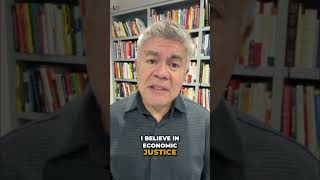
In this impassioned monologue, Luis Baragas, a first‑generation Mexican‑American from East Los Angeles, outlines his vision for a Latino economic revolution grounded in dignity, equality, and economic justice. He situates contemporary Latino challenges within a broader historical pattern of exclusion faced by African Americans, Jewish, Italian, Chinese, and Japanese communities, emphasizing shared experiences of fear, blame, and economic barriers. Baragas rejects stereotypes that equate poverty with laziness, affirming that hard‑working people deserve respect and fair pay. He declares his commitment to building a community‑driven economic movement that prioritizes humanity over political power, calling for solidarity across all marginalized groups and a universal golden rule of treating others with the same dignity afforded to one’s own family.
Chapters
I'm Luis Baragas. And let me say this clearly because I think it matters when I talk about Latinos, when I focus on Latino families, Latino wealth, Latino dignity. It's not because I don't care about anyone else. It's because this is who I am. I was born and raised in East Los Angeles by Mexican immigrant parents. Now, this is the journey that I know. This is the pain that I've lived. This is the culture that raised me. So this is a community that I'm called to serve. But I'm not blind to history. And what Latinos are experiencing today, in many ways has happened before to other communities in this country. African Americans, Jewish families, Italian immigrants, Chinese immigrants, Japanese Americans who were literally put in internment camps. Always different chapters, but the same pattern, right? Fear, exclusion, blame, economic barriers. So, no, this is not just a Latino thing. There are people hurting all across this country. People working hard, playing by the rules, and still struggling to get ahead. Now, I don't claim to know every journey. I don't pretend to speak for every group that wouldn't be honest. But I do know this, that anyone who stands up for their people with love, dignity, and a desire for fairness, I stand with them. Now, what do I believe in? I believe in equality. I believe in fair pay. I believe in economic justice. I believe that people deserve respect, not stereotypes. And I reject the idea that struggling means that you're lazy or broken. That story has been used over and over again in history, and it's never been true. Now, what I'm building is a Latino economic revolution, because that's my lane. That's my responsibility. That's my heart. But I celebrate anyone who is lifting their community with integrity. We don't need to compete in suffering. We don't need to divide pain by color or culture. This is a room for all of us to rise. And at the end of the day, this isn't about power or politics. It's about humanity. Not he who has the gold rules, but the real golden rule. Treat people the way you would want your parents treated or your children treated, your grandparents treated with dignity, with opportunity, and with respect. Now, that's the world I'm working towards for all Latinos, for all people.