My Street Money Live With Louis Barajas
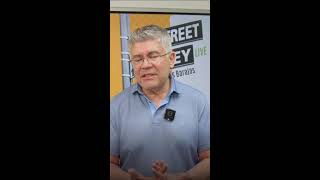
Recorded live on Louis Barajas' "My Street Money Live" (weekly Tuesday noon PST session), this video provides practical financial guidance targeted to the Latino community under current stress from immigration enforcement. Barajas: (1) shares immediate resources (appleseednetwork.org; his community site), (2) urges building a financial foundation — open a high-yield online savings account (examples: Marcus, Ally, Synchrony via NerdWallet) and create an emergency fund (aim 3–6 months), (3) contribute to workplace retirement plans at least to employer match (commonly ~4%) and target ~15% long-term savings, use target-date funds or S&P 500 exposure for simplicity, (4) explains basic asset classes (cash, bonds, equities), Rule of 72, and buy-on-dip discipline, (5) recommends low-cost term life insurance and reviewing auto/home policies, and (6) stresses estate planning documents (will, living/revocable trust, durable financial power of attorney, health-care directive, guardianship nominations) especially given deportation risks. He also emphasizes mindset, personal development, and community solidarity as critical for building intergenerational wealth.
Questions this video answers
Every Tuesday at noon Pacific Standard Time (weekly live; sessions recorded and posted to YouTube).
appleseednetwork.org
Marcus (marcus.com), Ally Bank, Synchrony (and he suggests using NerdWallet to compare).
Around 3.75%–4% (varies by bank).
Three to six months of living expenses (he notes smaller starter amounts like $500–$1,500 are still useful).
Chapters
Side.
All right, we are live. My street money live. Welcome. Every Tuesday at noon now, Pacific Standard Time, we also tape these. We put them up on YouTube and I answer your questions that you send me throughout the week. And we've had a lot of questions, a lot of questions. I'm getting a lot of responses from TikTok.
I guess that's where, and YouTube as well. It's a lot of the questions that we had last week. So I'm going to go through them. I'm going to try to go through them a little slowly. As you all know right now, in the Latino community, we have had a lot of tragedy with all the ICE raids and people being deported and families staying here and loved ones basically uncertain as to what to do. We're starting to see that there's a lot of help.
A lot of help coming up.
And so what I'm going to do is I'm going to share. So there's a great, great place to go. Also. It's appleseednetwork.org appleseednetwork.org they have put out a manual for people who have been deported and what to do. Also on my site@luisbarajas.com L O U I S B A R A J-A-S.com we're starting to post a lot of information. Join my community. Go into. Join my community. There's no cost there, guys. Just join my community and I will give you a lot of also a lot of the coaching tools that I talk about in a lot of my social media posts. We're going to do a lot more education now. Next Tuesday, I am not going to be here. I'm traveling. I'm leaving. I'll be in Boston. I will be in New York and I will be in Philadelphia from here until next Tuesday. And then the following week, I might do a mystreet money live on a special day. We'll probably do it on Thursday of next week when I get back. And we'll let you know in advance the time. Okay? And people who are there, like Pat Medina who's just jumped on. Hi. And I want to dedicate today's session to.
Patsy Lopez. Patsy Lopez was a friend and a client whose husband passed away a few months ago and who happened to pass away this, this weekend. And she passed away in her sleep and we're going to miss her. She was a heart of our community, always rooted me on, was a client and friend for over 35 years and was really behind the Chicano movement years and years ago. And has always been a big fan and big supporter. I know you're with me today. Thank you. And so let's talk about. Okay, so we have right now a lot of the questions where I have been telling you if we are going to change the way Latinos are viewed in the United States is one is we need to build wealth. We don't need to spend more money. We don't need to, you know, to go out there and just make more and spend more. We need to invest more. And everybody says, well, how do I start? I don't know where to start. Okay, first of all, you start and I'm going to give you the way I work with my clients and what I do with them and how we go. So this is just basically, it's not that complicated. You can do it. And even if you don't have a lot of money, you can start as long as I always tell people, even if you start with $10, it's not about the amount of money. It's about the mindset that you have that you know that this is the beginning to transforming, changing your life and changing the lives of future generations in your family. So the very first thing is obviously most people these days have a checking account and they have a savings account, but the problem is that they have nothing in that savings account. Or they put some money in their savings account and then they pull the money out because they need it for whatever reason, or they use it to pay their credit card, they don't have enough, and they use it to pay their credit card bills the following month. And so we want to do is what I love to do with my clients is I look for an online bank account which normally pays a higher interest rate on your savings. Right. And we can go through High Yield Savings Accounts, or we can go through certificates of deposits or CDs. I like to use high yield savings accounts. One is that the money is not tied to your checking account. There's another barrier which is harder to get to. It's always accessible. The money's always there. It's always liquid. You can get to it anytime. But I love that you actually have to like, go online, transfer the money to your checking account if you need some. It's not that simple. Where the other account at, whether you're using B of A, Wells Fargo, whoever you're using Chase, where you can just move the money very simply. Okay, so I love to do. Now I go. You can go to nerdwallet.com again right now. I am not being sponsored by anybody. So everything that I tell you from any specific company, nobody's paying me, okay? So I know everybody on social media is like, what's this guy trying to do or make right now? What we're trying to do is give you information so we can strengthen the Latino community and build wealth. So go to nerdwallet.com, go to bank. You can go to different websites, but normally what I do is I'll do a search on marcus.com an online bank. I will go to. I will go to marcus.com I will go through.
Synchrony. I will go through.
What else? I will go through synchrony. Ally Bank. Okay? There are different. There are different accounts that you can go through that will pay you more interest. Check those out. They're very simple. They're online banks. You just click on, start a new account. You can connect your bank account, your checking account, you can transfer money over. They're all paying around 3.75, 3.8 to 4%. Some are paying maybe a little bit more. But that's the most amount of interest you're going to get on a high yield savings account right now. And that's the most that we've gotten in years. Okay. Interest rates are staying high right now. There's a lot of uncertainty about the economic markets based on the tariffs and based on everything that's happening in Washington, D.C. and. And so basically the Fed is reticent to bring the interest rates down. And so interest rates are going to stay here for a while. So it's a great place to park your money. Okay. Now, how much money should you put in there? It doesn't really matter. Just keep putting money in there. Whether it's. If you're adding $10 a month, $25 a month, and you want to build it up. The rule of thumb in the financial planning industry is that you need three to six months, months of living expenses in case you lose a job or something were to happen and you have some kind of emergency. I will tell people, as long as you have some amount of money, whether it's 500 bucks, 1,000 bucks, $1,500. You know, ideally, to have three months to six months is ideal. But I don't know a lot of people, at least on my street, that have six months of savings on there because they're living paycheck to paycheck. But the goal is that you treat this money as sacred money. Money for real, true emergencies. Okay? You have lost a job, you have a health problem, you have things going on. And so now you need, you know, you've got your insurance card, but they want a deductible. And instead of using your credit card, you can take the money out from there and use that money. Those are true emergencies. Going out to dinner, going on vacation. Oh, my God, I'm exhausted. Whatever. I'm going to take a day off. I'm going to go spend 1000 bucks on Disney passes for my stress. That's not an emergency. Okay? Treat this as sacred money. All right? Now, once you've opened it up and started putting money away, right. I go back and I take a look at my clients and see what they're doing to build what I call financial independence. I don't even call it retirement anymore because I think that the way we're heading and how Social Security is so uncertain right now that a lot of people aren't going to retire. But at some point, you want to make sure that you have enough money to. To have some level of financial independence. All right, so what does that do? You got to start taking a look at and contributing to your retirement plan at work. If you're an independent contractor, you're a sole proprietor, you have your own business, There are plenty of retirement plans that you can create for your business that do not cost anything to set up. If it's just one for you or you and your spouse, you can set up a set plan, an SEP plan.
You can set up your own solo 401k, you can set up a simple plan. Again, there's no administrative cost. If you have employees, for example, in California, and you got your own business, if you have more than one employee, you must have a retirement plan going forward, and you're not in compliance. A lot of people don't even know that. So you want to start putting. How much should you put away? Well, if you are working for someone else and you're in a 401 or 403 plan there, most of the time, there are matching contributions. Okay? There are matching contributions.
That they'll put. Most of the time it's up to 4%. So at a minimum, contribute 4% because the employer will contribute another 4%. That's free money. If you don't do it, you're giving away 4%. Okay? Now, at a minimum, you got to get started. And then the next thing is that, what should you really put away? Well, I'm telling people. It used to be a long time ago when I first started in the dark ages of financial planning, we would tell people 10%. Why? Because the life expectancy for most people was maybe age 72. And now the age is now the life expectancy is 78, 80 years old. I've got a lot of clients that are in their mid-80s, and they look very healthy and probably live into their 90s. So, you know, we're saying put away at least 15%. So let's say another 11% of your money, 4% contributions, that's 15%. Put as much money as you possibly can. Louis, I'm living paycheck to paycheck. I can't do this. I know you can't. I know you can't. But I will share with you and I promise you that I'll never bullshit you, ever. I have clients that I started with working in the barrio of East Los Angeles who lived paycheck to paycheck, who didn't have any money, who are blue collar workers, immigrant families. And we pushed them to put money away in their 401, who never thought about putting money in the 401. And they've done it. Thirty years, 35 years later, they've got 700, 800, 900,000, over a million dollars invested, and they've never missed it. Why? You know, it's a miracle in which I don't know why. Just put it away. You're not going to miss it. You'll learn to live without it. I'll give you an analogy, a story. Have you ever had an old, beat up, drunk car and it finally breaks down, but I mean, you constantly are fixing it because the problem is you can't afford a new car. And then all of a sudden the car breaks down, and then you end up going to a dealer or buying what I call a new used car. And the next day, the very next day, you come out with a new car from the dealer or a used car from the dealer, and now you're making car payments, but the day before you couldn't make car payments, but now you need a new car because the other car, forget it's just broken down. And now you've got a car payment and you're making the car payments. How is that? I know a lot of you have gone through the same process. Well, it's the exact same thing when it comes to retirement plan. You're putting money away. You do that. Okay, so your foundation. Now here's the other problem. It used to be so complicated because you'd say, well, Louis, I opened up a 401k, but they don't help me. My company doesn't help me. Select the investments in my retirement plan. So which one do I choose? There's like about 20 of them. 20 different types of investments and mutual funds or ETFs, and I just don't know. And I left it in the cash side because I didn't know. Well, what came along was these date funds basically, or age dated funds, meaning that there are funds that you can put away based on how many years you have to retirement. So for example, there are like Vanguard funds, Fidelity funds. When you're looking at your most 401ks, they select those type of investments for you and they'll call them the fund for 2040 or, or 2035. So we're in 2025 today. And since 2040, that's 15 years from now. And you say, well, I'm going to retire in 15 years. Well, that's the one that I'm going to pick. Or I'm going to retire in 20 years. Well, I'm going to pick the one that's 2045. And so you can pick one based on dates. And the money managers will decide if your portfolio, what percent of your portfolio will be in stocks or in companies versus in bonds or how much in cash. Let them take care of it for you. Right. It's a very passive way to do it. But right now it's just, I need you to get started while you learn how to invest. Okay? And so we take a lot of the risk out of the investing. And again, you've got a long time for young kids that are starting out. When I say young and you're starting to work and you're just coming out of college or you're coming out of high school and you're working already, you know, I want you to be 100% in equities, meaning that in stocks, okay? And ETFs that have stocks inside. And again, if you pick one that's out.
A Target big fund that's out there, you'll be fine. It'll probably be 90% in stocks. Okay? And if not, just select the S&P 500 fund. I can't give you investment advice. This is not an investment because I don't know you specifically, but it's based on your age, how much time you have to retire. But it's really not that complicated. If you need help, go ahead and give me a call or go through infouisparajas.com we can get on and take a look at it and we can help you.
Okay? So you're putting money into your retirement plan. You're putting money into your 401k, right, or your simple plan or you have an IRA. Okay. And if you're self employed, where do you go? You can go to your bank, okay, you can go to Wells Fargo, you can go to bank of America. I think he used Merrill Lynch. You can go to a different bank, they can open up an IRA for you. I use Fidelity, I love Fidelity. And I open up my clients IRAs at Fidelity. And you can put up to every, it changes every year, $6,000 limit. If you're age over 50, you can add more money into your retirement plan.
And again, you can select your investments and what you want. It's usually what I like to do is have my clients, if they're just barely starting out into some kind of S and P, Standard and Poor's 500, the biggest 500 companies in the United States, and we get started in that. And then you get a ticket deduction on your tax return. If you're young, you can use what are called Roth IRAs as well. Again today it's not about teaching you about retirement plans. It was giving you ideas. Okay, so we put money in your emergency reserves. You started in your 401k. We set those on automatic pilot and we removed all the behavior and all the stuff that's going on now in light of what's going on. And everybody's scared because of all the immigration issues. And then right now we have, as most of you know, well, you should know, right, it's the, the, it's the war that we've got going on between Israel and Iran and the United States getting involved and everybody's concerned, oh my God, what's going to happen to the economy? Are we going to go into a recession? Is the market going to drop? Well, if you're following me right now and you go on to cnbc, you'll see that the Dow Jones, I think is up to close to almost 500 points. Nasdaq is up.
The S and P is up right now. You don't know. You just don't know. All we know is that we're going to be investing not for what's happening right now or next month or the month after. We know what we're going to be investing for the long term. So if you're getting started, don't worry about what's going on. Just start putting money away into your retirement plan. Put it in equities. That's what you're going to get. The highest rates of return. Now here's the Problem. You have to learn the rules of the game and what happens and why. Okay, well, it's risk, return. When it comes to investing, it's risk and return. Think about those two things and timing or the time. So there's only three investments that I think about in the whole world. Only three types of investments. There are cash investments, okay, Fixed investments and equity investments. I'll explain to you how we play the game when it comes to investing. Cash investments are things like actual cash, cash that you have in your wallet. Right? We got a buck actually. Cash cash or a high yield savings account or your checking account or short term CD money that you can convert into go buy something.
And it's going to earn the lowest rate of return. If you have it in a regular checking account, a regular savings account, it's earning like 0.01% of your money. And so, but guess what? There's no risk. Absolutely no risk. You put a dollar in and a month from now, and two months from now, and six months from now, and a year from now, and 10 years from now, you still get that dollar back. You're going to earn some interest, but the interest is going to be so low that it's not going to change your life. And in fact, when it comes to cash investments, we have one major risk. The risk is inflation. Okay? So if you're earning, let's just say 1% and inflation's at 3%, you're losing, buying dollars worth of those dollars. So 5, 10, 15, 20 years from now, that money's not worth as much. You can't buy as much money, right? And so if you guys have heard the Rule of 72, I'll explain to you what the Rule of 72 is. 72 divided by the interest rate that you're earning on your money equals the number of years that it takes to double your money. So 72 divided by 12. If you were earning 12% on your money, you would double your money every six years. 72 divided by six. Let's say you're earning 6% on your money. It would take you every 12 years if you're earning, right? So if you're earning 1%, it's going to take you 72 years to double that money. And for the longest time, Savings accounts were paying.01%.72 divided 0.01. It's going to take you 720 years to double that money. So why use that? Because if you need cash, if you're going to have to be paying tuition bills, you're going to be making your house payment, your car payment, you need to have money that's very liquid. It doesn't matter what you're earning on that money, you're taking absolutely no risk. That's why it pays so little. Okay, but it's not for investing, it's not for growth. It's for paying your current liabilities right now. And in case of some kind of emergency, the next type of investments. Remember, there's only three types, so you'll think about whatever. Basically, loans or bonds. Bonds are loans. You loan money to the government, you loan money to corporations. They want to build a plant somewhere. They can go to the bank, but they can try to get money because they've got a good reputation, they've been around for a long time.
They can borrow money from US investors and instead of getting money at the bank at.01% or 1%, these corporations will pay us 3, 4, 5% interest on our money and they'll lock in the money. It might be a five year bond, a 10 year bond, a 20 year bond, a 30 year bond. Disney at one point had a hundred year bond. And so what happens is you're going to get a higher rate of return. And so you lend them the money, they pay you a certain interest, they're paying you sometimes quarterly, sometimes semiannually, you get those dividends and that's how you get a higher rate of return. You might be retired and you need more income right now basically they're just loan, they're fixed investments. The major risk on that, not the only risk, the major risk on that is interest rates. If you hold a bond and interest rates rise, the principal, if you want to sell it before the term comes due, you're going to have to sell it at a discount. Because the problem is that if you bought the bond and let's say they were paying you 3% and right now bonds are paying 5%. Well, if I'm going to buy your bond, I'm not going to give you the same amount of money because I can go get one at 5%. So you're going to have to sell it to me at a discount, meaning that if you gave me $10,000 loan, you know, basically I'm going to pay you $8,000 for that bond. I'm still getting 3%, but that difference will pay me that technically average out to 5%. So that'll be a discount. So the thing is, those are bonds and then we have equities. Equities are, you put a dollar in today, $10, $100, 100,000 and you buy an investment. And those are investments in companies, in real estate, could be commodities, could be.
Crypto. You don't know what it's going to be worth tomorrow, but you know that in the long term it should be worth more than it is now because you're taking more risk. You don't know if that company is going to be around. But you can diversify that risk, right? And that's why you can invest on what I call exchange traded funds. They used to be mutual funds. Everybody now uses things like exchange traded funds where basically I put in some money, Eddie put some money, Angie put some money. We all put money into this pool. And an investment manager takes the money and will buy, you know, 500 companies like the Standard Imports 500, the biggest 500 companies in the United States. And so they get millions of dollars and billions of dollars into this portfolio and they buy those. So what happens, you're invested now with your thousand dollars, $10,000, you're invested in these 500 companies. And if one or two or three go bankrupt or something happens to them, you're not going to lose all your money because you're well diversified, right? But as you know, as if you've seen any stock market chart, go into right now into Google and put S and P stock market chart, Dow Jones stock market chart, you're going to see that there's ups and downs when there's wars, when we have financial crisis, when we have Covid. What happens is people get scared. They're concerned about what's going to happen to their money. Instead of thinking long term, they're thinking short term. They're following what everybody else is doing. And so most people make mistakes when it comes to investing in these type of investments based on emotion, right? Behaviorally, it's fear or greed. And so we have to remove that. But again, the problem is you have to be really comfort in your gut that if you see your money go down, but if you're investing long term, it's okay. This is the way the game is played. It's supposed to happen. Ideally, I like to train my clients or friends of mine to say, hey, give me a call when they see the markets going down. Or they hear the news talking about that the stock market just lost so much money, the Dow is down so much, and it's been kind of the same for a few days. They call me and say, hey Lewis, is it time to invest? Because I always like to buy on the dip whenever the money's down if I've got extra cash, let's say I was going to invest in and I know that the market's been down for a while. I'm going to invest it for the long term, right? I'm going to go buy some, I'm going to go buy the S and P and I'm going to invest in that. So that's how the game is played. So there's a risk, it's political risk.
There's a lot of different risks when it comes to investing. It's just going to be the management of the company.
I invested in Peloton and what happened is there was a movie that came out and the gentleman dies and has a heart attack, I think from being in the peloton on the bike and then the stock goes down the next day. What did it have to do with the price of beans? I don't know. But it wasn't able to recuperate. There's a lot of other issues obviously besides that. But the thing is that again I go back to, I don't invest in just one stock. I invest in a whole bunch of stocks by investing in large company stocks, small company stocks through ETFs and S& P and Nasdaq and all that. And so, but you have to be comfortable to understand that it's going to fluctuate. There's going to be volatility, all right? And so you don't sell when your investments are down. In fact, you want to, your brain should say, should I buy more? Should I buy more? Remove the fear, remove the emotion from investing. This is how you get your money to work. This is how most people of the United States make money. I will share with you that when I, when, when people come to me and they want me to manage their retirement, they want me to manage their money after they retire from their company. 98% of most wealth for the average hard working person and we're not talking about the CEO of a major company, but an employee is coming from their retirement plan by years and years of putting money automatically from their payroll into their 401k or their retirement plan. Okay, so.
That'S what you want, that's what you want to do. So again I go back to, is put money away for the long term now. So I've got you putting money into your high yield savings account. You're going to go on to an online bank, you're going to open it up. It's really, really simple. You're going to connect your current bank, you're going to transfer some money over. You're going to earn a higher rate of return starting immediately. You're going to start putting money into your retirement plan. You're going to select investments. And again, how much time do you have to retire? You can go more aggressive if you're younger. If you're older, you want to balance it out between bonds and stocks. And always see a professional, somebody who does this for a living every single day to help you out. And a lot of people can do it when they're starting by themselves. They can do it by themselves because there's not a lot of people going out there and helping people that are just starting out. The next thing that you want to do is, is that Porci Las moscas, just in case, God forbid, something bad happens to you and you're young and you have young children and you just have a mortgage, is you want to make sure that you have enough insurance to take care of your family. You never, never know. I know that it's never going to happen to you, but it happens to a lot of people. A lot of people pass unexpectedly from.
A heart attack or cancer or an auto accident or God knows what. You're in the wrong place at the wrong time. And you do not want to leave your children and your spouse with no money to take care of themselves. And so right now you can buy insurance online for pennies on the dollar. And it's just called term insurance. Term insurance is very, very inexpensive. Again, I'm talking to the people that are just scrapping by, don't have a lot of money. But insurance is so important for your family. Reach out to me as well if you need some help. But you can go online. There's a lot of places you can go directly through the insurance companies as well. Okay, so I'm talking about term insurance. You can get a lot of insurance for a low monthly cost. And so hopefully you get it while you're young and you're going to get it for a term, a time period in which you know that at that time your kids are going to hopefully be grown up and out of the house and taking care of themselves. And you've been putting money away in your 401k and you've got sufficient money, something were to happen to you, your spouse can take care of him or herself as well. All right? And then the next thing is, and all the foundational stuff is you've got to get your estate plan. We have been talking about the estate plans for the last several weeks. Especially for the people that are being deported. And when we talk about an estate plan, let me explain to you what that means. An estate plan is not a document. An estate plan is several documents, okay? So for most people, if you're listening to me, and if you're from another Latin American country, okay, the very first thing that when you do the estate is you do a will. So, for example, in Mexico es un testamento. But in Mexico, un testamento is very powerful, where here in the United States, a will is not that powerful. If you own a piece of property and if you own a rental, if you own your own home and you pass away, you cannot transfer that property to your children without going through this process called probate, which I live in California, and right now it's taking 18 months to two years to go through the probate process. You got to hire an attorney. It costs a lot of money. Where you could have done it through a trust. So when you're doing an estate plan, you're going to get a will done, you're going to get a trust done. And it's called a living trust or a revocable trust. It's a document almost like a corporation in which that document doesn't die when you expire, right? When you die, that document does not go away. It basically your property then transfers, is transferred into the trust when you die. It now says who is going to be the trustee who's going to basically handle transferring your property to your children? All right? That's assuming that not your spouse, your spouse is still alive. It goes to your spouse, and then after both people pass away, it'll go to the children. Without this probate process, you're also going to do an estate plan. You're going to do what's called a durable power of attorney for the people that you know that are in fear of being deported or may be deported. And you're listening to me, take that information to them. They need a durable power of attorney, or it's a financial power of attorney, if, God forbid, something were to happen. And again, I'm watching. They told me, I've been told now to stop watching the videos of people that were ISIS raiding certain places, running after people that are working at car washes, at restaurants, God knows where. And they're taking them, and I'm seeing them stripped from their families and seeing the children crying. I mean, this is affecting me. I haven't slept in over a week now. At least a week. And so if you know of someone, get them to do a Durable power attorney. You don't need to do the whole estate plan, you could do it basically that document by itself and you can go online and get it done for free. Put on Google search free Durable power of attorney, write it down and you're going to see that rocket lawyer comes up. I think for some of them are really, really low cost and you have to get it notarized. And what it does is that for some reason, not if you die, but if you become incapacitated, you get deported, you're out of the country and you can't get back in, you give the right for someone to handle your finances while you're here, you're still alive, you can have a car accident and be a doctor, could do a self induced coma, you're going to be fine. But you're in the middle of selling a house, you're in the middle of making some kind of financial decision and now somebody can step in for you. But again, I've always said you've got to trust this person because once you do, a durable power attorney or a financial directive is this person has a right to take money out of your 401k, take money out of your checking account, sell your pieces of property. So you really have to trust this person, okay? And I always say desperate people do desperate things. So you want to make sure you have someone who has a lot to lose in case they do that, because you can sue them obviously, but you want to give that right to somebody who has a lot to lose, okay? And then you have what are called the health care directive in case something does happen to you, you're alive, you're not dead and somebody has to make medical decisions for you, okay? And that's a health care directive and so you want to get that done as well. And then if you've got children, you have a nomination of guardian or a pre need guardianship.
Document that in case something were to happen. And let's say that I was here working and I get deported and my kids are in high school and, and they've been studying here, they don't even know Mexico, they were born here and I want them to stay here and I want them to stay with their tio or their TIA.
Or someone that I love and I trust and they want to be with. But the people that are staying here are going to have to make decisions for them, right? They're going to be guardians and so you get that done. Now the nomination of guardians is in case you pass, so the trust is in case you Pass. All those powers of attorney are good while you're alive. When you die, the trust takes place of all of that. Okay, I'm not an attorney, but you can get a lot of this information. But here's the thing. If we are going to be a powerful force in America, we need to build wealth. I can tell you the truth about how much money we as immigrants who come to this country pay in tax dollars. I can tell you about how much we're spending and keeping the economy alive. I can tell you how much money that we're paying into the Social Security system that a lot of the undocumented will never see. But it doesn't really matter because those are not just numbers. Right now. There is no power because there's a huge wealth gap in America with Latinos and Anglos, there's a huge wealth gap, and we've got to change that. And again, until we build wealth is we will know what the golden rule is, which is he who holds the gold rules. And unfortunately, at this point right now, there's a lot of fear. And so it's just, you're going to start. And so you may not change the world, and I may not change the world, but we're planting seeds right now. We're putting money away for our children. We're planting seeds for the shade we will never see from the trees that grow from those seeds. But we need to build wealth to the next generation. And we need to start teaching how to save money, why money is important.
What needs to happen, what we need to do. And we need to teach our children to do that, because we have to. If we're going to transfer that wealth to them, we have to prepare them on how to manage it, how to have the proper mindset for it, how to have meaning around money. Okay? So.
You got to get started. So that's the truth. The awareness is we have to have the right mindset. And responsibility is you're responsible. I cannot do it for you. I tell the story. A long time ago, I was trying to lose weight. I hired a personal trainer. He had me work out. I had to go see him, like Monday, Wednesday and Friday. And my very first training, he had me work out so hard and I was so sore. I mean, it was Tuesday, I couldn't move my muscles. I was so sore. I went Wednesday morning to go see him and I said, hey. He goes, give me 20 push ups. And I said, buddy, I am so sore, I can't do 20 pushups. He goes, I need you to give me 20 pushups. I said, well, then I thought for a second, well, I'm paying you, I'm paying you.
To get me in shape and to help me. I go, you do the push ups for me. And he says, unfortunately, it doesn't work that way. You have to do it. Okay, so I'm showing you how to do it. You have to do it. You have to take personal responsibility. And the courage is though, even though you know what to do and even though that you've never done this before, I know that change is uncomfortable. People hate change. They do everything to avoid change. They do everything to even get even though they know that if they take one step to become better, to do better. But the problem is that they've got these old habits.
They're just, you know, they're uncomfortable. It's like me, I worked out and I didn't want to work out again because I was so sore. And I'm thinking, but I did it every single day for a while and I got better at it. And so all I'm saying is that you've got to take the first steps. You got to face your fears, you got to do it in spite. You got to become uncomfortable. There are tons of people willing to help you. There are tons of people willing to help you at banks, at financial institutions. There's a lot of great financial advisors throughout the country. You can again, infouisparajas. Send me an email. I'm seeing a lot of people direct messaging me on all the social media sites. Like I said, I'm trying to get to you as fast as I can. You're sending me questions here, but it's up to you. And even though you know what to do now, you know that you have to do it. Find your why, why. Write down all the reasons why it's important for you to build wealth and why it's important for you to be the role model for your children, for your community, be a leader in your family and just start. Okay? And yes. Are you going to make mistakes? Of course you're going to make mistakes. We all make mistakes. I've made investment mistakes. But you've got to get started. That's the only way we're going to change and really empower ourselves. Okay. All right.
Things that also you need to make sure as you're going through your financial foundation and is we talked about life insurance, but I also want to take a look at all the other risks that are there while you're building your wealth. Okay? And the risks are again, we go through the insurance, what's called risk management. Take a look at your auto insurance policies. If you're driving a car and you have assets, how much auto insurance do you have? What is your deductible? What are you being covered? If you have a home, have you ever even taken a look at how much coverage you have on your homeowner's policy? Again, I live in Southern California. Most of you know that we had tons of fires here not that long ago. Especially I have friends who've lost homes in the Altadena, Pasadena area and thank God that they had the right amount of homeowners insurance and fire insurance. Take a look at that as well. All right, so we've got, we talked about, you're creating your emergency reserves. You're putting a high yield savings account. We talked about going and looking at like Ally Bank, Synchrony Bank, Marcus. Then you're contributing to your 401k.
You'Re creating a trust, you're looking at getting life insurance. Again, very inexpensive for you. And then looking at the other risks that you have now, that's the foundation. Okay? I tell my children when I'm driving down, when they were younger, not now, but when we were downtown LA and they saw a huge skyscraper, right?
It's like, you see that building? I said, what's holding that building up is the foundation, okay? And you must have a strong foundation. And I tell my kids, your foundation is not what we just talked about. Beyond the savings and putting money away and all that and the insurance and getting the estate plan done, that's your financial foundation, but your foundation as how are you investing in yourself? You need to be honest in that. In what career path do you have? When was the last time you read a book about your career path? When was the last time you went out and networked with people to earn more money? When was the last time you sat down with your boss, whoever, if it's a supervisor or the owner of the company, and asked them what you need to do to earn more money, what you need to learn, what skills you need to get, what habits you need to build, what knowledge you need to acquire to make more money, to be more valuable. That's also part of your financial foundation because sometimes it's just not investing in the stock. It's going back and taking a look at how can you be a better person, what can you do to invest in yourself? It's not spending money, it's not a waste of money. Always focus on building a better you. That's what money is for money is just a tool to build a better life. That's all it is. We've said it a thousand times. I've never seen a U haul behind a hearse. You're not going to take anything with you. At the end of the day, you're going to end up leaving this money for other people who may not even value it. Okay? Use the money to become a better you. Invest in your children, invest in their self esteem. Invest in giving them more life experiences while you're alive. Help them as well. Use money and sit down and take a look at how is your health, how is your career, how is your home? Can you make it a. Can you figure out how to be in a more safer environment? It's just not about acquiring more. It's just not about acquiring more. Okay? So this is the foundation. The investing part is really not that complicated. I think the industry wants to make it complicated to scare you that you need somebody. Okay? All I do is I can tell you that I tell people I have no idea which investment is going to make a ton of money. All I know is that I have done extremely well. My clients have done well. People I know who are not my clients, my friends who continue to put money over time have done really well because they basically trusted that what the markets have done. All you have to take a look at the stock market chart. We've been through World War I, World War II, the Vietnam War. We've been through high interest rates. We've been through where we had to get in line to wait for gasoline, where we couldn't even get gasoline. We have to go every other day to get gasoline. We have to go on odd and even days. We've gone through a whole real estate crisis. We went through nine, 11, we went through Covid. I mean, there's so many things that have happened and that will continue to happen. And I will guarantee you that if you think it's bad right now, well, things will get better, then things will get worse. And this is just how life happens. But you have to put money away, okay? And so just trust in that. At the end, people have to eat, people have to buy homes, people have to drive cars, people have to build buildings. You know, people go out there and spend money and that money is being spent on companies that are being built that are creating wealth. And you might as well take advantage of that and have shares in those companies that are building wealth, not only in the United States, but globally. All right? I know that right now it is all about the United States. But we are a global economy. You know, I don't see any boundaries. I see that wealth is built all across the world, and we must participate in that wealth. Okay, so we don't have much time. I've kind of gone through and sort of kind of talked about a lot of the questions you guys had sent me. Continue sending me questions if you want me to do some social media posts about certain things that are happening to you, if I can help you. Because whatever you're going through, other people are going through it. And we can have life lessons, we can have teaching lessons here that are very valuable.
Please, please, please join my community. Like my pages? I want to thank all the people that have liked my page on Instagram and on TikTok and on Facebook, because as we continue to grow, I get more people that can come in. The quality of what we're putting out continues to grow. Okay? So thank you so much. I really appreciate you sharing my post. I really appreciate you for being strong at this point. You know, we need to support each other. We need to back each other up. We're not all perfect guys. Nobody's perfect. But if you're Latino and we're in this together, don't put anyone down. Hold everyone up. Help someone this week, okay? Do me a favor. Just help do one kind thing to someone that, you know that needs your help, all right? And even if they're not appreciative of it, it doesn't really matter. It's not about them. When you do one kind thing is your energy of what you're doing. You will bring great things to you. You will attract great things to you. Do one kind thing, and I will see you probably next Thursday. Okay? Talk to you guys soon.









