My Street Money Live with Louis Barajas
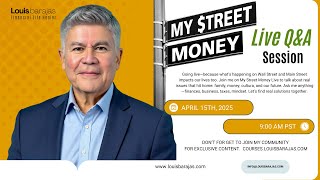
This is a livestream by financial advisor Louis Barajas (MyStreetMoney Live) originally recorded on April 15 (tax day). Barajas gives practical, actionable personal-finance guidance: how to handle missed tax paperwork or request an extension (Form 4868 or automatic local extensions), how to arrange an IRS installment agreement if you can’t pay (Form 9465), and how to adjust withholding using the IRS W-4 app and extra withholding per pay period. He discusses what to do with tax refunds (prioritize values: relationships, experiences, or financial goals), couple-level money management approaches (joint vs separate accounts, communication, and financial therapy), retirement cash-reserve and distribution advice (keep 12–18 months cash available), current short-term savings vehicles (high-yield savings vs CDs; observed online rates around 4–4.5%), and a debt-paydown philosophy that targets highest-interest obligations and uses a “debt dissolver” worksheet to list balances, rates, and minimums.
Chapters
Welcome to MyStreetMoney live. And this is Luis Baragas, your financial life healer, where every Tuesday morning, what we're going to try to do every Tuesday morning because I travel a lot, but every Tuesday morning at 9:00am Pacific Standard Time, noon Eastern Standard Time, we'll be answering your questions live. And thank you for some of you sending your questions this week directly to our website at luisbarajas.com info@lewisbarajas.com send me your questions there. Gives me a little time to prepare for some of your questions and some of them when they're coming in live. Then we'll just answer them live and do the best that we can here with my team. And so let's start. Let's start. Well, today is. What's today? Today's April 15th. Today's your last day to get your tax returns done. And if you haven't been able to get all the paperwork together or you've been busy or here in Southern California where you had to deal with the fires, you get an extension and you can extend until October 15th and it's automatic. For example, here in Southern California for Los Angeles county, it's an automatic extension. You don't have to even do any kind of paperwork. But for the rest of you, you have to file form 4868. But that doesn't relieve you from paying whatever you're going to be paying in your taxes. Otherwise you're going to be paying some interest and penalties. So if you think you're going to do that, send some money in today. You can go online or you can file it with your extension, have your tax repair file it. Or if you're doing it yourself on TurboTax, you can enter your banking information, file form 4868 and send some money in and do it now. But what happens if you have actually filed your taxes, you owe money and you can't pay it? You know, it was a surprise. Something happened. You received some bonus where taxes weren't withheld. You received some income for some independent contractor work that you did throughout the year and you weren't able to put some money away for the taxes. So what do you do? Well, you can fill out a form. I actually printed it out with your taxes. Form 9465. It's form 9465 and it's an automatic installment agreement. If you owe less than $50,000, I'm praying that you don't owe more than $50,000 and you just fill it out. It's pretty much automatic. Enter your banking information and they will do a direct withdrawal from your bank account every month. And you have up to 72 months to pay the taxes that you owe. But I will ask you that if you can try to get it down into a year's time or maybe a couple years time, but don't go all the way, six years out for that. So also, I prepared a few tax returns. I don't do many. I do it for my older clients that I've had for a long time when I used to do taxes. I'm an enrolled agent. Some people don't know that. And I do it also to stay abreast of all the tax law changes for my other clients that I give tax advice to. And so what happens every year, I see some clients that are every single year having to pay taxes. And the only thing that they have not done is that they have not adjusted their W4. Okay. And it's gotten a lot more complicated. So today's April 15th. Hopefully you filed your tax returns. You've been owing every single year. And you're tired, you're sick and tired of owing taxes. So what can you do? So there's a W4, and it's gotten rather complicated. And. And I'm going to share with you there's a better way now to do it. And you can go online. You can go to www.irs.gov IRS.gov is a site for the IRS and actually answers a ton of questions for you. And it's irs.govw4app. So there's an app on the IRS website where you can enter all the information, how much you make, how much your spouse makes, whether withholdings, what they've taken out. And they'll pretty much give you a pretty good close amount to what you should be withholding on your tax returns. And I'm going to show you something that I do with my clients to show them if they're withholding enough or not. Okay. So if you filed your tax returns or you did them yourself, for example, on TurboTax, you should know the software from your preparers will tell the preparer what marginal tax bracket you're in and what effective tax rate you've paid. The effective tax rate is the actual tax percentage that you paid on the dollars that you reported that was taxable income. So this is what I do every single time. Let me see if I can get this to work. Let's see here. And I don't know if, Eddie, you can Give me a clean back. Okay, so here we go. Where's my pen? Back here. All right, so let's see here what we can do here. So let's just say, just to make it easy for me, you made $100,000. Whether you made 50,000 or less, I'm just using 100,000 because.
That'S easy for me to calculate. And on your W4, this was your taxable income. I mean, excuse me, your W2. And it's going to say federal taxes withheld. It'll say federal taxes withheld. And so let's say that it said 15,000. Okay? If you find out that your marginal. Excuse me, your effective tax rate was 20%, so. Meaning that you paid 20% on this income. Right? So it's 20%. Well, basically, what you should do is multiply this times 20. You know that technically they should have withheld $20,000, but they only withheld $15,000. And I will guarantee you that's why you're owing money, right? That's why you're owing money money. Now, you want a simple form, now you got to say yourself, how many times do you get paid throughout the year? Some people get paid every other week, which is 26 times a year. Or you get paid twice a month on, like, the 16th and the first, and that's 24 times a year. So you'll divide this by 24, okay? And then basically that number there is what you'll decide to take out per paycheck, what it is. So on the W4, you can go online to your employer or you go to the HR department. And instead of filling all this out, basically on step four, where it says extra withholding, it says, enter any additional tax you want withheld for each pay period. Well, we already know they're going to be withholding $15,000 if nothing's changed for next year. And now you're asking them to withhold an extra $200, you know, $200 every pay period. So $200 times two is $400 times 12 is $4,800. Pretty close, right? And then you got a couple of extra weeks there maybe. And so the thing is that, you know, that's pretty close. So you can have them take out that money there. It's really simple. And it literally will take you five, maximum 10 minutes. And then you just don't have to worry about owing money. At the end of the year. The goal is to break even with your tax return. And I know some of you love to get a nice big Refund, and I'll always remind people that I've done it for, I don't know, as long as I can remember, is that getting money from the IRS and getting a refund is just over withholding. They just taking your money and giving it back to you after a whole year without paying you any interest. You could have used that money to pay down your property taxes or to pay your property taxes. You could have used it to pay your credit cards or something else. Right again. So when you get the money now. But let me just share with you that I've given up on that. I know some of you love and it's kind of a forced savings and I'm not going to fight you with that. And so people love to get refunds and they're getting back 5, 6, 7, 8, $9,000. I've tried to change it for some of my clients. They won't do it.
All common logic thrown aside. You know, they love getting that check every year. And so one of the questions that I have today that somebody sent me is like, what do I do with my refund? What's the highest and best use of my refund? Well, let me share with you that what we want to do is, what we want to do is think about now that you've gotten this money, besides right now, what I've told you in prior meetings or live events is that instead of putting into an emergency reserve account, well then the question was a highest and best use. Right. And so I love to go and sit down with a client and ask them what's important to you, what do you value? And for my clients, I know most of the time it's going to be their marriage, their children.
Investing. Right now there's a lot of self love and self care investing in themselves. And we look for ways besides putting more money into an IRA or putting money into a high yield savings account. We're saying, what can you do to strengthen your relationship with your spouse? Well, I haven't taken a vacation in a long time. We've been working really hard. Can we use that money for a vacation with your spouse to build more intimacy? What can we do? Well, you know what, I'm constantly working, My wife is working. We haven't taken any time out to really spend some quality time with the kids. And whether they use that money to go to Disneyland and spend it on, if it's a couple thousand, it's a thousand bucks. I guess it's if you go to Disneyland with a family of four or five, you'll spend in a day just with the tickets and food and everything else. You know, I said, go to Disneyland, use the money. Build some memories with their children, do some fun stuff with them. So never forget that money is not just for investing. It's investing in yourself, investing in your relationships, investing in your most important values. And sometimes we forget what they are because we're just busy, right? We're just busy with day to day stuff. And I know how that can be. We forget about important things. All right, so let's see here. What do we have here?
A question is.
As a couple, Louis, how should we save money as a couple? And okay, I'm going to take a stab at it because I think I needed some more context to this question is I'm going to share with you that every couple saves money differently. Some people save money together in joint accounts. Some people have separate accounts and a joint account. Some people don't have any joint accounts. They have completely separate accounts. I'll share with you how my wife, Angie and I handle our money situation. It's basically the same thing. The way we handle the way we were taught from our parents. My dad worked every single day. I don't think I ever saw my dad miss a day at work or even really take any vacation time. Even when he was injured or hurt or had broken his leg, he'd go to work the next day. But he worked really hard, came home and gave my mom his check. And my mom would deposit the check in the bank and then use that money to make sure she paid the rent, paid for our food, paid for whatever healthcare needs that we had. And together they shared goals. But it was my mom who managed the money. And whenever they needed to make a big decision, whether it was the very first time when they bought their house and they actually bought my grandmother's house or my dad's mom's house, that decision was made together. When they bought a home, that decision was made together. But most of the time, my mom made those decisions. In our household, it's pretty much the same. I will share you both. My wife and I work. She's a partner at Business Management Lab, and she's one of the co founders and works probably harder than I do. But at the end of the day, what we do is whatever money that I make, I mean, she gets it and she sees the money for us. We don't have separate bank accounts. Everything goes into a joint account. And when we sat together before we got married, we had a conversation as to, hey, let's manage this money together and let's use it to pay the mortgage, pay the property tax, pay the car insurance, pay the health insurance, pay for the kids education, put a percentage away for our retirement plan, take care of our basic needs and then whatever other money we have, let's save it to also to travel, to create some memories, to have some fun or just, you know, just to buy stuff that, you know, sometimes it's fun for us or whatever. It is something that if my wife wanted was, you know, had a desire to buy a fancy purse and we had the money there after she's taken care of everything else, you know, she could do whatever the heck she wanted to do with the money if she wanted to. I mean, basically, if you see that I'm wearing anything, it's usually because my wife's buying me my clothes. And so again, that's how we've always held it because together we've shared every goal, we've put things together. Yeah, no, we have different goals, but at the end of the day, this is how we do it. Now I've got clients that have a joint account, but they've set up separate savings accounts for their own personal fun or personal goals. I've got some clients who love self improvement and love going to conferences. Like for example, I've got a client this week that is at the Joe Dispenza Meditation conference that's out in Dallas, Texas. And she's there this week and she has a separate account where she saved money to go to that. It wasn't crazy expensive, but she had to save a few thousand, a couple thousand dollars for that. And her husband has other hobbies and he saves money. So they say kind of save money and they can use it for whatever hobbies that they want without feeling guilty. And again, no questions asked. So it is whatever works for you and whatever works for your marriage. Right. The only thing that I ask is that when I'm doing, I guess counseling or coaching, I shouldn't say counseling. I said coaching. Financial coaching with couples is that we don't, we want to make sure that there are no. We call them white elephants in the room, you know, when you're having a conversation with your spouse. But if there's a certain topic that you bring up, whether it's about money or family, it ends up always being in a fight and you know it's going to end up being in a fight or some kind of argument and it ends up becoming really frustrating and just, you know, there's a lot of upsets and so, but the problem is that for some couples, they stop arguing, fighting about that because they've just decided not to look at that problem anymore. But eventually it festers and it'll manifest when there are other problems and it'll pop up. And so I suggest that if you have that white elephant when it comes to about spending money, some people, again, are overspenders, some people don't spend enough, and usually they tend to marry each other. There's a lot of, there's this kind of. I don't know if it's a new profession, but it's been around for a while. But there's a lot of therapists that are now financial therapists that work with individuals who have money issues or who are couples who are having money issues. And they can go in there and work those through. I will share with you because at the end of the day, it's not about who's right. It's about how can you maintain a loving relationship, how can you spend time together, be loving, be around your family so they don't sense that stress that you guys have when it comes to money. And, you know, they say that the number one reason for divorce.
Is our issues around money. And I will share with you, meeting with couples my entire lifetime almost, it's really not money issues. It's lack of communication about money issues. And if they learn how to communicate. And sometimes you need a specialist, like a family financial therapist that can really walk you through and will make tremendous changes in your life and your love life, and it affects everyone around you as well. Also, with your children, they learn from you on how to communicate when there's really difficult issues. So when it comes to managing money, this was from Jose.
Hopefully, you know, like I said, go back and see what really works for you, but it's not what works just for you, it's what works for both of you. Okay, think about that question we have here today is how will the market survey falling affect pensions for us retired folks? Well, wonderful question. And I will share with you when you say retired, you know, next time I'd love for you to tell me when you're giving me questions about when you're retired or how long your goals are, is what your age is. But for most people that are asking me this question, they're probably in their 60s and have just kind of started their retirement. And I will share with you is that you, hopefully, if you stay healthy, will live a long time and sometimes you'll live another lifetime. I've got people who've been retired, that I've been working. When I first started, they were retired. They're still retired. It's been 25, 30 years later and they're still retired. And they've been healthy enough to be able to travel the world and now they're home and you know, and tending to their gardens and spending time with their grandchildren. I've got some clients that have great grandchildren and so you've got a lot of time. You don't have to worry about what's going on. You've been around. If you've paid attention to everything that's happened from the 19th of October, I think it was 17th or 19th, I don't remember anymore, when the market dropped out like over 20% in just one day, right. That that couldn't happen anymore. They'll stop the stock market if something like that is happening. But you've seen the recessions we've gone through, the 2008, the Great Recession. You've seen your money bounce back, you know, multiple times. You saw the 2020 Covid, the mini one month and a half, 45 day recession and where we had the bear market and the market went up and then we're going through something right now and it'll go back up. What I suggest though, if you're retired, okay, go to your portfolio, wherever you're pulling your money out, whether it's your rollover IRA and you're taking out a monthly distribution every single month, is have enough cash there to last you always around a year to 18 months. All right? Have the money in the money market account on the custodial, or have the money go into. Or have the money go into like a high yield savings account and pull out enough where you're not touching your investment portfolio. Okay. Where they're in your investment portfolio, hopefully it's really well diversified. You've got stocks, bonds, a little bit of cash in there, but you've pulled out enough where when we have times like this, you're pulling money from your regular savings account, okay. And the money's coming out and you don't have to worry about selling anything when the market's down. Because we don't want to sell right now. That's not what we want to do. Right. For the younger people that are listening to me when I say younger, in your 50s, mid-50s, planning to retire soon is what a wonderful time to start putting more money in the market again. You know, there's usually great buying opportunities. I think in the last live event that I did, I Showed you guys that the best times to invest is when the markets are down. This is what we got going on. There's just a lot of uncertainty and chaos and confusion. But that tends to be almost every single time. You don't know what's going on. The last time when we had the COVID situation, chaos, confusion, didn't know what the heck was going on. 2008, we kind of expected something to happen, but nobody really thought it was going to be that severe in 2008. And again, everything bounced back, right? So having emergency reserves is really important and having money pulled out there. So that's what you do. Do not worry about, you're gonna be fine if you're retired. Just like I said, the most important thing is health is wealth. And if you're retired, make sure that you're not stressing out, you're sleeping well, you're taking your walks, you're doing whatever you can to reduce the level of stress. Cause stress, causes a lot of other physical maladies. And again, take care of your stress, eat healthy right now, get some sleep and everything will be just fine. Just like it's always been. Okay, another question here. I'm going to read. I've been hearing a lot about CDs and high yield savings accounts. Are they actually worth it right now? Yes, yes and yes. And some people don't know what the difference is. They just don't know what the difference is. So let me explain to you. So currently right now, if you go online and you go to sites like nerdwallet.com you go to bankrate.com you'll be able to find the current rates that certain banks and online banks are paying for high yield savings accounts and CDs. Now, I was on the sites this morning to kind of take a look at what the current rates are. And I saw some online banks paying up to 4.5% for high yield savings accounts, mostly paying around 4%, some paying around 3.5. So you can find some great, great programs right now that are paying about 4% or a little bit higher. Now how is that different from a CD? Now CDs right now, short term CDs, like 6 months, 9 months, even up to 14 months. I've seen some that are paying currently right now, also four to four and a half percent. Well, a high yield savings account is not locked in. They're variable, they fluctuate with the market. So if interest rates start to come down, you're going to see that you're also the interest rate that you're getting on, that money will start to come down. It's not guaranteed, right. But it's great for liquid investing, meaning that when you need the money to pull the money out for something, that you're going to be buying a house in the next six months or next three months, or you're already in escrow and you need the money and it's where are you holding it? Putting a high yield savings account. But I will share with you that right now also with the current craziness of the market and some people who are really concerned and don't want to have their money invested and we're thinking about investing it, but they want to wait a little bit and they have that low risk tolerance where they're not willing to take that risk of maybe the market's going back up and investing in an equity portfolio, in a stock portfolio, you can get a cd. Now, the only thing is a CD will lock your money in for that specific time period. Right? That's the difference between a high yield savings account. Completely liquid, put the money in, take it out, you're earning 4%. Six months from now you could be earning 3%, you could be earning 2%. But right now the money's liquid in a CD. You put the money in and you said, I'm not going to touch that money for at least a year or two. You can lock it in right now. This morning I saw actually a 14 month CD that was paying, I think 4.5%. And that's a really great rate for a 14 month CD. I think it was Marcus again. Go to bankrate.com or go to nerdwallet.com and you'll find it there.
And so that is wonderful because if interest rates start coming down, let's say that we do go into recession, the Fed say, you know what, we're going to start bringing the rates down so we don't go into a deeper recession. You know, you're locked in and you've got a really great rate when the banks are bringing down their rates. I also went on to those sites and looked at, for example, certain brick and mortar banks, Wells Fargo, bank of America this morning. And just for regular savings rate, not high yield savings rate, it's 0.5, 0.01%. Still can't believe that banks are still paying that interest rate. Right. It would take you 720 years to make one, to turn $1 into $2 if you just go to a regular savings account. So pay attention to what you're earning Right now, clients over the last year, year and a half, because of inflation, have been getting great rates of return on their money accounts. So again, if you don't want to put your money and don't want to invest it for the long term and you need money for the short term, again, like we just said, you need it for your retirement plan, go to a High Yield savings account or go to a short term CD. The short term CDs are for money that you're not going to attach until it matures or it comes due. Okay. All right, so what's the smartest way to pay down debt here? I'm reading the question when everything else is getting more expensive. Okay. Credit card debt. I despise credit card debt. My wife Angie knows I hate credit card debt. Nothing more will enslave you than paying these crazy credit card interest rates of 13, 15, 21. I've seen them as high. I've seen certain people pay 29, 30% on their credit cards, especially if they've missed a payment. And so, you know, I know that there are people out there. I know that Dave Ramsey has like the snowball credit effect, which, meaning that, you know, if you've got three credit cards and one has $1,000, one you owe 5,000, one you owe $10,000, pay down the one that you're going to get off fast. I just don't have that philosophy. I believe that what's keeping you poor is not the amount of money that you owe, it's the interest that you're paying on the money. Right? It's the interest that you're paying on the money. I have a client right now who's just given a loan from the SBA. They were given like $100,000 at 2.5% from the Small Business Administration, 2.5%. And I know it sounds ridiculous, right? But it's a true story. And so they can take that money, they can use it for their business. Right now, I told you that High Yield Savings account are earning 4.5%. Well, guess what? They're going to be earning more than they are. What they're going to have to pay. So I don't know. I mean, that's not too bad right now. As long as they're not using that money to go buy stuff and then put it on another credit card, eventually running through that money and using it for something that's more high interest credit card debt.
But that's not the case for most people. That's not the case really for like 99.9% of you. So what I do is I make sure that I make for my clients, I make a list of every single credit card, the amount that they owe, and find out exactly what the interest rate is. I bet you for most of you, if I were to pull your top three credit cards where you owe the most, and I asked you what was the interest rate that you're paying on your credit card?
Most of you wouldn't really know. You'd guess, right? And you haven't seen the statement because you hate seeing the statements. And for some of you, you're just making the minimum payment or you're paying a little bit over the minimum, but you're not paying attention to the interest. And so what we want to do, the way I approach it is I tackle the credit cards that have the highest interest rate. So I start making the minimum payment on the other credit cards and start maxing out as much as I possibly can on the one that's charging me the most. Right. I've already cut up that credit card. I mean, I literally have done that. If you've ever seen the show Opportunity Knocks, that I come out on PBS last season with a young lady in El Paso, Texas who had a lot of credit card debt. I literally on the show, took some scissors, took her credit cards and I cut them up. I said, you can't use them. We saved a little bit of money, had some, a little bit emergency reserves, but she couldn't use them anymore. And so we cut them up and so you don't use them and you start making those payments and you start paying it down. Because again, what's going to keep you poor is the interest rate that you're paying on the money that you've borrowed. And they're absolutely crazy. So the first step is I always talk about truth, awareness, responsibility and courage. That is my platform. Truth is you got to sit down, you got to take the credit cards out. You know, we have this sheet. Send me info@lewisbarajas.com Eddie will send you the sheet. What I call the debt dissolver. It's just a sheet. That's list. This is a, this is what? Name the credit card that you have, the visa, American Express, MasterCard, the amount of debt that you owe, and write down the interest. That's the truth. You need to know exactly where you stand. Right? I mean, it's like, and, and again, for some people, they don't want to see, I mean, eight months ago or not even more, it was in August of last year. I Knew that I had to get healthy. My, my blood pressure was going up, my weight had gone up. And. But I was afraid to jump on a scale because I was afraid to know. Right. I was in denial is what I was. And so I finally just built up the. Mustered up the courage to step on a scale. My truth. And so, holy moly. Now I know why my blood pressure is high. I've got to lose weight. Same thing is holy moly. Your scale is going to write down the list of your credit cards, the amount, and then the interest rate, and then what your minimum monthly payment is for each one, and then what's the strategy to pay down the credit card? So truth awareness is finding out what the interest rate is. Responsibility is. Nobody's going to pay down that debt except for you. And you can't do it without having a plan behind it. All right? So one of the plans that I normally, when I'm working with my clients, we're going to do a budget. We're going to see where you're spending your money on. And at the end of the, at the end of the budget, we're going to take a look at how much extra cash you have, what we call it discretionary income, how much extra cash you have that we can put towards that debt and pay that debt as quickly as possible. Okay? That's responsibility. The courage is, you know what you have to do. I didn't, you know, I knew what I had to do to lose weight. I just knew it. Right. But why wasn't I doing it? Because I didn't have the courage and I didn't have the confidence to go on. And so what I did is I went online and I looked for people that had already lost a lot of weight. And you know, the thing is that again, come to us, send us an email, we'll help you out. But go to infouisbarajas.com and join me also on Ask me questions and I will answer them whether you're. We're on TikTok, Instagram, Facebook. Please, like, please share, help me out so we can get. Spread the word out and help more people. So that's what you want. You just find the courage to make that because again, it's not going to go away. The awareness is that debt is going to snowball and eventually catch up to you. And I can't. I don't need a crystal ball to know where you'll end up if you don't take care of that debt. Okay. All right, so next question. How much time do we have left. I think we've got a couple minutes. Well, this will be our last question for today and thank you for jumping on today and letting me know.
Sending your questions in. And again, I look forward to your questions next week. Let's see here. How can I start planning for retirement if I didn't start in my 20s or 30s? 30s? Well, it's really, really simple. I will share with you that one is you should do a retirement plan, meaning that is you're going to go back to retirement is all about cash flow. That's all it is. It's not kind of what you're worth. I've got clients that are worth two or three million dollars in real estate, but they can, I mean, and they're not really. They're still paying that property off, but they have a tremendous amount of equity in their, in their home, but they can't live off of that. They live in that home. I know people got here in Southern California have 2, $3 million of equity, but there's no income because they live there. And so it's all about income. So you've got to sit down and take a look at what your budget will look like when you do retire. What are your monthly needs that you have to meet? And then we got to take a step backward and say, okay, when you do retire, how much are you going to be getting from Social Security? Okay, you'll get the statement from Social Security. And then we continue working backwards and say, well, how much money do we have saved? And based on that, what's our gap? What do we need right now with all that being said and done, let's just keep it really simple here. It doesn't matter if the problem, if it comes back and it says you're going to have to have $2 million saved and no way in hell you're ever going to have that amount of money saved in the next five, 10 years. It's not going to matter. But the point is you're not going to give up. You just start saving as much as you possibly can. That's why to me, you know, I love budgets. I don't like being on a budget. I love just kind of knowing where my money's going and using that as basically the foundation of where, how much money I really do have at the end of every month to start saving towards retirement. But I'm going to give it to you even more simple. If you are working and you're in a 401 plan, you're a 403 plan. 457 plan. Just have them start taking out 15% of what you are earning and put it into that plan or start maxing out your retirement plan. Louis, I can't live. I'm living paycheck to pay Paycheck. Yeah, you're living paycheck to paycheck. Trust me when I tell you that if you take 10, 15, 20% of your paycheck, put it away into your retirement plan, your employer is going to take the money out and directly deposit into your retirement plan. You're not going to miss it. How do I know that? Because everybody that comes to me is living paycheck to paycheck. They've always lived paycheck to paycheck. Whether they were making household income of maybe 60, $70,000 or household income 4 or $500,000. They're all living paycheck to paycheck because everybody spends as they continue to make more money, they move into nicer neighborhoods, they drive more expensive cars, they're buying more expensive clothes. But you still have to put some money away. So just start putting the money away. If you don't know what investment portfolio to select, but I don't know where to get started, which investment? Pick a target date fund. If you know you're going to be retiring in five or 10 years, use that fund. Basically, the money managers in that portfolio are managing knowing that you're going to start needing the money money in the next few years. Okay? So let's just keep it simple. Let's not think too much about what's going on. Have money taken out and put it away. All right, that's it for today. Continue sending me questions. Love doing these. Hopefully I'm helping you out. If you have comments, send them to me@infois barajas.com and we'll see you next week. Take care.









