The Impact of Culture in Financial Planning Presentation for UCLA Extension
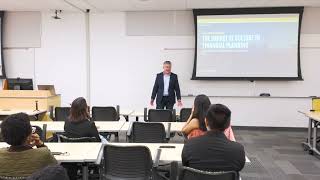
A recorded presentation by Louis Barajas describing his personal and professional journey from Boyle Heights to UCLA and the financial-planning industry, focusing on how cultural beliefs and community context shape financial behavior and how he adapts planning (empathy + execution) to underserved Latino communities. He describes career milestones (books, TV series, leadership roles), formative life stories, and practical culturally‑informed interventions for estate, insurance, education, and retirement planning.
Chapters
Hi, everybody. How you guys doing? So let me share with you a little bit about my background. Well, I'll tell you right now what I'm doing and then I'll share with you my background of where I started and how I'm here and the work that we're doing on a pretty much national basis. Currently.
I am the first Latino ever here, the first minority, not Latino, the first minority ever on the national board of the Financial Planning association. Currently the first Latino ever on the national board of the Certified Financial Planner Board of Standards. One of the first Latinos to ever write a book on personal finance. I've written five. I've got two more coming out next year.
I am currently on. There's a television show on PBS called Opportunity Knocks and there's been two seasons. We're shooting the third season and it's growing crazy leaps and bounds. I'm with Jean Chatzky from the Today Show. She was on Today show doing finance for 24 years. And Patrice Washington and myself. And we go out the country and we each get two families every there's 13 episodes on PBS and we get two families that we do complete financial life makeovers with a big team. Our budget is around $3 million now, and we're hoping that it's gotten big enough now that we got Netflix is interested. So they're meeting with Netflix. I'm not an executive producer, so that's what they' talking about. That's what I'm doing right now. Besides also I am besides having a wealth management firm called International Private Wealth Advisors. Ipwa. My wife and I own a company called Business Management Lab. Lab being Luis Angie Barajas, not like meth lab or something like that. That's what Lab stands. And we actually are the business managers, not the managers, the business manager. We handle all the finance for some of the most iconic Latino stars, international stars. And right now we are having lots of challenges from that side of the business. We have had artists who are being denied visas to come to the United States. Two weekends ago, we had a very famous artist who sold out two shows in Dallas. 50,000 people in a stadium, and the night before, his 32 musicians. Plus the artist was denied his visa to come in to perform. Even though the show has been sold off for three months. He actually sold out here at the Sofi Stadium. I think he sold out five days. Can you imagine? That's how big this artist is. And so we handle all their finances, we pay their bills, do all their tour accounting, buy their homes, handle all Their investments, all their insurance. We buy their cars, lease their jets. Buy their jets. I mean, we do everything for them. And then I have this firm called Luis Barajas Inc. That does a lot of basically coaching, teaching to underserved communities. And everything that I do is for my grandmother and for my parents, my grandmother who's no longer alive, and my parents who were immigrants who came to the United States. So my heart has always been. So this is where my heart is at. So whenever I get asked to speak about some of the work that we're doing and how culture impacts money and how we've made changes. So that's right now, what I'm doing. So let me take you back to when luis Barajas was 11 years old. He fought back. In the 70s, early 70s, there was a recession going on in the United States. My dad, who is a welder, lost two jobs. My mom was home taking care of two kids.
And she was pregnant with my brother, who's 11 years younger than I am. And my dad. I overheard my dad talking to my mom, and we spoke to my dad in English, and he spoke to us in Spanish, saying that they had lost two jobs and they didn't have any money, and he had, like a couple hundred bucks, and he was going to basically risk it all on buying a welding machine to start his own ornamental iron company. Does anybody know what that is? Ornamental iron. So when you go to, like, to places like Compton or East LA or whatever, you'll see homes that have window guards and wrought iron fences and wrought iron doors because people kind of break in. So that's what he did. He started his own company. And so he asked me if I can help him fill out a business application because somebody said he had to get a business license. So we lived in Boyle Heights. Anybody know where Boyle Heights is? Here I can say East Los Angeles. And we took the bus to downtown la. And I was my dad's interpreter. I was my dad's cpa. I was my dad's everything. And I filled out everything for my dad. I said, dad, and I would say, dad, sign here. And my dad would sign a few years later after that, I don't think my dad ever signed. I signed for my dad for, like, about 40 years.
True story. He ended up doing. He wasn't doing well. He was barely making it. But we didn't have to move into the red station wagon. My dad was able to pay rent, and a couple years later rented a place in East LA on Whittier and Indiana. The next street over is Calzone, and there's a restaurant in front, and there's a little place in the back that eventually, at some point, ends up buying the whole complex there. But back then, he could just barely afford the rent. And we were there. And this is back in 74, I think. We had a knock on the back door from my dad's shop. And it was the irs. When IRS used to pay you visits, they don't do that anymore. And they came over and I answered the door, and I was there with my dad sweeping up. My dad was welding and doing the wrought iron. There's metal shavings everywhere. And some lady came to us and said, Mr. Barajas, we have a business license. Yada, yada, yada. Have you filed your business tax returns? And my dad looks at me and she says, que dic? And I said, I don't know, dad. She says, something about business tax returns. What's that? I said, ma', am, I don't understand what you're talking. I'm 13 years old. And I said, so now, the reason why I made it out of the barrier, I will take one more step back, is that my mom got pregnant with me at the age of 15, had me when she had just turned 16. And her brother, my grandmother's eldest son, was a butcher, a meat cutter at Johnson's Markets in East la. And he loved books. He probably could have been a professor back in Mexico, but he would always buy me books. And so when I became around maybe about nine years old, he would always buy me a book. And then as I got older, he would buy two books, and we would have our own book club in my grandmother's little tiny living room. And she would make us a pot of coffee, and. And I would go every Friday to my grandmother's house to go have dinner, because my uncle would be there with a book. And the following week, we would then read the book and do it. When I was in college at ucla, okay, I was at UCLA before some of you were even born. There were dinosaurs on campus, just so you know.
And so that's kind of how I got. So I asked the IRS lady, I said, is there a book on how to prepare taxes? And she said, yes, there is now. Back then, the books were just like a regular. Just kind of a notebook. It wasn't really that thick. And so my dad drove me from East LA to Hacienda Heights, because back then in Boyle Heights, there were no bookstores. Just so you know, as of last night, there are no bookstores in east la, which is very. Lots of Mexican, Mexican Americans in East la. So I read the book from COVID to cover. I filed my dad's tax returns. I'm going to take you in two years. Now I'm 15 years old. We get a letter from the IRS saying that my dad's being audited for the tax return that I did. Now you have to understand this, that we are piss poor. We are really poor. I have no idea. I've never been out of east la. It's just basically in east la. My dad's shop is close to my dad's, the apartment, the house that they're renting.
And I heard from one of my friends or some teacher at the high school that told me that there was a guy named Al Capone who had killed a lot of people in Chicago. But he only went to jail because he avoided paying taxes. So guess what I'm thinking? I'm thinking I'm sending my dad to jail. Oh my God. So I'm this pimply faced kid, right? I'm this pimply faced kid. I'm stressing out. We go and the IRS office was in El Monte, right off the freeway. When you go off, I think it's the 10. You can see the office on this side. It was El Monte was on the fourth floor. My dad took his beat up pickup truck. I went with him. I'm sweating, I'm thinking, my dad's going to go to jail. Seriously. I didn't even sleep the night before. Stressed out as heck. And we get there and we take the elevator up and the lady says, Mr. Barajas, I said, we're here to ask you questions about your tax return. But there's no signature. I know that you don't speak English. And so there was a lady who, she was Latina, she spoke English, Spanish to my dad. I noticed that there's no signature. Parent and there's no way you could have done this tax return. Said, who filed your return? My dad said, mijor Luis ISO la declaracion. And she says, how old are you, son? I said, I'm 15. And I said, did you file the return? There's no way you could have filed it. This is two years old. Remember when they audit you? It's like two years later. She goes, you would have been 13. There's no way you could have done this. I go, and that's when I thought, oh, shit, I screwed up here. My dad's going to jail. I don't know if I can Even drive the truck back to the house. If my dad's going to jail, I'm thinking all these terrible things. True story. And she says, well, how would you have known how to depreciate a welding machine? I said, ma', am, I read this book. My dad took me, and it was this book. I don't remember what the title of the book. And it says that when you buy something that was an asset that was, like, tangible, you have to count what. You have to figure out the day that you bought it, and then count the number of days left. And then you put it in there, and then you divide it, and then divide it by 5. Did I do it wrong? And she looked at me and listen, we were really poor. My dad had a jacket that my mom bought him for his birthday. The very first day they turned on the welding machine, it sparked and it got on fire. And we couldn't afford to buy my dad another jacket. We had that jacket for, like, eight years. And she probably saw us, that we were good people trying to do the right thing. So I don't know if I did the return right. I really don't think I did. But she says, you're fine. You guys can go. No change. And so we go downstairs, and I'm still kind of shaking, sweating, and I'm probably. My armpits were stinky. And I told my dad, I said, dad, we can't live like this. I got to figure out how to learn about business. I don't know about business, but I need to help you. I'm going to figure out something. So I'm 15, go to high school.
My plans are when I get out of high school, I'm going to go work for my dad. I'm going to learn how to weld better than I was learning already. And that's what I was going to do. And a professor, excuse me, a teacher named Richard Smith at Schur High School in Montebello. Because I lived on east la, I lived out. My parents lived on where my grandmother's house was on Whittier and Gerhardt. And that year that I was supposed to go to high school, I should have gone to Garfield High School, but I went to Montebello. They had just converted that into a high school. And he says, what are you going to do after high school? He goes, I'm going to go work for my dad. I'm going to become a welder. And he says, I think you're too smart. I would love to help you apply for college. And I said, I don't remember what the cost was, but you would have to pay something for the application fee.
And I said, oh, sir, I said, we don't have that money to even do that. I said, I'm going to go work for my dad. He goes, I'll get you the vouchers from the office. I'll help you fill it out and I'll help you fill out, and we'll help you write the letter and we'll help you out. So we applied to the UC school system. I put UCLA first because it was close to. And the only reason why, because my dad loves sports. I love sports. We loved basketball back then. John Wooden. You guys remember John Wooden. All right. So basketball was a big thing for me. And then I applied to some school that I didn't even heard. I never heard about. I didn't even know what it was. It was some school named Stanford.
And I got accepted to both. I got accepted to both. I will share with you that I made a decision to go to UCLA because it was closed and I would still be able to do the accounting and the tax work for my dad and help him out. And my dad got so upset with me. Let's just share with you how we are in the community was so upset with me that I went to ucla. And my dad stopped talking to me for about six months. Like, didn't want anything to do with me because I abandoned him, which I didn't, because I was working now, just so you know, when I was at UCLA going full time, even though my dad wasn't talking to me, I was doing his books on the weekend, even though my dad wasn't talking to me. And I was working for the UCLA Partnership program. I don't know if they have it now, where we would have kids come. I was a counselor and I would go work in East LA at Roosevelt High School and at Belvedere Junior High and at Stevenson Junior High. And I would try to get Latino kids to have an experience to come to UCLA so they can get out. Because, I mean, I remember my very first day at Dykstra hall, right? Dykstra Hall. I'm saying stuff that I never say in my talks because you guys probably know. And so I remember going into the cafeteria in Dykstra Hall. I was on the fourth floor and we were going through line and getting food. And I was at my very first day at the end, and it was back then, it was a stack of white bread and the lady that was out there helping, she was Latina. And I stood there and I go, but it was like for dinner, right? And I was looking for tortillas.
And the lady sees me and she comes up to me, she goes, mijo, what are you looking for?
And she says, they don't. I go, no hay tortillas. And she goes, no. She goes, white people eat white bread. That's what they use for tortillas. Okay, like, how did they eat it? They just. I mean, I didn't know. So this is how. This is my life.
Ended up going to ucla.
I ended up going to pre med. Quick story. The reason why I went pre med was because when I finished high school early, I took an ROP course. I wanted to take an accounting course. It was shut down. So there was this thing called a medical assistant class in West Covina. And I went one day and it was just me and there was like 11 young college girls there. So I was like, oh, I'm going to take this. I did top of the class. I ended up working at a osteopath in San Gabriel Valley. And I got accepted. I went to ucla. And I remember. So I said, what are you going to study? Business. But business is easy for me. So I said, I don't know. Pre med and no counselor's help. I took chem 11, a bio 5, whatever, all those classes. And I remember the first day in class. I mean, what do I know? And I'm sitting there and they go, look to your left, look to your right.
Only one of you will be here the next quarter. It's a weeding out class. And I went to my left. I'm sorry, but there's an Asian gentleman next to me and an Asian gal sitting next to me. Oh, shit, that's going to be me. I'm not going to be here next. So I made it. Well, almost. I've never worked harder for season in my life. I finally saw a counselor and said, hey, listen, the goal is for you to graduate and let's change your.
Degree. And I became a sociology major. But while I was there, I had a roommate who said he was going to go get a master's in business, an mba. And I didn't know what that was either. So I ended up getting an mba.
Not from ucla. I went to. I got, I got. I did really well. Ended up going to Claremont Graduate School, got an mba, and then I wanted to learn all about finance. And so I started working at a firm called IDS because I had a friend who was working there who told me all about it. So I could learn all about stocks and bonds and mutual funds. This was back in 84, 85 after I graduated and got my MBA and I went into the financial planning industry. And for two years, I was the number one financial planner on the west side here. And then I moved over there to the Pasadena office. I sold more financial plans than anybody, but I made the least amount of money because I went back to my community to help people, because they taught us that financial planning was, you have to open up a retirement. I mean, excuse me, an emergency reserve and whatever. Now you have to understand, back then, when I grew up, Roosevelt and high school had a 60% dropout rate. Back then, before the Internet, people, there was no Internet at one point. Back then, 60% of Latinos were unbanked. No checking, no savings. Okay? And so it was. So I went into the community, I said, I'm going to share, I'm going to walk with you. And there was a Bank of America in front of my dad's shop. And I would get. My dad would help me get clients and I'd do the financial plan for them and I'd walk them to the bank of America. I walked them into the Wells Fargo and we would sit down and say, they need to have a checking account, they need to have a savings account. I would show them how to do the check register and all of that stuff. I wasn't getting paid because basically, if you're going to be financial planning, it was really sales. And so they sat me down and they said, hey, listen, you're a great financial planner, but you're failing miserably. And for every chair that we have in the office, we have to sell so much to make money. And I said, but I'm doing the right thing and I'm in this for the long term. And so we're just. I'm getting all these clients ready, and in two, three years, they're going to have money to invest with me and yada, yada, yada. Yeah, but it doesn't. In the industry, you don't wait two to three years. We got to get to make you money now. So I quit. I said, I will never do financial planning because it's a facade to sell a product. I did not want to sell products to people because I was told that I can do sell somebody the annuity, put them in a fixed account, and it would be just as good for them as good for me. And I didn't feel comfortable, so got married. At that time, I was married to somebody that I met in my last year at ucla. Cuban American, you know, you're married to a Cuban. And she went to Hastings Law School. She was an attorney. So we were. She was doing well. And she. And she said, why don't you go look for a job? I mean, you've been doing accounting. You're not an accountant, but why don't you apply for accounting jobs? I go, I don't think I'm going to get a job. I don't have an accounting major, but I have an mba. So it happened to be. This is a true story. UCLA has been like. UCLA is a little kind of angel for me. I applied all across the country. And there was one applicant. They told me that there was a firm called Kenneth Leventhal, that's not part of Ernst and Young, that were specialists in accounting, consulting and real estate. And now my dad was starting to do better, and I was helping him buy real estate. So I knew accounting and tax and all that. So I sent my applications. I was turned down by everybody except for the Newport beach office, who got my resume. And there was a lady named Susan Macris who had graduated from ucla.
This is in Orange county, in Newport Beach, California, now Newport Beach. A lot of USC people. People. Not a lot of UCLA people, a lot of USC people. And it was like her first week on the job. She says, hey, I'm reading your resume. You're a Bruin, I'm a Bruin. I'll give you a shot, but it's up to you to meet with the partners. She was head of HR for this big firm.
I go in there and I guess I get the job, and I end up working with people.
I end up working with people. Like, I'm embarrassed, but I'm not. No political stuff here. But one of our clients was Donald Trump. He was going under. He was going bankrupt. They hired our firm to help renegotiate his debt. I don't know. @ UCI. So UCI is an Irvine. Everything's owned by the Irvine Company. There's a guy named Donald Bren, Don Bren. In fact, at UCI, if you go to the event center, it's called the Bren Center. He was my client. So all of a sudden, I just happened to pass the right place. And back then, there was this huge savings and loan debacle. All the savings and loans were shut down. And there was a gentleman named Charles Keating who ripped off old people, older people, retired people in Orange county at a bank called Lincoln Savings. And I was put on. I was the original auditor on that case. But here's what's going on. Back then, CPAs were not CFPs and they were starting to do financial planning, but CPAs could not sell product then. So they said, hey, there's this thing called financial planning. We know that you come from that background and you're a cfp.
And we think we would love to open up a division and we would love for you to head that. So I started doing financial planning for some of the wealthiest people in the Nation. I had three billionaires clients. My poorest client was a 3:30 year old kid who, his net worth was 50 million. 50 million. And I was doing financial plans and they weren't that complicated. And they were charging 25 to $50,000 at the time for a financial plan. And I said, oh my God, if I could only do this for my community, yada yada yada. And then maybe be careful what you ask for and I will share with you what happened in 1990 and then I will get on to my presentation. But I'm giving this so you understand the context of where I came from and how I now teach financial planning to underserved communities.
So in 1990, while I'm working on the Donald Trump reorg and the Charles Keating case in Phoenix, Arizona and living in Orange County, California, my wife, who is an attorney, who is pregnant with our first daughter, Alexa.
My wife calls me and says, hey, come back from Phoenix. I think your grandmother's not doing well. She called and was asking for her. So I called her and she said that she had, that her left shoulder was hurting her and she was having a lot of problems. And I said, have my mom take you to the hospital, whatever, you can't afford to pay, I'll pay for you grandma. She was like, she helped raise me and she's like my mom. And long story short, she ends up dying from complications of a heart attack.
And she was 4 foot 8 and the love of my life and the most unconditional person that, I mean, nobody, I think loved me that much. And her eldest son, my uncle, who we used to have her book club before Oprah had her book club, by the way, and my grandmother's house. Two and a half weeks later, her eldest son, my godfather, who bought me all the books, who did the book club, Frank Medina's name, committed suicide. So I get another call from Phoenix and my wife says, hey, get your butt down here, we've got a little emergency. Just get over here. What is it? I need to know. Just get over here. Because she knows how I Would have been if I just fly in from Phoenix to John Wayne Airport. It's like an hour flight. And then she tells me, I break down. So I do the eulogies for two. And my wife was due about a month and a half later. And two and a half, three weeks later, she gives birth to our first daughter. And I will share with you. This is where my life changed. My wife called me, she said, hey, I'm on my way to the hospital, my water just broke. I said, but you're like three weeks early. She goes, yeah, I'm driving myself to the. I'm going to drive myself to the hospital at Hogue Hospital in Newport Beach. And it goes, meet me there. So I catch the first flight out from Phoenix to John Wayne, take a taxi to the airport. I mean back then, suit and tie, don't wear ties anymore. Suit and tie, take a taxi. And the baby, my daughter Alexa, is born at like 2, 3 o' clock in the morning. And she says, hey, I forgot some stuff at the house. Can you go pick it up? Haven't slept, haven't eaten. Absolutely. So I didn't take her. We had bought a minivan at the time because we were affecting the kids. So I take the minivan to the house, I change my clothes, take a shower, put on shorts and a T shirt, look at the stuff that was there. And then I go to a coffee shop around 6:30 in the morning in Lake Forest, California, at the Renaissance Cafe in Lake forest, California on September 8, 1990. And I just get a bagel and coffee and I'm on my way to the hospital because I want to see my daughter. And I'm not even sitting. I'm like half sitting, let's say the chairman, half sitting. And some gentleman like Mark comes in, but Mark's wearing a Hawaiian shirt. And he says, hey, do you mind if I sit next to you? And I say, hey, Mark, you know, wait a second. I said, I just had a child and I have to run to the hospital. I'm getting cream cheese and I'm putting it on. I'm coughing and I'm going to go. I said, by the way, my chair has a cushion on it. That one doesn't just wait like 15 seconds. And then Mark puts his hand on my shoulder and he says, are you okay?
The reason why is because Mark is thinking that I said, I have to run to the hospital. I'm in a hurry, is he thinks something's happened to my daughter.
But while I'm putting cream cheese on my bagel I'm thinking about that my daughter that I just had held a few hours earlier was never going to meet my grandmother and my uncle, the two people outside of my parents that I love the most. So I wasn't crying. I was sad. Just kind of sad. But he's thinking that something's happened, right? So.
I said, no, no, no, no. Is your daughter okay? Can I pray for her? And I find out that he's a pastor. And he starts. We start talking. Don't know if it was 15 minutes, 20 minutes, 30 minutes, or an hour. But I go back to the hospital, and this man that I just met, this gentleman that I just met, just changed my life. And I go back to the hospital. My parents show up from east la, like three or four hours later. I said, dad, I met a guy at a coffee shop that just changed my life. I'm going to quit my job on Monday. I'm going to go back to the barrio and.
Do financial planning. Because remember back then. Remember, no Internet and Latinos were poor. And the number one reason why Latinos were poor is because of financial literacy. There was no financial literacy, not enough information. Yada yada, yada, mijo. That's great. So the place. Remember I told you my dad rented a little place? Well, my dad ends up buying that place. And there's a restaurant in the front, and there's two apartment units on top. And those two apartment units on top are empty. My dad says they're empty for the first time in 15 years. How strange. Why don't we go up there, knock some walls down, turn it into your office, and then you pay me rent whenever you can afford to pay me rent. Thank you. Dad, remember I told you that there was a savings and loan debacle? They were closing down savings and loans. So I went to auctions, and I bought desks like these. And for a dollar, chairs like these for $2 I bought. Back then, people had copy machines that were like $5,000 copy machines. I bought a $5,000 copy machine for 150 bucks. Well, now, here's the thing. I had enough for five desks and five chairs. And then for clients to sit down, maybe another five more chairs. But when you bought an auction, you had to buy the whole room if you wanted the dollar best. So we bought the whole room, and I called my dad. Dad, I just bought like $10,000 of furniture for like, 50 bucks. That's great, I said, but can you bring your guys? He had his employees and a couple trucks. Because I need to Move all the furniture. So in the parking lot where my dad had, we sold all the furniture. And I made more than enough money to pay for all my desk and have extra cash to give my dad for rent. And that's how we started.
And I didn't tell my wife because I'd had so many hours and I had up to three months. And I went to go, quit that Monday, and I said, I'm quitting my job. What are you going to do? I'm going to go back to East LA to help the poor. I said, I think I've been very blessed. I met some guy that changed my life, yada, yada, yada. And he said, don't quit. You're on partner track here. You know, it's a Jewish firm, Basil for only Latino. He goes, you're going to be a partner here. They love you to death. Don't quit. Don't quit for at least three months because you're going to go help the poor right? Now listen, your grandmother passed away, your uncle committed, so you just had a baby. You know, you're exhausted. It's a kind of knee jerk reaction and it's going to be very difficult for you. Don't quit. And I said, okay, I won't quit. And I said, don't tell my wife I quit. And they go, no, we won't tell your wife. So I'll be getting the check for the next three months? Yes. It took me two months to get the courage to tell her.
Didn't make money for a few years, to be quite honest with you. And it was really tough. And so that's what I did. I went back to help the community. But then this is one thing that I learned and this is how all this. Now we're going to start into this. I went back because there was no financial literacy. All the financial information. And if you wanted information about stocks or bonds or whatever, the financial planners had that information. You had to buy from them. Technically, you know, they bought you the stocks and bonds. You can't do it yourself like you do it now. And so. But when I went back and I started working with the clients.
I realized I had this epiphany. It's like, oh, man, now I know why we're poor. It's not financial literacy. It was the financial mindset of the poor. And I said, and I realized, I go, oh, shoot, eight, nine years ago, 10 years ago, that was me. But you know, you go to ucla, you make friends whose parents have money, you get an mba, you start Hanging around with billionaires and multi millionaires who run, who spend money like crazy. And then all of a sudden you change without knowing that you change. And then you go back and then you realize.
No amount of financial literacy. So I end up. So then what happened is you guys have heard of a comedian named George Lopez? So I go see George Lopez at the Axe House. This is when, before he was famous, George Lopez, before Sandra Bullock made him famous. And he did a skit for Latinos on money that was like, in your face. Like, oh, my God, it was so brutal about how terrible we are with money and the terrible stuff we do to each other and how we can't be happy for each other. But he had like a five minute skit about money. And I was laughing so hard. And I'm thinking, but if a white person said that, if Mark said that, they would call him a racist. But I grew up poor in the community. I knew what he was talking about. And so everybody in that room, that's why they were laughing so hard, because we could identify with that. So I started doing presentations like I'm doing right now, about culture and stuff. And I made it funny so people can kind of find themselves in that material so I can impact and change lives, because people weren't doing that. Okay, I will share with you one more thing if you haven't read. There's a wonderful book by Elaine Olin named Pound Foolish. I read a book years later, years later that said that only 11% of all people that work with financial planners ever implement any of the advice. She worked. I'm making this up now. She worked, I think, in the gardening section for the LA Times. They came to her say, hey, we're going to create this financial makeovers. We want you to write about it. She goes, I don't know anything about money because you don't need to. You're going to bring a financial planner, one of the top financial planners in la. You're going to find a family, they're going to do a financial makeover, and you're going to write about their financial makeover. So she decided like a decade later, 15, 20 years later, to go back to all those families and see how their lives have changed. Working with financial planners, 90% of them, their lives were the same or worse.
The same or worse, no implementation.
So, you know, when I first started, I realized that when I gave advice, the families did not even know what I was talking about. And we were trying to help out and nothing was working. So I will share with you right now how we do everything. And this is how we got started real quick. About seven, eight years later, I end up writing a book about all the talks that we were doing called the Latino Journey to Financial Greatness. We have a second edition. And right now I'm doing the 25th anniversary edition of that book. And it's going to be. It's perfect time to write this book, considering everything that's going on right now. But the book will be out next year. The 25th anniversary is next year. And.
The book got published by HarperCollins. I got offers. My very first manuscript. Harper Collins, McGraw Hill, Thomas Nelson. Long story of how it got done. I don't want to waste more time that. But it's an incredible story as well, how the book got published. So HarperCollins wanted to do the book in English and Spanish. And they sent me to New York to. They sent like six or 10 authors to new York at the beginning of the year. And they're going to launch. You know, they launched tons of books, but they launched like the authors, I think are going to do. Well, they sent me to New York and I get there and we're in a room like this and basically it's wine and cheese or champagne and cheese, and they're talking about the authors and we kind of do a little reading and, you know, to send us off and they have their whole HarperCollins team that are going to sell the book there. And the guy that I saw at the coffee shop on September 8, 1990, is now there. We're now in the year 2000. Yeah. Ten years later, that guy is there. But imagine I saw Mark. Mark. Where did we see each other? It was Washington D.C. in DC. Imagine that Mark and I see each other in D.C. and then we see each other again 10 years later in LA or somewhere else. Some place, some other place that we don't live.
And I go, hey.
You look familiar, man. He's in New York now. You look familiar.
I go, you look like the guy. There's a guy that changed my life that I met at a coffee shop in Newport Beach, California, 10 years ago. And the guy goes, I live in Lake Forest, California. He goes, I live in Lake Forest, California. No kidding? I said, well, this guy was at a coffee shop. I told him about this, this and this and this. And I said, do you remember me? And he goes, no. And then my grandmother died, and then my uncle committed sighting. And then I had a baby. Oh, yeah, I do remember you. Now I remember the story. I don't remember you. I remember the story. I was probably a little heavier. Now, 10 years later.
And that guy ends up writing a book. The exact same year we're in New York with the same publisher, Harper Collins. And the guy wrote a book that sold, I think 38 or 40 million copies already from that book. Right. It's a guy named Pastor Rick Warren who wrote a book called A Purpose Driven Life. And that day he spoke to me about A purpose driven life. And that's why I quit my job and went back to the body to go help. So it's just in a tangent here. Now let's go to what you guys came for, the impact of culture and financial planning. I'll show you how I've done stuff. So everybody has different culture.
I'm going to talk to you about a formula that I think works, at least for me. It's empathy plus execution equals impact. And the problem is that financial planning is just helping people use or create money to help express their full potential and live a better quality life. Financial dignity. Most of the people I work with don't want Bentleys, don't want a home in Beverly Hills. They just don't want to live paycheck to paycheck. They just don't want to drive a car that's going to break down. If it's a single mom, they got kids. So for us, empathy is a little different when it comes to financial planning compared to how we were told. Okay. So I was taught as a certified financial planner that there's a process of how you go through that. We kind of had to change that process because it didn't work on our community. So when I went back, I had to go back and take a look at the culture. And what happened is I was sitting there trying to. We were doing financial planning and I was trying to implement, for example, one of the most important things, if you have children or you own a house, you need a trust. Not that you want one. You need one. If you're a blue collar worker and your wife's at home or vice versa, and you got two kids, you need insurance. I'm not going to sell you insurance, but you need it. Not that you don't want it. You need it. Bottom line. And I would say for a gentleman, when it came to family and insurance, I would say, on a scale of 1 to 10, how much do you love your wife? An 11. On a scale of 1 to 10, how much you love your children? An 11. I said, you're the sole bread earner. We need to get you a term policy. It's going to cost you back. Then it's going to cost you $9 a month for half a million dollars. Life insurance policy.
And let me think about it.
And let me think about it. And I didn't know why. We'll walk you through all those process and how we help the clients implement, because at the end of the day, financial planning is worthless unless there's financial doing. And it was all cultural. It was all cultural. Some of it you're going to find funny. Funny, ha ha. But it's not funny when you're dealing with a client who passes away and doesn't have the money to take care of their family.
So there's the parent.
So.
We'Ll talk about that in faith and I'll talk to you about the insurance policy right now.
This is why they didn't buy the insurance policy.
What is that? Anybody who's Latino here, what is the Sancho? Somebody tell everybody what the sancho is.
The what?
The side guy? Or let me just share with you. I would sit there and I would say, on a scale of 1 to 10, how much do you love your wife? An 11. How much do you love your children? On 11.
I said, so what's stopping you? And then I would ask my dad, dad, how come I can't get them to implement life insurance? They need it so badly. It's term. I go, I don't even make money. In fact, term insurance, if anybody's the reason why people don't. Insurance agents hate to sell term insurance because it costs, probably costs the agent money because it's a long process. They don't make any commissions on it. Said, dad, I don't make any money from it, but that's what they need. And he goes and he tells me in Spanish, por el sancho pendejo. What do you mean, dad, don't you remember el Sancho? The guy thinks when his wife is young and beautiful, if he dies and leaves her half a million, 250, whatever, 100,000, guess who's going to end up with the money? The new guy.
It's a very cultural Mexican thing. El Sancho, la Sancha.
And then my dad tells me that. He goes, oh, man.
I said, so I called an attorney named Paul Velasco in Downey, California, said, hey.
This is what's happening to me. There's a Sancho, whatever. Is there like a Sancho clause that we can put in estate planning? And he says, well, what do you mean, a Sancho clause? And I Go explain to you what's going. So I tell him this story, right? And he goes, oh, yeah, yeah, yeah. Let me show you what we can do. So it's called an AB trust. So here's what happens. So you will get a trust done for the family. What happens if they have, like I say, a $300,000 life insurance policy, $150,000 goes into her side. If he dies, another 150,000 goes for the kids. She has a right to use that money for the kids. But if she remarries, that half is for the kids. She can't. It's for the kids. The Sancho clause. But everybody else calls it the AB trust. So then I would explain to you. Let me just share with you the reason I don't think you're buying it, because there's nothing to think about. The reason you're not buying is because of the Sancho that you're thinking about. And they would kind of giggle. No, they would kind of giggle. And so what will happen is then I say, but we've got a solution for that. So let me explain to you what this thing is called. It's a trust that we have a Sancho clause. And they go, what's a Sancho clause? And now they're listening. Well, the money goes here and the money goes there. I want one of those. I want one of those.
And we got him to do the estate planning. We got to do that. Okay.
We don't have one for education. Right. The one behind it I'm trying to think about. Okay, let me just share with you that I'm going to go back to this whole family thing on education planning.
With the family.
So think about it. Because what we're using here is just common sense. And so if any of you are going into finance or financial planning, your goal is to take care of and protect the families, not to sell them shit they don't need. The thing is to make sure that if they need something that you use your intelligence and whatever it is in your culture to get them to implement.
So clients were coming to me, and now I'm getting a whole bunch of write ups. So when I went back, there was a gentleman named George Ramos, the first Latino columnist for the LA Times, found out about two years after I left that I had.
Left Kenneth Leventhal. I'd gone back to start a firm to help the poor, yada, yada, yada, ends up writing a story about me.
And so I started getting a lot of people coming in to see me now.
And they write about how I made it out and how it was because of education and I got a college degree. And people were inspired by that and they were bringing their kids and they're saying, we want to start saving money to send our kids to college in a community. I'm in Boyle Heights, which is Garfield High School and Roosevelt High school have the 60% dropout rate of those kids that are not dropping out. Remember, kids were dropping out of junior high and the ones that did make it, the ones that were going, they were going to Community College, East LA College, and only 3% were transferring to their four year degree, mostly at Cal State LA. And those only like another 2% were ever graduating.
So people would come to me and would want to do education planning before 529 plans, by the way. And then I realized.
We started analyzing that you could save all the money in the world for a kid to go to college, but if he doesn't have the knowledge, abilities, skills or habits, by the way, that spells cash, the knowledge, ability, skills or habits, he's not going to get through college. And again, these are all, I think God given to me or epiphanies or somebody sent it to him in my head where somebody said, ask the mother what they want to do. And I said, what is it that you want to do? Well, we want to send a kid to go to college, but no, what is it that you want to do? Well, we want our kid to go to college. I want to save money so they don't have to pay. I said, yeah, but in this community, only like 1% of the kids ever graduate from college. What is it that you want them to do? Well, the lady says, well, if I ever die, if my husband and I ever die, we know that if they get an education.
And we die, they can defend themselves in the world because they have an education.
So you want them to graduate from college yet all my friends that got. Well, we only had one friend that went to UCLA with me from one of the schools. But all the ones that did go to college, not one parent paid for school. We all graduated. My dad didn't have the money to pay for me to go to ucla, by the way, I hate to say this, but I was only paying $269 a quarter at UCLA at the time. That's what I paid.
All right, Mark says he spent that on lunch the other day.
Right? So I said. So then I said, and then this is the epiphany. I said, senora Sierra Susojos de los Tebe, ma', am, close your eyes and tell me what you see. And she says, okay. And she closes her eyes. She goes, what do you see? I see. I see my daughter wearing this hat and this dress. I go, it's called Cap and Gown. Cap and gown, yes. And she's walking up a little flight of stairs and there's this tall white guy who's going to give her a piece of paper. I don't think they give it to you at UCLA unless they find out that you're making your school loans, right? I don't know. And she says, so you see your daughter graduating from college? Yes. I said, okay. So I figured out that most of the kids that didn't graduate because they weren't doing well in school. But here's the thing. My brother became a teacher in East Los Angeles, and he'd have 30 students. And he would tell me that whenever they had parent teacher night, only two parents would show up.
When I had my first child, I lived in Irvine, California. My wife said. My wife said.
My daughter was like, in preschool. She goes, alexis, going to kindergarten next year. We have to go because there's going to be parents and they have to pick which kindergarten. And they go, what are you talking about? I show up for 20 students. There's like 60 people there. The wives, the ex wives, the grandparents. And in east la, only two parents are showing up.
And then I spoke to an organization in East LA that was a nonprofit that was helping kids try to graduate from college, called Telecoo. And I said, what are the factors that make the kids? And they said, you know, the parents have to be engaged. It used to be the A through F. I don't know. It's A through G now. What is it? You have to have so many classes in math and English and everything else. They have to have certain level of confidence, self esteem. And so what we did is we came up with a worksheet that said, before we even put a dollar in a UGMA account, UTMA account, a college education plan is we had them bring us the kids report card because if the kids had C's and D's, but the parents want their kids to go to college in a classroom of. I've done it a thousand parents years ago. A thousand parents. How many kids, how many of you want your kids to go to college? All thousand hands go up. And we knew only two were going to ever graduate.
So I said, bring me your report cards. If they had C's and D's, why would I be putting 50 bucks or 25 bucks a month in a mutual fund for the kids education. If the odds were they're not going to graduate from. They're not going to graduate. They might get into a community but they're not going to graduate. Can I use that money for a higher and efficient use? If we take. If I sent them to Chellaku to do a self esteem assessment.
And they would come back and if the kids had low self esteem they had a program that for 100 bucks and they would give us a grant. They would take the kids for a week up to Big Bear and they have them climb telephone poles and walk on wires and do a whole bunch of stuff and get them out away from their home for the very first time we would have them. They would have to before we started anything have to bring a letter from their English teacher and their math teacher of how they were doing in English and math. And if they had this proper skills to be able to. They thought they would graduate from college before we even talked about how much we should be putting. And then we would ask the parent is how.
I need you to be honest. All progress starts by telling the truth. What's going on in the house? Are you two.
Like love each other, are you kind, whatever yet? Yeah or no. She sleeps in one bedroom, I sleep in the other. We haven't been together and whatever.
And we would go through all these factors and so guess what we were using the money for.
That's why I was starving back there. We would use the money to hire family counselors.
We would send the kids to Telco and sometimes pay that hundred bucks who there. We would hire tutors, we would hire math tutors, English tutors for 50 bucks or whatever we could use. And now we would get them for the next two, three years where their grades were now A's and B's and they were now had higher self esteem. And now oh the other thing was we'd ask the parents there's parent teacher night. How often do you go.
Well you know, it's like we're working, I understand but how engaged are you? And we followed these families for years and guess what? We had almost like an 80, 80% graduation rate from all our families in East LA to this day. Because if you're sitting down and you're a financial planner working for hopefully some of you, I'm not going to put you down, I'm not even going to name the companies you're looking at. Let me go on to the spreadsheet and Take a look at which school, UCLA or usc. How much is it going to cost? They always say, well let's go to, let's send them to UCLA because USC is too expensive, right? Well, I don't know if they're going to get into ucla, but. Or Cal State. And how many years do they have before and what Investments and what? 520. California scholarship. And this is what you need to be putting a month without any advisor ever asking what's their grades, how engaged you are, yada, yada, yada. And are they going to graduate from school? Okay, same thing. I'll have the same thing with the families. I'll do one more thing and then we'll continue going on this. So is retirement planning. People will come and say we want to make sure that we have some money so when we retire because we don't think there's going to be. And most of the people remember, I deal with a lot of blue collar people to this day. I deal with regular people to this day. And most of them did not have retirement plans. Most of those companies did not have retirement plans. They would have to start putting money away. First question I ever asked for a couple, when I'm doing financial planning and this is what I do for everybody, I don't care if they're rich or poor. On a scale of 1 to 10, how's your marriage?
And I will share with you that most men are not aware half the time it's an eight. Could be better.
I always say all progress starts by telling the truth. I have had women many times tell me it's a six. I said, oh, where would it have to be for you to start contemplating maybe divorce? A four. And you always get this husband looks at like.
And we have a conversation now if all of a sudden they want to give me $500 a month to put into some IRA or to put into.
Their 401k or create a set plan for them or whatever if they're self employed, most likely I'm saving that money for the divorce attorney.
My job. Because if you were to ask a Latino, whatever culture it is, whether it's black or Asian or whatever, if you ask them normally, most of the time they say when you ask him what are your values? Family's up there, family's number one. Faith and family are number one. And number two.
And so I said the glue to this family is you guys. And I go what are we saving the money for? And you know, the man is. And we'll talk about the. You'll see the next slide right now after the one that I show you what happens. And it gets very defensive and there's just very tight. But there are times where we get them to use. And we have family therapists that speak Spanish that are bilingual. Back then, there weren't that many. Now there's a ton. And we use that money for its high best use.
I don't put it into the set plan. I don't put it in the simple plan. I don't put in the 401k until I find that they're now, hey, how are things? Things are getting better. And I will share with you that not only were they now, instead of giving me $500 a month to put in the retirement plan, they find more money to put away. Because now the wife who is saving money, maybe she had a side dollar amount over here, she was putting it away because she was probably thinking she's going to leave saying, hey, this is going to work. We can do more. I can see a better future.
By the way. You can stop me anytime and ask any questions. And I'm going to, I'm going to not keep you for the whole hour and a half, but you can ask questions about any of the stuff I'm doing. Because right now, just so you know, if you guys go into my social media site like TikTok or Instagram or LinkedIn, I'm putting up a lot of content right now on all the people that are being deported and what they can do with their, with their assets that are here. Because we got a lot of families breaking up.
I'm going to skip to the next one. This is what we get with very Latino men. There's a thing called machismo. Not the young Latino born here.
But the one born in Mexico or the one born in Colombia, whatever they still say, you know, basically it's my way or the highway or they don't like to take advice from anybody. Or if you're meeting with a husband and wife, they want to know that they're in control.
So I have to sit there and I've got to figure out how to. There's a saying that my dad taught me which has helped me a lot, and it could be a bad saying, it could be a good saying, but mijo Latino, que lavara coco. So he goes, you have to brainwash them to get them to do what you need to do. And so you need to make him so. And when you're dealing with that culture depends on where they're from or where part of Mexico they're from. If they're from Zacatecas or they're from wherever, then I have to say, hey, listen. So what do you think? Should we think we should do that? Yeah, let's do that. I like that I let them take control.
The wife knows. The wife is always the smartest one, I'll tell you that. She knows what's going on because she's the one that brought the husband there. It's rarely that I get a guy there. If you actually go back and look at my tiktoks, I think we're just barely starting out. We just started out maybe a couple months ago. I think mostly women. It's mostly the wives or the women that sign up. It's the men that have a hard time getting advice unless they think that it's from them. So we learned that there's machismo also. Right? So again, different cultures do different things.
Business on a handshake.
More Latinos get screwed over, and there's more fraud because they don't take the time to read contracts. Because they trust anyone. White, Chinese, black, whatever. Who's wearing a suit and a tie.
You will never see me on television with a tie, because I do everything because I honor my dad. My dad is a man who would never wear a tie. My dad has a really big neck, but he couldn't wear a tie. But my dad was an ornamental iron worker. I worked in the barrio, and nobody wore a tie in the barrio. And if I did, I would be one of those guys trying to screw over our own community.
But what happens is, because I thought about. Well, they don't read their contracts. No, most people are not highly educated. They're graduated from high school here, but they're still not the top of the class. And even there's college students. And I have.
I have PhDs. I have a professor from UCLA who's retired. When it comes to finances, you can work himself out of a paper bag because finances is a completely different subject. And they would sign whatever. They just trusted me. And so there's a lot of people ripping people off, and they don't. And so it's in Spanish. It was chocala. You know, it's like, I trust you. Shake my hand. And then they always get screwed. So the thing is, the business on a handshake, wasn't we. Because, oh, they're just not paying attention. Whatever. No, you have to understand. So the thing is that we would break it down. It says, do not ever sign anything. In fact, bring me the paperwork if you're going to sign something. So we review, believe it or not, every client that is buying a house, we review every escrow document, when it goes into escrow, everything. Because again, I don't want my clients signing something. And then we go through paragraph by paragraph and explain to them what they're signing and why. And there are times when I don't even know what the heck. I just finished reading if it's very legalese and I have to call the attorney or I have to call escrow and say, what the hell does this mean?
And I've been doing this for 30 years and I buy probably two or three homes a week for clients and there's times stuff comes up in contracts I don't even understand. So I was like, how do I expect my client to understand that? But most of the time it was business on a handshake. And that's what happens in our community. But it was more lack of education than anything else.
A couple more and we're done. Mi compadre. In the community that I was in.
There are no financial planners, no CFPs. There are insurance agents selling annuities and cash value policies.
And there are real estate agents.
And there are. And the financial planner is the person who makes the most amount of money in the family, whether they own a restaurant. Everybody goes to that person. They call it el compadre.
And that person has absolutely no idea about taxes or estate planning or whatever. Anybody ever hear of Oscar de La Hoya, a boxer? Well, I've worked with him twice. I actually, when he got out of the Olympics, his managers were ripping him off. And my ex wife, the Cuban, my ex wife, her firm got him out of his contract.
And then he had to get a manager. And then what happened? He ended up getting the manager. It was at the Chevrolet dealer in east la, became his manager because he handled the finances. Some guy that was about 5 foot 2, who was the meanest guy you've ever met, who absolutely was the biggest idiot you ever met.
But this guy, because he sold cars and was very. And that was his compadre because the dad knew him. So what happens in communities? Because there aren't people that they can go to that they trust. They don't know how to select the financial planner. They go to the compadre. And that's very, very common for my Latinos. Yay or nay, right? And so they get the worst advice. I have people going to their compadre, who's the real estate agent, who's giving them the worst tax advice ever. Worst tax advice, especially if you have parents. Worst tax advice Latinos do is that they, when the parents get older, they don't know anything about estate planning. And they said, oh, shoot, if I get sick and die, I want to leave the money to my kids. I want to leave it to my daughter. So it's like, let's go to the escrow. The real estate guy says, just go to the escrow office and they'll add your daughter to the title in case something happens. Your daughter owns that piece of property. Well, my parents bought their home in East LA for 35,000 bucks. It's now worth $800,000. And if my parents would have added me on title and my parents pass, yes, I get the property, but guess what? I get it at the same basis, at the same cost that they bought it for. 35,000. If they die and I want to sell it, I have to pay taxes on it. But if my parents would have put it in a trust.
And they both pass away on the date of death, I can hire an appraiser. It gets a step up in value. I can sell the piece of property. I can sell it and there is no tax.
You know how much money in taxes? If you're Talking about a $800,000 gain, that's a lot of money. And so one of the things that we have to understand is that because we don't do things right, we talk about intergenerational wealth moving the money over, and then we end up giving it to the government because we just didn't. We didn't know that. We didn't know. And the people in our communities aren't giving the right information. So where are they getting it from now?
Last one.
Yeah.
Si Dios quere.
Sometimes because we don't know the right person, we don't have the information is if God wills it. And so we give it up to faith. Instead of being proactive, we're reactive. We're just going to let it happen and see what happens. And we think God's going to take care of it if it's meant to be, that I'm going to be rich because God wants me to be rich. I don't have to do anything if I'm going to be poor, because God wants me to be poor. Si Dios que primero, Dios. And when people would always, every single meeting, we're going to do this, this, this, and we're going to get there and you're going to be there in so many years. You'll have this, this and that. Si Dios quiere primero Dios. And I would say, yes, Dios si quiere.
I said your God is an abundant God. God's an abundant God. He wants it if you want it. Do you want it? Well, yes, but it's not up to us. But do you want it? If you want it, God wants it for you. If you don't want it, God wants it that you don't get it either. So the thing is that I kind of have to overcome. Sometimes faith is something that's very personal, Right? It's like politics. But at the end of the day, we have to understand that if they're not going to be proactive at taking care of this stuff, then it's like they don't have that. What is it? Personal agency. They call it now the agent personal agency, where they don't feel like they're in control. My job is to make them feel that they have divine providence, that they have divine.
Prosperity. And it's very simple. And most of the time building wealth. I can build wealth for everyone here. It's just systems. It's just making sure that I have money going out of your checking account into your retirement account. We put it into some, let's say, S&P 500 fund. I'm going to make sure that you have this into emergency. I'm going to make sure your FICO score is good. I'm going to make sure you have your trust and then continue working and doing what you're doing. Spend the rest of the money that you have, but have a plan. The problem is that sometimes we think, well, what if I die tomorrow? I'm not going to enjoy it. Might as well just travel and go everywhere. I get it. Enjoy your money. Because here's the final saying that I'll say with this is that I have never seen a U haul behind a hearse in my 40 years of working in the industry, with plenty of clients passing away earlier than they should have, being at their funerals with their family members. I have never seen a U haul behind a hearse. I've never seen anybody take the money with them. You need to enjoy it while you're here. But at the end of the day, for if you're older and just let me share with you, for all the older people here, we say it went like this. It's going to go like that, and you're going to get there really quick. And you may say, well, I'll just work until. No, you may not. Be able to work because you get sick, you get Alzheimer's, you get dementia, you get Parkinson's, whatever, or the industry's gone because it's all AI now is that you have to have one eye today and one eye on the future. And you have to straddle that and decide, well, do I take this trip? So if you have a plan and all of you have a plan, by the way, you don't need a certified financial planner to make a plan. You all have a plan. Some of you just have it up in your head and maybe the worst plan ever, but it's a plan.
And all you do when you work with a financial, all I do is basically work on the behavioral side. Everything else is. Pretty much everything is a commodity these days. Guys. A financial planner is a financial cope that keeps you honest. Somebody's going to tell you the truth or somebody's going to know you really well and work around your, you know, liabilities that your personal liabilities, your mindset, everything I spoke about here, that was basically all self sabotaging mindset, cultural beliefs about money. And in every culture you have that. So you have to understand, you know, I was just talking to this gentleman back here who's studying to be an attorney in the Philippines. I guarantee you there's a Philippines very close to Latino as well. But there's a lot of mindset stuff that keeps people poor, okay? So be self aware, think about, think about.
Think about what you're thinking about how money should be. Don't let the industry dictate how to invest money. See how you can use money to build a better quality of life and create financial dignity in your life. And that is it. So I'm going to leave it for questions now. That's it for me for tonight.
Think about what you're thinking about, how money should be. Don't let the industry dictate how to invest money. See how you can use money to build a better quality of life and create financial dignity in your life. And that is it. So I'm going to leave it for questions now. That's it for me for tonight.









