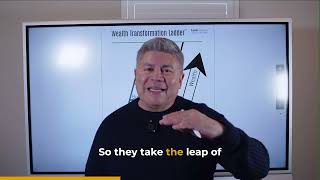
Louis Barajas maps seven stages of wealth building: from student through employee, manager, self-employed, business owner, investor, and philanthropist. The key distinction: self-employed people depend on themselves to earn, while true business owners build something sellable and scalable. Moving up means eventually getting your money to work for you.
Chapters
Everybody, this is Luis Baragas. Welcome back. Today I'm going to talk to you about the wealth transformation ladder. And it's just a way of looking at how people build wealth in the US and so we'll start off where everybody pretty much starts off as a student. Whether they finish or don't finish high school or get a college degree or go to a technical school.
They are students and they learn a certain craft. They want to be a lawyer, a doctor, an engineer, they want to fix cars, you know, whatever it is, you start off working for someone else after you finish school and you become an employee, right, you work a certain number of hours. Now what I see for most people who start off after school is that they'll work two or three different jobs over a certain time period until they find what they truly love to do and what they're good at, which I like to name as your occupation versus your occupation. And then once you're really good at what you do and what you love to do, you know, you'll stick out like a sore thumb because the, your bosses, your supervisor will say, hey, let's move this person up to the next level so he can supervise other people and train them to be just as good as he or she is. And so that's the manager role. Right. So technically you should be making more money, obviously. And then there's some people that get to the management role and said, you know what, I love what I'm doing. I think I could do this for myself and maybe make more money and, and also be in control of my hours and be control of the, the income that I make. So they take the leap of faith and start their own business. Okay. But what happens is they don't really become business owners, they become self employed professionals, meaning that you've created a job for yourself at that time. What's the difference between someone who's self employed and a, and a business owner? Well, a self employed person, if they leave for a one month vacation, they're not earning money while they're there, or the business is really run kind of like a mom and pop business is kind of informal. And the most crucial distinction is that that business isn't sellable. You live off the income that you make and hopefully you'll take it and invest it. We'll talk about another rung in that ladder in a little bit. But the business isn't sellable because the business is all about you. And, and if you're not there, then there is no business. Right. So the next Step is how do you convert that from becoming self employed to becoming a business owner? Well, I've written actually two books about that. It's one is called Small Business Big Life. The other one is Small Business Big Life for Women in which it shows people who have created jobs for themselves, how do they create the actually operating structure to run their own business that at some point they actually don't have to be there every single day to earn money. And at the same time the business can become scalable, meaning that they can grow and actually the business is sellable at the same time. So it builds what we call equity, right? So there's a net worth on what you started and what you can sell it at. So you can. So now you've got equity plus you got income. And that's ideally where we kind of want to get to now. The next level is when we these people here, whether you're the employee, the manager, the self employed person or the business owner, you've created enough, you've saved money, you've invested in it, whether it was in real estate, whether it's only your own stock portfolio or bonds or private equity, where you've taken some of the money that you've earned, you've put it aside, you let it grow and now the money's working for you instead of you working for the money. And that's where we want to get to as well. And the last level wrong with I work with some people who have made so much money that they want to give back to the world and they become what we call philanthropists. And philanthropists are people who are, who are now thinking about so I've made so much money, what can I do to make the world a better place before I leave this planet? So again, these are the kind of the, the wealth transformation ladder. These are the different rungs, see where you fit and then we'll talk next time.