Wealth Gap Warriors Podcast Ep 13. Closing the Opportunity Gap Through Career Pathways | Felix Lugo
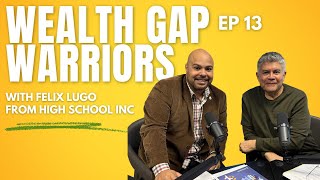
Felix Lugo, executive director of High School Inc. Academies Foundation, grew up in the South Bronx and now runs career-pathway academies in Santa Ana that raised Valley High School graduation rates from the low-60s to over 95%. The program partners with businesses to provide internships, mentorships, and employer-driven training across six core industries.
Chapters
Foreign.
Hi, this is Luis Baragas, host of Wealth Gap warriors and Wealth Gap Warriors. I'll kind of read you a little bit what I've written about what we really what our mission statement is here. And it's a podcast to introduce you to heroes. And today we have a real hero working in organizations that focus on helping eradicate financial injustice and economic disparity in underserved communities. And the hero that I'm talking about today is somebody I've gotten know really well. His name is Felix Lugo, who is the executive director of High Schools Inc. Academies Foundation. And we're going to have him on to have him share his backstory of who he is, how he grew up, how he's been inspired to work in this organization and how he's making changes. In Santa Ana, California, I got a chance to visit the school. In fact, I did a previous video with the school trying to help raise funds for all the incredible work that they're doing. And I think that we'll put a link to that video so you can take a look at it. And here he is. Felix Lugo, thank you so much for showing up today.
Thank you for having me.
Yeah, pleasure to be here. No, it's my pleasure. And again, part of the podcast here is for.
People like you to inspire other executive directors of nonprofits or people working in these communities, helping underserved communities to fight that wealth gap or economic, you know, disparity. Tell us a little bit about you and where you grew up, about your parents, your childhood and kind of how you got to this point right now.
Well, thank you. Well, I always like to start by saying if you hear an accent, it's, I'm not from California. I'm from New York. Normally, I give myself away when I pronounce water.
So I grew up in the South Bronx. I always like to say down the block from JLo. But I grew up in the South Bronx, Puerto Rican family. Grew up with my grandmother, Abuelita. Since I was a young kid growing up and, you know, humble backgrounds. We didn't have much, but as the saying goes, we always made something out of nothing. And throughout my life, I always was passionate about helping people, especially through my grandmother. You know, through my grandmother who didn't have a formal education, but she was the smartest lady I knew. Always giving back to the community. In fact, she was a philanthropist. I didn't know what that was until today. You know, years forward, she will always give toys to students in school back in Puerto Rico, always giving clothes out in fact, she told me, if you don't pick up your room, I'm going to give your clothes away. That was the way she taught us. But yeah, growing up in New York City, it was great, great upbring. She, she instilled a lot of values in me. Always helping people on the street. If you see a homeless person, you know, don't look down on them, always help them. If anybody asked me for help, help them as well. And she was that person. You know, she cooked food on the street. That's how she made a living. And anytime anybody would come by and say, hey, I don't have enough to buy a place, she said, don't worry about it, you know, you get it the next time. But yeah, that was my, my uproar in New York City. Really, really beautiful household where my grandparents learned a lot. Throughout my career, I just started learn, learning and loving about how do I help people. And I got into the medical field and went to school to be a hospital administrator. And because I did an internship at a nursing home and I said, oh, we got to treat people better than this. And I went to Monroe College in New York City, graduated with my bachelor's degree in health services. And then I decided to go to Florida. And the reason I went over there, because my aunt was like, new York City's not your life. Try something new, get out of the, you know, the barrio. And I went to Florida and that's when I was introduced to education. And I said, oh, wait a minute, I can actually help the youth by working in the school. And I always like to tell people that I got into education by accident because I was applying to stay in the health field. And I saw a job listing and they said, hey, we're looking for a recreation person. On the weekend I went in, did the interview, and hours later they said, hey, we know you came in for a part time, but would you consider being a residential dean? And that was essentially in charge of 60 high school students and 10 staff members and making sure that their well being are taken care of in the school setting. And from that, since the early 2000, I've been working in education from administrator, advisor, supporter, friend, parent. Right. Local parentees, helping students, you know, reach their biggest potential. There is.
That's amazing. Along the way through your educational process. I mean, were your, were your parents educated? Was your grandmother educated? I know that she was a philanthropist, but, you know, how does somebody, again, from your community, from the Bronx, who had Latino background and no education, all of a sudden you get all this education. Were you also inspired by high school teachers, college professors? What got you to this point where, you know, your eyes were really aware of all the need was going around you and that you were willing to take a step back and really go into these type of industries where you were really helping people?
Yeah. You know, my story is, is I always like to jokingly tell people I only went to school because it gave me a place to live. And, and that's, you know, my grandmother passed away when I was 16. She didn't have formal education, but she knew how to network. She knew how to network for people. And that's the one thing that I learned about her. In fact, in her funeral, there was a line around the block and there were police officers, judges, lawyers, community activists, you know, all of life, and people. And even my father was like, how does, how does she know all these people? And I said, because the same people she were helping on the street, the same person who, who didn't have enough money to eat, that person, because she helped them, inspired that individual, they later on became successful, came back and said, hey, your grandmother helped me when I was young, when I was a little boy getting in trouble on the streets. She kept me out of the streets. And I remember that growing up. So even though they didn't have formal education, my grandparents, you know, they only graduated high school, but they were smart in so many other ways. They knew the human connection. The human connection. Caring and loving each other. That's the only way you're going to make it in life. And in high school, I, I failed my freshman year. Like, I failed P.E. that's, you know, who fails P.E. you know, so instead of playing basketball, I was in the corner, you know, just chit chatting. And one of my teachers, homeroom teacher, she pulled me to the side at the parent conference. My grandfather stepped out of the room and she said, listen, now that your grandfather's out of the room, I'm going to tell you this. Once she shared a couple of words with me, I can't say, but she said in essentially, you messed up your freshman year. You're not going to mess up again. I'm not going to let you mess up. And that stayed with me. One, because she cared. She took the time to care for me, but also she put the fear in God with me.
Right?
But from that I, I said no, you know, someone actually believes in me. I'm not going to let them down. So this is just my way of giving back. You know, someone was there for me and I. I always give credit to her because she didn't give up on me. And in return, the work that I do now, I'm not going to give up on the community.
Yeah. You know, we have similar backgrounds. I mean, I think that I do everything that people that know me do from my abuelita as well.
That's amazing. So then you're in Florida. What brings you to Santa Ana, California? And how do you get to high school's Inc. Academy's foundation? And then tell us also, what are you doing there? And. And how are you changing that community? But also, I'm giving you a lot of questions at one time.
Right.
I just, I just thought about. Also share with me also when you talk about the high school Zinc, a little bit about Valley High in Santa Ana and how they were almost ready to shut that school down and why. And then how the community rallied around that high school.
Well, after Florida, when I went to graduate school, got a master's in management, I wanted to continue my education again. My aunt who was like, well, if you did your bachelor's, might as well do your master's. So I did my master's. And then she's like, if you did your master's, you might as well get your PhD. And then I was on my PhD program. Then I stopped because I was accumulating a lot of college debt and I said, oh, no, I prefer to say I'm a PhD dropout than a high school dropout.
Okay, there you go.
So from there, you know, I decided to take a break and I say, okay, what are sort of like soul searching? Like, like, what is this what I want to do for the rest of my life? So I actually resigned from that job and I, I took a trip to Colorado. My cousin lived over there and actually went six months of deciding what I want to do with my life. Do I want to continue this path or do something different. Because of my background of starting programs from scratch, they recruited me to New York City, started a brand new private school, preparatory school, boarding school in New York City. And then from that, because of my background of working with programs and, you know, starting things from scratch, they recruited me to California. I was actually tricked. They say, come to California. And if you tell a New Yorker, come to California, we're thinking Hollywood, you're gonna walk down the street, you're gonna.
Say, oh, hey, Brad Pitt.
Right? But actually, the first city I went to was Fresno. And I worked in Fresno for a couple of years. And then from there I went to San Luis Obispo for a couple of years, all working in education from being a recruiter, marketing, admissions and so forth. And I saw an opportunity later on to work in Santa Ana specifically. And I heard about this organization, a nonprofit organization that helps high school students with college and career readiness. And then I found out the demographics they work in and I said, well, you know what, I could relate so many to so many students being in the Latino community, not having much. And I said, you know, I really got to go back to my roots. I got to go back to helping people who were like me to show them that it's possible. I was once in your shoes. It's possible. Look at me. Let me help you get there. So I came across High School Inc. Working in this space. And High School Inc. At its core, what, what they do, it's truly to their mission. High School Inc. Empowers youth straight from the communities to business and education partnerships. That is what they do. They make sure that whatever the students are learning in the classroom, exactly what they need outside of the classroom. So they basically changing the mindset of students that even though you're dealt with these cards doesn't mean you have to settle for those cards. You can actually change your life. And we're changing the way we look at education. From your traditional go to school, straight to college, where go to school, explore what avenues you want to pursue. If you want to go straight to college, that's wonderful. We'll show you how to get there you want to pursue and go straight into the workforce. We'll show you how to get there as well. So we're preventing them from making mistakes like I did, going to college, exploring, accumulating a lot of debt, not knowing what to do to now, making better informed decisions by the time they reach their senior year.
Yeah, it's, it's a, a wonderful, thoughtful process that I think is going to make tremendous change. Now let's take a step back and let's talk about the community of Santa Ana because people are listening to this nationwide.
Right.
It's one of the most densely Spanish speaking populations in the United States. Tell us a little bit about the history of Valley High and then kind of how high school Zinc, you know, came in to help that school. But I want to know a little bit of the background and then tell us a little bit about the families there and the kids that are there. The more social, demographic kind of deal issues that they've got to deal with in that community.
Yeah. So high schooling was born more than 16 years ago. There Was a crisis in Santa Ana. Students were either graduating without the skill sets they need to get employed or they were not graduating at all. So you had a mixture of graduating with no skills to get employed or not graduating at all. So the Santa Ana Chamber of commerce said, we have to help our business community. The business community is suffering. They can't find employees that have the skills that they need to be successful or for their business to be profit. So they got together and said, what if we work with the school district? And they said, well, what would that look like? Well, let's work with the teachers, work with the administrators, and almost say, hey, we can almost guarantee that if you listen to us, they'll have exactly the tools they need to be successful by the time they graduate. So High School Inc. Was born where a partnership at MOU was in place, where you have High School Inc. As a nonprofit. You have saUSD, right? Santa Ana Unified School District, and you have the Santa Ana Chamber of Commerce. So allow us to partner with you. And how that looks like is Valley High School. They chose that high school because at the time, years ago, it was a high school that had a reputation of a lot of negative things happening. Students weren't graduating. It was a school that you wouldn't send your kids there. So they say, well, let's pick that high school.
90% Latino.
I think 90% of students are identified as Latino X anywhere from Mexico to, you know, Latin America region. And they picked that high school because it was about to take. About to be taken over by the state. And what that translates to, whenever you hear a school is about to be taken over by the state, that means that that school is underperforming. Their students are not graduating. Essentially, they're saying, you guys are not doing your thing right. The teachers and the administrators are not really performing where they need to be performing with the students. So they chose Valley High School. And they. They. They started with one academy. Because our academy model is you have to really increase student achievement if you want the outcome to be more positive. And what am I? What I mean by that is students are not going to go to school just because they have to go to school. They have to be motivated. They have to see a purpose. And what High School Inc. Does behind the scenes is increase that student achievement, motivate them. How do we do that? We say, hey, school is awesome, is amazing. Imagine going to school and you're able to meet professionals that you're. That you're in becoming like our business academy. When they started, they had about 30 to 90 students that first year. They, they, you know, just picture this. If I could paint a picture. Business academy students. I love business. I want to be an entrepreneur. Wouldn't it be amazing if you get to meet entrepreneurs? Wouldn't it be amazing you get to see entrepreneurs in their work settings. Wouldn't it be amazing you could have field trips to see what they do, how they do it. So we did that across all the academies. So 16 years ago, 16, more than 16 years ago, from the business academy, grew to six academies. Because at that time, Santa Ana chamber of commerce said, well, what industries are really growing? Need. Yeah, need growth. And Dr. Wallace Warad from the Orange county business council, he did research for us and he identifies six industries. And if you look at the. The letter of each industry that we have, which turned into academies, it spells the word change. Culinary, healthcare, automotive, new media, global business and engineering. And under culinary, you under engineering, computer science. And that's how the six academies were born at Valley.
Now, what happens is that when the kids coming in, I think from junior high, right. Or middle school, they actually kind of have to. They don't have to, but they normally will select a career path, an academy path. Correct. Of what they're most interested, and then they have the opportunity to change that. That path.
Right.
If there's something that interests them more.
So you talked about the culinary one, for example. I've taken a tour of the school. By the way, it is the most amazing place you'll ever see. You know, I sent my kids to some of the best schools in Irvine, and I'm thinking, man, I blew it. I could have sent them here to Santa Ana and, you know, nobody wants to. The kids, Santa Ana. Then you realize what an opportunity for the kids to get some of the best training in the world. I think the automotive also. Let me just give you just a visual. I show up and I'm thinking, culinary. Well, what does that mean? They're going to have a little kitchen with some electric, you know, stoves and some pots. They have a kitchen and a whole almost. I mean, better than any restaurant you've seen in Orange County. How much money was invested just in that kitchen that they have there? I mean, we're talking. I don't know how many thousands of square feet you have there just for the culinary section, but like a million or two. I don't know how much money some of the best cooking tools in the country are there right now.
Yeah, a lot of funds went into that through the school district. It was Actually one of two projects. It was a culinary facility and the automotive facility. I want to say in total it's probably up north of $18 million because they build the facility from ground up. Yeah. So it is amazing what we have over there.
It is, I mean, and again the other one is like for example, the automotive. I'm thinking I'm going to go and they're working on a couple of cars, cars like, you know, where I grew up in east la, right. They've got the cars open and they're working on, working on them with a few tools. You walk in there, your jaw drops. It's bigger than I think any Mercedes dealership where they're fixing the cars, they're working on.
Cars that are sometimes a hundred thousand dollars or more. You got these young, you know, 16 year old, 17 year old students with some of the best tools. And I heard that even that there are other dealerships that sometimes need special tools that they come and ask you for those tools to borrow them. And again a few million dollars also invested in that. Right. So the kids who are interested in that profession that are now highly skilled, high paying jobs coming out of high school.
Are getting the best training. And it's not in college, it's not at a tech school, it's at Valley High.
Yeah, Valley High School. And that's one of the high schools that we work with. So this piggyback off what you just said, a student comes in freshman year culinary. I'm passionate about culinary. You know, Santa Ana Unified School District has pathway programs. They have over 50 of them. And at Santa Ana High, excuse me, Valley High School, we have six pathway programs, the academies that they can choose that high school income with. Freshman year culinary student comes in, they take their regular high school experience like everybody else. They have social studies, mathematics, but then they take culinary 101, culinary 102 and a sophomore culinary 103. Right. As they move over sequential courses of CTE, the career technical education, we always like to say they get three layers of support. So that first layer of support is the sequential course of cte. The second layer support is the academy model. You have thousands of thousands of students who attend a high school. How do you make sure that they don't fall through the cracks? So that second layer of support is we take 2,000 students and we move them together in cohorts. That's the academy model. So you have about 250 culinary students freshman year. They move together sophomore year, junior year and senior year. That same classes, same Students, same familiar faces, same teachers. So every year they look forward to meeting their friends. It's sort of like a school within a school, the small learning communities. And then that third layer of support is the nonprofit of High School Inc. Our business partnership. So that student who's interested in culinary. You mentioned about the facilities. Those facilities was built with High School Inc's input. Our business partners came in and said, this is, these are the refrigerators you should purchase. These are the, the utensils you should purchase. The same thing with auto. You know, this is the brand you should buy. Snap on. It's industry standards. These are the lifts, these are the alignment machines you should purchase. Everything that was built was because our business partners gave their expertise and that's how we make sure that what they're learning in the classroom is exactly what they need outside of the classroom.
State of the art. Yes, state of the art. Brand new stuff. Not stuff that you learn in the school that's so antiquated that it's not even you can't use when you come out right. When you graduate. So share with me, if you can, any empowering stories of any students that have come out from these communities that have been transformed and changed and graduated and maybe found jobs and maybe come back to you. Well, you know, you're relatively new there as well, right? A couple years. But maybe some alumni that have come back and shared their stories to the kids of how much success they've received from going through the program, through the academies.
Yes. So there's two stories that come to mind is one story is about a young lady who started in the dental program. She was exposed to the dental program, loved everything about it. She did a dental internship. After the dental internship, she graduated and started working in a dental office. She was so inspired to continue the field of healthcare and particularly in dental that she said, well, I wanna go back and maybe become a dentist. So she went to Mexico. This was a student who first year came to America. She joined the welcome Academy at Valley welcome Academies for first time English learners. And she didn't know much English and started learning and developing. She graduated, got inspired to be a dentist. She went back to Mexico, one of the top dental universities there is, and she became a doctor. She came back to the United States, she reached out to high school and she said, I thank you for everything you've done. You've given me the exposure you have given me. I'm just one exam away from being a licensed dentist to practice in the U.S. is this something that you can Help us with. And that's what one of the things that High School Inc. Does. We don't only stop. Like, we don't stop when you graduate. We continue that support even after you graduate. We have an alumni association. She reached out to us. She said, could you help me with this exam? We said, absolutely. So we cover her expenses for her to take.
That's amazing.
Yeah, yeah. And the other young lady, she went to the same career path, healthcare, did an internship at Chalk, the Children's Hospital of Orange County. From there, she was inspired. She continued to be a medical assistant. A couple of years later, she said, you know, I want to do better than this. I. I want to keep going up. She actually became a registered nurse a couple of years ago, and all because of the exposure she got of High School Inc. Bringing her into the business community, having those internships, those field trips to get, you know, exposed to the. To the industry of choice.
Yeah, they go from making. I mean, registered nurse. I mean, we. We will do, you know, one of our businesses, we do tax returns for the Latino community as well. And those registered nurses are making over six figures. Easily. Over six figures. Right. And Dennis, what do I need to tell you? They're making, you know, high six figures.
What. What does the program still need? Because I know that you guys are transformative, and I've seen that other parts of the academy, I think it was the media one that they're now still using, they're using more antiquated computers. They need help there. What areas of the academy right now need a little bit more support and need more little attention. And I will share with you that if you're watching this or if you're listening to us on the podcast, and if you're interested, and then Felix will give you the information how to get a hold of them if you want to. If you would love to participate and donate money and help out for your professional, even if just help out as a mentor as well, reach out to him and have him give you a. A tour of the school. Because it's not about what you hear him say. It's about what you actually see what's going on. And it will inspire you. It will give you goosebumps. I'm telling you, I've done the tour twice now, and it is just amazing that. That we can't do this more in other underserved communities. And I want to make sure that Felix gets that proper support. So when you reach out to him, ask him, give me a tour of the school. If you're not close by, fly in and see him. Because again, I'm guaranteeing you that if people are always concerned about when they're donating money is like how much of their money is going to the program, what is it really doing, what kind of support if I give. But what are the results of that money that I'm donating? Right. And I will share with you that you will seriously get goosebumps as to what your money can do to help other people in need and a community in need and how the positive results are coming from that program.
What else right now of your six academies need a little bit more support, need a little more attention and then how can people help out besides donating money to High Schools Inc.
I also want to not say that when you look at the success of High School Inc. You know, 16, 17 years ago, Valley High School had a graduation rate of the low 60% but now they have well over 95% graduation rate.
That's amazing.
That is the success of having all of the support from the community and being connected to business partner. While donations are great and we utilize those donations to help students with certifications and internships and so forth, we also look for people who are willing to open their office, allow our students to go there and, and job shadow, allow our students to maybe do an internship. Allow our students to go to your company and explore manufacturing, company hospitals, you know, everything from the culinary field to the engineering field. We look for those opportunities for our students, you know, a foot in the door so they can get exposed to those industries. Absolutely. You know, we always are looking for mentors as well. You know, it's, it's great to have students to speak to industry professionals, to get inspired by your story, to learn from, be able to ask you questions. We're always looking for people to donate to the particular academies like new media. You mentioned about equipment that could be upgraded. Absolutely. There's always a need in many different areas of our academies from equipment to just supporting the teachers in providing the students those opportunities to be connected more to the industry.
Yeah, that's phenomenal.
So now back to you and the experience and everything. We have tremendous and wonderful experience you've brought to high school Zinc Academy Foundation. But what have you learned since you've been there? What's working, what's not working? Because again, most of the people that are listening to us, we're going to be other executive directors, people who are running organizations in the similar vein, who you know will learn from you as well. I'm sure they're we're going to get them on, and they're going to be sharing their stories. Tell us, as you've come into this community, what's working, what's not working, and what do you think can be done better? Whether it's the mindset of that community, whether it's the mindset of the schools, what can be done better and just share the stories.
Absolutely. What's working is the collaborations. When we collaborate with other organizations, I encourage other organizations to reach out to us. There's many ways that we can collaborate, utilize our resources. We all work in the same space in some capacity. All right. We're always wanting to give back. That's working really well. What's not working too well, but could be better is how do we communicate all of these resources to the parents, to the students? Because they don't always realize that there's help out there. And culturally. Right. Especially with my family, culturally, Latinos are like, whoa, are they willing to help us? Do they care about us? Absolutely. And I think not just for the Latino community, but for any cultural background, there's always this stigma of, like, you know, if they don't look like us, maybe they don't care about us. And that's not true. And with high schooling, we expose our students to. We actually bring them to a lot of philanthropy events and so forth to show them that there's people in the community willing to help and they don't always need to look like you. But also, also in saying that is. Is really how do we get these resources to parents, and they understand that. That there's resources out there. They're. They're here to help you. And we can help you in many ways, from, like, getting you resources to clothes, to food, to education, to workshops. And it's for free, and it doesn't cost you anything. There's a lot of money out there and resources to help in many ways. So I think that that area we can do better. How do we convey that message and get it out to the community? Because I think a lot of times they don't realize there's a lot more help than they think.
Yeah, that's. You know, that's so true. I think the problem is that there's always help.
Right.
But you have to look for it and you have to ask for help also. And at some point when you're asking for help, people will figure out a way to help you. They'll find somebody. Like, people will contact me for things that I cannot help them with, but I know Someone who can help them with. And then I just kind of. We just keep pointing them to the right direction. So any epiphanies.
Any life learning lessons you personally have had not for the organization as you've grown into this role of helping these communities out or helping these parents out, helping these students out. I always tell people that my story was when I was working in Newport Beach, California with these really super wealthy people, I went back to the bide to help the community. Even though I saw most people in need, my epiphany was, oh, shoot, there are some people who are not ready to be helped or who don't want to be helped as much as I agree can help them. Right. That was my epiphany. But any epiphanies you've had, you know, through your life working journey here?
Yes. There was one particular day I was walking through a classroom and I saw a lot of clothes just scattered all around the room. And I didn't know what that was. And I was like, what's going on here? Or these are clothes for kids who don't have clothes. And that hit me. That hit me really deep. I even get, you know, a little choked up now because, you know, I thought that I had a rough upbringing. But as the saying goes, there's always someone who has an even worse situation than you. And when I saw that, I said, you know, there's a, there's need, not only through great instructional resources, but also the basics. You know, having clothes, having, you know, hygiene products, you know, things like that. That, that really struck me because we don't, we don't think even deeper than that. You know, when we say, hey, how come kids are not getting jobs? Maybe they don't have the clothes to go on those interviews. You know, why are kids, you know, getting in trouble or not open? I always like to tell parents and, well, my administrators is that when I was a dean of students and I dealt with a lot of behavioral issues.
I have a philosophy.
Students don't wake up one day and say, how am I going to get in trouble? They don't do that. The reason they get in trouble and the reason they do things they're not supposed to is because they're misguided, they're misunderstood. And I think the more we get involved with them and the more we guide them intentionally and we show up and we're supportive, they're going to feel that love. At the end of the day, you can change anybody's life if you really show and genuinely show them that you Care and that you love them. And then you have to be passionate in the work you do. And that's why I do what I do now. And you can hear it in my voice. I'm very passionate about helping the community because again, I go back to my roots. That one teacher didn't let me down. To this day, I think if she would have never talked to me the way she talked to me. And I'm not encouraging people to use wrong things, but what I'm saying is if you're here to help the community, be genuine, be kind, and remember you was once young like them. And if you're successful, like one of the five focus of High School Inc. Is entrepreneurship and leadership. And I love that one. When I one area because we teach students. When you do grow up and you do make it, it's about remembering to look back because there's somebody behind you and you got to help the next person up. So that was my epiphany moment where I realized there's a lot of work to be done. Even the most, smallest things that you think is not making a difference is truly is a hello, a thank you. Hey, this is not much, but hopefully somebody can use this. Those little things do go a long way.
That's fantastic. Yeah. I find that most people that are doing the work that we're doing, it's not their occupation, but their occupation, as I like to say. And I can hear definitely the passion. And I'm so grateful that Valley High and High School Zinc was able to attract you. I always believe in a higher vibrational energy. That's how we attract people, and that's what attracted you here. I've met some of the students. They love you to death. You know, they've said wonderful things about you. They also say that you don't let them get away with stuff either. And so that's. That's fantastic. Anything else that you can share with our audience that is watching us today or listening to us today on, you know, other lessons or maybe things you would have done differently when you started? Because again, you know, we get. Sometimes we go on our career path and then we make mistakes and then we have to find our way back. Would you have done anything differently or everything worked out the way it's supposed to work out?
It's, you know, it's cool with the saying, there's always room for improvement. I think I could have listened more.
Okay.
I think listen more along the way, as some people might tell me now. Like my best friend told me the other Day, she was like, you know.
You don't listen to everything that I'm telling you.
And I think listen more and be more observant and. And reading between the lines and hearing between the lines, you know.
Wonderful. Yeah.
When you ask somebody, hey, how are you? Oh, I'm okay.
We're not listening to them. But if we didn't pay attention just by their. How their behavior is. Right. Their. Their energy level as well, Right?
Yeah, absolutely. And, you know, just listening and hearing between the lines can. Can really make the difference because I go back, you never know. That one hello, that one handshake, you know, you don't know what they're going through. You can't read minds. Right. So, you know, you could really change a person's life just by one little small gesture. But I also wanted to note, say that, you know, high schooling is not only at Valley this year we just expanded to Century High School. We're helping their biomedical science pathway program. Next year we're going to be helping their E Business academy and then the following year their esports pathway program. We also, we're involved with Magnolia High School, with Magnolia agriccience Community center, which is the Mac Farm. If you've ever been out there, if you have it, you should go. It's a 2.5 acre farm. It's amazing.
Rejuvenated farm.
It's. It's a sight to see. And we're teaching the community how to. What to do with a zucchini. I don't know. Right. Nutritional.
It goes from there. It goes to the culinary. Yeah. To cook at the culinary center.
But. But those are the things that we're doing within the community. So not just the academics, but also about nutrition as well. And that's what we're doing at the Mac Farm High School, Inc. Is helping in that regard. Really one of the. One of many ways of addressing. Addressing the food insecurity in Anaheim community.
But are there any other people or any other organizations that come down and visit? You are looking at what you guys are doing and have you basically created a transformation in this community? I mean, because it seems like.
Other cities going through similar socioeconomic issues could learn a lot from what you guys have learned and how you guys are implementing and executing a lot on the needs for these communities.
The number one thing that you always hear when it comes to nonprofit organization is capacity. We always get inquiries about we love what you do. How can we get what you're doing at our high school? You know, in another school district, in another state and we always say we will love to do that. You know, so talk about, you know, giving, giving more resources is being able to do those things. So we have more funding. If we have more capacity, we will love to expand to other high schools more rapidly because we get that question all the time. You know, your program should have been something that we should have had 20, 30 years ago. Yeah. And so, yeah, we do have plans to continue the great work. As I mentioned, we just started this year expanding the Century High School in Santa Ana. Our goal, I have a vision. My vision is imagine one day you're driving by a high school and in front of that high school it says this is a certified high school Inc. School. And that what that translates to is we make sure that students are successful, motivated, increase their student achievement. Because in order for them to be career and work ready. Right. They have to be achievement ready. They have to be wanting to be motivated and, and wanting to be insp. Like be inspired in order to achieve more in their life. And that's what high schooling does.
Yeah. So was the original problem then that maybe, you know, we're. We're hearing today about the news actually today is that they're trying to get rid of our educational system, the government system.
Right.
And is it that the school districts don't have enough funding and they needed, for example, the Santa Ana Chamber of Commerce to get involved and they needed this non profit that was created to raise funds also to create these programs. Was it prior to that that the school districts just didn't have enough funds or capacity or I don't know what. Because why was the school not achieving until we saw people from the outside saying, you know what? I really give a shit about this and we're going to do something about it. We're not going to let this will fail. We're going to let this community fail. What do you think it is? What do you personally think it is?
I personally think that when I used to do recruiting, I used to work in private schools doing recruiting. Everyone says they have a great school. Everyone says they have great teachers. Everyone says they have great classes. Everyone says that. I say is. There's a saying by Maya Angelou, if you heard of it, you know, you know, you tend to forget what people said or did, but you always remember how they made you feel. Right. That is the ingredient. That is the missing ingredient. People who show up to work every day and they're passionate and they love what they do is because they feel they're part of something big. They feel they're part of a team. Students who show up to school every day, they feel that they're accepted, they loved, they feel like they're going to get somewhere. And if you don't give more momentum to that, to making sure that they feel, feel a certain way, they're not going to be interested, they're going to be less motivated. So High School Inc. Knew that that was the missing ingredient, is increasing that student achievement. So we knew that one offs weren't impossible. One off meaning it's not enough for a career professional to come in, do a presentation at a class. You have to do more than that. You know, how do you inspire students? The internships, the competitions, the site visits, the one on one mentorships. That's what's really going to keep a student motivated. When they see they're getting all of these resources, wow, they care about me. I, I feel value. And when you feel value, you will succeed. And that's the missing ingredient. So I think the reason for them not performing well is because they haven't mastered. How do you make sure that these students are feeling loved and they're feeling cared for and they feel that they, they have a purpose.
Do you, you know, with all the wonderful work and the transformation you guys have done at that school, do you feel like it also not only affects the students, but also affects the, the staff, the teachers that are there? Do you attract now people or teachers at a higher caliber who care more, who say, I want to come to this school or look for opportunities there? What's going on in the schools with the teachers and the staff there?
I think there's a lot of. It goes back to when we say nonprofit is always about capacity. In the school system is the same thing. There's a lot of passionate teachers, a lot of passionate staff members, administrators. They really do care about the kids. But the capacity can only take them for so long. Right. Sometimes the teachers like, I know there's value in giving students, you know, resume workshops and public, public speaking workshops, but I don't have the capacity. That's why High School Inc. Was born, is to fill in those gaps. You know, the capacity barrier, we're breaking it. You know, wherever you need help, we're going to be there. And that's what we're doing. We're amplifying the student experience. So where the school district reaches a certain point, we're stepping in there and say, hey, we're going to add more additional help because we know that additional help is going to make a difference in Those kids lives.
Yeah. That's amazing. Listen, in closing again, I can't help but think as I hear you speak, is how much knowledge, wisdom and expertise you have. And you're so young still. And I can only imagine five, ten years from now where you're going to be, I assume probably at a higher national level than here. I would assume at that point, because I can feel your energy. I can see when I gone to the school, the reverence they have for you as well. What's next for you? What things are you doing and what things have you not done that in your personal vision statement that you see.
Doing in the future?
What would you like to do that you haven't been able to do yet?
I would like to, I would like to continue to spread the message that, you know, kids need help.
They.
They need, they need someone to believe in them. You know, when we talk about shaping the future, we have to shape the today in order to have a better future. So I would like to continue to expand High School Inc's model to other high schools. I'd like to continue to get more collaborations from other organizations. You know, I mentioned about students not having clothes, you know, sometimes for an interview or so forth. There are many organizations out there, like working wardrobe is one of them that helps in that regard. So more collaborations, more unity, more community in order to, to change this thing around and you know, to better, to have a better future. We have to start today.
That's phenomenal. Tell everyone how they can find you, get a hold of you, set up, you know, a tour of the school with you, donate money, let us know.
Yeah, absolutely. I always say don't take my word for it. Please come out to High School incademies. We're more than happy to show you. You can go to our website highschoolinc.org. you can reach me directly at Felix F E L I X High School Inc.org. please reach out to us. I would say give. I could give you my number, but I want to.
We'll put a link on right on there. We're going to be putting a link on the podcast.
I do have an office number. I can give you that. It's 714-241-6592. You can reach me directly my office number 714-241-6592 or go on our website, www.highschoolinc.org. we'll love to give you a tour, show you the same tour that Luis got an opportunity to see and you have an opportunity to speak to the students and see everything firsthand.
Yeah, you know, it's really interesting. I live in Orange County, California for about probably 30 years.
I've passed by in Laguna Beach, a place called Pageant of the Masters. And it is this show that they put on that is almost un indescribable. And I always say, before you die, you must see Pageant of the Masters and look it up and Google it. Don't have time here to explain what it is. I will share with you. The same thing is that when I'm talking to people, I just had somebody who called me and says, hey, I'd love to donate the school. I said, I don't want you to donate yet. I said, make a, you know, schedule a time to meet with Felix to give you a tour of the school. Because it's. That it's not just about giving money. It's about really seeing how your money's being used and, and the results that it's. That is going on in that school. It's unbelievable. Going from a 60% something dropout rate to a 95%, you know, graduation rate is. Is amazing.
And so please schedule the time to see Felix if you can. If you're close by, drive. Drive in. Guess you were gonna say something.
I was gonna. I was just gonna add thank you for that. But I was also gonna mention there's different avenues to. To give and help high schooling. We're doing a the Future is Working campaign with the Orange County Community Foundation. It's 21 different organization. One cause is happening on April 3rd. You'll find that information on our website. And also we're during our annual fundraiser, which is the seventh annual gift Gratitude which we're having at the Delhi Community center in Santa Ana. If you're wanting to come to that event and in here and really see what High School Inc. Is all about. May 8th is a Thursday. Thursday night, May 8th at Delhi Community Center. We have information about that fundraiser on our website and as well as the Future is working campaign on April 3rd on our website as well.
Thank you very much. Thank you for all of that. And I'm going to share with you today that Wealth Gap warriors will be writing a check to High Schools Inc. For $500. Thank you as well.
Parting thoughts. Something I always ask, you know, our guests. Any, any books that you've read.
Any resources for, for people who are in this genre who are working in anything that's inspired you recently?
There's no. I always refer to a book that I read years ago in business school and I refer to it every so often. In order for. For anyone to have a great organization, they have to have a healthy organization. There's a great book written by Patrick Lencioni, is a book called the Five Dysfunctions of a Team. He also wrote the Advantage and you know, he. He came out with the. The pyramid. You know, it's all about trust.
And I.
All is all about trust. And for. For me, any change you make in life is. Is based on trust. And if you want the community to believe in you, they. You have to build that, that, that foundation. So that's one book. I read it years ago, but I always refer to it. I share it with my team as well. So do I, because it's truly. I believe it. I live and breathe it, and I solely believe in the outcome if you follow it directly.
Fantastic.
Felix, thank you.
Thank you so much for stopping by. I appreciate this. It won't be the last time you'll be here. I want to be sharing the wonderful stories that are coming out of your organization. So thank you very much and thank you everybody for listening to us and we'll see you next time.









