Wealth Gap Warriors Podcast Episode 12. - Dr. Ana Maria
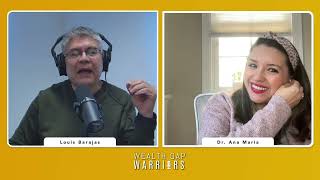
Podcast interview (Wealth Gap Warriors Ep.12) between host Louis Barajas and Dr. Ana Maria Lopez Caldwell. Dr. Ana Maria—Colombian immigrant who arrived at 13—describes her educational path (business degree; MA/PhD in Latin American Studies), experience as a New Orleans school principal, and transition into leadership coaching focused on Latinos. Major themes: immigrant identity and unlearning privilege, workplace under‑representation, code‑switching and belonging, unwritten rules for advancement, intergenerational trauma, the importance of clarifying one’s purpose/why, and practical coaching offerings (Spanish-language work, sliding-scale sessions starting at $95, group coaching). Contact: anamariaLC.com; Instagram @DrAnaMariaLC; LinkedIn: Dr. Ana Maria Lopez Caldwell.
Chapters
Foreign.
Welcome, everybody. We're here at the Wealth Gap warriors podcast and we have a tremendous guest for you today. I have Dr. Ana Maria Lopez Caldwell that we call Dr. Ana Maria, so she goes by Dr. Maria. She is one of the leading leadership coaches in the country, especially dealing with diversity. And, and we are excited to have her here because we want to not only have her impart her wisdom with us, but we really want to get to know her really well and find out all her reasons why she's doing the work she's doing. She's a natural figure at this point. And I see. Dr. Ana Maria, welcome. Thank you for being here. I just want to let you know I see you everywhere. I follow you on LinkedIn, I follow you on Instagram. Um, I see all the.
Love it, I love it.
I see all the work that you're doing through. You've talked at SEB conference at Alpha, you've done a whole bunch of, you know, different conferences throughout the country, and I want to thank you. And then at this point in our podcast, you're two months away from giving birth to your second child and I'm just getting over cold. So I really appreciate you being here with us today. So thank you.
Absolutely. L. Thank you so much for having me. I'm excited to have this conversation and to get to it and share a little bit about.
Leadership in latinidad.
Yeah, well, Dr. So, so the thing is that the very first question I always ask is just share with us, give us some context about your life, where you grew up, your childhood, what maybe life defining moments you might have had that got you to this point where you're now, as far as I'm seeing, is where you're taking your entire career under leadership, coaching and really helping people throughout the country. And so when people pick certain career paths that they're so emboldened by just, you know, being a leader, especially a national leader, they have a lot of whys, why they did. They had a lot of life defining moments. I would love for our listeners to and people who are watching us, who will actually tell us more, learn more about what makes you, you and, and, and, and get into this career path.
Absolutely. I would love to share a little bit about my story. So I was born in Colombia and I came to the States when I was 13 years old. I came to Elizabeth, New Jersey, which is a suburb of New York City, and I did not speak English and I spent a lot of time learning the language and really having to unlearn a lot of things and relearn cultural things and have to assimilate. And it was a really challenging time in my life.
Because.
The person who I was, the identity that I held in Colombia, did not necessarily apply in the context of the United States. That really shook me to my bones. And that really was one of the most defining moments in terms of.
My passion that I now have towards making sure that we have room at the table for everybody, that folks who are not represented are able to be finding a voice and being represented that comes from that immigrant experience and what I had to face when I first arrived in this country. Fast forward a little bit. I got a business degree.
Eventually I got a Master's and a PhD in Latin American Studies. And the reason why I was so focused on Latin American studies was because I wanted to connect back to my roots. I wanted to understand what was happening in Latin America. And questions that drive me really have to do with the way power moves. I'm really curious about what are all of the invisible ways in which society chooses who belongs and who doesn't belong in how our outcomes, how do we end up with the societal outcomes that we do in terms of representation and access and power and wealth making? Right. And so that curiosity led me to have a PhD. I studied the socioeconomic certification system in Colombia, and I looked at this idea called symbolic boundaries. Is it sociological theory that I apply to this day in terms of understanding some of the work and the support that my clients need as they work through corporate or as they build their own business or whatever it is, as they build their leadership and their career growth, whatever context that may be for the individual.
And something that was very.
That I was very aware of throughout all of those experiences is that I was not represented in the way that I wanted to be. The more I went up in my career in terms of getting a PhD or, you know, the 15 years of experience I have in leadership that spanned corporate, nonprofit, and the education system?
Yes, there's 20% of Latinos in the United States right now. And in those positions of power where I was, I was the only. And I had a really hard time feeling represented and feeling seen.
And he really led me to also question, like, what's happening and why? And so.
Fast forward to my last job before I became a leadership coach. I was a school principal in New Orleans. I was leading an early college program, and.
I was the only, you know, I was leading the school, and there was very little representation as well.
And I worked with that executive coach. And that executive coach was really helpful in allowing me to just unpack a lot of the feelings that I was going through, to not feel so isolated, to be able to understand that some of the challenges that I was facing were not me, but were patterns and were results of systems that I had little control over. In those moments. They felt really personal and scary. Right? And so, and so that coach was incredibly instrumental to me in allowing me to continue to stand in my power and allowing me to push through some, some discomfort. And I was like, I want to be that for other people. I want to be able to offer folks data driven support at any level that they're at, if they're hatching Latinos so that they're not feeling isolated and so that they have the tools that they need in order to overcome so many of the barriers that we face, whether those barriers are internal or whether those barriers are systemic and more external to us. So, yeah, that's what drove me to do this career. And to tell you the truth, I could not be happier. My job is to work with high achieving Latinos every day, which means I get to meet with people like you, have conversations, learn about your journeys, and also just gain so much appreciation, energy, knowledge for the work that each one of my clients is doing and the way that they are shaping the United States.
And so that's what I get to cowork every day. So I'm incredibly privileged and excited to be in this space.
That's phenomenal. I just want to take everything that you just said, though. I'm going to take a little bit, little bit of the pieces that you said when you came here at the age of 13 and as you started going to school here and then learning a new language, you said you had to unlearn and learn new things. So if you can share maybe just a couple of things that you saw that were very different from living in Latin America and then things that you had to learn that weren't part of your day to day.
You know, living like you were doing. And then I would like you to share back and say, tell me, what did your parents do? How big is your family? You meant you grew up in Colombia. Were your parents educated? Because from what I understand, and again, I'm, you know, I'm a certified financial planner and I'm probably one of the first in the entire country of the United States to be a cfp. I got a long, long time ago of that. But I realized that, you know, even now, to this day, right, I've had the CFP since 1990, I think, and now we're 20, 25, 35 years. Only, like 3% of all certified financial planners are Latino. In this situation right now, I would assume that As a Latina PhD, of all PhDs, you got to only be in the top. Maybe you got to be only one percent. Only one percent.
It's less than one percent.
It's less than 1%. Right. And so going on that journey and that path is not easy unless you have some level of support, whether it's emotional, financial. So how was your family supportive? I mean, were they educated? Not educated. Why did they come from Colombia to the United States? Because I think that has a lot to do. Also from your level of ambition to succeed, which you've already done. Right. I mean, you got. I know you got a lot more to go because you're so young in your career path, but being in the point, less than 1% of PhDs are Latina women. It's an incredible feat. So I know that it wasn't that easy. Well, I just went to school, and then I got my master's, and I got this, and I went. And then I became the principal of Tulane. That sounds easy, because the people that are listening to us are people who are also struggling, who want to get to the next level and really kind of want to hear a little bit about maybe some of the things that happened to you where it got difficult, but you were resilient, you were persistent, and something made you to keep going, because I know that the path to where you've gotten to has not been easy.
Luis, I appreciate your question so much, and one of the reasons why I appreciate this question so much is because one of my pet peeves is when a successful Latino gets on stage and talks about all of their accolades and makes it sound easy and also disregards their privilege in the meantime. And then other Latinos with different identities who are listening are like, well, yeah, okay, well, what am I going to do with that information? I love the fact that you're asking me those questions and problematizing my story and thinking through how can we think about this a little bit more nuanced? So thank you. Because that's what we need as we think about Latinidad and how diverse we are as a community. The experiences that I have, there are challenges and there are barriers that I face because of my identity. And also, there's a lot of privileges that I've had that have made it a lot easier than other Latinos who may hold different identities. And so I really thank you for that question. And so yes, my family. So I come from a middle class family in Colombia. In the context of Colombia, my dad worked for the central bank and my mom took care of us and had the most difficult job, which was to. To raise the family and make sure that we all were thriving. I have two older brothers. My oldest brother is incredibly impressive. He's deaf. He cannot hear, and he speaks four languages. He speaks English, Spanish, sign language in English and sign language in Spanish. And he was one of the first deaf people in Colombia to have graduated from a hearing school. So really, really cool there. And my middle brother is.
A dentist. He does root canals. He's an endodontist, and he owns his own practice. And he's somebody I lean on heavily these days for the entrepreneurship journey because he knows what it's like to not depend on a stable paycheck every day when you're building your business and to have that vision and to think 10 steps ahead. So that's a little bit about my family, I would say, in the context of Colombia, middle class. And that connects us. Middle class. When you say middle class, it really could mean anything the way we define it in the United States. So that's not as helpful either. But I would say.
We had access to all of our necessities. We had a lot of privilege in terms of owning our own car, being able to go on vacation.
Being able to go to private schools, and having a relatively privileged life. And that context is really important because I grew up in Colombia as a Colombian, where people were not questioning my identity or whether or not I belonged. I was part of the status quo. And there was a lot of things that I took for granted as a child and a lot of biases that I had in terms of understanding.
Social dynamics and privilege that exists. So when I said that when I moved to the United States, I have to unlearn a lot of things. It's exactly that. I had to unlearn a lot of biases that I had around identities and people, because for the first time, people were challenging my very existence. Right. Like, my middle school classmates were asking me questions like, hey, did you use a donkey to go to school in Colombia? Do you know how to tie your shoes? And those questions were deeply.
Disturbing for me because they signaled to me that my peers, number one, knew nothing about where I came from. Like, I came from Bogota, which is a huge metropolitan city, and now I was in a suburb of New Jersey. You know, it was kind of like the other contrast, Right?
You're being stereotyped.
Yeah, yeah. And the other piece that was difficult about that was that my peers didn't see me as like just another peer that came from another country, but rather what they saw were those differences that they couldn't even begin to, to like, imagine what it would be like for you to be from another country. And that was a really huge eye opener for me. And it was very humbling.
And it made me realize what many people experience, you know, like I experienced for the first time, firsthand, what many people in Colombia experience who may not be part of that status quo. So like Afro Colombians or people who are differently abled. Right. Like, those are not identities I had to ever. Or I didn't think about as a child as much because I had the privilege not to worry about it. And so that's what I mean when I say there was a lot of unlearning and learning I had to do was just like, confront the privilege I brought. And also the ways in which now I was experiencing some challenges within my identity and the way people perceive me and come to terms with that and also process that in the greater context of what does it mean for society, what is my responsibility in that ecosystem and how do we need to move forward and how am I going to be part of the solution?
Yeah, I get that now. You come to the United States, you go through your process now you get into, um, you get the executive coaching when you're the principal, and then you're realizing that this coach is changing your life and you, it inspires you to say, hey, I could probably do this because I'm really enjoying this, I could do this for others. And you make that transition. So when you make that transition, bringing in clients is difficult at the beginning, right? Especially a Latina coach who's not coaching on like, business or finances, coaching on leadership. What would you say right now, like, the percentage of your clients are Latinos versus non Latinos. And hold on a second, let me just finish. And of the Latinos you're doing, right, because you were Colombian, grew up in Colombia, come here to the United States, I think you end up teaching in New Orleans, right? You said you went to Tulane University.
And you get here and they're not just Colombians, because I think 67% of the population in the United States is Mexican, Mexican American. And then you have Colombiano, Salvadoran.
And you're starting to also see that. Like, for example, if, if you're Colombian but you live in Southern California, they're going to think you're Mexican. Right? If you're Mexican like me. And when I'm in, in, in Miami, because I also lived in Miami for a while, they thought I was Cuban because so they, they kind of stereotype you even there when you're there just as Latinos. But I want to share with you for the Latinos that you do work with, what do you see even culturally different as you're coaching them? And I also would love for you to share.
How you coach them. And what do you think, though? Even though. Because we're around successful people all the time, successful Latinos, at least I'm around a lot of successful. And we all have our own hangups because they're culturally biased. They come from our parents, they come from our neighborhood, they come from whatever that sometimes hold us back. So I would also love for you to then share. The third part is more of how are you coaching people? But what are you seeing from your eyes being Colombiana that comes to the United States and becomes a PhD that maybe the different Latino cultures here are hindering them from even achieving more success. So it's a three pronged question, but I'll let you start wherever you feel more comfortable and then we just kind of get back to it.
Yes. And please remind me if I missed part of your question, but I think I got it. Yeah. So I would say I coach Latinos, all Latinos from different countries, and not only different countries, but folks who are recent migrants like us, you know, you know, folks who may be in Latin America who are in the midst of interviewing for a job that will make the move to the United States, folks who recently arrived and are figuring out how to have that first corporate presence within the United States all the way to Latinos who may not speak Spanish, who may be like seventh generation Mexican Americans who may not have been claiming their Latinidad and are now more curious to explore what it means and how they want to show up and everything in between. And I think that one of the competitive advantages that I offer is that I came to the States as a migrant, right. As a non US Citizen. I moved to the United States, became a citizen. And so I have that immigrant experience. And I came here young enough that I very much identify with the Latino culture growing up in the United States. And so I'm able to have lived experiences in kind of like both worlds. And so to say, to share that, I will say my clients really are in the whole spectrum. And I also work with clients in Spanish. So some of those folks.
Who recently migrated or sometimes what also happens is that I may be Working with a client and they're like, oh my God, I really wanted to start working with my mom or my Diaz. And so I also have a portfolio of Spanish only clients. That's really helpful. And the one thing I will add is regardless of where you are on the spectrum in terms of like your Latino experience, what often happens is just like this beautiful code switching in the middle of, of coaching calls that's so unique to us in our culture. Whether you're from Mexico or like you're from a Mexican background or Venezuela. You know, as we are talking, as I'm coaching you, you may be talking to me in English and then sudden you're like, oh. And then my mom used to say, and then bam, you dropped some saying that you grew up listening to in Spanish. And there's just so much more cultural competence there and support that I'm able to offer in terms of understanding what that means.
As we're working with, you know, like as I'm working with that client. So that's just something natural and beautiful that, that I love to see happen time and time again throughout my coaching. So in terms of the difference, the differences that you're asking about and the nuances between folks, this is less about being from country to country and more about generational, I will say a trend that I notice, and this is anecdotal, this is not. I haven't seen research on this, but I just noticed it with my clients. Clients who are in the middle of their career, who are mid career folks, who have been working for a while and who may be managers of a few people, but still aiming for a higher up role, still working towards that. Oftentimes one of the main challenges that they're facing is burnout that is specifically caused by them not embracing their Latinidad in the beginning of their career and now feeling like that that's taking a toll on their authenticity in themselves. And so they're like, you know, I started this job as a financial advisor and I wanted to fit in with everybody else. And so I like toned down some aspects of my latinidad, like whatever that may mean for you, like the way that you pronounce your name or maybe you are not bringing, you know, your AREPA to the break room or whatever it is. And in the beginning that didn't matter so much for that client. But over time, as they become middle career, somehow this begins eating at them and somehow this becomes very defining part about whether or not they want to stay in that organization and whether or not they feel like they Belong. And so they come to me with lots of questions about what does it mean to be Latino in their own context and how can they work through that and how can they ask for that? Right?
Like, how do you declare that you're more Latino all of a sudden? So that's a lot of what.
It's complicated, though, right? I mean, like, that, that. Because again, I've been in that situation where I've had people on a national board say, hey, you are really a ambitious, you're going to be a leader in this organization, but you need to. I've actually had somebody say, tone down the Latino. And because again, I've always been fighting for.
Diversity and inclusion in the financial planning industry, Right. And in the boardrooms, I can say now or I've asked been. I've been asked to tone that down. And when you are the only one or the very first one to ever be on that national board that is a minority, what do you do? Right? Because the thing is now all of a sudden, if you don't tone it down, they're tuning you out. And if you become authentic. So it's a very complicated situation. It depends on what level of. Of power that they have at that. At their level. Because to get to that board or to get to that organization, to get to that level, they work really hard, and then all of a sudden they're asked not to be themselves. And then now, again, I know what that feels like to be isolated, where you feel like, okay, well, hold on a second. Do I then drop off the board and say, forget you guys, or do I suck it up and stay resilient and make a difference and open up the doors? You know, I'll get most of the pain, but the next person that comes through the door now, they'll allow them to be more authentic for the, you know, for whatever, you know, culture they're. They're from. It's hard.
Yes. And I'm really glad you brought that up, because what often happens when clients are coming to me is that they're feeling a very heavy load and a huge amount of guilt around that very thing that you just described. Right. And what I think is incredibly important is that we move away from Oppression Olympics. We move away from saying, hey, it's, you know, like, you need to stand up and you need to act in this particular way and you need to be Latino and, like, don't turn your back on Latino, whatever it is. No, we need to acknowledge the fact that there's a lot of trauma associated with why we made the decisions that we made and why in some cases we had to toe down our Latinid and.
We need to also acknowledge that it is a survival mechanism. Right. And that times change and that what's important in certain contexts to be able to make it through the next layer of leadership may be shifting or not. That's to be continued. But the point is.
It'S all about taking away the shame, taking away the guilt and thinking about how are you as my client going to think about how you want to show up in a way that feels right for you? Not in the way I define how you should show up as a Latino, but I know you define that and what you feel comfortable with, understanding your context and understanding that there's a lot of at a lot at stake. Right. Because when you make certain decisions, there's also risks associated with those decisions. And depending on who you are, you may be in a position where you could take that risk, whether that's financial or whatever it is and, or maybe not, or maybe you're just not at a place that you can do that. And so it is very nuanced and very person dependent. And so that's what I'm noticing that's happening with my mid career folks, with the entry level folks that's less of, that's not the main focus and there is actually a lot of research on this that shows that Gen Z.
If our generation, if the mid career folks are feeling like nosoynidi aki nidia Gen Z folks are feeling like they're.
And so they're having an easier time.
Vacillating between those two identities and worlds and kind of like making it more.
Making it okay for it to be both things.
And so the challenges that the folks are experiencing at the entry level.
Have more to do with social capital which is definitely the case for mid career as well. And as you move up, but some of the needs that they're coming up with and the support that they need is understanding how to access.
Folks within the industries that they want to grow in, understanding what are their own written rules, what are all the ways in which they need to behave to essentially pass the test from leadership that is not necessarily outlined for them in their job descriptions or in their company manuals and things like that.
Yeah, well there's a great book there for you, right? The Unwritten Rules.
Because I mean at the end of the day, right, when we want to go into.
A different not career path but a different level in our careers, there are different unwritten rules.
And a Lot of people already have that, that in that information. And for a lot of Latinos who've never been there before, who parents were immigrants, who don't know what, how to play the game, they're already behind the eight ball because they don't know what the rules are or the unwritten rules of how to win the game. And so it takes a while to learn it. And then sometimes it just becomes complicated. How do you handle.
Latinos that come to you in a leadership position, that sometimes feel that they're not being supported not by another culture and another race, but by their own culture or their own race? Because as I've worked through, I've been doing this for 45 years. When I've asked Latinos who've been, who are very successful, who are prominent national figures in their, in their careers, when I ask them behind closed doors, quenta yudo, who helped you get to the, who gave you the biggest lift in your hands? It was always, it was this Jewish lady, this Jewish guy, this white guy, this white gal, whatever. And it was rarely another Latino that helped them up. And in fact, sometimes they'll even say, you know, it was. I had to overcome in the situation, sometimes Latinos not being there. So I had to be strong and just continue going forward. How do you handle, how do you, what kind of advice do you give people like that, that they feel like they're not getting support from sometimes their own families? Be quite honest with you, because they don't have that experience. And so you look at everything generational and also kind of career based. I look at everything as socioeconomic. It's also. Which is the classes, right? There are people that come from poverty, there are people that are struggling, they're more middle class. And I've noticed that people that break through, which is very complicated to break through. A social class, an economic class, usually doesn't get support from their community. It's from their family or community because they've broken through. And now they're the bendido, they're the, the sellout. They, they became, they became Anglo. They call them the coconuts. You know where the coconut. If you don't know what that is, it's the person who's listening to us. It's a person like for me, I've been called the coconut, where I'm white on the inside and brown on the outside, right. And so I've now shifted it. Not true to my, to my community. How do you, what kind of advice or wisdom do you give people like that?
The most important part there would be to work with a client to understand.
What is the validation that they're looking for and like, where are they seeking that external validation from. And there's a lot that a lot of data and a lot of really helpful information that comes from understanding those gaps that that client may be having around seeking that external validation and support.
And to your point, there's a lot that happens that's really nuanced. So.
Why are we seeing some of the leaders.
Get a lot of support from allies rather than people that look like them or other Latinos? One of the reasons is simply a numbers game.
We have 1% of Latinas in executive roles and that 1% of Latinas who are in executive roles are being pulled in a million directions. Not only are they potentially like the owners of their own firm or the VPs within a big corporate organization, but they're also the voice of every Latino, like their customer base. And they're invited to every board, they're invited to every meeting. And so there's a lot of survival mechanism that is happening for folks who are at that level that makes it difficult, even when they need, well.
To be as supportive as somebody who does not have the tax of being the only in those. So it's important to understand that just less for the individual that you're asking me about, like that individual person that we're coaching, but more for the audience in general. As we think about, there's a lot of help and support within the Latino community and sometimes we don't necessarily see it or, or can even understand the impact of it because there's just so few of us at the top who can only do so much in terms of the rest of the folks who may be entry level or mid career who are looking to move up to those more executive roles. The other piece, and you talked about it as you were talking about.
Socioeconomic in access, there's a lot of trauma within our communities and hurt people, hurt people. That is just a really sad fact. The more trauma our communities face.
The more work that needs to happen to undo that trauma and to heal and to be at a place that we can be supportive.
And champions of other folks. And so that's something that is unfortunately, unfortunately plays a role. And some of this trauma also is very much informed and has a reason. Right. Like you may have fearful parents.
For young people who may be going into careers in the financial sector where they may not believe in banks because they come from Argentina or Venezuela where the currency completely changed and, and they're trying to protect their child from, from like a terrible outcome. And it comes, you know, and like the way that that shows up may not be helpful, may not be supportive, but it is helpful to, you know, whether those behaviors are not excused and they're not okay. It does help the client if they understand what may be the root cause of why somebody may not be fully supportive of what they're doing.
It makes a difference to know like, does this person, does this person not want the best for me? And they're just like not rooting for me because they're jealous or because they have bad intentions or do they want the best for me in this, in the way that they're acting towards me is manifesting this way because they're fearful and they're insecure about the decisions that I'm making that they may not understand. In the context of the United States, you know, it's still not okay, but it shifts your understanding of like your dynamic and your relationship with that person.
Yeah, it's. A lot of it has to do with, at least I deal with a lot with kind of a person's energy and mindset when it comes to money. And for me it's been, I know I can't, but how can I get them to change the way they're looking at stuff? Because it's not hurting me. They're not self aware of their, of how they're thinking by they're being envious, jealous, putting people down or whatever, feeling better about themselves or going through that trauma that it's that self awareness that that thinking is actually sabotaging, helping them build some form of wealth and overcoming that, you know, instead of intergenerational, you know, leaving money for, for the next generation is that intergenerational poverty that I see in certain communities? I mean, I grew up in a very poor community in a place called East Los Angeles and actually little enclave called Boyle Heights where back in the 60s, very gang ridden and you know, and so when people came out of that community, it was, if anybody made it out of that community, they were chastised, they were looked down upon instead of being happy for them because. Because you've just sold out. Right. And that was during that time. Again, it's a, it's also generational as well. Um, I'm seeing that younger people have a completely different mindset, but again, at the end of the day, not that many people are as poor as it used to be back in the 60s. Right. There's a lot less, there's a lot Less poverty now the wealth gap is getting bigger. And so the goal is for people to become more self aware of how they're thinking about helping others or being around others or supporting others. Because at the end of the day, that thinking helps them as well. That's just kind of the way I've looked at it as well. All right, well, we have another about five minutes.
I'd love for you to share. As you've grown.
As a PhD, as you've grown in your career path and as you've worked with people and you've been on boards, probably what epiphanies have you gotten that have helped you that if you knew 20 years earlier, that would have helped you earlier because, you know, you learn certain things and you realize, man, I, you know, I just, I got, I have an epiphany now. I figured something out that, God, I wish I would have known that 10 years ago would have made my life a lot simpler, a lot different. Is there anything that you can share as a, a career person, as a woman, as a mother here in the United States that you see that you look at life a little different now than you did maybe 10, 15, 20 years ago?
100%.
We often think that we have clear goals by just saying, like, I want to be successful or I want a career in X field, or I want to make a lot of money. That's not enough to be successful. We need to be crystal clear about our goals and have specific roadmaps to be able to achieve them. And the number one question that you need to ask yourself is, what is my purpose?
And you know, to get to that answer, maybe you're asking yourself, what is my calling? What is my why?
Because only when you have clarity about exactly what your purpose is will you have a very clear sense of direction. And that's what's going to allow you to attract success and abundance. Once you know your why, you're going to naturally attract success and abundance by being really intentional about the actions that you will take. It's going to be a lot easier for you to say yes or to say no to opportunities that come your way. You're going to have clarity about your passion. And that goal is going to allow you to really be purposeful and step into your power and be able to achieve it. Right? And for example, one great example of that is I work with a variety of financial advisors who are Latinos, who work with Latino clients. And there's so much pushback around that because it's like there's a lot of pushback in the Latino community about investment. There's not big money, although we know there are trillions of dollars, but, you know, there's not big money in that space. And all of the roadblocks that we experience.
Yet for those coaching, for those financial advisors that I coach in that space, when they're so clear about that, you know, they're able to attract that client and they're able to work and support folks in a way that's really attracting abundance, attracting success. And so that's my number one advice and request for anybody listening is like, do you know your why? And I'll leave you with one quick reminder of why this is so important. Yesterday I met with Jose Pereira. I had met him before. We just met through LinkedIn. He's a very successful speaker and coach, and he's a former CEO of a major oil company in Venezuela. And just casually through our conversation, he just dropped that he had been kidnapped and was in Cautillario for five years. He was in captivity.
And he, you know, I responded by being like, you know, I imagine that is incredibly traumatizing. You know, I talked about.
My thoughts on what he's sharing. He said, you know what? Actually, that experience is what gave me the clarity to understand my why, which was what gave me the profound fulfillment and financial success that I currently have. So I don't regret what happened for five years in captivity. And so think about that for a minute. Knowing your why is that important that somebody would say such heavy words in terms of, like, how much, you know, how much weight they carry when he shared that with me. So that was such a reminder for me about, like, we need to know our why, each one of us, so that we could feel empowered to take the next steps.
Yeah, we're in alignment. So my very first book that I wrote with Harper Collins was called the Latino Journey to Financial Greatness. Financial greatness is another word for significance. And it was about knowing your why. Right? It was about using money as a tool to live a better quality of life. Because at the end, I've never seen a U haul behind a hearse. You're not going to take anything with you. It's about what. What we leave behind. So we're complete alignment with that. Now, I have found, though, when working with Latinos that, you know, clarifying or articulating your purpose and your why is more complicated than not. Because they're so busy working, raising a family, doing this and that, that it does take time. For example, the gentleman that was kidnapped or said who got kidnapped, he had five years to sit there and think about, you know, what was going on or whatever. So sometimes we don't take time off, right? We need to take like a weekend off or go somewhere or work with somebody like you, with a coach that helps them continuously ask deeper and deeper questions to get to the root cause of what is their why? Because sometimes I think that when I work with people and they give me their why, I think still it's at a very superficial level. I don't think they've really thought it through because they haven't made the time that they get through or work with a professional like you that can get to extract that why? Because you're asking the right questions, you know, how to pull that information out that they've never had anybody around them. And then also sometimes in the Latino community, it's like, you know, why? What's the why? Just get to work. You have a family, get to work. You know that your why is bring. Make sure you bring home money to feed the kids, pay the rent and do everything else. But again, I will share with people who are listening to us. You need to make the time to take a step back, get away, or work with somebody like Dr. Andamaria to help you bring out. And really, there's that why. There are a lot of tools for that. But at the end of the day, I think it is still at a very superficial level. And I also think that sometimes we have that imposter syndrome where they say the imposter syndrome, where we think that our why or our purpose is so big that we get scared and we don't even want to tell people our why. Right? We don't want to tell people our why because I want to change the world doing this. But if you say that esta loco, you know, it's like, he's not going to do that. So the thing is that I don't want to share it because I'm afraid that how they're going to think that I'm crazy because we're not used to articulating that with people, especially in the communities that I serve, which are more underserved, impoverished Latino communities.
So with that being said, if somebody's listening to us, besides working with somebody like you, are there tools that you know of that people can maybe start their journey today? Are there any online tools that they can go and at least start looking at that they can start working towards their purpose? Because that's what I believe in a thousand percent, you will never be successful Because I had people who have gone from survival to success. And all the people that I've worked that got to success almost every single time. Dr. Ana Maria They've always said is this all there is? You know, I thought when I would get the Mercedes, I thought when I would lived in this zip code, I thought when I wore the nice suits, I thought, you know, and then it's just a car and then it's just a neighborhood and it's a neighborhood with an hoa, that homeowners association that's more pain than where I used to live. Is this all there is? They still not fulfilled. They're still now then going to some they're trying to find something and they look externally towards that and again they look externally towards more material things versus I say no, you need to start looking inside of you, not outside. And there's no material thing that's going to make you happy. You've happiness has always been with you whether you didn't have a lot of money or have a lot of money. But are there any tools that you know of that people can maybe start that journey or any books maybe that you might want to recommend?
Yeah, I would say.
Okay, you could get all the help you want and ultimately it is up to you to really invest what the time that you need to figure out your purpose. And there's no magic wand to be able to achieve that. I would encourage you all to journal. It sounds simple and we're not very good at it oftentimes. Right. To really put thoughts down on paper and think about what comes out for you. That's just like the, you know, like a one quick step that you could do today after you listen to this podcast. I do have a tool because this is something that we talk about in my one on one coaching but also in the group coaching. So if any of you listening want me to email that to you, you could just reach out.
And Louise, I'll ask you about how to like tell.
Us what's your so Your website is anamarillc.com Is that what it is?
How do we get anamaria LC yeah anamarialc.com and there you could either book a discovery call with me or you could send me a message and I will be happy to send you the tool which has some prompts to help you think through the why. And then finally I would like to share my coaching packages are very unique in that I offer sliding scale to ensure that folks who are in the beginning of their careers also have access that's part of my vision of access and making sure that we are working with Latinos at all levels. And so, just so you know, they start at $95 per session and they go out to 295. You choose where on that spectrum you're able to access depending on your budget. This is unheard of for the level of training I bring and the support that I offer. And so those are limited spots, but I do offer them every month. And there's a group coaching starting in mid February. And Luis, I'm going to share a discount code with you so that you can share with your listeners so that if they heard about the group coaching through you, they get a discount. And so that will be added to this answer as well.
Great. Thank you so much. I appreciate that. Your parting thoughts now is if you can share a book outside of your coaching, a book or a resource that helped, you know, change you as well. I mean, I read like a hundred books a year, so I could give you a list of a thousand books that have changed my life. But maybe something in the last decade, the last year, in the last month that you've read that has had you look at life a little differently. If you can share with our listeners, what would that be?
So this is a very practical leadership book that's focused on Latinos and I have it right here. It is called the Latino Leadership Playbook by Refuio Atigliano. So that would be one of my recommendations.
Great, fantastic. And then the last thing is, what is something that you still want to achieve or yet to achieve that is one of your goals that you know as you go through your purpose and as you're working through your why? What's next for you? What, beyond the coaching, what are you looking to do? Where are you looking to grow and to become?
Yeah, absolutely. That is a great, very difficult question.
I want to continue.
Supporting Latinos who are high achieving and who want to move up their leadership trajectory.
Right now I do that through coaching and group coaching. I plan on writing a book next year and I'm excited to also start a podcast towards the end of this year after I welcome my second son. So those are two of the big projects that I have in the horizon.
Fantastic. And then again, last thing, just, just share with US Again, it's anamarialc.com right. And then we can find you on which social media sites as well.
Yeah, you could find me on Instagram @Doctor Dr. Annamaria LC and you could also find me. I'm pretty active on LinkedIn and you could just look me up as Dr. Ana Maria Lopez Caldwell. Please connect. I'd love to chat with anybody.
Thank you.
Grow my network.
We, you know, our time's up. I think you shared so much wisdom today. I think this podcast is going to be one of those podcasts where I think people have to go back and listen to it a second time. I know that I'm going to go back and listen to it a second time myself, even though I've been on the podcast. I want to thank you for your time, your generosity, your openness to share all the wisdom that you shared today and continued success. Until next time.
Thank you, Luis. It takes two to have a good conversation. I really appreciate your questions and your insights, and I'm very excited to continue staying in community with you for sure.
Take care.
Bye. Bye.









