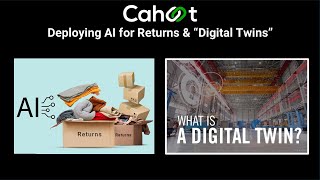
Maneesh and Jeremy discuss how AI and digital twins can cut fraud in ecommerce returns and redesign warehouse layouts for faster fulfillment. They explore what's actually possible now versus the hype around automating returns at scale.
Hello, listeners. Welcome to the Kahoot podcast with Maneesh and Jer. So, one of the most painful parts of E commerce, but it's a necessary evil, are customer returns. How can AI help with that?
That's a great question, Jeremy. I think Kahoot is in the process of launching a revolutionary return solution. And I can only share a little bit with you right now and more to come. So, one, a clear example of AI or even machine learning in the returns process is reducing fraud. So, for example, if you're returning an item X and the customer claims that they were shipped the wrong item, so by just asking the customer to submit a couple of pictures, we can identify if it was indeed the wrong item and if there was anything wrong, wrong with the item. And rather than shipping the item back to the warehouse, if the item is perfectly good, why not have that item be delivered or shipped to the next customer that wants that item? So we're going to create insane efficiency and completely revolutionize the way how returns work today, because that's a $468 billion market in the US alone, and the world needs a better solution. So utilizing technology to determine if the item was indeed flawed, if it had imperfections, and helping resolve that customer inquiry and also reduce fraud and improve profitability for the brands and retailers.
And just in time for the holidays.
Absolutely.
Do you want to talk about digital twins and how that's being used?
Yeah. So Kahoot obviously operates in the world of fulfillment and logistics and warehousing. So when you think about applying technology in the warehouse, you know, how do you optimize the space for storage? That is a very complex problem. You know, then if you haven't yet implemented robots, which 90% or 98% of the warehouses still rely on human workers. So if you think about it, how far does the human need to walk to go pick the item? If you don't apply technology and intelligence, you know, you can. It can have a dramatic impact on productivity. If you could cut that down by 50%, 60%, 80% by applying, hey, which items you're picking more often, place them closer to where the packing station is. That's just one simple thing. The digital twin. This concept of digital twin is really creating a replica of your physical space in a digital environment. It's essentially, think of it as Roblox, or think of it as Legos, if you will. And you really constructed a virtual environment, and now you're applying real world data and essentially measuring every aspect of it. For example, even energy consumption. You know, where your windows are, where your doors are and how often. I mean, these may sound somewhat futuristic, but they're not. But the simple example is storage space optimization, picking to packing, station distance optimization, inventory replenishment optimization, and then also figuring out, you know, what item should be included in what wave. In fulfillment centers, workers operate based on waves. They go pick items, but adding intelligence, you know, rather than using hard coded logic, which is what most now most organizations do right now. So I see great opportunity for enhancing productivity in the near future.
Well, thanks for your time Manish listeners. Please share your comments and feedback. And until next time, keep learning and stay curious.